
This Prinsjesdag, the Dutch government laid out their financial plans for 2027, which means it’s time to reveal the changes for you, your money, and the overall economy.
In their Budget Memorandum and National Budget, the Rijksoverheid listed a series of changes; let’s run through the key points.
- Lower purchasing power
- Increase in health insurance premiums, allowance, and deductible
- Increase in childcare allowance
- Lower aviation tax for long-haul flights
- More emphasis on affordable housing
- Additional training and upskilling for “crucial domains”
- Continued support for Ukraine
- More measures to limit asylum inflow
Lower purchasing power
For the average Dutch household, purchasing power, or koopkracht, is expected to drop by 0.1% in 2027.
To address this, the cabinet is adopting a series of measures, including:
- an increase in labour tax credit (arbeidskorting),
- a reduction in tax rates for the first and second brackets,
- an emergency fund for households struggling with their energy bills this winter (Noodfonds Energie),
- and an extension of excise duty reductions on petrol and diesel to keep prices down.
Increase in health insurance premiums, allowance, and deductible
According to the Dutch government, total healthcare expenditure will rise to €118 billion next year, driven by rising wages and overall prices.

This triggers several other increases down the pipeline, including:

- Health insurance premiums, which will average €169 per month in 2027 (an increase of €12.50).
- Healthcare allowance for singles, which will be raised to a maximum of €140 per month.
- The mandatory deductible (eigen risico), which will rise from €385 to €400 in 2027.
Increase in childcare allowance
The cabinet plans to gradually increase the childcare allowance in 2027, for all working parents who were not yet entitled to the maximum reimbursement.
While specific figures have yet to be released, they offer the following example:
“For instance, a family with two children, an income of twice the median, and two days of childcare will receive approximately €700 more in allowance in 2027 than in 2026.”
Lower aviation tax for long-haul flights
To “keep Schiphol competitive”, the Dutch cabinet intends to lower aviation tax on long-haul flights (i.e. those exceeding 5,500km) — bringing them in line with Germany’s.
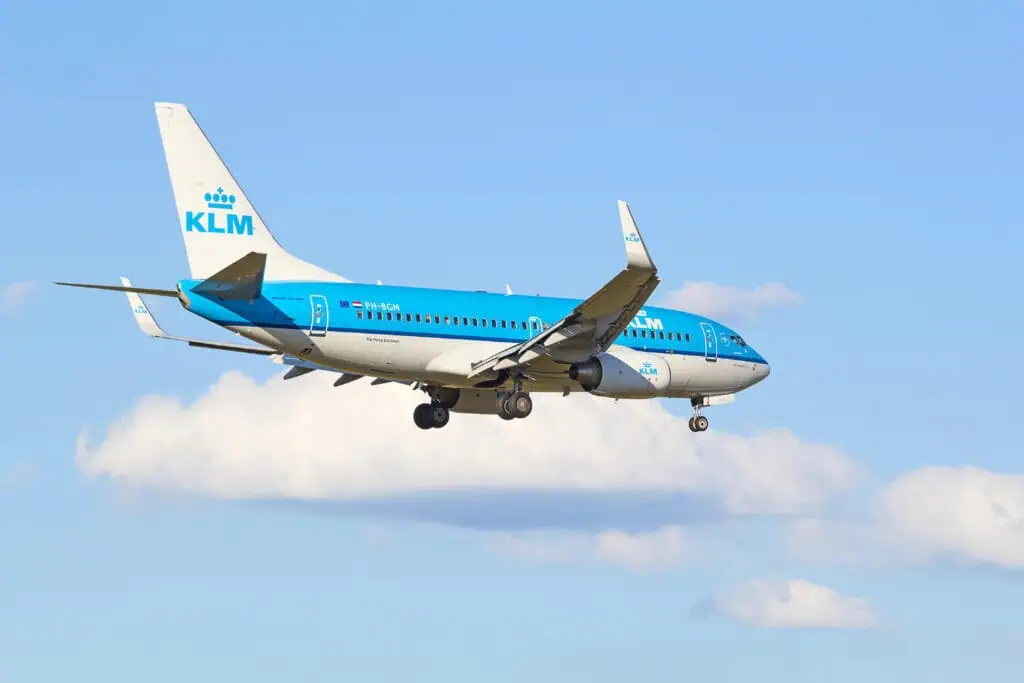
In addition to this, we might soon be flying greener overall, as the government wants to promote sustainable aviation fuels (SAF). Contributing €45 million to a Schiphol fund, airlines can claim an allowance for every litre of SAF they blend.
However, before you jump at the chance to fly green, the SAF fund is still hypothetical. The Dutch government’s contribution must still be approved by the European Commission.

More emphasis on affordable housing
The cabinet is allocating a whopping €7 billion to accelerate housing construction, which is intended to enable market parties and housing associations to build more homes.
Private investors are also getting their share of the pie, with €500 million available to build more rental properties.
In addition to this, a further €635 million will go towards increasing the number of care homes for the elderly.
Additional training and upskilling for “crucial domains”
The Netherlands plans to “attract, train, and retain people for the most crucial domains”, as part of a new Talent Strategy.
Together with civil society organisations and the business community, the cabinet wants to implement a “broad package” of changes for the labour market, with a special focus on certain domains.

And yes, highly-skilled migrants are welcome, too; Rijksoverheid notes that there “also remains room for attracting international talent”.

For now, the Dutch government is interested in upskilling the following four domains:
- Digitalisation & AI,
- Security & Resilience,
- Energy & Climate Technology,
- and Life Sciences & Biotechnology.
Continued support for Ukraine
As reported in a news release, the Netherlands will “continue to support Ukraine politically, militarily, and financially in the coming years”.
A total of €3 billion has been reserved for military support to Ukraine in 2027, plus an additional €327 million for the country’s recovery and reconstruction.
In total, approximately €14.8 billion will go towards “military deployment and the retention and recruitment of defence personnel”.
More measures to limit asylum inflow
Rijksoverheid announced plans to invest €28.8 million “in cooperation with countries outside the EU”, in a bid to reduce the influx of asylum seekers.
There’s also an extra emphasis on returning asylum seekers to their country of origin.
The government is working on plans to detain foreign nationals upon return to their home country, with the Custodial Institutions Agency set to receive €19.5 million in 2027 to implement this.
The cabinet also wants to increase the number of “participation desks” (or “meedoenbalies“) at asylum seeker centres, so that new entrants can start working much sooner.
Want to make sure DutchReview pops up on your news feed more often? Just add us as a preferred news provider, and we’ll handle the rest.