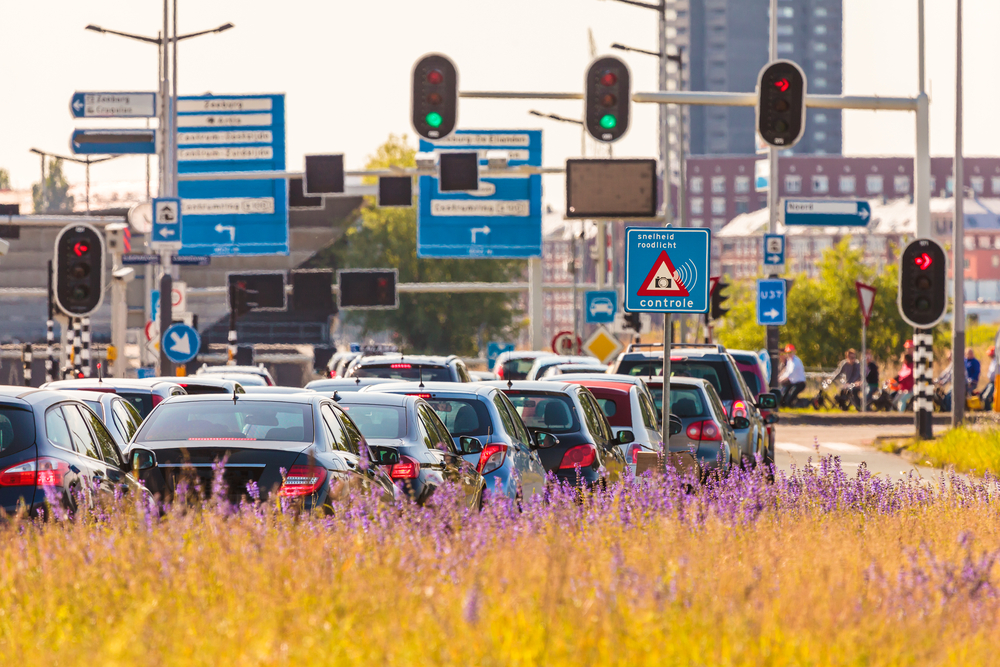

A major EU climate policy will add a carbon surcharge to gas, petrol, and diesel for Dutch households, with renters and lower-income households bearing the brunt.
Called the ETS2, this European emissions trading scheme will now extend carbon pricing to households and road transport, not just heavy industry and aviation.
This means that from 2028, anyone burning gas for heating or filling up at the pump will pay a price for the CO2 their energy use produces.
Unfortunately, with prices set by the European ETS2 market, the Netherlands has limited control over how high they go.
What will it actually cost you?
To calculate the ETS2’s impact on Dutch households, the PBL (Dutch Environmental Assessment Agency) modelled two contrasting scenarios.
If you live in a small flat with a gas-fired central heating boiler (cv-ketel), and drive roughly 6,000 km a year, you can expect to pay around €10–20 extra per month by 2030.

READ MORE | Utilities in the Netherlands: the ultimate guide to gas, electricity, and water
Meanwhile, if you live in a large, detached house and drive 20,000 km a year, you face an extra €30–70 per month on top of your existing bills.

At present, CO2 prices are uncertain, so these ranges are relatively wide. However, as Europe progressively lowers the cap on total permitted emissions, the available supply of carbon permits will tighten, pushing prices up.
And… you guessed it — those costs will be transferred to you, in the form of higher gas and petrol costs.
However, if you’ve already switched to an electric car and a heat pump, you won’t pay any of this. As the scheme is designed to make fossil energy progressively more expensive, switching to more renewable sources helps you avoid the price hike.
Is your wallet at risk?
PBL director Marko Hekkert warns that excessively high energy prices “lead to concerns about energy poverty and problems for specific groups of Dutch residents”, with ETS2 likely to be a contributing factor.

If you’re a renter, you’re going to feel the burn in your wallet. Without your landlord’s cooperation, you can’t insulate your home or switch to a heat pump, leaving you with rising costs and little ability to do anything about it.
While a share of ETS2 revenue will be funnelled back to vulnerable groups via the European Social Climate Fund, the PBL notes this covers only a modest portion of what’s collected.
In other words, it depends largely on your home type and how much you drive, and the Dutch government can’t simply opt out of the price.
Want the latest Dutch news to come zooming through the internet to your inbox? Dat kan! Subscribe to DutchReview’s weekly roundup 📮