US investment company, Blackstone, has admitted that 328 of its apartments have sat empty for years.
Why is that a big deal? Perhaps because there’s an acute housing crisis that leaves thousands desperate for a roof. 🙃
Following a series of critical questions from the party chairman of the Dutch Socialist Party (SP), the issue is being taken up with the Amsterdam city council today, reports AT5.
Squatters spilled the beans on Blackstone
In June, the police evicted a group of squatters from a building on Sint Willibrordusstraat in the bohemian neighbourhood De Pijp. Seemingly, it was this action that drove Blackstone to file vacancy notifications to the municipality — in bulk.
According to the squatters evicted from Sint Willibrordusstraat, the place had “been rotting away empty for years.”
This triggered the party leader of the SP, Erik Flentge, to start investigating Blackstone.
328 leegstaande panden gemeld, in één keer. Hoe bestaat het? Waarom zo veel, worden die allemaal opgeknapt? En nog onduidelijk is hoeveel meer panden leeg staan.
Let wel, duizenden mensen zijn op zoek naar een woning. (3)
“328 vacant properties reported in one go. How can that happen? Why so many, are they all being refurbished? And it is still unclear how many more buildings are empty. Mind you, thousands of people are looking for a home. (3)”
Amsterdam city council reacts
The Alderman for Housing, Rutger Groot Wassink, expressed the city council’s disapproval of leaving homes vacant for a long time. According to him, the council is fighting long-term vacancies “with all possible means” as “it is a duty to use houses for what they are intended, namely habitation.”
However, Wassink also explains the difficulty of tracing Blackstone’s total homeownership in Amsterdam. The investment company’s property portfolio is placed with various subsidiaries, making it very time consuming to figure out which homes belong to which Dutch branch.
Are there any consequences for Blackstone?
Asides from an inspection of the property on Sint Willibrordusstraat to get it ready for habitation as soon as possible, the municipality will have a meeting with Rembrandt Propco about the manner in which vacancies should be reported.
Meaning, they’ll have a little talk about how it’s not okay to report 328 addresses in one go. 🙅♀️
However, the Vacancy Act doesn’t provide any options for reprimanding Blackstone or Rembrandt Propco for leaving the properties vacant, only if they don’t report it — so all they get is a rap on the knuckles from the municipality.
Do you think the city council should do more to fight vacancies? And what are your opinions of Blackstone? Tell us in the comments below!
Yup, you read that right. You don’t have to unpack all of your winter gear just yet because autumn is going to start out warm in the Netherlands, according to Weerplaza.
Starting on September 1, meteorological autumn will kick off on a relaxing note: with temperatures of 20 to 22 degrees combined with some sunny days.
⛅ Today: cloudy with a chance of warmth
Already today we can expect some warmer temperatures, with the mercury starting with 17 degrees in the morning and 20 degrees in the afternoon! There are still going to be some clouds in the sky, but at least rain isn’t expected! 😅
☀️ Tomorrow: don’t blame it on the sunshine
Break out the biertjes🍺because the weather is going to be sunny, with temperatures rising up to 22 degrees. The lowest temperature will be 13 degrees.
⛅ Wednesday: indecisive is the weather’s middle name
Similar to Monday’s weather, Wednesday will be a mixed bag. We’ll be seeing some warm temps, with a high of 21 and a low of 12 degrees. However, it will still be cloudy, so it’s not yet time to bust out the inflatable, kiddy pool.
⛅ Thursday, Friday & Saturday
Expect more clouds but warm temperatures: the weather is going to be pretty much the same from Thursday through to Saturday, with a high of 20 degrees and a low of 12 degrees. It’s a good chance to take a stroll with a friend or a partner, but not to try and get a tan (sorry, everyone). 😭
What will you do to take advantage of the warm(er) weather? Let us know in the comments!
Speedy, better for the environment than planes and cars, irresistible views, and a tiny bit romantic: travelling by rail from the Netherlands to other countries is getting easier by the day.
Even more room will be made on Dutch tracks for international rail journeys in 2022, with multiple new lines launching.
So which classic European destinations will soon be just a train ride away? Here’s a glimpse!
A hop, skip, and jump to Berlin or Prague
Ever wanted to journey through eight European cities in a single night? The Dutch start-up, European Sleeper, will travel through Brussels, Antwerp, Rotterdam, Amsterdam, Hannover, Berlin, Dresden, and Prague in one trip from April 2022.
The trains offer free internet, privacy, coffee, and even breakfast in bed which makes the only remaining question: “How would you like your eggs?”
A weekend in Switzerland
From the flatlands of the Netherlands to the snow-crusted mountain peaks of Switzerland in a single night. The night train between Amsterdam and Zurich recently made its first trip with a lucky total of 876 passengers completing the 11.5-hour journey on December 13.
From now on, the night train will be running on a daily basis between the two cities.
From Switzerland, it’s also possible to get to other European destinations like Milan, Venice, Florence, and Rome. Did someone say ‘Eurotrip’? 🧳
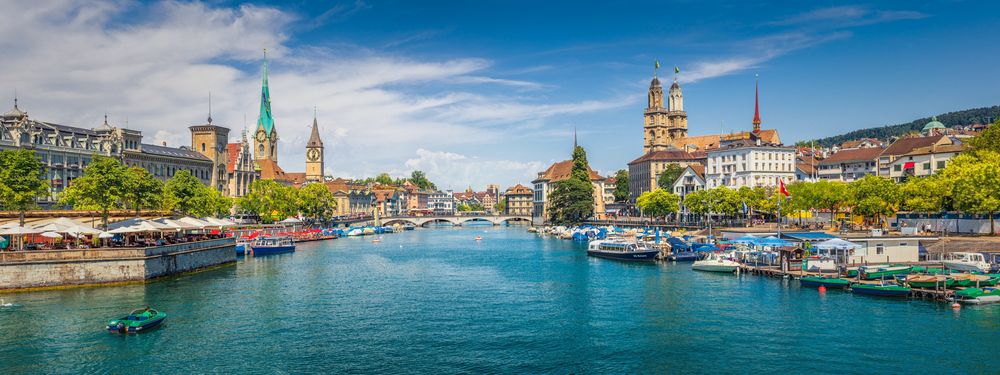
Sat ‘Guten Morgen Zurich!’. Image: pandionhiatus3/Depositphotos
All the way to Italy (and Austria, and Czechia)
What do you do when the night trains you want to take don’t exist? Charter a train and make it happen! At least, that’s what we think went through GreenCityTrip.nl’s head when they launched their own international rail trips to Venice, Verona, Vienna, Innsbruck, Milan, and Prague. The best part? You can snooze all the way there!
Psst: GreenCityTrip.nl says that Krakow, Copenhagen, and Budapest could be on the cards in the future! 🤫
Tea with the queen in London
Alright, the Eurostar has been running between Amsterdam and London for a while now — but it’s finally getting back on its feet, with the operator adding more trains to the schedule.
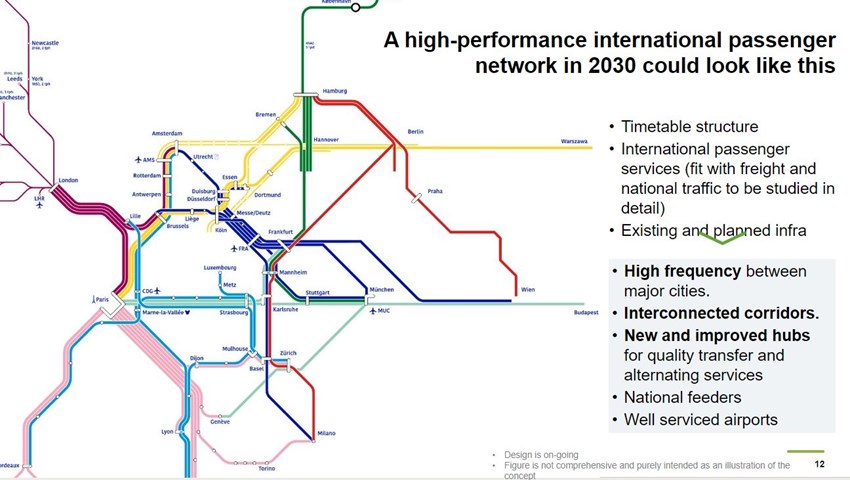
Focus on international trains in the future
Wave a happy goodbye to those cramped cattle-car seats of your favourite(?) budget airline! Say adios to long security lines or boring passport control queues. Switch out “Please be at the airport at least two hours before your flight” for “My train leaves at 12:00, so I’ll be at the platform at 11:55.”
Why? More international rail services could be on the way!
A possible European high-performance train network. Image: ProRail/Supplied
Jeroen Wesdorp, program manager Mobility Development at ProRail says that international trains are a ‘green’ alternative to cars and planes.
Based on this, ProRail wants to invest in more international trains and investigate better options for transfers with its international rail partners.
What international train routes are you waiting for? Tell us in the comments below!
Feature Image: nd3000/depositphotos Editor’s Note: This article was originally published in August 2021, and was fully updated in December 2021 for your reading pleasure.
Living with a disability, physical or mental, can be quite difficult in the Netherlands. There are over two million people in the country with a disability, including people with limited or no hearing or sight, and those with a physical or mental disability.
Many people with disabilities regularly experience a feeling of being excluded in Dutch society. This may be because they are unable to participate due to, for example, inaccessible entryway thresholds. Living with disabilities in the Netherlands can be hard.
There is also the case of private and public organisations failing to involve people with disabilities when organising special or everyday activities. This is usually because people think they are unable to participate in different activities that make up daily life.
The UN Disability Convention
What is the UN Convention on the Rights of Persons with Disabilities?
The UN Convention on the Rights of Persons with Disabilities and its Optional Protocol was adopted on 13 December 2006 at the United Nations Headquarters in New York and was opened for signature on 30 March 2007. There were 82 signatories to the Convention, 44 signatories to the Optional Protocol, and one ratification of the Convention.
The Convention applies to all types of disabilities that can restrict people from fully participating in society. This can involve physical, psychological, and intellectual disabilities. The treaty focuses on promoting participation and a more inclusive society. There are no new rights in the treaty but it does, however, further elaborate on the obligations that the government already has based on existing human rights treaties.
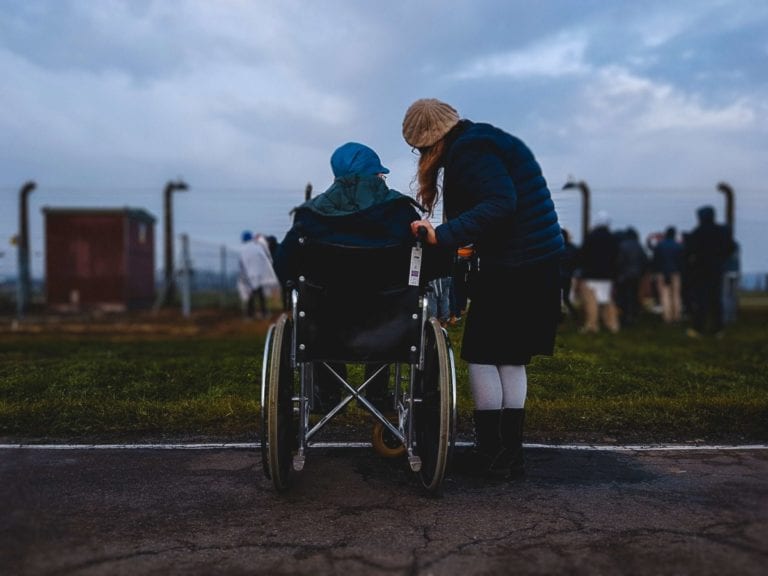
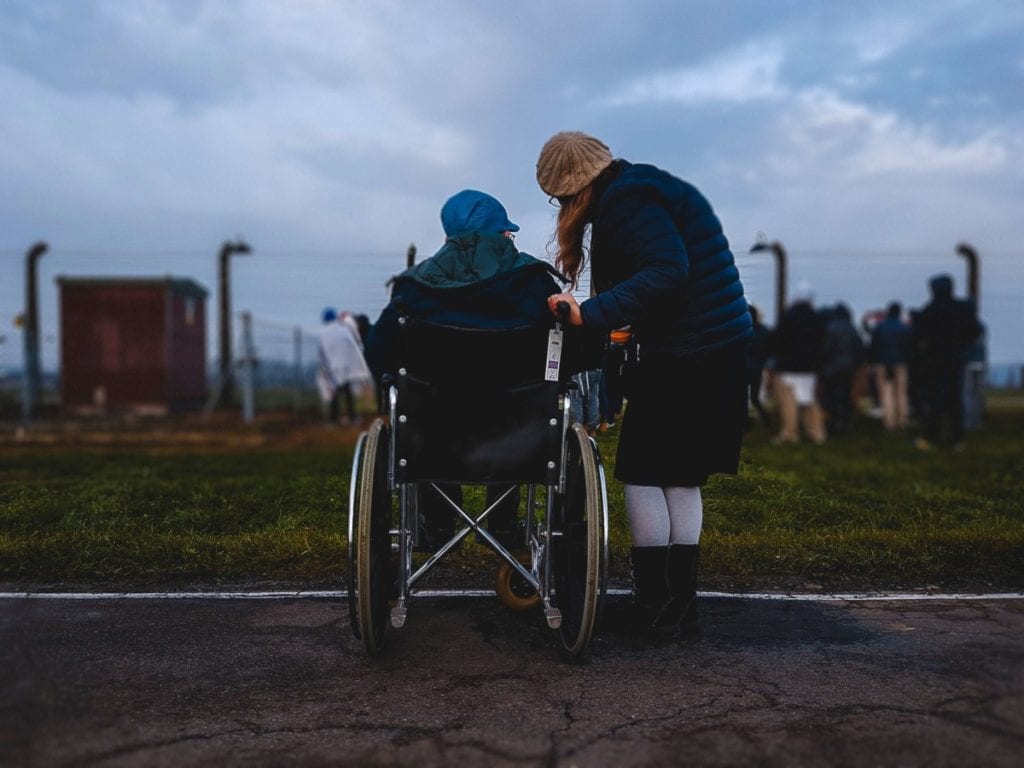
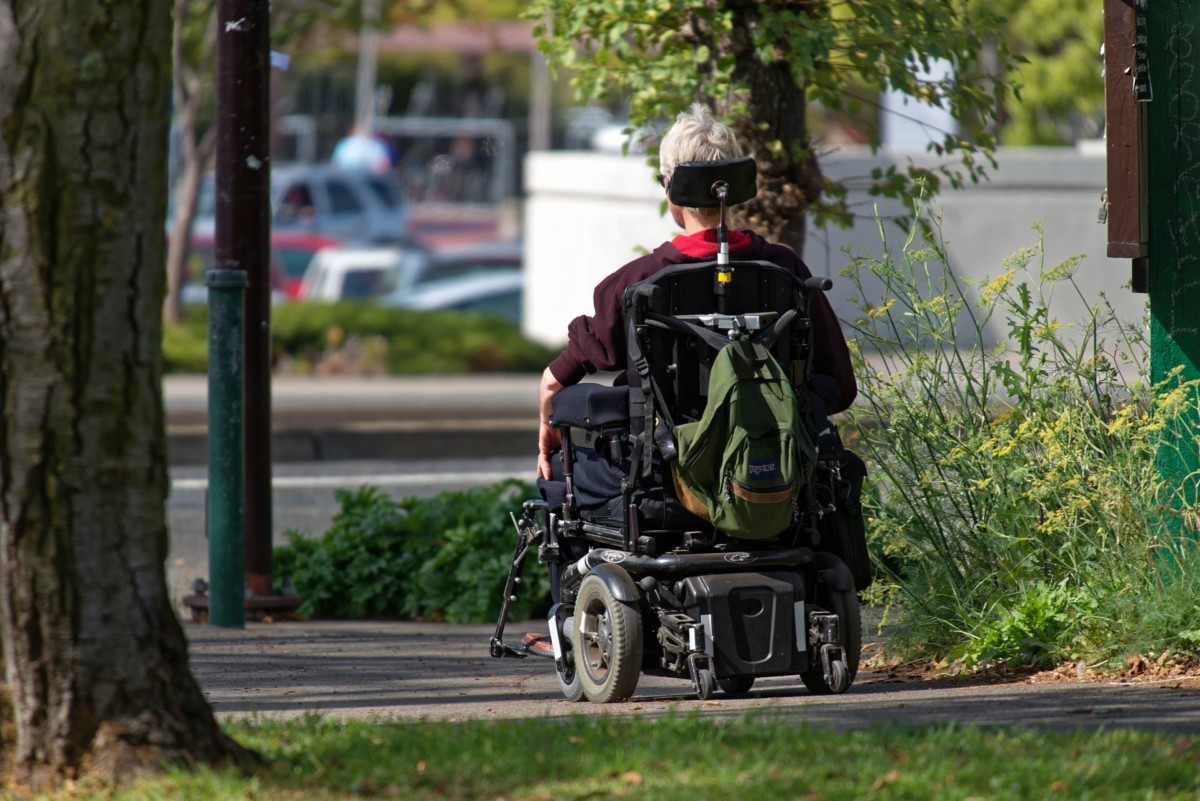
People living with a disability in the Netherlands. Image: Josh Appel/Unsplash
The Convention is intended as a human rights instrument with an explicit, social development dimension. It aims to protect the rights of persons with disabilities and reaffirms that persons with all types of disabilities must enjoy all human rights and fundamental freedoms.
It clarifies and qualifies how all categories of rights apply to persons with disabilities. The Convention also identifies areas where adaptations have to be made for persons with disabilities to effectively exercise their rights, where their rights have been violated, and where protection of rights must be reinforced.
The UN Disability Treaty in the Netherlands
The UN Disability Treaty was introduced in the Netherlands on July 14, 2016. The purpose of this treaty is to promote, protect, and safeguard the human rights of people with disabilities. Central concepts in the treaty are inclusion, personal autonomy and full participation.
The treaty specifies what the government must do to ensure that the position of people with disabilities improves. It stipulates, among other things, that people with disabilities have the right to live independently, go to school, use public transport and/or work, just like everyone else. The government (municipality, province, and central government) must ensure that this is well implemented.
The treaty also states that people with a disability must be able to make decisions independently. And that support must be available to them if they are unable to do so.
Who is responsible for implementing this treaty in the Netherlands?
The Institute investigates human rights violations or the level of protection of these rights. The Institute is also active on topics that concern people with disabilities: discrimination in the labour market, in education, at home, on public transportation, delivering of goods and services, engagement in sports, going out, insurance, etc.
The implementation of the treaty has ushered in some positive changes in Dutch society. The Dutch government have since put the civil and political rights from the UN disability treaty into practice. For example, the right not to be discriminated against and the right to easily access polling stations during voting season. There’s also the right to quality medical and sex care.
People with disabilities can also be lesbian, gay, bisexual, transgender, intersex, and/or queer (LGBTIQ+). The right to “sex care” and a sex life makes it very clear that every disabled citizen has a right to intimacy. A person’s appetite for sex doesn’t suddenly go away just because they are disabled.
UN Treaty Supervising Bodies
The Netherlands Institute for Human Rights monitors the Netherlands’ compliance with the treaty and how it has been put into practice since 14 July 2016 (implementation). As a supervisor, the Institute also looks at:
Whether laws and policies meet the standards of the UN Convention;
Which authorities are involved in the implementation of the treaty and how they perform this task;
The situation of people with disabilities and whether Dutch society is becoming more inclusive.
There is also an international supervisor, which is a committee set up by the UN. The Netherlands must report to this committee every four years on their implementation of the treaty. The first report was in June 2018.
Making Dutch society more inclusive and accessible for people with disabilities
When the Netherlands ratified the UN Convention on the Rights of Persons with Disabilities in the summer of 2016, a wave of joy spread through the disabled community. The joy was also felt among parents and partners of people with disabilities. They felt that the long-awaited change had come, and the rights of people with disabilities would finally be respected and recognised.
The Netherlands was going to enforce equal opportunities for work, education, housing, voting, etc.
The introduction of the treaty brought hope.
Note: The Netherlands only ratified the treaty nine years after the signing. The House of Representatives had repeatedly urged the government on an implementation plan.
Inclusion means that people with a disability fully participate in and belong to Dutch society. In an inclusive society, people with disabilities can do the same things as people without disabilities. For example, they can independently use public transportation and access polling stations and also decide for themselves where to live, work and attend school.
Some of us may think: “But the Netherlands is already inclusive. There are schools for special education, housing facilities for people with a disability, and there is travel assistance for people in wheelchairs travelling by train.”
But these are not examples of inclusion. In an inclusive society, there are no special facilities for people with disabilities. Special facilities usually mean that people with disabilities have to be assisted by someone. True inclusion means that all buildings and facilities are accessible to everyone and people with disabilities can use them independently.
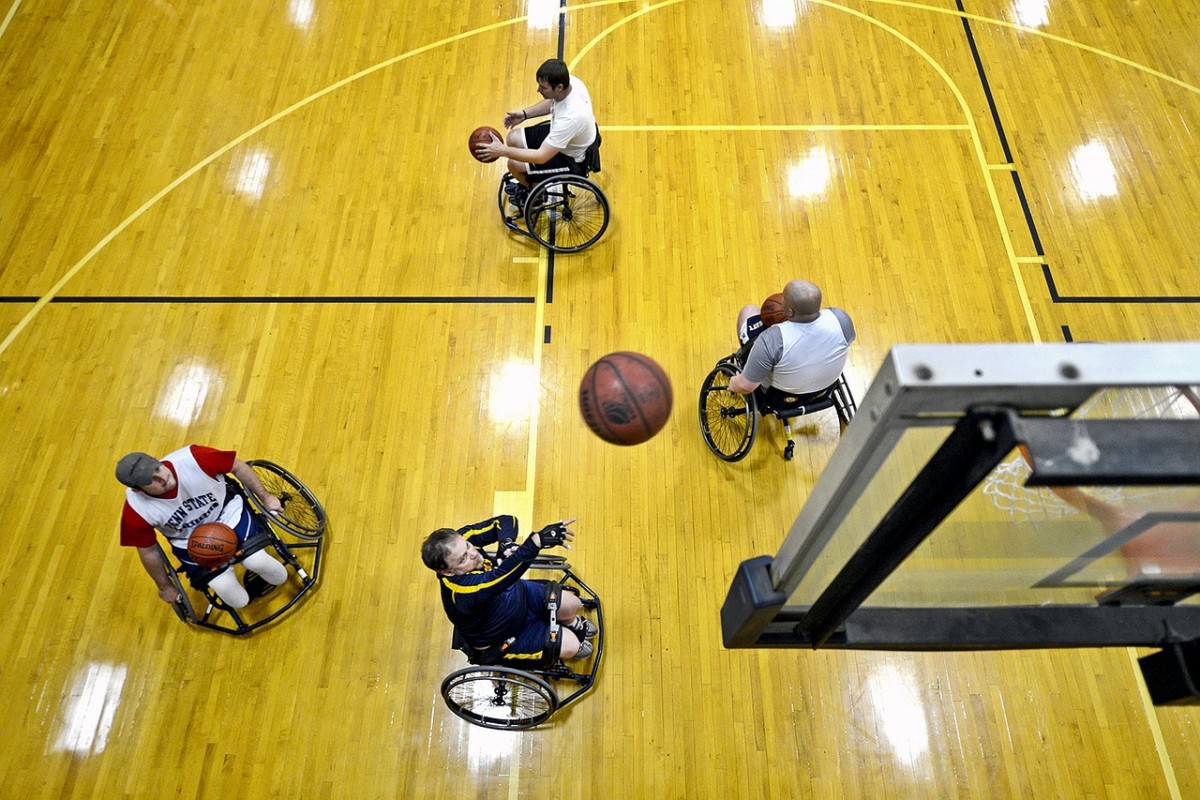
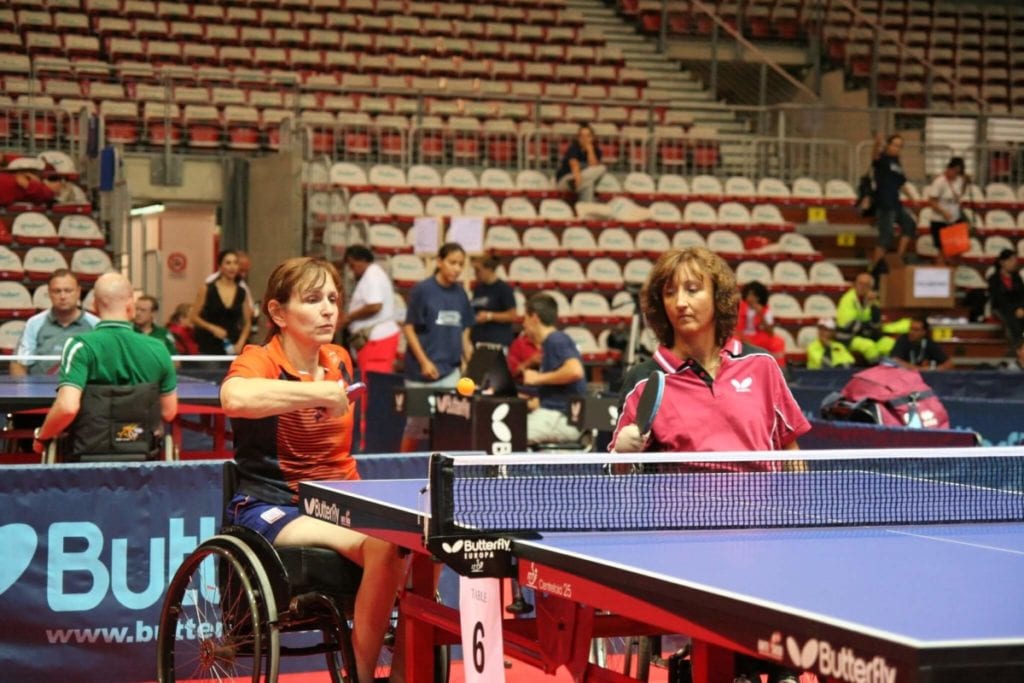
For example: What if a disabled person wanted to go bowling? Or what if they wanted to play wheelchair basketball? How many wheelchair basketball courts do you have in your municipality? Or is a disabled person not allowed to want to play basketball? Inclusion must cover all areas of life; education, the labour market, public transportation, internet, sports, going out, etc.
There are sports specifically for people with disabilities but oftentimes they don’t have a place for them to practice and play. Image: David Mark/Pixabay
For the Netherlands to truly be inclusive, more changes need to take place. Changes such as making public transport and buildings accessible to people with disabilities.
While accessibility is good, true inclusion requires creating awareness. In the coming years, companies, as well as individuals, should automatically think about how they can contribute to an inclusive Dutch society when organising special events or everyday activities. It’s time we stopped making it look like it’s too much effort to include people with disabilities in our everyday plans.
People with disabilities often notice that others react uncomfortably or in an improper manner towards them. Many people underestimate what life with a disability means, and looking beyond a “visible” handicap is difficult for them.
There is much more behind a disability than just practical limitations. It is also about being able to enter into (and keep) relationships, function fully as a member of society, and/or not having to rely too heavily on your loved ones. The authorities have to work on building more understanding and ultimately better opportunities for people with disabilities.
For the implementation of the treaty to be a success, the authorities (and members of society) have to stop approaching people with a disability as burdens rather than as participating citizens. Also, the biggest changes should not just be in healthcare, but in the labour market and daily life, with employers and municipalities playing a big role.
How can the Netherlands become more inclusive for people with disabilities?
People living with disabilities in the Netherlands. Image: Gaël Marziou/Flickr/CC2.0
An inclusive education sector
Children with disabilities have the right to go to the same school as their brothers, sisters and friends without disabilities. That is what the UN Convention on the Rights of Persons with Disabilities clearly states.
A school that is open to everyone is inclusive. An inclusive school assumes that every child has unique talents and is welcome to develop those talents. The school adapts to the child and is therefore open to all. This is different from the current type of schools in the Netherlands, where the student must adapt to the school.
Inclusive municipalities
An inclusive society starts with “everyday people” in their municipalities. That is why municipalities have an important role to play in implementing the UN treaty.
But what is an inclusive municipality? This is a municipality where everyone feels welcome, with or without a disability. To ensure this, every municipality must make sure that all amenities, whether public or private, are accessible to everyone. For example, accessible buildings and sports clubs where everyone feels welcome.
Public and private bodies must work together with people with disabilities to find ways to make life better for them. They certainly have to be included in the conversation about what can be done better in their municipality.
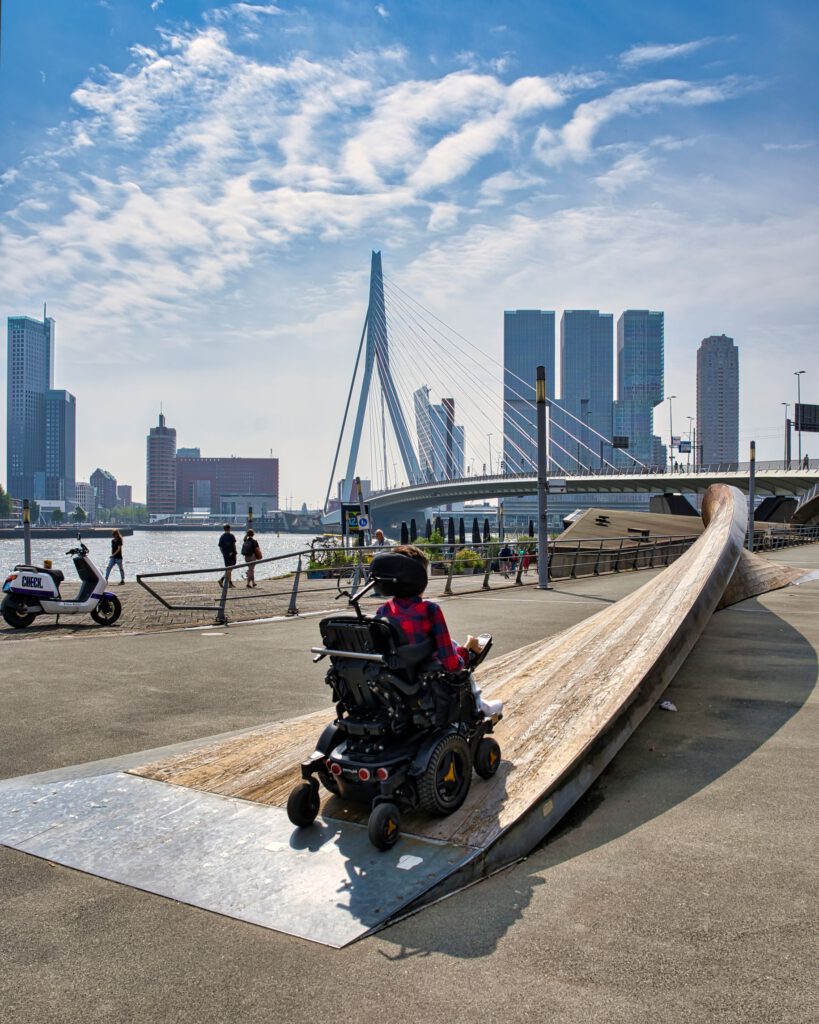
According to the travel blogger, Roman, Rotterdam is a very accessible city! Image: @romans.view/Supplied
Freedom to choose one’s life direction
The freedom to choose one’s life direction means that everyone should have the right to make their own life decisions. For example, people should be able to decide for themselves where they want to live and with whom, where they want to go to school, whether they want to travel by bike, bus, or taxi and what time they want to go home after a party. They are entitled to support, but they also get to decide for themselves whether they want the support and who it should come from.
Full participation in the labour market: “equal dreams, equal opportunities”
An important part of participating in society is participation in the labour market. Since people with a disability often have difficulty finding a job, the Participation and Quota Act had to be created in the Netherlands.
People with disabilities have the right, like everyone else, to earn their own money with work that suits them. To be able to do their job as well as possible, they are entitled to resources. For example, a modified workplace, wheelchair-friendly spaces, special agencies and talent development training or a sign interpreter at meetings.
“Equal dreams start with equal opportunities. The Netherlands has more than two million people with one or more disabilities. Going to a café or the university can be pretty difficult for them due to an inaccessible threshold, the lack of lifts or denied access to a service dog,” said Martin van Rijn, at the Participating with a Disability Campagne in 2017.
“This initiative calls on all of us to put ourselves in the shoes of people with a disability. If you do that, you will see that small adjustments sometimes make a huge difference,” he added.
More and more employers must be encouraged to hire people with disabilities with support options, such as subsidies and other solutions that work. The government must also include people with disabilities in discussions surrounding finding realistic solutions to this problem of exclusion.
Accessible information
There is information everywhere around us, but much of that information is not accessible to everyone. For example, many people have difficulty understanding written texts. Others are deaf or hard of hearing and cannot follow the television or videos on the internet without subtitles. And others are blind and cannot read the menu in a restaurant.
According to the UN treaty, you should have the right to make decisions independently. But you do need adequate information to do that. Being able to “independently” make decisions means doing so without assistance from people around them.
For example, people with disabilities should be able to have access to information on all websites on the internet without help from people around them. Living with a disability can take a mental toll on people, and being totally independent can go a long way in helping people with disabilities cope mentally.
Physical accessibility
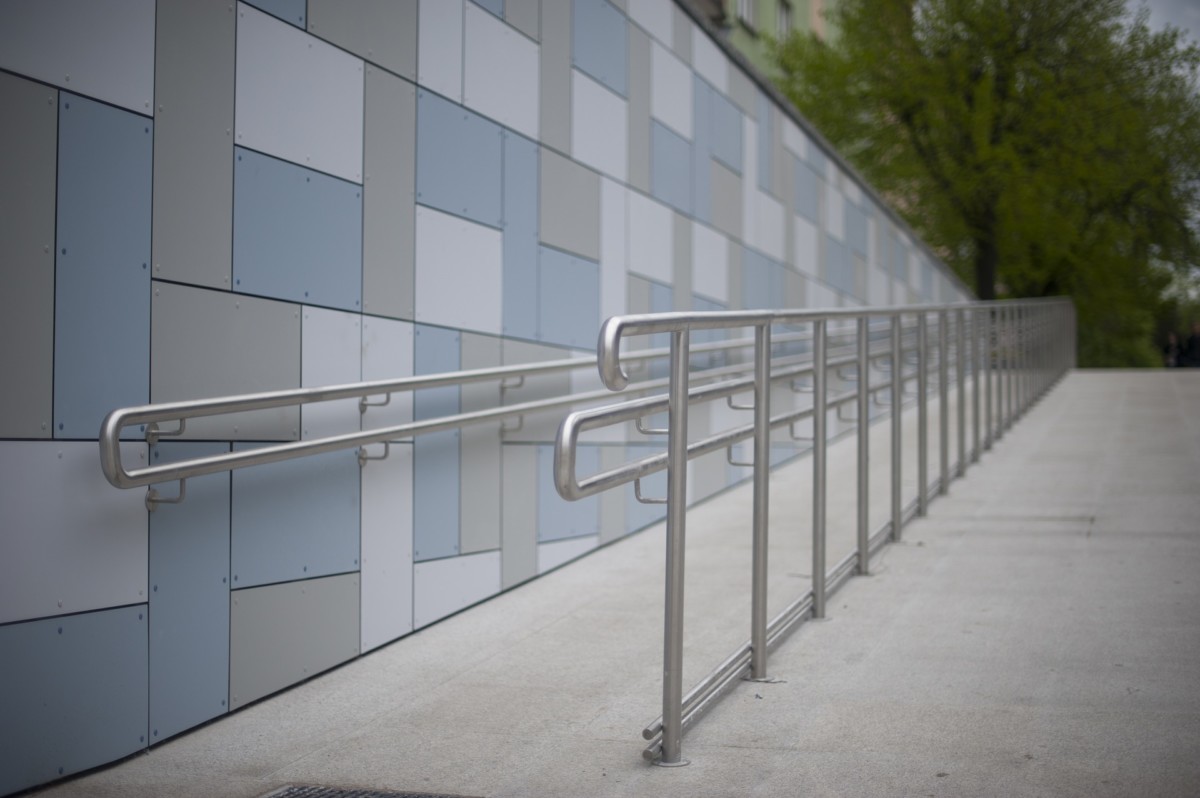
An example of physical accessibility is the accessibility of buildings. People in wheelchairs should be able to easily enter any building anywhere in the country. Blind people, for example, should be able to withdraw money from ATMs without assistance from people around them.
They should be able to go to the gym, strip/nightclubs, restaurants, school, etc, without help from others. Most people with disabilities find it difficult to move around their own houses. There is so much more that can be done in the Netherlands.
People with disabilities have sexual feelings, desires, and need for intimacy — just like everyone else. The mentality that there is something wrong with a disabled person wanting to have a sex life or intimacy in their lives has to change.
Most people with disabilities are frustrated because they lack intimacy in their lives. Some also lack access to information on how to properly engage in sexual intercourse.
For example, people with intellectual disabilities may lag when it comes to knowledge about sex and sexuality. They have less access to general information sources such as books, TV, and the internet. It’s also possible that they may not understand the information received via these channels, and may have a distorted image of sex as a result. They also have limited opportunities to experiment with themselves and others.
People with disabilities may also find it difficult to express their wishes and feelings, even if they can speak. They are more vulnerable because most of them are dependent on others. Imagine a case where a man living with a disability is dependent on his (religious) family members, properly expressing his sexual feelings may not even be an option.
The two main factors that are huge obstacles to people with disabilities finding intimacy or having a sex life are religion and the mentality that people with disabilities don’t (or shouldn’t) have sexual desires. That mentality must change, and religion or no religion, people with disabilities are human beings who have a right to intimacy and sexual satisfaction.
Action Plan for more people with disabilities in Dutch politics
An estimated two million people with a disability live in the Netherlands, and only around 0.5% of them are political officeholders.
There is currently an ongoing movement in the Netherlands for there to be more people with disabilities in political and administrative functions. That is the purpose of the Action Plan that was launched in The Hague on July 4, 2019, during a meeting aimed at introducing more people with disabilities into Dutch politics.
The theme of the meeting: “Political officeholders with a disability: how do we facilitate the future” saw more than 150 participants with and without disabilities come together to discuss ideas and solutions. On June 17, 2019, 33-year-old Rick Brink from Hardenberg was elected the first-ever Minister of Disability Issues in the Netherlands.
Rick is in a wheelchair and has been active for years in municipal politics in Hardenberg. He has said that he is mainly committed to the integration of children with disabilities in Dutch society.
Furthermore, the Elections Act has also been amended. It now states that all polling stations in the Netherlands’ municipalities must be situated, furnished, and equipped in such a way that people with a physical disability can access them and vote independently. The intention is that in a few years, 100% of the polling stations will be accessible to people with disabilities.
2018 Report on the Committee on the Rights of Persons with Disabilities
The Netherlands Institute for Human Rights is the independent body responsible for monitoring the Netherland’s implementation of the UN Convention on the Rights of Persons with Disabilities. The Institute installed an advisory committee of persons with a disability that is involved in the monitoring process.
On 3 December 2018, on an international day for people with disabilities, the Institute issued its first report on the implementation of the UN Convention on the Rights of Persons with Disabilities in the Netherlands over the first two years. This report is addressed to the UN Committee as supervisor of the implementation of the treaty.
The report shows that the Dutch government has taken steps to promote an inclusive society, but that the government must take better steps towards including people with disabilities in decision-making procedures.
Finally
People without disabilities tend not to think about how difficult life can be for people with disabilities. The world is changing at a very fast pace and while we are all enjoying the exceptional technological advances being made every day, we also have to make sure that people with disabilities are enjoying the same.
Whether it’s the latest tablet computers, mobile phones, or game consoles, people with disabilities also have to be as excited as the “crazy” iPhone fans camping in front of the Apple Store at the Leidseplein waiting for the shop to open so they can buy the latest iPhone. We have to make life as independent and enjoyable as we can for them.
To do this, extra attention has to be paid to them and their needs. That extra attention is needed to make Dutch society more inclusive. This isn’t just about making the Netherlands accessible to everyone, it’s about a change in the way of thinking within our society.
Disabled parking and the installation of lifts in every building aren’t the answer anymore. We need to think further than that. We need to find solutions in everyday life, in tech, education, sports, sex care, etc., for people with disabilities.
The mentality that disabled people are a burden to society must change. They are just like you and me: participating members of this society. All the privileges that we enjoy have to be accessible to them.
These privileges must be accessible to everyone, at whatever level they can handle, so that each citizen, disabled or not, can participate in everyday Dutch life. It is the only way we can truly become an inclusive society.
Are you living with a disability in the Netherlands? We would love to hear your thoughts on this. Tell us in the comments below!
Dutch summer banger “Ik ga zwemmen” has made a splash in Spotify’s Viral 50 – Global chart, taking the #1 spot a few weeks back and sitting at #4 today.
The song is iconically Dutch, maddeningly cheerful, and the music video is just…well take a look below:
We are damn addicted to this song right now, and we can totally see why it is becoming a viral hit. It’s also currently occupying the #1 spot in the iTunes Netherlands Top 100.
So is it a glistening ballad over life in the Netherlands? An introspective look at humankind? Perhaps a metaphor for being plunged into the sometimes warm, sometimes icy cold waters of love?
Of course not! It’s about swimming in rum, or more specifically, Bacardi Lemon. And that. Is. It.
Lyrical genius
In the song, Dutch singer Mart Hoogkamer — known for participating in season 8 of Holland’s Got Talent — sings Ik ga zwemmen in Bacardi Lemon ‘I’m going to swim in Bacardi Lemon’ (alright, pal). And that’s basically all you need to know!
Okay, he also compliments a girl’s father and mother for making her ‘his type’ and calls himself a tiger that can’t be tamed. 🐅😐
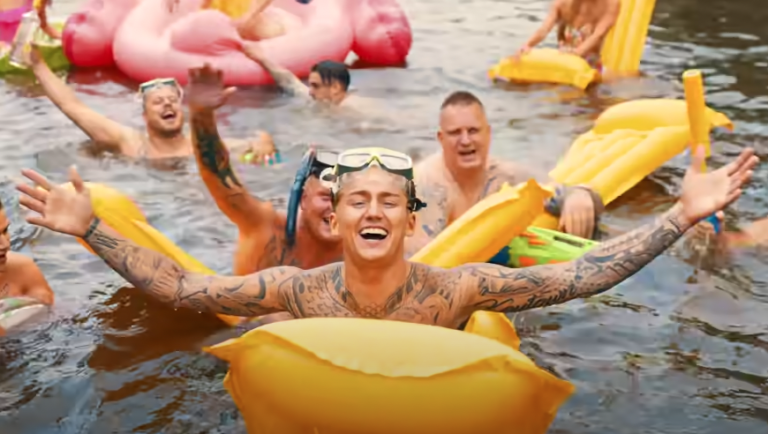
Weird lyrics aside, the video is just as wild and was filmed in the stunning Dutch city of Leiden. It was fun and bright, although still een beetje gek (but we like that 🤭).
The clip takes place in one of the canals with people swimming, sitting on colourful floaties, and there was even a jet ski. 😱
⚠️ Attention, readers: do not take jet skis into Dutch canals, no matter which catchy music videos tell you to.
Also, the weather in the video makes Holland look like it had an amazing, warm summer. But as we know, the reality of the Dutch summer this year was…a little different. 🌧️
Fun fact: Did you know that the music video was filmed just five minutes from the DutchReview headquarters?! You’ll know where to find us at our next borrel…zwemmen in Bacardi Lemon!
What do you think of this soon-to-be Dutch classic? Tell us your thoughts in the comments!
The Dutch Paralympic champions are bringing home six more medals — four gold and two silver — rounding the Netherlands’ current total to eleven medals in a substantial winning streak! 🥇🥈🥉
Yesterday, the Dutch Paralympic team achieved striking success. While Rogier Dorsman and Chantalle Zijderveld swam for gold, Liesette Bruinsma and Lisa Kruger took silver — all of this within one hour, reports the NOS.
In the Olympic’s sister event, which began on August 24 and will go on until September 5, we can surely expect more success from our 73 Dutch athletes.
The games have only been on for a few days, and they’ve already placed the Netherlands in fifth place for this year’s world medal ranking! 🏆 As the NOS reporter Suse van Kleef put it, “almost everyone is a medal candidate.”
Success recap
The Netherlands’ total medal count since its first participation in the Paralympic Games currently stands at 749. Throughout history, Dutch swimmers alone claimed more than 400 of these — wait…so the Dutch are good at both swimming and biking?! 👏
The 2020 Summer Paralympics — which had to be rescheduled to 2021 due to the coronavirus — mark the 16th consecutive participation from TeamNL.
What’s your favourite sport to watch at the Paralympics? Tell us in the comments below!
Despite the Netherlands’ highly-criticised response during coronavirus, Bloomberg’s Covid-19 Resilience Ranking for August has ranked the Netherlands as the second-best country in the world for its current management of coronavirus.
The emergence of Delta in the past few months has thrown many curveballs, with countries like New Zealand — famed for its containment of the virus — tumbling back into lockdown, while the early champ of the vaccine race, Israel, saw a huge surge in infections — eek!
The Delta rollercoaster didn’t spare the Netherlands either. From early relaxations (remember “dancing with Janssen” 👀) to a 500% increase in cases in a single week, we all thought our summer holidays were on the rocks.
Resilience based on 12 data indicators
That’s why it may come as a surprise to many (we are certainly bowled over) that the Netherlands has been ranked by Bloomberg as the second-best place to be in the world right now for its management of coronavirus — echt!?
The Covid Resilience Ranking is a monthly snapshot of how the 53 biggest economies in the world are handling the virus.
Bloomberg has come up with a resilience score based on several data indicators. These include:
coronavirus containment,
the quality of healthcare,
vaccination coverage,
overall mortality, and
progress toward restarting travel and easing border restrictions.
#2 in the Covid Resilience Ranking
Now, we know we all love to hate on the government’s management of the coronavirus situation (we’re looking at you, Hugo de Jonge) but it turns out that their middle ground strategy really seems to be working. Yeah, we’re surprised too.
Over the past month, the Netherlands has flown 12 places up the ranking — landing in spot number two for the best management of coronavirus behind Norway, and ahead of Finland.
Whoop whoop, go the Netherlands 🥳
Four factors largely contributed to this high score: people covered by vaccines, lockdown severity, flight capacity, and vaccinated travel routes. Here’s the breakdown:
💉 63.1% of people in the Netherlands are covered by vaccines
🍻 We have the 36th most severe lockdown out of 53 countries — so somewhere in the middle
✈️ Flight capacity is only 32.2% lower than where it was at this time in 2019
🗺️ If you’ve had a shot, there are 353.5 different travel routes available to you right now
@TheDutchGovernment — we’re sorry, we’re going to stop complaining about you now.
The winners and the losers
In August, nine out of the top 10 countries on the ranking were European countries. The bottom five are Southeast Asian countries: Thailand, Vietnam, Indonesia, the Philippines, and Malaysia
Having been number one on the resilience list since the ranking was created last November, August saw New Zealand plunge 26 places, as their lockdown went from being the most relaxed to the strictest. Israel and the US who ranked highly in spring aren’t doing too well either.
What are your thoughts on the Netherlands Covid-19 resilience? Tell us in the comments below!
Lidl has recalled a whole suite of hemp products sold at their Dutch stores after they were found to contain waaay too much tetrahydrocannabinol (THC) — the part of weed that gets you high. 🪁
As part of their recall, the grocery chain is urging consumers to return some hemp tea of the brand Mogota. Riiight, that is definitely going to happen. 😂
The company warned that the “Consumption of this tea can have unwanted health effects” — unwanted, or wanted? 👀😉
Lidl’s Germany recall also includes other hemp products such as hemp tea, hemp oil, and hash cookies sold at their German locations. Time for a quick check of your snack drawers y’all — those munchies might just give you the munchies.
How much is too much?
The Dutch government draws a clear policy on soft drugs that can be legally consumed in the Netherlands. However, the recall from Lidl didn’t go into much detail regarding how “high” the THC levels in these happy products was.
Lidl, however, abruptly addressed the side effects of consuming the recalled products, advising that unwanted health effects may occur such as “mood swings and fatigue” — well okay then! 😵
Don’t return all the boxes though! The tea being recalled only includes Mogota tea with the best before date 31-12-2022 and barcode 3830001230185.
What do you think of this mixup? Tell us in the comments below!
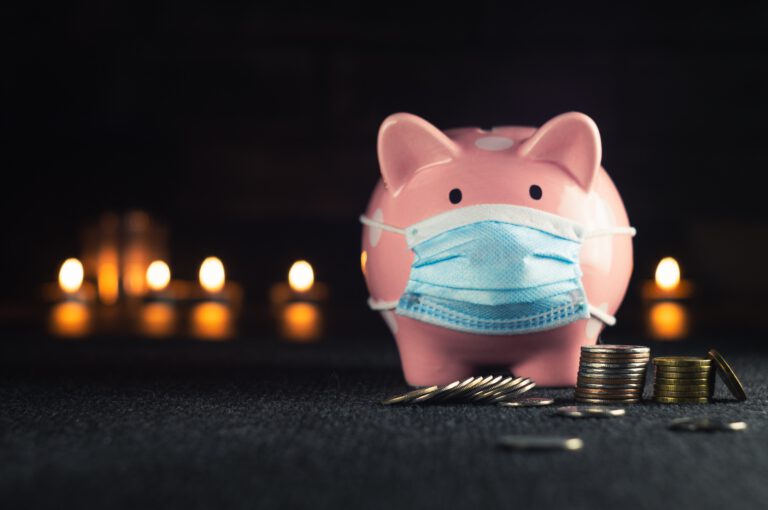
Due to the coronavirus pandemic, Dutch people have managed to save more money in the past year. But even though things are now opening up again, they aren’t planning on spending it anytime soon. 🙅♀️
According to De Nederlandsche Bank (DNB), households have hit a record amount in savings of 46 billion euros in the first quarter of 2020. 💸💸 This amount also takes into account extra savings before the pandemic started.
However, Dutchies are still being super careful with their money. At least half of the money saved during the coronavirus crisis won’t be spent, according to RTL Nieuws.
Why are they saving so much?
With coronavirus restrictions in place and everyone being cooped up indoors for a long time, the money simply couldn’t be spent. (Though that didn’t stop us from ordering from Thuisbezorgd a little more than we should. 🙈)
Even though according to the DNB most incomes have remained stable due to support measures from the government, Dutchies were also concerned about the economy and job security, leading them to spend less than they normally do.
What are the Dutch spending money on?
The DNB expects that 14% of that extra money will be spent within a year — in particular on clothing, electronic devices, and cars.
Is this really shocking, though? Because anyone who has ever split the bill with a Dutchie (Tikkie, anyone?) will know that the Dutch are great (stingy?) with handling their finances.
What do you think about Dutchies saving more money this year? Let us know in the comments!
Enjoy riding your bicycle with others? Love going around in your birthday suit? Stuck for ideas for your next Tinder date?
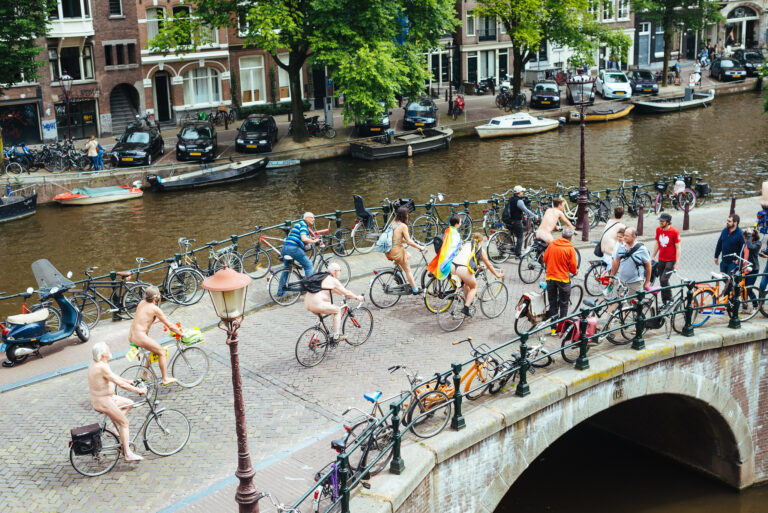
You’re in luck: this Saturday, August 28 is the 11th edition of the World Naked Bike Ride in Amsterdam.
Yes, you read that correctly. Bikes, boobs, and balls on the Amsterdam streets and all for a worthy cause: protesting car traffic. 🚲
What’s it all about?
The World Naked Bike Ride (WNBR) is an annual demonstration held in major cities and capitals around the world. Activist Conrad Schmidt started the World Naked Bike Ride in 2004.
However, those with a Spanish background may have come across its inspiration: the Spanish Ciclonudista which was first held in 2001 in Zaragoza with the idea of reclaiming the street for the people living there and commuting with non-motorized forms of traffic.
But why Amsterdam?
You may, at this point, be wondering why this would need to be demonstrated in a country (and city) that has a normally brilliant cycling infrastructure and culture? In the organizers’ own words on their website (translated):
“The street does not have to be ‘conquered’ from the motorist here, as in Seattle, Vancouver, Auckland or Lisbon. Amsterdam is a bicycle city par excellence, that is absolutely true. We focus on other aspects: cycling is healthy, good for the environment, and very pleasant for the wallet.”
“But even in the bicycle-friendly Netherlands, cyclists are vulnerable and motorists intrusive. With our action we say: we are literally and figuratively naked, be careful with us.”
A message and statement of body positivity
The organisers continue by saying that nudity can also bring people together.
“So you have a belly. So what. Accept yourself! Be proud of the strength of your own body! Moreover, we believe that participating can be a way to overcome uncertainty. It’s very liberating.”
There may be more balls at this event than in a juggler’s supply closet but it’s a positive, healthy sentiment that should apply to everyone.
“Everyone” is exactly who the organisers are aiming for with those involved being very implicit about their wish for inclusivity. They write:
“Everyone can ride along, singles, couples, families, but also people with disabilities can ride along and not unimportantly, we are LGBTI+ friendly.”
How do I get involved?
The first thing to point out is that if naked cyclists are not your thing and you were planning a nice family picnic in Amsterdam there may be a few places or parks to steer clear of on Saturday.
Between 12:00 and 1:00 PM, event traffic controllers will be accompanying those taking part from the meeting point at Amsterdam Amstel station to the starting line at Park Frankendael (or you can meet them there).
The ride starts at 2:00 PM and will end in Vondel Park around 4:00, after which you are allowed to stay in the nude until 5:30 PM (how kind) 🍑.
The event is free to attend, but fair warning: you do have to be over 18.
Will you be stripping down and hopping on (your bike)? Tell us in the comments below!