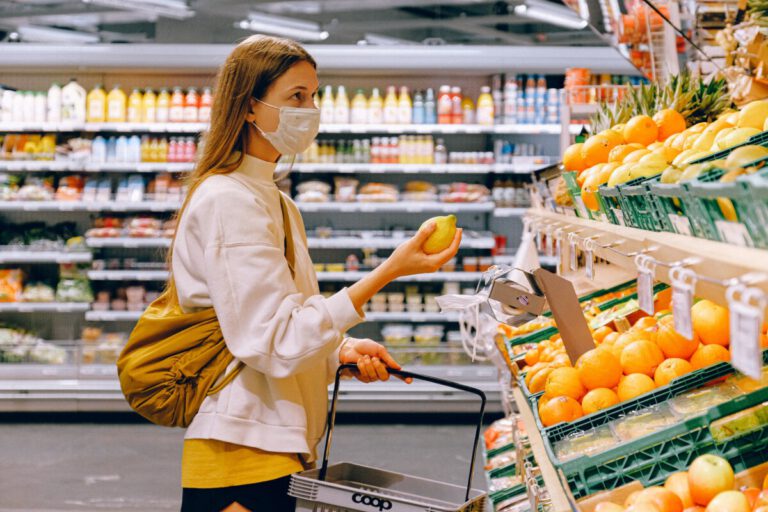
The Dutch supermarket chain Albert Heijn will remove the rolls of single-use plastic bags for fruits and vegetables from its stores by the end of the year.
During the two weeks following April 19, all AH customers will receive a reusable nylon bag for free if they purchase fruits or vegetables that have to be weighed. After those two weeks, customers will have to pay 30 cents per bag.
Removing single-use plastic bags from Albert Heijn stores will save 243,000 kilograms of plastic per year. This equals approximately 130 million bags. Customers will be informed about this by AH’s fruit and vegetable department from mid-April, reports the NOS.
A small step for Albert Heijn
If you feel like doing a little celebration dance or saluting the supermarket for finally doing something good for the planet, let us stop you right there.
While single-use plastic bags from the roll are finally being removed, Albert Heijn is dragging its feet on removing shrink-wrapped carrots, peppers, and aubergines across all its stores. This one small step for Albert Heijn is, thus unfortunately not one giant leap for mankind.
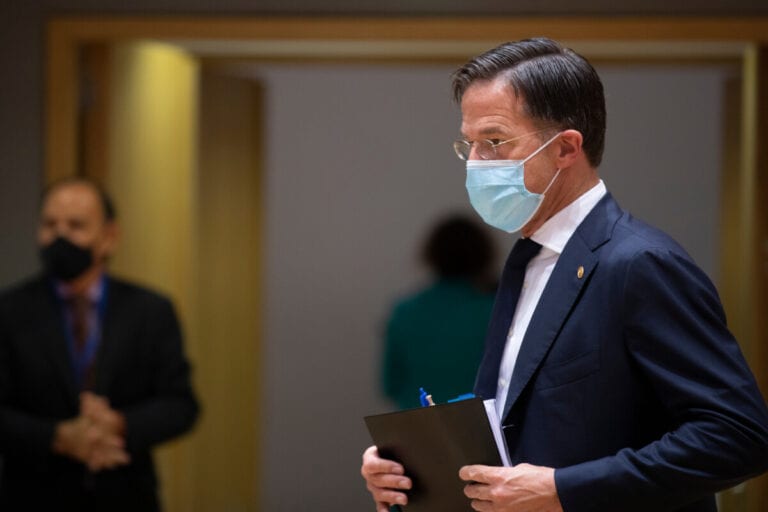
This week, all 17 party leaders of the newly elected Dutch government met with the Minister of Interior Relations, Kajsa Ollongren, to discuss the new formation of the Dutch cabinet. Today, Ollongren tested positive for coronavirus.
The task of organising the layout of the new Dutch coalition is no small one, especially when there are 17 separate parties involved.
Minister Ollongren from D66, along with Jorritsma from the VVD, had been given the job of “scout”, meaning that she was involved in the process of determining what the new Dutch cabinet will look like.
In order to do this, Ollongren and Jorritsma met with all 17 party leaders — in person — for discussions throughout the past week. She was also present at the Council of Ministers last Friday.
Coronavirus regulations followed but still a risk
There had been some discussion as to whether the talks should be carried out in person, especially once the Outgoing State Secretary of Economic Affairs, Mona Keijzer, tested positive for coronavirus last week.
Minister for Health, Hugo de Jonge, was also asked to remain at home for a few days after voting last week. The public have expressed annoyance at the cabinet’s continued insistence to not work remotely themselves.
However, the decision was made to lead the coalition talks in person. While the meetings had been held in accordance with coronavirus regulations, concern remains as the meetings were held behind closed doors for more than 15 minutes.
Dutch minister and 'coalition scout' Ollongren tested postive for corona. This is after meeting up in person with virtually all of Dutch political leadership and after numerous calls from outsiders to move their meetings online and WFH. I guess it's "do as we say, not as we do"
Political reporter, Fons Lambie, tells RTL Nieuws that all party leaders are at risk. “They have been in the same room for more than fifteen minutes. Although at a distance and in compliance with the corona rules, all the party leaders and half the cabinet have been near her.”
Misschien dat na het positief testen van 3 kabinetsleden (van wie Ollongren de afgelopen dagen alle fractieleiders heeft ontvangen) het in Den Haag ook doordringt dat Zoom vergaderingen een mogelijkheid zijn?
It is not known where Ollongren contracted COVID-19. However, Prime Minister Rutte has had yet another lucky escape, according to RTL Nieuws, he has since tested negative for the virus.
The talks have now been delayed as a new “scout” must be found to replace Ollongren while she is gone for at least the next 10 days.
What are your thoughts on this outbreak? Tell us in the comments below!
Tilburg can get past most people’s radar because…well, I don’t know. I’ve been there, and it is a positively charming city. It isn’t typically Dutch, but that doesn’t mean it’s not worth a visit! Have you seen Its nature and luscious green scenery? No? Allow us to introduce you!
The city of Tilburg has a lot to offer in terms of culture, art and music, but it is also one of the greenest cities in the Netherlands. You can explore and hike through its breathtaking nature, and just take the time to get connected with the world around you again.
Coronavirus update: Due to the current coronavirus restrictions, festivals, museums and Cafés are currently not going ahead/open. However, we thought we’d share some this article’s great hiking spots for a socially distanced walk!
Abdij de Koningshoeven
Let’s start with one of the most beautifully located areas which has some old and grand buildings and — more importantly — serves you some of the best beer of the world.
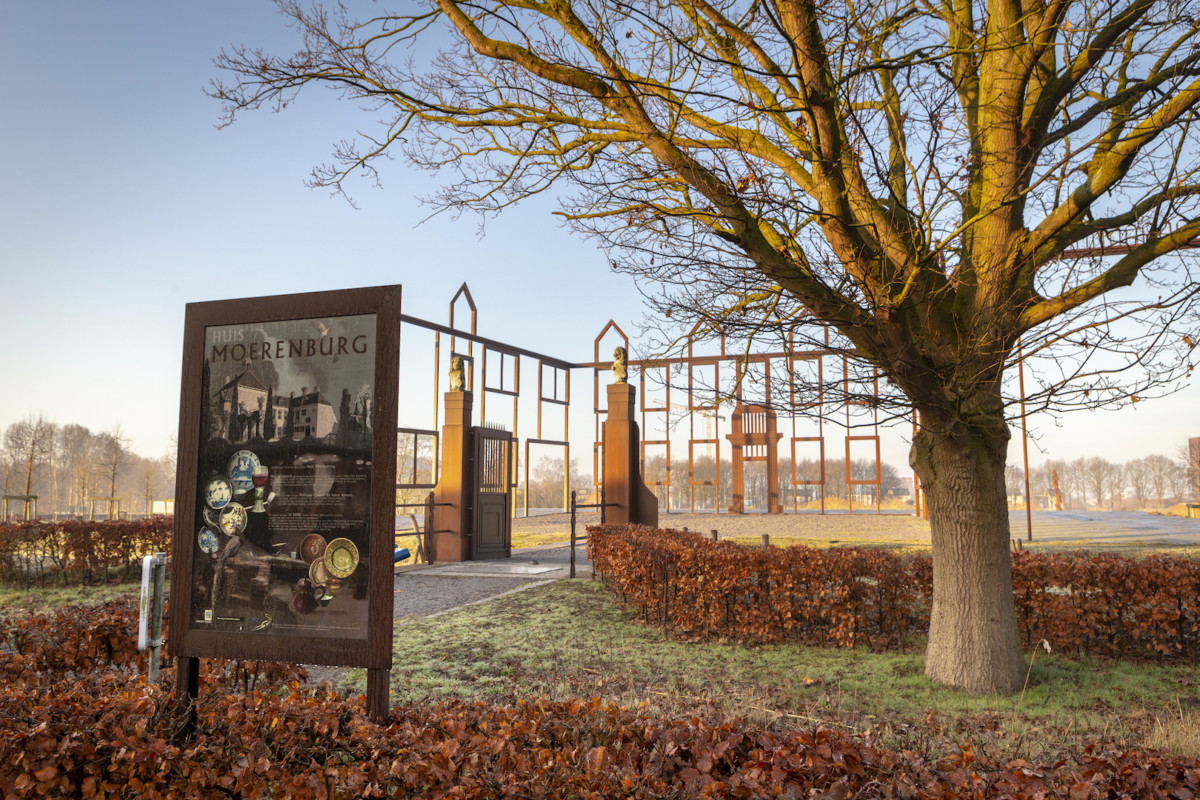
This monastery is located inside of the Moerenburg — Koningshoeven Landscape Park and is a must for any La Trappe Trappist beer lover. This was built in the late 19th century by trappist monks, and has a really interesting history.
At the end of the 19th century, a small group of Trappist monks fled from France to Berkel-Enschot. Here they found a piece of heather with a few hooves and a sheepfold. They embraced this former country residence of King William II — the royal hooves — as their new home. This was the start of the beer brewery. The beginning of a life full of prayer, work in peace and quiet (and beer, the good stuff.)
They have a tasting room where you can enjoy a delicious lunch or dinner, and then you can start your brewery tour. Did you know it takes between 6-7 weeks to brew beer? You can see how it is brewed on the tour!
They have tours starting at 2pm from Monday to Friday. On weekends and public holidays, they have tours at 1:30 pm and 3:30 pm. For the English tours, you can register and go on the tour on Tuesday and Thursday at noon, or Saturday at 11:30 am.
Even better might be the La Trappe cycling route, which combines cycling, epic surroundings and drinking beer all in one journey that you’ll never forget (well, unless you overdo it on the beers). Check it out right here!
Beer, great nature, epic history — all in all going for a daytrip to the Koningshoeven Abbey is great thing to do.
Located in the East outside of Tilburg, this nature park is perfect for anyone who is looking to enjoy a day with the environment, go boating, or to just walk through the thick forests.
It serves as the “Gate of the Green Forest” or as a gate to Het Groene Woud, a special forest area in the country. It has multiple nature reserves and tons of things to do, including a walking tour which takes you from the city to the Moerenburg area and back.
Nothing like a frosty morning walk! Image: www.tickettotilburg.com
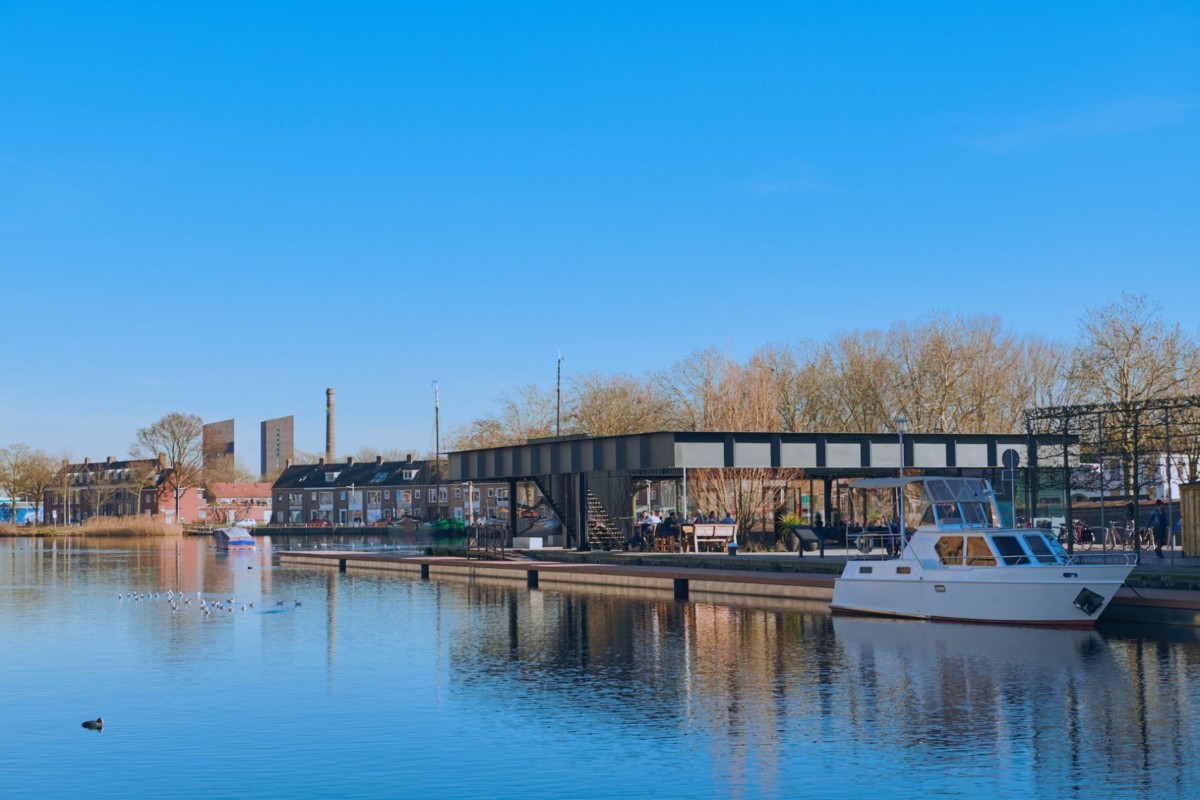
Just got to Tilburg, and your plan to get around the city is by foot? No worries — Piushaven can be easily reached by foot, located right in Tilburg city. You will have a lot of places to choose from to eat, and drink.
It is right next to the water, and even has a “living stage” for different events for art and culture! Check out the Ticket to Tilburg section to find out what’s happening in the Piushaven and what to do there.
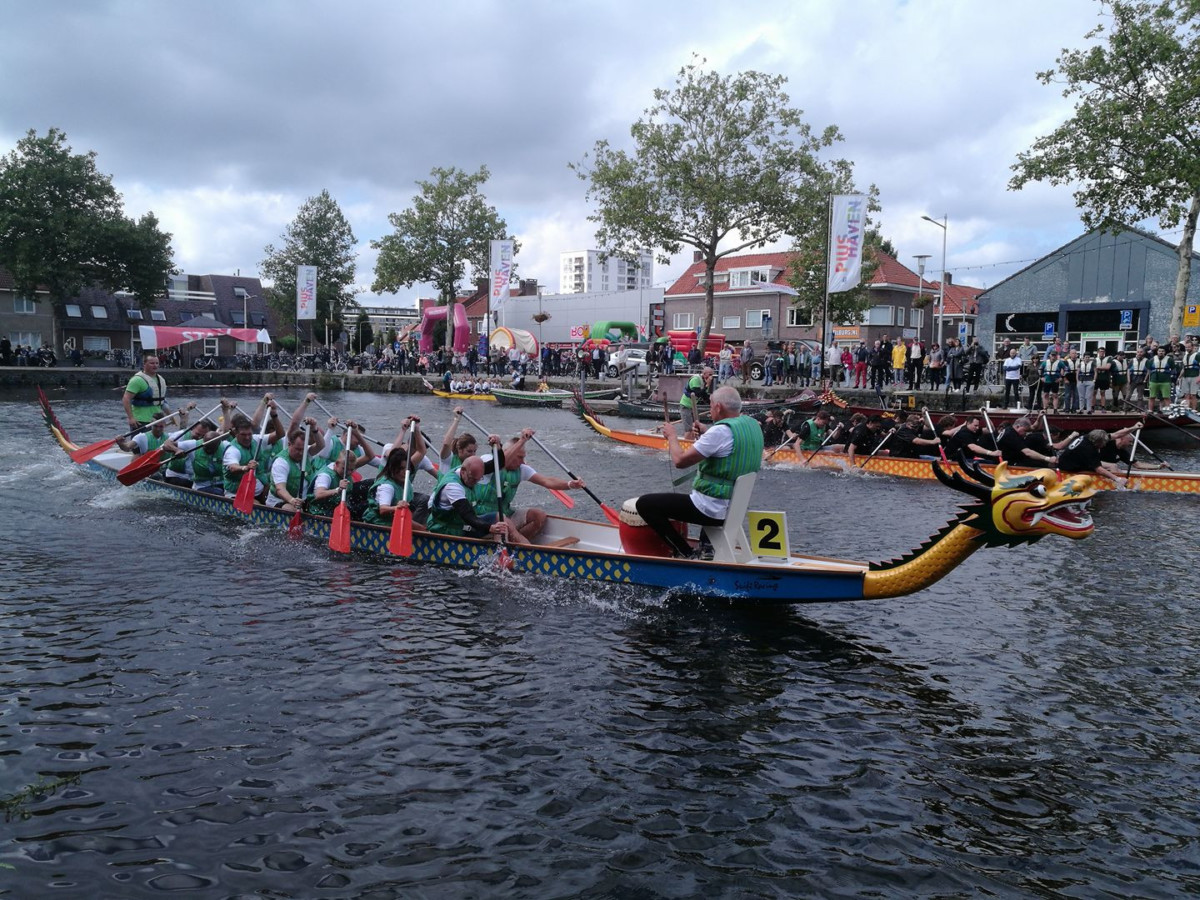
But that’s not all! Piushaven also plays host to the Drakenboot Festival. Teams compete with each other on boats, and it is spectacle to not just participate but also watch as they try win! It happens every year on September the 8th, so don’t miss it!
Everyone loves a good dragon boat race. Image: www.tickettotilburg.com
Stadsbos 013
This one is a local favourite! The municipality of Tilburg has worked together with local residents, entrepreneurs and nature enthusiasts. It is just outside the city, but is still within cycling distance. You can go there to enjoy in peace, play some sports, and enjoy the serene nature. It is as big as 7 football fields, bringing you a plethora of flora and fauna to explore and enjoy. This park is a delight for everyone!
This one really makes for amazing picturesque strolls or bike rides, and it is right in between the centre of Tilburg and Reeshof. They have many hiking trails, and places with picnic benches. Doesn’t it sound like the ideal place to take your family, friends or just about anyone to enjoy a nice picnic by the waterside, and get that quality time you need with them?
So serene! Image: www.tickettotilburg.com
This place even has a petting zoo for the kids. Or you could even go there alone, because getting lost in nature is the perfect way to reconnect with yourself!
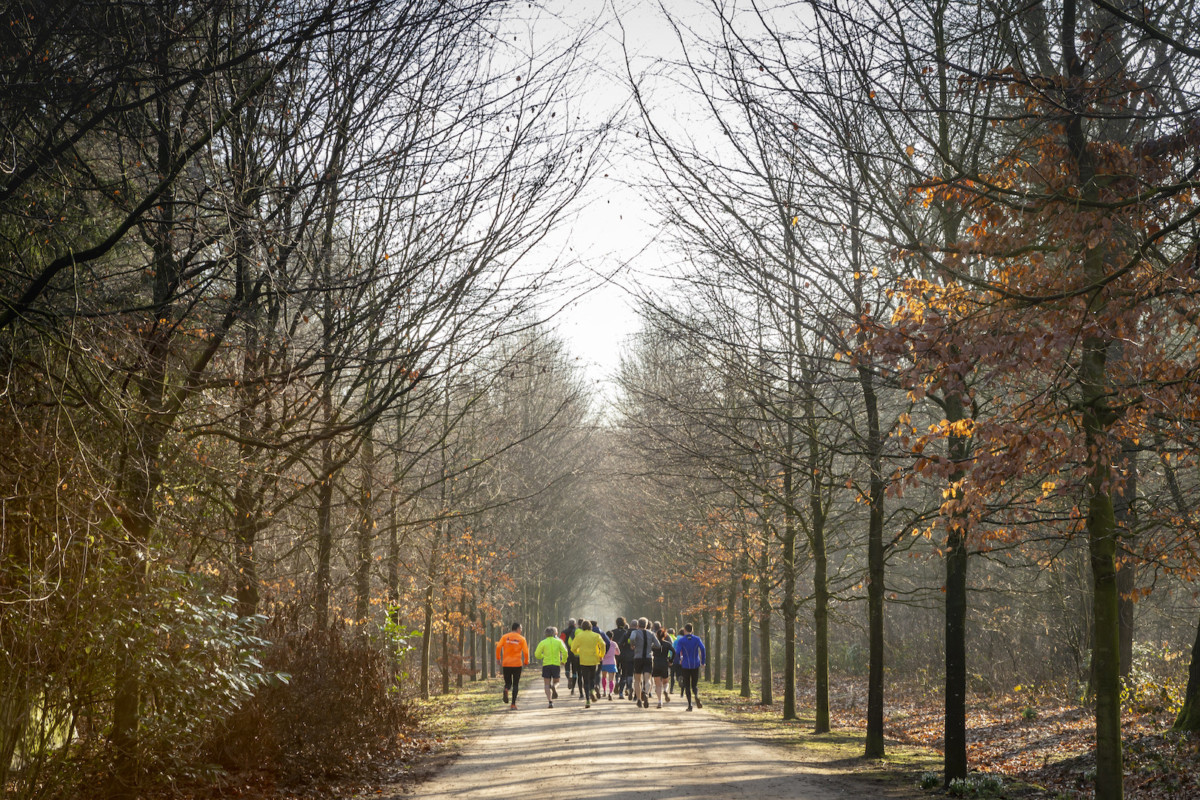
This one is one for the photography books! The paths within this park are shaped like a star, with each one taking you to different corners. All you have to do is pick one, and you seriously cannot go wrong. As soon as you reach the end of one road, start making your way to the middle, where you’ll find a nice little clearing with a cafe.
The perfect place for a morning jog. Image: www.tickettotilburg.com
The park is also featured in our video about Tilburg, which you’ve probably seen before because of the epic drone shots of Tilburg’s beautiful nature surroundings:
Enjoy open-air festivals? Then visit this park for their events like Back 2 the 90’s and Parkbeats. Grab a beer, or a picnic basket, your nearest mate and head over here even if they don’t have anything happening! You guys are in for a wonderful time nonetheless. Come rain, snow or sunshine, this park is ideal for a walk or a bike ride.
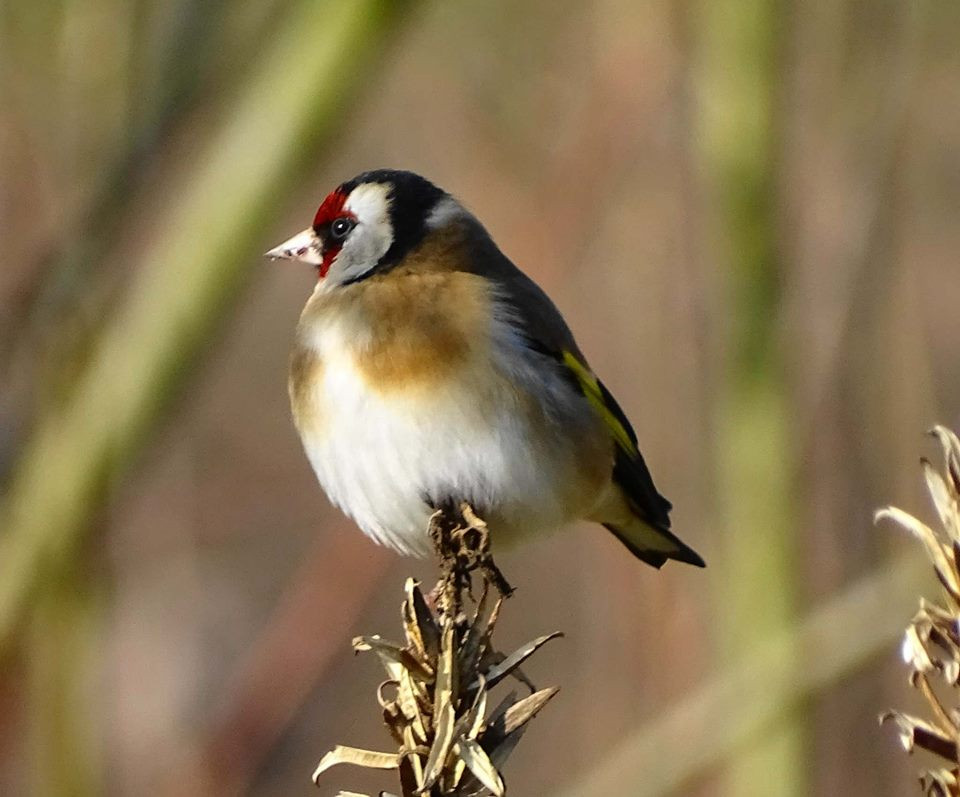
Birb. Image: www.tickettotilburg.com
National Park Loonse en Drunense Duien
Tilburg is one of the greenest cities but they still have sand dunes! What?! Yes, I know! It was formed nearly 10,000 years ago, covering 30 square kilometers, and is home to many different species of plants and animals.
You can visit these dunes any day, and tour through them with guides. Don’t feel like walking? Take your mountain bike, and use their GPS tours, bridle paths or bike trails and hop (ride) to it!
Safaripark Beekse Bergen
Did you know that Tilburg is also where the largest wildlife zoo in the Benelux is located? The Safaripark Beekse Bergen is a safari-themed park where you can go through it either by boat, bus or your own car.
For the more adventurous people, you can even go by foot. It is open all year round. So visit the elephants, rhinos, lions, leopards and buffalos, and see how they’re liking the Dutch weather!
So, we know that spending a day in the park or with nature is not always possible, because let’s face it: we’re still in the Netherlands. But if you still want some nature, and wouldn’t mind a bit of humour, some general knowledge, and a whole lotta fun, go to the Natuurmuseum in Tilburg! (Or go to the other museums there, or visit the new LocHal!)
Apart from being a perfect way to spend the day indoors with your family, the museum is also home to the exhibition called the Comedy Wildlife Awards! Does your morning routine consist of scrolling through 9gag, Instagram, or Facebook looking for funny cat videos, or cute little doggos doing their doggo thing? There are so many more (hilarious) animals to laugh at!
This exhibition is an attempt at bringing attention to conservation of nature and wildlife, with a little bit of humour to brighten your day.
D’awww. look at that cutie. Image: www.tickettotilburg.com
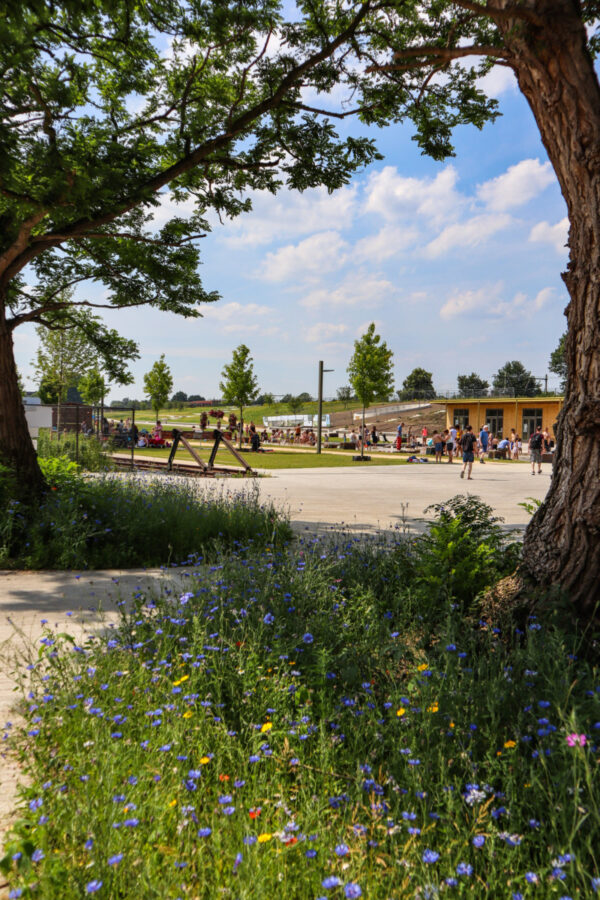
This one deserves a special mention because the Spoorpark is one of the largest citizens’ initiatives in the Netherlands. The municipality has built and designed this park based on 80 ideas submitted to them by the citizens! They have a campsite, outdoor sports area, 35m high lookout tower, and so much more.
As you can see, if nature is your thing then Tilburg is your town. If nature isn’t your thing but culture is, well we’ve just got that perfect article on culture in Tilburg for you. More into eating, drinking and partying? Say no more…
We’ve worked together with Ticket to Tilburg on bringing you this article, check out their site for more good stuff on Tilburg! The city of Tilburg also has a wicked insta-account, a Facebook-page and a Twitter-account to keep you up to date!
Have I convinced you to go to Tilburg yet? Let us know in the comments or tag @dutchreview on Instagram when you do go and take those amazing pictures!
Feature Image: Evelien Oerlemans/merktilburg.nl Editor’s Note: This article was originally published in March 2019, and was fully updated for your reading pleasure in March 2021.
If you’ve gotten used to having four seats to yourself on the train, be prepared for that to change soon. Travellers on the NS trains will have to sit beside each other once again, warns the railway company.
Over the past few weeks, the Dutch state-owned railway company NS has been receiving several hundreds of complaints from travellers about the trains being overcrowded, reports Trouw.
This didn’t go unnoticed by the Netherlands’ Outbreak Management Team (OMT), who called the situation “undesirable”. But is the railway company at fault?
Coronavirus protocol for public transport
The NS simply follows a protocol that was drawn up last year in cooperation with the OMT and the RIVM, according to which all seats can theoretically be occupied.
The protocol was agreed on after it became obvious that keeping a 1.5-meter distance won’t be possible on public transport. This is also why wearing a face mask became mandatory on trains.
@NS_online extreem drukke trein , melden in app lukt niet , betreft sprinter 08.43 vanaf Almere Parkwijk naar Hoofddorp pic.twitter.com/akXBuUW6J6
— Ina Hartgers #IkStemNida #IslamIsMe (@hartig55) March 19, 2021
However, now people have gotten used to not only face masks, but also having two to four seats to themselves. If the number of travellers increases, people will have to sit next to each other again, warns the NS board member, Tjalling Smit.
“In the past, travellers complained when the train was 90% full. Now they are already doing that at 40%,” he adds.
Increasing capacity not possible
While some have been crying for longer trains, there is not really much room for expanding the train capacity, says NS.
Right now, there are only 10% fewer trains than in normal circumstances, and on average, they are also about 10% shorter. Last year, about 580,000 people per day took the train. In 2019, the number was 1.3 million.
How do you feel about the situation on the trains? Let us know in the comments below!
Dutch Prime Minister Mark Rutte may have said no travelling till May, but there is a loophole — if you’re part of a scientific study. In April, holidaymakers from the Netherlands will go on a test trip to a resort in Rhodes, Greece.
These 189 lucky tourists will be flown out for an eight-day all-inclusive holiday, according toRTL Nieuws. It seems that aftertest festivals andfootball games have been allowed, the tourism industry wanted to get in on the action.
The aim of this experiment is to see whether holidays can go ahead safely in the future. Holidaymakers can sign up from today to fly out on April 12.
What’s the catch?
Before you start thinking this sounds too good to be true, or like a prize from a game show, you should know there are some conditions to this heavenly holiday. Participants must pay for their stay and are not allowed to leave the resort while on holiday. Of course, there are worse places to be in lockdown right?
Participants will have to be tested forcoronavirus before and after they travel to the resort and will have to complete ten days of quarantine when they get back to the Netherlands. The cost of the quick tests will be covered by the travel company. The trip can also be cancelled by the RIVM at any point if it’s deemed unsafe.
General travel warning
If you were hoping to go on holiday anywhere else this spring, bad news: inlast night’s press conference, Rutte advised travellers to stay put until at least May 15.
The Dutch cabinet is making an expectation for these trials so it can assess the safety of travelling in the future. An independent agency will assess the findings of this experiment, which will help the government provide accurate travel advice for the summer holidays.
What do you think of a test holiday? Would you jump at the chance? Let us know in the comments!
The famous Keukenhof — a place to see enchanting tulip fields with spectacular colours — is forced to keep its doors closed for the second year in a row.
The park was prepared to open its doors to the public on April 1. However, with the current coronavirus regulations, this is no longer possible.
With the flowers already in full bloom, this is a huge disappointment not only for visitors but also for all the employees and partners who have been working on the preparations for this year’s opening.
Huge losses for Keukenhof
Seven million tulip bulbs were planted last autumn in the hopes that visitors would get to enjoy them in the spring of 2021. Even though the long-term viability of the park won’t be impacted, the fact that Keukenhof cannot open its doors to visitors will have major financial consequences.
The park is usually open for about eight weeks, and needs between 750,000 to 800,000 visitors to break even. This year’s closure will result in a loss of 22 million euros for the region, according to NU.nl.
“It is incomprehensible that you can walk in every park in the Netherlands, but not in Keukenhof,” said director of Keukenhof, Bart Siemerink.
Virtual doors remain open
While the “physical” doors of Keukenhof have to remain shut this year, you can still enjoy a 360 degree virtual tour of the park. Thanks to the filmmaker Wiebe de Jager, you can also indulge in the spectacular colours of Keukenhof at sunrise, while enjoying music by the violinist Rosanne Philippens.
Have you checked out Keukenhof’s virtual tour? What did you think? Tell us in the comments below!
Rutte and De Jonge have taken to the podium once again to update the Netherlands on the current coronavirus measures. After a week of leaks, here’s what they had to say.
This past week has seen information continuously leaked to the press. First, there were the whispers that measures will not be relaxed at the end of March, then came the rumours that the current negative advice against travel has been extended and, finally, the claim that curfew will be pushed back to 10PM.
Rutte and De Jonge have clarified the Netherlands current coronavirus restrictions. So, what will change and what will remain?
Measures will be extended until April 20
As was expected, coronavirus measures will be extended for a further three weeks until April 20. Rutte explained that the R number and rate of hospitalisation across the Netherlands are not low enough to justify any relaxation of current measures.
Rutte pointed out that he understands it is bad news, and the cabinet continue to look for relaxations where possible — but for now, nothing changes.
The prime minister also pointed out that the Netherlands is not alone in extending its measures, France and Germany are even tightening restrictions.
Curfew — pushed back an hour
However, one slight relaxation will be allowed. Rutte announced that “because of the contamination figures, no measures can be relaxed, except for the curfew, which we postpone for an hour.”
The “avondklok” will now be pushed back an hour and begin at 10PM. This is for a number of reasons.
Firstly, Daylight Savings Time will come into effect this Sunday night, meaning that the clocks will go back and evenings will be longer. This would make it more difficult to enforce an early curfew in the Netherlands, the Security Council believes.
However, there are also other factors at play in this decision. For example, Ramadan will begin in mid-April, which would be complicated by a 9PM curfew.
No sitting out on the terraces this Easter
While Rutte and De Jonge had expressed a hope to see the R rate drop enough for people to enjoy the terraces this Easter, this will no longer be the case.
The current restrictions will be extended until at least April 20 meaning that terraces may not open up for the Easter holidays.
The Dutch cabinet is not satisfied with the number of coronavirus infections in the Netherlands. This week saw 46,005 new cases with 1,441 hospital admissions.
However, Rutte claimed that if numbers do start to go down, measures may be relaxed — that being said, he also pointed out that if numbers continue to get worse, stricter measures may be brought in.
De Jonge: four million jabs by mid-April
Minister for Health, Hugo De Jonge, offered a quick update on the Netherlands’ vaccine strategy.
All going well, the country should see four million jabs given by mid-April and five million by May. These will be given for over 70’s.
By mid-May there is a possibility that over 60’s will start to receive their vaccines with those in the 40-30 age category receiving jabs in June. The Dutch government still aims to have all adults vaccinated by July 1.
Return to higher education a possibility
There is some hope for students of higher education, however. De Jonge claimed that it may be possible for students to return to in-person higher education once per week from April 26.
However, in order to do this, students must have access to rapid tests.
What are your thoughts on the Netherlands’ approach to coronavirus? Tell us your thoughts in the comments below!
The RIVM has released its weekly coronavirus figures for the period of March 17 to March 23. The number of infections has risen again compared to the previous week.
Over the past week, the RIVM reported 46,005 new infections in the Netherlands. This is an increase compared to the previous week’s number of 39,527 new infections. The percentage of positive tests went up to 8.1% compared to 7.6% last week.
Deaths
The number of patients who have died from COVID-19-related complications has also gone up. This week 223 people passed away, compared to 204 people the previous week.
Hospitalisations
Similarly, hospitalisations, as well as the number of admissions to the ICU have both increased. The past week saw 1,441 new admissions to the nursing ward and 313 new patients in the ICU. The week before, there were 1,327 and 274 respectively.
The Dutch government remains concerned as hospitals are close to overflowing. Code black was on the cards last week for the province of North Holland.
The decision to move the curfew is supported by the National Security Council of Mayors. With the clock jumping back an hour for Daylight Savings Time and the sun slowly creeping back to the Netherlands, the measure would become increasingly difficult to enforce.
AstraZeneca vaccines resumed
The Dutch Ministry of Health, Welfare and Sport decided to resume AstraZeneca vaccines in the Netherlands. The decision came after the European Medical Agency (EMA) found that the chances of serious side effects are very small.
The rollout of the vaccine had been previously paused in the country due to concerns over the increased risk of blood clots.
Negative travel advice to be extended
The Dutch government is planning to extend the negative travel advice until May 15. Up until that date, residents of the Netherlands are strongly advised not to leave the country unless absolutely necessary.
At the March 8 press conference, the prime minister had hoped to introduce separate travel advice for the May holiday.
The weather in the Netherlands is not the only thing that feels gloomy right now. The country is currently more than three months into its third lockdown with the end nowhere in sight.
The government consulted the OMT on Friday, discussing possible relaxations for higher education, terraces, gyms, and the curfew. However, the conclusion of the team was clear: relaxation at this stage isn’t a good idea.
“The R-value is 1.13, we are still at more than 100,000 infectious people and the hospital admissions are increasing. Those are three signs that point in the wrong direction,” says the microbiologist and member of the OMT, Marc Bonten.
Both the current Prime Minister, Mark Rutte, as well as the leader of D66, Sigrid Kaag, have been hoping to take into account factors other than just healthcare when considering coronavirus restrictions.
However, their hopes were swiftly crushed by the director of RIVM, Jaap van Dissel. We are still in a “serious epidemiological situation” and the pressure on the healthcare system could become too great, he warns. For now, the cabinet is at least considering moving the curfew to 10 PM instead of 9 PM.
Two more months of lockdown
The OMT expects serious relaxation only to be possible in about eight to ten weeks. This should coincide with vulnerable groups of the population receiving the first dose of the vaccine. According to Bonten, we won’t start to see the real effects of vaccination until the end of May.
Dutch nurses, unvaccinated. Doctors, unvaccinated. People over 70, unvaccinated. People with vulnerable health, unvaccinated.
It still matters. And it’s still a grotesque state failure. https://t.co/dfYZ7LfOQZ
Some critics have pointed out that opening terraces under strict conditions may actually be safer than the large groups of people who are currently gathering in public spaces. But the OMT believes that any relaxation will bring more infections.
Bleak outlook
The Prime Minister, Mark Rutte, will announce the measures effective after March 31 in a press conference tonight. Despite the currently bleak outlook, he expects a “completely different situation” in two months.
The government will continue to assess the possibility of smaller relaxations over the course of the coming weeks.
How do you feel about potentially being in lockdown for another two months? Let us know in the comments below!
According to insider sources, the Dutch cabinet is likely to push back the curfew to 10 PM. The Security Council of mayors in Utrecht support this measure, especially with the clocks going back this weekend.
Outgoing Minister of Justice, Ferdinand Grapperhaus, told the NOS that pushing back the curfew is a “very understandable and substantiated suggestion.” Maybe you will be able to go for that post-dinner walk again.
Clocks go back
This Sunday, the clocks will go back by an hour for Daylight Savings Time meaning we will have longer evenings. The Security council points out that this and the weather brightening up will make it harder to enforce an earlier curfew.
Other factors, such as Ramadan starting in mid-April, make it difficult to see an early curfew being effective.
Is curfew helping to fight the virus?
Chairman of the Security Council, Herbertus Bruls, has questioned whether the curfew is still an effective measure against coronavirus. Other members of the council have suggested that politicians should look at more than infection rates and hospital numbers when deciding measures, according to the NOS.
Any changes to coronavirus measures will be announced by Rutte and De Jonge in the press conference at 7 PM tonight.
What do you think about the current measures? Let us know in the comments below.