If you were hoping for a nice little escape abroad during the coming spring months, this will be disappointing news for you.
The Dutch government is planning to extend the current negative travel advice until May 15. This means that for the upcoming May holiday, the advice will be to stay in the Netherlands, sources from The Hague claim.
The negative travel advice was originally in place until mid-April, but was most likely going to be extended by two weeks anyway, reports RTL Nieuws.
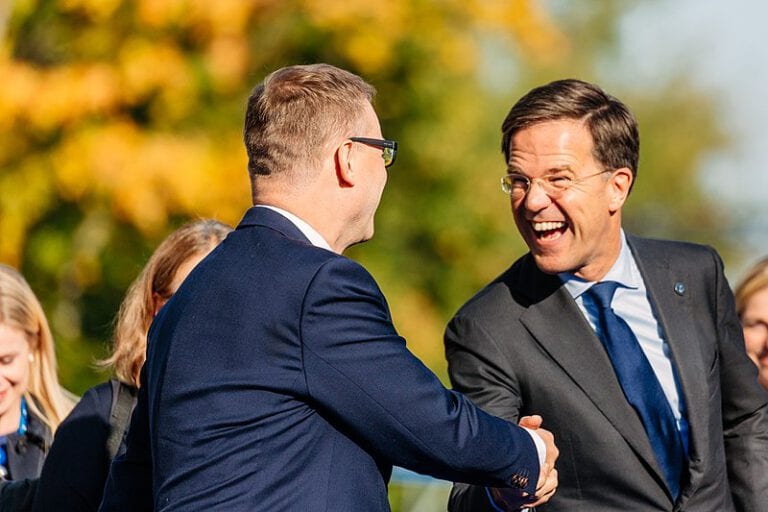
There had been some hope that the May holiday would see a relaxation of the current travel restrictions. At the March 8 press conference the (then) outgoing prime minister, Mark Rutte, had promised to introduce separate travel advice for the May holiday.
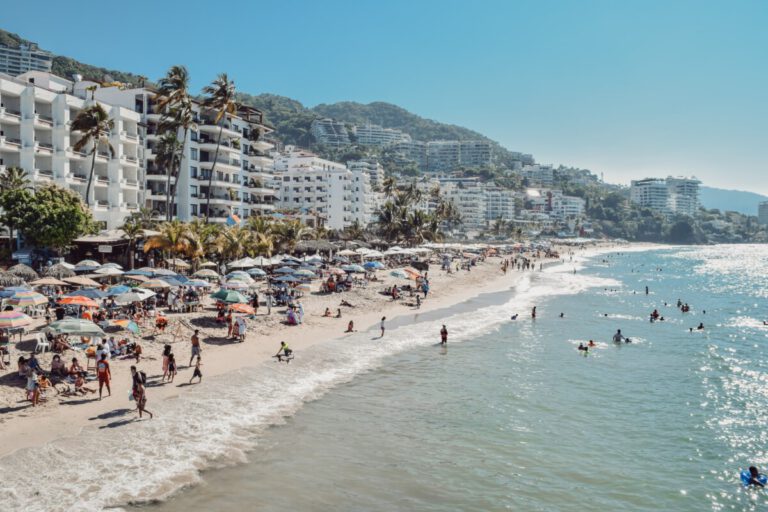
It looks like the Netherlands could be in for some dazzling sunshine in the last week of March, at the end of what feels like a cold and cloudy month in the country.
This week will still be cloudy but will warm up a little, reaching double digits tomorrow, meteorologist Nicolien Kroon told RTL Nieuws. There might even be some sunny weather on the cards.
Mid teens at the end of the week
Say goodbye to that bitter wintery chill. Tomorrow will be a temperate 11 degrees in most parts of the country, and the mercury will jump to dizzying highs (we wish) of 13 degrees on Friday.
There will however be a slight dip on Saturday, the temperature dropping back to 10 degrees, but Sunday still promises to bring us a milder end to the month.
A sunny start to April?
If you are a sun worshipper, never fear. Kroon says it could hit a whopping 20 degrees next Wednesday in the southeast of the Netherlands. “Spring weather seems to be coming” she adds, so it looks like we might have to brace for those April showers. But you don’t see us complaining — we’ll take a little sun any day! 😉
Are you itching to get out in the sun? Let us know in the comments below!
Maybe it’s all the stroopwafel, but the Dutch seem like a happy bunch. It could be the fact that the Dutch live a long life, or maybe it’s the healthy sex drive — whatever the cause may be, the Netherlands has been ranked the fifth happiest country in the world!
At least that’s where it stands according to the World Happiness Report 2021 who teamed up with Gallup to perform a worldwide survey. They asked people in 149 countries to rate their happiness. Finland pinched top place, for the fourth time running, followed by Denmark, Iceland, and Switzerland respectively.
How was it measured?
No, it wasn’t based on how much haring is consumed, otherwise, we know we would come out on top. The World Happiness Report based its rankings on things such as Gross Domestic Product (GDP), the population’s access to social support, individual freedoms, and the public’s perception of corruption.
Impact of coronavirus
Unsurprisingly, the wake of the coronavirus pandemic has affected the results of the report. Gallup says that the report “sheds considerable light on the effect that the pandemic had on people’s subjective wellbeing and on humanity as a whole.”
Despite the stress brought on by a global pandemic, figures show that some nations are experiencing less anxiety. The report shows that the Netherlands, as well as France and Denmark, shows a decrease in the percentage of people experiencing anxiety since Spring 2020. The increased use of cannabis during lockdown probably explains why the Dutch are more mellow. 😉
The top 10 happiest countries
Want to see who our competition is? Here are the top ten happiest countries according to the report:
1. Finland
2. Denmark
3. Iceland
4. Switzerland
5. the Netherlands
6. Sweden
7. Germany
8. Norway
9. New Zealand
10. Austria
Which countries did expect to see on the list? Let us know in the comments!
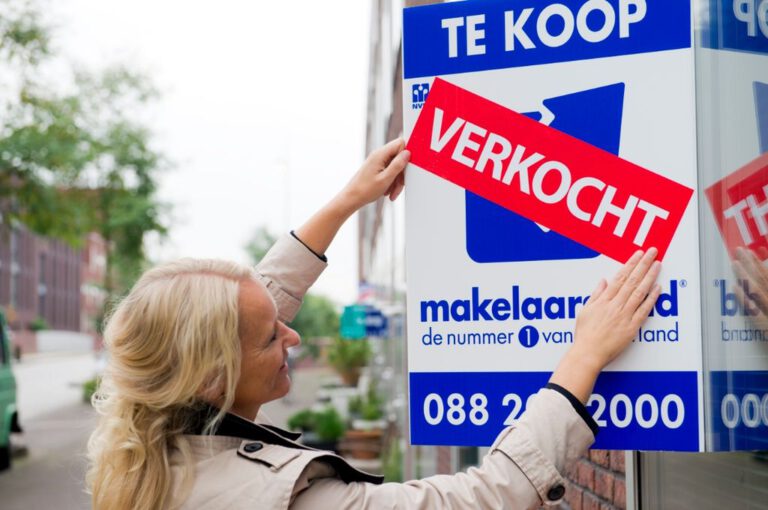
If you moved to the Netherlands with just a suitcase and a dream of owning a classic Dutch home precariously perched on the canal, bad news: Dutch house prices are continuing to skyrocket.
We wish we were exaggerating, but that stats don’t lie: on average, an owner-occupied home bought in February last year was 10.4% more expensive just 12 months later.
If you’re not one for percentages, let’s put that into perspective: if a home was €300,000 in February 2020, that exact same home now costs over €330,000, based on last month’s figures. Um, ouch.
The jump is the highest rise in almost 20 years, according to numbers from the CBS and Land Registry. Housing prices last decreased eight years ago, with a steady upward trend since 2013.
Wait — the housing market was meant to dip during corona, right?
It’s true that at the start of the pandemic there were thoughts that the Dutch housing market could drop, resulting in more affordable housing for those in the market.
However, one year on and this is not the case — and isn’t likely to be anytime soon. In fact, the pandemic may have caused a rise in housing prices, CBS chief economist Peter Hein van Mulligen told ANP. It turns out that people have a lot more money jangling in their pockets when they can’t go on holiday or out to dinner.
To add fuel to the fire, mortgage interest rates remain low and the Dutch housing crisis continues. This is resulting in bidding wars for the few houses that are for sale, forcing starters (young adults who haven’t owned a house before) out of the market.
Are you trying to buy a house? Tell us your experience in the comments below!
Two weeks ago, Prime Minister, Mark Rutte and Minister for Health, Hugo De Jonge, announced in a press conference that they hoped to relax coronavirus measures by the beginning of April. Sources from The Hague are now claiming this will not happen.
Ministers met today at the Catshuis to discuss whether or not coronavirus measures should be relaxed. Rutte and De Jonge had previously hoped terraces may open up once again and students may return to lectures on a part-time basis. However, these relaxations will not go ahead, sources from The Hague are claiming.
According to the sources, the cabinet believes that coronavirus infections in the Netherlands are not reducing enough to justify the further relaxation of the current measures, the NOS reports.
As of 10AM this morning, the RIVM reported more than 7,000 coronavirus infections across the Netherlands in the past 24 hours.
No relaxation but also no tightening
Recently, the Outbreak Management Team (OMT) voiced concern over the Prime Minister’s hopes to relax measures. Rutte has previously listened to the OMT’s advice.
On Tuesday, the cabinet will consult with the Ministerial Committee for COVID-19 (MCC) before giving a press conference.
However, according to the sources, while the current measures — including the curfew — will remain, it is expected that there will also be no further tightening of coronavirus restrictions.
What are your thoughts on the relaxation of measures after March 31? Tell us in the comments below!
After a year of multiple lockdowns in the Netherlands, the feeling of being at a large music festival or a dance party seems almost impossible to recollect. However, we may be able to enjoy some fun outings once again.
Organizers of events such as concerts, festivals, sports competitions, and congresses can start planning their events for after July 1, according to an announcement made by the outgoing cabinet.
The decision was encouraged by the positive results the Netherlands has had with trial festivals and football matches over the course of this spring, reports the NOS.
Subsidy in case of cancellations
The cancellations of 2020 took a toll on various businesses — events organizers included. However, if the events planned after July 1 have to be cancelled again due to coronavirus restrictions, the organizers are to receive 80% of the costs back as a subsidy from the government.
The remaining 20% would be paid out as a loan. The Dutch government has set aside 385 million euros for this purpose and the scheme will apply for events until December 31, 2021.
More freedom
“Not only the organizers, but also the public yearn for a concert, a festival, or a football match. Hopefully, we can all enjoy these again in the summer,” said the outgoing State Secretary for Economic Affairs and Climate Policy, Mona Keijzer.
While the cabinet expects that more relaxations will be possible in the summer, the situation still remains uncertain. For now, the assumption is that everyone above the age of 18 will have gotten their first vaccine jab by July.
How do you feel about the good news? What type of events have you been missing the most? Let us know in the comments below!
Dreaming of a getaway this summer? (We are!) A new plan could mean that those vaccinated against, recovered from, or tested negative for coronavirus could get the green light to explore.
The EU Commission yesterday presented their plans for a travel certificate that will be valid in all EU countries. The commission hopes that with these certificates, people within the EU will be able to travel this summer.
With the Digital Green Certificate, anyone within the EU who can prove that they are not at risk of spreading coronavirus may travel to a different EU country.
How can you get a green digital certificate?
According to the EU Commission, there are three ways that a person may receive a Digital Green Certificate.
1. Vaccination
If a person has been vaccinated with a vaccine that has been approved by the European Medical Agency (EMA), they will be eligible for the certificate.
2. Immunity
This is also the case if you have had coronavirus within the past six months as your body has likely built up immunity. However, you need to supply proof that you had the virus and that you are now fully recovered.
3. Negative test
The third way to obtain the green light for travel is by testing negative for coronavirus. The Commission has not yet been established how old a test result should be.
How does the digital green certificate work?
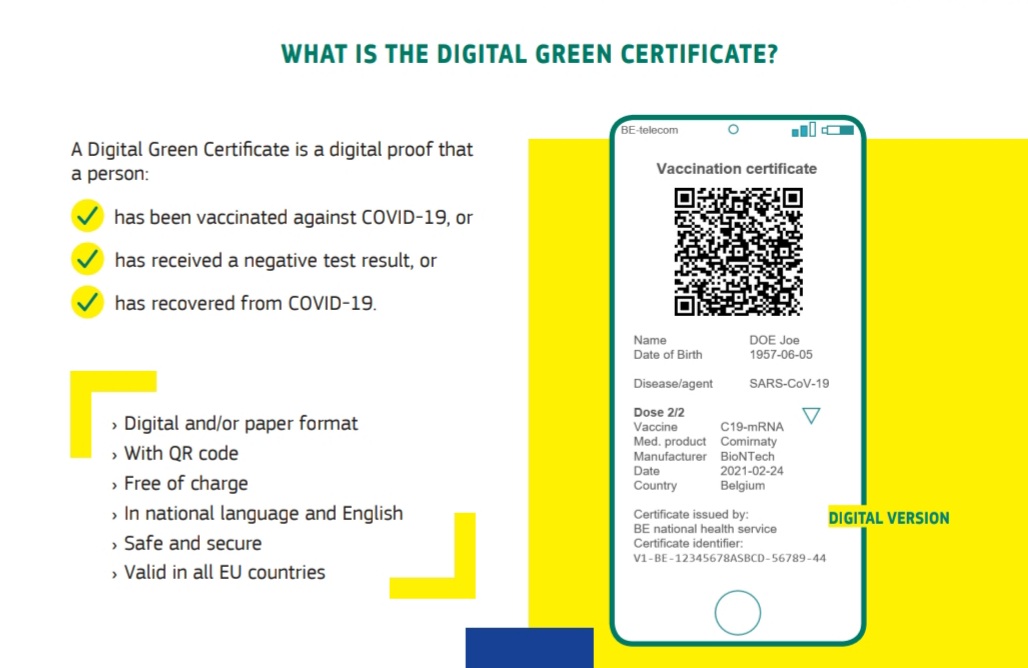
Once a person has proven that they are not at risk of spreading the virus, they can receive the digital green certificate. The certificate will be available on an EU-wide app however, people may also choose to print out their certificates.
The app will use a QR code. Image: European Commission Digital Green Certificate Fact Sheet.
The app will display a QR-code that will be used to check the authenticity of the certificate as well as some personal information and the reason why you do not pose a risk.
The rollout of the green digital certificate throughout the EU will present the EU with a huge logistical challenge. The app and certificate must be valid in all EU countries and all EU member states must agree on the same conditions.
A collective decision on these conditions is the next step in bringing the Commission’s proposal to fruition.
What are your thoughts on the digital green certificate? Let us know in the comments below!
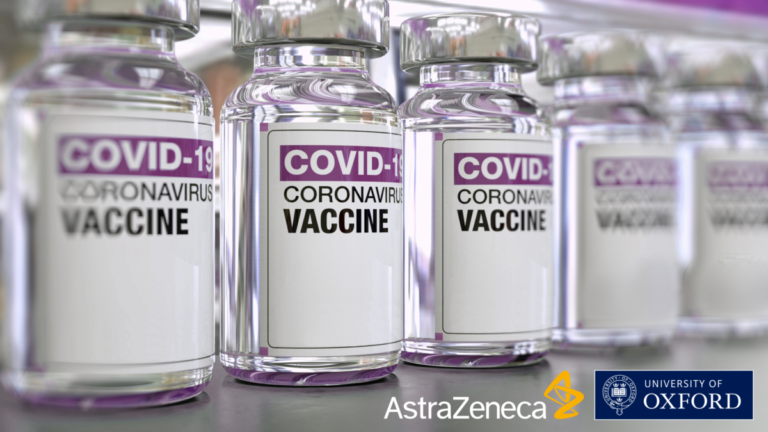
The rollout of the AstraZeneca vaccine was paused earlier this week but it looks like it won’t be a long break. Health Minister Hugo de Jonge has announced that vaccinations will be resumed next week.
This decision has been made after the European Medical Agency (EMA) did research into the safety of the coronavirus vaccine. It found that the chance of serious side effects, including those related to blood clots, was very small.
Recalled for the vaccine
Those who had their appointments cancelled this week will be the first to get vaccinated. GPs will start using the vaccine again on Monday, and the GGD will resume vaccinations on Wednesday, according to RTL Nieuws.
The Netherlands has ordered a total of 11.7 million doses of the vaccine. Each person who receives the AstraZeneca vaccine requires two doses to be fully vaccinated against coronavirus.
Why was it paused?
De Jonge made the decision to pause the vaccine earlier this week based on the advice of the Dutch Medicines Evaluation Board CBG due to the concerns over its link to blood clotting. Many other European countries also made the decision to halt the use of the AstraZeneca vaccine. As of next week, some other countries that chose to pause the use of the vaccine will also resume its rollout.
The director of the EMA, Emer Cooke, told RTL Nieuws “There is no evidence of a link between the seven rare complications and the vaccine, but there may be. It needs further investigation.”
Are you surprised at how quickly vaccinations will be resumed? Let us know in the comments!
Welcome to the day after the elections! We’ve got a staggering 17 parties set for the Dutch parliament and I can imagine you, the international reader, is still wondering what just happened?
Well, with nearly 90% of the election results in, Mark Rutte is still winning while the left is still losing — all while there’s a pandemic playing out. And with 17 parties in parliament, it’s quite a pickle to figure out what a new coalition government will look like; one now needs a degree in both political science and math to wrap their heads around the current political situation and possible coalitions.
So let’s help you international readers make sense of this multi-party system and the Dutch election results of 2021.
1. Mark Rutte wins — again
A whole generation of young people is growing up having only known Mark Rutte as the Prime Minister of the Netherlands. In the end; no botched handling of the corona-crisis or child-care allowance scandal was enough to deter people from voting for Rutte once again.
Other parties might say otherwise, but a big portion of the Dutch once again trust the upbeat, cycling-about Mark “Teflon” Rutte. In 2022, he will surpass Ruud Lubbers and become the longest-serving prime minister of the Netherlands.
Dutch prime minister expresses outrage when journalist comments he’s cycling an electric bike pic.twitter.com/GL6KDBcXyz
And if you ask me, he might just go for four more years in the 2025 elections. He likes the job and the Dutch like him on the job.
2. The left loses hard
The Netherlands isn’t a balanced political country. The (center)-right is always a bit bigger than the left. But this time around the three leftists parties: PvdA (labour — keeping up with their UK counterpart), GreenLeft and SP (socialists) all had thoroughly disappointing results.
Together these left parties are only gaining about 25 seats, way less than the nearly 30 seats the far-right parties get.
Apparently, the average Dutch voter didn’t care that much about affordable housing and the welfare state. These three parties now need to reinvent themselves once more and figure out how how to appeal to a broader audience, perhaps a merger is a way to go?
If you’re confused by this outcome, it’s probably good to know that you’re most likely in a bubble with young internationally-minded Dutch people who vote for leftists parties. Unfortunately for the young city crowd, a large part of the Netherlands isn’t really into those ideas.
In case anyone was wondering how the Dutch Labour Party is doing, these are their seats won out of 150 in parliament https://t.co/hvcbgORsDg
3. D66 and “potential” first female prime minister of the Netherlands Sigrid Kaag win big
Everybody expected Mark Rutte to win. But the polls were less clear about who would come in second. Would it be Wilders? Or perhaps the Christian Democratic CDA with the “presidential Hoekstra”? Or D66 with Sigrid Kaag, the slightly elitist but seasoned diplomat?
It looks like D66 will emerge with 24 seats today, these are three less than the whopping 27 of yesterday’s exit poll. Nonetheless, it’s a great result for the progressive liberal D66 and the result of a brilliant campaign that positioned Sigrid Kaag as the “fresh female alternative” for Mark Rutte.
One way or the other she will have a big say in the new coalition and will be eyeing to beat Rutte in four years.
4. There’s a record number of parties entering parliament
Sure sex is great, but have you ever properly felt the thrill of handling a Dutch ballot?
— Buffi Duberman, English Coach 💕 (@buffiduberman) March 16, 2021
Such a ballot brings with it a big batch of new political parties for parliament. As it stands now, there will be an impressive 17 (!) parties present in the Dutch parliament, there hasn’t been that much present since 1918. So who are the new kids on the block?
JA21
There’s JA21 — rightwing populists who separated themselves from Thierry Baudet’s conspiracy-ridden Forum for Democracy after accusations of antisemitism and racism ran rampant there. They’re set for four seats.
Volt
Then there’s Volt. Despite the overlap with D66 they managed to get a buzz going with the young and internationally-minded crowd and now the pan-European party get three seats.
Bij1
There’s Bij1 — standing to get one seat — with black activist frontwoman Sylvana Simons.
BBB
There’s the BBB which stands for the Farmer-Citizen-Movement and it looks like they’ll also get one seat.
5. We’ll have a new coalition — but likely not that much will change
So winners, losers and loads of newbies. What does this mean in the long-run for Dutch politics and eventually the Netherlands?
Well, a coalition needs to be formed — it will likely be one with at least the VVD, D66 and CDA. But at least one other party is needed in order to get a majority in the senate.
It’s also important to bear in mind that in the Netherlands the makeup of the senate is very different to that of parliament.
The government now needs to agree on four, perhaps five, parties who, in turn, will agree on what to do after the crisis ends. How will they tackle climate change, the growing inequality in society and the housing crisis?
The answer is likely not by following leftists social ideas, they didn’t get the confidence from the voters. At the same time, it will probably not be by following far right-wing populist ideas; Rutte and Kaag already excluded Wilders and Baudet from any possible coalition.
Right now on the radio a Leiden professor explaining how he outlined the composition of the Dutch parliament (15 parties) to a Korean audience. The only question he got was “How can we avoid this ever happening in our country?”.
The pressure is on this time since nobody will appreciate political games while the country endures a seemingly endless lockdown.
Looking into the future one can envision a coalition that isn’t wildly different from the coalition the Netherlands just had the past four years.
While perhaps the Netherlands is well off with a stable government run by happy-go-cycling Mark Rutte during the endgame of the pandemic, the general feeling in the country is that change is needed. Given the similarity between these election results and the last, whether that change will happen, is unlikely.
What do you think was the biggest takeaway from the Dutch election results of 2021? Are you happy with four more years for Mark Rutte?
People’s Party for Freedom and Democracy (VVD) and its leader and current Dutch prime minister, Mark Rutte, remains expected to snatch 35 seats in the House of Representatives.
The surprising second runner-up — Sigrid Kaag’s D66 (Democrats 66) — is expected to obtain 24 seats.These are great elections results for the progressive liberal party, but is now is three seats less than the trailblazing 27 seats yesterday’s IPSOS exit poll predicted.
Vote counting continues
This preliminary forecast comes from the election service of the ANP — Het Algemeen Nederlands Persbureau — and is based on 88.5% of the votes at 8:30 this morning. Amsterdam, Utrecht, and The Hague are included, whereas the vote counting is still ongoing in Rotterdam. There may still be some (marginal) changes further up the road.
The final distribution of seats has yet to be calculated, but it probably won’t differ much from what we’re seeing right now. The counting is going slower than in the previous 2017 election. This is mainly due to the coronavirus measures that are currently in place, as well as the fact that more parties are on the ballot this year.
Who gets the other seats?
Geert Wilders’ PVV (Party for Freedom) is the third-largest party, expected to get 17 seats. Then comes the CDA with 15 seats (one more than in the exit poll of yesterday), Forum for Democracy (FvD) (eight seats), and GroenLinks with a disappointing seven seats. PvdA and SP are also both up at nine seats.
Where the VVD and D66 are hailed as the big victors, the leftist parties SP, GroenLinks and PvdA are generally being considered the losers of the Dutch elections of 2021.
Remember that horrible benefits scandal? The parties of the two MPs who did most to uncover that (CDA and SP) were massively punished, the party arguably most responsible for it actually won seats.
There are also some new parties set to make an entrance. Populist right-wing JA21 stands to get four seats. Pan-European party Volt is set for three. A few other parties are expected to gain one seat, but that’s still a tense and developing situation for them since that can also change with the last votes coming in.
As it is now, there will be an impressive 17 (!) parties present in the Dutch parliament, there haven’t been that many parties present since 1918.
Are you surprised by the Dutch election results? Let us know in the comments below!