Home Blog Page 580

Living in the real capital of the Netherlands: The Hague

3

What is the real capital of the Netherlands and why does The Hague get thrown into the mix? It’s certainly confusing. Let’s clear up a few things.

Before trying to figure out which is the capital of the Netherlands (yes, we know the real capital of the Netherlands is Amsterdam), you first have to know the difference between Holland and the Netherlands.

See what I mean? If this didn’t confuse you enough, the situation with capital cities makes it even more so. When I first came to the Netherlands, we needed to get checked through. This was a few years ago, before the wonders of the Schengen Zone had been introduced to the European Union.

I asked my mother where we were headed. I assumed this would be Amsterdam. My mentality up until then was, “Amsterdam is the capital of the Netherlands, so the administration buildings will be there.” Oh, how wrong I was, when we simply had to travel into the next town over, one which I had never heard of: The Hague.

In my opinion, there are three capital cities of the Netherlands. Firstly, there is Amsterdam, the commercial capital, where the tourists are trapped, the canals are revered and the red light district booms. Then, there is Rotterdam, which is the economic capital. Sure, Amsterdam lets business flow like aforementioned canals, but Rotterdam has a river. And it’s pretty important.
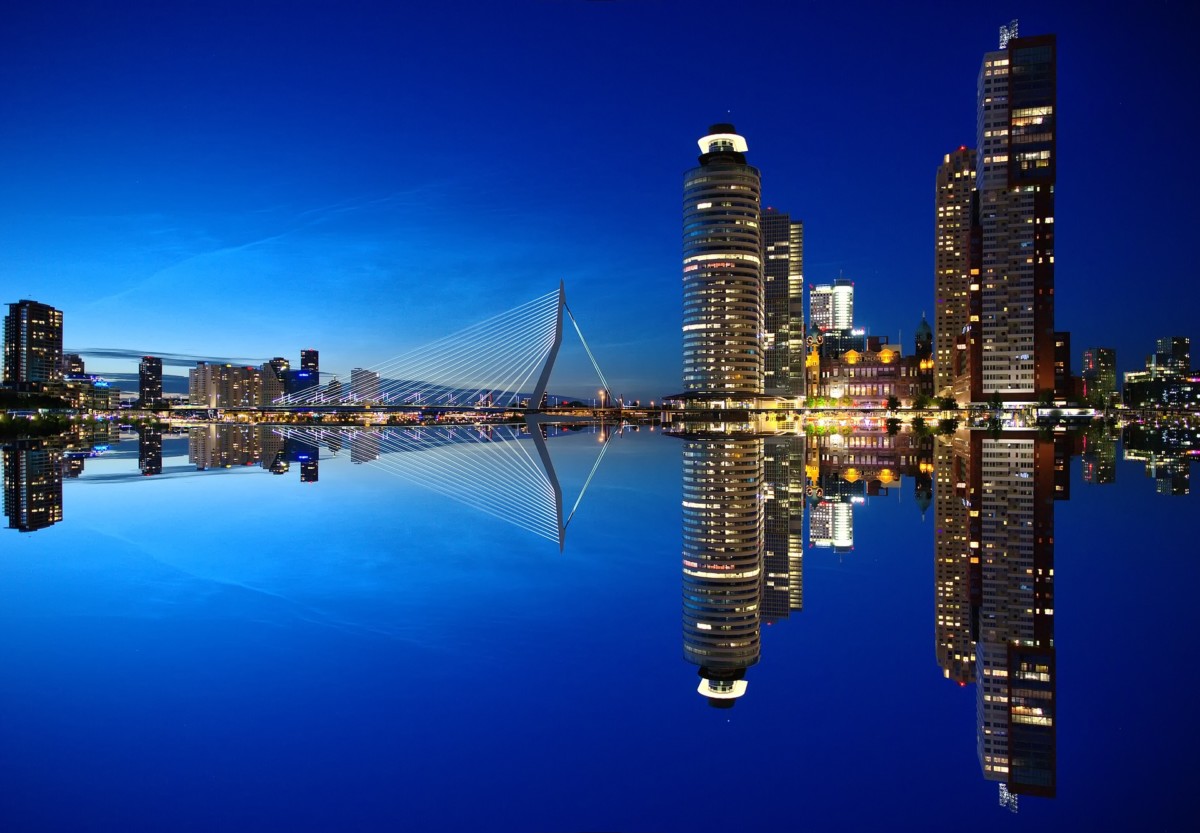
Rotterdam is known as the economic capital. Image: 3093594/Pixabay.

Finally, there is The Hague, the political capital. But why is The Hague considered like this to me? Wouldn’t it make much more sense to simply have all of these things in one area? Well, while The Hague is not actually a capital city, it certainly feels like one. Here are a few reasons why:

The capital of the Netherlands: the history

It starts, like many stories of modern European history, with Napoleon. Not the Emperor of the French who lost at Waterloo, which would be too easy. This was his brother, who was more commonly known as Louis Bonaparte. He was also called the “Konijn van ‘Olland,” mostly because of the hilarious rumor that he mispronounced King of Holland by virtue of his terrible Dutch.

In any case, before his reign, The Hague was the seat of the government. Yet for Louis this would not do, and he instead took Amsterdam for his capital. And then he took Rotterdam for his capital. And then The Hague, Leiden, and back to Amsterdam.

Do you see where the confusion began? His changeable nature meant that his royal court was constantly chasing him, hoping that he’d eventually settle in one place long enough to actually do some governing. It was only after his reign ended — a few scant years — that the seat of the government was sent back to its rightful place: Amsterdam.

Wait, hold on. After his reign ended, Napoleon (the emperor this time) sent a governor to take over the kingdom instead of his brother. It was after this short lived governor that the seat returned to The Hague.

The capital of the Netherlands: on buildings and government

And so it was that Amsterdam became the capital of the Kingdom of Holland. This explains some of the historic reasons behind the confusion between the two cities.

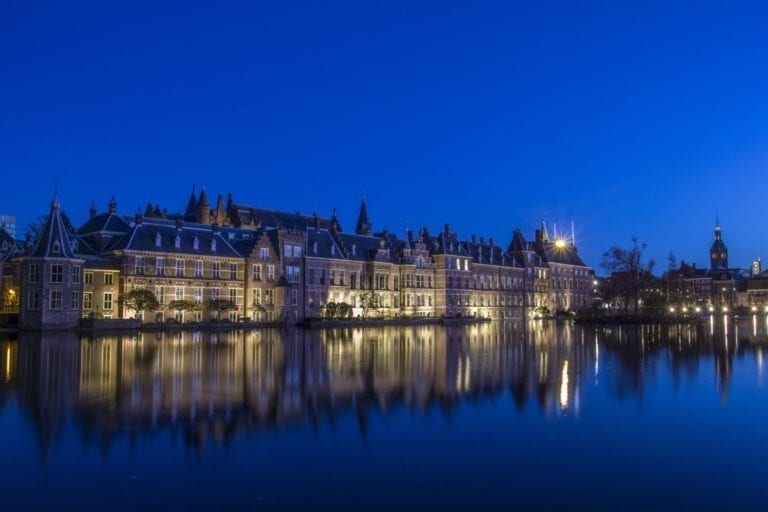
But when you’re looking for the capital city, one of the first things that mark it above the rest is the government building. Both the first and second chambers, the legislative and executive branches of government, are found in The Hague within the very scenic remnants of feudal Holland — the Binnenhof.

Of course, they needed some way of making the new parliament stand out from the old, hence the glass exterior strutting out next to the side of the Ridderzaal in the courtyard. The Hague had been the seat of government since the 16th century and from the Dutch perspective, there seemed to be no reason to change this just because of a few years of French rule.

The Ridderzaal at Binnenhof. Image: Frank Magdelyns/Pixabay

It doesn’t stop there, though, as many other governmental buildings are found in The Hague as well. This includes the many embassies for countries around the world, and numerous international organization headquarters. Many of these buildings can be found on a single street, jokingly called by those in the know as “Terrorist Alley.”

Even the working palace of the royalty can be found in the center of The Hague, not in Amsterdam. Though, it should be mentioned that Rabbit kings’ palace was in Amsterdam, taking the town hall as his palace.

Final thoughts

But then, why is The Hague relatively unknown as a political center by people entering the country? Maybe it’s the lack of an airport? Most that enter the country come from Schiphol, and though The Hague shares an airport with Rotterdam, trying to get to The Hague from there requires you to go to Rotterdam first.

When I was studying abroad for my degree, not many people knew of The Hague. In fact, those who did had only heard of the International Criminals Court, and assumed that all the other political departments were in Amsterdam.

It’s a strange turn of events when a state separates its capital from all the usual tell-tail signs of a capital. In the end, we can turn to definitions and to the usual signs. Perhaps it’s less about what a capital is, and what a capital feels like. While Amsterdam may be the capital of the Netherlands, it will never look like a capital to me.

Was there a time you believed the capital of the Netherlands was not Amsterdam? You can be honest here, tell us your thoughts in the comments below.

Feature Image: Rob Van Der Meijden/Pixabay
Editor’s Note: This article was originally published in September 2015, and was fully updated in November 2020 for your reading pleasure.

The Dutch are the best non-native English speakers in the world (again!)

The Netherlands has topped the charts for English proficiency in a new study released by EF Education First. 

The EF English Proficiency Index (EF EFI) 2020 examined the English-speaking capabilities of 2.2 million respondents across 100 countries. It’s the second year in a row that the Dutch have claimed the top spot.

Naturally, we’re sure the Dutch are proud as punch over the achievement — especially after beating out their language arch-nemesis Denmark for the title. The Dutch scored 652 points on the survey, relegating the Danes to second-place with 632 points.

“It’s great that the Netherlands has again managed to occupy the number one position this year,” says Marc Hollander, Country Manager of EF Education First Netherlands. “It has become clear that communication is key, especially in the challenging circumstances of the past year.”

Which city is home to the best English-speakers in Holland?

Drumroll please … well, perhaps that’s not necessary. Amsterdam is home to the best English-speakers in the Netherlands, closely followed by Rotterdam and The Hague. We could lie and say that we’re surprised but … we’re not.

Of course, the Dutch speak great English all the way across the nation. But how did this tiny country become so good at a language that isn’t their own?

Why the Dutch are great at English

The Netherlands teaches English from primary school all the way through the final years of high school, and even vocational education and university. Some universities have even switched entire courses to English, prompting fear of a “linguicide” of the Dutch language.

Online TEFL courses have also become a firm favourite in the Netherlands, with many Dutch looking to teach English as a second language.

Meanwhile, unlike other European countries, like Germany and Spain, that insist on dubbing popular television shows and movies, the Dutch don’t rely on dubbing. That’s why you can walk into virtually any non-children’s movie playing in a cinema in the Netherlands and enjoy it in English.

READ MORE | Why are the Dutch so good at speaking English?

Dunglish

While writing this article I asked my partner for a translated Dutch phrase about being proud. “Proud as a cockpea!” she said confidently. I must have looked confused. “You know, the bird with all the feathers!” she said.

Perhaps English proficiency doesn’t stretch as far as the word “peacock”?

EF EFI 2020 Country Rankings for English Proficiency

1Netherlands
2Denmark
3Finland
4Sweden
5Norway
6Austria
7Portugal
8Germany
9Belgium
10Singapore
11Luxembourg
12South Africa
13Croatia
14Hungary
15Serbia
16Poland
17Romania
18Switzerland
19Czech Republic
20Bulgaria
21Greece
22Kenya
22Slovakia
24Lithuania
25Argentina
25Estonia
27Philippines
28France
29Latvia
30Italy
30Malaysia
32South Korea
33Hong Kong, China
34Nigeria
34Spain
36Costa Rica
37Chile
38China
39Paraguay
40Belarus
41Cuba
41Russia
43Albania
44Ukraine
45Macau, China
46Bolivia
47Georgia
48Dominican Republic
49Honduras
50India
51Armenia
51Uruguay
53Brazil
54Tunisia
55Japan
56El Salvador
56Iran
56Panama
59Peru
60Nepal
61Pakistan
62Ethiopia
63Bangladesh
63Guatemala
65Vietnam
66United Arab Emirates
67Venezuela
68Sri Lanka
69Turkey
70Kuwait
71Qatar
72Jordan
73Nicaragua
74Bahrain
74Indonesia
74Morocco
77Colombia
78Mongolia
79Afghanistan
80Angola
81Algeria
82Mexico
83Egypt
84Cambodia
85Sudan
86Azerbaijan
87Syria
88Uzbekistan
89Cameroon
89Thailand
91Ivory Coast
92Kazakhstan
93Ecuador
93Myanmar
95Rwanda
96Kyrgyzstan
97Saudi Arabia
98Oman
99Iraq
100Tajikistan

Dutch government considers “nudging” people towards vaccination

2

It seems Prime Minister Mark Rutte and Health Minister Hugo De Jonge, among others, are at odds over whether an indirect vaccination obligation should be implemented in the Netherlands.

During a debate in the Lower House, Rutte proposed implementing strict measures for those who don’t get vaccinated in order to “nudge” them towards vaccination. These measures could include preventing non-vaccinated people from entering government buildings, concerts and libraries, reports RTL Nieuws.

“The cabinet will not be for coercion,” Rutte said, “but you can also nudge indirectly by stimulating people. That is really a medical-ethical point of view, we are currently considering that.”

De Jonge: no indirect vaccination obligation

The Health Minister argues that introducing such measures could be counterproductive, as many Dutch people have indicated that they do not want to be vaccinated. Surveys in June showed that almost three quarters of the population wanted to take a vaccine, but this week that dropped to 60%. The greatest difference was seen amongst young people.

De Jonge says it would be better to simply relax measures for those vaccinated rather than tighten restrictions for those unvaccinated, reports AD. For example, the elderly and healthcare workers who are vaccinated first would no longer have to keep the 1.5m distance.

Herd immunity

VVD MP Hayke Veldman pointed out that a large percentage of the population needs to be vaccinated in order to reach herd immunity. Rutte agreed, arguing that if vaccinations are purely voluntary, “there may come a time when half of the Netherlands is vaccinated: that is still too little for group immunity, what do you do then?” The Prime Minister emphasized that this is something to think about.

Freedom

FVD member Wybren van Haga reminded cabinet that “many people are terrified of compulsory vaccination” and that an indirect vaccination obligation would come as a threat to individual liberties.

VVD member Veldman acknowledged the importance of personal freedoms, but suggested that in times like these there are bigger things to consider. “Sometimes steps are needed of which you basically say: no, we don’t want that. Sometimes — precisely because of the freedom you have yourself — you need a step to protect the freedom of another. You will have to do that together. You have to think about that.”

Do you think there should be an indirect vaccination obligation? Tell us your thoughts in the comments below.

Feature Image: DutchReview/Supplied

At home (in a hotel): why we’re loving a long-stay at the Wittenberg

0

Wittenberg isn’t your average hotel or your average apartment. It’s an aparthotel, intentionally designed for long stays in Amsterdam. It’s the perfect home-base for people coming to work or visit Amsterdam for a week or more and is especially ideal for new expats moving to the city. 

Nearly every expat moving to Amsterdam has a period of transition while they’re looking for their permanent housing. It can take anywhere from a few weeks to a few months. Rather than stay at a basic hotel or settle for a permanent home you’re not totally happy with, it makes sense to relax into somewhere comfortable in the meantime. I personally stayed at Wittenberg for a month when I first arrived in the Netherlands and would do it again in a heartbeat.

So if you’re in the market for a short-term home in Amsterdam or work in the global mobility sector, Wittenberg may be just what you’re after too. They provide all the amenities you need to really feel at home, combining the attentive service you’d expect from an upscale hotel with the comfort and convenience of having your own personal headquarters. With an outstanding location, modern, tastefully appointed apartments, exceptional service, and all the comforts of home, you may never want to leave.

We teamed up with the wonderful folks of Wittenberg to bring you the scoop on this fantastic establishment. We’re pretty wild about it, and we think you will be too.

A prime location in De Plantage

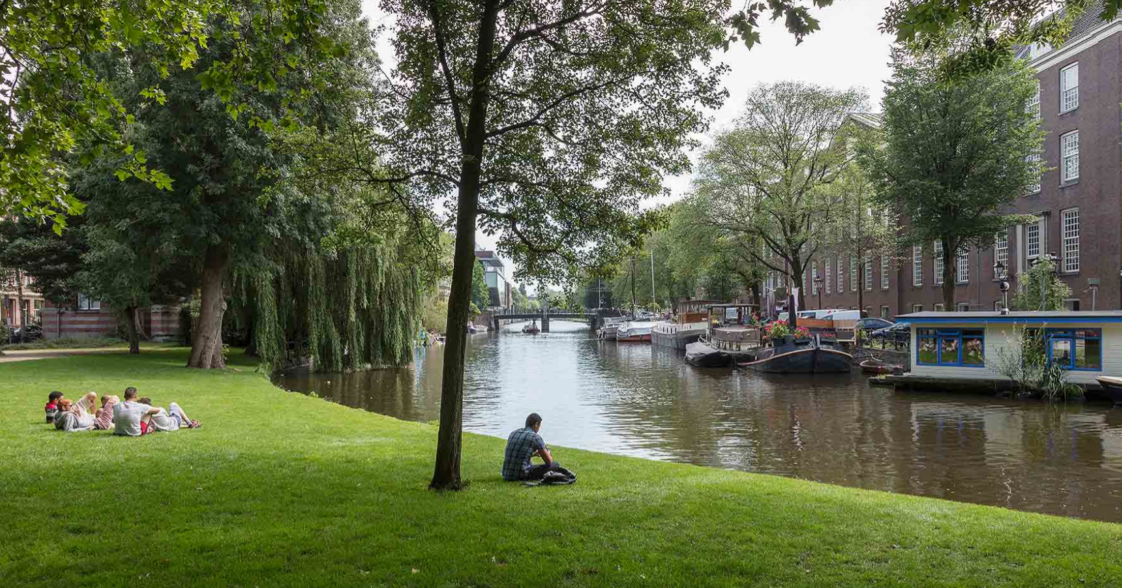
Wittenberg is situated alongside the Nieuwe Keizersgracht canal in the heart of De Plantagebuurt. This charming old neighbourhood is just east of the city centre. It’s close enough to all the action but far enough away for a bit of refuge. The area is quiet yet vibrant, full of gorgeous green spaces, with an excellent selection of cafes and restaurants — an ideal landing pad in Amsterdam.

De Plantagebuurt
“De Plantagebuurt,” meaning “the plantation neighbourhood,” is full of lovely gardens and green spaces. Image: Wittenberg/Supplied

Wittenberg is as close as can be to the stunning Hortus Botanicus gardens, and it’s just a stone’s throw away from the Artis Zoo. Other popular destinations like the famous Waterlooplein market, the Jewish quarter, Carré Theatre, and the Dutch National Opera and Ballet are all within easy walking distance. 

One particularly nice thing about De Plantage is that it’s just a 15-minute walk to the city centre, so it’s simple to venture out to hustle and bustle too. You can easily walk to many Amsterdam hotspots, but if you prefer public transportation, the Metro is just steps away. You can hop on and be in Zuidas, the business district, in no time.

READ MORE | 31 things to do in Amsterdam in 2020

The historic building with a modern twist

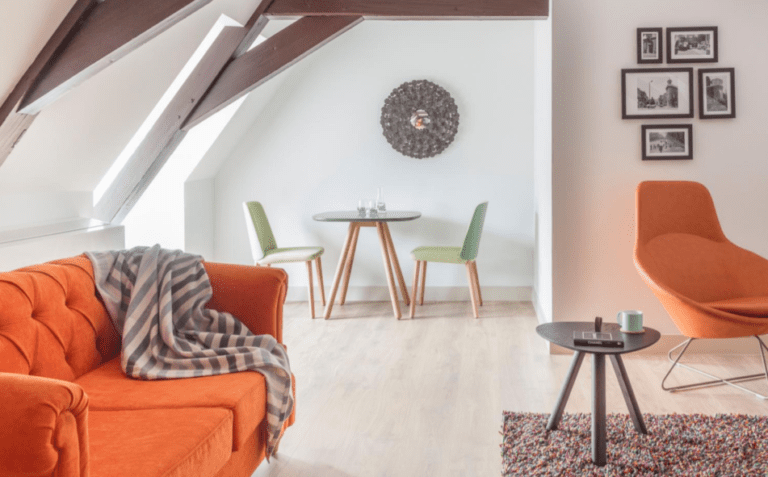
Bright, spacious, contemporary — Wittenberg has all the things on your list and more in a centrally-located Amsterdam hotel. They offer urban comfort in a historical setting, lending to an unpretentious boutique feeling.

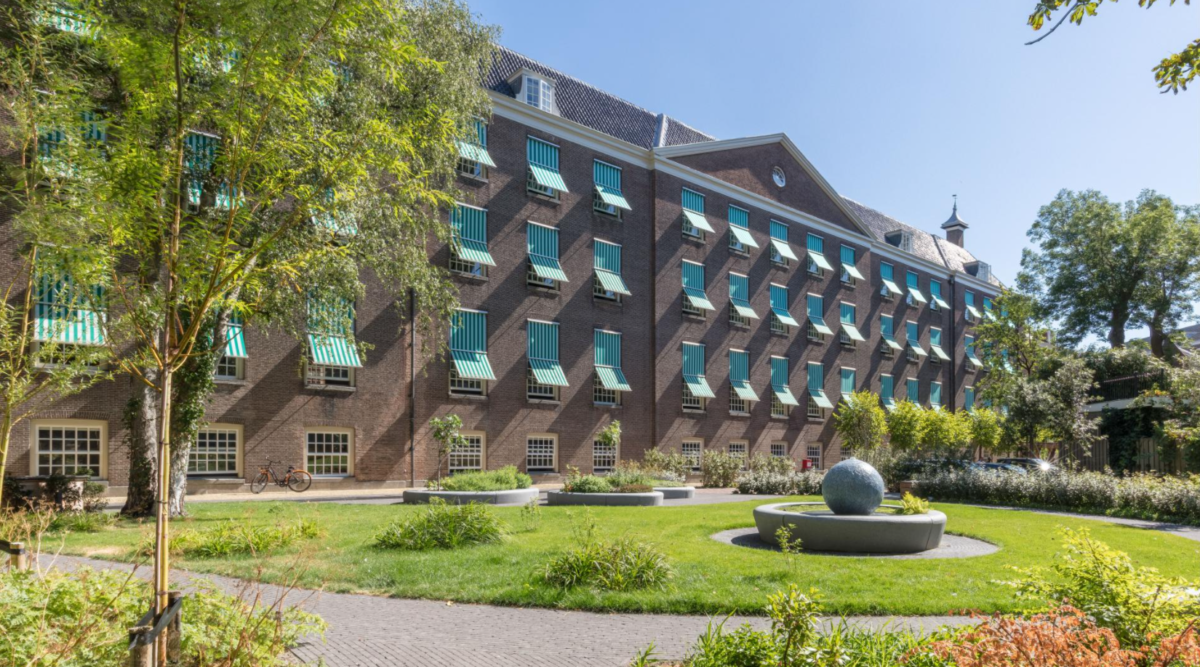
When you first approach the stately 18th-century building, it’s clear it’s always been a place for people. With a welcoming courtyard and windowed brick facade, the building is brimming with stories of the past. Formerly called Lutherhuis, it was established in 1772 as a nursing home, built by the Lutheran church. Over the years, it’s welcomed people through its doors as an orphanage, kindergarten, and refugee home. 

Wittenberg Aparthotel
A lovely garden to take in some fresh air. Image: Wittenberg/Supplied

The historic building preserves its original character, with tasteful modern updates. The interior is now sleek and fresh with historic charm, while the outdoor area hosts a lovely shared garden. Particularly helpful during these times of stay-at-home restrictions, you can enjoy a bit of fresh air and respite. 

Another great design feature is the indoor social working space, perfect for getting some independent focus time, having a meeting, or playing board games with the family. Plenty of natural sunlight and plants brighten the space, while coffee and tea are always at the ready to keep your batteries charged. Also important, the staff monitors the capacity of the space to ensure proper social distancing.

Full-service apartments

WIttenberg office
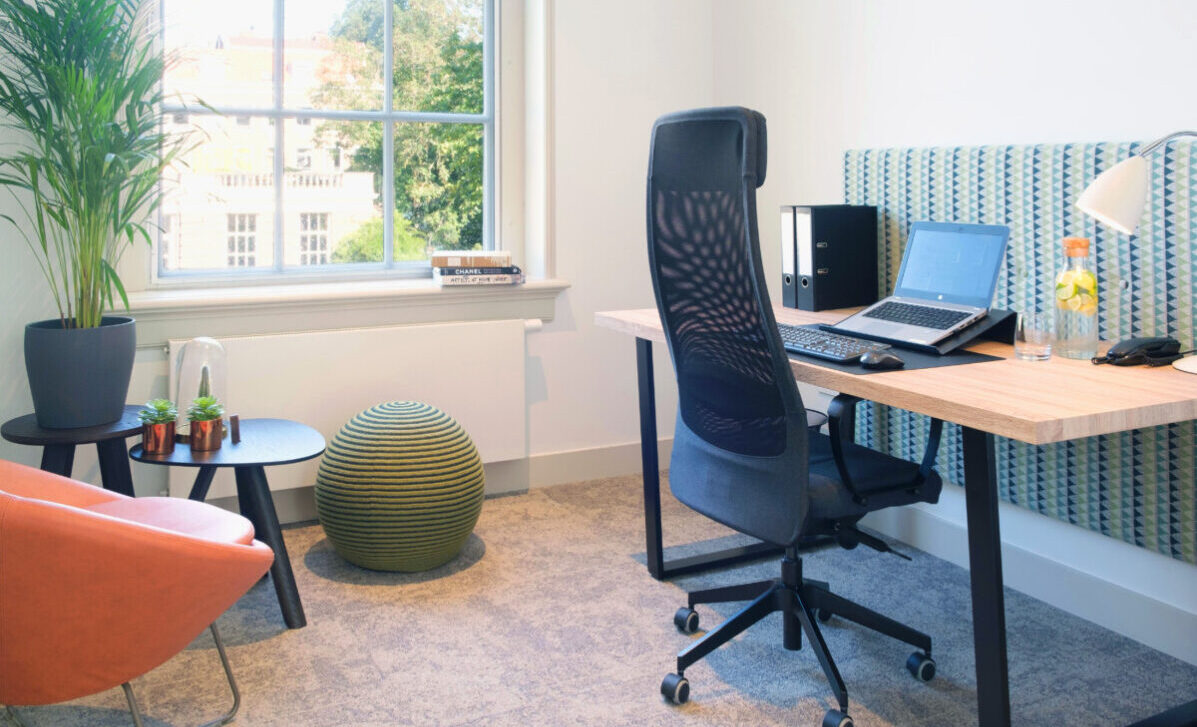
Working from home in peace, quiet, and comfort. Image: Wittenberg/Supplied

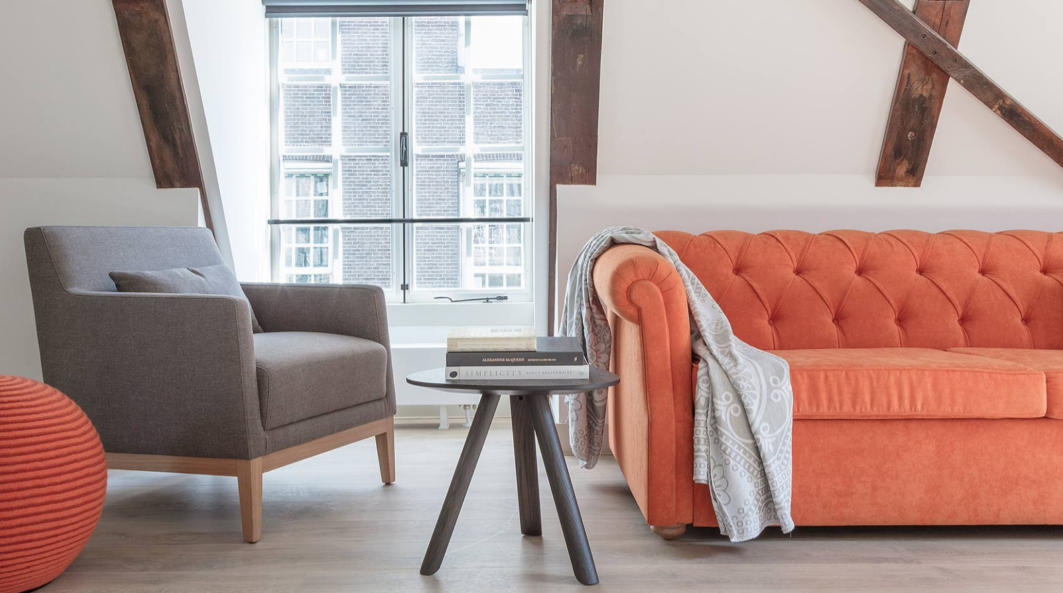
Wittenberg has 115 tastefully restored and stylishly furnished apartments. They’re incredibly open and bright, sparkling clean, and ultra-comfortable, designed to give you everything you need for a comfortable long-stay. It’s easy to unpack, settle in, and feel right at home. Wittenberg offers a range of room styles, so whether you’re looking for a studio for yourself or a three-bedroom for your family, they can easily meet your needs. 

To accommodate more people working from home during this time, Wittenberg has transformed some of their apartments into office suites so you can work from home in comfort. These apartments have a separate office with a desk and office chair (plus other bells and whistles) where you can close the door and easily tune out any distractions. They’re ideal spaces for individuals looking for a change in scenery or for companies as part of a corporate travel programme.

Each of the apartments has a fully-equipped kitchen, and you’ll find plenty of grocery stores within easy walking distance. With everything you need to cook your favourite meals, you won’t have to rely on take-out or delivery while restaurants are closed for seating. But if you do, that’s no problem either — the staff at reception will kindly deliver to your room.

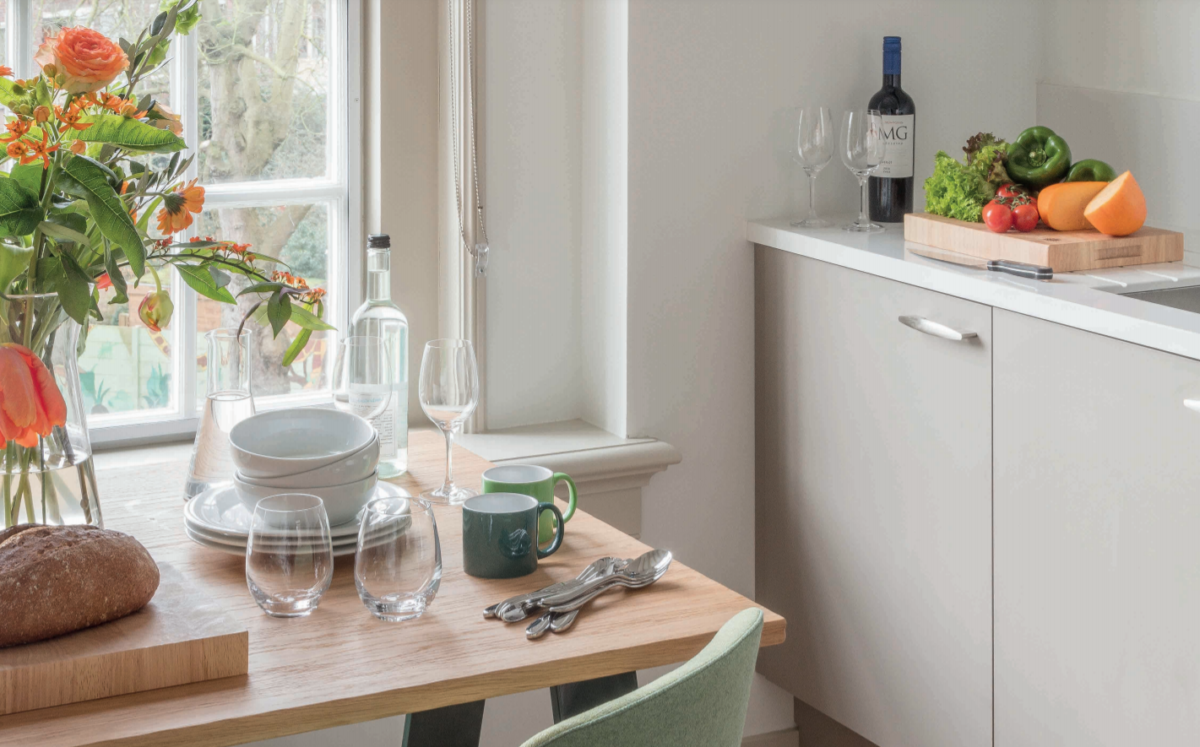
Wittenberg kitchen
Fresh, bright, with all the bells and whistles. Image: Wittenberg/Supplied

The apartments come equipped with all the basics you’d expect, plus great extras like:

  • Apple TV
  • Dishwasher
  • Laundry
  • Wardrobe and dresser
  • Toiletries

But the best part of all, the apartments start at 85 euros per day with a minimum stay of seven nights — an astonishing rate for everything that’s included. 

Prioritising wellbeing

Since Wittenberg specialises in longer stays than a traditional hotel, they take extra steps to ensure your physical and mental wellbeing. Their extensive wellbeing program is accessible through a handy website. You’ll obviously find yoga and the best running routes, but there’s a surprising number of other resources as well. Wondering where to find nearby playgrounds, or how to make a classic Dutch pea soup? They’ve got all the answers you seek.

In normal times, Wittenberg hosts a long list of group activities, from morning coffee and mediation to boot camp and kids art parties. Of course, during coronavirus these are scaled-back, but they’re constantly searching for creative ways to meet your wellbeing needs, especially in these challenging times. They’re even expanding their online streaming offerings of group classes, so you can still stay fit and well from the comfort of your own apartment. 

Wittenberg Aparthotel
Be well even when you’re staying home. Image: Wittenberg/Supplied

Wittenberg also has partnerships with nearby health and wellbeing studios. You can keep your mind and body in top working order with specialised training like spinning, or even a day at the spa — they’ll be happy to assist you in setting it up. They even offer deals on some class packages.

When you feel like staying closer to home (or when the government requires you to) the on-site gym allows the freedom of working out from home. During coronavirus times, it operates via sign-up to ensure it’s never too crowded. 

So many extras

Wittenberg offers all kinds of other perks to their guests as well. Small gestures like a twice-weekly cleaning of your apartment, bikes available for hire, and wheelchair accessibility make all the difference. They also have 24/7 guest support — “house hosts,” as they call them, who are friendly and helpful, and also give you plenty of space and privacy. They will assist you with any questions you may have, offer local tips, or help with any other needs that may come up.

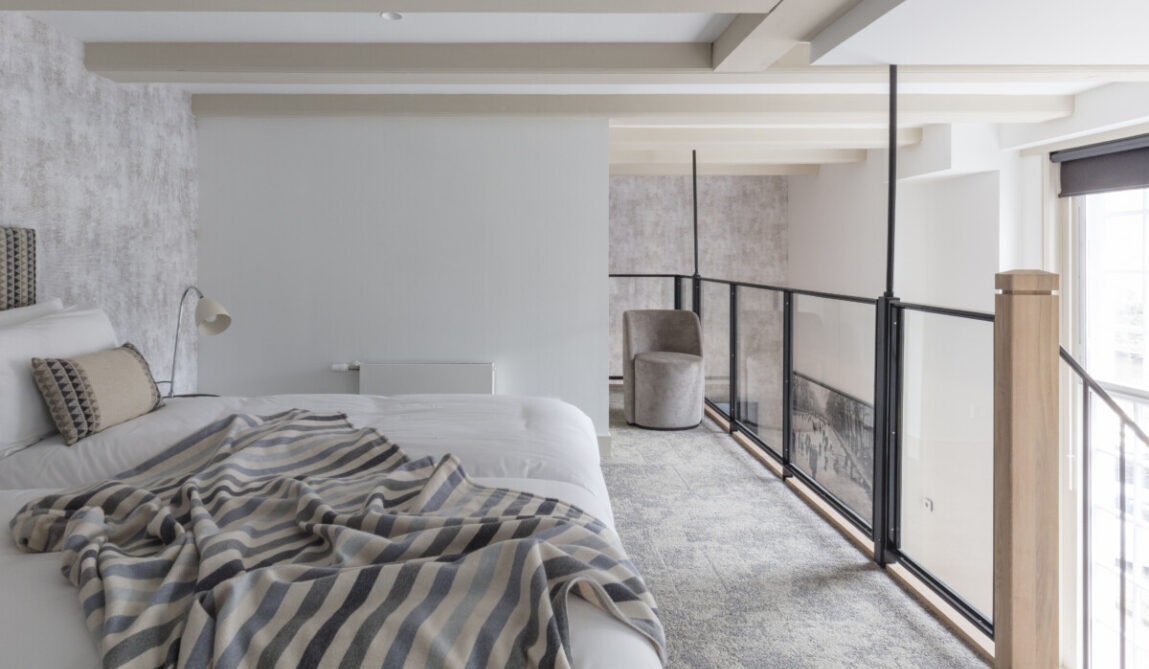
Wittenberg-bed
Twice-weekly cleaning means two days of the week with perfectly tucked sheets. Image: Wittenberg/Supplied

House hosts can even set you up with special arrangements like high-end nanny and concierge service or arrange for a bottle of locally distilled gin. And Wittenberg maintains partnerships with some excellent nearby businesses, so you can get discounts all over the neighbourhood — anything from a special meal at a nearby restaurant to a custom-made suit.

Another bonus is that since the aparthotel is designed for long-stays, guests are staying a minimum of one week. This means there’s very little commotion at the reception area with other guests checking in and out. When you come and go, you truly have the feeling that you’re at home.

Also good to know: Wittenberg is a part of edyn — the serviced apartment and aparthotel group including Locke design-led aparthotels, SACO serviced apartments and the elegant, boutique apartments of The Moorgate. edyn maintains a commitment to social responsibility and is continuously working to improve recycling and energy-saving and minimise the use of plastics as part of its environmental responsibility policy.  

How Wittenberg is managing coronavirus

Wittenberg is taking steps to be COVID-19-safe. They’re closely monitoring the advice of the government and health authorities, and making sure their practices are up to the highest standard, with enhanced cleaning procedures and appropriate social distancing measures. They’re prioritising the health and safety of their guests and employees while also providing reduced rates and more flexibility with booking.

If you’re coming from abroad and need to quarantine upon arrival, the staff will make sure you have everything you need. They will safely deliver all of your meals while you relax or work from the comfort of your home office.


Whether you’re coming to Amsterdam for business, leisure, or a new home, the charming and friendly Wittenberg will make sure you do it in style. Contact them via email or check out their website to arrange your future home away from home in Amsterdam.

Would you enjoy a stay at Wittenberg? Tell us your thoughts in the comments below.

Feature Image: Wittenberg/Supplied

Spring-like weather in the Netherlands today to break temperature record

0

Today’s warm weather today in the Netherlands is expected to break another high-temperature record — for the eleventh time this year.

Today is expected to be dry and sunny, with light clouds moving in later in the afternoon.

The day is expected to warm up to around 13 degrees in the north of the country, and 17 degrees in Limburg. “The light will turn on again today!” says Jan Visser of Buienrader.

Record-breaking warmth

The standing heat record for November 18 is 14.5 degrees in 2015, which will most certainly be broken today as temperates climb into the higher teens throughout the country.

With the unusually warm weather we’ve had all year, “record-breaking heat” is no stranger to the headlines in 2020. Today will mark the eleventh time this year temperatures have left their mark on history.

Stormy weather on the way

Tomorrow, on the other hand, showers and hefty winds will gust into the Netherlands. Thunderstorms are possible, particularly in the north. Temperatures will reach a maximum of 11 degrees, with winds of around 75 km/hr in coastal provinces.

The rain is expected to sprinkle on and off for several days to come, with moody temperatures moving down to a maximum of 8 or 9 degrees on Friday.

Do you have plans to enjoy today’s sunny weather? Tell us in the comments below.

Feature Image: Sander Weeteling/Unsplash

The Dutch government wants to test everyone once a month from March

2

The Dutch government plans to expand testing capacity even further by March. The hope is that residents of the Netherlands will be able to get tested for COVID once per month.

Sources tell RTL Nieuws that the government hopes to be able to test anyone in the Netherlands at least once per month, regardless of whether or not they have symptoms of coronavirus.

In last night’s press conference, Minister for Health Hugo De Jonge announced that there will be experiments with large scale testing. It is believed these will begin in January.

Not ready yet

The current testing capacity of the Netherlands is not up to scratch yet however. In order to make this achievable, there are a number of things that need to happen.

Firstly, more people needed to be trained in administering a coronavirus test. Secondly, more testing locations are required in order to have enough places for everyone, and finally, more testing kits are needed.

According to RTL Nieuws, the cabinet will reach out to test providers and companies in order to help make this happen. Testing locations may also be found outside of test centres, such as in train stations and shops.

What do you think of large scale testing? Tell us your thoughts in the comments below! 

Feature Image: DutchReview/Canva

Press conference: Some temporary measures will be lifted, but Christmas is still uncertain

0

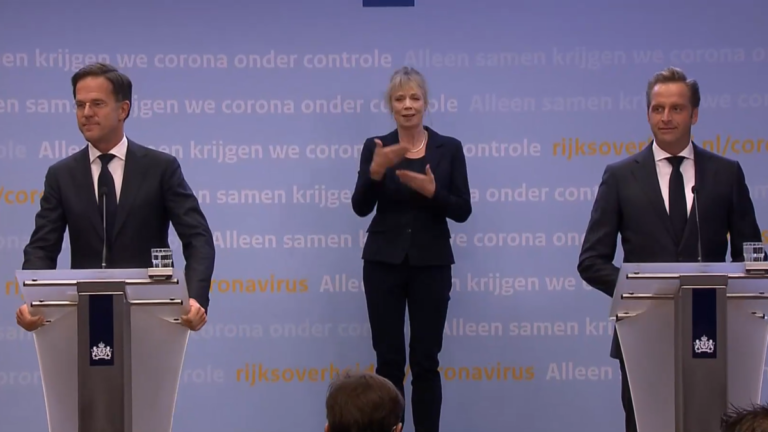
Tonight, Prime Minister Mark Rutte and Minister of Health Hugo de Jonge held a press conference once again. This time it was to announce that the measures taken two weeks ago will not be extended. We can visit a museum again and walk outside with a group of four.

The ministers confirmed that the two-week period of stricter measures will come to an end this week, meaning that we will revert back to the previous measures. As for Christmas, they are hoping to be able to ease restrictions for the holidays. But whether they do this or not will depend on how the numbers perform in the coming weeks.

Measures now in place

The following measures will be in place until at least mid-December and perhaps until Mid-January:

  • The number of people allowed to meet up outside has been expanded from two to four again. Children and people from the same household are not included in this.
  • A maximum of three guests from different households are allowed to visit your home per day (up from two guests).
  • All bars, restaurants, and coffee shops will remain closed, but take-away is still allowed. After 8 PM, alcohol and weed will be banned from consumption in public spaces. Hotels can remain open and serve their guests.
  • Theatres, cinemas, sports clubs, museums, amusement parks, and zoos will be opened to the public again. A maximum of 30 people are allowed to gather in public spaces. Religious gatherings and parliaments remain exceptions to this but Rutte has appealed to these institutions.
  • Most events are banned, from festivals to neighbourhood barbeques.
  • Working from home is strongly advised.
  • It is strongly encouraged that people do not travel abroad. If you do choose to travel within the Netherlands you can only travel with a maximum of four people from different households.
  • Mouth masks are to be worn by everyone above the age of 13 in public sectors (including in schools, MBOs, and universities). This will be legally enforced from December 1st, with a fine of €95 for those caught breaking the rule.
  • Retailers must limit the number of shoppers to ensure a 1.5-metre distance. Individual venues will be consulted to determine the maximum number of visitors allowed inside at one time.
  • Contact-based industries (such as hairdressers and dentists) must ask customers to provide their name and contact details.

Christmas holidays

De Jonge announced that they are hoping to ease the restrictions halfway through December so that the Netherlands can enjoy the Christmas holidays with some family members. They understand that people are lonely and missing social connections. However, the cabinet is nervous about a potential third wave hitting before Christmas, and so clarity over what measures will look like over the holidays cannot yet be confirmed.

Vaccine, testing, and quarantine

Health Minister De Jonge explained that not everyone will be able to be vaccinated immediately. However, there are plans in place to begin vaccinating the population at the beginning of 2021. Vaccinations will not be obligated but will be strongly encouraged by the government.

As for testing, capabilities will be expanded across the country and De Jonge has urged the public to get tested if they experience symptoms. They are aiming to make it possible to test without complaints by December 1 if you receive an alert from the CoronaMelder app that you have been in contact with someone who tested positive.

The ministers announced that the quarantine timeframe will be reduced from ten days to five days.

But ultimately, De Jonge emphasised that living a healthy lifestyle is an important way to protect yourself from the virus.

Declining infection numbers

The weekly coronavirus update from RIVM revealed that the numbers of infections, hospitalisations and deaths all reduced in the last seven days. New infections tallied at 37,706, which is almost 6,000 less than the previous week. Hospitals admitted 1,496 patients compared to the previous week’s 1,520, and deaths decreased from 565 to 479. If anything, this indicates that the stricter measures we’ve experienced these past two weeks have made a difference.

“We can do better”

“We’ve taken a turn and are heading in the right direction, but it’s still not enough,” says De Jonge.

But Rutte urged the public that we can do better to follow the rules, particularly when it comes to working from home, supermarket behaviour and meeting up with friends. If the downward projection continues, De Jonge says they can consider easing most restrictions halfway through January.

De Jonge encouraged the public to be patient and “hang in there.”

Follow DutchReview on Facebook for the latest coronavirus news and updates. 

Feature Image: DutchReview/Supplied

Is working from home good for the Dutch economy?

0

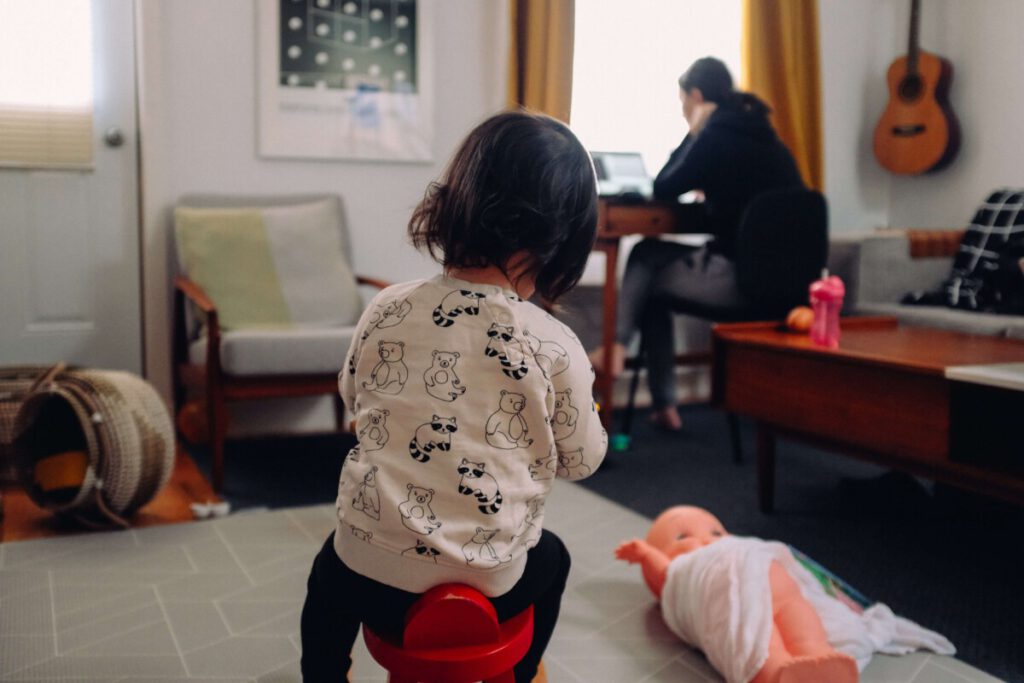
In every coronavirus press conference so far, Mark Rutte and Hugo de Jonge, have been crystal clear on the issue: “if you can work from home, please work from home.” But the question remains: if this were to continue after the pandemic what effects would it have on employers, employees, and the precious Dutch economy?

Experts and political commentators have often spoken of the “new normal” and how after the pandemic, working from home would be a very big part of that new way of life. In fact, many Dutchies have said they wouldn’t mind continuing to work from home.

However, very little research has been done into the economic consequences of working from home, and that’s because the world has only recently started doing it. It doesn’t matter where you find yourself right now, working from home (for those who can) seems to be the way forward.

how good for the economy is working from home
Working from home has become the new norm for many. Image: Annie Spratt/Unsplash

The statistics

According to a Rabobank report from April, 43 per cent of all economic activity can be carried out from home. That’s almost half. But it mainly concerns ICT, (digital) business services and financial institutions.

Not everyone works in those sectors, the other half of our economy is based on agriculture, construction, industry, leisure and catering, entertainment (theatre, etc) and healthcare. A 1.5-meter measure may apply there, but working from home seems quite impossible.

Rabobank’s report claims that almost half can work from home, but is that really the case? The Central Bureau of Statistics (CBS) calculated that last year almost 40 per cent of all workers occasionally worked from home.

Just to be clear: the Netherlands has about 12 million workers, 3.5 million people with home working experience. Those 3.5 million people did not work week after week from home, but it was incidental, and not on a fixed day. Of those 3.5 million people, 1.3 million are a group who actually always prefer working from home.

But what would be the economic consequences if about half of the Netherlands’ workforce decided to work from home? Vodafone was one of the first companies to allow call centre employees to work from home. Their own research shows that employees who worked from home achieved a 9 per cent higher NPS (Net Promoter Score) than the group in the office, and calls at home were 23 seconds shorter on average than calls in the call centre. The employees from home thus turned out to be more productive. Why is that?

Higher productivity

Working from home leads to higher productivity because people take fewer breaks, can concentrate better (at least, if the kids are in school), no longer have to worry about commuting to work every day and can therefore dedicate the time to work.

Higher productivity also means happier employer and employees, and employers also get to spend less on expensive office space and equipment. Some of the saved money could also go to giving employees an allowance for the energy, internet, and equipment they use to work from home.

Every advantage has its drawback

You would probably think that working from home would only be a win-win situation for employer and employee, but unfortunately, it doesn’t work that way. There is an advantage and a disadvantage to everything and there are just as many studies that point to the disadvantages of working from home for a long period of time.

For example, a working-from-home economy will also have some adverse effects on companies that make a living from an office economy. Consider the suppliers of office furniture and supplies, cleaning companies that make their money from cleaning offices, etc. They may lose work and as such, see a drastic reduction in revenue.

This could lead to companies going bankrupt, having to lay off workers, a reduction in revenue from taxes for the government, and the government spending a lot more on unemployment benefits.

Transport companies like the Dutch Railway Corporation (NS), Connexxion Bus Company, GVB trams and buses, etc., will see their turnover evaporate when the commuter traffic stops.

You also have businesses that operate in the Train Stations all over the country, like Kiosk, AKO bookstores, and of course, the coffee shops where you take a break with your colleagues during lunch. Most of them might just end up closing up shop!

Personal drawbacks

Those who keep their job and work from home may also face some drawbacks. For example, while the Netherlands is currently one of the best countries in terms of maintaining a good work-life balance, people who work from home often work longer days than when they would work at the office. This is mostly because that vague dividing line between work and private life suddenly disappears, and private life loses its function as a place of rest and recovery.

Another possible negative aspect is the end of work social contacts, and for example, not being able to have some coffee, short chats and laughs in the company canteen with colleagues.

Even the possibility of office romance and “working singles” meeting the loves of their lives at the workplace suddenly seems impossible. And with a bit of bad luck, employees might end up having neck and shoulder complaints or a repetitive strain injury (RSI.)

Just for the record: whether and how strongly someone is sensitive to these negative effects depends entirely on personal and social factors. It is also true that both the advantages and disadvantages do not apply to everyone.

Is working from home good for the economy
Not all of us have the ideal WFH situation. Image: Charles Deluvio/Unsplash.

Face-to-face contact

A company can also be damaged in the medium and long term by too much working from home. Face-to-face interaction with colleagues or customers is important to boost creativity, knowledge transfer and innovation. Sharing ideas, debates, discussions, etc., are all part of the creative process.

While online video meetings and calls have mostly replaced face-to-face meetings, they still lack the magic of being able to meet up physically and working/bonding as a team.

So what exactly is the effect on the economy?

If 43 per cent of all work can be done from home (as Rabobank says), 39 per cent of all workers already do (as Statistics Netherlands says) and there is higher productivity, then working from home could have a positive effect on the economy as a whole. With an emphasis on “could have” because what has not been taken into account in all of this are:

  1. the loss of turnover of those companies that could lose from a working-from-home economy.
  2. the possible (and difficult to measure) dropout and absenteeism in the longer-term and.
  3. the (even more difficult to measure) possibility of diminishing creativity and innovative strength.

There may be a lot of positives from working from home, but for now, the figures aren’t there yet to draw conclusions, and how working from home affects the Dutch economy remains guesswork.

But one thing remains a fact. When the pandemic is over, there will be a new normal, and at first, it will hurt, might hurt a lot, but we will always find a solution. Maybe companies will combine working from home and working from the office!

Do you think that working from home is good for the economy? Tell us your thoughts in the comments below! 

Feature Image: Alleksana/Pexels

Coronavirus update: number of cases, hospital admissions and deaths are down

0

The RIVM has reported 37,706 new cases of coronavirus in the past week. This is almost 6,000 less than last week’s numbers. Hospital admissions and deaths are also down.

As the Netherlands comes to an end of the latest coronavirus measures, the effects can be seen. The question is whether measures will continue throughout Christmas.

Hospitalisations

The number of people hospitalised due to coronavirus has dropped slightly this week. There were 1,496 new admissions to nursing wards this week compared to 1520 last week. The ICU also saw a slight drop in numbers with 224 new patients compared to 275 last week.

Deaths

The number of deaths remains high however it has decreased by almost 100. This week, 479 people passed away from coronavirus. Last week saw 565 deaths.

New Vaccines

The past week saw two new vaccines emerge with promising results. The Pfizer vaccine, with an effective rate of 90%, could be ready for distribution in EU countries by December. The Dutch government have ordered 8 million doses of the Pfizer vaccine. A few days later, Moderna announced that their vaccine had proven 94.5% effective, which could potentially arrive to the Netherlands ready for use by January.

Dutch vaccine strategy

The Dutch Ministry of Health will be announcing their vaccine strategy for the Netherlands later this month. They intend to begin vaccinations in December, but this is dependent on when the vaccines arrive. It is expected that the elderly, vulnerable groups and health care workers will be vaccinated first. But vaccinating the whole Dutch population could take over a year, according to Hans van Vliet, manager of the National Immunization Program of the RIVM.

Different rules for those unvaccinated

Health Minister De Jonge has expressed that there may be different measures in place for those who have not yet been vaccinated, once the vaccination programme is in place. But details like this are yet to be decided upon. The vaccine strategy will also depend on which vaccines become available first, and how many vaccines the Netherlands has access to.

Face mask mandate

In the meantime, cabinet have been working on a corona law which will make wearing facemasks in indoor public spaces obligatory. Anyone caught breaking this rule will be fined €95 but will receive no criminal record. The law is expected to be implemented from December 1st.

Follow DutchReview on Facebook and tune into our Live Blog for more corona news.

Feature Image: ©Oleksii Boiko/Canva.com

LIVE BLOG: coverage of the Rutte and De Jonge press conference

1

Coronavirus: today’s news

The latest headlines:

  • Christmas measures are still uncertain, but don’t expect large family gatherings
  • New Moderna coronavirus vaccine expected in the Netherlands around January
  • Corona weekly update: number of cases, hospital admissions and deaths are down

 Feature Image: DutchReview