Home Blog Page 600

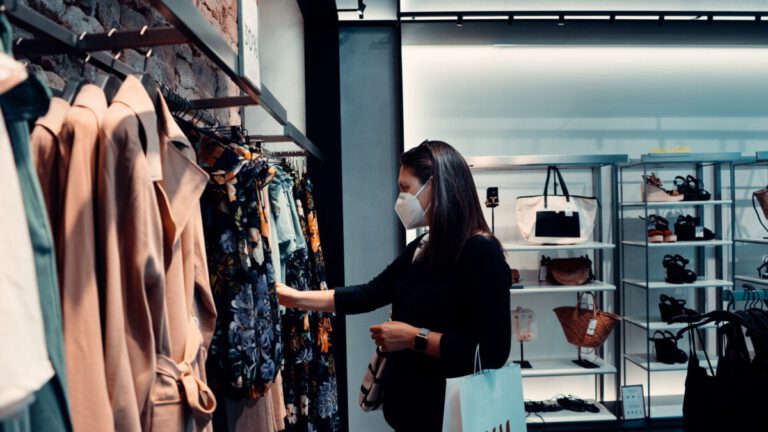
Should the Netherlands make face masks mandatory?

6

This week’s coronavirus update showed that the number of new cases in the Netherlands had doubled since last week, which shows that the current measures are no longer taming the spread of the virus. Should the Netherlands follow other countries, and make face masks mandatory?

France, Germany and England have all made wearing a face mask mandatory while indoors. But the Netherlands has been very hesitant to follow suit. During the early stages of the crisis, not advising the public to wear masks was partly done to maximise supply for the healthcare sectors, but also because the RIVM didn’t think it would matter that much. However, now that people are required to wear non-medical face masks in public transport, that explanation no longer makes sense. So the following question is there to be answered:

Is it time to make face masks mandatory?

Professor Detlef Lohse from the University of Twente has been carrying out research on the role aerosols play in the spread of coronavirus. His study has shown so far that the droplets we leave behind in the air when we breathe can travel further than 1.5m, and that the virus can live in them for 30-40 times as long as was originally thought.

Masks could help enormously with minimising the spread of coronavirus through these droplets: not only do they limit the amount of droplets a person can spread, they also provide some protection from droplets from other people. If everyone is wearing a mask, then the virus has a much smaller chance of spreading. Lohse recommends making face masks mandatory in indoor spaces as soon as possible, especially to prepare for the autumn, when people will be spending more time indoors. In an interview with the AD, he said:

“I do not understand why the Netherlands still has not made wearing face masks mandatory.”

There are problems with face masks in certain settings, though. It’s hard to see how they could work in bars and restaurants, where people are drinking and eating. Unfortunately, these are also the settings where masks would be really helpful, as people are talking and laughing with their heads quite close together most of the time. Enforcing them in shops could also prove difficult: getting customers to pick up a basket when they enter a store is hard enough.

What do you think? Should the Netherlands make face masks mandatory? Let us know in the comments below.

Feature Image: DutchReview/Canva

Pull up! Tilburg’s drive-in cinema is here

0

What activity requires a lust for popcorn, two hours of your time, and a car? A drive-in cinema, of course!

This summer, Tilburg has opened a pop-up drive-in cinema called Fabulous Drive In, perfect for these socially distant times. Drive-in cinemas are usually a predominantly American affair, but Tilburg is bringing it to the Netherlands and giving it a unique twist to boot.

So, how does a drive-in cinema actually work?

The drive-in promises to be a unique experience. The organisers advise people to come with just two people per car, to ensure everyone in the car can get a good view of the film: though you can totally come with more people. When you arrive, you’ll be allocated a place by the organisers, and you can go ahead and park up. Per show, 80 cars can be accommodated.

Now, at the risk of sounding a tiny bit silly, one of the things I never understood about drive-in cinemas was how you could hear what was going on in the film. If, like me, this was a question you were too embarrassed to ask in the past, let me solve it for you. The sound of the films enters the car via your own radio and headphones are distributed during performances.

“Special times call for special experiences”

One other very cool aspect of the Fabulous Drive-In is the food — or to be more precise, how you get the food. No movie is complete without snacks, and even though you’re coming in your own car, you don’t need to bring your own popcorn or anything like that. You also don’t need to organise your snacks before the film starts, as you do at a regular cinema. Instead, let your tastebuds be inspired by the film, and then turn on your hazard lights, and the catering crew will find you and take your order.

“Special times call for special experiences,” says Jeroen Rosenberg, one of the organisers of Fabulous Drive-In. “Especially at this time we want to give people a unique experience. Films in combination with live performances by artists who have a clear link with the film, that is unique. Getting the sound in your car via radio and seeing a movie on a huge LED screen is an experience in itself.”

Need some other staycation plans for 2020? Head on over to our friends at Ticket to Tilburg and check out all the nice stuff that’s happening there in the summer of 2020


What films can I see at the Fabulous Drive-In? And how do I get tickets?

You can find the full programme here, but we wanted to shine a little spotlight on some of the films and performances we’re most excited to see, just to give you a taste of what Tilburg’s drive-in has to offer. On Sunday July 26, they’ve got a full day’s programming waiting for you: you can bring your kids to see “Shaun the Sheep” in the morning, and come back later to see “City of God” or “Fury” by yourself. On Wednesday, July 29, you can go and see “Fame” earlier in the evening, and catch a live performance by the Fat Guys to accompany the MacDonalds movie night.

And since everybody loved the whole deal of the Drive-In – it has been extended straight up until the 2nd of August!

As always, at some point, we have to get down to the practicalities. First of all, how do you get tickets? It’s super simple. Just head over to the Fabulous Drive-In website and book them there. Tickets for film screenings in the morning cost €7.50 and in the afternoon €14.95 per person. The film and live performance combination deal costs €24.95 per person. The drive-in cinema will be located in the parking lot of the Willem II Stadium in Tilburg.

One last thing…

Summer is here, but so is coronavirus. We absolutely encourage you to head out and support local businesses and have a wonderful summer, but don’t forget: wash your hands, keep 1.5m from other people, and stay home if you have coronavirus symptoms.

What’s the coolest place you’ve ever seen a film? Let us know in the comments below.

Feature Image: TicketToTilburg/Supplied

G’s brunch boat: the brunch lover’s floating oasis

Boat, brunch, booze — if you’re not sold on that alone, here are a few more reasons why G’s Brunch Boat in Amsterdam is one of the best things you for can do for yourself this weekend.

The bottomless brunch boat — as someone who loves both brunch and boats, I was immediately intrigued when I heard of this brilliant amalgamation. So when my Saturday morning reservation rolled around, I was about as excited as a Dutchie with a kortingscode.

Pretty as a picture, and ready to brunch. Image: Brin Andrews

It’s 10 AM on a sunny Saturday when my friend and I meet the boat at its pick-up location in front of the Anne Frank house. Being the refined 30-something-year-old woman that I am, I wouldn’t normally be hopping on a booze cruise while the sun is still on the rise, but this is brunch, and brunch without booze is just breakfast. So when our server asks what I’ll have to drink, the words ‘Bloody Mary’ slip out of my mouth as easily as the smile that’s crept onto it.

Yours truly, starting the day off right with a Bloody Mary. Image: Lottie Coltman

The boat’s general vibe seems inspired by hip-hop culture, and the music and decor offer an air of unpretentious charm. The food and drinks follow suit, equally and deliciously on-point.

So what’s on the menu, you ask?

Hopefully, the hardest part of your day is choosing between the enticing menu options — it was for me. You’ll have your pick of various tantalizing benedicts and waffles, or you can even opt for something along the lines of a BLT, yoghurt, or salad. My friend and I each had a variety of the eggs Benedict, and although scantily clad in Hollandaise (for a girl who could drink the stuff), they were thoroughly enjoyed. We were quite pleased with the impeccably poached eggs and generous servings of salmon and bacon.

Benedicts of salmon and bacon. Image: Brin Andrews

The drink selection includes all of your morning staples, like mimosas and bloody Marys, plus a few creative cocktails like the ‘Bloody Mezcal’ and the refreshing  ‘Manmosa,’ with prosecco, vodka, and grapefruit juice. The Bloody Mary is flavourful, fresh, and packs all the heat you’d expect from a drink in the Netherlands — that is, none — so if you’re looking for spicy, this isn’t the one for you, but otherwise, it’s going to hit the spot. The simple mimosa is jazzed up with a mysteriously perfect pairing of gummy candy, and the ‘Manmosa’ is crisp, refreshing, and goes down easier than most drinks should before noon.

The simple perfection that is the mimosa. Image: Brin Andrews

‘This is nice.’

‘This is SO nice.’

For most of the ride, the conversation between my friend and I consists of back and forth praises of what a nice time we’re having and how much we love boats and brunch (real deep stuff), peppered with enthusiastic reviews of whatever that next thing is that we’re putting in our mouths.

The food is delicious and the views? 👌 Image: Brin Andrews

We cruise around the grachtengordel, and every once in awhile remember to look out the window. But mostly, our attention is on the brunch and we don’t particularly care where we are, as long as we remain afloat with food and drinks. And we do, for the glorious but fleeting hour+ until we arrive back at the dock at 11:15. By then, it’s all a blur of mimosas and magic — just as brunch should be.

What’s better than a mimosa? A ‘Manmosa’. Image: Brin Andrews

Here’s everything else you need to know (and maybe a few things you didn’t):

What’s this “bottomless” option?

If you’re anything like me, the first question that comes to mind when you hear bottomless brunch is: does this mean endless drinks or optional pants? (Either way, I’m in, but I like to be prepared.)

The short answer: it refers to the drinks, not food or pants (which means there’s still an open market for any pantsless entrepreneurs out there).

The long answer: there are two options when booking your brunch cruise: the €42.50 option that includes one adult beverage, or the bottomless option for €59.50. Some fast maths with tell you that’s a €17 difference, so it’s up to you to decide if you can make it worth it. Additional drinks are available at a good price (€5 or a mimosa, €4 for wine, or €3 for beer), so in this case, considering one drink is already included, you’d have to have a total of 5 mimosas to come out on top…or 7 beers…in less than an hour-and-a-half (cocktails are excluded). Should you accept this challenge, sit close to the bar.

Is G’s Brunch Boat worth it?

This thing isn’t as cheap as my usual brood met hagelslag, so is it worth it? Let’s break it down. Your €42.50 option includes:

  • 1 hour and 35 minutes of sailing (though ours was a bit shorter)
  • Brunch 
  • 1 alcoholic drink
  • 1 non-alcoholic drink
  • Coffee/tea + a small dessert

The average cost of a 1-hour-ish boat cruise in Amsterdam, drinks excluded, is €16-20. A typical brunch at G’s restaurant, including all the same, is going to set you back around €30.

So the price is certainly fair! Now, I’m no mathematician (all previous impressive calculations aside), but I’d estimate the value of experiencing both brunching and boating at the same time equals something to the effect of = priceless.

Sold! The deets, please.

  • The boat boards in front of the Anne Frank house twice every Saturday and Sunday, at 10 AM and noon.
  • It has a retractable roof, heaters, and sails rain or shine.
  • Booking is easy through their website and reservations are recommended. 
It wouldn’t be a Dutch brunch without stroopwafels. Image: Brin Andrews

G’s restaurants (one in de Pijp and the other in Jordaan) have a reputation for serving up some of the best brunch in the city, and their brunch boat is no exception. You can relax into the weekend with smooth sailing, attentive service, good food and drinks, and the comfort that at that particular moment there’s no better place you could be. The only let-down is that it doesn’t last longer, but good things tend to feel that way.

Special thanks to G’s for hosting us on a wonderful cruise!

Would you take a brunch boat? Tell us in the comments below!

Feature Image: Brin Andrews

Tilburg’s urban beach is finally here, and life is Beachy

Summer has well and truly arrived in Tilburg. The city has just opened a fabulous urban beach, and we’re beyond excited to head over there and get the sand between our toes.

Lots of us are staying in the Netherlands this year for our summer holidays, but that doesn’t need to feel like a sacrifice if you choose the right spot. And what better spot is there than an urban beach? Not only do you have an open air cinema, beach yoga, and a campfire to enjoy, you also have the bustling city of Tilburg literally right outside the beach. It’s the perfect balance of a city stay and a beach vaycay.

Creating an urban beach is not without its challenges, as initiator Tim Frenken found out. Quite apart from the coronavirus crisis, which delayed the opening of the beach by two months, Frenken also had to reckon with a storm damaging the beach tent, and with his palm trees being stolen by some not so upstanding citizens. But despite all these challenges, the beach opened on Saturday, July 11, and was completely up and running by July 17.

Image: Ben Smit


What can I do (and eat) at Beachy?

Beachy, as the urban beach has been christened, has everything you could expect from a beach, and a whole lot more besides. There will be lots of food, something that is absolutely crucial to a good day at the beach, as I’m sure you’ll agree. You’ll be able to pick and choose between a catering business, and three food trucks, selling satay and grill, hot dogs, and vegan food.

Beachy is also set to become something of a cultural hotspot this summer. It has singer-songwriters, yoga teachers, an open air cinema, and a silent disco. Get yourself ready for some nostalgic summer vibes as well: Beachy has a campfire that you can gather around (with a 1.5m distance, obviously).

Image: Ben Smit

The urban beach also plays host to a miniature golf course which, according to Frenken, is “the most insane in all of Europe”. There will be glow in the dark holes, a bridge, and a stream with a Ferris wheel (which, by the way, is not the only Ferris wheel you should be checking out).

Maybe most excitingly for all you festival-goers, Beachy is also going to be where festivals, in a modified form, will be taking place this summer. They will be sit down festivals, so the 1.5m distance can still be fully observed, and will be organised by Disco Snolly and Rewind Amsterdam, among others.

Of course, you can also just flop down on a deck chair and relax: that’s what beaches are for, after all.

Need some other staycation plans for 2020? Head on over to our friends at Ticket to Tilburg and check out all the nice stuff that’s happening there in the summer of 2020

Image: Ben Smit

So how can I visit Tilburg’s open beach?

Now, down to the nitty gritty. Beachy will be open every day from 12:00 to 00:00, and most importantly for the Dutch among us, entrance is completely free. The exact address is Goirke Kanaaldijk 44, and there’s plenty of parking available if you don’t want to bike there. The urban beach is set to remain for at least the next three years, and a beach hut has been set up so that getting those holiday vibes in winter will be possible, too. You can check out their Facebook page here for all the latest updates.

One last thing…

Summer is here, but so is coronavirus. We absolutely encourage you to head out and support local businesses and have a wonderful summer, but don’t forget: wash your hands, keep 1.5m from other people, and stay home if you have coronavirus symptoms.


Are you heading off to Beachy in Tilburg for your summer holidays this year? Let us know your plans in the comments below.

Feature Image: Ben Smit

Farmers protest nitrogen regulations: traffic jams likely despite tractor ban

0

Yesterday and today, agricultural vehicles have been banned in several security regions in the Netherlands. Farmers were intending to use tractors to protest the nitrogen regulations in the Netherlands on July 21 and 22.

Farmers are expected in large numbers at the RIVM headquarters at Bilthoven today. The army was deployed there yesterday to set up blockades, and RTL Nieuws reports that there are concrete blocks, fences and police cars there to block the access roads. There may also be protests in other parts of the country, including Lelystad airport and Groningen. Whether farmers come by tractor or car, you can expect extra traffic on the roads today, and potentially some congestion on the roads.

Tractors and agricultural vehicles have been banned to prevent congestion and unsafe situations. The ban applies to public roads, parking spaces and other public places. It has sparked fury in the Farmers’ Defence Force (FDF), with leader Mark van den Oever saying that the group had been in a productive conversation with the municipality of Utrecht, “and suddenly agricultural vehicles were no longer allowed. We are going to call for cars, but I cannot fault any farmer if they do drive tractors.”

The issue the farmers are protesting against is how the RIVM calculates nitrogen output, claiming that it is unreliable and unfair. The RIVM calculates how much nitrogen is deposited in sensitive nature areas from industries like farming, building and traffic. However, the institute does not make the policies, which are what the farmers actually have a problem with, says researcher Kees van Luijk from the RIVM.

While the nitrogen regulations impact farmers in several ways, the one that is getting the most attention at the moment is the requirement to lower the amount of protein in cattle feed. Lower protein food produces less nitrogen, and the government intends to use the nitrogen that is “left over” from this change to allow more houses to be built (the Netherlands has been facing a housing crisis for the past few years). However, dairy farmers are worried that lower protein food will reduce milk production and damage the health of their cows. The agricultural research unit at Wageningen University does not believe these fears are justified.

How do you feel about the protests? Do you support the farmers or not? Let us know in the comments below. 

Feature Image: Cekay/Wikimedia Commons

Experts warn chance of second Dutch coronavirus wave in autumn increasing

0

Following today’s worrying coronavirus update, experts have come together to warn the Netherlands to clamp down on the virus. 

The RIVM published the weekly coronavirus update earlier today, and the figure that has dominated conversation since is the number of new cases: 987. That is almost double last week’s number of new cases, which was 534. Perhaps even more concerning is the fact that carriers of the virus are infecting more people than they were last week.

This has brought the Dutch R (reproductive) number to 1.29, which means that every 100 people who are infected with coronavirus go on to infect 129 more, on average. Unless the R number drops below 1, the number of new cases will continue to increase.

“This is a significant increase in all areas,” says Aura Timen of the Center for National Coordination of Infectious Disease Control, who called the new figures “alarming” in an interview with NOS. “If this continues, we can lose control of the virus. This is a wake-up call: we shouldn’t go on like this.”

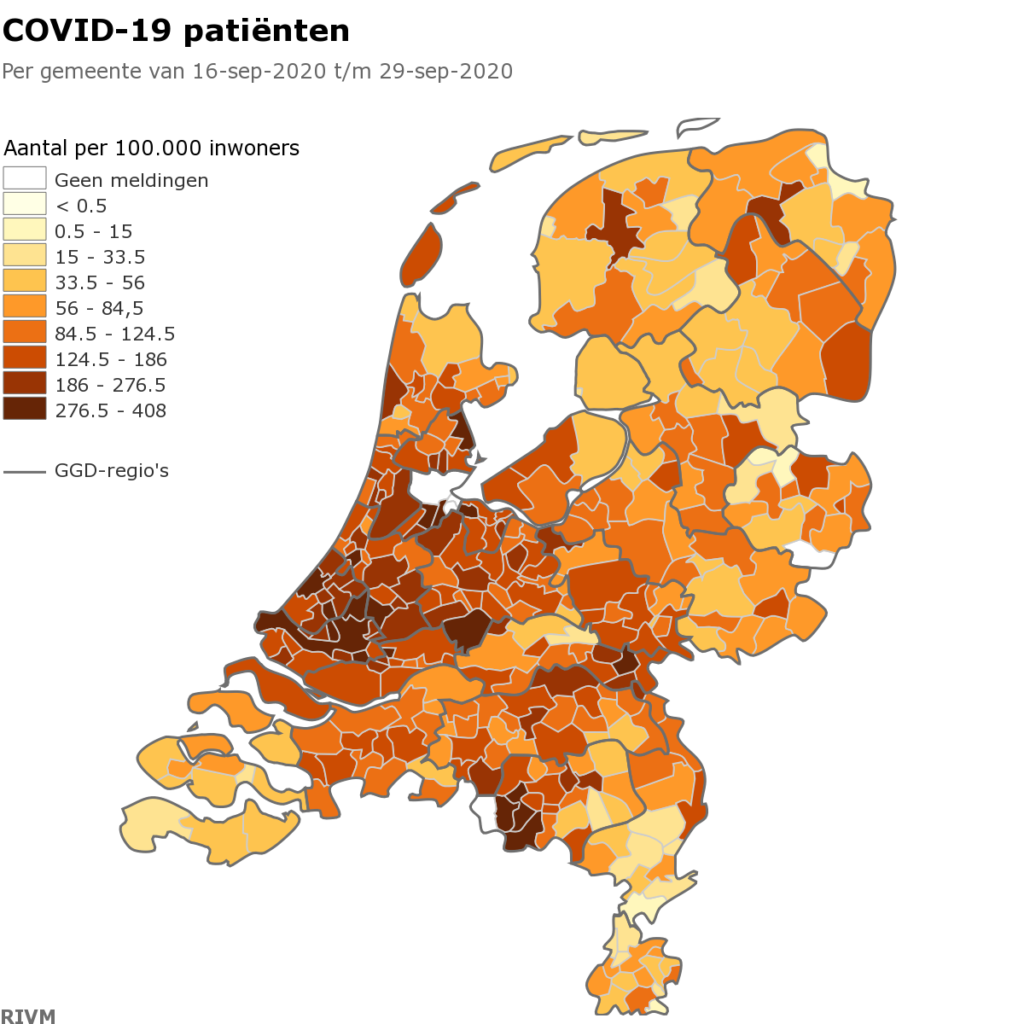
While many of the new infections are occurring within families or households, parties, workplaces and gatherings are definitely playing a role. These clusters are particularly common in Noord Holland, Zuid Holland and Zeeland. Most of those infected are relatively young, between 20 and 40 years of age.

The number of tests taken this week has increased, by just under 18%. However, this does not go all the way to explaining the increase in cases. Last week, 0.6% of those tested did have coronavirus: this has increased by two thirds this week to 1%.

The RIVM encourages people to stick to the measures in place, such as sneezing or coughing into your elbow, keeping 1.5m from other people, and staying at home and getting tested if you have symptoms. However, part of the problem is that people are no longer following these rules, especially at social gatherings. “People now have a sense of freedom and want to catch up on parties. But our concern is that the measures are no longer being observed,” says Timen.

If the Netherlands continues this way, the risk for a second wave in the autumn is much higher, Timen says. “If we continue like this, the risk that it will indeed come is much bigger.”

You can follow DutchReview on Facebook for more updates on coronavirus in the Netherlands.

Feature Image: DutchReview/Canva

Weekly coronavirus update: number of new cases almost doubles

1

The RIVM has published the latest weekly update on coronavirus in the Netherlands.

The update brings bad news this week: the number of coronavirus cases has almost doubled, compared to last week. The RIVM reports that 987 people have tested positive for coronavirus this week, in comparison to 534 last week.

This week, the RIVM reports that 19 people have been hospitalised as a result of coronavirus, and are now receiving medical care. That is an increase of three people, compared to last week.

Unfortunately, the virus continues to cause casualties. Since last week, seven more people have passed away. Last week, eight people died as a result of coronavirus, so we’re seeing a slight decrease here.

Overall, the increase of new cases this week is bad news for the Netherlands. It should be “a wake up call” for the government, according to Aura Timen from the Center for National Coordination of Infectious Disease Control.

Coronavirus vaccine purchased by the Netherlands appears to be safe and working

A vaccine developed by the University of Oxford had human trials, and the results so far suggest that it is safe for human use and that it’s working.

The vaccine helps the body develop antibodies and T cells that help tackle coronavirus. Researchers have nevertheless stressed that it’s still too early to determine if the vaccine provides adequate protection against the virus. By the end of the year, the researchers hope to know for sure if the vaccine is effective or not.

A million coronavirus tests remain unused in the Netherlands

The Netherlands has one million tests for detecting coronavirus that have not yet been used. Of the 1.5 million tests that are available, only half a million were used.

When widespread testing became available on 1 June, it was believed that more people would go out to get tests. However, the maximum daily capacity of 30,000 tests per day was never reached.

Experts are currently debating what to do with all of the unused tests. No matter the case, the RIVM is preparing an expanded testing capacity of 100,000 tests for autumn, when many people will have colds.

Follow DutchReview on Facebook for the latest news in the Netherlands.

Feature Image: DutchReview/Canva


This Dutch bank does things differently: how bunq operates ethically and sustainably

You must have been living under a rock if you didn’t notice us talking about bunq as the go-to-bank for internationals in the Netherlands, but where did this innovative new financial player come from? 

bunq is a revolutionary bank that disrupted the industry in 2012, and has been steadily growing since. In fact, it has doubled its user deposits from 2018 to 2019. We at DutchReview have been massive bunq fans for a while now, as you’ll have seen from our previous articles on them.

But we’ve never had the opportunity to sit down with someone who works at bunq, and ask them why they do things the way they do. bunq, after all, is not exactly your typical bank.

We had a chat with Oliver (Olly) Sinclair, who is bunq’s Recruitment and Employer Branding Specialist, to talk about what makes bunq different, and why it chooses to operate the way it does. For anyone who has been wanting to know more about bunq, or who just wants to hear about something different in the banking world, this article will do the trick.

We sat down with Olly to talk about what makes bunq different. Image: Oliver Sinclair/Supplied.
We’ve written lots about the different features bunq has (like Slice groups, Auto Save or automatically splitting your salary),  as well as why they’re a particularly great option for expats and for freelancers. bunq’s features are awesome for travelling, and for internationals.

bunq’s founding story: user-centred banking

bunq was founded in 2012 by CEO Ali Niknam, who wanted to do banking differently. In the wake of the 2008 crisis, where many people felt that the banks weren’t looking after them, bunq set out to do something completely different – put its users at the heart of everything it does. In 2014, bunq became the first bank in 35 years to get a European banking permit, which it acquired from the Dutch Central Bank.

freelancing in the netherlands
bunq does banking differently. Image: Vedika Luthra/Supplied.

In late 2015, it opened fully to customers in the Netherlands, and by 2019, it had expanded to the whole of Europe. Its approach has always been to centre the customer: a lot of bunq’s features and updates have been inspired by feedback from users. Every staff member, no matter what their usual role is, will spend a couple of hours a month working in the customer support team. That means that everyone working at bunq stays in touch with what it’s like to be a user, to ensure that the bank remains centred around the customer. The aim is to help customers feel like “their voice is being heard”. In fact, Olly says, “speaking out is what makes bunq the bank of The Free.”

How bunq was able to thrive during the corona crisis

Given that bunq rose from the ashes of the 2008 financial crisis, we wanted to ask Olly about how the bank was finding the current period of financial uncertainty as a result of the coronavirus crisis. Did banking differently actually turn out to be beneficial during this strange period in history? “The choices we’ve made have really helped us,” Olly says. “If you’re looking to attract millions of new users every month, that would require a different approach from ours: but we’re really happy with how things are going.”

At a time when a lot of businesses and people are struggling, bunq is doing really well. That’s partly down to the fact that it’s fully digital. In the corona times, many traditional banks had to close down branches or reduce their opening hours, which of course made it harder for their customers to bank as normal. The digital nature of bunq made it both a really attractive option to potential customers during these times, and also meant that it was fully prepared for our collective shift to doing everything more digitally. bunq is also bucking the trend that people don’t use challenger banks as their current accounts – 67% of bunq Premium accounts are major usage accounts and are consistently being used with deposits higher than €1,000.

How bunq hires the best people from all over the world

bunq hired 55 new staff members during the coronavirus crisis, and actually had their biggest hiring quarter ever. As a bank that prides itself on its multilingual customer service and all-round international vibes, it will probably come as no surprise to you that bunq has a really diverse team of people behind it.

A large part of that is down to the fact that bunq seeks out the best people for each role, and does whatever it needs to do to get them on its team. Olly, for example, is Australian, so needed a company to sponsor his visa— which bunq was happy to do. bunq also always invites its potential employees to its physical office, so that they can check if the bank and employee are a good fit. It’s also an opportunity for the potential employee to check if they feel at home there, Olly says: “it’s a two-way thing”.

If bunq is sounding like the sort of place you’d like to work, then it’s worth mentioning that they currently have over 20 positions open on their website.

bunq’s rainbow card: “in the end, we are all human”

In August last year, one of bunq’s customers was beaten up while on holidays in India, because his assailants thought that his use of the rainbow card meant that he was gay. When the news broke, CEO Ali Niknam revealed that he had gotten requests over the years to “make the card less gay”. This is absolutely not something bunq is planning on doing, Niknam says.  “As if being gay would be somehow bad. Black, white, yellow, purple, gay, straight, bi: in the end we are all human. ” According to Niknam, the colours represent “the happiness and pleasure that people associate with seeing the rainbow”.

https://www.instagram.com/p/CBfUOC8AKFR/

How sustainability works for bunq

In our previous articles about bunq, their focus on sustainability has been something we’ve been delighted to highlight for you. bunq used to offer its customers a Metal Card: a stainless steel bank card which allows you to plant a tree for every €100 you spend. The Metal Card is much more durable than the plastic one, so much better for the planet too! bunq has now extended this subscription to anyone who wants it, regardless of whether they have the (very aesthetic) Metal Card.

Now that we had the chance to sit down with Olly, we wanted to ask why bunq had chosen to focus on sustainability. “Sustainability is the future,” Olly says. “It’s not a money-making solution, it’s a life-making solution. For everyone and every business, the health of the world should be the number one priority.” A side benefit of bunq’s focus on sustainability has been the attention it has drawn to the bank. Sustainability is something that is important to most people at this stage, but it’s unusual to see a bank acting so decisively in line with that.

Now, Olly says, bunq is known for its action behind the Metal Card. “When I started at bunq, two and a half years ago, my friends weren’t really talking about it. Now they’re all talking about the bank that plants trees, and a lot of them have switched to us as well.” bunq also recently introduced a new subscription option, called SuperGreen. Customers can plant a tree for every €100 they spend. In doing so, they can effectively become CO2 free within two years— with literally zero effort. bunq is the only bank in the world to offer this option to its customers.

Teaming up for the common good

Having seen how people had banded together to plant trees by choosing the Metal Card and now the SuperGreen subscription option, bunq also decided to create a new feature: the Common Goals feature. This allows anyone to start a campaign to raise money for a cause, and then they can easily share it with other people to more easily gather funds for it. Another way bunq allows its users to harness the power of their money is by giving them full control over what it’s invested in, or if it’s invested at all. bunq also only invests ethically as a company. More about this here.

From centring its customers, to making sure the company is ready for the future, bunq’s approach to banking is innovative, ethical, and above all, forward-thinking. We’re delighted to bring you this article in collaboration with them— it was really fascinating to hear all about the thought process behind this bank that we’ve been a fan of for so long.

Whats your favourite bunq feature? Or do you have any ideas you think they should incorporate? Let us know in the comments below. 

Feature Image: Vedika Luthra/Supplied. 

Shortage of student housing eases as international students stay home

0

An unexpected consequence of the coronavirus crisis can be seen in the housing market. As fewer international students are coming to the Netherlands, more rooms have become available.

This is confirmed by figures coming from Kamernet. When the coronavirus crisis started, 53% more rooms were available, as many international students returned home, reports RTL Nieuws.

The market has since stabilized, but there is still more housing availability than last year. At the beginning of July, there were 18% more homes on rental websites compared to the same period last year.

Student cities experience this differently

The amount of available rooms varies depending on the student city. In the Hague, 21% more rooms were offered compared to last year in June. In Rotterdam, there were 14.5% more rooms, in Utrecht 38% and in Amsterdam 44%.

Not only have there been more rooms available, but waiting lists have also become shorter. According to Mark Kuipers, CEO of Greystar, a real estate developer for the student campus in Diemen, “Normally you call the first ten, and then you have filled the rooms. Now we had to call 40 people.”

Nevertheless, Kuipers considers that the demand for student housing in the Netherlands remains high.

Paul Tholenaars, the director of Kences, a knowledge centre for student housing, believes this is only a temporary shift. “When the foreign students left, it expanded the room market, but the number of students is still growing, so the housing shortage continues to increase. Corona has given some space, but interest in studying is not diminishing.”

Has the coronavirus affected your housing situation? Let us know your thoughts in the comments!

Feature Image: na4ev/Pixabay


The EU reaches a deal – Rutte satisfied and gets a discount

After many hours of negotiations, the leaders of the 27 EU countries have managed to strike a deal on the coronavirus recovery fund.

A press conference will be held later this morning with the details of the deal by European Council President Charles Michel.

Prime Minister Mark Rutte will also give a press conference later today, RTL Nieuws reports. He revealed that it had been a difficult process and that it “had turned into a long weekend.”

After four days of meetings, Michel managed to bring the EU leaders on the same page on the EU budget and the coronavirus recovery fund. From what is known so far, the recovery fund has €390 billion in subsidies and €360 billion in loans, for a total of €750 billion.

Italy will receive 28% of the recovery fund, as it is one of the most affected countries by the coronavirus. Of that sum, €127 billion are a loan, while €81 billion are provided as a subsidy. Prime Minister of Italy, Giuseppe Conte, expressed his satisfaction with the deal, NOS reports.

Difficult negotiation

It was not easy to reach a deal, as there is a conflict of interest between countries like the Netherlands and the hard-hit southern European countries. Mark Rutte especially received criticism for his pragmatic economic approach. In his view, he is simply defending Dutch interests.

At his insistence, safeguards and “emergency breaks” were implemented when it comes to allowing EU countries to access the recovery fund. The agreement stipulates that countries can be held accountable for the agreements they made before receiving the funds. “In the most extreme cases, that could mean pulling the emergency brake if those countries have not done enough,” Rutte stated.

Specifically, the emergency breaks are implemented for EU countries that break the rule of law and have a weakened independent justice. Poland and Hungary are two EU countries where the “emergency brakes” might be implemented if they do not backtrack on some of the changes they made to their justice systems.

The multi-year budget of the EU is now at €1074 billion. The Netherlands will receive a discount of €1.92 billion on the annual EU budget, as well as on using the subsidies from the recovery fund.

What do you think of the deal? Should the Netherlands be bailing out the south?

Feature Image: Sebastiaan ter Burg/Flickr