Home Blog Page 622

“Time and boredom”: why Dutchies are having more sex during the coronavirus crisis

0

A survey of South-Hollanders has shown that the coronavirus crisis doesn’t have to be all bad news: people are having more sex and masturbating more often during the lockdown, AD reports.

The survey of 1400 people was carried out by EDC Retail, more commonly known as EasyToys. Although lockdown has been hard in many ways, Dutchies have been taking things into their own hands to deal with the stress of the situation.

More interest in sex during the intelligent lockdown

61% of those surveyed said that they were more interested in sex than usual. 96% of those with children said that they’d had sex during the coronavirus crisis, and 91% of those in a relationship but without children said the same.

The survey also showed that Dutchies are having sex more often: 3.3 times a week on average, in comparison to the pre-lockdown 2.8 average. 25% of those surveyed said that they were also taking advantage of the slower pace of life and extending the amount of time they take to have sex.

Single people are having fun too

And what about the single people? Well, apart from the RIVM’s advice to find a sex buddy, 75% of single people are masturbating more often. Their reasons are pretty simple: “time and boredom”.

Please don’t tell us anything about your sex life in the comments below. 

Feature Image: Toa Heftiba/Unsplash 

Half of the Dutch STILL don’t wash their hands, even in the face of a pandemic

0

With coronavirus in full swing, the government as well as media outlets have made it pretty clear that one of the ways to prevent the spread of the virus is, you guessed it, to wash your hands.  

The RIVM is currently investigating the efficacy of advice regarding coronavirus in the Netherlands.

Shockingly, only 48% of Dutch people are listening to advice to wash their hands more often one the past few weeks, RTL Nieuws reports. At the press conference on Tuesday, Minister of Health, Hugo de Jonge stated that of all the advice issued by the government, this was the worst-scoring in terms of the percentage of people following through.

Ironically, the advice to wash your hands is given pretty regularly, de Jonge notes. Yet even before coronavirus times, people in the Netherlands still struggled to wash their hands. Why that is remains a mystery equal only to the ingredients of bitterballen.

Other coronavirus advice is being (mostly) followed

On the plus side, de Jonge also stated that people are following other behavioural advice well, such as keeping to smaller groups, taking the train only when necessary and keeping a distance from one another.

But hand-washing literally takes two minutes, and should be a reflex action, just as the 1.5 meter rule has become.

In normal times not washing your hands is gross enough already, but during the coronavirus times it is truly a matter of life and death. So, please: wash your hands, people!

Why do you think Dutchies score badly when it comes to washing hands? Let us know in the comments below.

Feature image: Burst/Pexels

Homophobic stabbing incident in Amsterdam, main suspect is 14-years old

0

Despite being one of the most pro-LGBTQ countries in the world, homophobia is unfortunately still an occurrence in the Netherlands.

On Thursday evening, a gay man was stabbed with a shard of glass in Amsterdam East, reports NOS.

Attacked by a 14-year old

The gay man was on a canoe with another gay man, when a group of teenagers threw homophobic slurs at them.

When the two men stopped by the side of the canal to confront the teenagers, they were attacked.

The victim was stabbed with a shard of glass by one of the teenagers, who then ran away. He was then taken to the hospital.

The main suspect is only 14-years old, while the other two teenagers are aged 14 and 15 respectively. They were already known to the police for causing nuisances in the past.

The victim will press charges, and the police are currently investigating the case.

Follow DutchReview on Facebook for more news from the Netherlands.

Feature Image: Dickelbers/Wikipedia Commons 

Overcrowding in parks and at the beach on summery Ascension Day

0

Yesterday was Ascension Day, and a summery one at that. Dutchies flocked outside to the sun, which meant that some areas became way too crowded.

As the Netherlands begins to reopen, the emphasis is on avoiding crowded spaces rather than staying home. Yesterday, many Dutchies did neither, with the umbrella organisation for regional security groups (the Veiligheidsberaad) reporting that it was far busier yesterday than it has been over the past weekends, and in some places, it was overcrowded, NOS reports.

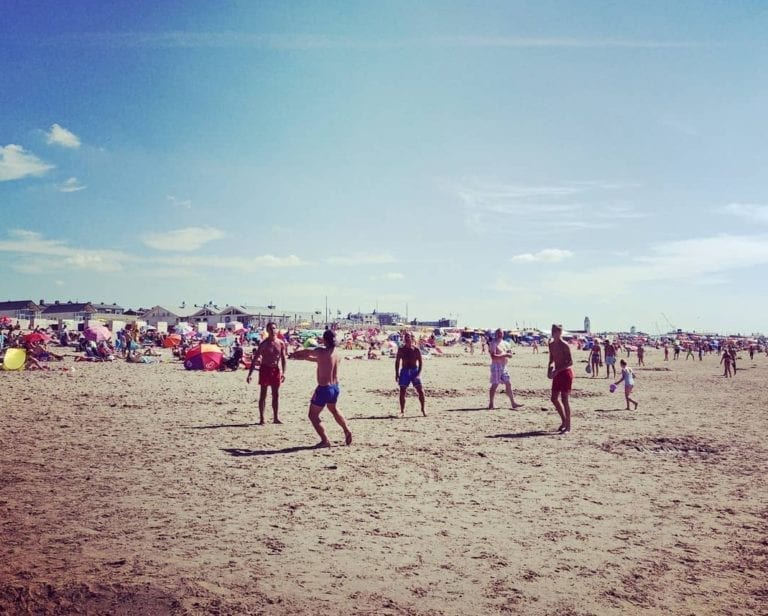
This was especially the case on some beaches, in the Amsterdam Somerlust park, the Groningen Noorderplantsoen, and the city centre of Limburg. It was also necessary for security teams to intervene in some areas with lakes, as well.

No mass fines, areas closed down instead

But the approach that the regional security teams took was not one of mass fines, but simply of closing off overcrowded areas. They generally spoke with groups and warned them of the risk they were taking, and only if the group didn’t cooperate were fines handed out.

According to Hubert Bruls, head of the Veiligheidsberaad, it is expected that on nice days, people will want to go outside. The emphasis is not on blaming people, but on keeping control of the situation by shutting down popular spots. This is the approach that will probably also be used throughout the summer.

Dutch Twitter reacts to Ascension Day overcrowding

Dutch Twitter, naturally, was outraged by people being (what could be termed) a bit reckless. The queue of people waiting to enter the Vondelpark in Amsterdam was, indeed, a bit terrifying:

And it was definitely true that some places were way too crowded:

Especially the main street of Amsterdam ;).

How did you spend Ascension Day? Let us know in the comments below.

Feature Image: LeifLinding/Pixabay

Coronavirus update Ascension day: traffic jams on route to the Dutch coast

It’s ascension day 2020 and also one of the warmest days of the year, and here we are with the update from the RIVM on the latest coronavirus figures of the Netherlands.

As of today, a further 253 cases have been detected in the country, bringing the total number of cases registered to 44,700.

In terms of the severity of some of the cases, another 13 people have ended up in the hospital.

Unfortunately, another 27 people have passed away from the virus, with 5,775 total casualties ever since the outbreak began.

Heavy traffic on the roads to the beaches

It’s a warm day and everybody is a bit more relaxed regarding the coronavirus, so we’re sad, but not surprised, that there are traffic jams on the roads to the popular Dutch beaches. Especially on the roads to the Zeeland coast and in the North of North Holland, it’s pretty busy, says the ANWB to the NOS. In total, there are more than 60 kilometers of traffic jams in the Netherlands, according to the ANWB.

According to the ANWB, crowds are not too bad on the coastal roads in South Holland and there are no traffic jams on roads to beaches in Noordwijk, Katwijk and Scheveningen yet. However, it is already full of cars in the center of Noordwijk. Because there is no more space available in the municipal parking areas, the municipality advises that drivers do not come to Noordwijk. Zeeland is saying the same thing.

And random thought, if you can’t walk or cycle to the beach you might as well be better off and stay home.

Fewer new expats: coronavirus halves Dutch immigration

Dutchies in and foreigners out — that’s the result of coronavirus on Dutch migration. New data from the Statistics Netherlands shows in the weeks since the intelligent lockdown, fewer immigrants registered with a Dutch municipality. Read up about these developments in our article on it.

That’s it for today’s update, go and enjoy some sunshine in a socially distanced manner.
Image: pixabay

Amsterdam expats are getting a heavier dose of Dutch culture during the pandemic

It’s springtime in Amsterdam. The trees are green with fresh new leaves, flowers are in bloom, and the sunny days keep getting longer. The natural world seems to all be in working order, but the streets tell another story—one that might give Amsterdam expats their first real taste of Dutch culture without leaving the city. 

This year, spring has been replaced with the pandemic season. What is usually the time of year for long weekends, holiday celebrations, and terrace drinking is now the time for DIY projects, working from home, and spring cleaning. But aside from the quieting everyday effects of social distancing, an even more noticeable change can be felt from the marked absence of tourists.

This spring, you aren’t hearing the howls of hen and stag parties taking over the city with their debaucherous weekend pub crawls, leaving piles of puke and penis paraphernalia in their wake.

Rather, you’re more likely hearing the squeals of rosy-cheeked children playing in the streets with their bicycles, water toys, and sidewalk chalk, leaving behind little more than a few puddles and traces of hopscotch.

The familiar sounds of rolling suitcases have been replaced by neighborly chit chat, and the countless languages and accents exchanged for, well, mostly Dutch.

Amsterdam is characterised by its tourism

Until now, it would rarely cross my mind that I lived in the Netherlands as I’d dodge tourists staring at their phones, the buildings, their reflections in the windows, anywhere but their immediate surroundings.

I simply felt like I lived in Amsterdam—the international city where tourists flock for the Red Light District and coffee shops, stocking up on wooden tulips, clog postcards and canal selfies before running, bleary-eyed through the airport, to barely catch their flight home.

Don’t get me wrong, I love this city. It also has world-class museums, a rich history, impressive architecture, and a longstanding culture of tolerance. But all the things that make Amsterdam wonderful and unique are also the things that draw somewhere around 20 million visitors each year.

That overwhelming taste of tourism can sometimes taint the palate, and tends to overshadow the Dutch side of the city’s culture.

Now, with this abrupt (and dare I say, welcome) shift, it’s almost as if Amsterdam has morphed into a completely different city, and suddenly, it feels a whole lot more like living in the Netherlands.

Spotting the undeniably Dutch

Like everyone else, I’ve always accepted that if I want to experience Dutch life I have to get out of the city. But now that the fog of tourism has lifted, aside from the smattering of expats, Amsterdam is likely as Dutch as we’ll ever see it. Every day, all around, I’m noticing things like:

  • People with relentlessly high spirits, in spite of the rampant coronavirus.
  • Families and friends still managing to get together for circle parties, balloons and all, in spite of the rampant coronavirus.
  • Streets lined with people enjoying drinks and meals outside for as long as there’s any hint of sunlight, in spite of the rampant coronavirus.
  • Flowers in hands, in homes, in planters—everyone keeping their flowers fresh, in spite of the rampant coronavirus.
  • People who trust in their healthcare system (or perhaps the power of paracetamol) enough to go predominantly mask-free in public, in spite of the rampant coronavirus.
  • Parks packed with sunbathers and tans that resemble something closer to those of tropical beach dwellers, in spite of the rampant coronavirus.
  • An air of unphased confidence, giving the impression that everything will be okay, in spite of the rampant coronavirus.

Of course, this cultural evidence was all here before, but it was often hard to detect through the pot smokey haze of tourism. Now, these characteristics are highlighted even more by the, you know, rampant coronavirus.

It’s the little things

The unfortunate truth, however, is that Amsterdam thrives on its tourism and the pandemic has had enormous economic repercussions, not to mention the impact on many individuals, families, and everyone involved in healthcare.

Since I can’t change those things, these days, I’m finding gratitude in the little things—things I want to savor because I know they won’t last for long. Things like:

  • Cycling through the bike lanes without having to keep my thumb hovering constantly over the bell because everyone knows how bikes and bike lanes work.
  • Walking around, admiring the city center, and the canal belt no less, without being asked to take pictures of people.
  • Practicing more than just my goedemiddag when I go to the grocery store because the cashier doesn’t automatically assume I can’t speak Dutch (they’d be mostly right but I so desperately want to try).
  • The sound of the Dutch language everywhere, which (though admittedly wasn’t always my favorite) has come to sound like home.

Let’s be clear, nothing about right now can truly be considered “typical Dutch life,” just like nothing in the world can be considered typical anything while we’re in the middle of a global pandemic. But excusing the fact that the whole world is off-kilter, I, for the first time since living in Amsterdam, feel like I live in the Netherlands. It’s a new experience, and one I’m afraid I’ll miss when the sweat pants and tiaras make their grand return.

What cultural changes have you noticed since the coronavirus pandemic? Let us know in the comments below!

Feature Image: MabelAmber/Pixabay

Fewer new expats: coronavirus halves Dutch immigration

Dutchies in and foreigners out — that’s the result of coronavirus on Dutch migration. New data from the Statistics Netherlands shows in the weeks since the intelligent lockdown, fewer immigrants registered with a Dutch municipality. 

Here’s a recipe: take the closed borders of the Netherlands, and add it to outside countries blocking migration. Then mix it all together with international air traffic coming to a near standstill, and what do you get?

Hugely reduced immigration.

Before coronavirus reared its ugly head, around 5,200 people registered in the Netherlands each week. Since mid-March, that number has fallen rapidly to just 2,200. Non-EU nationals represent the sharpest drop, going from 2,500 per week to just a little over 700.

Image: CBS

Who’s leaving and who’s coming back?

The second-largest group of migrants to the Netherlands are normally people from India — but they’ve had a huge decline. While there are normally 220 Indian immigrants per week, now there are just 40 per week on average.

Meanwhile, only a thousand EU citizens continue to register in the Netherlands on a weekly basis, a decline from 2,300 normally.

But coronavirus did have one other effect: thousands of native Dutchies have flocked back home, around an extra 100 per week than average.

Did coronavirus stop or speed up your migration plans? Tell us in the comments below!

Feature Image: Ketut Subiyanto/Pexels

Coronavirus update: 198 new cases as Amsterdam announces it might be the last city to reopen

0

The RIVM has published the latest count of coronavirus cases in the Netherlands, for May 20.

As of today, a further 198 cases have been detected in the country, bringing the total number of cases registered to 44,447.

In terms of the severity of some of the cases, a further 14 people have ended up in the hospital.

Unfortunately, another 33 people have passed away from the virus, with 5,748 total casualties ever since the outbreak began.

Youth unemployment skyrockets because of coronavirus

Unemployment has risen with unprecedented speed in April. Those who are most affected are young people with flexible contracts. The industries most affected by coronavirus- restaurants and cafes, the cultural sector, etc- are those in which young people tend to work, and they tend to do so under flexible contracts. That means that businesses are able to fire them, or give them no more hours, far more easily than more established employees. The government is due to release a second support package for affected industries this evening.

How the Dutch are expanding intensive care

Today, the Dutch House of Representatives will discuss the expansion of normal IC capacity in the Netherlands. Specialists propose a “lite” version, in which more ventilation and rehabilitation clinics should be implemented.Health minister Hugo de Jonge advocates for an increase in IC capacity from 1,250 to 1,700 beds. However, a number of nurses and other healthcare professionals argue that this idea is impossible to carry out due to staff shortages.

Amsterdam may be the last Dutch city to reopen

Based on the current statistics by the RIVM, there have been calls by certain political parties to reopen certain industries in Amsterdam, such as the catering industry, hospitality as well as the tourism industry. Mayor Halsema warns against this enthusiasm: “I hear you talking about international tourism, and I also know that there are 55,000 hotel beds waiting for guests. In the coming period, however, we must be extremely cautious about stimulating regional, national and international traffic. If we do that too excessively, we run the risk that Amsterdam will become a seat of fire in a second wave [of coronavirus infections].”

Last night’s press conference

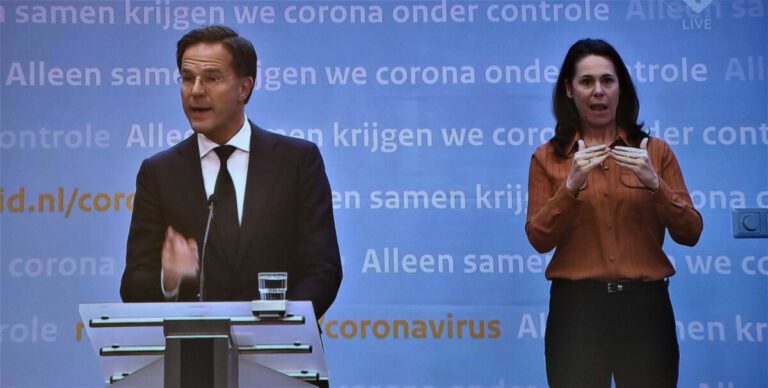
This evening, Prime Minister Rutte and Minister for Health Hugo de Jonge gave a press conference about the Netherland’s future approach to coronavirus, and what we can expect from the upcoming relaxations of coronavirus regulations. There were no big surprises, just a few technicalities that were a little different from what was expected. As planned, public buildings, including cafes and restaurants, can reopen from 1 June at midday.

You can follow DutchReview on Facebook for more updates on coronavirus in the Netherlands. 

Feature Image: DutchReview/Canva

Intensive Care “lite”: the Dutch way of expanding ICU capacity

0

Today, the Dutch House of Representatives will discuss the expansion of normal IC capacity in the Netherlands. Specialists propose a “lite” version, in which more ventilation and rehabilitation clinics should be implemented. 

Health minister Hugo de Jonge advocates for an increase in IC capacity from 1,250 to 1,700 beds. However, a number of nurses and other healthcare professionals argue that this idea is impossible to carry out due to staff shortages, NOS reports.

Others say that this period is still uncertain, and it may well be the case that such an expansion is unnecessary, as in pre-corona times, the capacity at 1,250 was sufficient. In fact, even during the worst coronavirus peak in the Netherlands, hospitals were able to absorb the shock. Additionally, IC beds are costly, at £2,500 per day in a teaching hospital.

IC lite

Thus, the idea of increasing ventilation and rehabilitation clinics, the IC lite, is intended to provide patients that are no longer in acute distress with rehabilitation so that they can continue to recover, whereas IC clinics would be reserved for patients in serious condition.

Not only does this cost less, at £1,800 but also allows for patients that lie somewhere in the middle to relieve the right care.

However, some specialists such as Diederik Gommers, president of the Association for Intensive Care, is concerned about a second wave, and whether the Dutch will be capable of accommodating it without a greater IC capacity.

Others contend that it’s merely a matter of creating space and getting patients out of IC units faster if possible.

Supply and demand

Pulmonologist Leo Heunks of the Amsterdam UMC says that only the amount of beds necessary should be available, since a surplus (a greater supply of beds than demand) would result in patients being admitted to IC units more easily, when it isn’t always required (the threshold for admitting patients into IC care is lower in the US, for instance).

Heunks would like to prevent this, arguing that it would only be costly, and would make it difficult to decrease beds later on in the future.

Do you think that the Dutch IC capacity should increase? Let us know your thoughts in the comments. 

Feature image: Canva

Amsterdam exceptionalism: why the Dutch capital might be the last to relax coronavirus restrictions

In the Netherlands, social distancing measures seem to be doing their job, as death rates stay fairly low, and the number of coronavirus patients in the ICUs continues to fall. This has given people the idea that normality could be just around the corner. 

The Mayor of Amsterdam, Femke Halsema, warns that the city might still have to keep the measures, lest a second wave of coronavirus emerges, reports Het Parool.

A cautious approach

Based on the current statistics by the RIVM, there’s been calls by certain political parties to reopen certain industries in Amsterdam, such as the catering industry, hospitality as well as the tourism industry.

Mayor Halsema warns against this enthusiasm, stating that “I hear you talking about international tourism, and I also know that there are 55,000 hotel beds waiting for guests. In the coming period, however, we must be extremely cautious about stimulating regional, national and international traffic. If we do that too excessively, we run the risk that Amsterdam will become a seat of fire in a second wave.”

Lack of space

One of the main challenges that Amsterdam faces is a lack of space. With the existing population of 800,000 people, it’s already hard enough to respect social distancing measures.

If thousands of tourists flock to the city, respecting the measures would become downright impossible.

High population density

Another one of the major risk factors in Amsterdam is the high population density. A higher population density means a higher risk of infection, as well as a higher risk of a second wave of coronavirus in autumn, should the city reopen.

Halsema warns that it will take Amsterdam longer than other areas to reopen safely. She also expects to see regional differences when it comes to reopening. For example, places such as Groningen and Drenthe might reopen faster than other areas, given their lower populations and lower infection rates.

The Mayor has not specified which industries will remain closed in the city compared to the rest of the country. Her cautious approach is, however, a reasonable one.

Should other cities in the Randstad area take a cautious approach to reopening? Let us know your thoughts in the comments!

Feature Image: Vlad Moca-Grama/Supplied