Home Blog Page 621

How to get the most out of The Hague after social distancing measures relax

The wait is over! After months of banana bread baking, online yoga, and Zoom pub-quizzes, cafes, restaurants, bars, museums and other spaces are re-opening on June 1 — under certain conditions. 

With a face mask on and hand sanitizer at easy reach, here’s how to spend the first 24 hours in The Hague after the relaxation of the coronavirus control measures!

But first, a quick reminder: the end of the intelligent lockdown does not equal the end of coronavirus. Head out and support businesses and museums — but keep your distance, wash your hands, and abide by social distancing rules.

12:00 PM: Dear brunch, I missed you!

The era of store-bought pancakes is well behind me – now is the time to enjoy some lekker food cooked by others!

My go-to spots for delicious brunch in the city are Confetti in Prinsestraat, or Haley’s Comet in Piet Heinstraat. Both cafes have that feel-good, funky atmosphere — much needed after two-months of isolation!

READ MORE: 7 Things you didn’t know about The Hague

If you’re closer to the centre, you could also check out Palmette across the Binnenhof. I know what I’m ordering first — one of their morning cocktails to celebrate the end of the lockdown!

Reminder: these cafes will allow a maximum of 30 guests – remember to make your reservation in time!

2:00 PM: Soak up some culture

What I’ve mostly missed during the lockdown is visiting museums. This is why I’m going to make up for the lost time by visiting three of my favourites!

First on my list, the Mauritshuis. Conveniently situated close to the Plein, it was high time I reunited with Vermeer’s Girl with a Pearl Earring! The only reminder of her is my coffee mug from the giftshop…le sigh.

READ MORE: 7 of the best free things to do in The Hague

Next up and in close proximity, is the Escher in Het Paleis museum. The former Winter Palace of Queen Mother Emma of the Netherlands houses the collection of intricate graphic prints of the Dutch artist M.C. Escher.

Last stop for my museum-hopping is the Voorlinden at Wassenaar. Ron Mueck’s hyper-realistic couple under the umbrella is waiting for me to wave and say hello.

Reminder: these cafes will allow a maximum of 30 guests – remember to make your reservation in time!

5:00 PM: Gelato time

If you have a sweet tooth like me, then you must have missed eating fresh homemade ice cream.

Het IJskabinet in the Plaats square has re-opened for business – do yourselves a favour and try their vegan chocolate sorbet! Or, if you’re around Plein, then do not miss Marinello at Lange Poten – one of the oldest ice cream parlours in The Hague.

For those who are a bit further from the city center, Ollini can satisfy your ice cream cravings too. My to-try list includes their mocha and lemon-pie flavours.

8:00 PM: Dinner is served

Dinner is going to be candlelit, and not at home!

De Resident in Denneweg has been a locals’ staple since 1977. What is it most famous for? Its ribs and steaks — try either, or both, your choice!

A personal favourite, Walter Benedict, is also based in Denneweg. If the weather allows it, grab a seat in the backyard — their little urban oasis will instantly get you in a summer mood.

READ MORE: These are the 7 best places to get vegan food in The Hague in 2020

If you find yourselves closer to the Driehoekjes street, then it’s worth checking out Milú. This international cuisine gem has it all — from truffle risotto to beef teriyaki with Chinese pancakes.

10:00 PM: Proost!

Tonight we’re celebrating the end of isolation and the beginning of social life — with social-distancing of course. This occasion requires a toast.

Located in the cellars of the Old Town Hall of The Hague, dating back to 1564, Beergarden has a wide selection of more than 100 beers to choose from. Did anyone say beer tasting?

For drinks with a view, go for the Bleyenberg rooftop bar. Let the lights from the Grote Markt and the city centre set the mood for this celebratory night!

At Valkenbosplein, Café Franklin is that neighbourhood cafe with a wide selection of wines that makes you choose the ‘hood instead of the centre.


Of course, The Hague has many more options to offer when it comes to drinks and dining. The relaxation of the control measures has come just in time to explore them all! Where are you planning to spend June 1? 

Feature Image: Canva

Private party across the border in Germany leads to 18 infected guests

While countries around Europe are easing measures, an incident across the border in Germany reminds us that the crisis is far from over.

A private party held at a restaurant in Leer, Germany, right across the border from Groningen, lead to 18 of the guests being infected with coronavirus, reports RTL Nieuws.

Party thrown to celebrate easing of measures

Ironically, the party, organized by the owner of the restaurant, was held in order to celebrate easing the measures against the coronavirus in Germany.

14 people were infected during the party and another four people got infected by contact with people who went to the private party.  118 people have been preventively quarantined as some of the guests are already showing coronavirus symptoms.

As one would expect from a party celebrating easing of coronavirus measures, people did not respect the necessary social distancing rules at the party. Hands were shaken, the staff did not wear masks, nor was the 1.5-metre distance respected.

The guest list was also inadequate, leading to more guests coming than there were on the list. The owner faces a fine of up to 25,000 euros for this reason.

German Health Minister Carola Reimann said that this outbreak proves that the battle with the coronavirus is far from over. “It is still there and we must work together to ensure that the efforts of the past few weeks have not been in vain.”

Follow DutchReview on Facebook for all coronavirus related-news in the Netherlands.

Feature Image: Free-photos/Pixabay

Dutch primary school students’ learning undeterred by the pandemic

0

Primary schools have been partially open for almost two weeks now, and we’re beginning to see how the weeks of homeschooling have affected the students. Luckily, it seems to be mostly good news, NOS reports.

Primary school teachers were asked by General Association of School Leaders (AVS) about how their students had progressed during their time away from school. 90% said that the progress of their students was constant: that is, that the coronavirus crisis hadn’t had much of an impact on their learning progress.

10% of those surveyed reported a delay in their students’ learning, and 1% said that the delay was serious. “Plans are already being made for students where a delay in progress has been identified,” said AVS Vice President Ingrid Doornbos. She also mentioned that in some schools, students’ learning progress was actually ahead of where it might otherwise have been.

AVS praises teachers and parents, but warns that the crisis isn’t over yet

The AVS was quick to praise parents and teachers for how they had handled the crisis: teachers had created online learning systems in an extremely short space of time, and parents had successfully juggled working from home and homeschooling.

But the impact of coronavirus on primary schools is not over yet. There are still going to be issues with teachers being able to teach: some may be in a risk group, some may have cold symptoms and need to stay home, and others may have ill family members.

It is also not clear yet how schools are going to manage parents who decide not to send their children back to school. As of yet, there are no plans to provide online education for these children.

How do you feel that coronavirus has impacted children’s education? Let us know your thoughts in the comments below. 
Feature Image: Pixabay/Pexels. 

22% of slaughterhouse workers infected with coronavirus in Groenlo plant

0

More than 22% of the workers at a meat processing plant in Groenlo were infected with coronavirus when tested. These infection rates are thought to be down to the workers’ poor living conditions rather than the fact that they work with raw meat.

Of the 657 employees of Vion’s meat processing plant in Groenlo, 147 were found to be infected with coronavirus. 79 of the infected employees live in Germany, and 68 live in the Netherlands.

The GGD is conducting a source and contact investigation to track the spread of the virus, and all workers and their housemates must self isolate. Vion has shut down this particular processing plant but is continuing its operations in other Vion locations in the Netherlands.

Cramped living conditions of workers probably increased the spread of the virus

The majority of the workers at the meat processing factory are migrant workers from Eastern Europe. Their living conditions are cramped and crowded: workers often have to live together in housing owned by the employment agency that they are attached to.

The conditions in these shared houses are cramped, which makes transmitting the virus easy. Two workers will usually share an 8m2 or 10m2 room, and share other facilities in the house with multiple people. Additionally, when commuting to the factory, workers usually travel all together in a van, which again creates the perfect conditions for the virus to spread.

Working conditions in the factory probably also played a role

The problems don’t end there, though: social distancing at the factory is also impossible, it seems. In a survey conducted by the FNV, 30% of those surveyed could not keep distance when working, washing hands, or changing clothes.

This is not an isolated problem: slaughterhouses have been hotspots for coronavirus outbreaks in the US and Germany already during the crisis. It is unlikely that the workers are catching coronavirus from the carcasses, as coronavirus has mostly been a human-to-human transmitted disease. However, the Netherlands is investigating a possible case of mink-to-human transmission on a mink farm.

No impact on food safety

Consumers are not at risk of getting coronavirus from eating meat processed in one of these plants, however, according to NVWA spokesperson Tjitte Mastenbroek in an interview with NU.nl. “Firstly, there are no known cases of people becoming infected with food. The European Food Authority (EFSA, ed.) Pointed out this earlier. In addition, the virus needs a living body to survive and there is enough time between the meat is in the factory and is with the consumer.”

You can follow DutchReview on Facebook for more updates on coronavirus in the Netherlands.

Feature Image: elementar01/Pixabay

Coronavirus weekend update: Saturday & Sunday figures, hand washing and conspiracy theories

0

The RIVM has published the latest count of coronavirus cases in the Netherlands, for Sunday the 24th of May.

The new count reveals that there are 172 more detected cases in the Netherlands, with a total of 45,236 cases registered ever since the outbreak began.

Serious cases of the coronavirus lead to the hospitalization of a further 13 people.

Unfortunately, ever since the last count, 11 people have succumbed to the virus. Nationwide, the coronavirus has caused 5822 deaths.

Yesterday, Saturday the 23rd, deaths and hospitalisations remained low, with 23 deaths and 10 new hospitalizations reported.

Half of Dutch people still don’t wash their hands despite the pandemic

Washing your hands is one of the most important measures you can take to protect yourself from the coronavirus.

The Dutch people already have a bad track record when it comes to washing their hands, and the pandemic seems to not have changed that too much. An investigation by the RIVM on the efficacy of different coronavirus measures revealed that only 48% of them wash their hands.

Conspiracy theories take hold in the Netherlands during the pandemic

Conspiracies and fake news have spread virally during the pandemic in the Netherlands, but also throughout the world.

One of the most popular conspiracies in the Netherlands is about 5G towers, which has lead to arsonist attacks on broadcasting towers.

Beyond that, there have been protests in The Hague and Utrecht, which promoted a wide range of conspiracies, ranging from a connection between 5G and the coronavirus, as well as anti-vaccination messages.

What’s certain is that social media platforms have a great responsibility to identify and remove any such conspiracy theories, which as of now are propelled by the algorithms for their potential as viral content.

Follow DutchReview on Facebook for the latest coronavirus news in the Netherlands.

Feature Image: DutchReview/Canva

Viral conspiracies take hold in the Netherlands during the COVID-19 pandemic

0

A ‘conspiracy theory’ is defined as the belief that a secret but powerful group or institution is to blame for an event. There is nothing new about conspiracy theorising, and nothing new about it occurring during times of crisis.

When the bubonic plague spread through Asia and Europe in the 1340s, theories that Jewish communities were to blame for the epidemic lead to mass arrests and executions. The majority of conspiracy theories function as scapegoats: simple explanations for complex, random, or inexplicable events.

So it’s no wonder that this kind of theorising has taken hold over the last few months of global lockdown: as minds wander, fear and anxiety creep in, and we yearn for clarity. That said, if you do find solace in the thought that Bill Gates has engineered the virus to depopulate the Earth, you should probably try another less ridiculous way to pass the time instead. What about baking some banana bread?

The 5G theory

A conspiracy theory that has taken particular hold during the COVID-19 pandemic associates the virus with the installation of the 5G network. This theory has lead to real damage in the form of vandalism and arson attacks on network towers in the Netherlands and the UK.

Ethereal narratives associating radio waves with damage to the human immune system have existed since the construction of radio towers in the 1980s and 90s. This particular theory originated in the Dutch-speaking world: a since-deleted article in the Belgian newspaper Het Laatste Nieuws in January first implied a link between the two.

 The 5G theory has since been legitimised by “experts,” such as discredited British ex-physician Andrew Wakefield, pushed by Instagram influencers and celebrities, and picked up by social media algorithms designed to identify viral trends (regardless of their content).

The New York Times reported that 5G conspiracy theories have been spread by Russian television station RT — yes, the one involved in the strategic spread of disinformation in the 2016 US presidential election — since 2019, reportedly as a means to slow the spread of technology in the West.

Recent protests in both the Hague and Utrecht promoted a range of conspiracy theories which connected 5G to coronavirus and included anti-vaccination and anti-censorship views. These appear to be part of a wider social phenomenon of scepticism. Dutch demonstrations against 5G are not entirely new, but the current crisis has certainly endowed the protests with heightened mainstream attention.

Indeed, anti-5G activists have now forced de Gezondheidsraad, the Health Council of the Netherlands, to produce a report on the safety of 5G, the results of which are reportedly due to be published in July.

The demonstrations across the Netherlands highlight the common denominator of all conspiracy theories: they rely on the paranoid principle that everything is connected, and nothing is what it seems. Arguably, the theories themselves are in some way irrelevant, and are merely a means by which to express an underlying cynicism and anti-establishment worldview.

However, Dutch sociologist Jaron Harambam argues that it is crucial to study the meanings conspiracy theorists attach to these theories rather than simply dismissing them as paranoid fanatics. Emphasising the fact that “it is cultural climate of epistemic instability that allows conspiracy theories to thrive”, Harambam argues that it is far more productive to examine the origin of conspiracy beliefs.

Rather than spending this article debunking the nonsensical 5G theory (find evidence of its irrelevance here), I’d like to explore what it is that has catapulted fringe viewpoints into the mainstream, and what the theory shows us about the condition of present society. Why has the COVID-19 lockdown created such fertile ground for conspiracy theories to fester? What factors have contributed to the virality of misinformation, and how can we attempt to combat the negation of facts, evidence and expertise?

The murky waters of a ‘post-truth’ society

The rise in misinformation is a determining trait of what has been coined as the ‘post-truth’ era. Post-truth society is characterised as one in which experts are dismissed, falsehoods are presented as alternative facts, and facts or “truths” have little meaning. The rise in populism in recent years can perhaps be associated with the rise in “fake news” and the synthetically generated “deepfakes” which uncannily complicate distinguishing fact from fiction.

The lack of expert voices throughout the politicised handling of the pandemic, combined with an underlying distrust of authority has contributed to the rise in misinformation and widespread doubt. Ironically, during the campaign for Britain to leave the EU in 2016 — a path vehemently discouraged by many experts — one of the leaders of the Vote Leave campaign Michael Gove famously declared that “people in this country have had enough of experts.” The prevalence of conspiracy theories throughout the COVID-19 pandemic has emphasised how rapidly misinformation can spread in a post-truth climate. When trust is eroded, it is far easier to cast doubt on events and information being presented as fact.

The conflation of science and politics throughout the pandemic has also lead to confusion between government policymaking, and scientific fact. Although Trump’s comments unanimously united both scientists and politicians in the agreement that people shouldn’t be injecting themselves with disinfectant, uncertainty has characterised even the science surrounding the COVID-19 virus.

However, science is governed by immutable laws, and scientific research is subject to scrutiny in the form of peer review. There has to be openness about how knowledge is gained. Throughout the pandemic, false and misleading claims that science leads policy change only contributes to an environment in which science, facts, and transparency are believed to be suspicious, untrustworthy, conspiratorial.

Sir David King, the former chief scientific advisor in the UK, expressed concerns that government ministers are “setting the scientists up to be the fall guys”, after continual claims that the British policy is simply following the science. Perhaps another factor to which we can attribute conspiracy theorising is a modern tendency towards soundbite, simplistic information: “misinformation comes into the world fully formed…real information is slow.” Almost tragically, The 5G theory reinforces this desire for simplicity, as it reassures its believers that if the masts are destroyed, so is the virus.

Time to step up, Zuckerberg

Social media does indeed provide misinformation with a platform and much greater reach than a conspiracy theory would have had in the past. This, of course, doesn’t mean that everyone who comes across conspiratorial material will go on to believe it. But social media channels — YouTube, Facebook and Twitter in particular — undoubtedly have a responsibility to identify and remove harmful misinformation. A senior researcher at Demos Josh Smith noted: “the dangerous messaging around 5G highlights the urgent need for a process for identifying and removing harmful misinformation, driven by those who are experts in relevant fields, but also with public knowledge and consent.”

Transparency with regards to online censorship is key here: removal of videos without public knowledge otherwise only endows conspiracy thinkers with more perceived power.

The self-prescribed role of the conspiracy theorist centres around collecting evidence and pointing to things that don’t appear to make sense, often seeing themselves as the true critical thinkers compared to the rest of us sheep. The polarisation heightened by the echo chambers and targeted content of social media feeds shores up “confirmation bias,” the typical human tendency to interpret new evidence as confirmation of one’s own preexisting beliefs. As the hotspot for passive-aggressive comment threads, social media often has the tendency to reaffirm difference in opinion, instead of initiating meaningful debate. 

Building trust: transparency and accountability

So whether it’s the post-truth climate, the lack of and lack of interest in expert voices, the confusing conflation of science and politics, or the polarising and irresponsible social media channels, the rise of the 5G conspiracy throughout the COVID-19 pandemic highlights some concerning elements of a modern post-truth society. Critical thinking and critical engagement are key, as are meaningful conversations with those who oppose your own views.

However, being endlessly rebuked by the classic retort, “well you would say that wouldn’t you” can get pretty tiresome. For this reason, it is crucial that tools and systems driven by experts, and held accountable by the public, are made available to the public: especially in times of crisis such as these.

Have you encountered a conspiracy theory during the COVID-19 pandemic? Tell us your thoughts in the comments below.
Feature Image: Canva

Coronavirus update: 188 new cases as the coronavirus crisis halves immigration to the Netherlands

0

The RIVM has published the latest count of coronavirus cases in the Netherlands for today, 22nd of May.

Today, 9 people have been hospitalised as a result of coronavirus, as the social distancing measures in the Netherlands continue to do their job. A further 13 people passed away.

188 people tested positive for coronavirus today, as the Netherlands inches closer to 45,000 cases. As of 1 June, testing capacity is hoped to expand to anyone with symptoms.

Fewer new expats: coronavirus halves Dutch immigration

Dutchies in and foreigners out — that’s the result of coronavirus on Dutch migration. New data from the Statistics Netherlands shows in the weeks since the intelligent lockdown, fewer immigrants registered with a Dutch municipality. 

Before coronavirus reared its ugly head, around 5,200 people registered in the Netherlands each week. Since mid-March, that number has fallen rapidly to just 2,200. Non-EU nationals represent the sharpest drop, going from 2,500 per week to just a little over 700.

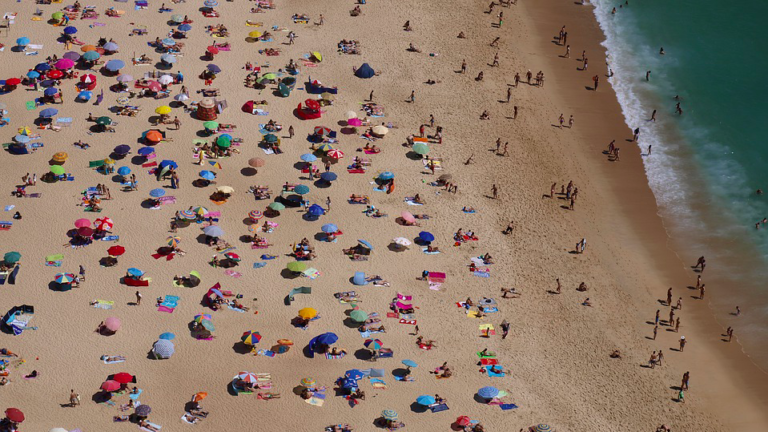
Overcrowding in parks and at the beach on summery Ascension Day

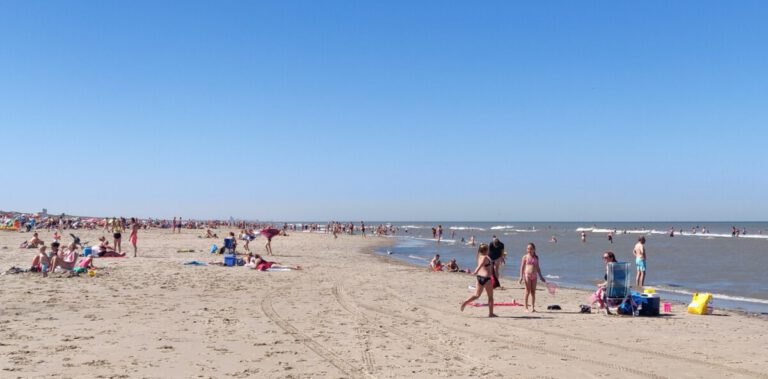
As the Netherlands begins to reopen, the emphasis is on avoiding crowded spaces rather than staying home. Yesterday, many Dutchies did neither, with the umbrella organisation for regional security groups (the Veiligheidsberaad) reporting that it was far busier yesterday than it has been over the past weekends, and in some places, particularly beach areas, it was overcrowded.

Instead of giving out mass fines, security teams closed off overcrowded areas and warned people of the risks instead.

Half of the Dutch STILL don’t wash their hands, even in the face of a pandemic

With coronavirus in full swing, the government as well as media outlets have made it pretty clear that one of the ways to prevent the spread of the virus is, you guessed it, to wash your hands. Shockingly, only 48% of Dutch people are listening to advice to wash their hands more often one the past few weeks.

“Time and boredom”: why Dutchies are having more sex during the coronavirus crisis

A survey of South-Hollanders has shown that the coronavirus crisis doesn’t have to be all bad news: people are more sexually active during the lockdown. Not only did 61% of those surveyed express more interest in sex compared to usual, but that the sex average per week as gone from 2.8 per week before the lockdown to 3.3.

Feature image: DutchReview/Canva

The differences between exchange students and long term students in the Netherlands

Knowing that you will be in a foreign country for a short period of time, you can easily romanticize it all and carpe diem as much as you’d like. But, knowing you’re going to live in a foreign country for at least two years, you have a lot more thinking about housing, food and clothes to do.

Tens of thousands of international students flock to the Netherlands every year — some for short-term study programs, others for full-blown degrees. And, their experiences can be very different. Here are some of the main differences!

Studying & free time

My exchange semester was 6-month teambuilding in The Hague. At university, I had only a big product-engineering project, weekly workshops, regular client meetings and monthly assessments. At the end of the project, the client put my team’s product into production. Awesome, huh? Compared to my home university system, it was far easier and I had a lot of free time. In fact, I even visited another nine Dutch cities and two countries nearby

Well, being a full-time international student is also a piece of cake, but now you are the one cooking it. You will have to learn to balance a lot in a semester — and that is definitely a good feeling. You will plan and organize your studying, earn money and go to parties as well. You can even join a student team or your faculty study association, to get hands-on experience in the industry.

(Oh, and just kidding about cooking — you’ll barely even have time to do your laundry.)

Comedy Work GIF by waikikipd - Find & Share on GIPHY

Rent, food and (maybe) pocket money

It’s not breaking news that the Netherlands is an expensive country for those coming from Eastern Europe, so the money talk is drastically different depending on if you are talking about having a scholarship or paying the living expenses yourself.

During my Erasmus semester, I was receiving three scholarships from my University (€ 900 total) and it was written black-in-white that I couldn’t receive any other subsidies. Nor could I work in the country where I was going to study. So: € 480 rent (one room), no house allowance/rent subsidy, meant €420 left for food, transportation and emergencies. A bit harsh, but very doable.

Think Winona Ryder GIF by reactionseditor - Find & Share on GIPHY

But as a long-term student, that all changed. Starting in August 2019, I had to begin tracking my daily spending and Microsoft Excel became my new best friend because duh! I can only spend as much as I can work. I pay €250 rent (2-room apartment, living with my partner), getting House Allowance and in my darkest times I survive on instant noodles.

Short or long-term, you want to avoid buying unnecessary stuff because you are probably on a budget. From my experience, you’ll be twice as careful with the money you earn by working than with a scholarship. Nonetheless, this is a tip for both students and adults: better not go to the supermarket when you’re hungry.

Tip: write down daily, for at least a month, everything you buy to see your pattern of spending money. Divide everything into categories: rent, food, personal hygiene, household products, transportation, going out, clothes, and any other unexpected spending (e.g. drugs for a cold). Then analyze what you can cut off. Think how cool it would be if you could save at least €50 each month?

Of course, I don’t always practice what I preach — there are days when I find myself having only €5 in my bank account.

Je moet nederlands spreken

As an exchange student, I knew I was going to leave eventually and I didn’t know if I would ever come back, so I didn’t lose sleep over the “you’re in the Netherlands, you must speak Dutch” attitude.

Vomit Barf GIF - Find & Share on GIPHY

On the other hand, as a full-time international student in Eindhoven, I found it crucial to learn Dutch. Knowing Dutch will help both your grades and your job prospects as well. I started to learn Dutch on my own, in Romania, and here I enrolled myself for a Dutch language course at my university. My current level of Dutch is A1, so I still find myself saying “engels, asltublieft?” quite often, but I am more and more optimistic.

While attending a Dutch course, you can also:

  • read children’s books
  • watch online Dutch lessons
  • set any series on Netflix to Dutch subtitles
  • Take the free magazines from supermarkets
  • pay attention to your environment (commercials, the train station ‘Beste reizigers, …’, even traffic signs ‘Wacht op groen’)
  • speak Dutch as much as you can with natives.
  • You can also hang around the house post-its with common Dutch phrases used in different social situations (buying something from a store, going to the movies, talking about hobbies or vacations).

It’s all about cycling

My first bike experience in the Netherlands was simple: €45 for the bike, another €45 for the improvements and two weeks until it got stolen from the building’s garage where I lived. I didn’t dare to betray my first bike’s memory, so for the rest of the period as an exchange student, I only used public transportation.

Now, if you know you’re going to spend here at least two years, you will definitely want your own bike. A good-looking one, with good breaks, two very strong locks and maybe a basket in the front or a bag in the back (unless you were born with Dutch abilities, such as cycling while having a backpack and two heavy bags with groceries in each hand). You will invest more money at first, but the peace that comes afterwards is worth it. 

Starting to blend in

One thing is for sure: no matter the period, The Netherlands will grow on your heart and you will easily get used to the Dutch way of living. I hardly remember how to use my feet for walking since I am cycling everywhere and I am calmer in every stressful situation.

What other differences do you think there are between short-term and long-term international students? Tell us your thoughts in the comments below!

Feature Image: fauxels/Pexels

Mark Rutte is asking youngsters to speak up about how new society should be

We got used to working from home, doing groceries once a week and having daily ZOOM meetings. But what about the youngsters? The “one-and-a-half-meter society” will define the adulthood of today’s teens.  

Besides the sightseeing and food, there is one more thing that makes me love the Netherlands even more: you are encouraged to think about your future and share your ideas by participating in a national brainstorming activity.

“The coronavirus is turning our country upside-down, and your life as well. It is very important that you also participate and think about what our country should look like in the near future. It’s about your future,” said Mark Rutte earlier this week.

“So I challenge you: Are you between 12 and 18 years old and have you found a way to deal with the one and a half meter society? For example, about how to keep our distance from each other and still learn, play sports and party with each other?”

View this post on Instagram

Het coronavirus zet ons land behoorlijk op zijn kop, en ook jouw leven. Het is heel belangrijk dat ook jij meepraat en meedenkt over hoe ons land er de komende tijd uit moet komen te zien. Het gaat over jouw toekomst. Dus ik daag je uit: ben je tussen de 12 en 18 jaar oud en heb je een manier gevonden hoe je met de anderhalvemetersamenleving omgaat? Bijvoorbeeld over hoe we afstand van elkaar houden en toch met elkaar leren, sporten en feesten? Laat jouw initiatieven, acties en goede voorbeelden achter in de reacties onder dit bericht. En wie weet nodig ik je binnenkort uit om jouw initiatief te komen toelichten op het Catshuis. Alles op een rij: ➡ Je bent tussen de 12 en 18 jaar oud. ➡ Je kan je bericht insturen tot woensdag 27 mei 12.00 uur. ➡ Als jouw initiatief wordt uitgekozen, krijg je eind mei een reactie. #jongerenaanzet

A post shared by Mark Rutte (@minpres) on


Here are some thoughts that I would reflect upon if I were in the age group Rutte mentioned:

Learning

How can teens still collaborate in a classroom? Adaptive learning software? Smart apps? A blended approach? How much technology should be involved? How can the ‘human’ art of teaching can be preserved?

We can investigate not only differentiated content but also just-in-time, just-enough and just-for-me learning resources. What about assessments? Homework practices and assessments can be designed by the students themselves, with proper academic criteria guidance from the teachers.

It’s a very good period of seriously analyzing what should be kept, what not and what can be improved in terms of teaching and learning. Nobody can know for sure what the best approach can look like. By creating experiments and exploring out-of-the-box solutions (by the way, there is no box!) we could reinvent the learning process for each one of the three educational paths a student can choose for secondary school (VMBO, HAVO or VWO).

Sports

The Dutch people are born with a love for sports. Football, tennis, golf, gymnastics, swimming, volleyball and ice-skating are some of the most popular sports in the Netherlands. You can’t take that away from the youngsters, but you need to handle them with care.

How can training schedules be worked out best for different age groups? Coaches can split teens into groups of 10 max and provide a bigger space for and between them. Some can play outside, some inside and they can rotate.

Italy GIF - Find & Share on GIPHY

Inline skating has become more appealing to many teenagers since Corona, but the Friday Night Skate event is still banned. Should individual sports be made more attractive? What sports can be made up? What about group dancing? How will new choreography look? Young people are often more creative than adults.

Party

Most party locations will probably have several areas with a limited number of teens. Birthday parties with only 10 friends can still be fun: think about dividing an immense trampoline into personal spaces or party-bikes with fewer seats. The difficulty arises when thinking about dancing and eating, but activities like ping-pong and Wii can still be taken into consideration.

Create your own future

Ask your sisters, brothers, nieces and nephews how they like their future to look like. Anyone between 12 and 18 years old can send their message until Wednesday, May 27 at noon on the Instagram post above, and the selected initiatives will be responded to by end of May.

What ideas would you suggest for the future of the Netherlands? Tell us in the comments below!

Feature Image: Vadim Fomenok/Unsplash

4 things to know about sim-only phone subscriptions in the Netherlands

You’ve landed in the Netherlands and now you’re looking to land a sweet phone deal. Just one thing — you’ve already got a killer phone in your pocket loaded with all your apps, contacts, and photos! You don’t need a phone, but you do need to be able to use it. It might be time to consider a sim-only phone subscription.

But why choose a sim-only phone subscription over a pre-paid sim-card, or a subscription with a phone included?

Well, firstly, a pre-paid sim-card typically offers as little as half the included value of calls, texts, and data.

Secondly, a subscription with a phone included locks you into a long-term contract with an expensive repayment option each month.

For the best value and flexibility, consider a sim-only phone subscription instead. Here are four reasons why a sim-only subscription is a better option:

Control your monthly costs while staying connected

By taking advantage of a sim-only subscription you get a set amount of value to use each month.

For example, you may pay €15 euro per month, and get 7GB of included data, plus unlimited calls and SMS. As long as you don’t go wild streaming YouTube videos for hours and cross over that 7GB limit, all you will pay is that €15 — and you’ll never have to worry about not being able to make a call or send a message when you need to.

Can easily get a Dutch bank account to sign up with

If you’re new to the Netherlands and feel like you can’t get a phone subscription because they all need a pesky Dutch bank account, no stress — just sign up with bunq or N26 online and grab that Dutch IBAN. Plus, it will be helpful for more than just for your phone bill 😉

More flexibility in your contract

Sick of being locked into two-year contracts? The great thing about choosing a sim-only subscription for your phone is that the contracts are much more flexible: some are for as little as one month!

That means if you’re only in the Netherlands for a short term, you don’t need to lose value on a prepaid subscription. If you’re looking for the best value for your money, you can compare all these mobiel abonnement options (as we say in Dutch) by sorting by price, inclusions, and contract length.

Incredible value

When telecommunications providers have to provide expensive cellphones, they can bear a lot of that cost. If you choose a sim-only subscription you’re only paying for the telecommunications providers service — so you can get an even better deal!

Similarly, if you choose a pre-paid subscription, the provider doesn’t have a guarantee that you’ll stick around long-term. By choosing a sim-only subscription, you get the best bang for your buck with inclusions, but still don’t have to be locked into a long-term contract (see point three!)[td_smart_list_end]


How to find the best deal in the Netherlands?

The Netherlands has three main telecommunications providers and dozens of mobile virtual network operators (MVNOs). That means the number of different options you have to research to find your perfect phone plan can look crazy, so if you have any tips to share with other readers – sharing is caring!

Got a hot tip on a great sim-only subscription for the Netherlands? Leave it in the comments below!

Feature Image: Lisa Fotios/Pexels