The British University of Oxford is working to develop a vaccine against coronavirus. The vaccine has already been purchased by the Netherlands, and after human trials on 1100 people, appears to be safe so far.
The researchers stated that no serious side effects were discovered and the vaccine leads to the development of antibodies and T cells that tackle the coronavirus, reports NOS.
On the other hand, researchers say that it is still too early to say for certain that the vaccine, called AZD1222, provides adequate protection against coronavirus. Results show that 70% of test subjects developed fever or a headache, but that can be easily remedied with paracetamol, according to the researchers.
Based on current results, the researchers hope that the body which gets the vaccine “remembers” the coronavirus, to protect people for a longer time. “However, we need to do more research before we can conclude that the vaccine provides adequate protection, and how long that protection lasts,” one of the researchers said.
Together with three other European countries, the Netherlands has ordered 300 to 400 million vaccines which are co-produced by the pharmaceutical company AstraZeneca and the University of Oxford. The hope is that by the end of the year we will know for sure how efficient the vaccine is.
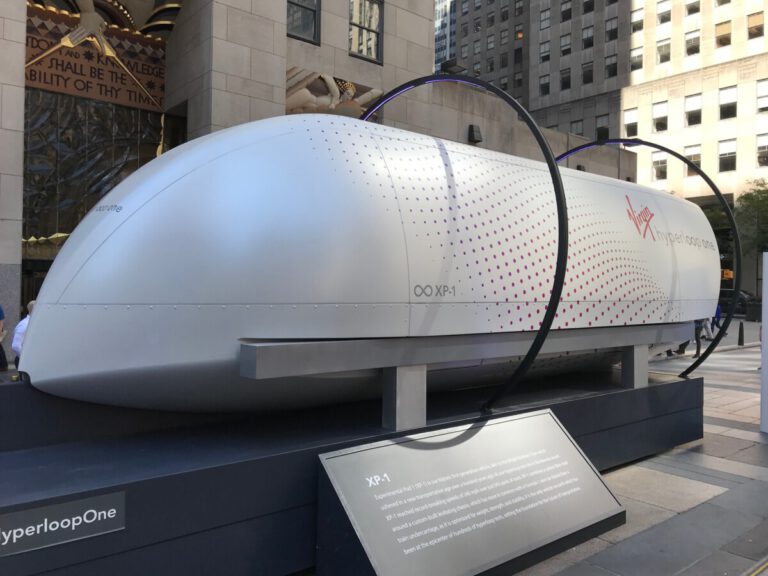
Last year’s record was achieved during the official annual hyperloop contest in a vacuum tube. By comparison, this year was in an open field, on a 368 meter-long test track in Hilversum.
This year’s Atlas04 capsule did not enter the official competition by SpaceX, reports Tweakers. Partly because of the coronavirus crisis, the 2020 SpaceX Hyperloop Pod Competition did not take place. This year’s edition should have taken place in a 10 kilometer-long tunnel with bends, to simulate the circumstances of an actual hyperloop. The tunnel has not yet been constructed, so the competition is stalling until it is done.
The Atlas04 built by the Delft team still uses wheels, but the final product will use magnets instead so that rolling resistance will be eliminated. Air resistance will also no longer be a problem as the tunnel will function as a vacuum. If all goes well, the hyperloop will be able to travel with speeds of up to 1000 km/hour.
Excited about the possibility of hyperloop travel in the future? Let us know your thoughts in the comments!
Airlines like KLM, Transavia, Corendon and TUI must pay back cancelled tickets faster, according to the Human Environment and Transport Inspectorate (ILT).
The inspectorate investigated how ten different airlines responded to cancelled flights due to the coronavirus and government measures, reports NOS.
After cancellation, half of the airlines gave customers immediately a choice between a refund or a voucher. KLM, Transavia, Corendon and TUI did not initially offer this choice. According to the inspectorate, that is against the rules. After heavy criticism, the four airlines changed their policy.
Money-back within seven days
The Inspectorate stated that normally, customers that ask for a refund should get their money back within a maximum of seven days. The airline companies say that this is not possible, because of the high number of requests for refunds. The ILT is in talks with the four airlines for a reasonable payback period of cancelled tickets.
The Inspectorate is also in talks with Vueling Airlines after customers reported that they are still waiting to get their money back.
The other five airlines investigated by the Inspectorate that offered immediate refund options are Lufthansa, Delta Airlines, Ryanair, Easy Jet and British Airways.
How are your experiences with getting your money back? Follow DutchReview on Facebook for the latest news in the Netherlands.
Twelve members of a Belgian family tested positive for coronavirus after a holiday in Cadzand-Bad, a beachtown in the province of Zeeland.
It seems that the family has been infected with coronavirus on their holiday. The family has since last week been quarantined at home, reports Omroep Zeeland.
Hendrik Vandromme was celebrating the golden wedding anniversary when his wife fell ill. Upon calling his doctor, he received the advice to return home to Belgium. A day later, everyone was tested for the coronavirus. 12 out of the 15 family members tested positive.
The family was in the holiday park Noordzee Résidence Cadzand-Bad. While there, they maintained social distancing. Their sons went to town to pick up things for their BBQ, but overall, it seems they did not have contact with many people. They called the home they were living in to announce them that they tested positive, the house has since been disinfected and cleaned.
Contract tracing investigation
Belgian contact tracers have been in contact with the family to determine from whom did they get the infection. The investigation is still ongoing.
Figures from the RIVM show that in the municipality of Sluis in Zeeland, no infections were reported while the family holidayed there. Only one person tested positive in the month of July in Sluis.
A million coronavirus tests remain unused on shelves of laboratories and suppliers. The tests were meant to be used after the introduction of widespread testing on June 1, but fewer people took the tests than expected.
Of the 1.5 million available tests, only half a million have been used. The maximum capacity of 30,000 daily tests has not been reached, reports NOS.
Should there be a more active testing policy?
Some experts believe that the presence of such a big stock of unused tests is a good opportunity to pursue a more active testing policy.
According to Frits Rosendaal, head of clinical epidemiology at the LUMC, “There are actually two groups that you just want to actively test. The first is the group of people where the consequences of infection are greatest, such as at slaughterhouses or nursing homes. The other group is the one where the risk of the virus is greatest. This applies, for example, to the contacts of people who come into the picture through source and contact research. After all, you know that the chance that they have the virus is greater than with random other people.”
Another option for testing involves travellers, according to Rosendaal. “They come here with planes and are spreading again, and may have been in regions with a lot of contamination, but you don’t know where they are going either.”
Hans Heesterbeek, professor of epidemiology at Utrecht University, considers even more applications. “You can also routinely test in places where many people come together and where there is a lot of interaction. You can also test people who have many contacts with other people because of their work or activities.”
Not everyone agrees for a more active testing policy, such as Marc Bonten from UMC Utrecht. “We heard this week that only 12% of people with complaints actually get tested. That should actually be 98%. It probably makes more sense to strive for better compliance with current agreements than to broaden the criteria for testing.”
Bert Niesters from UMC Groningen also agrees that the tests should be preserved. “They will not get over the date quickly and in the autumn we expect many people with colds again. I would save the tests for when you really need them again.”
Whatever the case, the RIVM is already preparing up to 100,000 daily tests for autumn, when many people will report cold symptoms.
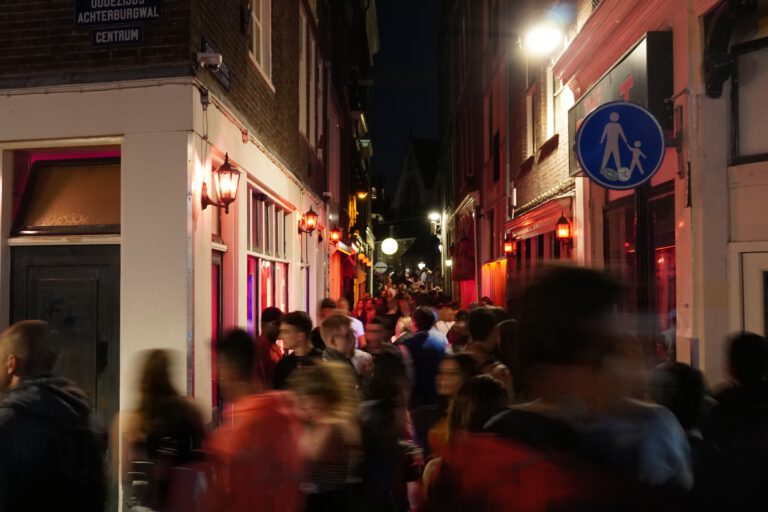
Amsterdam’s red-light district became so full of tourists over the weekend, the municipality had no choice but to close many streets and alleyways.
In Paris, there is the Eiffel Tower. In Italy, the leaning tower of Pisa. And in Amsterdam, there are the sex-workers on display in windows. The gravitational pull of the tourist attraction has not reduced during the pandemic, to the point where Amsterdam had to put the brakes on — quick.
Tourists to the area were so plentiful on the weekend that they could no longer keep their 1.5 metres distance. While the municipality had expected crowds and implemented one-way streets, it eventually had to take to Twitter to plead with tourists to stop coming.
Naar aanleiding van de aangekondigde extra maatregelen van de gemeente ben ik zelf een kijkje gaan nemen op de wallen. Ondanks extra hosts en eenrichtingsverkeer is het op de vroege avond al erg druk en is 1,5m afstand amper mogelijk. Ook zijn straatdealers volop actief. pic.twitter.com/HhMA8taMEO
Sex workers in the Netherlands were allowed to resume work from July 1 — under strict conditions.
“Before I make an appointment, I have to check with the client if they’re feeling ok and if they don’t have any of the symptoms, or if any of their housemates has symptoms,” Foxxy, a sex worker and activist at the Prostitution Information Center in Amsterdam, told The Guardian at the time. The majority of sex workers also avoid face-to-face contact, so no kissing.
According to Foxxy, she also needs to ensure the “disinfection and washing the hands, cleaning the sheets after every appointment. Those are the basic needs. But we don’t need to wear any face masks during the playdates, thank God.”
Are you avoiding tourist areas during coronavirus? Or living life as best as you can during the pandemic? Tell us in the comments below!
Two crew members have died after a Dutch army helicopter crashed in the Caribbean Sea near Aruba. They were 34-year-old aviator Christine Martens and 33-year-old tactical coordinator Erwin Warnies.
“It is a severe shock to all,” Armed Forces Commander Rob Bauer said early this morning at a press conference. The other two occupants of the chopper only suffered minor injuries, reports NOS.
Cause of crash unknown, further investigation will follow
The NH90 was en route to Curaçao around 2:30 PM local time (8:30 PM in the Netherlands) and at the end of a coastal patrol. About 12.5 kilometres off the coast of Aruba, the chopper crashed into the sea. Attempts were made to resuscitate the two — but to no avail.
The cause of the incident is still unknown. A coastguard helicopter and a defence diving team from Curaçao went in to investigate and to secure the black box.
Prime Minister Rutte announced via Twitter that he was “deeply affected” by the news about the helicopter crash. “My thoughts go out to their families and friends. I wish them a lot of strength in this sad time.”
Ik ben diep getroffen door het trieste nieuws over de helikoptercrash waarbij twee van onze militairen om het leven zijn gekomen. Mijn gedachten gaan uit naar hun families en vrienden. Ik wens hen veel sterkte in deze verdrietige tijd.
The NH90 is a maritime attack helicopter that can operate from patrol ships and frigates. The Ministry of Defence also uses the aircraft as a transport helicopter, also, for example, to drop off special forces. The Netherlands has 20 helicopters of this type. The entire NH90 fleet will remain on the ground as a precaution after this accident.
It is the first time that an NH90 from the defence has crashed. This aircraft was part of the patrol vessel Zr.Ms. Groningen.
“This type of helicopter has been flying for about ten years now,” says Jan Kropf of the association of defence personnel to the NOS radio service.
“After its introduction, there were some problems with corrosion. Many aircraft have problems with this: aircraft and saltwater do not mix and these are aircraft that often fly low above the water. But these problems have been solved as far as we know.”
Kropf says he has every confidence in the investigation that the Defence Security Inspectorate is probably going to conduct.
The yearly Tilburg Fair is starting today, and we are more than excited for a visit!
Tilburg is an underestimated gem of the Netherlands, and if this fair isn’t enough to convince you to give this lovely city a visit, nothing will be!
The Tilburg Fair, known in Dutch as the Vakantiekermis(which translates to holiday fair), is the biggest fair in all of the Benelux region- and if you ask us, it’s also the best. Yearly, it attracts more than one million visitors. It’s not hard to see why!
The fair has over 200 attractions, loads of booths with foods and drinks, music, and a generally great vibe. It’s perfect if you’re a family with children, but equally fun with a few friends after work. There’s something so nostalgic about being at a fairground: it always takes you right back to being a child, smelling the food cooking and hearing the screams of excitement from the rides.
How is the Tilburg Fair dealing with coronavirus?
We know, we know. How can a fair take place, given the current coronavirus crisis? Well, ever since July 1, fairs can take place as long as they get a municipality permit. 80% of them don’t manage to get one, but the Tilburg Fair has been given the green light.
Of course, that means some changes need to be made in order to ensure the safety of the staff and the many visitors. So while this year’s fair might look a bit different from usual, it will have all of the magic of the usual Vakantiekermis: just with some extra safety thrown in.
First, the fair will operate at a more limited capacity than usual. It will have only 55 attractions, instead of the usual number, which exceeds over 200 different attractions. Second, the fair will take place in four different squares around Tilburg, to ensure that no place gets too crowded. This will allow everyone to respect the social distancing rules while visiting the fair- and it has the added advantage of showing off the city of Tilburg. You can wander around the city, popping in and out of the different fair locations: honestly, that sounds like the best day trip ever.
So, what do you need to know before going to the Tilburg fair?
What should you consider before going? Entry to the four different squares is free, so if you are just curious and what to check the place out, don’t worry about paying an entry free.
The festival will take place between this Friday, July 17 and until Sunday, July 26. The opening hours are as follows:
A must-see at the fair is the Ferris Wheel. Honestly, in our totally unbiased opinion, Ferris Wheels are the best part of any fair. Forget those twisty-turny-upside-down-screaming rides: a gentle spin with some scenic views is where it’s at (we know we sound like we’re about eighty years old here, but we’re also right).
The Ferris Wheel is located in Spoorlaan and will be there for two months. A ride on it only costs €2 for adults and €1 for children. Entrepreneurs from Tilburg will be able to use the Ferris Wheel for an art exhibit, or a dinner and drinks with employees. (Is this a reason to move to Tilburg in itself? Quite possibly.)
What else can you do on a trip to Tilburg?
Want to turn a visit to the Funfair into a proper day trip to Tilburg? Good idea, plenty to do there. How about some culture? There are some great museums in Tilburg and plenty of other cultural hotspots.
That includes buildings like the LocHal, a state-of-the-art library which used to be a giant hall to repair locomotives. It is an architectural marvel and is a great place to study and chill. You can also check out its wonderful urban scene.
The Dutch coronavirus app, CoronaMelder, will be available to download for everyone from September 1.
The app alerts users if they have been in contact with someone who had the virus, reports RTL Nieuws.
The app will be available for both Android and iOS and is voluntary. The way it works is that if you’ve been in close contact for more than 10 minutes with someone who had coronavirus, you will get a notification on your phone.
The app uses Bluetooth to detect other users and works only if both people have the app installed. Using Bluetooth, the app calculates your proximity to other people and how much time you stayed in their presence. According to the Ministry of Health, the app is anonymous and no private data is collected.
The app is supposed to help GGD to keep track of coronavirus patients and with whom do they keep contact with. People who are at risk of infection can then be notified so they can take measures to isolate themselves to prevent spreading the virus further.
Criticism about the app
The app has attracted criticism in the past months. For example, a data breach was detected by RTL Nieuws. Experts are also sceptical about how efficient the app is in tackling the current coronavirus crisis.
Evelyn Austin, from the civil rights organization Bits of Freedom, expressed that there needs to be a “clear endpoint” for the app, so that users know when it can be deleted. She further expanded that “At its core, the app remains a means of surveillance. People have little confidence in the government and have doubts about the effectiveness of the app. They then ask themselves the question: am I willing to give up part of my freedom for that?”
The Ministry is also looking to make a controversial collaboration with the tax authorities for the roll-out of the app.
Privacy watchdog Dutch Data Protection Authority is currently looking into the app and will release a statement in the coming weeks about the privacy of the app.
Would you use this app? Let us know your thoughts in the comments!