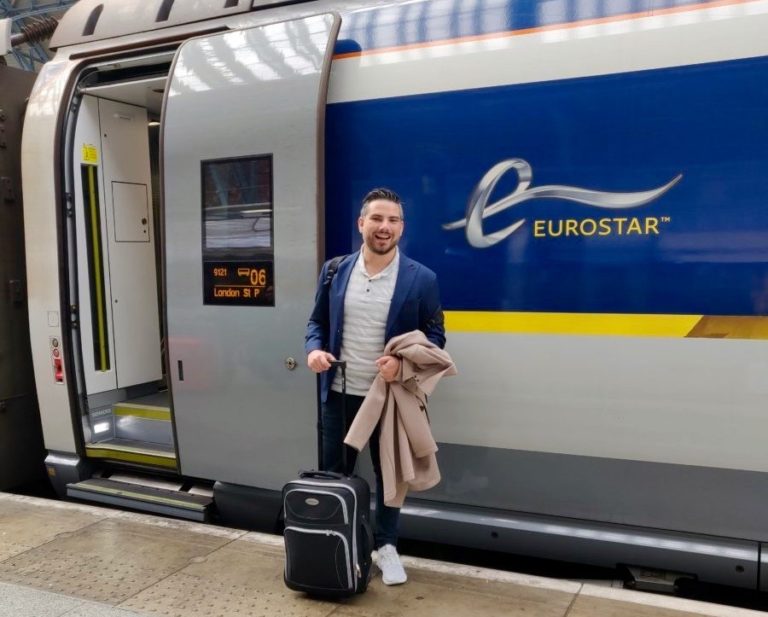
The Secretary of State for infrastructure, Stientje van Veldhoven, signed a treaty that will make the train line possible, reports AD.
Four countries, including the Netherlands, Belgium, France and the UK have signed agreements that simplifies the process of passport controls and security.
The procedures will take place at the beginning of the journeys, in Amsterdam and Rotterdam. That way, people will not need to get off in Brussels to for passport control, saving one hour of train travel.
According to Van Veldhoven, “You will be travelling comfortably, quickly and easily by train from Amsterdam to London in just over four hours. No more hassle with checks and delays in Brussels. A Eurostar train has roughly twice as many seats as an average plane and CO2 emissions per passenger are considerably lower. This makes the train to London a truly sustainable and full-fledged alternative to flying.”
The Eurostar train will begin running trips again from Amsterdam to London, with the stop in Brussels, starting from 6 July. Depending on the evolution of the coronavirus outbreak, the train will have two rides daily in August and three rides in autumn, when the direct line will also commence.
Excited for the chance of direct trips to London? Let us know your thoughts in the comments!
The Alrijne care group has decided to file a complaint against a coronavirus patient for deliberately exposing nursing staff to the virus. Four nurses tested positive for the virus in the days after the incident.
The incident took place on June 6 at a hospital belonging to the care group, which has locations in Leiden, Leiderdorp and Alphen aan den Rijn. It took place when an infected family member of a coronavirus patient had a conversation with the nursing staff.
The family member did not agree with the treatment plan for the coronavirus patient, and was allowed to discuss the way forward with nursing staff, provided that the infected family member wore a mask and protective equipment. However, at the end of the conversation, the infected family member took off the mask and apron.
“It is understandable that emotions can run high when it comes to the health of loved ones, but with this action Alrijne feels a line has been crossed,” says the care group to NOS. The four nurses who contracted coronavirus after the incident have not been hospitalised with the virus. The care group cannot give more information than that about their conditions for privacy reasons.
The care group says that they have no way of knowing for sure if the infection of the nurses took place during this incident or not, but say that this is not the point. “But that does not detract from what happened. It has been a shocking experience for these employees. That is why Alrijne thinks it is important to report this.”
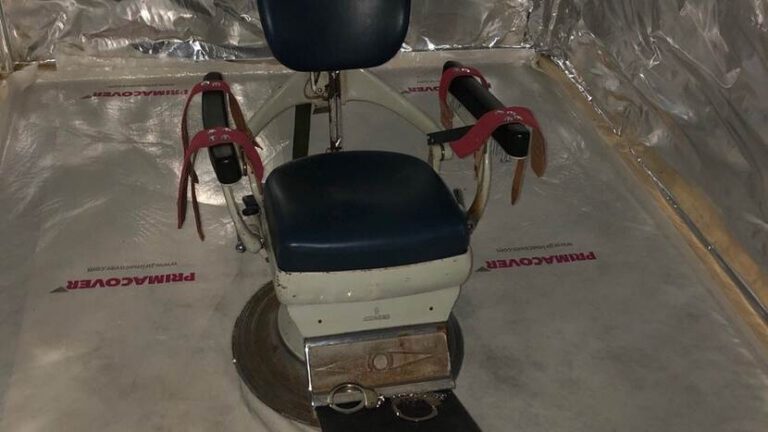
The Public Prosecution Office revealed in a report the gruesome details of a torture chamber found in a container in Wouwse Plantage, in Brabant.
The chamber contained scissors, scalpels, handcuffs, saws, duct tape and more, as reported by NU.
Six other containers were arranged as cells, and handcuffs were attached to the ceiling to have someone hanging by their arms in the cell.
Last week, six arrests were made in the case. The Public Prosecution Office reported that among the suspects was a 43 years old man from Rotterdam, another 44-year-old man from Nieuwegein and a 40-year-old man from The Hague. The rest of the suspects were from Lexmond, Utrecht and Spijkenisse.
The men are suspected of preparing kidnapping, extortion, physical abuse and being part of a criminal organization. Two of them were also detained for possession of weapons. No person was actually tortured in the containers.
Police surveillance since April
The police knew of the existence of the containers since April. EncroChat, the platform through which the criminals were communicating, was hacked by the police. Law enforcement has been following their messages for weeks.
The people who were targetted for kidnapping were announced by the police so they can go in hiding.
The torture chamber also had sleeping and siting facilities, presumably to keep guard had the kidnappings taken place. Seven small firearms and an assault rifle were found, as well as 25 other weapons in the suspects’ residences.
The police also found police clothing and bulletproof vests. As of now, the detention of the suspects has been extended by 90 days until their trial.
Follow DutchReview on Facebook for the latest news in the Netherlands.
The RIVM has published the first weekly update for coronavirus numbers in the Netherlands for today, July 7.
This is the first update since daily updates stopped on July 1.
The newest count reveals an additional 432 cases detected over the last week. In total, since the outbreak began in February, there’s been 50,694 cases of coronavirus in the Netherlands.
Severe cases of coronavirus have lead to nine people being hospitalised.
Unfortunately, the virus continues to cause casualties. 19 more people have died since last week, and the virus has claimed the lives of 6,132 people throughout the country.
Coronavirus crisis impacts dating and sex life, singles most affected
In general, there’s been less physical dating between people, which is in all honesty understandable. Porn consumption and masturbation has gone up among youngsters. People have also done fewer STD tests, out of concerns of getting infected at hospitals with coronavirus and because of the fear that hospital staff is already busy with treating corona patients.
Corona spitter wanted by police in Amsterdam
A man is being wanted by the police in Amsterdam, after he spat on an Albert Heijn employee back in April. The police have released camera footage of the man, and are asking for any potential leads that might lead to his arrest.
The Consumers Associaton and Data Privacy Foundation (DPS) consider that Facebook must pay users in the Netherlands for privacy violations.
The two associations have accused Facebook of collecting private data from users and giving it to third parties without permission, reports NOS.
The privacy breach also includes information about user location, gender, age, as well as the apps that people use, web searches outside of Facebook as well as information about Facebook friends.
According to the two associations, users have been misled by the platform. Sandra Molenaar, director of the Consumers Association, stated that “They did not know that Facebook passed that information on to advertisers and app makers. Facebook’s privacy policy was insufficiently clear, inconsistent and unnecessarily difficult.”
Multiple fines for violating privacy
Facebook has received several fines for breaching the privacy of users. For example, the company received a hefty fine of $4.5 billion from the U.S. Federal Trade Commission, given for privacy violations after the revelations about Cambridge Analytica. Beyond that, data from 87 million users were used for political ads during the U.S. election of 2016.
Privacy more and more important
The Consumers Association consider they have a solid basis for their demands. The claim for privacy violation runs from 2010 to 2020, so anyone that has used Facebook within this time frame can make a report.
Gerard Spierenburg, spokesperson for the Association has said that “It is very important that consumers register. There are 10 million people on Facebook in the Netherlands, so that can become very substantial”.
As of now, it is not certain how much the financial compensation of users will be, as that is part of ongoing negotiations with Facebook. Spierenburg added that “We call on consumers to register, to support us, but also because in time we will need data from people who then need to receive that money.”
Facebook has not yet responded to the demands made by the two Dutch associations.
How much should Facebook compensate users for data and privacy breaches? Let us know your thoughts in the comments.
By the middle of this century, the demography of the workforce of the Netherlands will be quite different.
The demographic institute NIDI predicts that by 2050, around 42% of the workforce aged between 20 and 65 will not have a Dutch background, NOS reports.
In total, the number of people with a Dutch background within the workforce will decrease by 1 million.
Currently, 26% of the working population in the Netherlands does not have a Dutch background. This includes first-generation immigrants (foreign-born) and second-generation immigrants. Within the second generation, at least one of the parents is born abroad.
The NIDI did the study at the request of the House of Representatives, which wanted to see how society will change by 2050 in terms of population and composition.
Unpredictable numbers
The CBS population forecast predicts that the population will increase to 19.3 million in 2050, compared to the current 17.4 million. However, according to the NIDI, the population could grow to 20 million by 2050, if immigration, number of children and life expectancy turn out to be higher than the current predictions. If they’re lower, there are chances that the population of the Netherlands might even shrink.
It is difficult to know for sure how Dutch society will look like in 30 years from now. For example, it’s not very clear how many immigrants come and stay in the Netherlands. Around 80% of immigrants leave the country after a couple of years spent here.
The political implications of these changes are not for NIDI to decide. According to lead researcher Joop de Beer, “Ultimately it is about the political question to which society we want to go.”
On the other hand, the NIDI has stressed that “low migration leads to a shrinking potential workforce and high demographic pressure.” If migrants continue to come to the Netherlands, that pressure remains low.
Increase in diversity
Over the coming decades, the migrants coming to the Netherlands will diversify. As of now, 40% of people who have a migration background come from the following countries: Morroco, Turkey, Indonesia, Suriname and Netherlands Antilles.
Within 30 years from now, it is expected that there will be more migrants coming from EU countries (30%) while traditional migration countries will decrease to 25%. The share of people coming from asylum countries is also expected to increase from 15% to 20%.
Ageing population
The number of people aged over 65 is also expected to increase. There were 3,4 million people aged over 65 last year, and that number is expected to increase to 4,8 million by 2050.
Due to an increase in life expectancy, people aged over 80 will also double in number. Currently, in the Netherlands, there are 800,000 people aged over 80. By 2050, that number could increase to 1,5 million, or even 2,5 million if life expectancy continues to grow.
What are your predictions for Dutch society? Let us know what you think in the comments!
The rental market in the big cities of the Netherlands is beginning to feel the effects of coronavirus. In these cities, expats make up a big share of the market for rental properties: and a lot of expats have left the Netherlands in recent months.
Overall, rental prices in the Netherlands have still managed to increase this quarter, by 2.4%. In The Hague, Amsterdam, and Eindhoven, rents for private sector homes fell for the first time in a long time in the past quarter. Utrecht is the only marked exception to this rule, with an increase of 5% in the last quarter. So it might not be the time to move to Utrecht.
In large cities, expats make up a sizeable chunk of the rental market, so the long term effects of coronavirus on the housing market depend on whether (most) expats stay away from the Netherlands in the long term. “If the expats stay away, those homes will remain empty. To avoid vacancy, the expats will be offered for a lower rental price,” says Jasper de Groot, director of Pararius, in an interview with NOS.
Particularly in Amsterdam, the number of apartments offered for rent has increased: not just because expats have moved away, but also because of the increased regulation of the rental property sector in the Dutch capital.
A shooting incident occurred this morning in Beuningen, in the province of Gederland, reports NOS.
A man was shot to death by two men wearing balaclavas, who then ran away from the scene.
Het slachtoffer (een man) heeft het helaas niet overleefd en is overleden. We vragen mensen met tips of informatie om ons direct te bellen via 0900-8844. Bij een verdachte situatie belt u naar 112. Wilt u anoniem tippen? Dan kan dit via 0800-7000 (meld misdaad anoniem). ^JS https://t.co/8W5J2hLW89
— Politie Gelderland (@POL_Gelderland) July 6, 2020
The shooting took place around 8:30 AM, and it is still unclear what precisely happened. The police have cordoned off the area, with criminal and forensic investigations currently ongoing.
The attackers are on the run, and it’s believed they escaped in a Volkswagen van.
The coronavirus has affected not only the healthcare system and the economy. It has also had a strong impact on people’s dating and sex lives.
A large study on the sex lives of Dutch people found that bachelors were the most affected by the crisis, reports RTL Nieuws.
One in five single people still have sex, but with a more stable partner (i.e. friends with benefits), with 58% of youngsters reporting this. On the other hand, one night stands have become less popular, which can only be a good thing, considering no one wants to wake up awkwardly hungover during a pandemic and have to put on their pants and face mask and leave in a hurry.
Nikki Peeters, a 20-year old single, knows perfectly well how the crisis has affected dating. She had no physical contact with anyone since the start of the outbreak. Part of the reason why is because she is working with the elderly. She told RTL Nieuws that “I work with people in a vulnerable group, with the elderly. So I didn’t want to take any risks in that. I did keep that off. I don’t have a permanent partner either.”
Less physical dating
Overall, physical dating has decreased during the coronavirus crisis. 40% of young people stated that they date less than they did before. According to Nikki, “I did swipe a bit during the crisis, but it is indeed difficult because you don’t know how long everything will last.”
The uncertainty makes it difficult to plan a date, let alone go on one. “Everything is planning ahead. It is difficult then, the contact stops quickly.”
Porn galore
Porn use and masturbation have increased among young singles. In the age group between 16 and 20, 30% masturbate more and 29% watch more porn, compared to before the outbreak.
STD testing has become more complicated as well. The study shows that 8% of young people wanted to get tested during this period of time but did not go through with it. Part of the reason is because of the coronavirus crisis. Young people were concerned that the medical services were busy with tackling the crisis, or that they risked infection if they went to get tested.
Dutch sex life might be impacted now, but that does not mean it’s not worth some more reading in to. You can read more about Dutch sex life in general here.
How has your dating/sex life been impacted by the crisis? Let us know in the comments!
Moving to the Netherlands can be a stressful affair: from finding housing to finding a job, there’s a lot to organise. Luckily for you, though, there’s one aspect of this whole process that can be simplified: getting yourself a car.
You might have thought— as we once did— that the only way to get a car for a longer period was to, well, buy one. But actually, there’s another way: and one that is really suitable for life as an international in the Netherlands; (private) leasing a car. Yes, it’s a grown-up thing, and yes, it’s complex at times but also very advantageous for some of you reading this. So we’ve partnered up with Bynco to tell you all about getting a private lease for a car as an expat in the Netherlands.
Bynco is a Dutch company which sells and leases cars online: the name Bynco stands for “Buy Your Next Car Online”. We’ve worked with them on this article to take advantage of their knowledge of private leasing, which is the perfect option if you’re an expat coming to the Netherlands. They also, of course, sell cars, and you can browse through their selection of those here.
First of all, what is a private lease?
A private lease allows you to rent a car for a particular period of time. Most leases will be for a number of years, but there are shorter leases available. You can choose between a new car or a used car, and the amount you pay each month will depend on that, as well as the type of car you choose.
Another massive advantage of a private lease is that all monthly costs, except for fuel, are covered under the monthly fee you pay to the company you lease the car from. That includes the car itself, road tax, liability insurance, accident insurance for occupants (optional), legal assistance, body damage, maintenance, repairs, tires, breakdown assistance, the car sharing module, replacement transport after 72 hours and the possibility of cancellation without penalty in the event of divorce, death or dismissal from work.
Main reason to lease a car in the Netherlands: taking your doggo for a spin. Image: Free-Photos/Pixabay
And finally, importantly for expats who might want to return home at some point, you can just give the car back to the lease company at the end of your lease: no worries about selling it on when you want to move away from the Netherlands.
Why is a private lease for cars especially suited to expats?
When you move away again from the Netherlands, you would usually have to figure out what to do with your car. With a private lease, that’s not something you need to worry about. You can give your car back to Bynco when you want to move away, no hassle required. Overall, sometimes it can work out to be cheaper to take a private lease instead of buying a car, depending on your personal situation.
How do you lease a car? What are the requirements for a private lease?
Ok, so we’ve convinced you. Welcome to the grown-up club! The next step is figuring out how you can lease a car in the Netherlands. There are some requirements that you’ll need to meet: after all, you are being entrusted with a pretty valuable object. Bynco asks for the following requirements to be met by its customers:
You must be 21 years or older.
You need to be living and registered in the Netherlands,
You need a Dutch bank account.
You don’t have a negative BKR registration (the BKR is the Dutch organisation that keeps track of your history with debt- quite like a credit score).
You need to be able to pass the income burden test. That means you need:
An employment contract, or a letter of intent from your employer, or
Another form of a fixed monthly income, which you can prove, and
Most companies that lease cars will require you to have a Dutch residence address, a valid passport/ID, and a driving licence that is recognised by the Netherlands. You’ll also need a permanent or temporary employment contract. A lot of car lease companies will require a Dutch driver’s licence, but as an expat, that’s not something you will have. For the companies, including Bynco, who don’t have this requirement, you still need to get your driver’s licence recognised by the Dutch authorities.
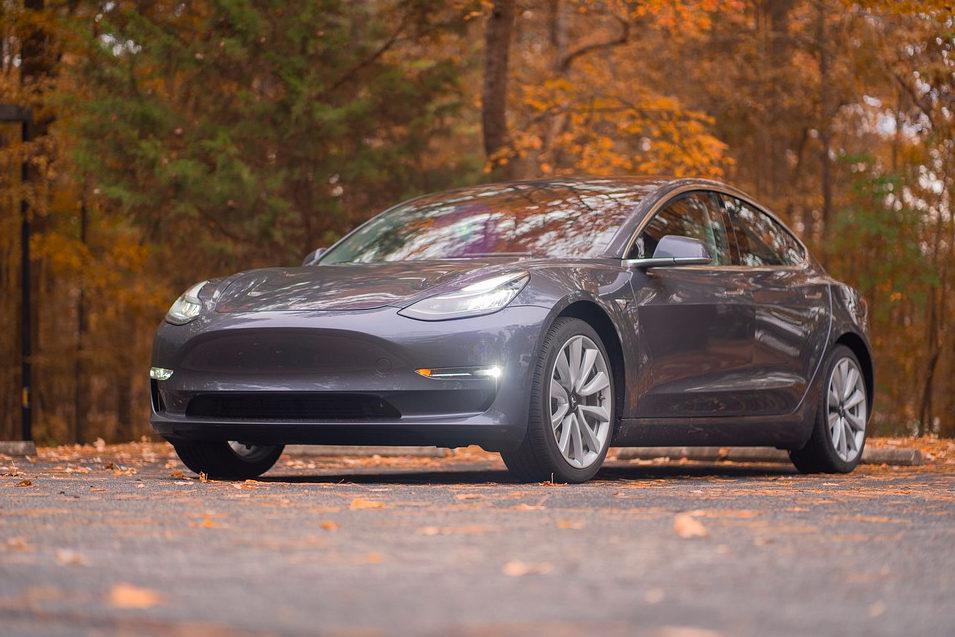
Not gonna lie, we would love to private lease this one ;). Image: Jteder/Pixabay
Getting your driver’s licence recognised in the Netherlands
If you’re from the EU, then this is a simple process: your EU driver’s licence is valid in the Netherlands for as long as it is valid in your home country, with a 15-year limit on this.
If you’re from outside the EU, you can use your old driver’s licence for six months in the Netherlands. During this time period you should apply for a Dutch driving licence. If you wait longer than that, you’ll need to do a Dutch driving test- which honestly, we would wish upon no one. You might also be able to apply for an International Driver’s Licence, which some car leasing companies will accept instead of a Dutch driver’s licence.
The benefits of leasing a car with Bynco
Now, we teamed up with Bynco to write this article for a reason. They offer a truly premium service, which makes the entire process of leasing a car much easier. First of all, they’re open 7 days a week, which is super handy if you work full time during the week, for example. They also offer you a 14 day reflection period, so if you choose a car and realise it doesn’t work for you, you can just exchange it within two weeks. That ensures that you’re really going to be leasing a car you’re happy with.
There is also flexibility when it comes to switching between cars and bundles. When you first lease a car with Bynco, you might not be fully sure how much you’ll use the car, especially if you’ve just moved to a new country. There are several tiers with Bynco, each of which give a particular allowance for the number of kilometres you can drive without incurring extra costs. If you realise you’re driving more than you expected, you can just switch up to the next tier. Similarly, if you’re driving less than expected, you can switch down.
The same idea applies when your private lease comes to an end. So, when you lease a car, the lessor estimates the number of kilometres you will probably drive with the car, and the depreciation that causes is included in your monthly payment. But maybe you’ve driven the car way less than that, so the car is actually in better condition than the car lease company expected. In that case, you can actually get money back from Bynco at the end of the lease, if you don’t want to change your monthly bundle along the way.
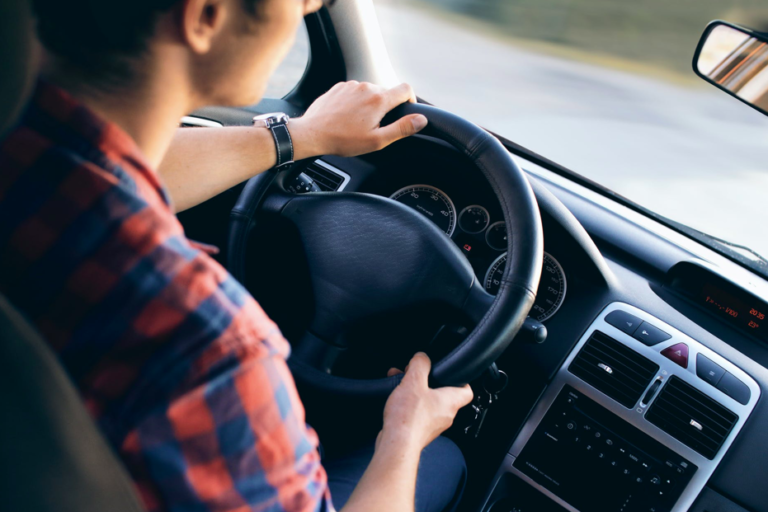
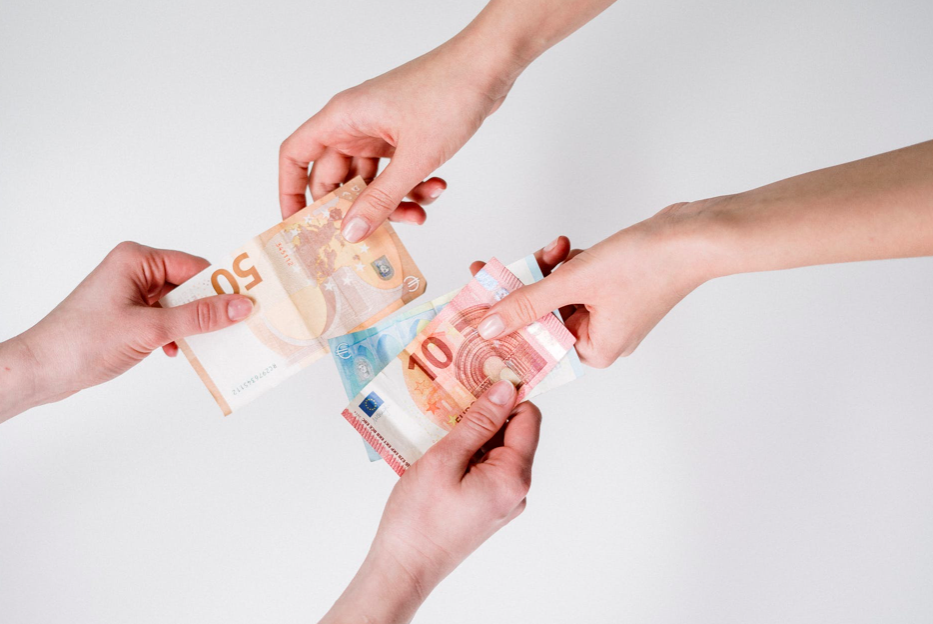
This is you, with your four hands, enjoying all the money you’re saving with a Bynco private lease. Image: cottonbro/Pexels
Bynco also doesn’t require a deposit on the car you lease, which is great for those of us who don’t have a whole chunk of money chilling in our bank accounts. Furthermore, they have the Quality Mark for Private Leasing (in Dutch: Keurmerk Private Lease – yes, we know, Dutch is wild).
What’s the difference between leasing a car and buying one?
So, let’s get into the nitty gritty. What are the main differences between leasing a car and buying one? Well, it comes down mostly to ownership and responsibility. So, when you own a car, you need to buy it yourself, and pay all the costs associated yourself. You also need to sell it on if you move away, for example.
When you rent a car via private lease, you pay a monthly fee to the car lease company. With that fee, you’re paying for the car, and most of the monthly costs of the car in one go. You can rent the car for an agreed-upon time, usually between a year and five years. That also means you give back the car at the end of the lease, and don’t need to worry about selling it on.
What is an occasion private lease?
Sometimes, you might need a car urgently: maybe you didn’t expect to need one, and suddenly realise you do, or maybe there’s a special occasion that requires it. In any case, if you need a car quickly, Bynco offers an “occasion private lease”. This type of lease offers you a second hand car, which you can drive for a reduced cost each month. This is definitely a cheaper option than running out and buying a new car in a panic, and it has all the advantages that a regular private lease does: your monthly costs, apart from fuel, are covered, and it’s very flexible.
We’ve worked together with Bynco on bringing you this article. If you have any questions about your individual situation, Bynco are happy to help! You can look through their website yourself, and contact them via email or phone. They pride themselves on providing a seamless, customer-centred experience to anyone looking to buy or lease a car in the Netherlands.
What are your experiences with driving in the Netherlands? Still wondering about getting a private lease on a car in the Netherlands? Let us know in the comments below.