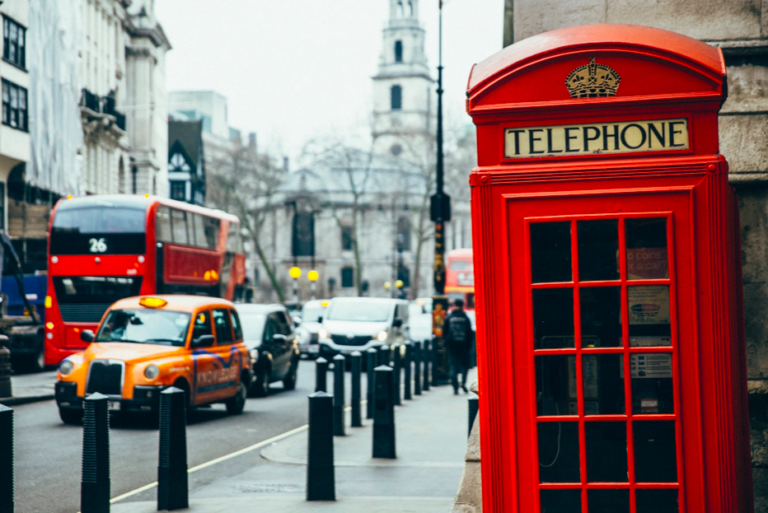
From today, Dutchies will not need to quarantine after arrival in the UK, along with citizens of nearly 60 other countries, NU.nl reports.
In June, the UK enacted a quarantine requirement on all international travellers in order to reduce the spread of coronavirus. In the UK, nearly 290,000 infections have been diagnosed since the beginning of the coronavirus outbreak. The official death toll stands at 44,687.
Despite this, the Dutch government has relaxed its travel advice for the UK from code orange (avoid unnecessary travel) to code yellow (travel is permitted, but travellers should be aware of the safety risks). In practice, that means that Dutch people can go on holiday to the UK this summer. The only exception is the Channel Islands, which remain code orange. It is possible that you might be checked for coronavirus symptoms as you enter the country.
The Netherlands decided to relax its travel advice for the UK not only because the UK had done likewise for them, but also because the UK has lifted restrictions on movement within the country. Pubs, restaurants, hotels and hairdressing salons have been open since last week.
Would you go on holidays to the UK this summer? Let us know in the comments below.
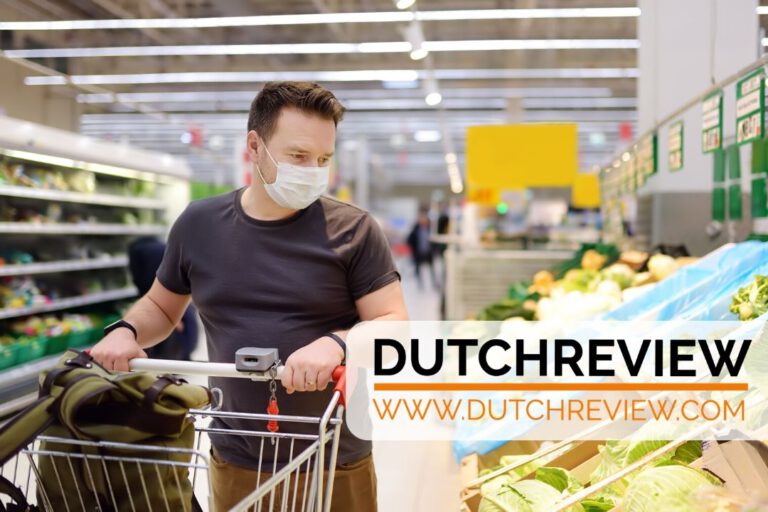
Measures taken back in March to allow for safer shopping for customers in supermarkets, including elderly hours, are slowly being discontinued, reports NU.
The elderly hours were implemented back during the peak of the crisis here in the Netherlands when people hoarded items like toilet paper and certain food products. The purpose of the elderly hours was to allow older people to shop safely and stock up on food and other necessities.
It’s been four months since the peak of the coronavirus crisis in the Netherlands, and things are gradually returning to normal. Some of the measures are being phased out, with elderly hours being less and less common in supermarkets. Shopping trolleys and baskets are also not cleaned as extensively as before.
Lidl, for example, has completely discontinued elderly hours, claiming that “There is less need because the situation has now normalized and we are seeing a spread of customers in our branches again during the week.”
Essential measures still in place
Despite the discontinuation of certain measures, supermarkets have stressed that it does not mean that the coronavirus outbreak is taken any less seriously.
The 1.5-metre distance is still necessary for supermarkets. Having a shopping cart with you is also mandatory, as well as having one customer per 10 square meters. When it comes to cleaning the shopping carts, many supermarkets have adopted a DIY variety, allowing customers to use disinfectant at the entrance and cleaning their carts themselves.
Should the measures stay for longer or should they gradually be dropped? Let us know your thoughts in the comments!
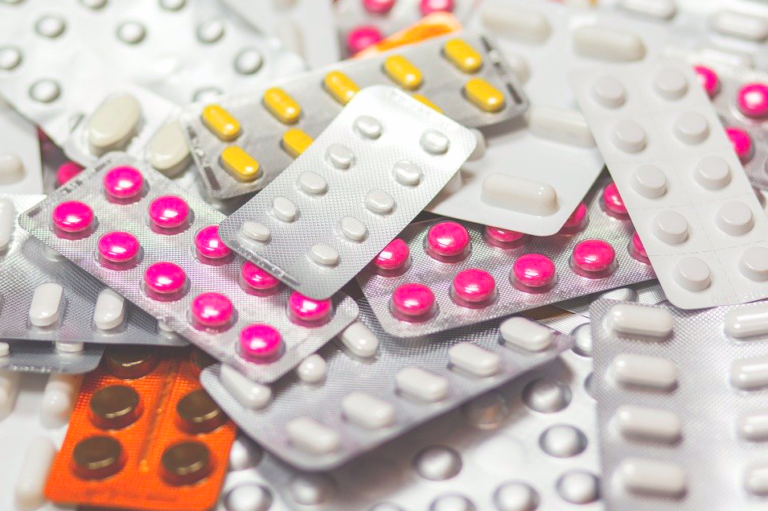
Dutchies are usually big fans of paracetamol, no matter what the illness, but could be set to change. Traces of a carcinogenic substance have been found in paracetamol sold in the Netherlands.
This finding has come to light as a result of an investigation by NRC and the television programme Zembla. The paracetamol in question was manufactured in China by Anqiu Lu’an Pharmaceutical. It has been contaminated by 4-chloroaniline, usually abbreviated to abbreviated PCA. This is a substance that occurs during the production of paracetamol anyway, but definitely should not end up in the finished product.
Opinions are divided on how worrisome this finding actually is, however. The European Medicines Agency (EMA) says that a person could take six contaminated pills a day without it becoming dangerous. However, the European Food Safety Authority (EFSA) has a different opinion: they say that even one pill a day poses an unacceptable cancer risk. This is because PCA has the potential to alter a person’s DNA.
It is not clear where the contaminated paracetamol has ended up. In the Netherlands, two billion paracetamol pills are sold each year, and about half of those are made by the Apotex pharmaceutical company in Leiden. Apotex uses Anqiu Lu’an, the pharmaceutical company which made the contaminated pills, as its main raw material supplier, and has done for the past few years.
Apotex supplies paracetamol to be sold in Albert Heijn, Etos, Jumbo, Trekpleister, DA and Kruidvat, so if you’re wondering if your paracetamol could be contaminated, there isn’t really a simple answer. The Medicines Evaluation Board (MEB) has decided that it won’t be pursuing the matter further, so don’t expect any product recalls or a deeper investigation.
Do you think there should be a full investigation into this? Let us know in the comments below.
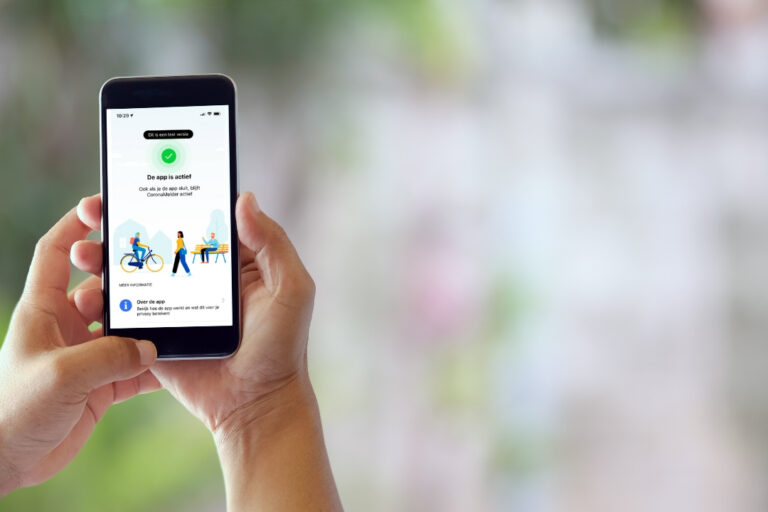
The Dutch coronavirus app, CoronaMelder, has begun public testing today. Several hundred residents of Twente will use the app over the coming weeks. If successful, a nationwide rollout is expected.
The app works by alerting users if they have been in close contact with another person with coronavirus. Using Bluetooth signals, the app can measure with “significant reliability” if you could have a risk of infection. However, the app only works if both people have it installed.
Local health departments will use the app to find out who coronavirus patients have been in contact with. Early detection of potential infections is important so that people can self-isolate, and reduce the risk of further transmission.
“We must do everything we can to prevent a second corona wave. We are the dyke that can stop that second wave. The app can play an important role in this,” Dutch Minister for Health Hugo de Jong said in a statement.
Put away your tin foil hats (and someone please tell those people who set 5G towers on fire). While the app is communicating constantly, users of the app and the government do not see names or identifying information — in fact, you’re reduced to a string of numbers representing your movements.
If someone tests positive, they can choose to send their information to a central server, which is then sent to everyone who has the app installed. If someone has been in contact with the person confirmed to have been infected, they will receive a warning message.
If you’re at risk of infection, you will receive a notification. You’ll be able to request a corona test, and you can report yourself that you have coronavirus.
What about privacy?
Personal privacy has been highly criticised in other countries that have rolled out coronavirus tracing apps. In the Netherlands, When CoronaMelder is installed, it states that your name, location data and other personal information is not stored. You’ll be asked if you want to switch on Bluetooth, and if so, Apple or Google’s COVID 19 exposure technology will activate. The app will run in the background from then on.
However, people remain suspicious of the privacy features, which will undoubtedly come under further scrutiny on widespread release.
Can people fake an infection?
What better way to wreak havoc than a bunch of kids claiming to have coronavirus when they don’t, right? Well, they’ve thought of that. If you are unfortunate to test positive for coronavirus you can indicate this in the app. The regional health department will confirm the infection using a unique code.
When does the coronavirus app trigger an alert?
If you have tested positive and have been around anyone for more than 10 minutes (who also has the app installed) they will receive a notification. The notification is anonymous — so you can’t play the blame game. The app will tell you that you are at a higher risk of infection and that you should watch out for symptoms.
When can I download the app?
Only several hundred residents of Twente are currently testing the app, so you won’t find it on Google Play or the App Store. The Dutch government will announce in mid-July if CoronaMelder will be rolled out nationwide and be available for everyone to download. However, you may need to brush up on your Dutch — the CoronaMelder app is not expected to be in English.
Will you be using the CoronaMelder app if it is released? Tell us your thoughts in the comments below!
Three youngsters were arrested under suspicion of participating in firework violence earlier this year in Breda.
Two young people attacked police with fireworks in May of this year in Breda. Three suspects were arrested this week, two on Tuesday and the last one this morning, reports NOS. The youth are aged between 14 and 18 years old.
Breda suffered a chaotic New Year’s Eve celebration this year. In the attack, 20 youngers were caught vandalizing a mobile security camera. When officers arrived on the scene, the teenagers set off fireworks directly at the officers.
The police say that surveillance camera footage revealed that the fireworks were specifically directed at police officers. “You can see that the young people were waiting for the police officers who drove into the street. So, it was not the case that the young people turned against the officers later.”
The mayor of Breda, Paul Depla, has considered implementing a total ban of fireworks in the district of Breda where the incident happened, namely Hoge Vucht.
Fireworks have caused a lot of controversy in the Netherlands over the last few years, owing especially to New Year’s Eve, when fireworks are launched chaotically, with people being heavily injured and even dying from them.
Should fireworks be banned nationwide to prevent further violence? Let us know what you think in the comments!
Trays of Heineken wind through (the slightly more separated) tables on terraces, streets are teeming with bicycles, and Kalverstraat is no longer the place for a quiet midday stroll. But despite the easing of restrictions in the Netherlands, the ways in which the ongoing Covid-19 pandemic has altered the daily to-and-fro of our lives have not been forgotten.
People across the world were forced to settle into more simple routines, in which the days gradually revolved around the domestic. A focus of these new routines became carefully considering, creating and enjoying daily meals. The familial and neighbourly sharing of food has been both a source of joy, and an expression of resilience. But the pandemic has also exposed the striking imbalance of our relationship with nature, and the fragility of our food system.
While life under lockdown may have restored the appreciation of food for some, it has also exposed the inequalities that exist between those whose meals can instantaneously arrive on Deliveroo bicycles, and those forced to continue to work to make that possible. The prediction that 60 million people are now at risk of extreme poverty, juxtaposed with imagery of colossal amounts of food waste, starkly exposes the deep inequality and fragility of modern food systems. And remember those barren supermarket shelves? The pandemic shocked Westerners into the realisation that there is nothing immediate about food.
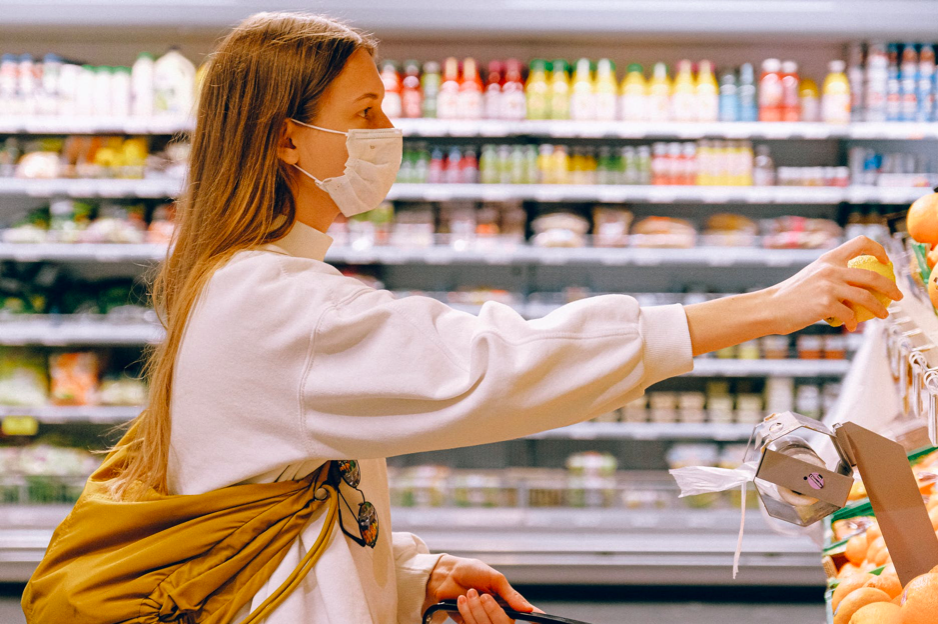
Coronavirus made us all reconsider our relationship with food. Image: Anna Shvets/Pexels
Climate change is without a doubt one of the greatest challenges of our time. But while it’s easy to feel as though we’re steaming towards an inescapable disaster, it’s important to remember that climate change isn’t something that we can’t do anything about (at least for the moment). Contrary to popular belief, humans have proven time and time again throughout history to be both resilient and resourceful in times of crisis. Just have a read of historian Rutger Bregman’s book ‘Human Kind: a Hopeful History’, in which he makes a compelling case for the better nature of humanity. There are choices we can start making today that will impact our tomorrow for the better.
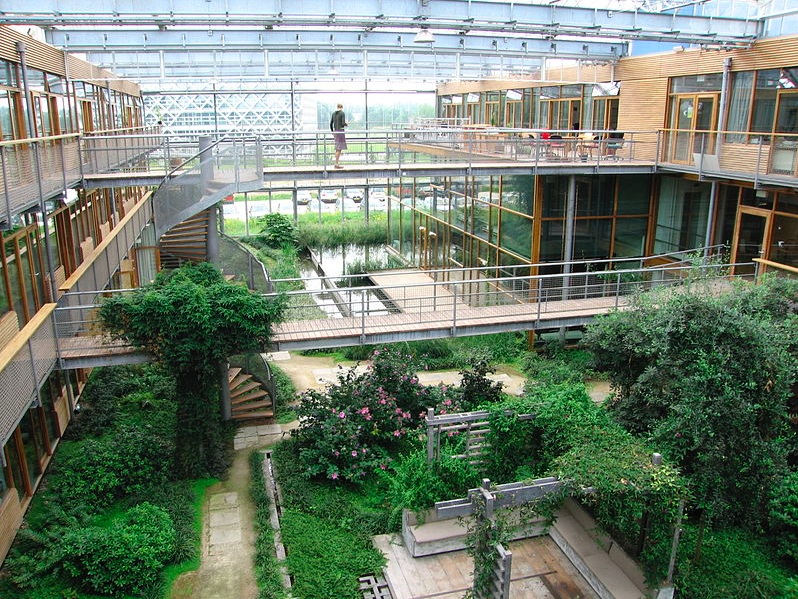
Improving our food system is a crucial part of managing climate change. Image: ElasticComputeFarm/pixabay
This is not the first time that a crisis has provoked the desire to reform our relationship with food. Our Food Problem, published in 1939, demanded a post-war reconstruction of the food system. So the question that remains is this: can we harness progressive ingenuity in the wake of this crisis to push for a radical rethinking of our strained relationship with food and nature?
The innovative developments towards reshaping the future of our food right here in the Netherlands proves that yes, we can, and emphasises the imperative fact that yes, we must. The Netherlands is the second largest exporter of tomatoes and onions, and the largest exporter of eggs in the world. For such a tiny country, this is quite a feat. The Dutch are the masters of efficiency and resourcefulness, and innovative developments so far suggest the Netherlands could be at the forefront of the mission to redefine our currently unstable and unsustainable relationship with food. And as one of the world’s top food exporting nations, it has a pretty good standing to do so.
Reimagining our communities through the lens of food
Dutch architecture and urban design practice MVRDV’s project in Almere Oosterwold reimagines city planning through the lens of sustainability, community and food. Within Oosterwold, free design and construction is limited only by the prioritisation of a “productive landscape” to maintain the rural character of the area: Oosterwold is 18% construction, 8% roads, 13% public green, 2% water and 59% urban agriculture. What is particularly inspiring about Oosterwold is the unprecedented way in which rural nature has been integrated into its development, making the project a living and breathing microcosm of a truly visionary idea. The thinking behind Oosterwold recognises our responsibility within the future construction of communities, and the dire consequences of the current imbalance in the relationship between the urban and the rural. By integrating sustainable agriculture into the planning process, MVRDV uses food as the connecting tool to build the community from the ground up.
Ever heard of the town of Wageningen? It’s maybe not included in Lonely Planet’s top ten Dutch highlights, but Wageningen is a little town with a big ambition: solving our food problem through technological innovation. Located in the town which has now been rebranded as “Food Valley”, Wageningen’s university is developing innovative growing technologies to combat our current system’s unsustainable draining of planetary resources. Think vertical farming, plant-based meat and gene-editing.
The “next generation growers” of Duijvestijn Tomaten have created a sustainable farm which grows tomatoes with mineral water, no soil and zero pesticides, using 50% less energy than a standard farming process. Doubly insulated greenhouses are home to thousands of tomato plants, which grow in small balls of mineral wool under LED lights.
The innovation of the scientific solutions on futuristic tomato farms is striking, and the productive urban spaces such as Almere Oosterwold emphasise collectivity and inclusivity. But the ongoing challenge is to ensure that such initiatives remain affordable, and can be readily integrated within inner city spaces. Political change is vitally important when it comes to tackling our food problem.
Investment in planning and in economic systems which take sustainability and environmental impact into account is needed on a large scale to make a real impact globally. The municipality of Amsterdam have made steps towards this too. The city is now the first in the world to adopt Kate Raworth’s holistic donut economic model, a circular economic framework which takes planetary boundaries into account.
Sitopia: a “practical, doable, reachable version of utopia”
The driving ideas behind these projects are in dialogue with other progressive thinkers, most notably British architect and author Carolyn Steel. Steel’s concept of “sitopia” — or “food-place” — places food as the central idea to human life: “’Sitopia’ is a practical, doable, reachable version of utopia,” says Steel. Steel argues that the balance between the city and the countryside, from which we are both physically and psychologically distanced, is essential. Her solution for regaining this crucial equilibrium is to rebuild our future communities through the lens of food. Steel proposes that the balance between humans and the urban, with nature and the rural, must be regenerated. In doing so, we can directly address the consequences of the way we eat: countering climate change, mass extinction, deforestation, soil depletion, pollution, water scarcity, pandemics and diet-related disease. Sounds pretty good right?
Whether it is planting windowsill dwelling herbs, or campaigning for political initiatives that strive to rebuild our relationship with nature, these choices are ours to make. If we make them now, we might just have time to ensure that the act of sharing good food is one which can be enjoyed by the many, for many more years to come.
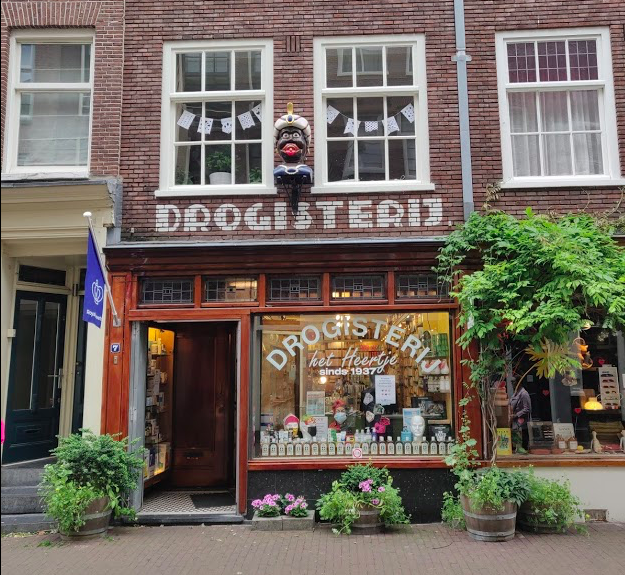
A drugstore in Amsterdam has decided to remove a statue of the head of a Black man from over its front door, following a Twitter storm.
The statue in question was a gaper, which usually depicts a Black or Asian man, often with a turban. Often, they have an open mouth with their tongue sticking out, and were used in the Netherlands from the 17th century onwards by drugstores to promote the quality of the shop. The use of Black or Asian men as statues aimed to advertise that the medicines from the shop were coming from far away: many 17th century medicines were made from spices traded from the Middle and Far East.
A few days ago, Volkskrant columnist Sylvia Witteman tweeted about the statue to her 170,000 followers: a tweet, she now says, that was meant as a joke. However, the humour was lost on some people. “My snide comment was taken seriously by a bunch of idiots. The residents are harassed and the gaper is taken away!”
However, the management of the drugstore does not seem fully sure if it has made the right choice. “My employees have no longer felt safe in the store in recent days,” said Harry Piet, the drugstore manager, to NOS. “There were no threats, but they didn’t feel good about people walking by or taking pictures.” Piet insisted that the statue had nothing to do with racism or slavery, and is looking into ways of getting the statue back up, but perhaps in a new location in the store.
Across Europe and the US, there have been lots of conversations about controversial statues and how we can handle them. From removing them entirely (or dumping them in the harbour, as the people of Bristol did with the statue of slave trader Edward Colston) to moving them to a different context, such as a museum, how we are to deal with monuments that are not in line with our current moral standpoint is still a question that remains unresolved. Part of that is down to the variety of statues that are problematic: it might be more suitable for some types of statues to remain in public spaces, but with plaques attached giving further explanation.
How do you feel about these types of statues, and how should we deal with them? Let us know your thoughts in the comments below.
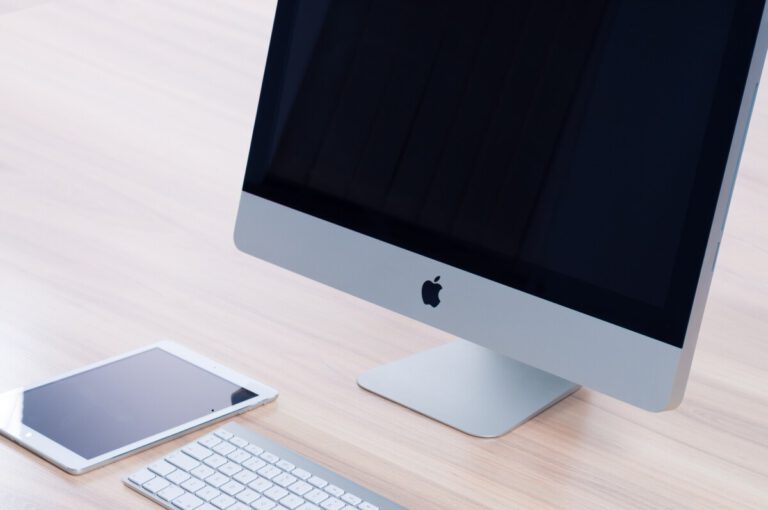
A glitch on the MediaMarkt website allowed a Dutchman to buy three iMacs for less than 7 euros. Now, the electronic retailer is demanding for them to be returned.
A man named Nemo, from Emmen, tells the story of how he bought the three iMacs for cheap, reports RTL Nieuws. “Last Saturday I ordered three iMacs and half an hour after ordering I noticed the error on the website. I thought it was a nice price, but I just received an order and shipping confirmation. I thought: then Media Markt really wants to sell it.”
If it sounds too good to be true, it’s because it is. “On Sunday evening, I received calls from someone from customer care telling me to return the iMacs. If I didn’t, a debt collection process would follow.”
MediaMarkt quickly pushed to have the computers returned or for them to be paid in full price. “But it quickly became pushier. If I had not decided before Wednesday whether I would return the computers or pay for them, there would be a debt recovery process or legal action.”
Nevertheless, Nemo decided that he’d rather like to keep the computers, and asked a lawyer friend of his for advice. “The fact that the iMacs have been delivered to me confirms to me that Media Markt wanted to sell the computers and that I can keep the iMacs. A collection process has now started from Media Market. I am waiting for that.”
This is not the first time a company accidentally soles a product for way cheaper than the actual price. The Dutch Consumers Association considers that consumers must know when something is wrong with the price and that they shouldn’t be “childish” about it.
In the meantime, Nemo believes that the judges will give him justice, as MediaMarkt must take responsibility for its mistake. “I think if this leads to a lawsuit, the judge will agree with me.”
Should Nemo be allowed to keep the computers or not? Let us know what you think in the comments!
A group of 20 Dutch youngsters were given fines after they drank on the street and broke coronavirus rules in Albufeira, Portugal.
The resort has been overcrowded with tourists and youngsters, including our Dutchies, who were partying as if there was no tomorrow. The situation got so out of hand that military police had to intervene to disperse the crowds, reports NOS.
On the weekends, hundreds of youngsters, some of them on graduation trips, overwhelmed the bars in Oura, the city’s main entertainment centre. The owners of the bars struggled to enforce coronavirus regulations, such as keeping distance and wearing face masks. Unfortunately for the bar owners, they are at risk of getting a fine between 1000 and 5000 euros if they do not enforce these rules.
People from the resort have gone on Twitter to vent their anger at the Dutch youth causing chaos in their town. They call out the disrespectful behaviour of the tourists, as well as highlighting that Portuguese youth have been at home for four months, some not even managing to take their final exams.
— Deborah do Carmo ⚖️ (@LawyerLinguist) July 7, 2020
The Albufeira City Council calls for stricter measures to be taken by the catering industry. They have also expressed their dissatisfaction with the high number of people on the streets. As of now, bars and clubs aren’t allowed to open in Portugal, unless they have a snack bar permit, which allows them to stay open until 11 PM.
Some travel agencies have cancelled trips to Albufeira due to the high influx of people coming in. However, people are still coming, with 2000 Dutch youngsters arriving yesterday, who are bound to cause some problems.
Should countries limit a high influx of tourists coming in during this period of time? Let us know your thoughts in the comments!
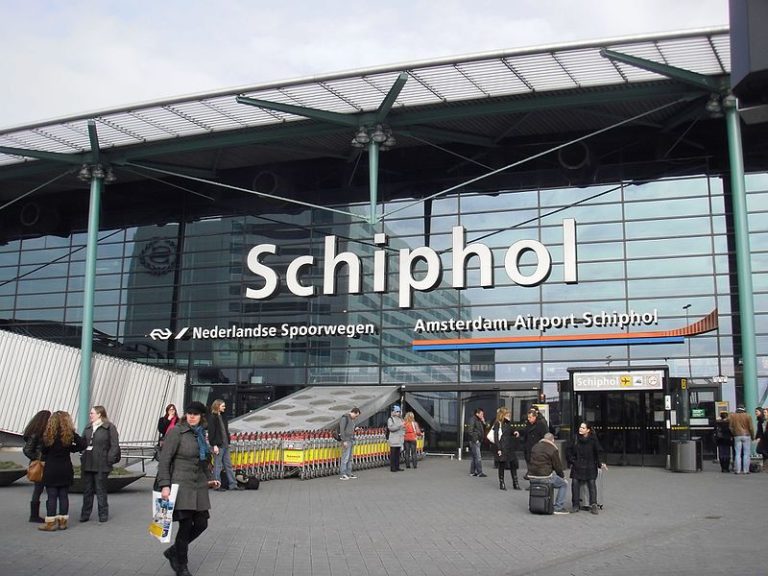
Yesterday evening, five people became unwell after opening a suitcase at Schiphol airport. The suitcase contained an unknown substance, which is currently being examined by a laboratory.
The five people in question were security staff, who opened the suitcase after it had been seized. The incident took place in a commercial building at the airport. The staff who opened the suitcase became slightly unwell and were examined by medical personnel. They did not need to be hospitalised. Their complaints have now decreased, NU.nl reports.
#Brandweer verricht metingen na aantreffen van een onbekende stof uit een in beslag genomen koffer in een bedrijfsgebouw op Schiphol. Hierbij zijn een aantal personen licht onwel geworden. Er wordt momenteel verder onderzoek verricht naar de aard van de stof. ^mm
What exactly the substance is remains unclear: it is currently under investigation in a laboratory. The Royal Marechaussee is also investigating the incident. The spokesperson for the security region says that the substance is not a danger to public health.
Do you have any guesses on what the unknown substance might be? Let us know your theories in the comments below.