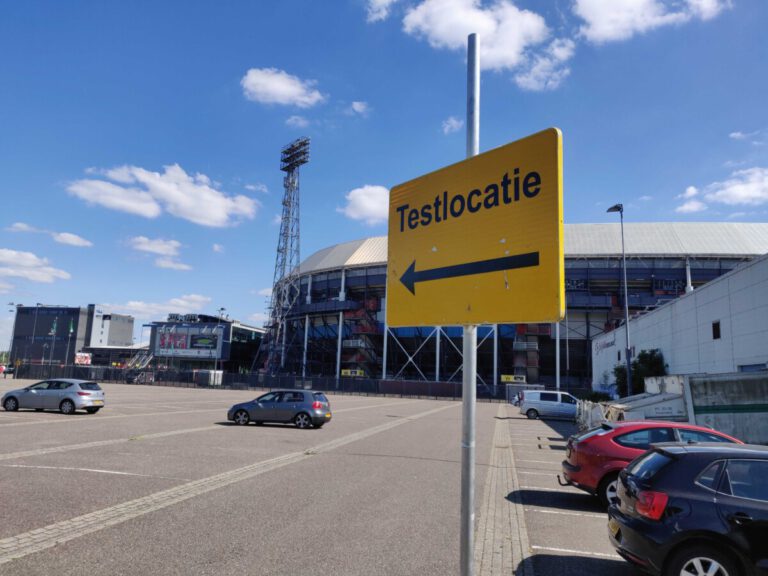
After weeks of potentially sick people being rejected from coronavirus testing, the Netherlands will finally begin widespread testing from June 1.
Starting from next Monday, everyone with mild complaints will be able to get a test. Anyone will be able to call a specialized phone line and make an appointment with the GGD, with the goal being to get tested within 24 hours. And, we’ll all be happy to know that testing will be completely free.
80 locations for testing
Throughout the Netherlands, there will be 80 different locations where people will be able to get a test. The government has a plan to create even more testing sites if the demand is high.
Those who are tested should get the results back within 48 hours and if you test positive, the GGD will then start contact and source research.
What is contact and source research?
Essentially, the GGD will be looking into who an infected person was in contact with in the last 24 hours. There are three different groups of people that get contacted by the GGD if someone tests positive:
Housemates: If they live with other people, they need to go into home quarantine for 14 days. They will also be monitored for signs of contagion.
Close contacts: People who have been within 1.5 metres from the infected person for more than 15 minutes will also be asked to stay at home. This also includes potential partners you’ve kissed or someone you might’ve coughed close to.
Non-close contacts: People who have have been in the same room with you for 15 minutes, such as work colleagues or classmates are asked to stay alert in regards to their symptoms. But, they do not have to go into quarantine.
New testing capacity
In recent weeks, there was an average of 4000 tests conducted daily, with around 5% of people testing positive. The number of tests will increase greatly in the near future.
Testing laboratories can already conduct 17,500 tests per day. At the start of June, that capacity will increase to around 30,000 daily tests. The GGD expects to see around 2% of people testing positive or around 600 people per day.
Vanaf 1 juni kan iedereen met klachten zich laten testen. Zo zien we snel waar het virus weer oplaait en kunnen we het direct de kop indrukken. Voor iedereen met klachten zoals hoesten, verkoudheid of koorts geldt daarom: ‘Blijf thuis, en laat je testen.'👉🏻https://t.co/xIw7o58ysppic.twitter.com/Fk5ePZZebN
Dutch Health Minister, Hugo De Jonge, confirms that there will be initial start-up problems, given the complicated logistics involved. Nevertheless, he is confident in the GGD’s ability to expand its testing capacity.
Director of Public Health, Sjaak de Gouw of GGD (Municipal Health Service) has also warned that there will be initial setbacks and that the task at hand is complex. He said that “it may take longer to make an appointment and get tested in the beginning. But we make sure that anyone with complaints related to the coronavirus is helped as quickly as possible.”
Are you looking forward to being able to be tested if necessary? Let us know in the comments!
We all know the Netherlands is an indisputable cyclist paradise — and now they’re upping the ante. Rotterdam is making the most of the coronavirus crisis by widening bike lanes and sidewalks as part of their Rotterdam Mobility Approach.
Have you pulled up to a traffic light on your trusty fiets only to find there’s no space to keep your distance? We’ve all had the experience over the past few months, resulting in a lot of angry side-eyes to warn people not to breathe too heavily.
But Rotterdam is taking steps to reduce that problem and make sure cyclists can keep their distance. The broader roads will allow cyclists and pedestrians to comply with the one and a half meter rule. This will hopefully assist in reducing the spread of coronavirus.
What are the changes?
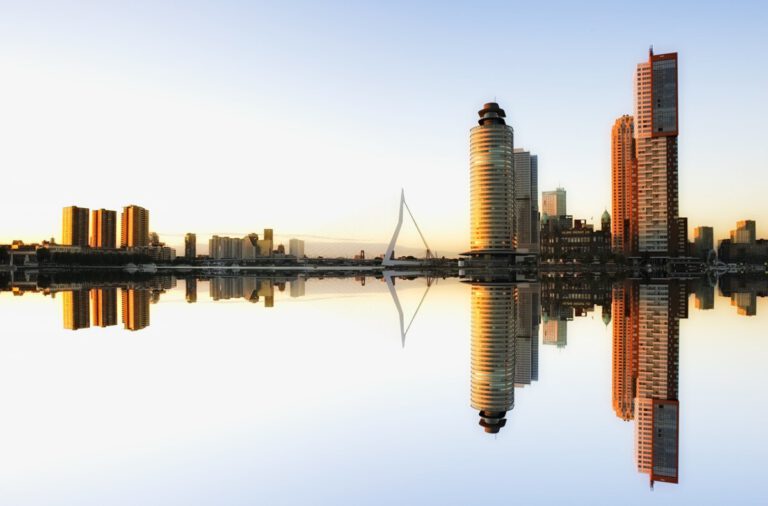
The additional space will be tested around the Erasmus Bridge in Rotterdam, says the municipality. The number of lanes for cars will be reduced to make way for bikes and pedestrians. If you’re keeping count, that’s one point for bikes — and zero for cars.
On the south side of the bridge, a right-hand lane will be closed to cars on the Erasmus Bridge, Posthumalaan and Wilhelminakade. This will give cyclists more space to wait at traffic lights. On the northern side, one lane on the Schiedamsedijk will disappear to make space.
Of course, cars aren’t left entirely in the dust — two lanes for cars will remain available to cross the bridge.
It follows an experiment that began earlier this year to reduce traffic through the Oude Westen by closing off at Kruisplein and Eendrachtsplein.
What other changes will come later?
Authorities will be testing and monitoring the traffic changes. As part of the Rotterdam Mobility Approach, an experiment around the Maas Tunnel will be conducted later to improve the air quality in the area. From next year, another experiment with a safer school environment will begin.
Do you want to see more of these initiatives in the Netherlands? Tell us your thoughts in the comments below!
As summer is quickly approaching, many people are curious if they can take advantage of the beautiful weather and go on the vacations they’ve always done in past years.
The Dutch government is hard at work in order to determine the status of summer holidays for this year, NOS reports.
Postponing holidays might be the best option according to prime-minister Rutte
Mark Rutte’s advice so far on summer holidays is to postpone them as much as possible. The government will have a crisis meeting next week in order to determine exactly what should be done about the summer holidays. Mark Rutte hopes to announce a list of countries where it’s best not to go due to the severity of the coronavirus there.
In any case, the Dutch will probably only be able to travel to the countries that have a similar level when it comes to their approach to the coronavirus. As for visitors to the Netherlands, they will also need to follow the guidelines here when they visit.
A joint approach to holidays by the governments of countries
One of the favourite travel destinations of the Dutch is France, which is also undergoing a transition phrase to reopen, reports RTL Nieuws.
However, it is far from certain when and where could Dutch people travel to in France this summer. The French Ministry of Tourism urged for a common approach by European countries in order to determine how summer plans should go.
So far there are many differences between how European countries are approaching this issue. For example, the border between Germany and the Netherlands is open, while it’s closed between Germany and France. Tourists going to Spain and the UK need to enter a mandatory 14-day quarantine period, while visitors to the Netherlands don’t have to.
The next deadline on the horizon for measures throughout Europe is June 15, so hopefully, there’ll be more clarity on the situation by then.
Follow DutchReview on Facebook for the latest coronavirus news in the Netherlands.
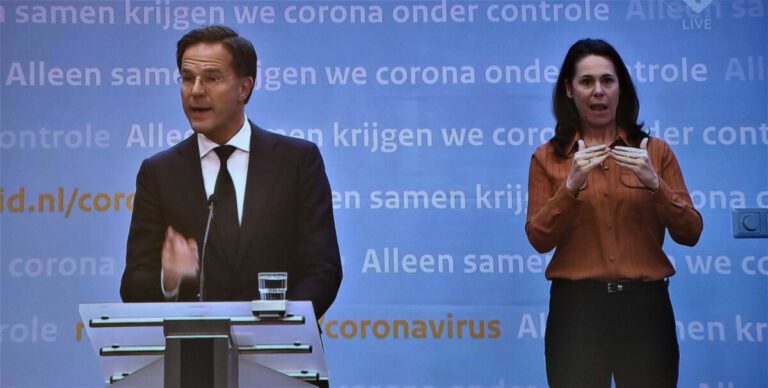
“But only IF it turns out that it is really possible by then,” said a stern Prime Minister Rutte told press after the meeting.
This means that the spread of the virus should not have increased too much. “A really big profit warning,” said Rutte. “Whether it is possible depends on how we stick to the rules and behave” It will then be announced a week before July 1 whether the relaxation will actually continue.
Requirements for gyms to open up
Gyms must meet certain requirements in order to actually open up. For example, they must ensure good ventilation, supervise compliance with the hygiene rules and they must perform a health check in advance on people who want to come and work out.
The opening of gyms was previously planned for the September 1. Many gym owners have recently said that they found that date far too late. The experts from the Outbreak Management Team did not come to a piece of advice to the cabinet about the gyms, because too much is still unclear about the distribution of sweat droplets and ventilation and such, nonetheless, the cabinet has decided.
Next week the cabinet will talk about the vacation period and if people can travel abroad and if yes, to which countries.
Is this going to work out? Are you going to work out? Drop a comment and follow DutchReview on Facebook for more updates on coronavirus in the Netherlands.
The RIVM has published the latest count of coronavirus cases in the Netherlands for today, May 27.
The number of cases continues to grow. Today’s count reveals an additional 190 cases of coronavirus. Ever since the outbreak started in February, there’s been 45,678 cases throughout the country.
Severe cases of the coronavirus lead to seven people being admitted to the hospital.
Unfortunately, since the last count, the coronavirus has claimed the lives of 15 more people, making a total of 5,871 deaths from the virus in the Netherlands.
Even as the Netherlands slowly reopens and while we all wish to get back to normal, it’s important that we still respect the necessary social distancing measures to avoid a second wave of coronavirus appears and all the progress is undone.
Almost 3% of education and childcare employees test positive
The RIVM has revealed that 2.8% of employees with health complaints in primary education and childcare have tested positive for the virus, out of a total of 2100 initial tests. These results come after “street tests” were introduced on May 6, allowing employees working in primary education and childcare to get easily tested at their local hospitals. In the period May 6 to May 25, 99 employees in primary education and childcare tested positive of coronavirus, while one of them had to be hospitalized.
Air France-KLM CEO gets €798K bonus as the Netherlands gives airline €4 billion bailout
Yes, airlines have been gravely impacted by the coronavirus crisis. But they are simultaneously the same companies that will make you pay extra if your luggage exceeds 500 grams over the limit.
The CEO of Air France-KLM, Ben Smith, is snatching up his 798K euro bonus either way, despite the company receiving a bailout from two different governments. His reasoning for receiving the bonus is that he worked hard in 2019 and is therefore deserving of it.
The Dutch government voted against him receiving the bonus, but unfortunately, as the country has a small shareholding in the company, the vote did not pass and he will receive his bonus.
Behind the scenes, work to reopen tourism industry
NOS reports that work is being done by six different ministries to develop a tourism protocol. The tourism industry is strongly affected by the coronavirus crisis.
The consultations with the ministries want to figure out how best to safely reopen the tourism industry. From what is known so far, tourism might reopen for countries that have a similar amount of cases to the Netherlands as well as similar measures. Neighbouring countries will also get easier access as tourists to the Netherlands.
Follow DutchReview on Facebook for all coronavirus-related news in the Netherlands.
Sexting is at an all-time high in the Netherlands, presumably as single people try to find their RIVM-recommended sex buddy. Can’t be disobeying a direct order from the government, can we?
A survey by VPNGidsnl has shown that 44% of women are spending more time on sexting during the coronavirus crisis, and 50% or men are doing the same. Let’s all just take a moment of silence for the women suffering from that particular gender imbalance.
The sending of sexual pictures is actually what is on the rise, while sexting, in general, has remained pretty constant over the past weeks. According to the survey by VPNGidsnl, this is because sending sexual pictures is viewed as “the next best thing” when social distancing makes physical contact pretty impossible.
How has coronavirus affected sex in the Netherlands?
A couple of weeks ago, the RIVM recommended that single people find a cuddle buddy or a sex buddy to take comfort in during these hard times. This statement aroused (sorry, we had to) many different types of responses: primarily “Is there somewhere I can sign up for this?”.
Most Dutchies are quite responsible sexters- and somehow, that doesn’t even feel surprising to us. More than half of Dutchies do not send pictures in which they are recognisable.
30% of the men who do send recognisable images say they do not worry about their privacy, because they trust the recipient of their messages. One in three women does send recognisable photos when they trust the recipient.
You can follow DutchReview on Facebook for more updates on coronavirus in the Netherlands.
Air France-KLM CEO, Ben Smith, has decided that now is the perfect time to take a €798,000 bonus, NOS reports. Yes, we’re talking about the same airline that was awarded a bail out by two European governments very recently.
The airline industry has been suffering over the past months of the corona crisis: no one can travel for pleasure, so planes have spent a lot of time on the ground. That means no money for the airline industry.
Air France-KLM has been hard hit by the pandemic, just like other airlines, and has needed the governments of France and the Netherlands to bail it out. France will provide €7 billion to prop up the airline, and the Netherlands will give between €2 and €4 billion.
Why is Smith getting this bonus?
The way Smith is justifying this bonus is as follows: it’s for his work in 2019, when the airline performed well. Also, being a true paragon of virtue, he did not take a short-term bonus earlier this year when the crisis started. He has also taken a 25% pay cut like all KLM staff for as long as the airline can’t fly. What a sacrifice, to take a temporary 25% pay cut to get a €798,000 bonus.
Because the Netherlands is a shareholder in Air France-KLM, it also had a vote on whether Smith could get this bonus. Finance Minister Wopke Hoekstra says the Netherlands voted against the bonus. “As we have always said: we are in a crisis and a lot of tax money is needed to get companies and employees through this crisis. Therefore, this is not the time for bonuses for directors of companies we have to support.”
Unfortunately, as the Netherlands only has a 14% stake in the company, it was overruled. The majority of the shareholders of Air France-KLM voted in favour of giving Smith the bonus.
And that’s it for your daily reason to become a socialist! You can follow DutchReview on Facebook for more updates on coronavirus in the Netherlands.
The RIVM has published the latest count of coronavirus cases in the Netherlands for today, 26 May.
While the country prepares to slowly reopen, the coronavirus nevertheless remains a concern.
The new count reveals that there are 133 new cases in the Netherlands. Ever since the outbreak began in February, there’s been a total of 45,578 cases throughout the country.
Severe cases of coronavirus lead to 10 people ending up in the hospital, who are now receiving care in intensive care units.
Unfortunately, the virus has also claimed the lived of 26 people since the last count. Overall, the virus has caused the death of 5,856 people in the Netherlands.
A quarter of prospective international students say “nee” to online classes in the Netherlands
Facing financial insecurity, as well as uncertainty over travel restrictions, 35% of students who took part in a survey expressed doubt over coming to the Netherlands next academic year to study. Online classes are another factor in their indecision, as they cannot provide the same quality education as going to a physical classroom.
20 Dutch children have serious coronavirus-related illness
It seems that the illness is a combination of two different diseases: the rare Kawasaki syndrome, and Toxic Shock Syndrome. It’s believed the illness is caused by the child’s immune system overreacting to the coronavirus.
The disease is present in other countries as well, where it has caused casualties. Thankfully, in the Netherlands, none of the children has died, but it is not known yet how their recovery is going.
Follow DutchReview on Facebook for the latest coronavirus news in the Netherlands.
Coronavirus is a global health emergency: primarily physical at the beginning, but mental health problems are now on the rise as people struggle with self-isolation and worries about the future.
Recently, more and more alarming reports have surfaced about what the corona crisis and lockdown does to our mental health. The spread of the coronavirus currently has major consequences for daily life in the Netherlands. COVID-19 makes the body sick, and when combined with the lockdown, it can sometimes also affect the mind. In the past few weeks, mental health complaints have increased, and treatment has also become almost impossible due to the lockdown.
Since the virus made its way into the Netherlands, it has sparked fear, guilt, anxiety and depression. While the number of cases and deaths may be reducing everyday, psychologists predict that the end of the pandemic may be the beginning of a mental health crisis in the Netherlands.
Negative effects of the pandemic on the mind
For people with a mental illness, the corona crisis has had a major impact on them. Many appointments in mental health care have been canceled or converted to phone/video calls. In many cases, the affected people desperately need therapy to keep their heads above water. According to a survey done by MIND in the Netherlands: half of the respondents indicated that they have trouble sleeping and also suffer from, for example, anxiety, depression, panic attacks, etc. Some spoke of having vivid dreams, often coronavirus related. A third are not sure how to get through the crisis.
Post-traumatic Stress Disorder (PTSD)
It is also evident that healthcare workers suffer mentally while on the frontlines of the corona crisis. They have to deal with a huge influx of patients, work long days and experience, firsthand, the fear and pain in the eyes of their critically ill patients, all without good PPE (in a lot of cases). The reality of this whole situation is that healthcare workers may end up suffering from post traumatic stress disorder. PTSD is the psychological stress that develops after a person has been exposed to a traumatic event. In situations (like Italy), where healthcare workers saw so much death, and even had to make the decision on which critically ill patients would receive treatment, and which ones would be left to die, they may be overwhelmed with feelings of guilt and shame, which in turn can cause psychological complaints, including PTSD. The question remains: how much damage has this caused, and how can our healthcare workers be helped?
Post-traumatic Growth in the Netherlands
Coronavirus times advice. Image: Nick Fewings/Unsplash
No matter how traumatic certain events may be, they can sometimes lead to positive changes in people’s lives. The term ‘post-traumatic growth’ describes this phenomenon. During traumatic times like these, a lot of people can start thinking about what is truly important in life and become more guided by these values. For example, they may decide that they no longer want to take life’s simplest pleasures for granted, may feel more gratitude for the life they have or become more aware of their surroundings and everyone in it. Many people also experience a stronger connection in relationships and friendships, and some may even stop fighting amongst themselves and choose to make peace, do good and enjoy life.
Since the beginning of the lockdown in the Netherlands, we have seen true resilience from a lot of people; those who help the elderly with doing groceries, entertained their neighbours from their balconies, and others who are doing all they can to make the best of the situation, etc. The pandemic and lockdown will definitely leave a huge dent on our mental health, but so far, it has also led to post traumatic growth. One can only hope that when all this ends, there is more post-traumatic growth than post-traumatic stress.
For now, social distancing is still as important as ever. There is still no cure or a vaccine and it is of paramount importance that we continue to be there for one another. The pandemic might end up not leaving too great a burden on our collective mental healths if we all support one another through these crazy times. For all who do their best to keep the most essential parts of the Netherlands running, for the soothing music coming from the balconies, and every other help offered — big or small — we say a big thank you. These crazy times seem to have unlocked some kind of universal sense of what’s really important in life, and I hope that when all this is over, we can come out of it with more love and affection for one another.
Coronavirus information and help lines
Do you have any questions about the coronavirus? Then you can call the public information number 0800-1351 (available daily from 08:00 to 22:00).
Red Cross helpline for mental care
The Red Cross has opened a telephone helpline for people who are in isolation or quarantine. You can call 070-4455 888 (available from Monday to Sunday from 9:00 am to 9:00 pm).
On those days when you feel alone and need a listening ear, please call 070-4455 888 for a listening ear, some advice or just to discuss available options for extra help. And if you are concerned about someone who is vulnerable and may need help coping with the lockdown, you can also call the helpline. The Red Cross can then send a volunteer to support them.
Psychological help during the coronavirus lockdown
For people who may experience psychological problems such as anxiety, gloomy days, or stress, it can sometimes get worse if they already have mental problems. Talking about how you feel definitely helps. If you would like to talk about your concerns or problems, you can call MIND Korrelatie: 0900 1450, (15 cents per minute, every working day between 9am and 10pm). In addition, on Wijzijnmind you will find many options for support during these corona times: tips, contact with fellow sufferers, welcome distractions, and a livestream from the MIND Digital Living Room every afternoon. Please take advantage of this, if you think you may need it.
We’ve been hearing the term, “the new normal” a lot. There are some who think that this so-called new normal is but a “temporary anomaly”. The terms, “1.5 m society” and “the new normal” are only for these corona times. Humans are social beings and for those who suffer mental illnesses in our communities, social contact can be a way to help them keep their heads above water. Unfortunately, that isn’t very possible right now. We must all understand that these coronavirus measures are certainly essential, but yes, they are not normal. They are a “temporary abnormal” that is necessary until a treatment and/or vaccine is available. So while we are social distancing, wearing our masks and no longer shaking hands or giving hugs, we should not forget the importance of looking out for one another.
We do not necessarily have to endure a mental health crisis after the corona crisis is over. And we can achieve this if we continue to take good care of ourselves and others, now and in the longer term. If hospitals and companies provide their employees with good mental support and care, we can definitely prevent a mental health crisis in the health sector. For now, the focus should be on making sure that we all survive this pandemic with our mental health intact. In addition, an emergency plan must be put in place by the government for mental health care. Some of our brave healthcare workers might need it when all this is over.
What has your experience been of mental health during this coronavirus crisis? Let us know in the comments below.
Prime Minister Rutte’s mother has passed away at the age of 96. Rutte has respected the coronavirus rules and not visited his mother in her nursing home in The Hague.
Mieke Rutte-Dilling passed away on 13 May, but her death was announced yesterday by the RVD. She did not die of coronavirus, though the virus was present in the nursing home where she lived.
When asked if Rutte had indeed not visited his mother before she passed away, Rutte’s office confirmed that he had indeed obeyed all the coronavirus rules and not gone into the nursing home.
Ik ben even stil.
Je krijgt voor de tweede keer in je loopbaan een onmogelijke taak. Moet dealen met onmenselijke kritiek, van zowel volk als politiek én je verliest je moeder.
Via the RVD, Rutte said that he and his family hoped to be able to deal with this loss together soon. He also expressed gratitude. “In addition to the great sorrow and all precious memories, my family and I also have a feeling of gratitude that we were allowed to have her with us for so long.”
Mark Rutte’s mother has died – apparently not from the virus, but she was living in a facility where there had been an outbreak, and had a closed funeral. In the days since, “the Prime Minister simply continued working”. Hard times, which touch us all.https://t.co/SQRVXJHzgS
On 1 June a trial will begin in the Netherlands where some nursing homes will reopen to visitors, to be followed by all nursing homes on 15 June- provided things go well.
Dutch social media has been filled with condolences and messages of appreciation of the Prime Minister’s decision to respect the lockdown. Rutte has also received messages of condolence from other political parties such as PVV, 50PLUS and DENK.
Dutch PM Mark Rutte did not visit his dying mother due to #COVIDー19 restrictions. He understood that he had to adhere to the standards in public life that he himself had set.https://t.co/L5MrGNvmb3
Lots of people, including the Guardian, have drawn parallels between Rutte’s decision not to break the lockdown for personal reasons, and the current British controversy about the actions of Dominic Cummings.