The RIVM has published the latest numbers on coronavirus cases in the Netherlands.
The number of coronavirus patients has continued its creep toward 40,000, with 386 new infections reported in the past day. Yet, the RIVM says the figures of the past days “match the picture that the measures are working.” However, the true infection count remains unknown as the Netherlands has not rolled out widespread testing.
The Dutch death count has increased by 145 in the past day, but RIVM warns that daily figures are particularly skewed this week after the long weekend. The total number of deceased in the Netherlands from COVID-19 now stands at 4,711. The figures also show that 76 patients have been reported hospitalized in the past day.
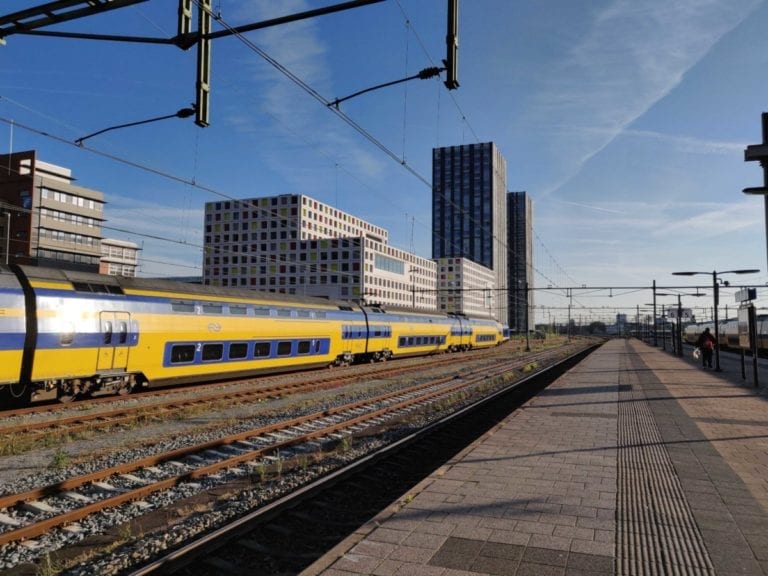
NS reintroduces intercity trains, warns against non-essential travel
Since March 21, the NS had run on a special schedule, with only two trains leaving per hour in any direction. The trains are also sprinters, meaning that they stop in every station.
However, fewer trains mean more people on them, which makes it difficult to respect the necessary social distancing measures.
The NS will introduce intercity trains again but warns that these are not for social outings and should only be taken if strictly necessary, such as for work.
Compared to last quarter in 2019, the population growth has slowed down. Part of the reason is that for the month of March, there were more deaths than births. Another reason is due to immigrants no longer coming to the Netherlands due to the coronavirus crisis.
International students affected by the coronavirus outbreak
International students are going through several challenges during this period of time. As many of them were hired in HORECA jobs, they’ve been financially hit by this crisis more than other groups, as restaurants and cafes have closed down.
This had made some of the students unable to pay for living and/or rent expenses. Unions state that there are around 16,000 students that are going through these difficulties.
Furthermore, non-EU international graduates who are on their orientation year visa (zoekjaar) are struggling to find jobs as well due to the coronavirus crisis and are asking for an extension on their visas.
Follow DutchReview on Facebook for the latest news on coronavirus in the Netherlands.
While all of us are affected by the current coronavirus crisis, some categories of people are more gravely impacted than others.
One of these categories is international students, especially those outside the EU. While universities are preparing for a new academic year with potentially completely online classes, there are concerns that for international students, that might not be enough to make them come, reports NOS.
Online experience only is not worth it
Murali, a student from India, said that he is not going to enroll to a Dutch university for this year, as online courses alone are not worth it.
He wanted to apply to a technical university, but he believes that only doing online courses will not give him the knowledge he seeks. This is especially because he would miss out on all practice that occurs within a laboratory.
Bernand from South Africa has similar doubts about registration, especially because a big part of his desire to come is related to experiencing the Netherlands. Doing a university year online would defeat this purpose.
The Ministry of Education, Culture and Science expects fewer international students to apply. Not only is there a problem of maybe doing online courses only, but given the current travel restrictions, it’s not certain if and how can the students come to the Netherlands. Applying for a visa will be difficult, and things like English tests are also complicated, as many testing centres are closed.
Finances play a huge role
Nuffic, a Dutch organization dedicated to the internationalization of education, considers that finances are a huge deterrent for international students. Parents have run into financial difficulties due to the coronavirus crisis and it is also more difficult to take out loans and grants from the government.
To overcome this, some universities like the University of Twente will treat tuition fee payments more leniently, hoping that international students will simply register for online courses if it comes to that. According to the head of Student Affairs at the University of Twente, it would be a shame for international students not to come, as that would ruin the international atmosphere that the University thrives on.
Should Dutch universities be more lenient with their fees in order to attract more international students? Let us know in the comments!
Many groups in society have been hit by the coronavirus outbreak. One group is students. Since early March, many students have not been able to work, resulting in an inability to make a basic income.
Many students will work flexibly in sectors like restaurants, cafes or stores, meaning that the many of them will have lost all their income as a result of the coronavirus crisis.
This income, which they would usually earn, covers necessities such as rent and groceries and equates roughly 530 euros per month, the FNV union’s youth branch and the National Student Union (LSVb) have reported, according to NU.nl.
These unions have appealed to the cabinet in order to come up with a solution to address the issue.
Zero-hour work contracts
Many students are flexible workers, through employment agencies or via self-employed means. Thus they are either fired, or no longer contacted for work.
The unions argue that students should receive the same kind of assistance as other flex workers do under the government’s coronavirus initiatives.
According to the unions there are approximately 16,000 reports from students who are suffering financially as a consequence of the coronavirus measures.
And for international graduates, there are also problems
Graduates are given a visa extension for year (zoekjaar) to find a job after completing their studies in the Netherlands. However, due to the coronavirus outbreak, they are experiencing difficulties finding a job, thereby asking for an extension of their visas.
Are you a student in the Netherlands who has been hit by the measures? Tell us about your experiences in the comments.
Due to the coronavirus outbreak, international students from non-EU countries would like to extend their residence permits in order to have sufficient time to find a job.
After having completed their studies at a Dutch university, the Immigration and Naturalisation Service (IND) grants foreign students one year in the Netherlands to find a job. This is called a zoekjaar. If they are successful, they are permitted to stay in the country.
International students pay a tuition fee that exceeds by far the Dutch or EU/EEA fee and often need to borrow large sums in order to finance their studies. Often this investment is worth it, especially if these students can find a job. However, this has been called into question with the coronavirus crisis.
NOS reports that students such as Jeevan Kumar, borrowed a sum of €50,000 from an Indian bank to study at TU Delft. Kumar has been searching now for several months. However, all of his job interviews have been postponed, meaning that he must rely on his parents’ finances. But because of a hefty interest rate, this becomes problematic.
The Ministry of Security and Justice has announced that it will not extend the zoekjaar.
For internationals still studying
For students coming from abroad who now have to resort to online classes, the hefty investment also becomes questionable. Thousands have signed a petition for a tuition fee reduction.
Many of these students also experience serious financial difficulties (partly they can no longer work part-time jobs) and are having issues paying their tuition fees. Consequently, they risk losing their residence permit. These issues are being discussed with educational institutions as well as the Ministry of Education.
Are you an international graduate or student living in the Netherlands? Have you experienced difficulties due to coronavirus? Let us know your thoughts in the comments.
The Central Bureau of Statistics has published the latest numbers on the population for the first quarter of this year.
The population grew slower this quarter compared to the same timespan last year. This year, the population grew by 15,500, while last year, it grew by 24,200 for the same quarter. Part of the reason for this decrease is due to how the coronavirus has impacted migration flows to the Netherlands, reports RTL Nieuws.
Higher deaths than births
Principally due to the coronavirus, more people died in the month of March than usual.
Mortality and births are usually balanced, but this quarter, there were 3000 more deaths than births.
Nevertheless, the country’s population has continued to grow as people decided to move to the Netherlands nonetheless, according to CBS sociologist Tanja Traag.
Less emigration
According to Traag, people who were working abroad have decided to come back to the Netherlands.
Besides that, there have also been people who have refrained from emigrating, such as those who had a job position opening abroad but decided to cancel plans due to the coronavirus.
Immigration has also decreased
There have been fewer immigrants coming into the country as well, according to the CBS.
Immigrants from countries like Turkey and India arrived in lower numbers in the month of March, and the CBS has said that they expect the impact of the coronavirus on immigration will be more visible once the data for April will become available.
Follow DutchReview on Facebook for the latest coronavirus news in the Netherlands.
From today, intercity trains are back online, meaning longer journeys will take far less time than they have for the past month.
The NS has been running on a special timetable since 21 March, which involves only two trains per hour leaving in any particular direction. These trains also stop at every station, so travelling a long distance took far more time than usual. Additionally, these trains sometimes got too full at particular times of day, meaning that it was impossible to keep a 1.5m distance from all passengers.
Not an excuse for an outing, NS emphasises
These issues will hopefully be diminished by the addition of intercity trains, but the NS was very clear that the extra rail service is not to be used as an excuse for an outing. They are purely intended to service people travelling to and from work.
Amsterdam public transport reopens more services
All around the country, other public transport networks are reopening as well. In Amsterdam, four of the five metro lines are back online, with trams running more often than they have over the past month as well. While this is partly to deal with the extra passengers from NS, it is also in anticipation of 11 May, when primary schools will partially reopen and more people will be moving around the city.
More buses and trams all over the country
Buses are also going to be coming more often. “It is one large network, if the NS suddenly comes with an extra intercity in place A, this has consequences,” said Pedro Peters, spokesman for umbrella organisation OV NL, RTLZ reports. Bus and tram companies will be monitoring the situation and adding more buses or trams if they think it is necessary.
Schedules are still uncertain
Passengers are asked to plan their journeys well in advance, because things are still unpredictable as the public transport system warms up once again.
Do you think it is a good idea to begin running intercity trains again? Let us know in the comments below.
The Netherlands: a safe haven for queers, an incredibly culturally diverse nation and a place where all fun things are legal. This, or similar, is a common picture conjured up in discussions surrounding the cheese and tulip-loving nation.
But the black and brown communities are not really on board with this one-sided presentation and point the finger to the hidden side of the coin: social exclusion of minorities, racial profiling, negative stereotyping of non-whites, and the world’s best-known blackface, Zwarte Piet.
A self-proclaimed tolerant and inclusive dutchie might respond to such accusations with their eyes rolling, forehead frowned, saying: “If you don’t like it here why don’t you go back to where you come from — what else do you want to eradicate from our culture?” Well, since you’re asking, plenty actually, but how about we begin with an open discussion surrounding racial discrimination?
Reasons as to why there is a burning necessity to open up this discourse are plenty, rooted in the draining everyday experiences of non-whites. Let’s start by talking about some of those, so we all know what we are dealing with.
Everyday encounters
My friend Etienne is African-American who came to study in Amsterdam on a scholarship. He is also very handsome and consequently takes his Cardio seriously (some days more than others). One of his runs led him through beautiful Amsterdam-west and he did some window-shopping while at it (apparently not only women are able to multi-task). As a dedicated fashionista, he spotted a pair of chic shoes and snapped a pic with his phone.
Maybe 30 minutes later back at his apartment, he notices a police car. The cops stop him, stating that he had raised their suspicion because of the photo he had taken of the shoes. Did he plan to return later and steal them? Etienne’s initial confusion (did they need directions or why are they approaching me?) turned into anger that they must have been following him for the past half an hour or so. His body trembles, but not because of exhaustion from the run, but because of the oh so familiar and agitating feeling of being accused of something he didn’t do.
He straight up confronts the cops, pointing out their nonsensical argumentation and illegitimate behavior. The very purpose of the shoes displayed in the window is to attract the attentive gaze of passing victims of consumerism. There surely had been plenty of white people starring at the shoes, too, but the unconscious bias of the cops had led them to follow him, the running black guy. The two get very embarrassed about the racist label and drive off.
“I’m not a racist, really…”
He can tell you stories like this for a week, echoed globally by black and brown people. The way you look still defines the way you are treated, immensely. A strategy he employs to protect himself from for example excessive scrutiny at the airport is that he dresses up extra sleek and bougey before hopping on a plane. I guess the lighter the complexion, the more comfortable you can go with the travel outfit (this would finally explain white girls traveling in their PJs).
My friend Cho would never compromise his afro-hipster style as a preventative measure. He is a professor at the University of Amsterdam with the most lavish dreadlocks of the entire staff (I am not sure whether anyone else has locks, but he’d win in any case) and his resistance to normative fashion in the profession has stocked him with a never-ending repertoire of stories that’ll make your mouth drop wide open.
To many in The Netherlands it does as well. The discussion here has been hijacked by agressieve and loud right wing groups. For the first time in my life I really don’t like my country. We used to be a beacon of liberal, progressive and free thinking ideas, now we condone racism.
A few years back we were chilling at the Pllek in Amsterdam-Noord, a Senegalese band was playing. We were vibing and enjoying drums and beer, when a white lady sitting a few tables over, came and destroyed the fun. She asked Cho whether he had seen her 20 Euros. “Which 20 Euros?” “My 20 Euros that were here on the table” “Oh do you want me to help look for them?” “No, I mean…”. And that’s when he understood that the lady thought he had stolen the 20 Euros.
She was punished (or blessed) with a passionate and angry lecture about how she should be ashamed of herself for judging people by the way they look, she had chosen to accuse not the people seated next to her, but the closest black person. At some point, she starts crying “I am not a racist, really, I just…”. I am certain that if Cho had found 20 Euros somewhere, he would have looked for the rightful owner, while I would have happily put them into my pocket without feeling bad about it.
But what the lady saw was skin colour, whether she wanted to accept that or not.
Unconscious bias
He told me about another peculiar experience: he was one of the invited speakers at a conference and upon approaching the reception to register, the friendly lady informed him about the whereabouts of the utility room for the cleaners. He clarified the situation and she, too, received a talk but of more tender tone: “It’s not your fault for making an unfounded assumption, it’s the fault of the system we live in that makes you think this way…” (There’s nothing wrong with cleaning as a profession, of course).
The two cops, as well as the two white ladies, perpetuated racial stereotyping through their behaviour without being fully aware of it. Making such people sensible to the system that creates unconscious biases is most difficult because they don’t view themselves as racially discriminating. They don’t see it, so how do we get them to?
"The Netherlands has a history of trading on its international image as a progressive, tolerant nation while struggling to deal with societal racism […]" https://t.co/UJFir383PX
I’ll tell you another story: I met up for dinner with my friend Aziz at Botanique in Amsterdam Oost, a spot with jungle vibes and friendly staff, dimmed lights and fairly private. It’s the first time we met after a very long time, so there was plenty to catch up on. My friend is pretty accomplished in what he does, Ph.D. in the making, great job and so forth. But when he tries to go to the club none of that matters, what people see is — a Turkish man.
He might get rejected at the door or is scrutinized more intensely than his white friends, and he gets pulled over by police in his car on a regular. Aziz shared his grief about the day to day discrimination he experiences with a friend of his. Said friend is white, straight and Dutch. White guy is by no means what we would consider a racist or sexist, but he also genuinely believes in the flawlessness of the Netherlands in terms of equality. He consequently trivialized Aziz’ experiences (a problem in itself) and put them into the coincidences box. “They probably had a bad day/ you were confused for someone else/ you must have misinterpreted the situation”. Aziz let it go, and his friend probably thought Aziz was over-sensitive and living a self-fulfilling prophecy, seeing ethnicity as the issue when it really wasn’t.
Fast forward two years later. Straight, white, Dutch guy comes out as gay and doesn’t hide it. He tells Aziz that he suddenly experiences discrimination himself! From subtle comments in the day to day life “meant as a joke” towards clearly homophobic statements. His oh so accepting Netherlands turns out not to be so holy after all. He apologized to Aziz for the previous trivialization of his experiences with discrimination. Now that he is not part of the status quo anymore he had the epiphany how life is like for the non-white, non-dutch and non-heteronormative in NL. Voila, the blind man who could see and he didn’t even need Jesus for it — kinda the opposite, to tell the truth.
A claim made by Adam Smith many years ago comes to mind: experience is the only valid source of true knowledge. So, giving someone an experience is very efficient in creating awareness of the system that creates unconscious biases, leading to racist acts, but also not very feasible. We can’t make our straight friends act gay for a day or turn the mansplainer into a woman until he’s a feminist. So what do we do?
What comes very close to experience is storytelling. Well told stories make us respond physically the same as the actual experience, we laugh, cry, sweat, taste and feel pleasure all by the power of our imagination, triggered by the right words and sentences. Hence, if we want to reinforce or transform people’s behaviours we need to give them an experience or tell them a great story. From a psychological perspective, this enables us to generate change without too much confrontation. Our beliefs are part of our identity and deconstructing and reshaping our identity is a difficult process.
Criticism can be experienced as an attack and will likely be met with rejection and backlash. A wise friend of mine once said: “If a story doesn’t create an image in someone’s head you are simply being too vague. Even the best strategy is powerless if it doesn’t trigger something from within”. Problem is, we first need to get them to listen and that is a challenge in itself. And if we did manage, it is not guaranteed that it’ll work either.
When Aziz initially told the straight/gay, white friend about his own experience, it didn’t change the latter’s position. Hence, storytelling as a strategy doesn’t always work, or at least not right away. If we as humans genuinely believe in the righteousness of a system, we will try to find excuses and bend ourselves backwards to make old claims fit newly acquired knowledge, rather than advancing our previous position.
I think showing the reality of structural inequalities requires a lot of endurance and creativity and most importantly — respect. Being openly judgmental will only trigger resentful feelings and harden the frontiers. Let’s do the judging in private together with our other woke friends, and lure them blind fellows in with a never-ending influx of stories and information eventually (hopefully) leading to the epiphany our gay/straight dutch friend had.
Have you experienced discrimination in the Netherlands? Have you unconsciously found yourself biased before? Tell us your story in the comments below!
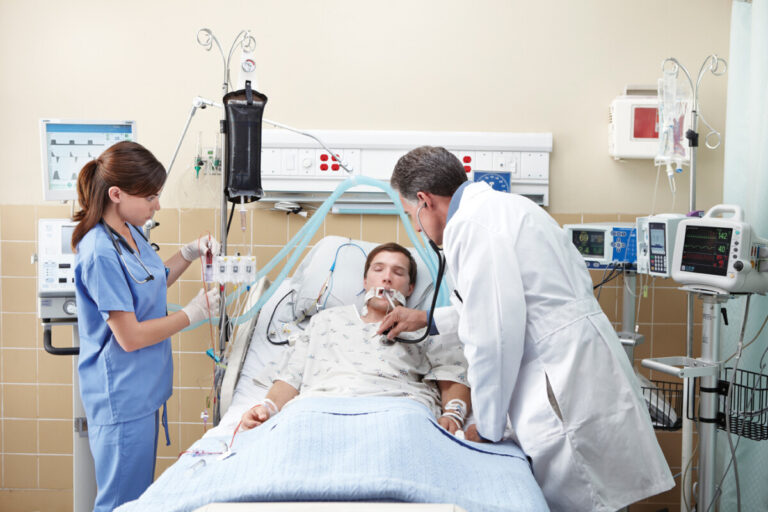
ICUs are one of the most important elements in a country’s ability to successfully treat grave cases of coronavirus.
Currently, the Netherlands has 1150 ICUs, but that number needs to increase in the near future to 1531 in order to accommodate coronavirus patients over the next three years, reports NOS.
Calculation by the RIVM
The RIVM, together with the Dutch Association for Intensive Care (NVIC) and the National Coordination Center for Patient Distribution (LCPS) calculated how many ICUs are needed in various scenarios.
One calculation is based on the assumption of herd immunity and that 60% of the Netherlands will get infected, with 0.45% of people ending up in ICUs. This would lead to approximately 37,500 ICU patients over the next three years.
Assuming an even distribution of patients, that would mean that 639 permanent ICU beds are needed just for coronavirus patients unless a vaccine is created in the meantime.
The chairman of the NVIC, Diederik Gommers, wrote a letter to his healthcare colleagues, explaining the following:
“You have to realize that there are of course many assumptions in this calculation. Furthermore, it is also the case that the average is of little use. If the measures are released in phases, we are expected to be limited in the summer months to for example 300 COVID patients in ICU in the Netherlands and that this number will increase again in the autumn.”
He assumes that the summer will be more light when it comes to cases and that the extra time needs to be used to prepare more ICUs and nurses.
He also expressed his frustration in the letter that the virus has not spread equally throughout the country, thus affecting some regions much more gravely than others.
Follow DutchReview on Facebook for the latest coronavirus news in the Netherlands.
The coronavirus outbreak has pushed governments out of their confines and into unchartered territory. It has placed a spotlight on policy makers, forcing them to step up — because failure to do would have massive consequences. It also means that the legislative and executive branches are accumulating more power. Is that a good thing?
#Covid19 & abuse of power:#Coronavirus seems to trigger some power grab: people are terrified, so governments are doing whatever they want.
This will have a huge impact on people's freedom from an astonishing growth of unchecked governments' power.
In the span of a few weeks, a microscopic particle has had a colossal impact on society. Democracies have been shaken to their very core as businesses have been shut down, educational institutions are no longer conducting classes, draconian-style lockdowns have been imposed and regulations for social contacts have been put into place.
The crisis is transformed into an opportunity for governments to extend their powers. And people are allowing this because it’s literally a matter of life — or death.
Viktor Orban in Hungary has, for instance, used the virus to consolidate his dictatorship and give even more power to the government. He can now stay in power without any time limit. Prime Minister Narendra Modi worked swiftly to impose a total lockdown in India. It proved to be disproportionately harmful to the poor but did stop the spread of the virus. Here in the Netherlands, a partial lockdown has been imposed and surveillance has been increased, measures that would be unthinkable in “normal” times. But so far, they seem to be working.
So is increased power to the government a good thing?
Coronavirus in the Netherlands and how it is being dealt with
The Netherlands lies somewhere in the middle of the spectrum in terms of severity of measures.
Partial lockdown
Initially, the Dutch government was criticised for failing to do enough. But in mid-March, the government announced measures that can be viewed as a partial lockdown. Restaurants, gyms and other such places were shut, people were advised to work from home, education moved completely online. A distance rule of 1 .5 meters between people in groups of three or more was imposed. Although this approach wasn’t necessarily condoned by the public, Rutte contended that a total lockdown would firstly contradict democratic values, and that it was unnecessary.
Later on, stricter measures were added to the list, after people failed to take the advice seriously. These included fines for people who failed to respect the distance rule, as well a ban of all public events (which have now been extended to September 1).
Meanwhile, surveillance has increased. For instance, apps have been developed in the Netherlands to report people who appear to be violating the measures in place.
It goes without saying the government is imposing measures (and fines for violating them) that would, prior to the crisis, be completely contrary to a democracy, measures that appear to violate a number of fundamental human rights. But so far, it appears as if the measures have been working: The curve, once exponential, has now begun to plateau.
This proves that in the Netherlands, the coronavirus measures are not completely arbitrary.
Looking after people who can’t work anymore
With closing so many stores, businesses and a foreseeable recession in the near the future, the government is doing its part to ensure that people are making their ends meet even though unemployment is becoming ubiquitous.
Self-employed persons who are hit by coronavirus measures are now eligible for a TOZO, or temporary bridging scheme for independent entrepreneurs till June 1, and possibly longer if the crisis continues.
Entrepreneurs affected by the 1.5m regulations are also eligible for a one-off payment of €4,000 — this is for businesses such as museums and hairdressers, and businesses will received money instantly, not months from now. This demonstrates the efficient manner in which the government is executing tasks.
Because of the coronavirus restrictions, education has shifted online. As a result, children from many lower-income families who may not have internet access or computers available, are hit hard.
However, the Dutch government addressed this issue by providing children with laptops so that they could still access coursework online. Other NGOs also pitched in. Obviously more could be done, but this is still a pretty good step in the right direction.
Strain on healthcare system
Initially there was a fear here in the Netherlands, that ICU capacity would fall short. Thankfully, numbers of ICU patients began to drop some weeks ago. Nonetheless, the Dutch government prepared itself for the worst case.
For starters, the option to transfer ICU patients to Germany was made available just in case the Netherlands ran out of space. In the meantime, ICU capacity was increased to 2,400 total beds from 1,150. Furthermore, the testing capacity here in the Netherlands was also increased in an attempt to make numbers slightly more accurate.
Technology
The government is also providing funds to invest in the development of apps, that can be used to report, track and test the virus.
So how well is the Dutch government doing?
In order to ensure that people follow rules, it is clear that enforcement has become stricter. For instance, over Easter weekend this year, €700,000 worth in fines was collected for failure to adhere to coronavirus measures.
But numbers in the Netherlands are falling without the imposition of a total lockdown. It seems then, that the government is attempting to remain democratic by only restricting daily life where necessary.
People are impressed by the work of Prime Minister Mark Rutte and his cabinet. 91% of the public supported Rutte’s partial lockdown, 88% supported the measures related to health and 75% supported the economic measures, according to i&o research. Furthermore, satisfaction with Rutte’s cabinet increased from 42% to 61%.
Other leaders are experiencing similar trends. In Germany, Chancellor Angela Merkel’s approval rating rose by 11 points to 79%, according to Forbes. In Italy, Prime Minister Giuseppe Conte’s popularity rating jumped to 71%. Similar trends in approval ratings are also present in France, the UK, Canada and India to name a few.
The approval that is given to governments shows that people are in support of the measures, even though they might be difficult, and give governments the stamp of approval needed in order to continue imposing necessary measures.
Times of crises can lead to growth
In these times, whatever a government is doing is a matter of trial and error, as there is no correct formula on how to address the virus. In some ways, we are serving as guinea pigs for government policies. Increases in mass surveillance and regulation of private life are things we don’t normally support, and the hope is that these won’t become norms after the crisis subsides.
But in other ways, we are testing new lifestyles. These include online learning, online work, and even online gyms — things that would likely not have been put into place so quickly. These are developments that are expanding the scope of the digital world.
The #COVID19 crisis—which is changing the way we live and work, and perhaps priorities in life and mindsets—can pivot economies towards “building back better”, with a greater focus on clean energy, green jobs and sustainable development. https://t.co/zmoCMGxpG1
The RIVM’s latest numbers reveal that there are only 171 new infections. Compared to yesterday’s rate of increase of 400 new patients, this number is considered encouraging.
This means there are now a total of 38,416 reported infections in the Netherlands.
Hospitalisations are now at 88, bringing the total number to 10,609, and new reported deaths are at 48, bringing the total mortality count to 4,566.
Of course, not all deaths have occurred in the past 24 hours. Furthermore, there might be a delay in reporting numbers and not all cases are being reported for the count. But it is clear that the numbers are declining compared to a couple of weeks ago, when new infections were above 1000 per day.
Did people stick to the coronavirus rules during King’s Day?
Authorities are generally happy with how King’s Day went in terms of people sticking to the 1.5m rule. Furthermore, young people, in particular, have shown a marked improvement in keeping to the rules since a few weeks ago.
Over the entire weekend, 719 fines were given out to people who were flaunting social distancing rules. On King’s Day itself, 65 fines were handed out until 4 pm. The police also noted that the number of fines given out on the night before King’s Day was surprisingly low, at 309.
Call to donate flowers for Remembrance Day
One of the most important Dutch national days is around the corner, namely Remembrance Day on May 4. Given the current situation with the coronavirus, Remembrance Day will be different this year. Although the Prime Minister and King will be giving their annual speeches, their audience will tune in from their screens instead of attending the festivities at Dam Square this year.
A decision was made by the National Committee so that people may buy and donate flowers from flower growers, so that they may get distributed across war memorials in the country. Furthermore, as per usual, there will be two minutes of silence at 8:00 PM followed by the singing of the Dutch national anthem.
Minks have been infected with coronavirus North Brabant
Coronavirus has been detected in several mink farms amongst some of the animals. Because some of the farm’s employees had symptoms of the virus, it can be presumed that the animals were infected by their human caretakers.
The farms are located in Milheeze and Beek en Donk, both of which are located in the region of North Brabant. The virus has hit this region in the Netherlands the hardest. Both farms have been closed as a precautionary measure.
Dutch students forced to sail across the Atlantic to return home after coronavirus outbreak
When the coronavirus hit Europe in full-force, many people, including 25 Dutch high-school students, found themselves stranded in foreign countries, unable to easily return home due to the many new travel restrictions.
The students, between the ages of 15 and 17 years old, were taking part in a sailing course that was supposed to last for a duration of six weeks. The organisers of the course, professional sailors and teachers, decided that the only thing left to do was to sail all the way back to the Netherlands — a 7000-kilometre trip. They finally arrived back in the Netherlands in Harlingen on April 26, just in time to celebrate King’s Day.
For more, follow DutchReview on Facebook and check out our coronavirus guide for all-things coronavirus related in the Netherlands.