The Netherlands’ hottest tulip destination, Keukenhof, is, well, getting hotter. And that’s not good for the tulips.
In an interview with nu.nl, Keukenhof director Bart Siemerink said that the park had needed to plant about thirty percent more bulbs this year, in order to have the usual colourful display ready for visitors from March onwards. Although this year the winter has been very mild, the new volatility of the climate as a result of climate change will be a general problem for Keukenhof in the future.
Temperatures are increasingly unpredictable
“We see that the winter weather has become much more volatile in recent years,” says Siemerink. “Temperature peaks and troughs alternate at a rapid pace. And following nature: it is currently 12 degrees outside, so the first leaves are already rising above the ground. It is early January, so that is indeed relatively early.”
Wider variety of plants
In addition to planting more bulbs, Keukenhof staff are also using a wider variety of plants in order to ensure the best possible chance of a colourful show. “We have started to plant more different species that flower sooner or later in the season,” Siemerink says. “And we plant 30 percent more bulbs to prevent certain fields from failing and in the weeks that we open are not offering the flowers that people come for. ”
One and a half million visitors each year
For a park that relies on the seasons, climate change is already posing a challenge to Keukenhof, which attracts one and a half million people to Lisse in South Holland each year between mid March and mid May.
What other effects do you think climate change will have? Let us know in the comments below.
The VVD and CDA have, at last, come out in favour of a ban on fireworks- at least, on bangers and flares. Ornamental fireworks will still be allowed, though, according to the VVD, NOS reports.
High number of injuries this year forced government to act
After multiple city councils voted in favour of a ban on fireworks, the only piece of the puzzle left was agreement among the national government on the necessity of doing something about this dangerous New Year’s Eve tradition. Each year hundreds of injuries occur, and this year there were even fatalities.
CDA thought ban would be unenforceable…
CDA spokesperson Van Dam said that part of the reason the CDA was against a total ban on fireworks was because such a ban would be unenforceable. Initially the CDA only wanted a ban on flares and singleshots, as these are the most dangerous to emergency help workers and the public, and two days after New Year’s Eve, Van Dam had said that the party would oppose any ban it deemed to be unenforceable.
But they and the VVD seem to have had a change of heart
But during Question Time today, the CDA appeared to have had a change of heart. “We have discussed it extensively in the group. If there is a ban on fireworks and flares, we are not against that.” Van Dam said. VVD party leader Klaas van Dijkhoff said “Ornamental fireworks are still allowed. You have to intervene on the rest.” So it seems that some sort of ban is definitely on the way.
Lots of support for a ban in government
Other parties in government, such as D66 and ChristenUnie, had long in favour of a ban, especially after the 1300 injuries that occurred in the New Year’s Eve celebrations a couple of weeks ago.
Would you support also banning ornamental fireworks? Let us know your thoughts in the comments below.
When you do a Google search on the word “extrovert,” it gives you “an outgoing, socially confident person.” If you resonate even a bit with that, you probably faced challenges at some point in dealing with the lockdown of the Netherlands in 2020 — a challenge that will continue for the time being.
I am not saying that introverts don’t feel any issues, but let’s be honest this year has been comparatively more intense for the ones who love being social.
We homo sapiens have evolved gracefully and can’t easily let a virus break Charles Darwin’s popular concept of the survival of the fittest. Great job in handling the lockdowns/quarantines/isolations so far!
Clearly, there was not much “out” for the outgoing ones last year. Being an extrovert located in Amsterdam myself, I figured I would offer some suggestions for other like-minded expats living in the Netherlands.
Move it, move it!
Yes, you may have heard this many times that staying active helps. I am sure many of you could adapt your workouts during last year, but I am here to remind you that you need to keep moving.
Just keep swimming, just keep swimming — or y’know, moving. Image: Tirachard Kumtanom/Pexels.
Personally, I have been able to avoid gyms last year and still keep up with fitness. I plan to continue the same regime this year as it gives me more control over my fitness and easy on that wallet too. How?
Home workouts
They may sound boring to read but trust me it gets fun. And it’s mostly free. I suggest to find a good training video or a challenge, so you can stay disciplined throughout and make sure you finish it. You can also mix and match your workouts to keep yourself motivated. Never done kickboxing before? Now’s your chance! How’s your flexibility holding up? Try some complex yoga poses.
If you’re extra motivated you could also workout in Dutch! Lookup Dutch gym gurus on youtube and work on both that banging bod and your Nederlands!
Go for a run
Ain’t no better feeling than the one you get after you have completed a run. Running is a great exercise and is also safe. Depending on your running experience, you may want to explore running techniques to keep yourself focused. E.g. simply learning to run, improving heart rates or speeds.
What’s great about running in the Netherlands is that almost everything is flat — no steep hills to stop you from completing that 5k. This is great for beginners and who knows, you may end up signing on for an actual (and not the virtual) marathon in 2021! — all going well, of course.
Take yourself for a walk
Simple, fuss free and soothing. Just plug in your earphones and move — but beware of the cyclists! If you like to make your walks more motivating, set up tiny goals for your walk. Maybe consider walking to and from that florist and bringing home flowers OR walking to different coffee places so you get to try nice coffees on the go.
Find something interesting and just explore
Most of the time, extroverts are so busy socializing that we may not remember to explore a new hobby. Pro tip: we all have had that introvert friend who simply prefers staying in vs. going clubbing — it’s probably time to seek his/her suggestions. Who knows, you may unveil a hidden talent and this could become an amazing year to look back on.
Give bird spotting a try from your kitchen window! Or if you’re sick of looking out the window, fill it with plants — they become great company after some time. Especially when a lot of that time is spent alone. Looking to expand your mind? Brush up on some fun Dutch history or, even better — write for the crew here at DutchReview!
You may surprise yourself. Image: Sarah Brown/Unsplash.
Connect with the world
Let me tell you this, there are more people impacted by the isolation than you can think. Some may not even bring it up to you, maybe they don’t want to impose anything on you or don’t know you too well or just don’t want to sound weak.
So go through that contact list, and simply send a “hey” to your childhood buddy with whom you lost touch for no reason. There is nothing more to lose here anyway, is there?
Stay positive and be kind to yourself
The over-dramatic plot line that was 2020 has been an intense year for each and every one of us in the Netherlands, irrespective of being introvert or extrovert. Make sure you plan that well deserved break — which your mind needs.
Try planning to see your family (if rules permit!), working on those new year resolutions, or simply doing nothing! Pamper your mind and body, so you could reboot yourself for when things turn for the better!
What is that hobby which helped you get through corona times? Tell us in comments below.
In a YouTube video posted yesterday, Dutch YouTube star NikkieTutorials came out as transgender in a video entitled “I’m Coming Out.” NikkieTutorials (Nikkie de Jager) has 12.7 million subscribers, and generally makes makeup tutorials.
In the seventeen minute long video, De Jager said that telling her audience that she was a trans woman was “scary but liberating”. She has had her channel for over eleven years, and says she had always intended to tell her audience- though not necessarily at the time she did. Towards the end of the video, De Jager revealed that she had been blackmailed by people who had found out that she was transgender. It was this that forced her to make the video when she did.
One of the things De Jager emphasised most in her video was that she did not want her audience to think of her differently: “I am me. We don’t need labels,” she says. She expressed anxiousness about the reaction of her audience, saying that she did not know how they would respond- the only thing she knew was that she had not changed.
Apart from being a huge moment for De Jager herself, the video also does important work in highlighting aspects of being transgender that many cisgender people might not consider. She describes the pain of having to tell new people in her life about “a part of your life that you hate” and the inherent danger of dating as a trans woman. De Jager also gives particular praise to her mother and her teachers in school, who supported her gender expression and transition wholeheartedly.
From the comments section of her YouTube video, it seems that her audience has reacted well to De Jager’s decision to come out. It has also been received positively by Dutch media, such as NOS and thebestsocial.media.
Just like last week, the weather has nothing very wintery in store for the Netherlands. You might think this sounds nice, but it just means that we will see plenty of rain, wind, and grey skies, Weerplaza reports.
Tuesday and Wednesday: disgusting
Today and tomorrow will be particularly disgusting. You can expect wind all day, along with showers every now and then, in case you might get too comfortable. The wind is coming from the south-west, and is therefore a warm wind.
This won’t help you to enjoy the weather any more, but it is actually predicted to be 5 degrees above the average temperature for January today and tomorrow- between 10 and 11 degrees depending on where in the country you are. Today will begin with clear skies in some places, but by midday we’ll be seeing wind and rain, which will also be the opening act (and main act) of Wednesday.
Thursday and Friday: colder but still ew
The rest of the week will be slightly less mild and wet- temperatures will make their way down to appropriate levels for January. This, like pretty much everything else in this news report, does not mean that it will be particularly enjoyable, though. It will be mostly dry: rain will fall during the night, but you probably don’t need a rain jacket if you’ll be outside during the day.
Weekend: less windy, but nothing to get excited about
As the weekend draws in, it will get even colder, but still a little above the January average. The wind will also dissipate a bit over the weekend.
Will we ever see winter again in the Netherlands? Let us know your weather predictions in the comments below.
One of my favourite things is the smell of hotel coffee.
You know how smells can be associated with memories? Well, there’s something about the smell of that generic roasted blend wafting through the hallways, signalling breakfast that easily invokes those strong holiday feelings of relaxation and excitement for me.
There is an ease and an escapism that a hotel stay provides: I no longer have to make up my own bed or cook my own breakfast; I get to wake up without an alarm, enjoy a new home away from home for a few days and (usually) forget about work.
But back to reality. It’s January. The December holiday season has sadly come and gone and summer is still some months away- the only light at the end of the long, dark tunnel that is the remains of the wintry months. A hotel stay seems all but unfathomable for the next few months.
We’re picturing a night just like this. Image: Mastersuite/Art’otel/Hotelnacht
Except you’re forgetting one delightful Dutch event: Amsterdam Hotelnacht 2020. Here to ease you back in to the work year and let you escape, if only for one night!
What is Hotelnacht?
Ever walked past one of the cool or fancy hotels peppered around Amsterdam and wondered what it might be like to have a true, easy-going tourist experience in the city you call home? Well, Hotelnacht aims to let you do just that! Amsterdammers are invited to experience their city through the eyes of visitors by enjoying an overnight stay at a participating hotel, at discounted rates. Yes, you read between those lines correctly: I said “KORTING!”
How does it work?
There are two elements to this event: the Hotelnacht stay and the Hotelnacht Ticket.
Hotel Stay
Been eyeing that 5-star hotel that all the tourist flock to? Wondering where all the hot backpackers stay?
Around 35 hotels are participating in Hotelnacht 2020. You can choose from Creative Hotels (55 euros), Premium Hotels (75 euros) and Luxury Hotels (125 euros).
Check out the full list of hotels you can escape to for the night on the Hotelnacht website.
Hotelnacht Ticket
As part of the festivities, hotels also host culinary, cultural and creative events throughout the weekend. A Hotelnacht Ticket for 27 euros will give you entry to all events at the participating hotels, without needing to stay the night.
There are so many that sound appealing though that it’s a very good idea to plan ahead. View the full Programma 2020 for more deets.
Personally, I’m a sucker for a good scent and so I’ll probably be hitting the Make your own room spray with Marie-Stella-Maris because what better way to associate the memory of Hotelnacht than with a great, custom scent?
But, I’ve also been meaning to do some karaoke with friends so the Asian Karaoke Night at Taiko Bar also sounds like a good way to start 2020 too? I’m a classic indecisive Libra so I’ll probably do all of these!
Good to note that for some events it is necessary to make a booking and some hotels might ask for an additional amount for part of their event – for example, a dinner with a special price.
Feeling fruity, fresh, sexy, or scandalous? Create your own room spray at Hotelnacht 2020. Image: Hotelnacht/Supplied
What else do I need to know?
As with most exciting events, it’s always good to be aware of some of the terms and conditions applicable and what to plan for ahead of the event. Don’t worry if you are feeling a bit scant on cash after the December festive season, because the hotel rooms are a bargain.
One thing to note is that rooms may only be booked through a credit card. Another prominent note is that you may only book one room per person/address.
So, are you ready to escape?
Even though I just got back from vacation a few days ago, my last hotel stay seems soo far away that I can’t wait to chase away the January blues with a Hotelnacht escape- and in the city I live in no less!
Are you planning on heading to Hotelnacht 2020? What event are you most excited for? Let us know in the comments below!
The guide to taking the (direct) Eurostar train from Amsterdam and Rotterdam to London in 2019: 8 things to know
We’ve finally taken the direct (-ish) Eurostar train from the Netherlands to London! Only fair that we share what that is all about. So take a train seat and all aboard for an extensive article on our experience with the direct Eurostar train from Amsterdam to London. But we went from Rotterdam (in this case) to London.
Will it be quicker and cheaper than flying to London? How’s the customs process? How is the food on board the Eurostar train? How’s getting to and from St. Pancras International like? How are the Eurostar hotels? How is the channel tunnel? (spoilers: dark and boring).
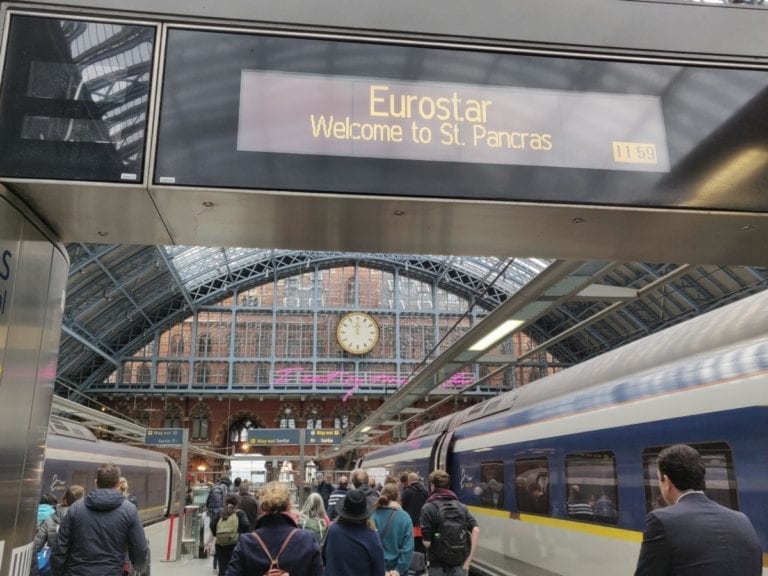
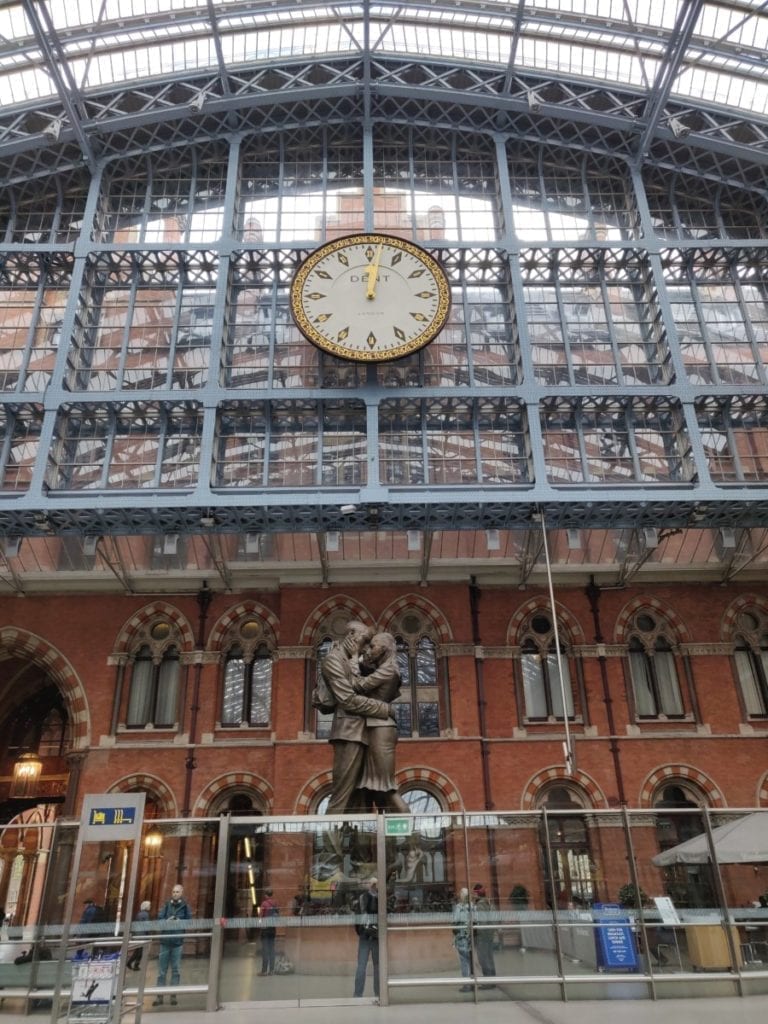
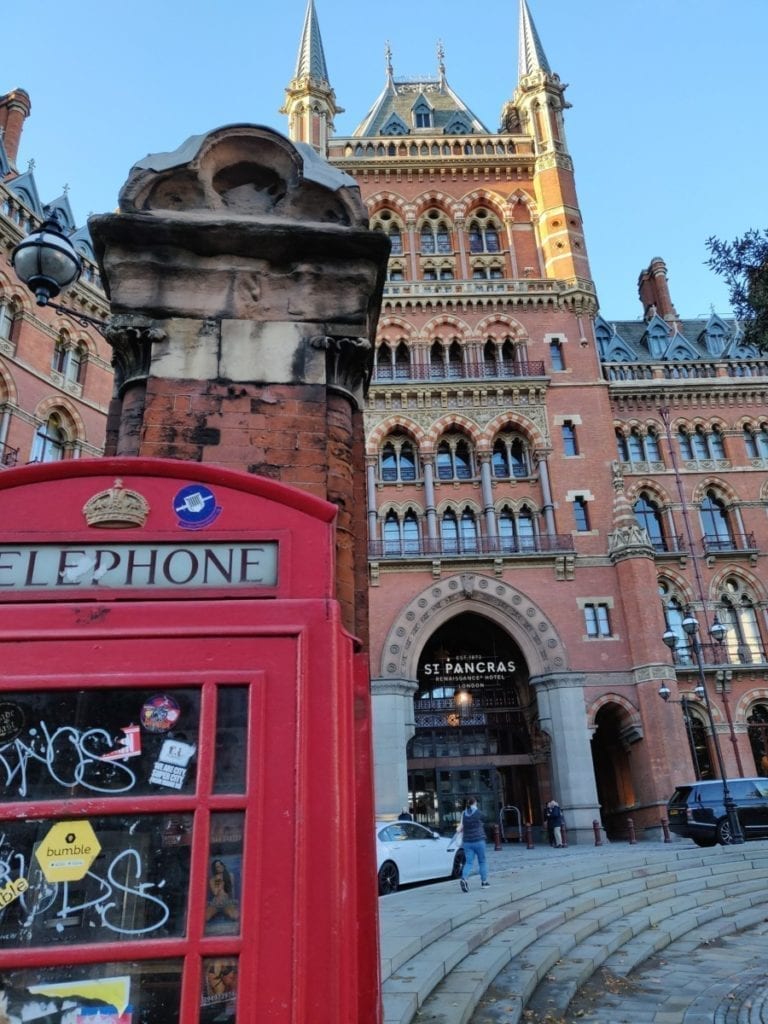
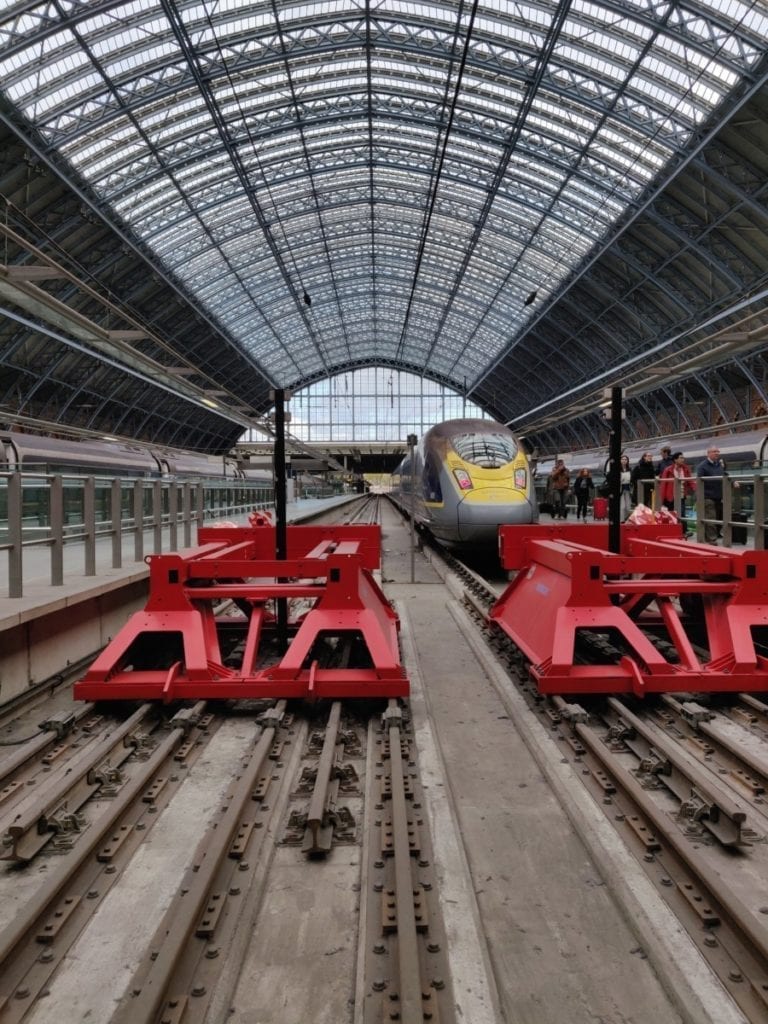
St. Pancras is pretty nice by the way
Yes, you guessed it, it’s time for the ultimate:
Everything you always wanted to know about taking the Eurostar train from Amsterdam or Rotterdam to London
First of all, let’s get us some tickets! ALL ABOARD
#1 How to get tickets for the Eurostar train, what kind of tickets do you need to get and how much do they cost?
It’s 2019, so obviously going online for your tickets is the way to go. It isn’t a surprise as well that tickets get cheaper once the departure date is further ahead or when things are slow. No drastic changes there and it pays off to book your ticket well in advance to get the best price for the best times.
The Eurostar train to London (or Amsterdam/Rotterdam, depends on where you’re reading this 😉 ) has 3 different classes with different price-tags. What is good to know is that all come with decent legroom and they’ll allow you to bring luggage.
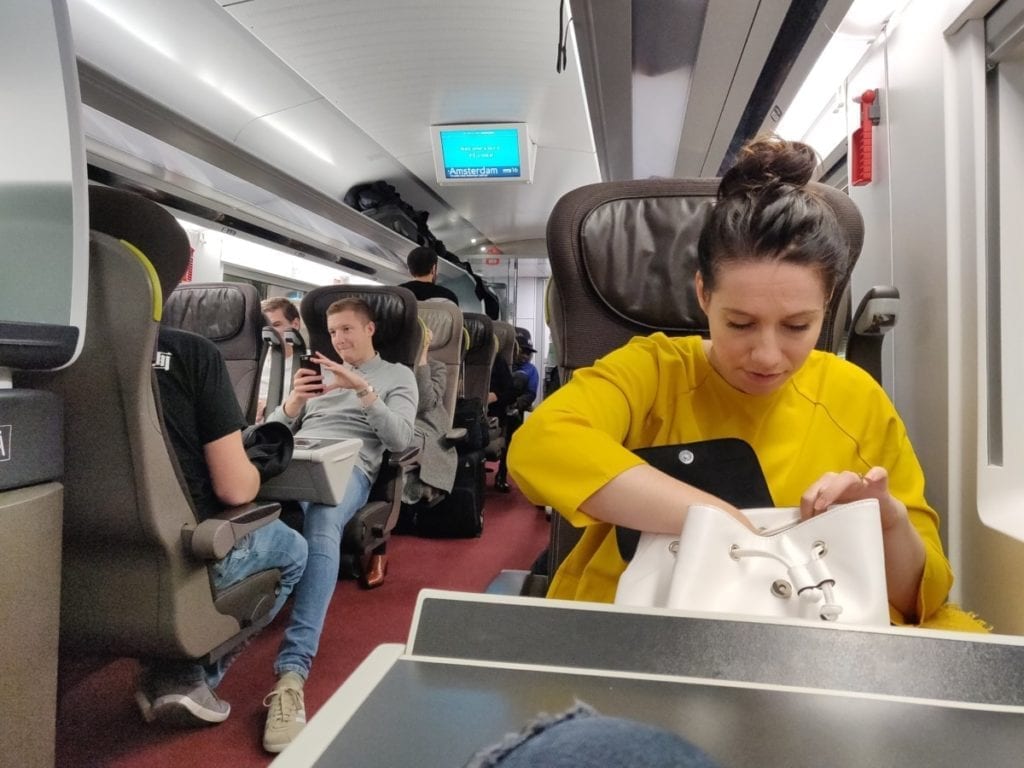
The guy in the background was 1.90m, AND LOOK AT ALL THAT LEGROOM TALL DUTCH PEOPLE
Standard is well, standard. This is between € 59 – € 220 for a one-way ticket. Standard Premier is the regular upgrade and Business Premier is the high-life with swanky meals on the train and the business premier lounge. Standard Premier is € 99,50 – € 274 and Business Premier is € 360 for a one-way ticket.
Life is just a tad bit better in the Standard Premier and it comes with some flexibility and snacks. So check the prices, sometimes it’s just a few euros more than standard – well worth it.
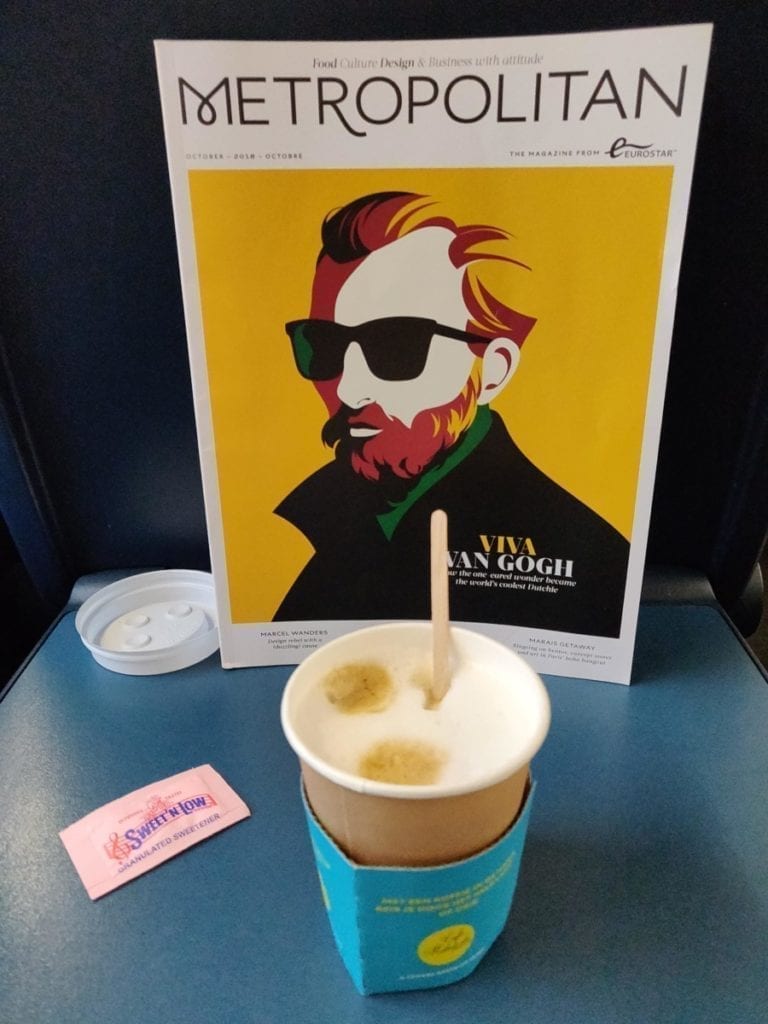
Pictured: decent coffee and a stylish-in-train magazine. Not bad!
Oh, once you get the e-tickets, download the Eurostar app. This one will load you the tickets and all really easily – never had such a tranquil experience with any air travel.
#2 Getting on board the Eurostar train and how about the custom process?
Eurostar and common sense highly advise you to be present well in advance before departure time. They generally don’t stop that long, so don’t expect the train to be standing there on the platform for a while.
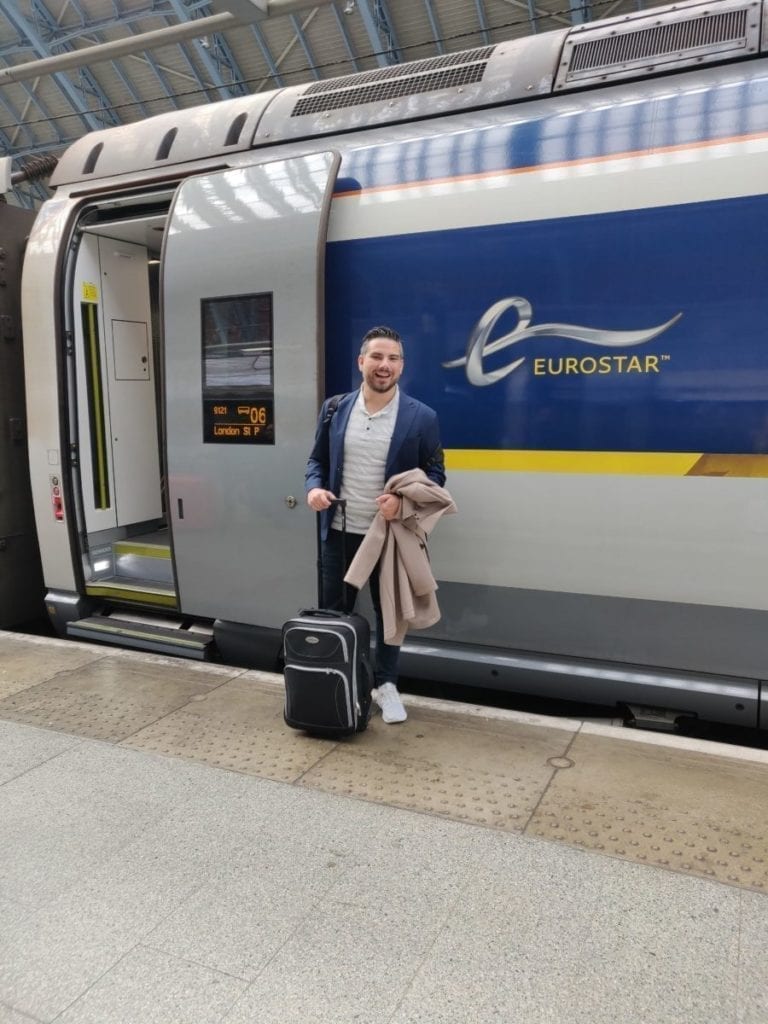
Here’s the Eurostar train arriving at Rotterdam Central Station:
Once that train pulls in, you know it’s going to be different than your ordinary NS ride. They’ve got pursers helping you out there and helping you towards your seat, it’s a thing when you’ve never internationally traveled by train. Oh yes, there’s a designated seat – that’s a good thing!
The custom process, well, it’s a custom process – that’s never going to be fun (and god knows what #Brexit has in store). But it’s way more relaxed than any airport in the world and it doesn’t take up much time. So it’s barely a nuisance.
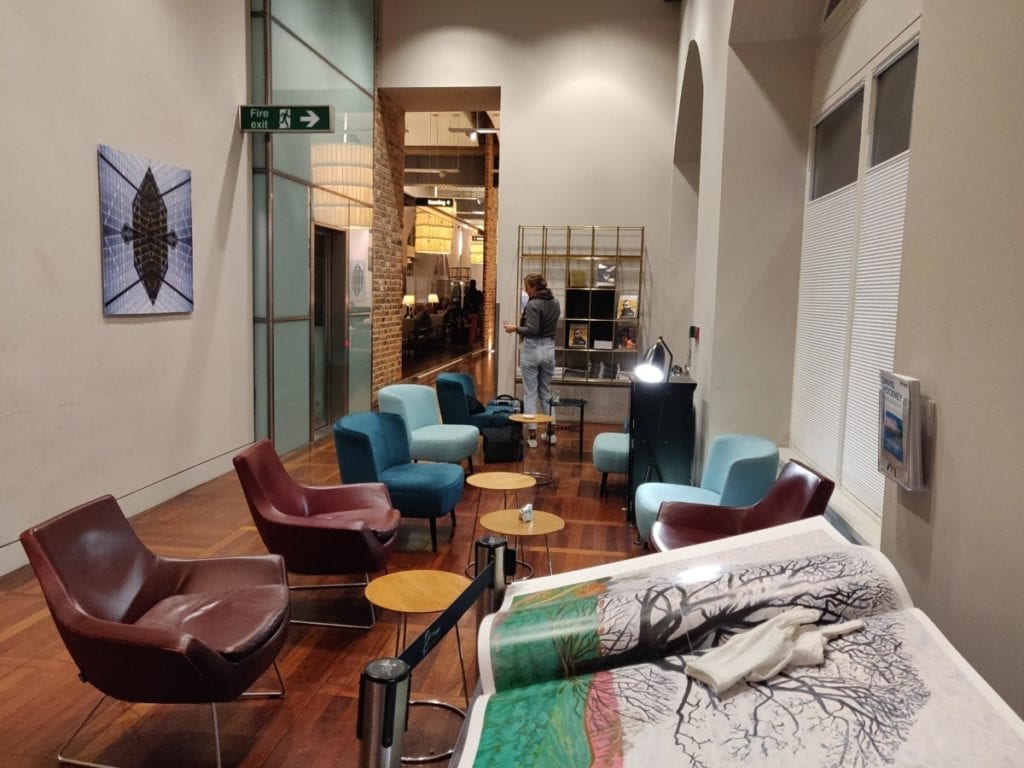
If you get access to the Eurostar Lounge, then this is where you can chill before you leave at St. Pancras
Check-in times are different for the classes (premium gets you later check-in) and there’s a boarding call for your train about 10 minutes in advance, you can’t miss it.
#3 How long does the Eurostar from Amsterdam to London really take?
The journey from Amsterdam to London St Pancras varies from around 5 to 6 hours, so for a faster journey pay attention to train times. The journey from London to Amsterdam is a bit shorter at under 4 hours. Not too bad!
#4 Is it really directly to London?
Customs is apparently also what’s making you get out of the train and still doesn’t make it a direct trip from Amsterdam or Rotterdam to London. Because both Amsterdam and Rotterdam Central Station don’t have any room for the whole custom process, this is done in Brussels. So in Brussels, you have to leave the train, go through customs and then check in again, which is no matter how you put it a disturbance of what is otherwise a pretty tranquil travel experience. This could be solved once authorities finally handle things, which could be in April 2019 but nowadays the end of 2019 seems more realistic.
The way back though was one of the nicest travel experiences I had in life – EVER. Its a direct journey from London to Rotterdam or Amsterdam, customs are done in London. And I don’t know, it was a bit surreal to just hop on a train in London and then exit in the Netherlands at your train station. Way better than flying in or out – but we’ll get onto that bit somewhat later in this article.
Time to talk about London
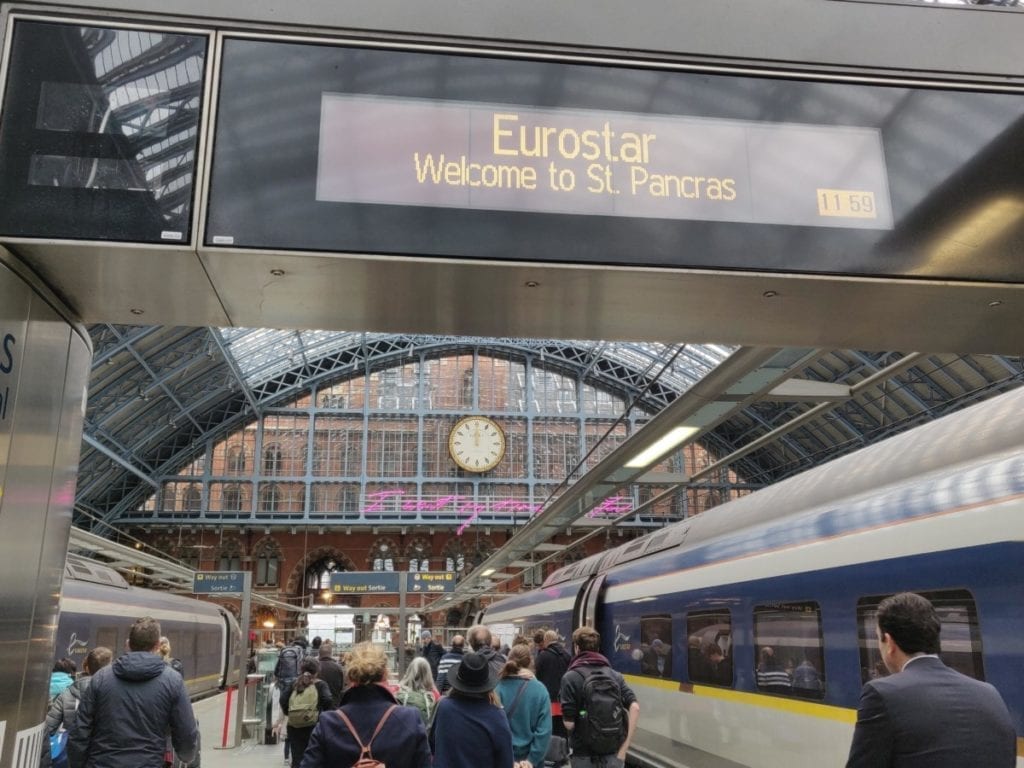
#5 Travelling to St. Pancras International London, what’s that like?
Another straight up-side to taking the train to London with Eurostar is that your arrival point isn’t some wretched cheap-ass airport 50 km from Londen center. The Eurostar train stops at the nicely located St. Pancras Station – right next to Kings Cross station in the north of London with access to tons of tube-lines. When we arrived we opted for a UBER, forgot how murderous traffic was in London at any time of the day (start biking you Brits!)
The station itself has a bit of that turn-of-century-splendor you’re looking for when internationally traveling on a train and it’s far more decent than most railway stations on the continent.
The Eurostar lounge at St. Pancras was also more than okay, with a complimentary cocktail area – can’t go wrong with that!
#6 What was our experience on the Eurostar train connection from Amsterdam/Rotterdam to London? What’s it like?
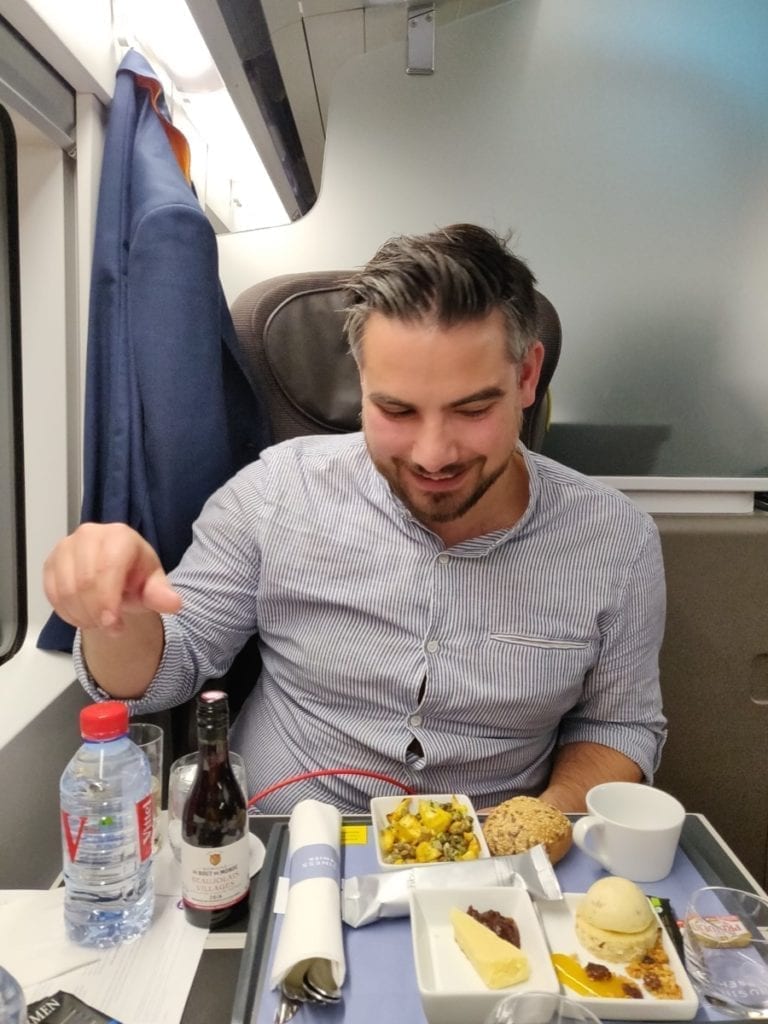
Right off the bat, no matter which class you’re seated, it’s better than any plane or train. The amount of legroom is spectacular, there’s a nice train magazine, a railway carriage with a bar, in certain classes you get free drinks and snacks. Or even champagne and a proper meal when you’re traveling on Premium:
Pictured: that swanky train travel life
Stowing away all that luggage is no problem (you can take a shitton of luggage, another upside) but sadly the same can’t be said for the wifi. On both journey’s the wifi on the Eurostar train was lacking at best, or non-existing at all – other passengers had the same problem. So this is something they need to fix, fast.
The staff on the trains were extremely helpful, notably better than on short cheap airliners: really another plus for Eurostar there.
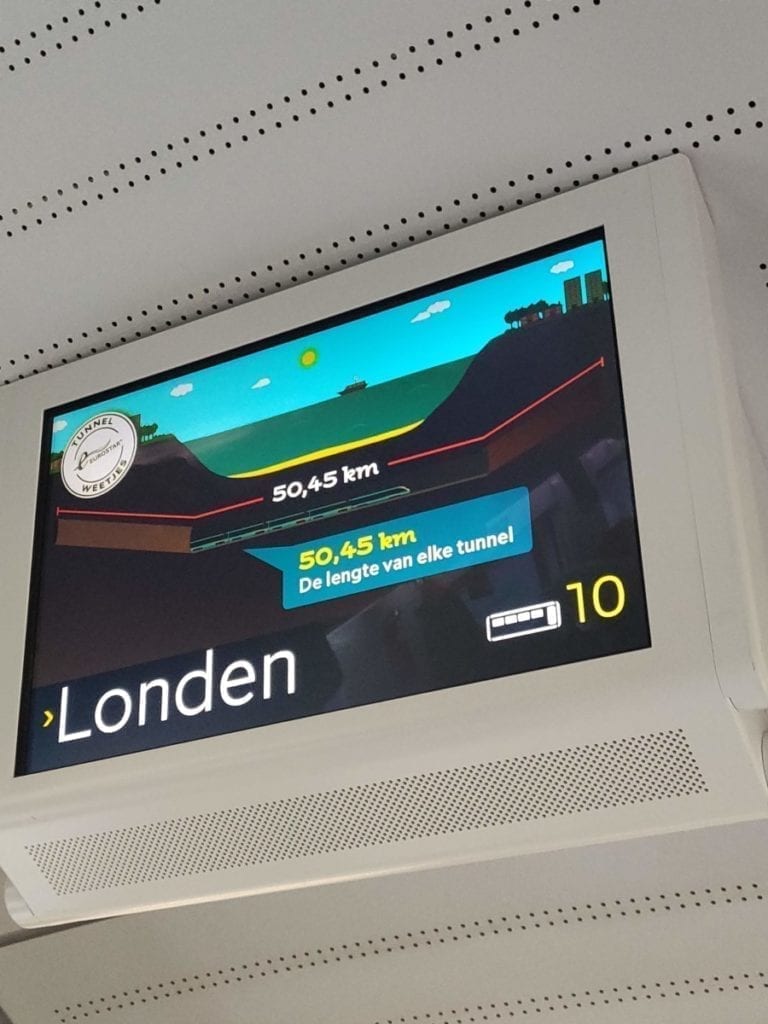
The trip itself and the passing landscapes were pretty relaxed. It was nice to see a bit of the English countryside, the journey through the tunnel was dark and full of nothing (no stops there) and coming into any station went super quick – no delays!
#7 Staying with a Eurostar hotel, the Draycott – that was just awesome
Eurostar offers a thorough experience and can also set you up in a hotel. They’ve got agreements with numerous hotels throughout London, which works out pretty nice for all involved.
We went for the quintessential British experience and got set up at the Draycott in Kensington. And boy oh boy, did that hotel deliver. See if you’re going for that train journey anyways – you want it to be a special trip, and their hotels and especially the Draycott were a great choice.
The Draycott – it was so good that we need to talk about this
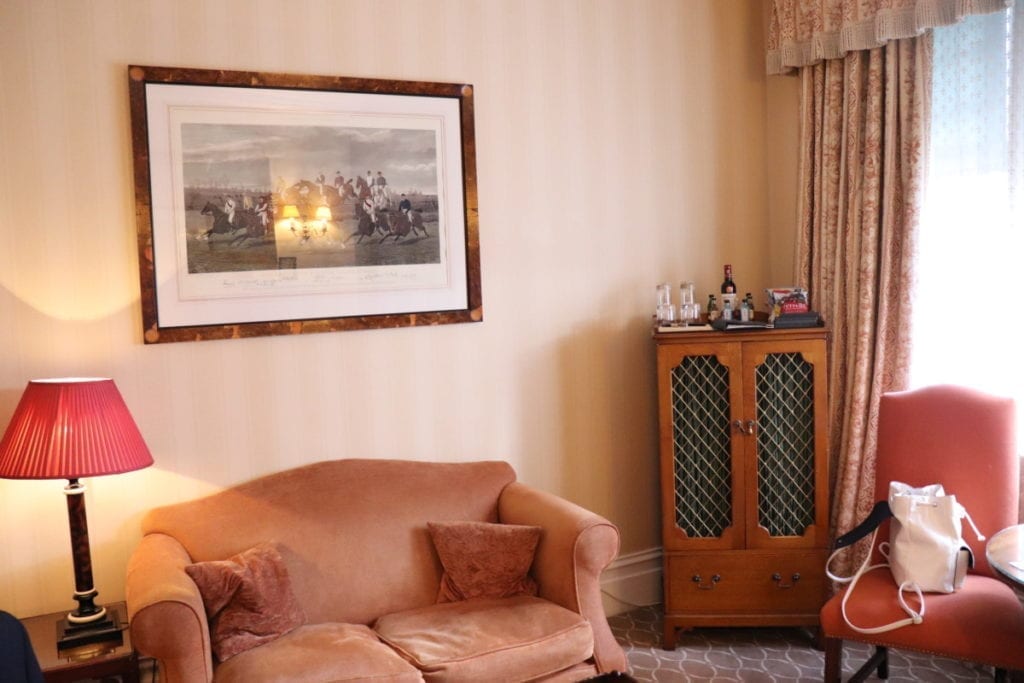
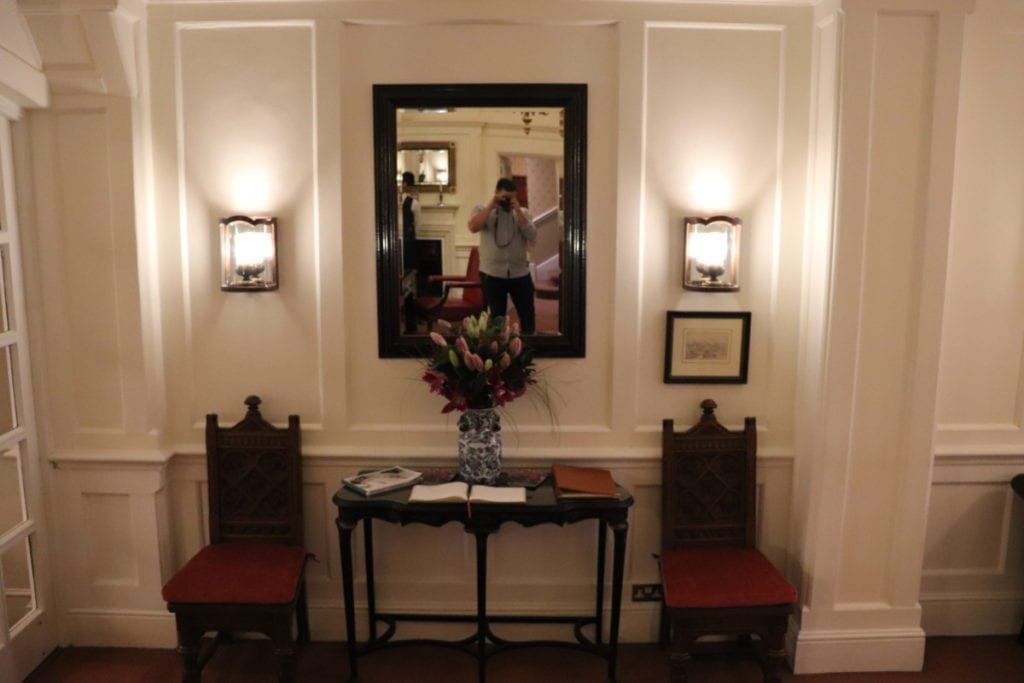
It doesn’t look big from the outside and on the pictures, it looked a bit, well, old-British. But inside the Draycott hotel takes you back to a London that I’m sure only exists in our fantasies. All of their rooms are beautifully styled in pure Britannica; stylish classical music playing, portraits from grand old Britain on the wall – all done with class and respect for past times – but nowhere outdated.
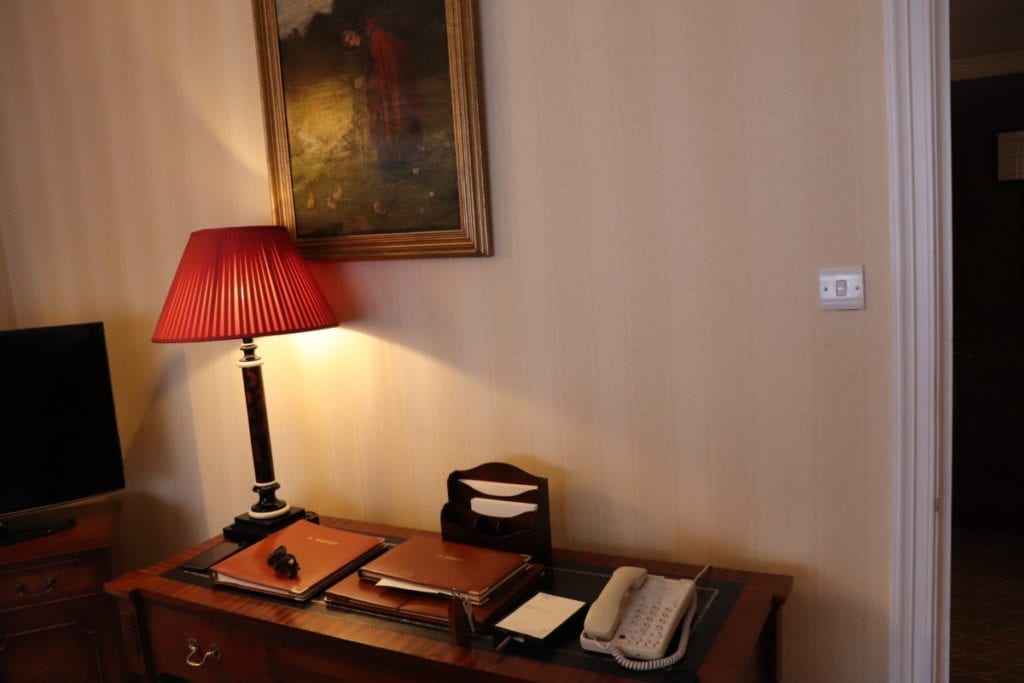
All rooms are named after writers instead of having an arbitrary number. The rooms are all different themselves as well, so no one room is the same. I was also pleasantly surprised by the stylish desk and the grand bathroom.
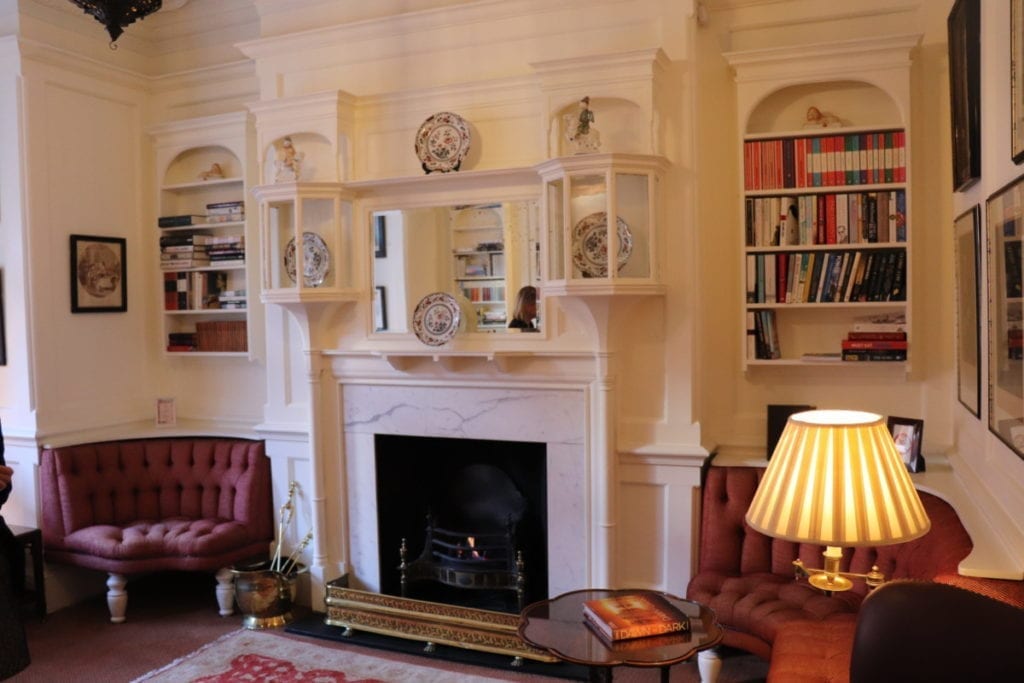
Two big plusses of the Draycott, besides its epic scenery and pleasant service, number one: the moments in the day where they served complimentary tea, champagne (!!) and hot chocolate in the beautiful drawing room.
Not just because it’s nice to get free delicious stuff (those homemade biscuits!) but also because they got the atmosphere really right there. It’s the closest you’ll get to your Downton Abbey Fantasy.
The other big upside for the Draycott was their serene garden; beautifully styled and a nice getaway from the hustle and bustle of London.
All in all, I can wholeheartedly recommend booking one of the hotels with Eurostar, more-than-pleasant experience!
#8 When leaving from Rotterdam or Amsterdam. Flying from Schiphol to London or taking the Eurostar train to London?
The million dollar pound question, what’s better? Flying to London or taking the Eurostar train? Well, as you might expect, the answer depends on your situation.
First of all, if you can book a bit in advance, want to visit the center of London and live closer to Amsterdam Central or Rotterdam Central than you live to Schiphol or any other London-connected Dutch airport then the Eurostar is probably your best bet. Tickets are decently priced when booking in advance and I found it way better than traveling to any London airport (Bar London City, which can be expensive). Most of London’s airports are so far away that reaching the city center will take plenty of time as well, not to mention the money that the transit will cost you. I’d rather spend less and get a decent trainride right in to the city like we did with Eurostar.
When it comes to service and experience in general, the Eurostar is also better in my opinion. There’s legroom and actual service, something which you won’t find with many aircraft companies nowadays. Personnel also makes you feel genuinely welcome, instead of like cheap cattle when flying with something like Ryanair.
If you’re looking for a one way trip from London to Amsterdam/Rotterdam, then the Eurostar is a no-brainer with its direct journey. But of course, it isn’t all champagne-life, the interruption in Brussels when taking the train from the Netherlands to London is something which isn’t pleasant in any way. And it might still take a while when this is solved, with Brexit and all that happening. So that’s something to take into account when one makes the decision between the plane or train to London.
But overall, when living near a station and booking ahead? Choo choo! All aboard for that direct Eurostar train from Amsterdam to London! ( Or Rotterdam 😉 ) And luckily, in June, Eurostar will be expanding the train service from London to Amsterdam to three times a day, instead of two.
Have you ever taken the direct Eurostar train from Amsterdam to London? Or from Rotterdam to London? Let us know your experiences in the comments!
Some vandals had a field day with 8 railcar coaches belonging to NS. They spray-painted all 8 of them in silver spray paint. These railcars were not in use and were stationed at Wormerveer, Noord-Holland. So now the whole train is out of service to be cleaned, reports RTL Nieuws.
This “antisocial behavior”, as termed by an NS spokesperson, was made easy because of the absence of proper security, says Wormerveer resident Michel Schermer. He tweeted and posted on Facebook where exactly the vandals had broken into the station, and where they had discarded their aerosol cans.
He said on Facebook, “One or more miscreants have sprayed the back of a train of the Dutch Railways. The eight trains are completely sprayed, even the windows and doors. More and more often there are vandalism at [the] station Wormerveer [like] windows [being broken in] the waiting area and graffiti in the tunnel and on the platforms.”
Security must be improved
He continued to say, “Now that the station in Wormerveer is increasingly used as a train yard, supervision would be useful to prevent this kind of vandalism in the future. It might be time for the municipality of Zaanstad or ProRail to place surveillance on and around the stations. This costs a lot of money every time to recover and we finally pay it ourselves.”
It is difficult to look at the silver lining of a situation like this. What are your thoughts? Let us know in the comments below!
Research by the FoodService Instituut Nederland (FSIN) has scientifically proven what we all knew to be true: we millennials are ruining our chances of property ownership by having a social life.
1500 euros a year spent on eating out
According to RTL Nieuws, the FSIN has shown that of all generations, millennials are eating out at restaurants far more often. This is costing us, on average, 1500 euros a year. Generation X, or those born after 1960 but before 1980, only spend 1239 euros on this frivolous expense. It makes complete sense that this massive difference in spending habits has prevented us millennials from owning houses, and not, as some have idiotically suggested, a housing shortage, or fears for the future. Thank goodness.
Time to start acting like boomers
Heading out to explore the best places to eat in Leiden (for example) with friends is, according to the director of the FSIN, Jan-Willem Grievink, a completely normal thing for millennials. What strange habits we have. RTL Nieuws reports that eating out is the “spearhead of [millennials’] lifestyle”. You’d think at some point we would quit enjoying the trendiest places to eat in Amsterdam and act more like everyone’s inspiration in life, the baby boomers, who only spend 436 euros on eating out each year.
Millennials are NOT killing an industry (for once!)
The FSIN did this research because of the increase in profit in the food and hospitality sector over the last couple of years. This year horeca profits reached 21 billion euros, which is an increase of 4 percent since last year. But it has been clear for a while that the sector is growing. As a millennial, it’s wonderful, for once, not to be killing an industry.
Increased competition for established restaurants
Because of the increased level of opportunity in the industry, more and more cafes and restaurants are opening up. This competition, in combination with supermarkets beginning to offer warm meals, means that established restaurants and cafes may experience some trouble in the near future.
Aart Staartjes, the moody and loveable Meneer Aart from Sesame Street died from injuries from a traffic accident in Leeuwarden, reports RTL Nieuws. The actor was 81-years-old and loved by countless generations of Dutch children.
He was thrown out of his vehicle when a car and his moped collided. He succumbed to injuries at a hospital in Leeuwarden. The police are investigating what caused the accident.
The Dutch are going to miss Meneer Aart
Being someone who believed that change will come with the children, young Dutchies (including Prime Minister Rutte) will remember Aart from his Sesame Street days and from shows like De Stratemakeropzeeshow, JJ Bomb formerly Kindervriend, De film van Ome Willem, and The Core.
Wat een droevig nieuws: Aart Staartjes is overleden. Zoals zovelen ben ik met hem opgegroeid (De Stratemakeropzeeshow, De film van Ome Willem, Sesamstraat). Een icoon uit onze jeugd. En altijd een markant persoon gebleven. Ik wens zijn naasten veel sterkte met dit grote verlies.
Translation: What sad news: Aart Staartjes passed away. I grew up with him like so many others (De Stratemakeropzeeshow, De film van Ome Willem, Sesame Street). An icon from our childhood. And always remained a striking person. I wish his loved ones much strength with this big loss.
His colleagues also expressed their shock at hearing the news of his passing. Bert Plagman, or better known (heard) as Tommie’s voiceover on Sesame Street, said, “It was very nice to work with him. He was a pleasant person. Over the years we also had a lot of personal contact.”
#AartStaartjes 1938-2019. Roadbuilder-at-sea; his programs meant so much to me as a child, and later in life as well. Still learning to build at sea. I’ll never forget him. Thank you and rest in peace. X pic.twitter.com/3sPgea6lK8
— Rian Visser – kinderboekenschrijver (@RianVisser) January 12, 2020
Deze man maakt deel uit van de kindertijd en de herinneringen van zo ontzettend veel mensen. Het is alsof we allemaal een familielid moeten missen. Dag lieve Meneer Aart. Dank voor al het moois. #AartStaartjespic.twitter.com/FCflavxInd
Translation: This man is part of childhood and the memories of so many people. It’s like we all have to miss a family member. Goodbye dear Mr. Aart. Thanks for all the beauty. #AartStaartjes
Were you one of the Dutchies who enjoyed watching and learning from Mr. Aart? Which was your favourite TV moment of his? Let us know in the comments below! May his soul rest in peace.