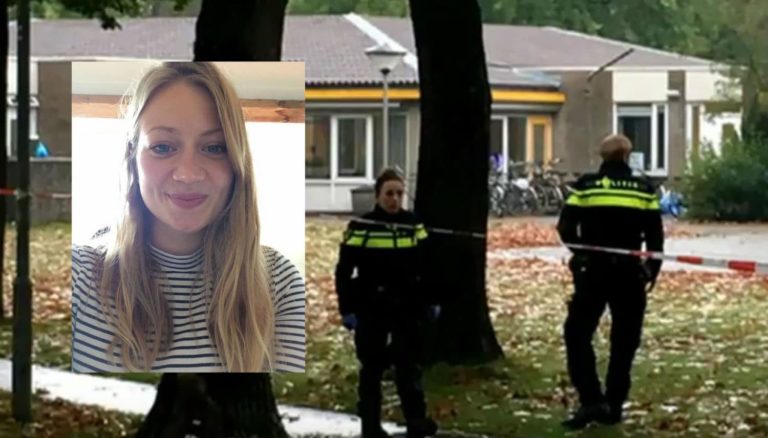
Michael P., the murder suspect involved in the brutal killing of Anne Faber has admitted that he raped and killed her.
During a police interrogation in Utrecht, he made this confession, after being silent with the police for the past two days prior. This was announced on Wednesday in Utrecht by the prosecutor, during the first pro-forma hearing. Michael P. was not present at this.
Currently, the Public Prosecution Department is investigating this statement. The Public Prosecution suspects Michael. P of committing rape and manslaughter or murder. The investigation is ongoing and will take months.
In response to the anger surrounding Michael P.’s actions, on Wednesday, his lawyer, Niels Dorrestein stated that Michael P. expressed his regret at these emotion interrogations. It is not yet known if his client will be attending the next session.
Understandably, Han Faber, Anne’s uncle, gave a statement after this session. He stated that “every message that comes out about Anne hurts.”
Public outcry about Michael P.
This case has been hit with heavy criticism. Michael P. was allowed to walk in the clinic’s grounds as he was just about to serve the end of his sentence. It sparked debate about whether this should ever be allowed for prolific sex offenders to walk free. It doubted the effectiveness of rehabilitation. Let us know your thoughts in the comments.
Basic timeline of events in the Anne Faber case
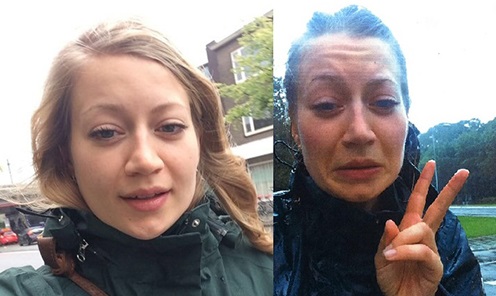
29th September – Anne Faber is reported missing, after going on a bike trip on a stormy day. A few days after this Faber’s friends found her coat and DNA from her coat, matched with Michael P.
9th October – 27-year-old Michael P. is arrested by police. He was a patient for the Psychiatric Clinic of Den Holder, close to where Anne went missing. He was attending the clinic to rehabilitate him for past sexual offences.
12th October – Anne Faber’s body was recovered, due to information provides by Michael P. This was recovered from a park in Zeewolde.
Ongoing case of the murder of Anne Faber
On 15th January the suspect will be admitted to the Pieter Baan Center. Here, an examination of his mental state will take place, which is said to take 7 weeks. The next scheduled session is on 23rd March.
The substantive treatment of the case is not scheduled until the 11th and 12th of June.
If you’re a loyal DutchReview reader, you already know that Tilburg is one of our favourite cities in the Netherlands to keep on our radar. It is the seventh-largest city in the country and is one of the best places for you to explore if you want to get out of the Randstad. It has so much going on and the city is an epic blend of arts, culture, music and history with unique spots like Doloris, the Spoorpark, and the LocHal. Each year, a myriad of events are put on and people marvel at the diversity and organisation of each one. Here are the events we are most looking forward to in Tilburg in 2020.
Wine Event in the Spoorzone
When: January 18, 2020 at 2:00 PM to January 19, 2020 at 6:00 PM Where:RAW Cost: € 15.79
Got a budding interest in wine? This is the perfect event for you as you can sample over 60 different wines (all included in the ticket price). € 40 you can end the night with a 5-course meal at RAW restaurant with matching wines for each course.
When: May 5 2020, 14.00 – 23.00 Where: Music garden, Tilburg Cost: €5 early bird, €7 regular
The Student Liberation Festival commemorates the liberation of the Netherlands during World War II. Jam out to DJ’s and dance the night away while realising how lucky you are to live in the liberal and free Netherlands!
Restaurants meet in a central location and showcase their best dishes. This year is the 25th anniversary of the event so it is bound to be special, especially with an event’s tagline is “where you are at home if you go out”
The program and the participants of Hap Stap Festival 2020 have not yet been released. Watch this space…
The ultimate fun in the sun activity. Round up some friends and head to this beer festival, which is the first student specialty beer festival in the Netherlands, and is also packed with live DJs and delicious food trucks.
Best Kept Secret Festival
When: May 29 – June 1 Where: Beekse Bergen Cost: Prices range depending on if you buy a day or weekend ticket. Check tickets here.
The Best Kept Secret Festival is far from secret now ? This great festival in Hilvarenbeek showcases both new and old artists from a variety of different genres. From rock to hip hop, there really is something for everyone. Headliners this year include The National and Massive Attack.
When: July 17 at 15:00 to July 26 at 23:00 Where:Tilburg Fair Cost: Free
The Tilburg Fun Fair / Tilburgse Kermis is coming back! Time flies and thank god it does because, with over 200 different attractions, there is definitely no shortage of fun. Year on year more and more visitors come to the kermis – with more than one million visitors visiting Tilburg’s fun fair every year. ‘Pink Monday’ is the top day for the fair with over 300,000 visitors passing through the gate, wowee!
Woo Hah! Festival
When: July 10, 11, 12 Where: Beekse Bergen (a gorgeous, lakeside venue). Cost: Prices range depending on if you buy a day or weekend ticket. Check tickets here.
Woo Hah! is the biggest hip-hop festival in the Netherlands and with headliners like Kendrick Lamar and A$AP ferg, this is not a festival to be missed. It started off as pretty small scale but quickly grew to 30,000 (completely sold out – ticket wise that is) within 2 years and as someone who attended last year – I am not surprised. Watching 5 seconds of the after movie and I guarantee you’ll be scrambling to buy a ticket.
Dragon Boat Festival
When: TBC Where: Piushaven
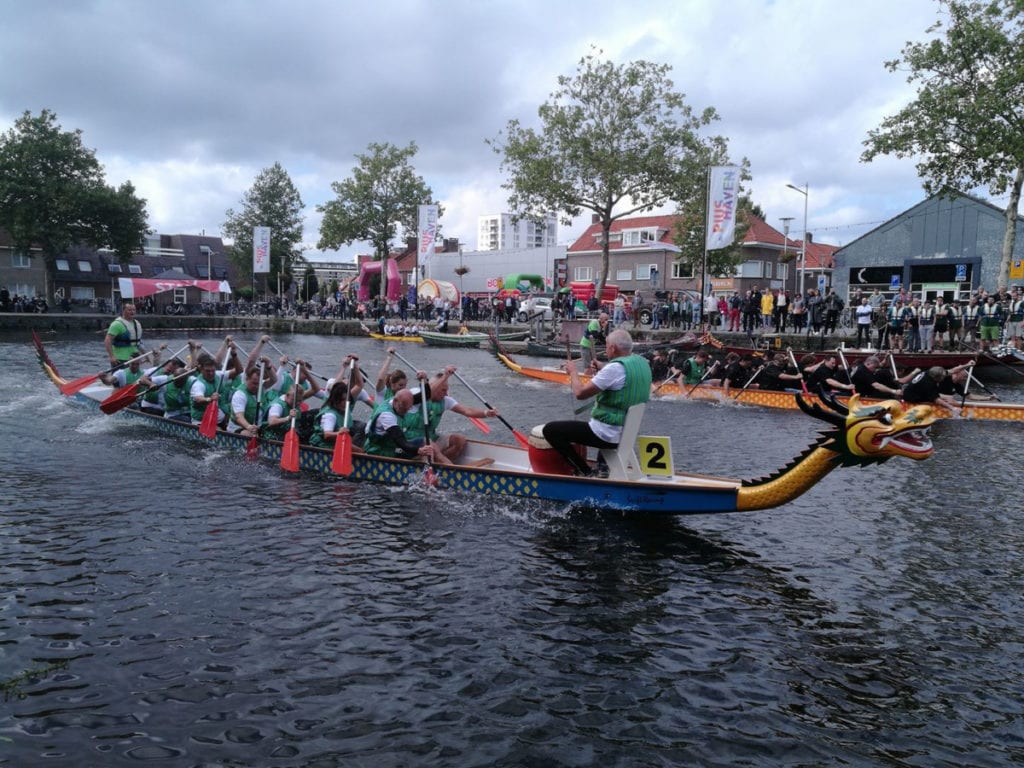
The Dragon Boat Festival is a popular event for all ages. Not only do many people compete, but they go along to watch this great race. This will already be their 8th edition and yet again many dragon boats (big and small) will be competing against one another. So if you’re wanting to take part or witness an exhilarating race, then you know where to go!
Photo Credits: tickettotilburg.nl
Circolo Festival
When: 16-25 October Where: Leijpark Tilburg Cost: Depend on what shows you buy but tickets range from €10 to €27.50
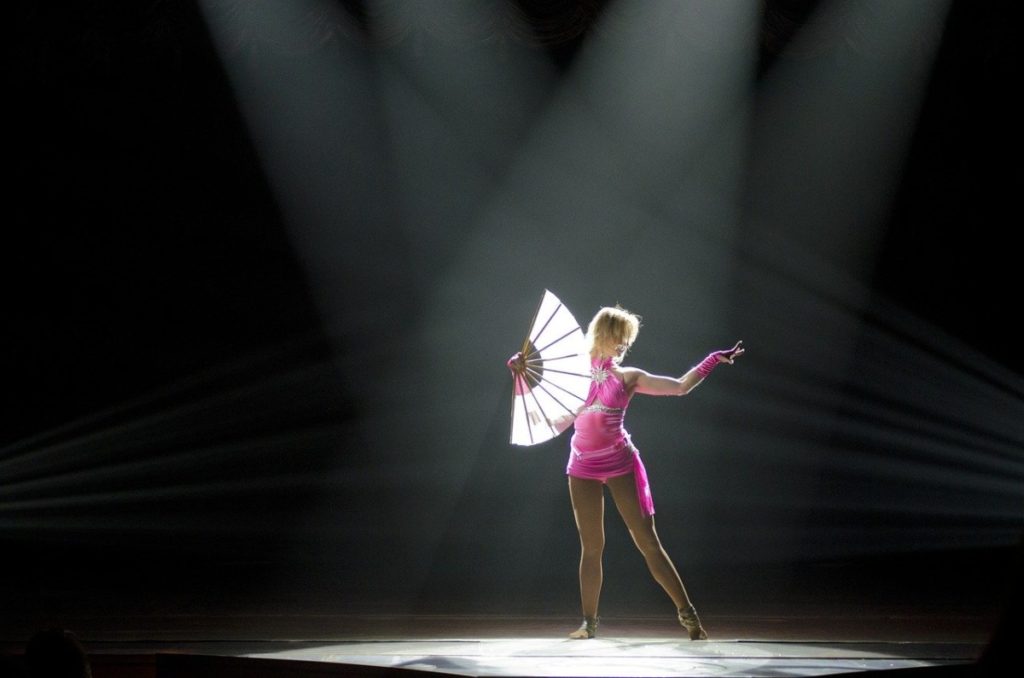
If you’re wanting to attend something creative this year, then Circolo festival may be for you. The festival includes design and visual arts, music, modern dance, circus, and theatre and offers something for audiences both young and old. It is an international platform for artists and showcases their incredible talents.
IgorSuassuna / Pixabay
Draaimolen Festival
When: Saturday 12 September – Where: MOB Complex(outdoor) Cost: Prices range depending on if you buy a day or weekend ticket. Check tickets here.
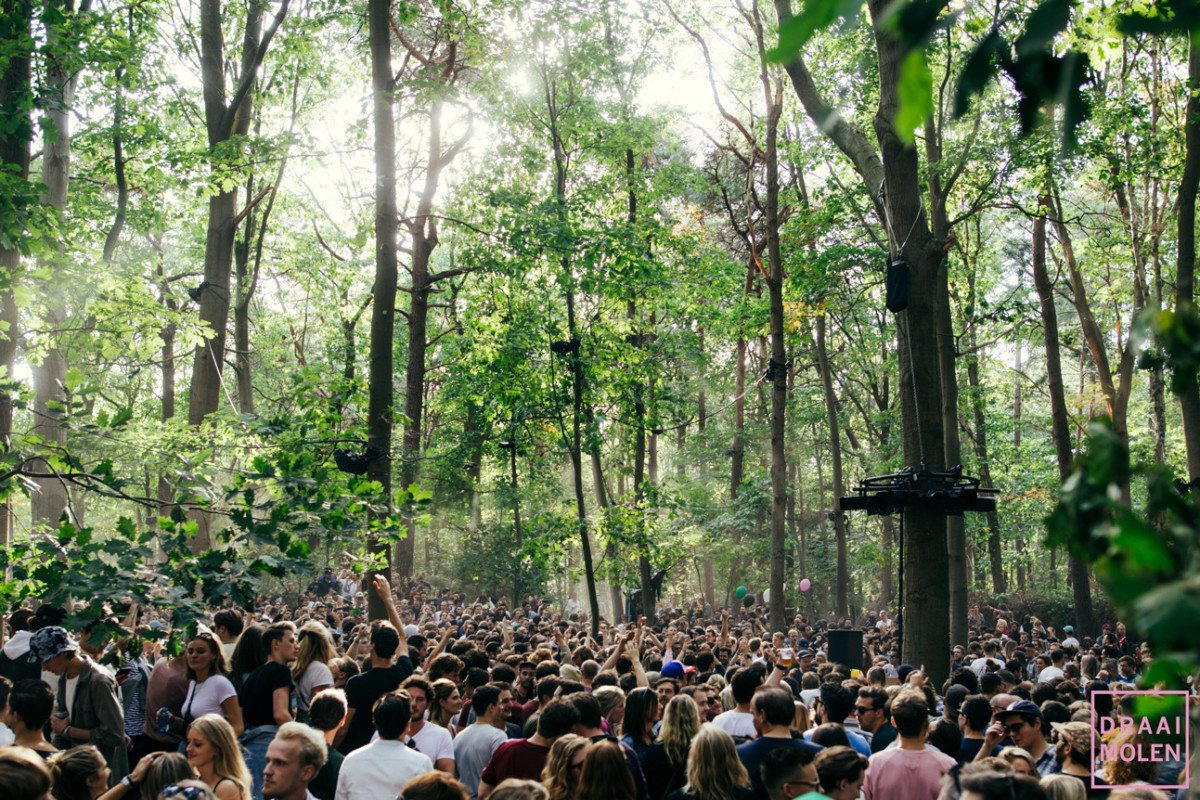
Draaimolen, an organisation that was started only in 2012, has been organising numerous music festivals and concerts for all the residents of Tilburg and beyond to enjoy. Their landmark festival every year has been the Draaimolen festival and promise to provide killer line-up, stunning stage designs and multiple art projects. A lot of tickets are already sold out, so get in fast!
Kaapstad: City hacks and art takes over!
When: August 7 – 9 2020 Where: Tilburg city centre Cost: Free
Artists take over the city centre of Tilburg and look at her as if they’re seeing her for the first time. They will use their creativity and unique minds to reimagine the city like it has never been seen before!
Make It Jazz
When: September 17 – 19 2020 Where: Tilburg city centre Cost: Free
Make It is a festival that launched for the first time in 2018 and is coming back around to treat Tilburg with some smooth Jazz sounds again this year. As it’s a festival still in its infancy, they offer a platform for the new voices and melodies of tomorrow in Jazz music.
Special mention: One of the best libraries in the world, the LocHal!
Right next to Tilburg Central Station and Tilburg’s hipster hotspot the Spoorzone you’ll find another addition to the sixth city of the Netherlands; the library called LocHal. The factory-turned-prestigious building maintains its spectacular sense of grandeur but with an added feeling of intimacy in many of its hidden corners. Last year, it won World Building of the Year, so it is a must-see while in Tilburg.
Damn, that’s a lot of things to do in Tilburg, I wouldn’t even mind living there! Don’t want to take our word for it? Check out the local’s guide to the city! Or at least plan a day trip to the cultural hub of Tilburg soon! If there’s nothing in our guide that is interesting to you, why not look here for more suggestions?
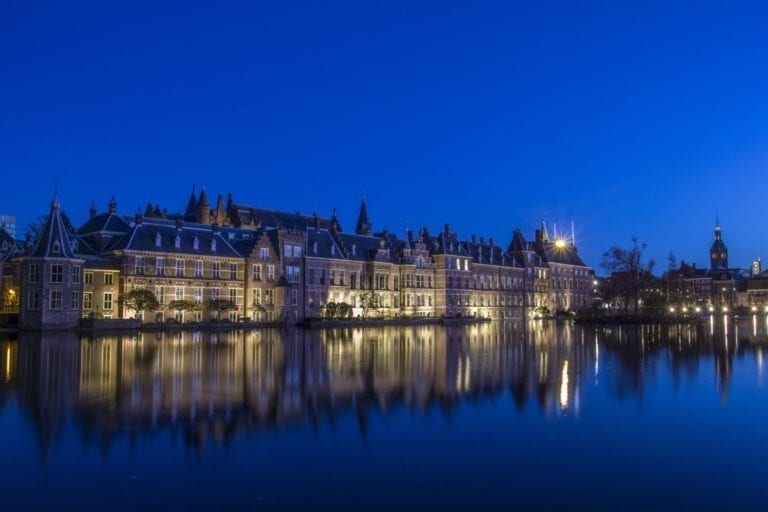
Did you know where The Hague’s peace and justice vocation comes from? Let’s take a look at some of the organizations that made it the international city of peace and justice.
For many, the Netherlands is a picturesque land, with windmills and oliebollen stalls, bikes and colourful tulips. For others, it is the country of innovation, progressiveness and amazing engineering feats. However, there is yet another ingredient in the Dutch identity mix that makes the Netherlands famous worldwide: being home to the international city of peace and justice.
Dutch politicians argue that The Hague’s vocation as the international city of peace and justice is not something new. In fact, they argue that it started 750 years ago when famous jurist Hugo Grotius wrote The Freedom of the Sea, known as the basis for modern international law. Since then, other great minds lived and worked in The Hague. As such, it was only logical that organizations should follow.
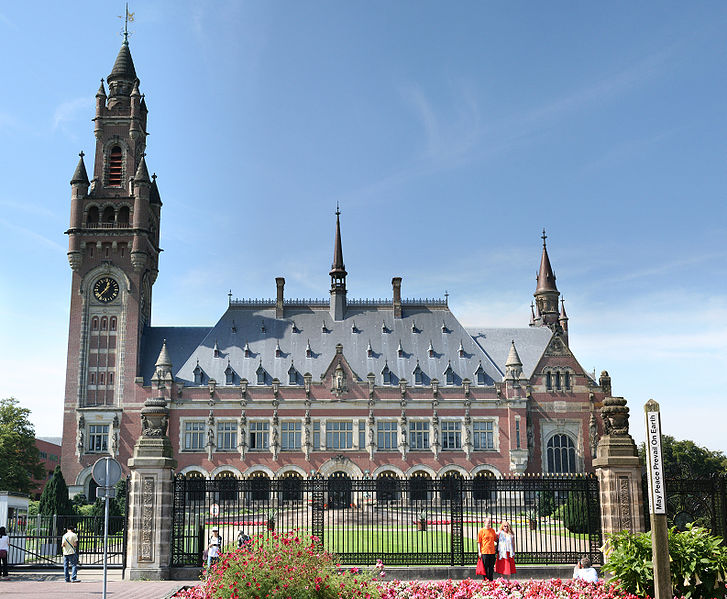
The beautiful (and open to visitation!) Peace Palace is also home to The International Court of Justice. It is the highest legal body of the United Nations (U.N) and the only main branch of the U.N that is not located in New York. Founded right after World War II, the court is responsible for settling legal disputes submitted by countries, as well as for giving opinions on legal issues. That’s why The Hague markets itself as the ‘second United Nations city‘, as well as the international city of peace and justice.
International law’s modern revival
Around the millennial generation birth era, right after the end of the Cold War, International Law went through a revival. The period saw the creation of many, and sometimes groundbreaking, international organizations: Europol in 1994, the Organisation for the Prohibition of Chemical Weapons (OPCW) in 1997, and the International Criminal Court in 2002 are some examples. They are all based in The Hague, contributing to the solidification of the city’s reputation as the international city of peace and justice.
The Peace Palace in The Hague. Image: Iamthy/wikipedia
A major contributor to this branding of The Hague is the International Crime Court (ICC). It’s responsible for judging some of the most horrific international crimes. Genocide and crimes against humanity such as torture, rape and sexual slavery, are some of the offenses the court can bring to trial.
Although the court has condemned some really bad guys, its reach is limited. It can only trial crimes committed by, or in the territory of, countries that have accepted the court’s authority. Notable absences in this category are the United States, Israel and Iraq.
There is something rewarding about being able to say that on the heels of a long tradition, the country you now live in is host to so many organizations that uphold fundamental human values. However, if you’ve been living here long enough you must know by now there’s also probably a smart financial angle to it.
International jobs in The Hague skyrocketed since the establishment of these organizations. The spending power of those employees, coupled with that from their organizations, supports almost as many jobs.
The international city of peace and justice title is a major selling point that attracts highly trained talent, as well as tourists. It is also arguably the crown jewel of the country’s clean-cut progressive image. An image needed to counter the legal pot and prostitution combo, usually used to describe what makes The Netherlands such a forward-thinking nation.
Have you been to the international city of peace and justice? What did you think?
Feature Image: Rob Van Der Meijden/Pixabay Editor’s Note: This article was originally published in January 2020, and was fully updated in September 2020 for your reading pleasure.
Three city councils in the Netherlands now have a majority in favour of a ban on fireworks in their city councils, nu.nl reports. This is in contrast to the national VVD government, which is as yet refusing to ban fireworks in the whole of the Netherlands.
Rotterdam city council was the first to support a complete ban on fireworks in the Netherlands. They were followed by Amsterdam, and then Eindhoven. In each of these councils, the majority was only made possible when local VVD councillors decided to support the ban. Other parties also supported it. However, the fact that VVD councillors decided to support a ban is significant, because the national VVD party has refused to ban fireworks.
National VVD party is against the ban
VVD party leader Klaas Dijkhoff has said that conversations are going on within government about the possibility of a national ban, but as of right now, the VVD national party are against a total ban on fireworks.
“A completely sterile society”
Even the local VVD councillors that supported citywide bans have expressed hesitations about their decision. In Eindhoven, VVD party leader Joost de Jong said he was “a bit apprehensive about the trend towards a completely sterile society” in an interview with the Eindhovens Dagblad.
Hard to enforce
Although citywide bans are an improvement on this year’s firework chaos, without a national ban they will be very difficult to enforce.
What do you think? Should there be a firework ban in the whole country? Let us know your thoughts in the comments below.
2020 is an exciting year for all sorts of reasons. It’s the first year of a new decade, it’s pleasingly aesthetic to the eye, and you can make jokes about 2020 vision like never before. But here in the Netherlands, we have six very specific reasons to be very excited about 2020.
The Eurovision
The first, of course, is the Eurovision Song Contest, which will be hosted this year by the Netherlands after our triumphant win last year with Duncan Laurence’s beautiful song “Arcade”. Eurovision 2020 will be held in Rotterdam, and we’re so excited about the whole thing. To make the event more environmentally friendly, the Netherlands is looking into providing long distance international trains to the Netherlands to bring people from far and wide sustainably to Rotterdam. If you want to keep up with the Eurovision details as they emerge, we have an article on that.
Summer
We’re very excited for summer. As in, desperate for summer. And it’s only January! How are we going to survive the next, well, at least six months? Although the Netherlands is far from famed for its summer temperatures, anything is better than it still being dark at 9am in the morning, and raining to boot. We’ll just be happy with daylight this year. But because 2019 was one of the hottest years on record for the Netherlands, we could be in for a good summer. By which we mean one day of sunshine. Maybe.
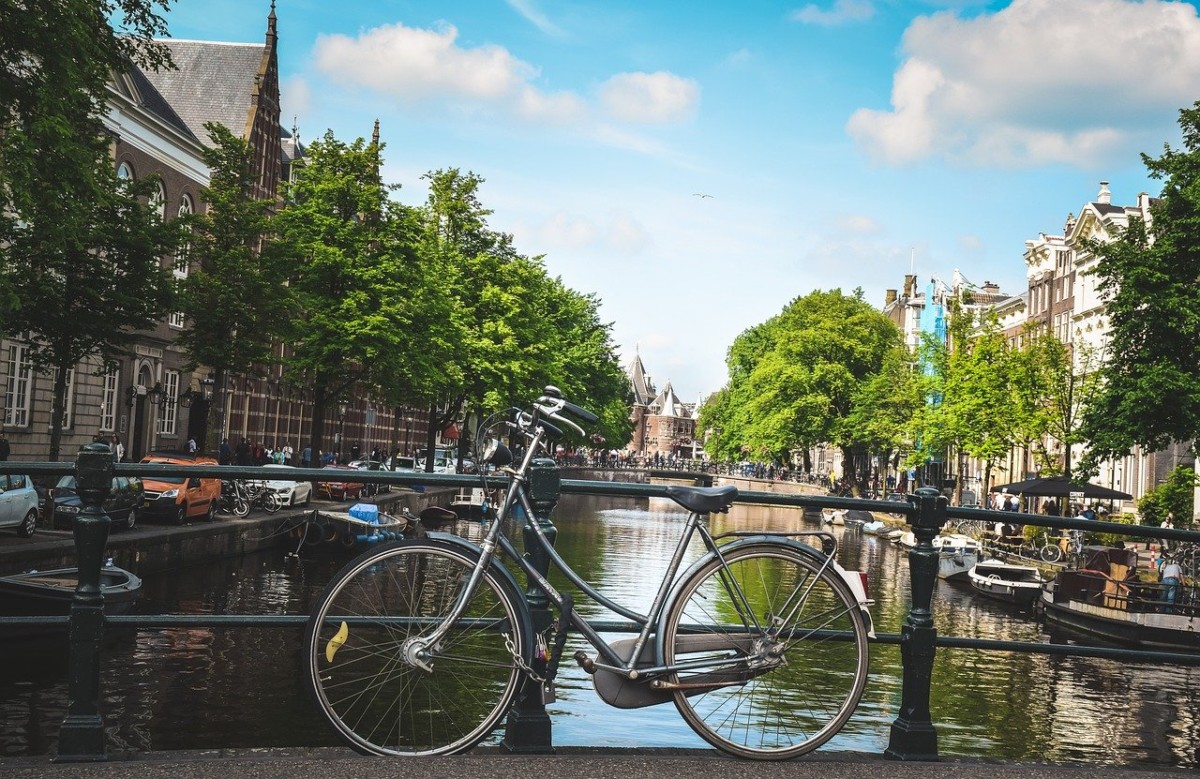
There’s nothing like the Netherlands in summer. Image: StockPhoto/Pixabay
Trump (hopefully) departing
2020 is an important year for people from the US, as the presidential elections will be taking place in November. In the Netherlands, we’re watching on with a sort of terrified glee as Trump creates wreckage (sometimes literally) as far as the eye can see. We’re pretty excited to see him (hopefully) disappear from the public eye in 2020, even if it will only be at the very end of the year.
Brexit (maybe)
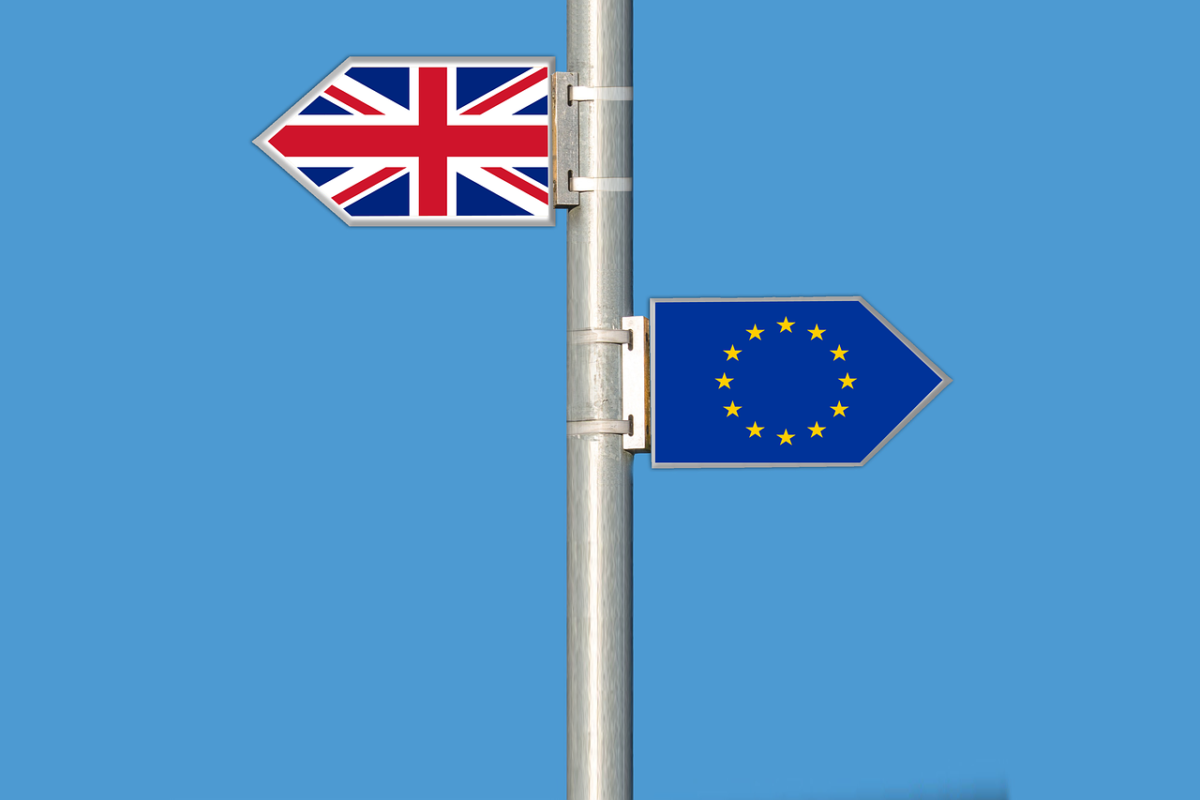
Is this the year Brexit finally happens? Image: Elionas2/Pixabay
Another political one for you: in 2020 Brexit may actually, finally happen. We’re not exactly looking forward to this one, but like Mark Rutte, we’re glad the whole drama may finally come to an end. Boris Johnson now has a majority in the House of Commons, and intends on officially Brexiting before the 31 January this year. So this particular event could be happening pretty early in the year, but honestly at this point we’re all a bit sceptical.
Euro 2020
This summer, the UEFA Euro 2020 tournament is taking place. The Netherlands will be hosting some of the games, and it’ll also be playing and obviously, winning. The games the Netherlands will be hosting will take place in Amsterdam, at the Johan Cruijff Arena. From what we know as of now, the Netherlands will be in a group consisting of Ukraine, Austria, and a not-yet-determined fourth country.
Reading every DutchReview article closely
Now, this one is obvious. In 2020, clearly the thing we’re all most excited about is following DutchReview’s every move. Whether it’s a weather article, an update on Dutch politics, or just us screaming about how Dutch people don’t use curtains again, you better be reading every single one. Every. Single. One. Or we’ll come for you. (Stay in touch).
What are you excited for in 2020? Let us know in the comments below!
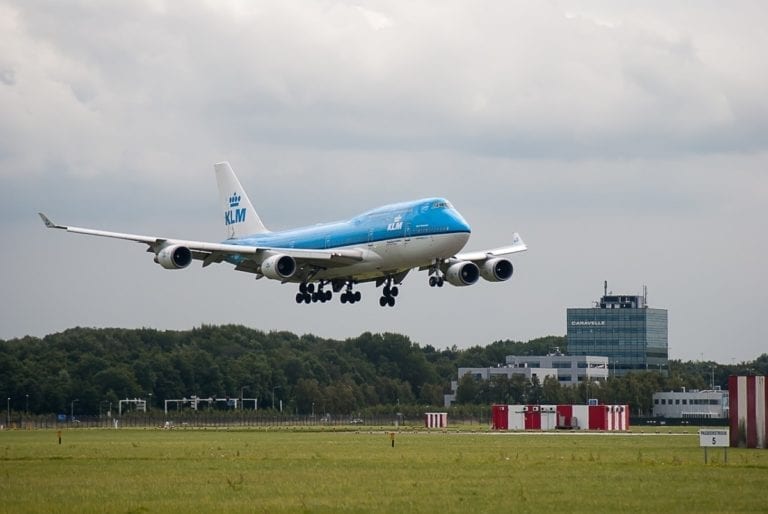
KLM has decided to halt all flights over Iran and Iraq following turmoil in the area after a US drone strike killed Soleimani. Other airlines have also done the same.
A Ukrainian passenger plane carrying 176 people crashed minutes after take off from Tehran’s international airport. There were no survivors. Reza Jafarzadeh, the civil aviation spokesman stated “The pilot had no contact with the tower and didn’t announce an emergency situation before the crash.” It is not yet known if this crash is connected to the unrest between Iran and US.
Flight disruptions
A spokesperson for KLM says this decision will add a 10 to 12 minute delay to flights destined for Southeast Asia and the Middle East, NOS reports.
Other airlines change flight paths too
KLM is not the only airline to stop flights over Iran and Iraq. Ukraine International Airlines has stopped all flights to and from Tehran. German plane carrier, Lufthansa, has ceased all flights between Germany and Iran.
US aviation authority, FAA, are also prevented from flying over Iraq and Iran.
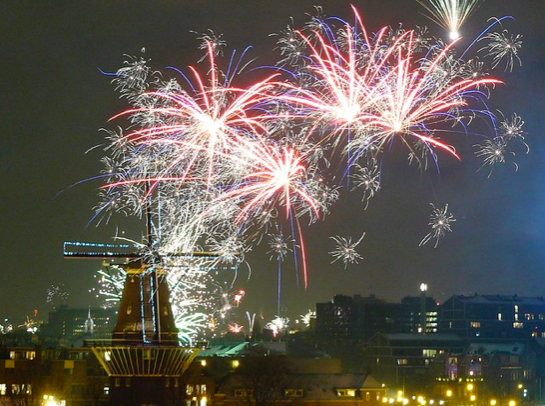
The next New Years Eve could be a lot quieter in Rotterdam, as the port city announces it is in favour of a total fireworks ban.
It’s the first of the four major cities to have a majority for a ban on the pyrotechnics. The change in tide came after the VVD party announced it was in favour of the ban.
The VVD department wrote on their website that they changed their position after huge amounts of incidents and violence over the New Years period. The ‘atmosphere of lawlessness’ that the fireworks created caused inconvenience and injuries every year, the party said.
The city previously attempted to implement fireworks-free zones, creating a patchwork quilt of yes and no zones. According to the VVD, it did little to curb the problem.
Last New Years was the breaking point for the city when eighteen people were rushed to Rotterdam Eye Hospital with injuries caused by fireworks. Security and emergency services in the municipality were stretched to their limit, with the control room receiving a thousand reports during the 2019-20 celebrations.
VVD in Rotterdam voor instellen vuurwerkverbod. Daarmee is er voor het eerst een meerderheid in de Rotterdamse gemeenteraad voor een vuurwerkverbod. Zie reactie @vincentkar: https://t.co/TIgK5iQzrJ
Would you support a fireworks ban throughout the rest of the Netherlands? Or do you think there are other ways to deal with the issue? Let us know in the comments below!
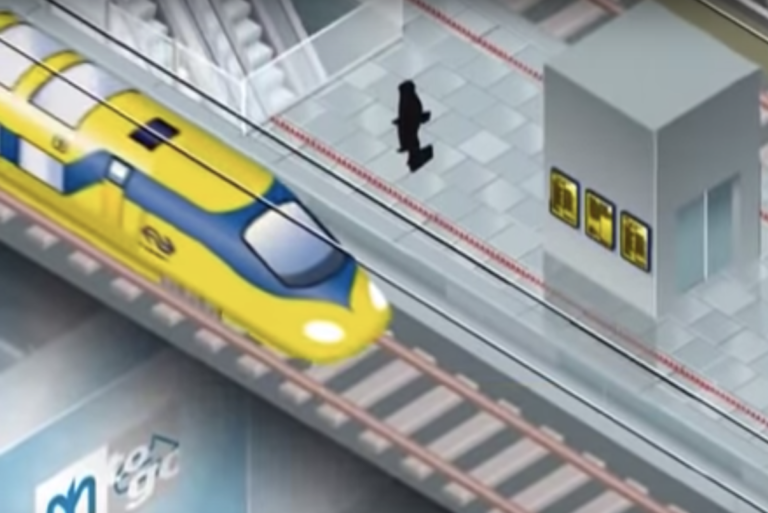
Superbuses, barrier-free highway exits to jump on a train, and hanging out in stations for the heck of it: the vision of NS of what taking a train would look like in 2020 is a far cry from reality. Dutch Railways 2020 vision video, released in 2006 envisaged all this, and more, in a banger of a video accompanied by a Madonna soundtrack.
Remember watching The Jetsons as a child and dreaming about a future where we would hoverboard to work, have an automatic hygiene machine composed of various robotic hands to poke and prod us in the morning, and 3D printing our evening meal?
In an excellent example of how the internet keeps everything forever, Dutch Railways have re-released their 2006 vision video of 2020. Guess what, we’re in 2020 – and they weren’t particularly accurate.
The video is pretty great to watch in general; in addition to that excellent soundtrack, there are some real noughties vibes in the animation. Keep your eyes peeled for the smartwatch displaying NS timetables (where’s our watch app, NS?), the office space with suspended televisions, and the screens in the back of the seats (okay, the screens are in our hands now so we can’t complain).
Check out the video and all its noughties goodness below (and yes, we believe that is a 4:3 ratio!)
Barrier-free transfers
“NS is seducing the car user to use the train in their life,” promises the video. One of NS’s planned ideas was removing barriers from switching between car, bus, and train in 2020. Stuck in a traffic jam? No problem! Take the next exit, park your car at the attached garage, and hop on a train. Seamless.
It’s actually a great idea in theory. In practice, government privacy rules made exchanging information between providers impossible to achieve the vision. “What we had not anticipated at the time is that privacy rules have a much greater impact than expected,” says Jeroen Fukken, director of strategy and innovation at the Dutch Railways on the podcast POEN.
However, it’s not a lost cause yet: Dutch Railways are attempting to make agreements with the government to enable data sharing for some transport use. “It has also become clear to us that you cannot achieve many things on your own. We have started to collaborate more with other transport companies and with car parties,” says Fukken.
Those sweet central transfer points where you can jump from your car to your train? They’re still being planned and hope to be completed by 2030. We’re rooting for you NS!
Not just a train station
Ever dreamed of heading to the train station to hang out with friends and catch a movie? Yeah, us neither. Regardless, transforming stations into central hubs and a “destination on their own” with cinemas and childcare was another vision of NS in 2006.
One of the references in the video is to a superbus: a limo-like car that can carry up to 23 passengers at speeds of 250 kilometres an hour via specially-designated highway lanes. While a prototype was designed, the project never eventuated.
What did the future bring?
Well, not a lot of the NS’s predictions ended up occurring. We could see one accurate prediction: no more carrying around a paper timetable book. The future is now!
The predictions for the number of daily travellers growing to 1.5 million was close, but still missed the mark by about 200,000. The global financial crisis in 2008 made sure to delay economic progress, and therefore passenger growth.
Now the Netherlands is moving towards technologies that weren’t even thought of in the video. Testing for a hyperloop, a capsule that flies through a vacuum tube, has begun with speeds of up to 1000 kilometres an hour.
But will we see a hyperloops throughout the Netherlands? Probably not, says Fukken. Hyperloops are more suited for long distances, so an inter-Europe version is far more likely.
What was your favourite part of the NS vision video? What would you like to see change in public transport in the future? Leave your thoughts in the comments below!
We all have to take a break and go elsewhere to have a new perspective or to just enjoy some new sights. A great place to go to that’s nearby is Germany, which has many diverse sights to offer.
It doesn’t have to be an arduous journey and it certainly doesn’t have to break the bank if you travel to the neighbouring country of Germany. Too often we forget all the opportunity and adventure we could have closer to our doorstep. So in the spirit of finding cheaper and more accessible holidays, we compiled a list of some of the best German cities for a weekend escape from the Netherlands.
Disclaimer: Given the current situation of the coronavirus crisis, plan ahead if you wish to travel to Germany, respect social distancing measures and stay safe.
Cologne
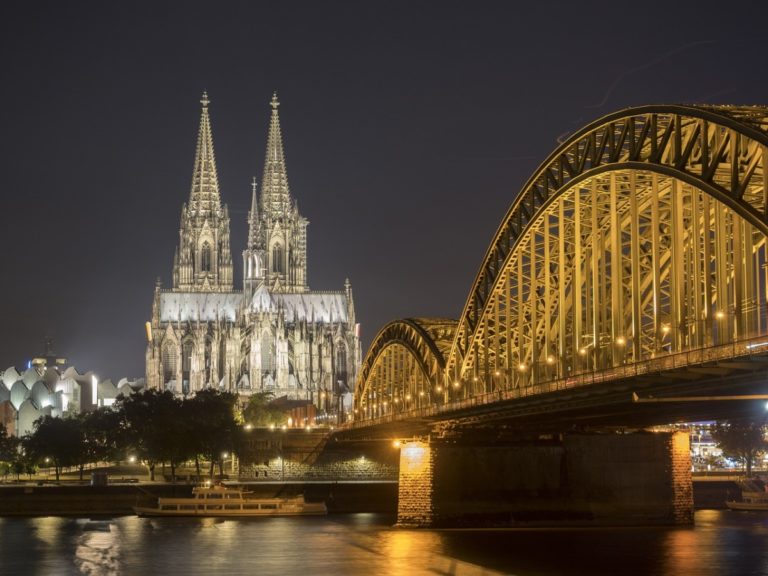
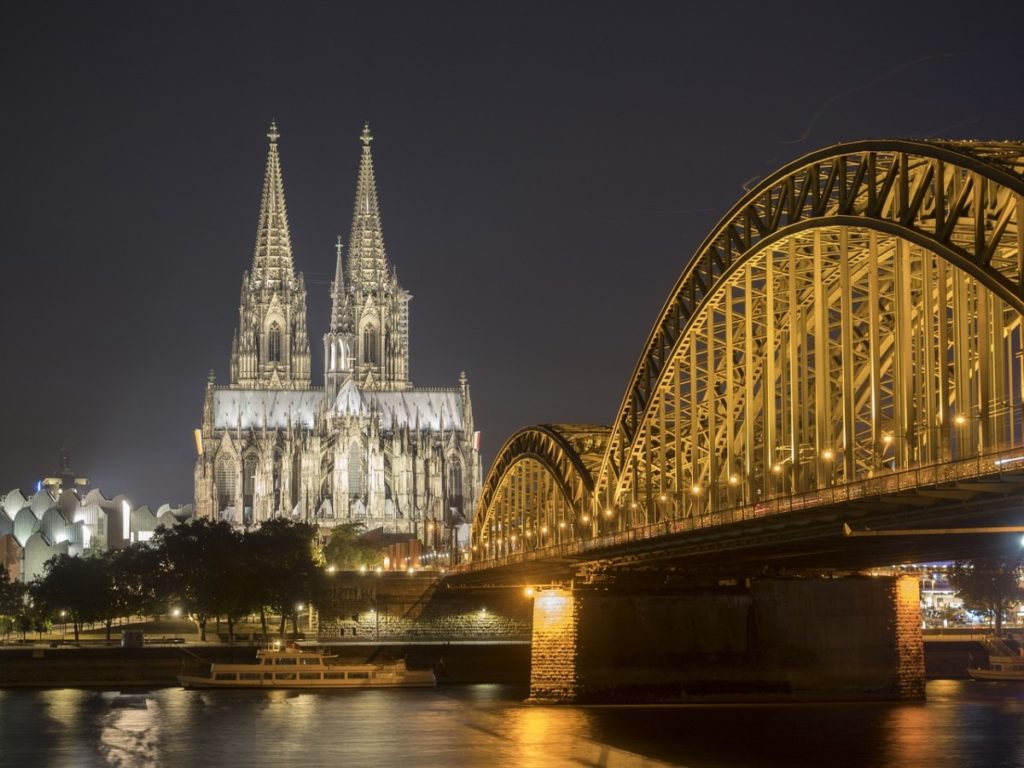
The Cologne Cathedral taken from the Rhine River. Image: 46173/Pixabay
Time by train:→ 02:40 from Amsterdam/Rotterdam
Cologne is rather grungy like Berlin, which is a large part due to the fact most of the city was flattened during WWII. After the war, the focus was to try and rebuild the city as quickly as possible which resulted in the erection of sterile concrete blocks.
Thankfully, the famous Cologne Cathedral (used as a reference point for attacking pilots’ location) survived. It is the main tourist attraction of the city and given it is the largest Gothic church in northern Europe, it is easy to see why. After paying the four euro entry and ascending the 386 steps, you’ll be rewarded with panoramic city views including the Rhine River and iconic Hohenzollern Bridge.
TIP: Don’t leave this city without trying Cologne’s famous “Kölsch” beer!
Not to be confused with Munich! This city in west Germany has a lovely feel to it with a stunning Altstadt (old town). Due to its extensive bicycle path network, it is often named the “bike capital of Germany”, so Dutchies should feel right at home!
It also has more 1,000 pubs, so you won’t be hard pushed to find a cool beer to top off a day bike exploring. You’re unlikely to be disappointment by your drink as Germany has laws in place to protect the quality of brews.
Heidelberg
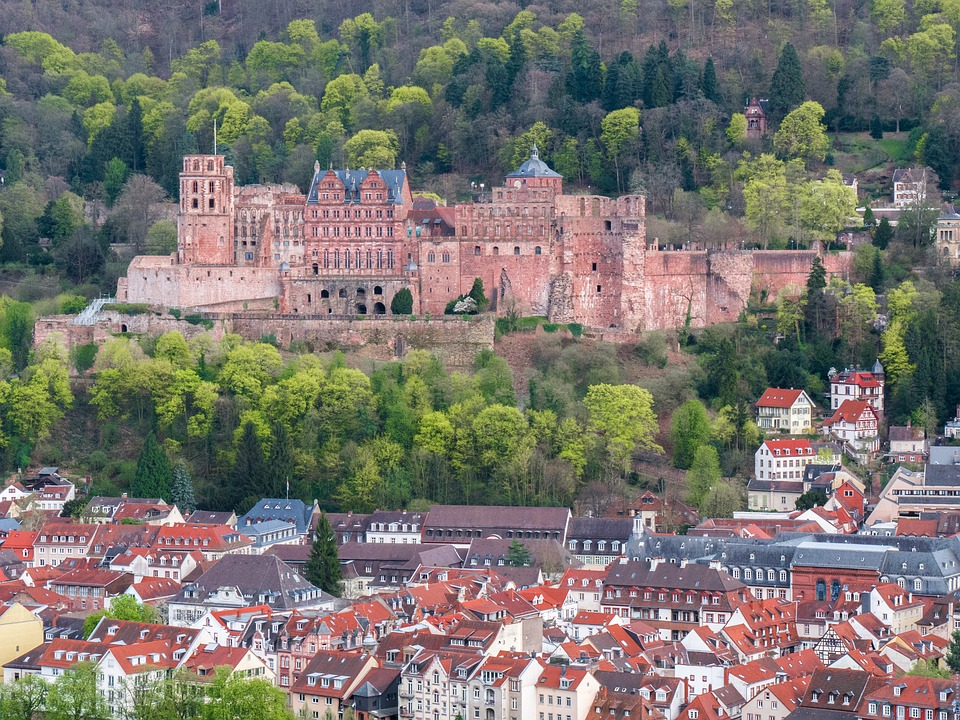
The Heidleberg Schloss (castle) looms over the old town. Source: Heidelbergerin/Pixabay
Time by train:→ 04.45 from Amsterdam
Heidelberg is Germany’s oldest university town with famous alumnus including Max Weber and Franz Boas. Its notability does not stop there, however. Famous playwright, Goethe lived in Heidelberg and author Mark Twain detailed his three-months living in Heidelberg in his book A Tramp Abroad. This rich literary history has lead the city to be named a Unesco City of Literature in 2014.
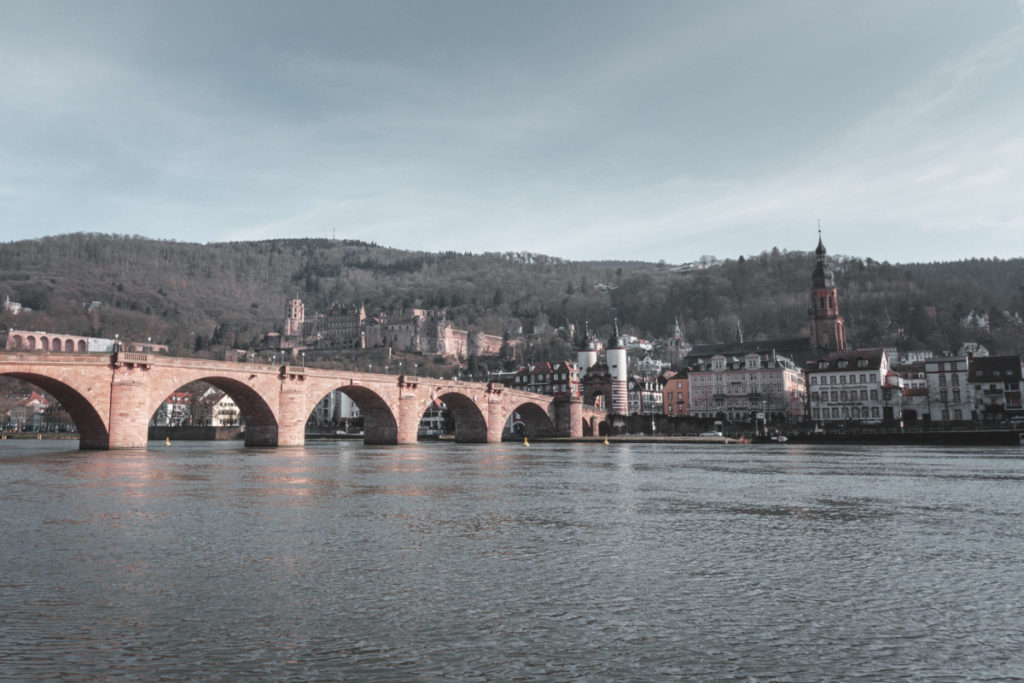
But that’s not the only appeal. Visitors marvel at the beautiful baroque architecture of the old town, which survived WWII, the location next to the Neckar River and the imposing Heidelberg castle that looms over the town on one of the many surrounding hills.
The Neckar with the Heidelberg Schloss in the background. Image by Emily Peilan at Freedom Wanderers Travel Blog/Supplied
Choose your visiting weekend wisely however, as more than 11.5 million tourists flock to this city each year.
Time by train:→ 5.15 from Amsterdam, or 03.45 from Groningen
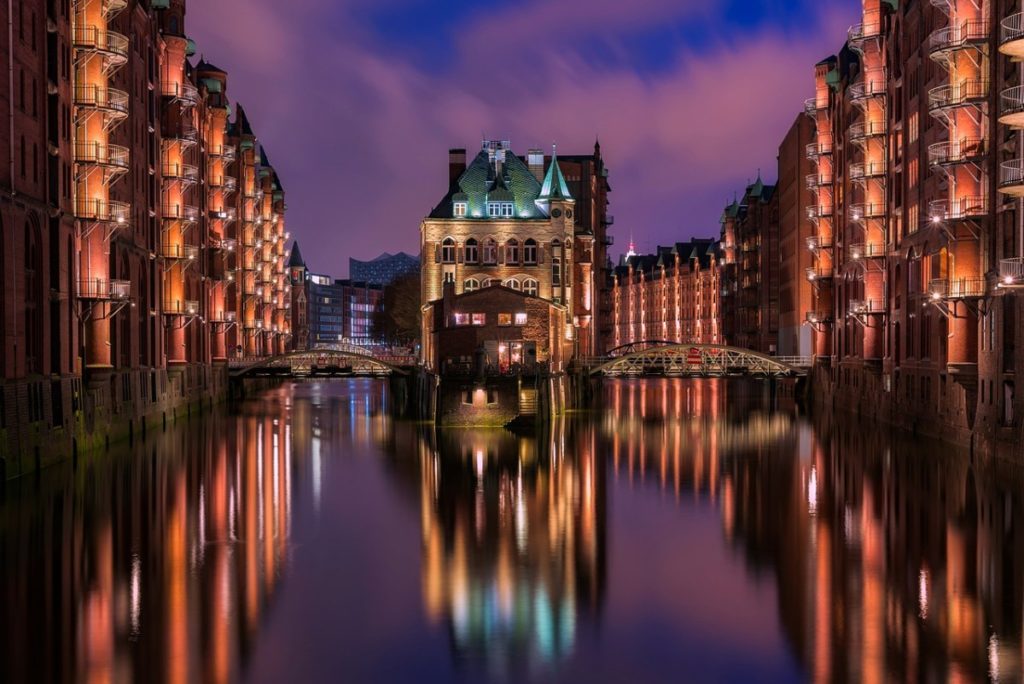
Hamburg is a major port city located in northern Germany and has more bridges inside its city limits than any other city in the world (with even more canals than Amsterdam).
It can take a while to navigate the different areas of the city but if you put in the effort and discover all the hidden gems then you will undoubtedly grow to love it. The Beatles rose to fame while playing on the infamous Reeperbahn strip. When John Lennon was once asked what it was like growing up in Liverpool, he retorted “I didn’t grow up in Liverpool. I grew up in Hamburg.” For major Beatles fans, it is worth noting that there is a designated Beatles tour you can take in Hamburg.
A must-do is the Sunday Fischmarkt, located right on the harbour. It starts around 5 am with herring sandwiches and of course, beer. As the morning continues, bands start playing and people flock to the dance floor. No better way to cure your Saturday hangover than with a Sunday drink!
Dortmund
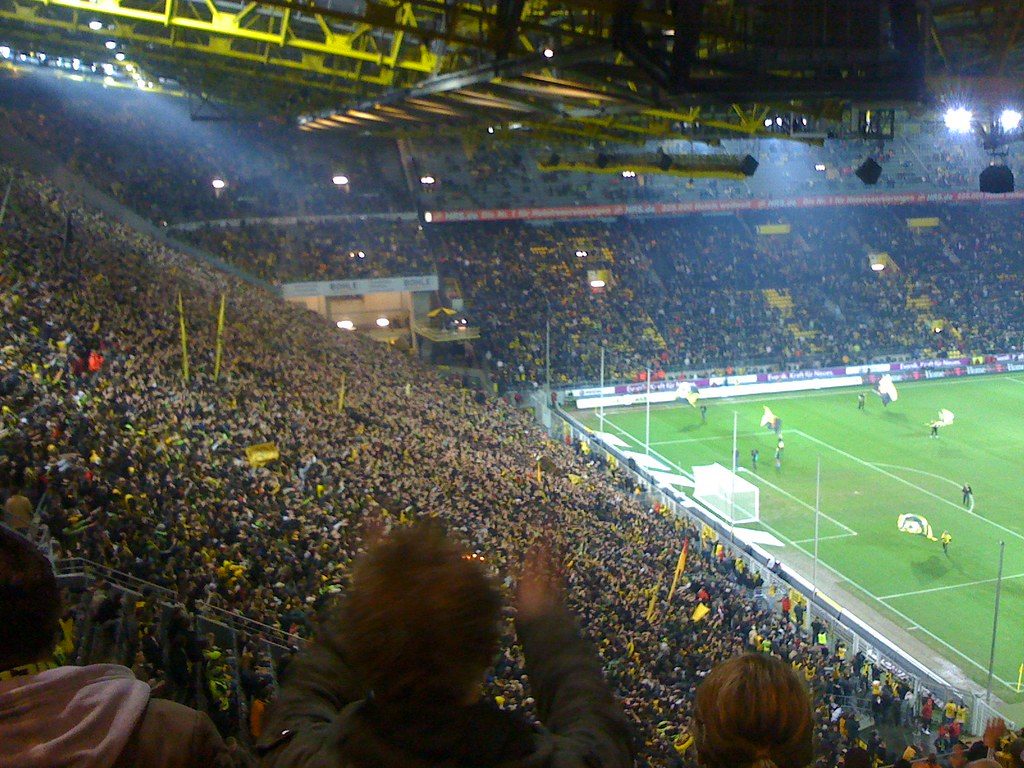
Fans cheer during a football game at Signal Iduna Park. Image: Achim Hepp/Flickr.
Time by train:→ 2:45 from Amsterdam
Dortmund is most well known for their football team – Borussia Dortmund – which is the second most successful German football team after Bayern Munich. After Camp Nou in Barcelona, Dortmund’s Signal Iduna Park is the second-largest stadium in Europe so even if you aren’t a football fan, the atmosphere at the 81,359-capacity stadium is electric and promises an epic time.
If after attending a match you catch the football bug, then the fun doesn’t need to end there. The German Football Museum opened its doors in 2015 even equipped with quizzes, interactive games and a small indoor pitch to muck around on.
Aside from football, there is still lots to discover here. Meander around the beautiful Westfalenpark or boost up Dortmund’s 220-metre TV tower for panoramic city views.
So there you go, five varied and worthwhile German cities for a weekend escape from the Netherlands. Have you been to any of these cities? What’s your favourite place in Germany? Let us know in the comments!
On the TV program Op1, Dutch Defense Minister, Bijleveld, says she understands why the US killed Soleimani and nodded to the awful atrocities Iran is responsible for, NOS reports. Nonetheless, the Netherlands, as a member of NATO, is focussed on de-escalation.
“A real crook”
Bijleveld described Soleimani as “a real crook” and discussed his involvement in the war in Syria as commander of the Quds Force.
But she went on to acknowledge that the assassination of the leader created “a very fragile situation” and emphasised that NATO members are well aware of the potential retaliation from Iran.
En morgen mogen de medewerkers van Nederlandse ambassades wereldwijd weer naar hun collega's met de stichtelijke boodschap dat Nederland staat voor een internationale orde gebaseerd op regels en recht. Godgeklaagde hypocrisie. Totale shit. https://t.co/SWd7z2Zuly
However, the minister said the Dutch government are focussed on de-escalation. Bijleveld referred to statements made by Stoltenberg, the secretary of NATO, who also stressed the drone strike was a decision made solely by the US and is not endorsed by NATO.
The Netherlands wants explanation from United States Government
Bijleveld believes the Netherlands and other countries should have been informed of the attack before it happened.
The Netherlands wants the United States to provide a “legal basis” for such a major decision. The US claim the attack on the Iranian general was “self-defense”.
In a letter sent to the House of Representatives, the cabinet says the Netherlands “will underline Iran’s negative influence on regional stability and point out the importance of Iraq’s sovereignty and territorial integrity” during the upcoming meeting between EU foreign leaders scheduled for Friday.