Are you taking your car to visit the family somewhere? Be sure to fill your tank up to the brim because petrol and diesel is set to become even more expensive from the new year. Smokers will also feel the price pinch, with cigarettes getting 1.14 euros more expensive by April, so stock up! Or you know, you could do your part and not use your car or smoke. But to each his own, I guess (quit now!).
The government are increasing gasoline prices, diesel and LPG prices so that it adds up over a year. Plus, you need to pay the VAT for ‘excise duty’ of 21%, making it the largest overall increase in years.
You will have to pay 80 cents more for every litre of gasoline, 50 cents more for diesel and 19 cents more for LPG. If you fill up 60 litres, you will pay a total of 91 cents more – that might not be much in a week, but it adds up to an extra 47.50 euros more a year!
For cigarettes, you will be paying more taxes on them with an increase of 14 cents. But it will increase even more in April 2020 by a whole euro. The government hope to “realize a smoke-free generation by 2040” with these new regulations.
Do you think these changes will help us reach our environmental and health goals? Let us know in the comments below!
We’ve had heatwaves, subzero temperatures, more rain than we could possibly want, and a drought. 2019 has been a tumultuous year for weather in the Netherlands, and Europe in general.
So what should we expect for the last two weeks of the year and 2020?
When you think of Dutch weather, rain must come to your mind a lot. You tend to spend a lot of time indoors when living in the Netherlands, not because you hate the great outdoors but because sometimes the weather just doesn’t cooperate. We had multiple heatwaves where records were broken and autumn where it was pouring down every other day.
Today, it is cloudy and there’s a possibility of rain. But worry not because it can get dry in the evening. Temperatures will even reach 10 degrees in the south of the country! But that’s not all, the sun may very well make an appearance shine through.
But apparently, it did not rain enough this year because there were droughts again this year. The total number of frost days has also decreased by 30 days this year. So there are weather changes for every season.
Well, we better get used to it because this kind of weather is here to stay. Expect extreme droughts despite an abundance of rain in other parts of the country, a shorter number of frost days, and heatwaves every summer. Climate change is real, and it seems to be here to stay; for 2020 at least.
Okay, doomsday is here, but what about the weather for the holidays?
On Christmas Day it’s going to be similar. It will be cloudy and it will rain, but does it matter when you’re huddled up around the tree opening up presents? Enjoy this time with your family because that’s what the holidays are all about! There’s also no chance of a white Christmas, so what’s the point anyway?
From then on, it’s only going to get colder and colder. So be prepared for a chilly new year’s!
What do you make of these weather changes? Are you prepared for heatwaves, droughts and fewer frost days? Let us know in the comments below!
We’ve visited the LocHal in Tilburg and really, you should too if you’re living in the Netherlands! Read up on how this bit of jaw-dropping feat of architecture in Tilburg has an old soul and was voted one of the best libraries in the world!
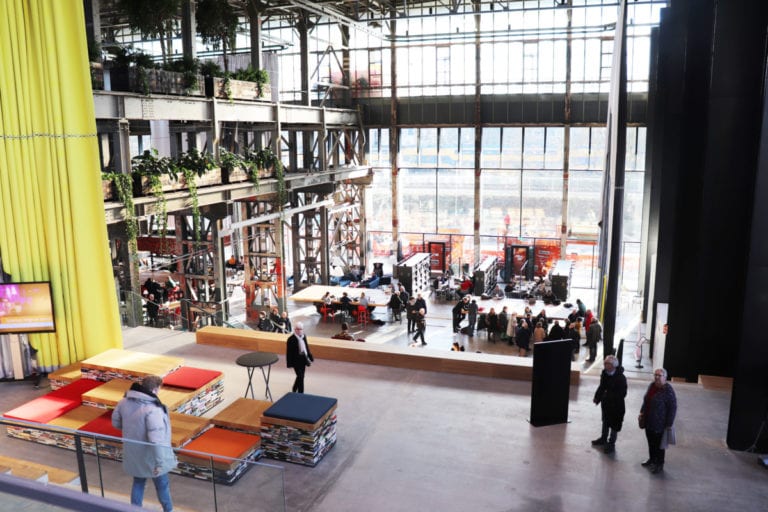
Right next to Tilburg Central Station and Tilburg’s hipster hotspot the Spoorzone you’ll find another addition to the sixth city of the Netherlands; the library called LocHal. Well, it’s not exactly new, it’s an old industrial locomotive hall that has been transformed into a cutting edge library. And another thing, it’s far more than just a library.
We’ve got another brand new DutchReview video for you to check out:
From an old industrial building to an instant classic in the city of Tilburg
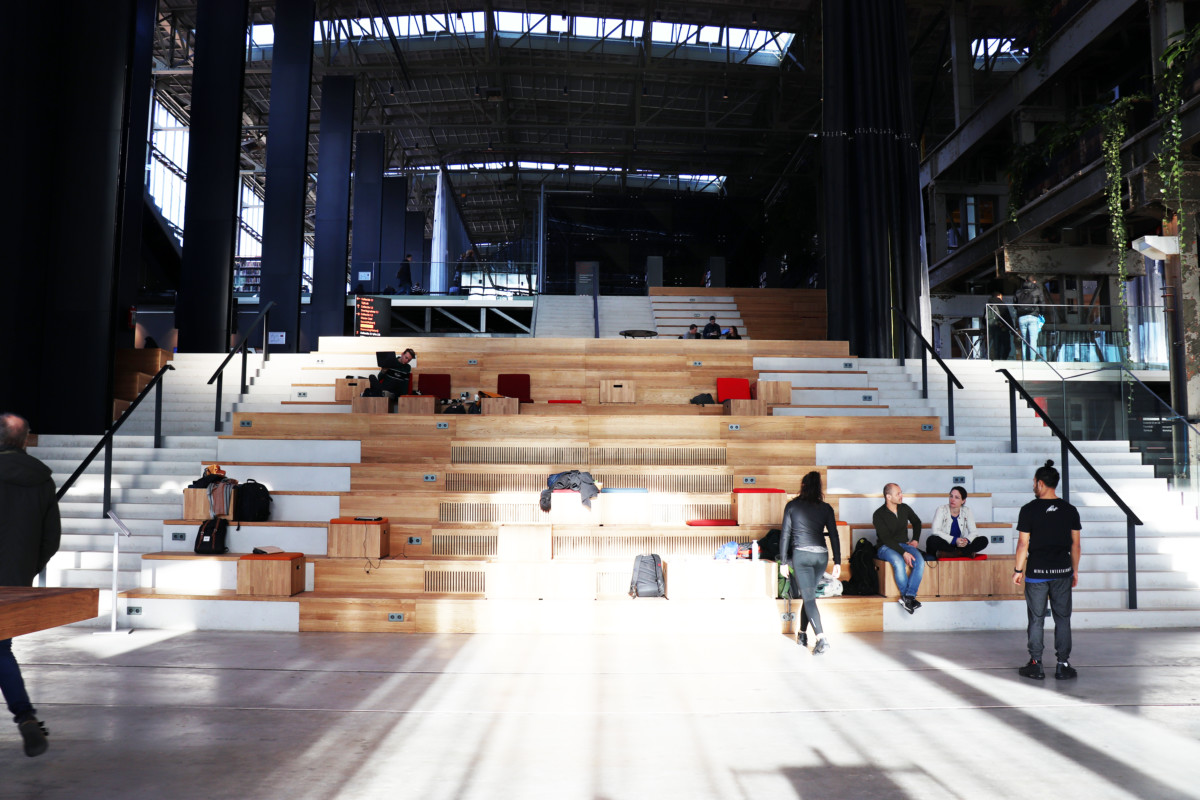
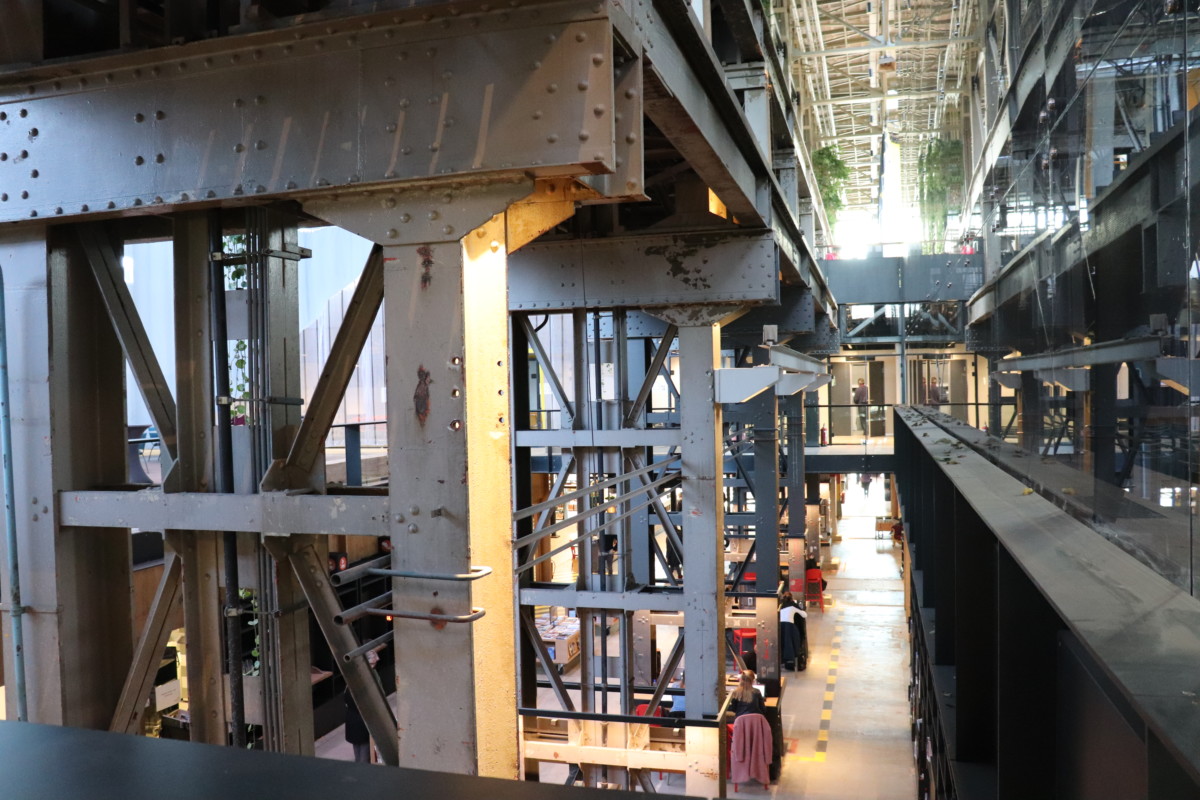
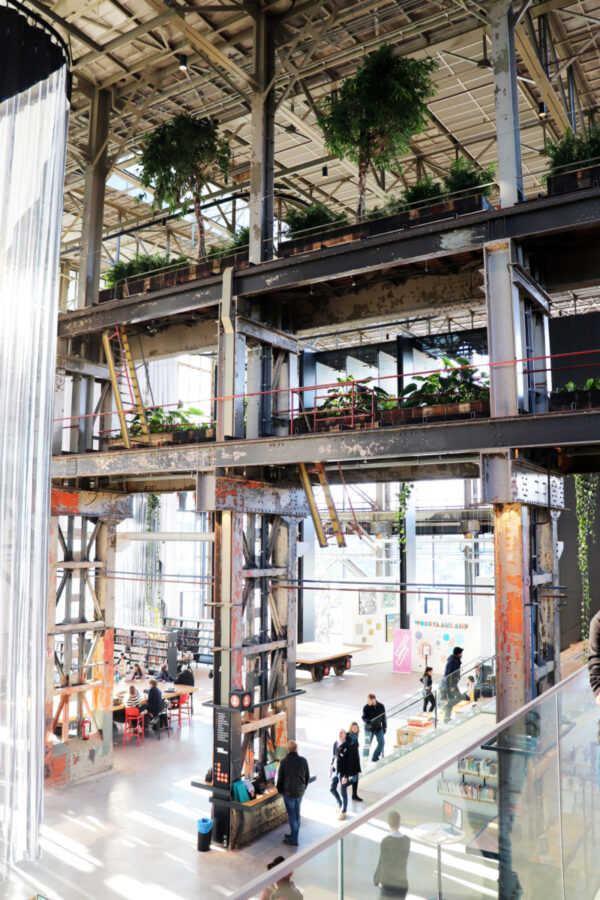
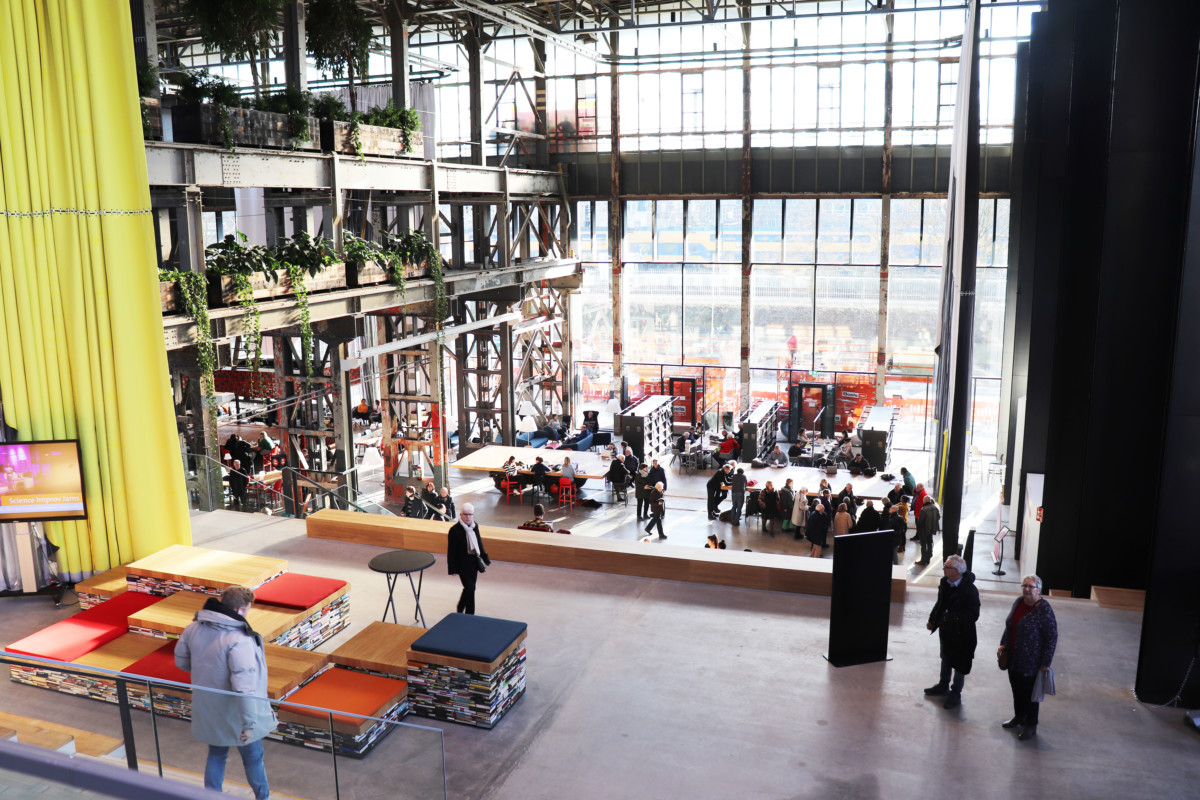
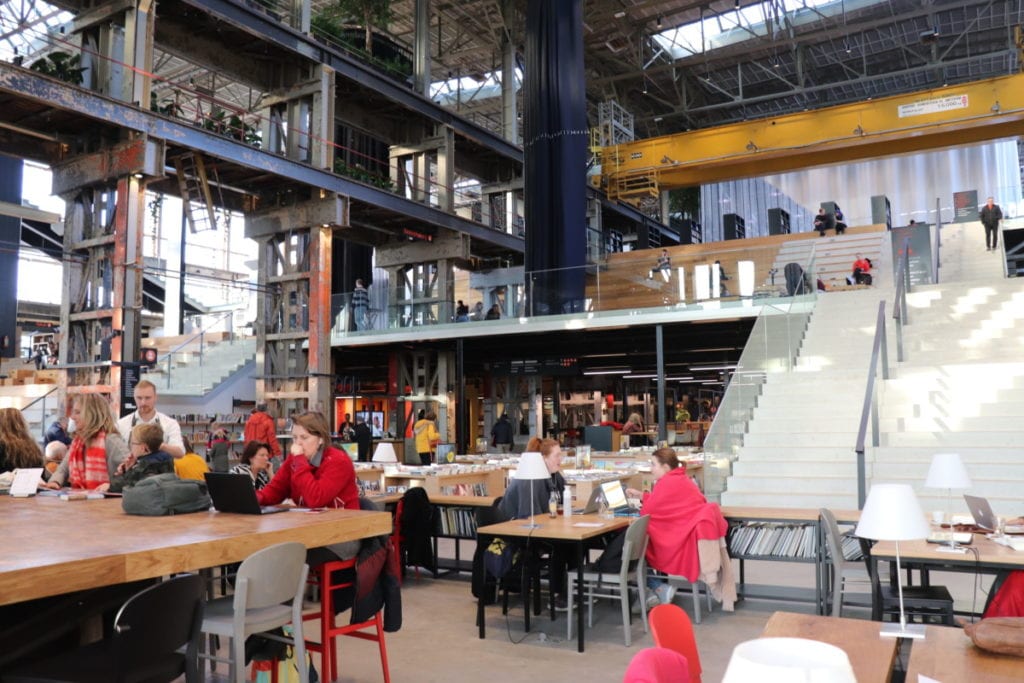
The building is an instant classic with the people of Tilburg. All of this, in what used to be a locomotive hall in the up-and-coming ‘Spoorzone’ area. At the beginning of the 21st-century locomotives were built and repaired here. The municipal monument dating back to 1932, has been converted into a modernist epicentre of design filled with glass, stunning wooden staircases and the grand old skeleton from its industrial days.
The LocHal now houses the Central Brabant library, two art institutions (Kunstloc Brabant and Brabant C).
Giant steel beams from another time, still in use in Tilburg’s brand new LocHalIt’s hard to imagine a better meeting place than this
The designers and architects involved in this stunning transformation (Civic, Braaksma en Roos and Inside Outside initially, with Arup and Mecanoo in the later stages) have really created something special here. The LocHal has maintained its spectacular sense of grandeur while embodying a feeling of intimacy in many of its hidden corners. Just take your time and explore, you’ll discover tons of mesmerizing vantage points.
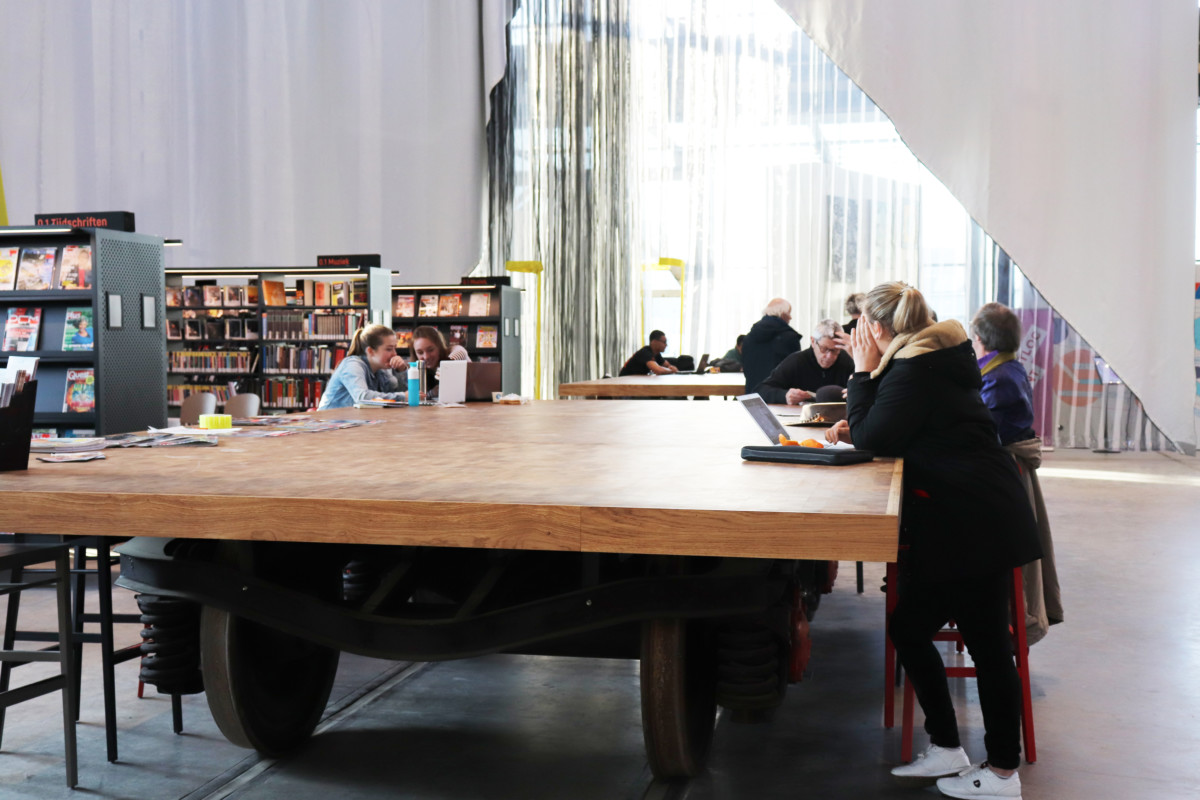
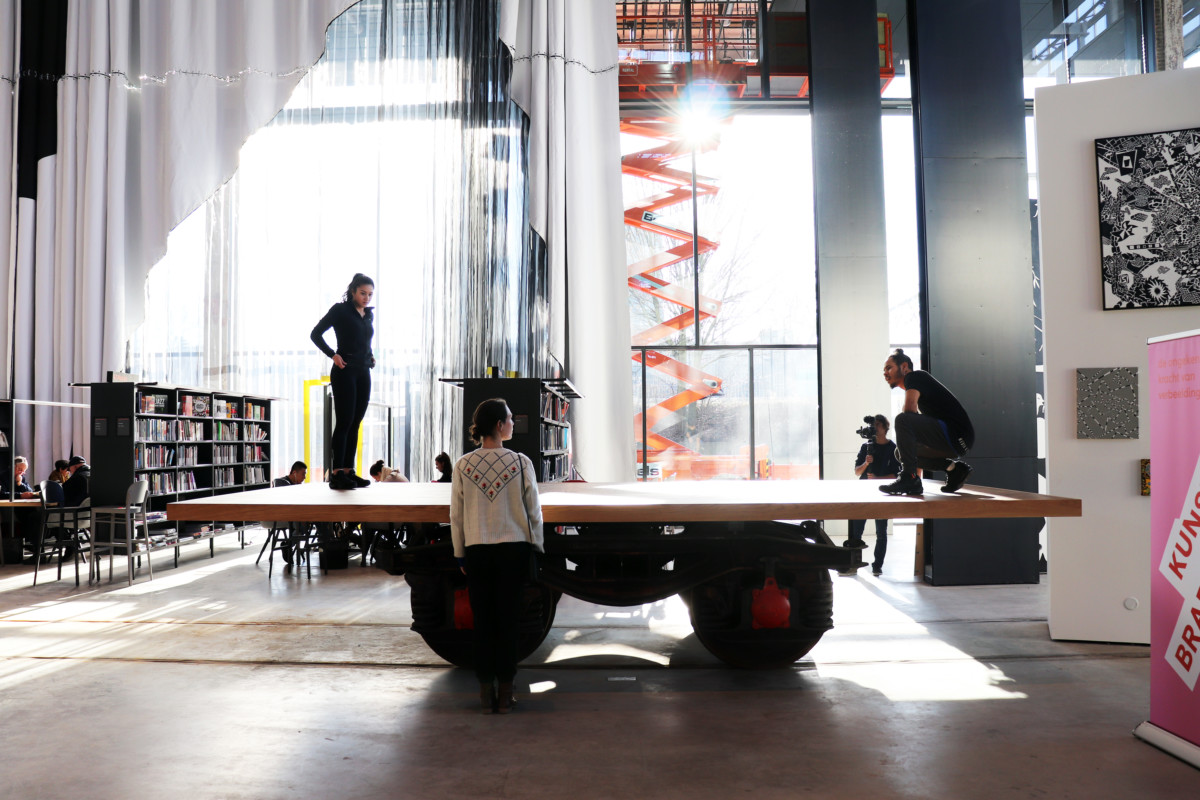
A great big rolling wooden table creates the undeniable sense of community workspace
Giant automatic curtains that couldn’t be from anywhere but Tilburg
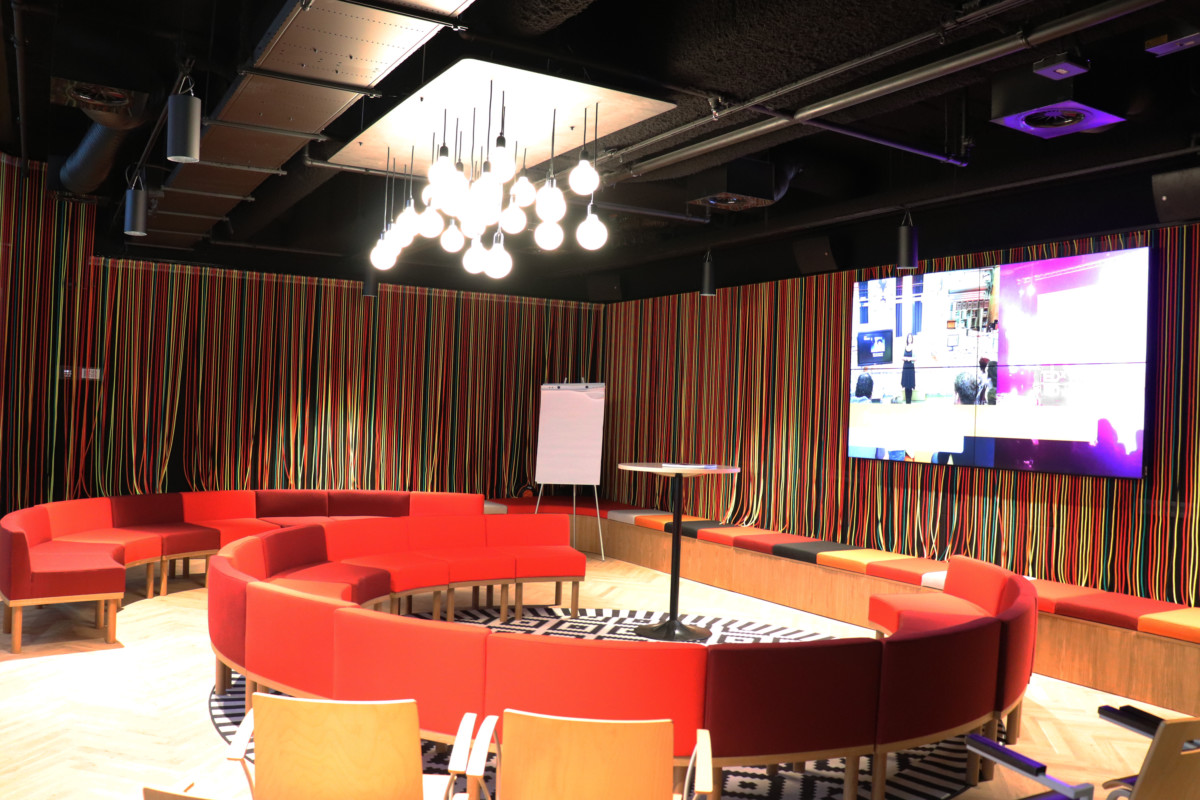
One of these aspects which we just need to talk about are the giant automatic curtains around the LocHal bar-area which, at the pressing of a button, create a mobile room.
Tilburg, historically a textile city, decided to produce the (15 meters high, 47 meters wide) curtains itself. Inside Outside designed the curtains, which were produced together with the TextielLab (of the TextielMuseum, add that one to your bucket list) and created some spectacular curtains full of intricate and thoughtful details. Don’t believe me? Just take a closer look and you’ll see some remarkably unique patterns.
The LocHal: big on sustainability
Sustainability is an inherent theme whenever a structure the size of the LocHal is opened. But still, the LocHal scores its sustainability points in a very stylish way.
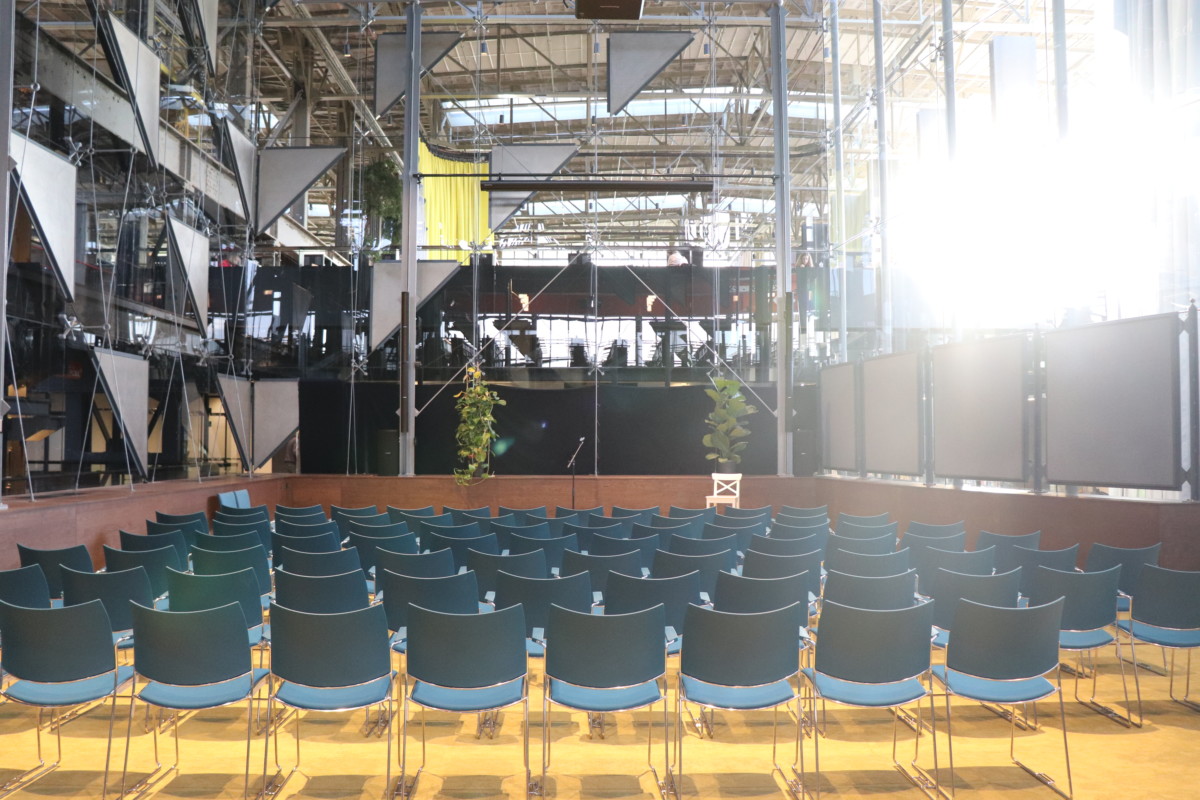
Exhibit A: The Glass Dome from the ‘Beurs van Berlage’ The ‘Beurs van Berlage’ had an iconic glass room which was, sadly, on the shortlist to be demolished. Coming to its rescue, the city of Tilburg bought the glass structure for the symbolic amount of one euro, and transported it to Tilburg. It was used to create a stunning glass auditorium with near-perfect acoustics and space for 200 people.
Exhibit B: Solar panels everywhere The enormous LocHal also has an enormous roof which is flat and now boasts a whopping 1278 solar panels, enough to power roughly 80 households on a yearly basis. In my opinion, every sizeable flat roof should have this.
The LocHal in Tilburg: more than a library
So besides being an awesome example of an industrial building transformed into a modern library, it’s good to know that the LocHal is far more than just a library. The city of Tilburg and the people behind the LocHal always envisioned the building as a meeting point for the people of Tilburg. Being conveniently located next to Tilburg’s Central Station it’s also a perfect spot to meet up with your Tilburg buddies or plan a day trip to see the LocHal.
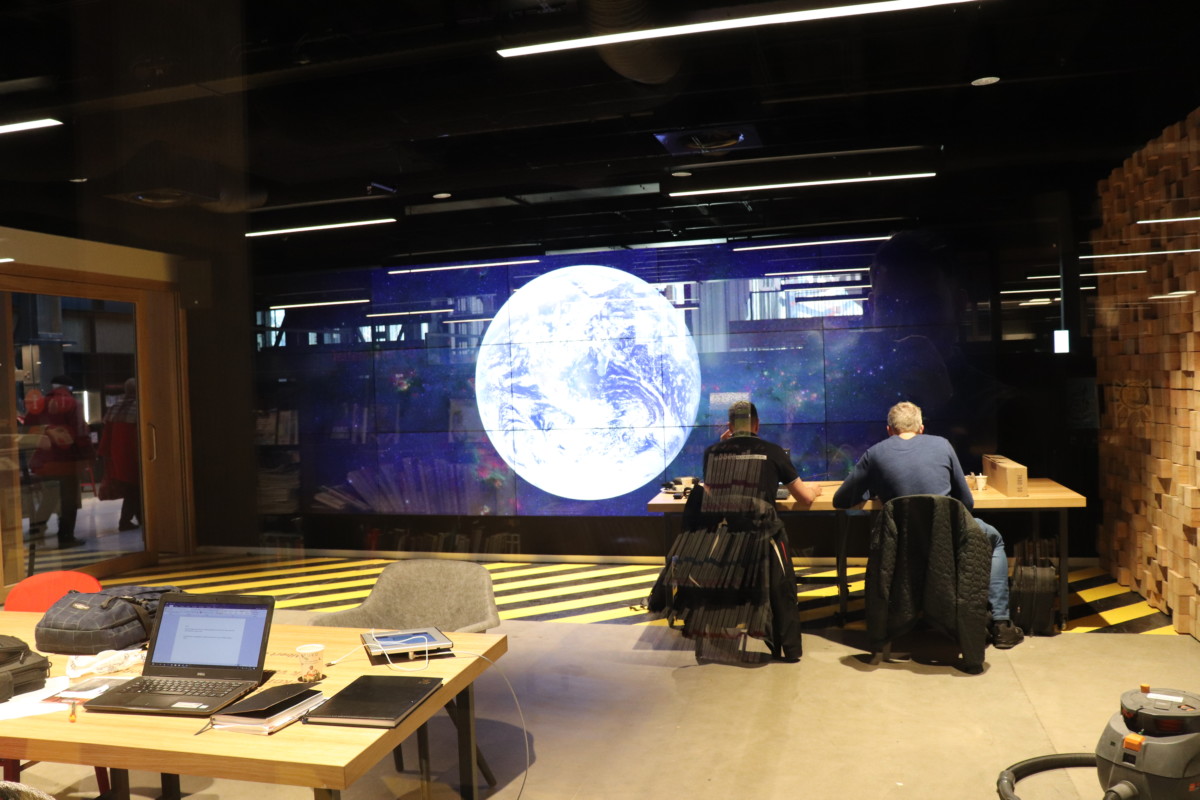
So what’s happening at the LocHal? Besides books? First of all, if you want to work or have a meeting there then that’s totally possible. Seats2Meet will gladly help you with that and can even arrange access to the glass dome.
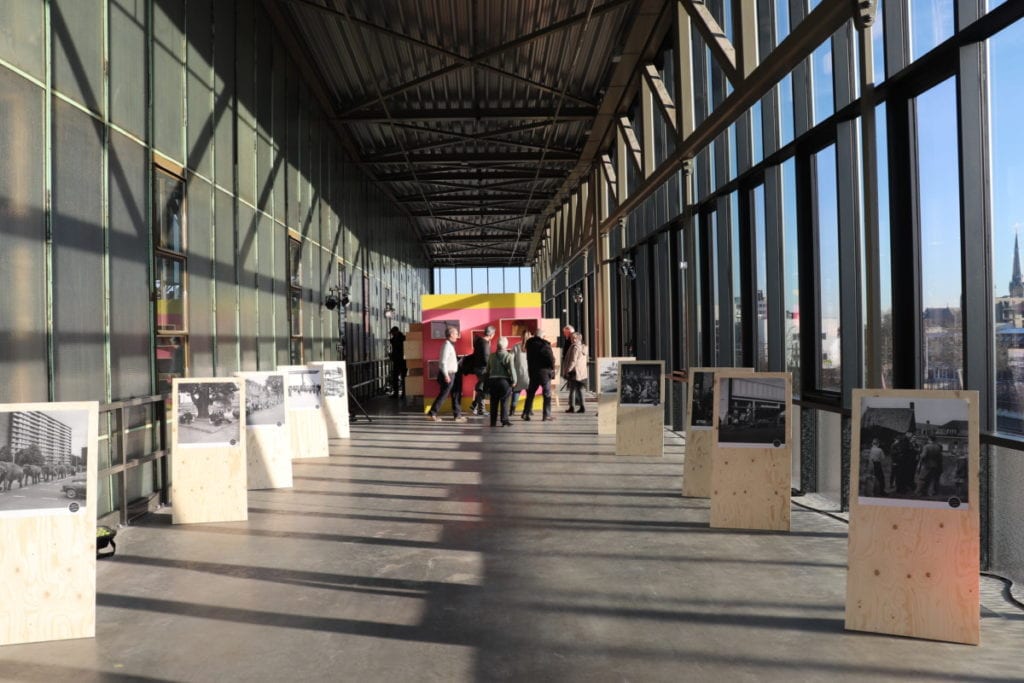
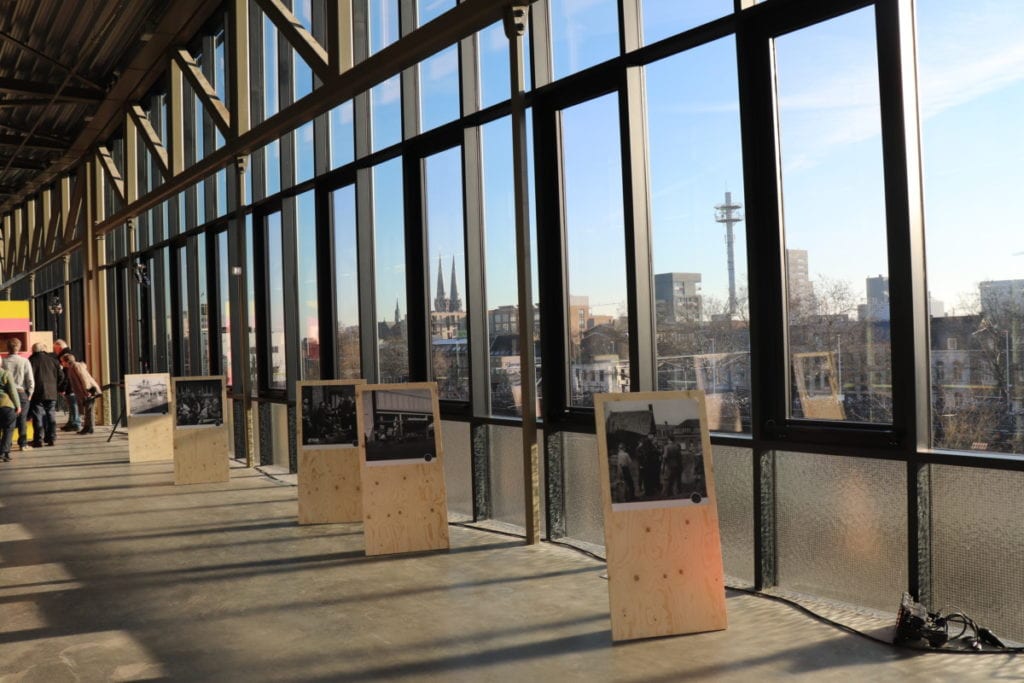
There’s a proper bar for lunches and drinks. Even better, with views over the whole city, LocHal impresses with its ‘city-balcony’. Now used to showcase art (go check out those photos of Tilburg of another era, stunning stuff) it will soon be transformed into a full-on bar, can’t wait to get back when that’s the case.
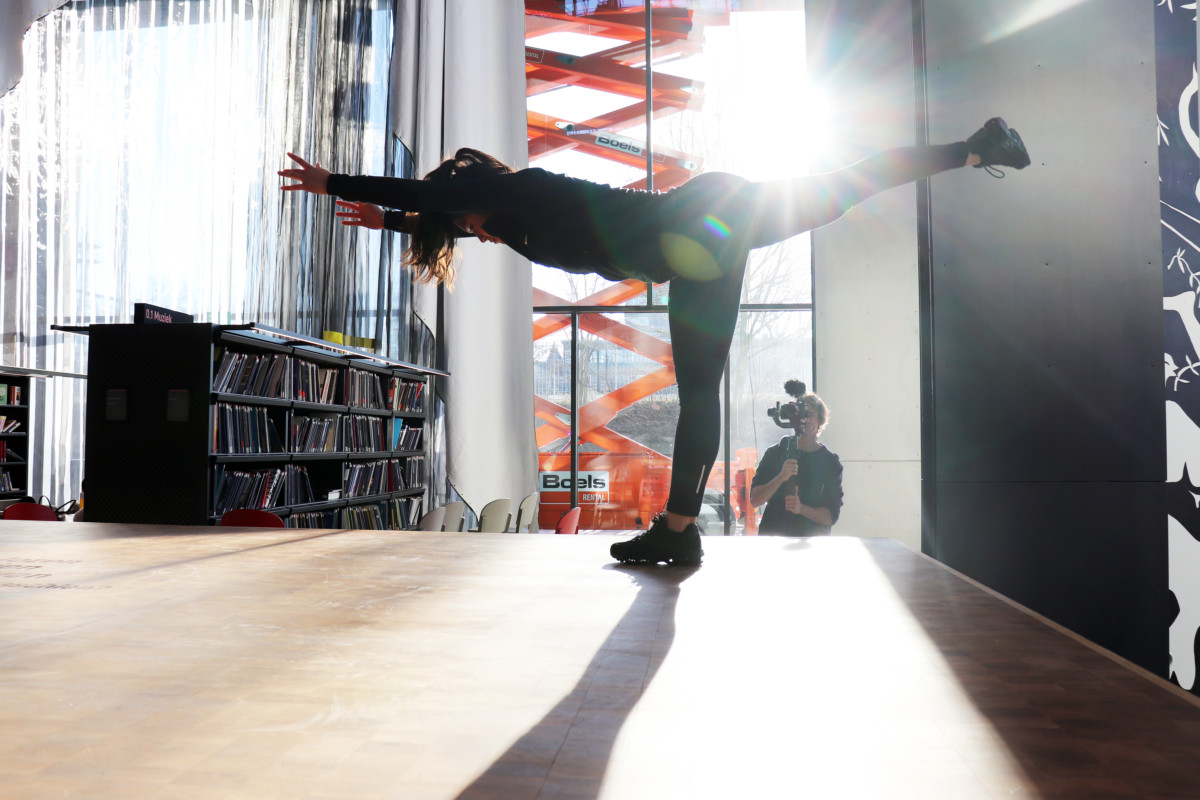
Speaking of art, the LocHal is also meant as a home to all kinds of exhibits (free of charge most of the time!). There was some colourful stuff on display when we visited and there were even 2 dancers performing right in front of the big wooden stairs.
Live dance art breathes fresh creativity into Tilburg’s newly opened LocHal
And yeah, it’s a library, but a special one. When we walked through the building we found tons of creative areas for young and old. Inspiring stuff everywhere you look, just so pleasing to see and explore.
Need more reasons to go to Tilburg?
If it’s your first visit to Tilburg there is plenty to see. It’s a great time to see Tilburg, aside from a town with heart and character it’s a great place to hang with friends and family. Generally, Tilburg always has something going on, and more often than not you’ll be glad you checked it out.
Have you been to the LocHal? Want to go? Drop a comment!
Editor’s Note: This article was originally published in January 2019, but was fully updated in December 2019 to make it shiny, new, and ultra-correct.
As 2019 comes to a close, it’s time to look back and reflect on the year that has been. One of the things we have to look at is crime. In 2019, a staggering more than 8000 bicycles were reported stolen Amsterdam.
Dubbing it as the “most common form of crime in the city”, AT5 reports that motor vehicle theft came in second with 4562 cases, and vandalism is the third most common crime with 3345 reports.
But the good news is that there is only a slight increase in drugs and arms trafficking with 504 in 2018 and 541 in 2019. There has also been a decrease in burglaries in the last two years where it was 4500 in 2017 was 3500 this year.
But the problem of bicycle theft is still very high. The months of January and October were studied. However, it is much lower than in 2018 when there were a whopping 11,290 cases reported.
Have you had your bike stolen? Have you been a victim of a crime in the Netherlands? Tell us your story in the comments below!
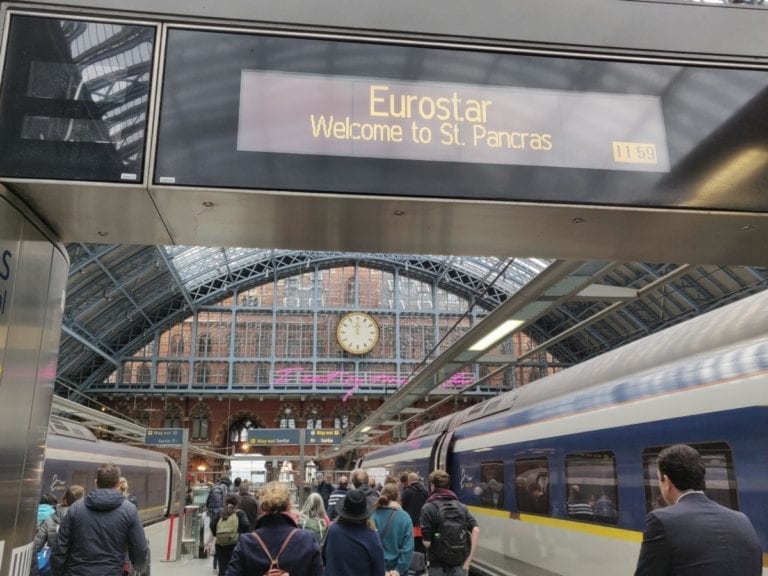
Are people waking up to the reality of climate change and looking to work towards leading a more sustainable life? Apparently people living in the Netherlands are! According to NOS, the Dutch Railways saw a growth of 13% with four million travelers going abroad from here.
According to a spokesperson from the Dutch Ski Association, they find that a lot of people going to skiing destinations want to take the train for environmental reasons. They said to NOS, “On our online forum we see that there are more and more questions about sustainability.”
Growth for destinations close by and far away
Although the most growth (22%) was seen for people wanting to take the train to closer destinations (like hopping on over to Belgium for that day trip).
There was also growth in destinations more than 700 km. “In absolute numbers, with tens of thousands of train passengers per year, it may remain modest,” says Heike Luiten, director of NS International, “yet the growth is impressive. Our main focus remains to get up to 700 kilometers from the plane on the train.”
And it seems like they’re being sort of successful. They want to make these destinations as accessible as possible. They said to RTL Nieuws that there are 3200 places they want to be covered.
Zooming through Europe in a metal pipe just became a lot more real. The European Hyperloop Center (EHC) could be built before the end of 2022, Hardt Hyperloop announced on Friday.
The centre will investigate and test whether the hyperloop could eventually replace short-haul flights, in a CO2 neutral way, with potential to have a huge impact on cutting our carbon footprint amidst continual climate strikes. That’s right – no more flight shaming!
A hyperloop allows vehicles to move through an electromagnetic drive system within a pipe – like a really, really fast train. The emerging technology is becoming a potential reality after millions of dollars in funding.
“From Amsterdam, you can travel with the hyperloop to Eindhoven in just fifteen minutes and you will be in Frankfurt within fifty minutes. In addition, twice as many people will fit in the hyperloop as in a current high-speed train,” says Hardt Hyperloop.
The centre will be built in the Groningen province, the Delft company said. Groningen was in the running alongside Zeeland, but the northern province emerged victorious. Millions of dollars in funding is making emerging technology a potential reality.
A three-kilometre track will be built at the test centre to test the transport system at a high speed.
“We are happy and proud that the EHC is coming to Groningen,” said Mirjan Wulfse, deputy for the province of Groningen. “The EHC will put Groningen on the map internationally as a testing ground for smart and green transport. It will also create more employment in our region.”
Construction of the EHC will start in 2020 and is expected to be completed in 2022.
Will you be hopping on board a hyperloop in the future, or sticking to planes and trains? Let us know in the comments below!
You’ve found the perfect room for your holiday, but oh no! The website assures you to ‘Book soon! There’s only one room left!’ Ah, that’s fine, you know today is a great deal, because that one room has a discount, and the hotel was booked 50 times in the last 24-hours, so it must be good. Book, pay, and you’re ready to hit the sun.
Well, maybe not. Although most people consider themselves much more savvy about how companies advertise their services (although we’re still confused about why our Ab-king didn’t give us a six-pack in thirty days), the above are just some of the manipulations used by Dutch company, Booking.com.
But, not anymore! Well, not from 16 June 2020. The accommodation-giant has made an agreement with the European Commissioner for Consumer affairs to stop the practices, reports Belgian newspaper De Tijd.
What are the changes?
From then on, Booking.com will make it clear that claims like ‘one room left’ only apply to the availability on their website. In other words, there may be multiple rooms left, but Booking.com has only been allocated one to sell. Via other channels, additional rooms can be available.
Sale prices will no longer be used if the price will remain the same after the deadline Booking.com advertises. And, in line with Facebook and Instagram requiring #sponsored posts, Booking.com will indicate if a hotel has paid to appear higher in search results.
The company will also provide greater transparency around prices. All surcharges and taxes must be clearly stated, and they cannot claim a room is ‘discounted’ if the discount comes from other circumstances: like the season the room is booked.
Why are these changes happening?
Because everyone deserves to know what they’re purchasing. According to De Tijd, Booking.com has been closely watched by the consumer watchdog for years. Meanwhile, consumer organizations have also been monitoring the travel giant over misleading selling techniques. That’s a lot of eyeballs on one company.
“It is an important signal that a market leader such as Booking.com is taking its responsibility,” European Commissioner Didier Reynders told De Tijd. “Non-transparent communication is a source of frustration for many. Internet companies must realize that they must continue to earn the trust of consumers.”
New consumer protections will come into effect from 17 January 2020, when European consumer legislation is tightened. Then, national advertising watchdogs will be able to work across borders to tackle misleading advertising. Go European Union (but sorry our British friends).
Have you experienced misleading sales tactics on accommodation websites? Let us know your experiences in the comments below!
The Supreme Court of the Netherlands has ruled in favour of Urgenda.
The preceding court cases
Back in 2015, the Urgenda Foundation successfully took the Dutch Government to court and demanded they take more measures against climate change. The government appealed the decision and the case was heard in both the High Court and Court of Appeal in 2018. Both courts ruled in favour of Urgenda but the government appealed. The Supreme Court judgement was delivered today at 11 am.
Summary of the case
Both the Dutch Government and Urgenda think that measures should be taken to reduce climate change but they disagree about how tough these measures should be. The state believes that by 2020, a 20 percent reduction in CO2 emissions is sufficient. Urgenda does not think this is enough, especially because in the UN climate treaty that was signed over 10 years ago, the Netherlands promised to reduce their CO2 emissions by 25 percent by 2020.
The Urgenda Foundation, made up of 900 citizens, believes the government has a legal duty to take action against climate change and it is wrong to knowingly contribute to a climate crisis.
The Supreme Court of the Netherlands has often ruled that the government should be held accountable for failing to take measures to prevent foreseeable harm.
Urgenda are relying on this precedent to highlight the government’s failure to tackle climate change. Urgenda believes that failing to prevent climate change is not only politically and morally corrupt but is also a legal obligation that cannot be ignored.
The Supreme Court ruling
According to the Supreme Court ruling, “the [government] is obliged to reduce greenhouse gas emissions”. this means that by the end of 2020, the emissions need to be reduced by 25% as compared to the emissions in 1990, reports NOS.
What do you make of this? Let us know in the comments below!
Christmas is coming and with it plenty of free time to spend with friends and family. Maybe a little too much free time. If you’re struggling for things to talk about with your family, then we have a list of family-friendly activities you can do with them over the holidays to help ease the awkward silences.
Play-in Utrecht
Up, down, run-around – Play-In Utrecht is a kid paradise. Image: Play-In Utrecht
This is the best place to go if you want your kids to run off all that excess energy they’ve gained from the Christmas fare. Play-in Utrecht is an indoor playground, climbing area and trampolining zone. There is no end to the family-friendly activities your children can get up to there, but you can also have some fun yourself: there’s a lovely cafe there where you can chat to your fellow adults, read a book, or (we might as well admit it) scroll.
Winter Wonder Weeks – Leiden
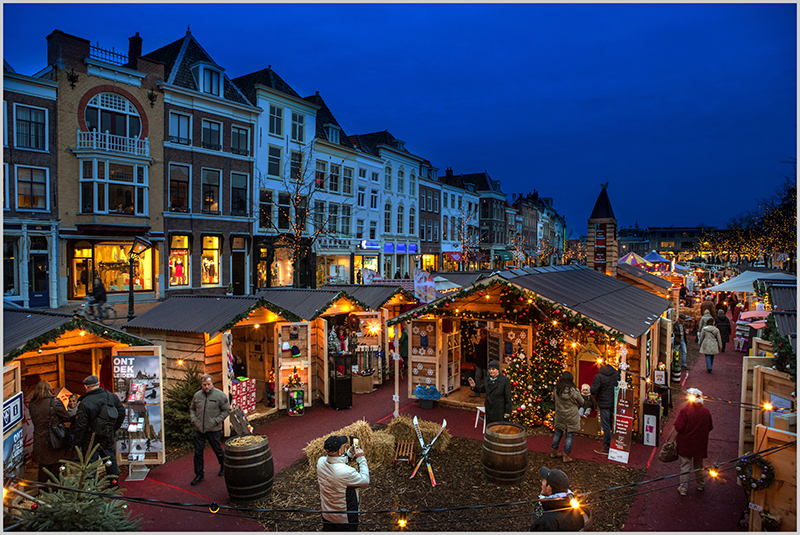
How Christmassy! Image: Leiden Marketing.
It’s Christmas, so we absolutely have to have Christmas themed family-friendly activities. There is none better Leiden’s winter market. First of all, it’s floating on the canal- how magical is that? Grab some mulled wine, a cookie or a crepe, and wander around the different stalls. You can pick up Christmas decorations, little gifts, or even clothes. For kids, the magical atmosphere and the promise of a hot chocolate are all they’ll need to have an amazing afternoon.
Moco Museum – Amsterdam
VERY Instagram friendly. Image: Ivaylo Kirov/Supplied.
Time for some cultural family-friendly activities! With all this time off, you might as well learn something. The Moco Museum in Amsterdam is perfect for this because it’s not your typical dry museum that will have your children begging to go home in seconds. Moco is full of colour, interactive exhibits, and contemporary art. And for your Instagram obsessed family members, the exhibits are VERY photographable.
MyEscapeClub – Amsterdam
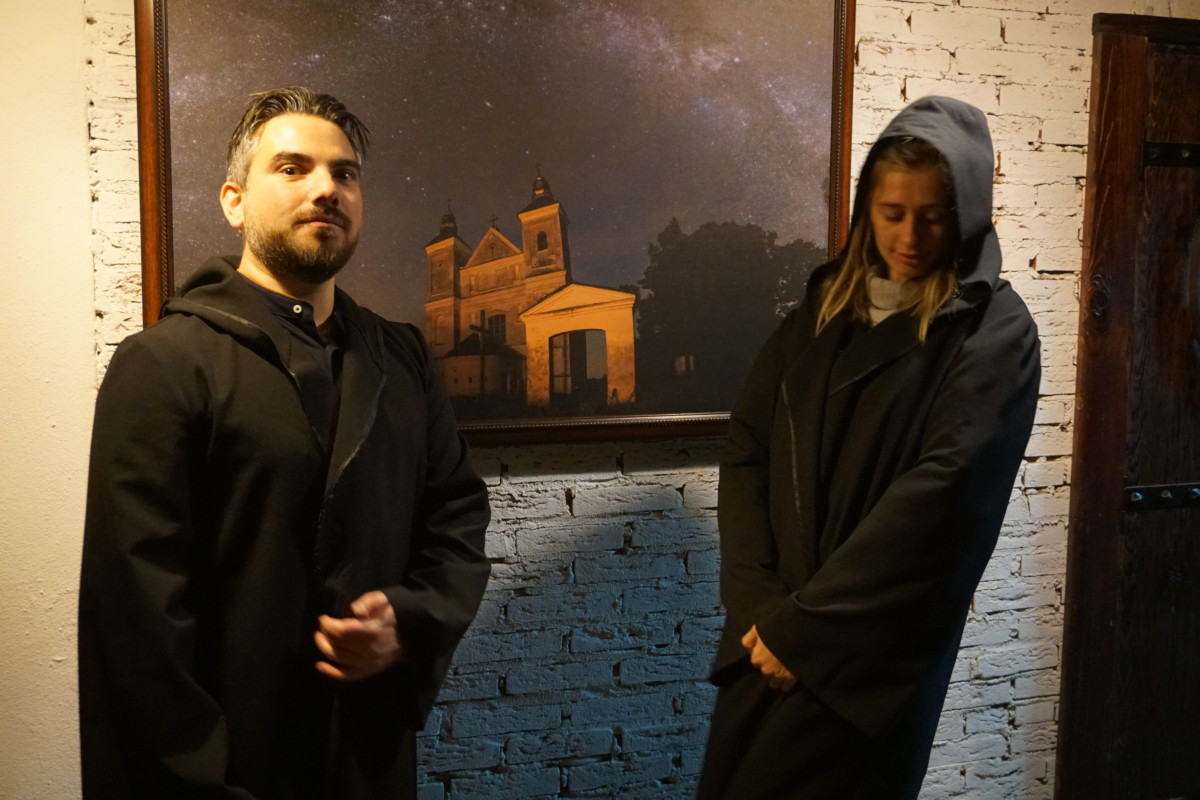
Freya and Abuzer in the creepiest room of MyEscapeClub. Check out the robes! Image: Ivaylo Kirov/Supplied.
Look, we all want to escape from our relatives around Christmastime. But what if you had something actually serious to escape from that would bring you closer with your esteemed family members? An escape room like MyEscapeClub is the perfect way to do so. Work together to solve the puzzle of the room, release some stress (and maybe go to a Boom Chicago show in the evening to continue the giddy atmosphere, though you’ll want to leave the kids at home for this one). As family-friendly activities go, there’s none better really.
Daytrip to Tilburg
Tilburg is a gorgeous city to go to on a day trip over Christmas: the perfect family-friendly thing to do when you need to get out of the house. It has plenty of lovely restaurants, bakeries and art. Plus, you can also visit the LocHal, which won Building of the Year this year. And there’s loads of nature around Tilburg so your wild children can enjoy some outdoor madness.
Ice skating
The optimum winter activity. Image: Immortal shots/Pexels
If we end up having a cold winter, then you might be able to give skating on a natural ice rink a go. But climate change is a thing, so there are plenty of artificial ice rinks for you to choose from in the event of a warm winter. We have an article about natural and man-made ice rinks around the Netherlands, so take your pick and get your skates on! It’s the ultimate wintery family-friendly activity.
Go to the zoo
See some of your favourite animals up close. Image: Flickr/John
It’s a typical family-friendly activity for a reason: going to the zoo has it all. Your children can run around, see exotic animals in real life (maybe for the first time) and you can even have lunch while you’re out. We have listed the 10 best zoos of the Netherlands for your pleasure, so do your research and head off to see the animal kingdom this Christmas.
Got any other plans for the holidays? Let us know in the comments below.
Following a recent street harassment case in Rotterdam, RTL Nieuws reports that those guilty of the shameless act of (for example, in the mildest of cases) hissing at someone or making kissing gestures cannot be punished. Any ban that would persecute creeps would hinder their constitutional right to freedom of speech.
The court has ruled in favour of a 36-year-old street harasser who was “calling on [women], making kiss and hand gestures and running [towards] them”, reports RTL Nieuws. He harassed three women, but will not be persecuted for the same. Apparently, saying things like “hey, beautiful lady” or “hey, baby” is not legally punishable.
He had previously received a penalty from the subdistrict court judge for a fine of 200 euros, for two incidents. That sure is going to make a huge dent in his finances, wouldn’t it?
However, the judge at the Hague court said it “is not based on a legally valid penalty”. According to the court, both “verbal and physical manifestation forms of thoughts or feelings” are protected under the freedom of expression.
Should street harassers be persecuted?
From the tone of voice in the previous paragraphs, it’s easy to deduce where I stand on the issue. If our goal ultimately is to make sure women feel safe wherever they go, every crime must be punished. Of course, I am not saying the punishment should not fit the crime. I am not asking for this guy to be detained and put in jail. In my eyes, willfully making women uncomfortable, and making them feel so unsafe (he ran after them for god’s sake, who wouldn’t feel unsafe?) that the police had to be involved, is a crime that deserves a punishment which is a whole lot more severe than a couple of hundreds of euros. And remember, it is not always feasible or safe (and oftentimes not legal) for a lot of people to take matters into their own hands.
Most women deal with harassment for most of their lives. According to research by Erasmus University in 2017, 84% of women in the Netherlands (18 – 45-year-olds) deal with this phenomenon. They said, RTL Nieuws reports, “81 percent of the women ignore the behavior, 74 percent walk as fast as possible, 51 percent look disapprovingly, 26 percent try to make a joke or laugh it away. 21 percent say they are not interested and 4 percent start the conversation”. However, the most interesting statistic would be the number of women who don’t get annoyed or angry. 41% of the women said they don’t mind, and even find it flattering.
According to the study by Erasmus University, street harassment is “getting hissed at, cornered, being asked for sex or chased down the street”. It goes without saying that most of us don’t want to reach that point of contact, let alone beyond that.
What do you think? Do you think street harassers should be persecuted or be let go with no consequences? Let us know in the comments below!