


Looking for the best apps to learn Dutch?
Let’s face it, learning Dutch is not always easy. Apparently, it takes more than just knowing how to say lekker and mooi (who knew?)
Thankfully, there’s a plethora of apps to learn Dutch available — but with all those options out there, how are you supposed to know which one is best for you?
When I first arrived in the Netherlands, I wanted to learn Dutch, but I was immediately hit with decision fatigue. I’ve tried, tested, and compared the best apps to learn Dutch. Here are the best!
How we tested the best apps to learn Dutch
No, we didn’t just scroll the App Store and pick the first seven logos that looked friendly (though that might’ve been a lot easier).
Each app had to offer a Dutch course, support beginners, and have an active user base.

We tested them on language level coverage, speaking practice, grammar clarity, price, ease of use, reviews and — most importantly — real-life practicality.
Best apps to learn Dutch
There’s no single “perfect” app — but a few consistently stand out. These are the strongest options for learning Dutch in 2026.
Babbel: The best paid app for learning Dutch
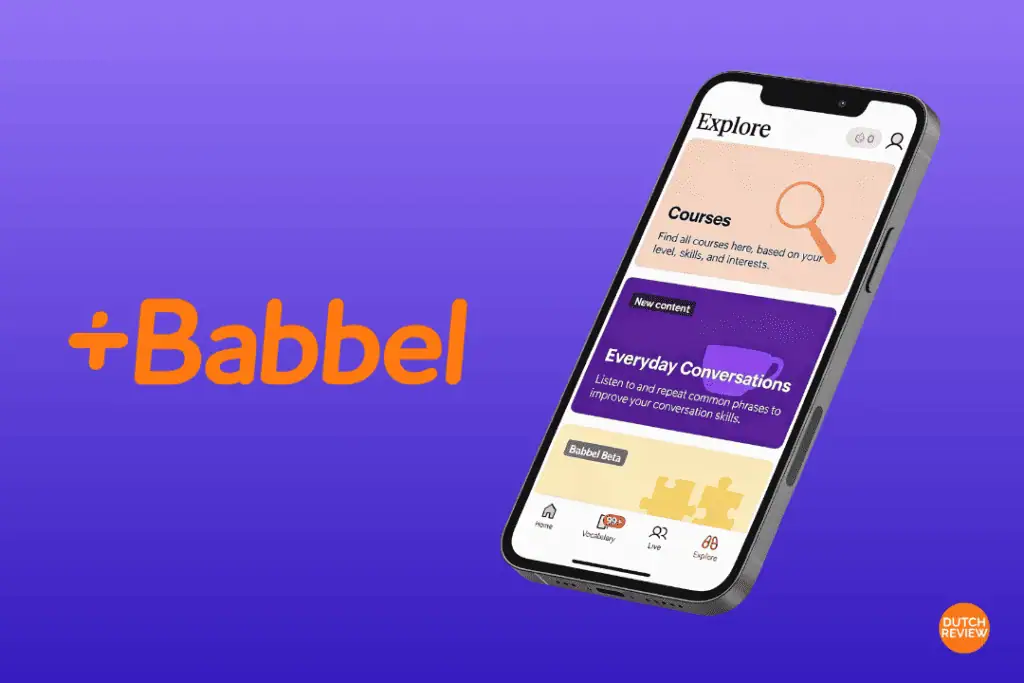
Babbel is our choice for the top paid app to learn Dutch because it balances speaking practice, vocabulary building, and clear grammar explanations in one structured course.
When I had been living in the Netherlands for a few months, I recognised plenty of Dutch but struggled to form my own sentences. Babbel helped bridge that gap.
Instead of just drilling words, it focuses on building usable sentences and understanding Dutch word order, which can feel unfamiliar at first.
The dialogues are practical and based on everyday situations like ordering food or making plans, making it especially useful if you already live in the Netherlands.
It’s less flashy than apps like Duolingo, but that’s part of the appeal. If you want Dutch to start making sense, not just sound familiar, Babbel is a logical next step.
Duolingo: Best free app for learning Dutch
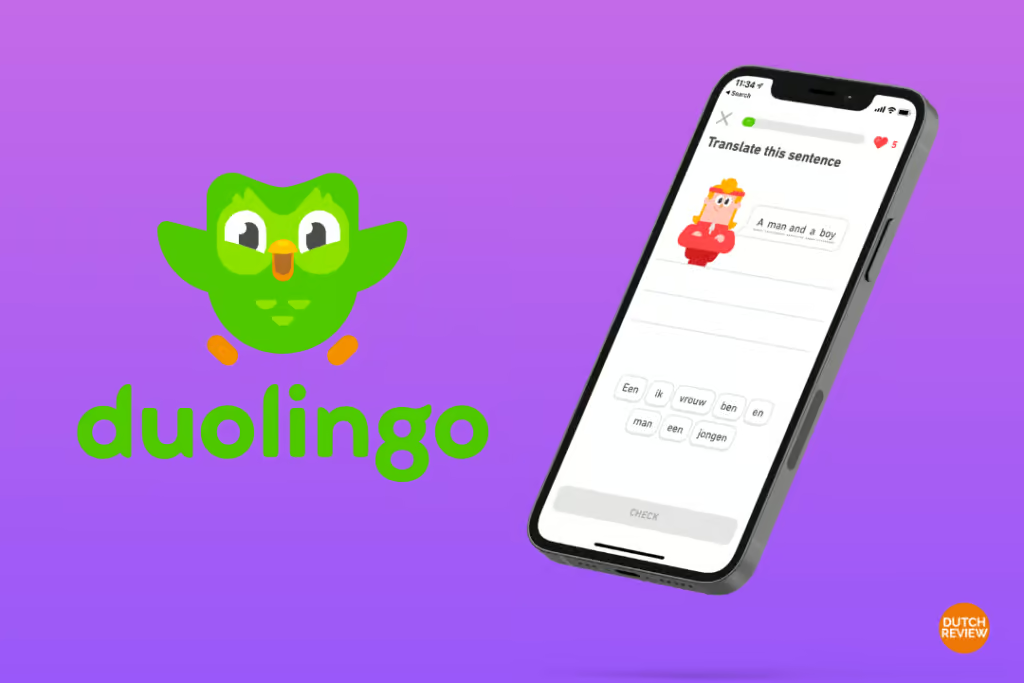
Duolingo is one of the easiest ways to begin learning Dutch. You don’t need prior knowledge of grammar or vocabulary — you simply open the app and start.
When I first moved to the Netherlands (with zero Dutch contacts, mind you) this was the app I downloaded. It helped me build basic vocabulary, simple sentence patterns, and get used to Dutch pronunciation without feeling overwhelmed.
However, after a few weeks, I outgrew it. While the vocabulary practice is solid, Duolingo offers limited grammar depth and minimal speaking practice. For real-life conversations in the Netherlands, I needed more structure and active output.
Still, as a free Dutch learning app, Duolingo is hard to beat. It’s accessible, gamified, and ideal for absolute beginners testing the waters before committing to a more comprehensive course.
Busuu: Best app if you want to practise speaking
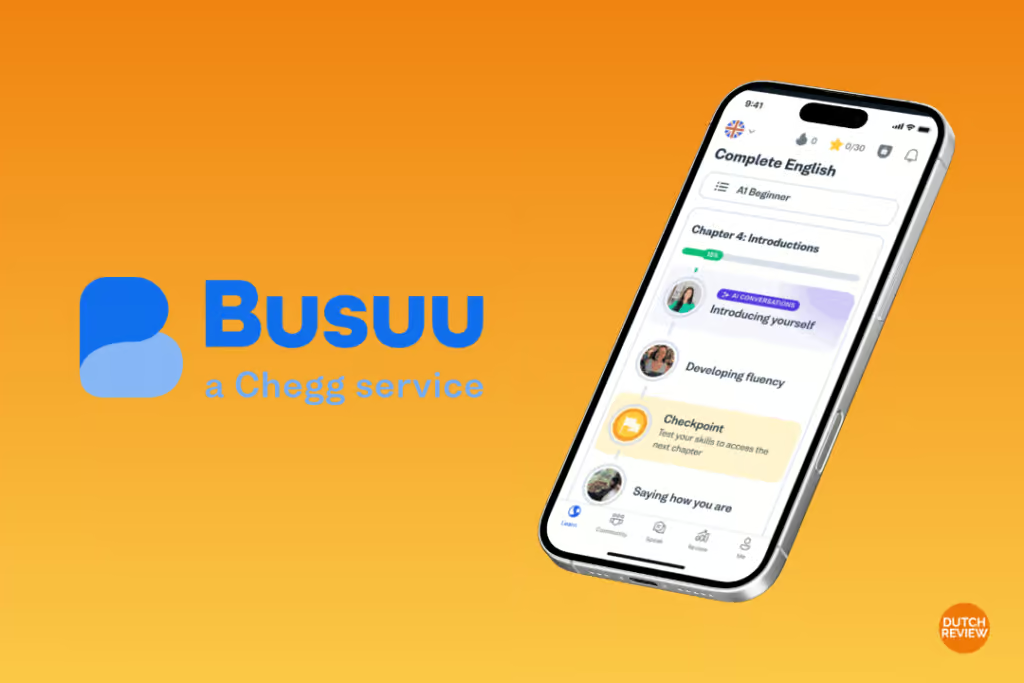
Busuu stands out because it pushes you to speak early. Instead of relying on endless multiple choice, you record short spoken answers, which other users – often native Dutch speakers – can correct.

In testing, this felt more realistic than passive exercises but still safe enough to make mistakes. You’re actively producing Dutch, not just recognising it, which makes it one of the better apps for improving speaking skills.
The free version is limited, and full lessons with detailed corrections require a premium subscription. Feedback quality can vary, and if you’re shy about recording yourself, there’s a small confidence hurdle at first.
Compared to apps like Duolingo or Drops, Busuu focuses more on active output. It also pushes you into real interaction sooner than many traditional course-style apps
Drops: Best app for busy people
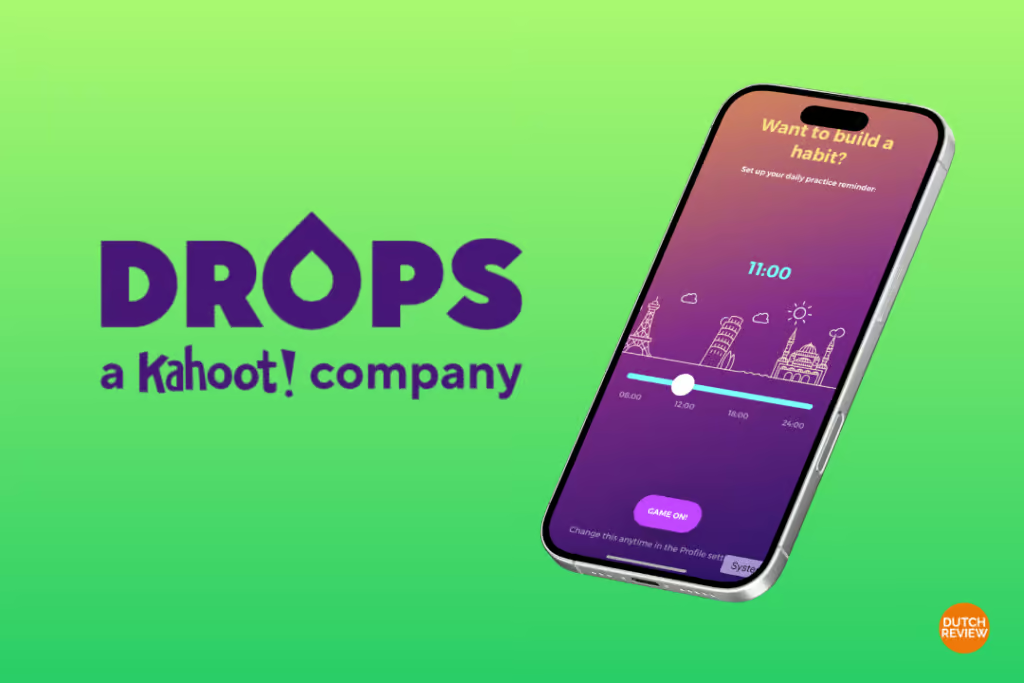
All the apps above have their strengths, but the one thing Drops does exceptionally well is keep it short.
In the age of endless scrolling and diminishing attention spans, Drops respects that you won’t be able to sit for twenty minutes at a time repeating “Hoe gaat het?” over and over.
The five-minute sessions offered by this app are focused on vocabulary and feel much more manageable.
While that might sound basic, a stronger word bank makes everything vocab-related easier, from listening to speaking and reading.
When you’re tired or having a rushed day, this app makes staying consistent feel like more of a molehill than a mountain.
Clozemaster: Best app for grammar and sentence structure
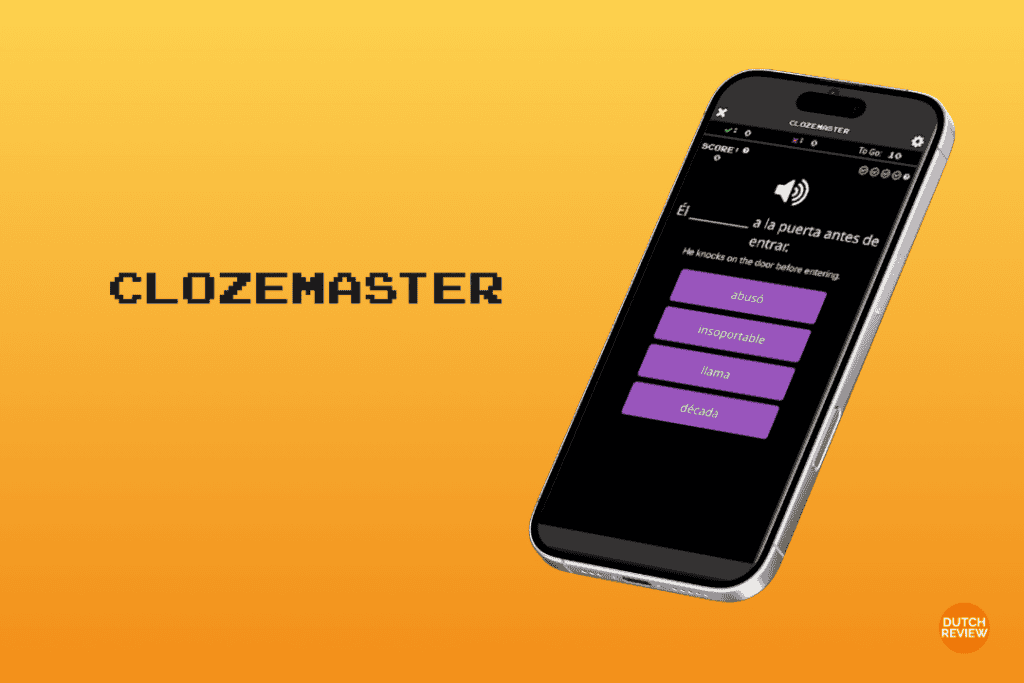
Fair warning, Clozemaster doesn’t look flashy. There are no cartoon owls. No streak celebrations that feel like you’ve just won the Olympics.
It’s a little more… serious. And that’s exactly why it works so well for certain learners.
Clozemaster is built around context: instead of teaching you isolated words, it drops you straight into full sentences. You fill in missing words and see how vocabulary behaves in real Dutch.
This matters because language isn’t a list of nouns — it’s patterns, such as word order or verb placement.
So if you’re past the beginner stage and want to get better at writing, reading, and sentence composition more generally, Clozemaster is a very useful app.
LingQ: Best app for learning through listening and reading
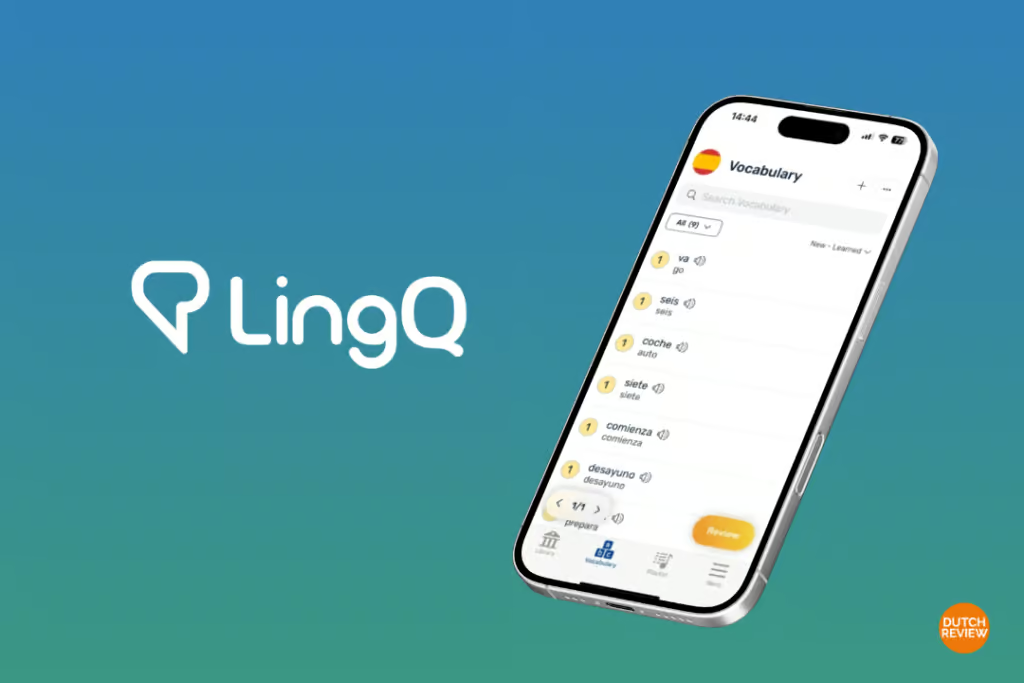
If you’ve got hungry eyes and ears, this app is for you.
LingQ does two things really well: it ups your comprehension, plus it gives you real content through articles, podcasts, and natural speech.
Not only does LingQ’s exposure train your ear, but it also allows you to learn about things you actually find interesting in a Dutch context.
No more listening to audios of inane conversations about groceries — now you can learn about Dutch culture through TV shows and podcasts that are relevant in the here and now.
Memrise: Best app for vocabulary and listening practice
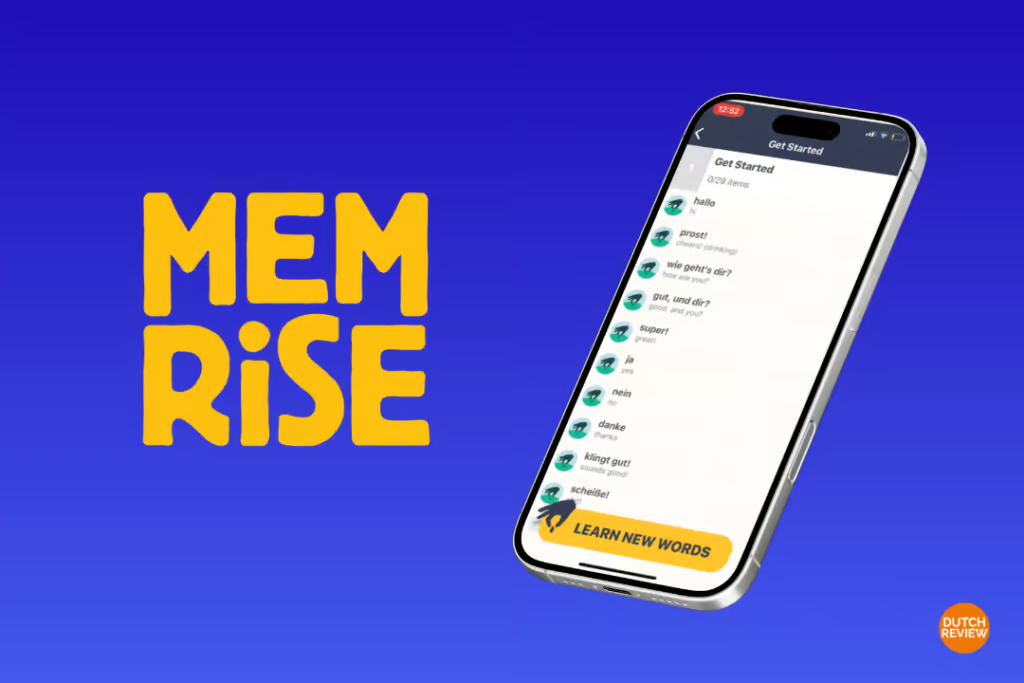
Memrise is a strong choice if you want to build Dutch vocabulary and get better at understanding spoken Dutch at normal speed.
Its biggest advantage is the use of short video clips of native speakers, so you hear real pronunciation and natural rhythm rather than scripted audio.
In my testing, this made a noticeable difference when adjusting to how Dutch actually sounds in everyday conversations.
The app uses spaced repetition to help words stick, and it now includes AI chat tools like MemBot for brief dialogue practice. That said, it remains far more focused on vocabulary than grammar.
There’s a limited free version, while the paid subscription is priced similarly to other premium Dutch learning apps such as Babbel and Busuu.
Jumpspeak: best app for fast, AI-style speaking drills
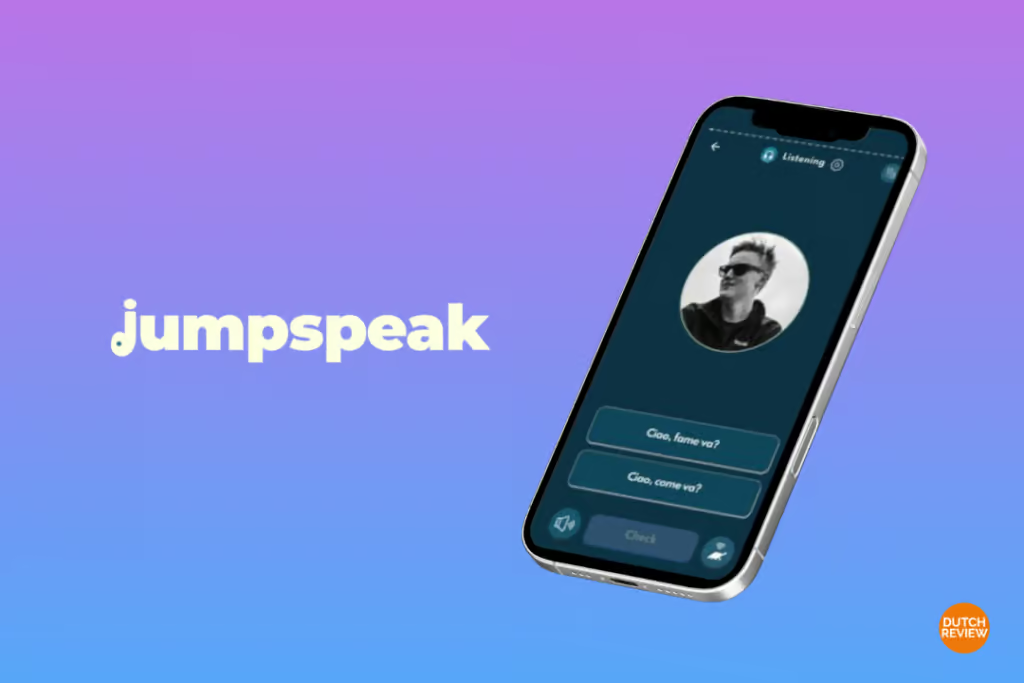
Jumpspeak is built around one clear goal: helping you speak Dutch from day one.
The app uses AI-powered conversations rather than simple word repetition. You respond to prompts in simulated real-life situations, which pushes you to think quickly and speak more naturally.
When testing it, I found this helpful for breaking the “I understand it but can’t say it” barrier.
That said, Jumpspeak is one of the more expensive Dutch learning apps, and the interaction is still AI-based rather than with real tutors. Grammar explanations are also fairly light.
If your priority is building speaking confidence fast, Jumpspeak delivers. Just don’t rely on it as your only structured Dutch course.
Comparing the best Dutch learning apps at a glance
Different apps solve different problems. Some build habits, others build confidence, and still more build comprehension.
Here’s a quick and easy breakdown of each app’s strengths:
| App | Price | Level | Speaking practice | Best for |
|---|---|---|---|---|
| Duolingo | € | Beginner (A0–A1) | Low | Starting out, building a habit |
| Babbel | €€ | Beginner–Intermediate | Medium | Grammar clarity and structure |
| Busuu | €€ | Beginner–Intermediate | High | Speaking with feedback |
| Drops | €€ | Beginner | Low | Quick vocabulary sessions |
| Clozemaster | € | Intermediate | Medium | Sentence structure and context |
| LingQ | €€€ | Intermediate–Advanced | Medium | Listening and reading immersion |
| Memrise | €€ | Beginner–Intermediate | Low–Medium | Vocabulary retention with audio |
| Jumpspeak | €€€ | Beginner–Intermediate | High | AI-based speaking drills |
Price guide:
- € = Free or low cost
- €€ = Mid-range subscription
- €€€ = Higher-priced subscription
How to choose the best Dutch learning app for you
There isn’t one “best” app. There’s the best app for your situation.
Your first step is to figure out what you need. If you’re starting from scratch, this broader guide to learning Dutch helps frame the bigger picture.
Start with your level. For example, if you’re A0, you need repetition and confidence more than grammar theory.
If you’re A1, A2 or B1, however, you likely understand more than you can say. That means you need output, not more mindless tapping exercises.
Then, look at your goal. Are you learning Dutch for work? For friends? For the inburgering exam? Or just to stop smiling blankly when people start Dutching it up around you?
Finally, be honest about your time. Here’s where I got overambitious. Thankfully, apps saved my bacon.
If you’re like me and don’t have the energy (or money) for evening classes three times a week, apps fit great because they slide into the gaps — transport, queues, long bike rides, and more!
Why learning Dutch with an app actually works
The main strength of apps is that they reduce friction.
Practice can be done privately, awkwardly, and as many times as you might need, which makes the whole process of language-learning far less daunting.
And, best of all, you can combine this awkward practice with your adventures in the real Dutch world.
For internationals, this is perfect. Good Dutch matters in the long term, especially for internationals trying to settle here.
Best free vs paid apps to learn Dutch
So, there are lots of apps available — but should you be paying for an app when there are free options? That’s a great question!
Fully free apps like Duolingo are excellent for habit-building, and the free aspect certainly removes room for excuses.
If you want something more advanced (or if you need to spend money to make sure you’ll follow through), though, there’s nothing wrong with that.
A good middle ground is freemiums. Freemium apps let you test before committing. That’s helpful if you’re unsure about your learning style or how much a paid version of the app can help you.
Overall, paid apps definitely add structure and guide progression more clearly. If you struggle with consistency, that can be helpful. They also tend to handle speaking and grammar more seriously.
Once again, though, it ultimately depends on your goal. Can’t swing the price? Don’t fret, there are plenty of free options that work just fine!
Can you really learn Dutch using only an app? Tips and tricks
Short answer: no. Longer answer: Apps are a strong foundation.
I, too, wish it were as simple as opening an app every day and then — poof! —- being suddenly fluent.
In reality, apps are a great help, but progress requires more. Speaking. Listening. Daily exposure. Combine apps with real life. Order that coffee in Dutch (even if they reply in English).
Of course, another great way to use apps is in combination with real-life Dutch classes.
It sounds hard (trust me, I know), but that doesn’t mean it’s impossible. It just means consistency matters more. Here’s where apps are amazing: if you get discouraged, they allow you to pick up and try again!
It also helps to bake your app-learning into your social life. Motivation grows when language connects to people. Even flirting works — these steps to flirt in Dutch might help. 😉
Set small targets. Not fluency, not perfection, just consistency. And if your goal is speed, this guide on how to learn Dutch fast and easy adds structure.
And remember, apps work best as part of a system. Add conversation. Add podcasts in Dutch.
Plus, if your goal is social integration, speaking matters. Dutch people switch to English fast, and they’re strangely good at it.
Even awkward attempts at small talk are helpful. You can even try faking it till you make it! (It really works.)
What is your favourite app to learn Dutch? Let us know in the comments!
Best apps to learn Dutch in 2026: Frequently asked questions
What is the best app to learn Dutch as a complete beginner?
The best app to learn Dutch as a complete beginner is Duolingo. It offers a simple starting point, builds habit, and increases word familiarity.
Can you really learn Dutch using only an app?
Learning Dutch using only an app is not ideal. Apps help, but speaking and exposure are essential, so combine your tactics!
How long does it take to learn Dutch with an app?
How long it takes to learn Dutch with an app depends on consistency. Expect months, not weeks.
Which Dutch learning app is best for speaking practice?
The best Dutch learning app for speaking practice is Busuu. This app offers excellent structured speaking and feedback.
Are free Dutch learning apps actually worth it?
Free Dutch learning apps are definitely worth it, especially for vocabulary and habit-building.
What level of Dutch can you realistically reach with apps?
You can realistically reach up to A2 level Dutch using apps. Many reach A2 or higher with consistent use and added practice.
Do Dutch learning apps help with the inburgering exam?
Dutch learning apps definitely help with the inburgering exam as they support vocabulary, but exam-focused preparation matters. See this guide on smashing the integration exam stress-free.
Which app is best if I’m busy and short on time?
The best app if you’re busy and short on time is Drops, which suits short daily sessions.
Why do Dutch people switch to English when I try to speak Dutch?
Dutch people switch to English when you try to speak Dutch because they can. It’s a habit, not a judgement.
Should I combine Dutch learning apps with classes or real-life practice?
Yes, you should definitely combine Dutch learning apps with classes or real-life practice for the best results. Real conversations accelerate progress.


I like learning Dutch. To be honest, I want to learn attentively and extensively. But I am too poor to afford this spending money. If there’s any free of cost course, I will of course do it.