Last night marked a special success for Dutch cinema — a movie from the Netherlands won the Academy Award for Best Short Film.
Director Victoria Warmerdam will be the one bringing the golden statue home for her sci-fi comedy Ik ben geen robot (“I’m not a robot”).
An enjoyably unsettling watch
Spare 20 minutes to sink into the trippy movie, which follows a young woman’s identity crisis after repeatedly failing CAPTCHA tests, making her question if she’s a robot. 🤖
Prepare for paranoia — we’ll never look at those tests the same way again…
A comeback for Dutch cinema
Victoria and her partner and producer Trent hope that the monumental win will bring a larger audience to their film and give the entire Dutch film industry a boost.
“This means so much to us, especially because no Dutch people had been nominated in this category since the sixties,” said Victoria to RTL Nieuws.
The win is certainly already boosting Victoria and Trent’s careers. 🤩
“I hear from Victoria and Trent that they are indeed having a lot of conversations and that doors may be opened,” commented Henry van Loon, one of the actors in the award-winning film.
Have you seen any of the Oscar-nominated movies? What did you think of them?
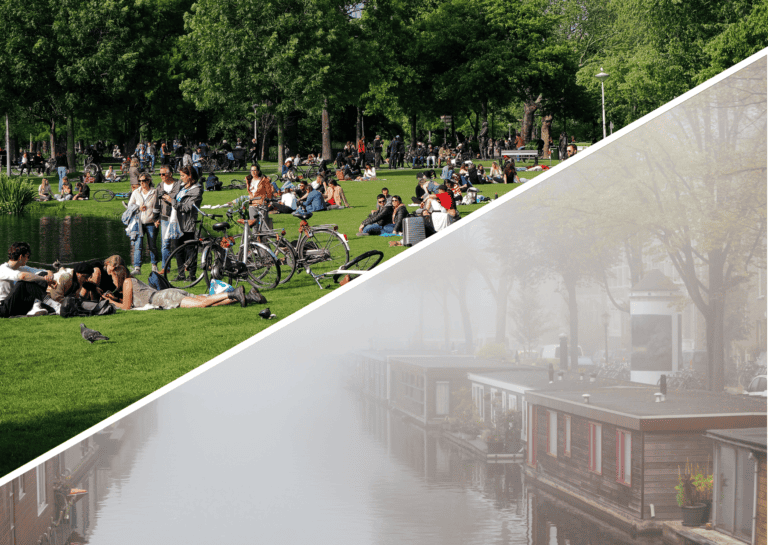
With barely any wind and rising temperatures finally easing the stinging winter chill, it’s time to step outside and soak up what we’ve been missing.
While foggy mornings will still take a while to shake, sunshine and higher temperatures will break through the cold starts, RTL Nieuws reports.
First, fight off the fog
Of course, the sun faces obstacles in its bid to dominate the Dutch skies this week.
The KNMI gave a code yellow warning until 10 AM for dense fog in parts of the country, particularly in South Holland, Utrecht, North Holland, Flevoland, Friesland and Limburg.
From humble cafés to impressive libraries and coworking spaces, here are the 15 best places to work or study in The Hague.
The atmosphere in The Hague is motivating, with a mix of international big-city vibes and cosy old-town Dutchness.
The City of Peace and Justice attracts ambitious busy-bees worldwide, giving The Hague a reputation for being a great working city.
While Storktown might not be the first place that comes to mind when thinking of Dutch student towns, rest assured, the city has tons to offer for students, too — if you know where to look for it.
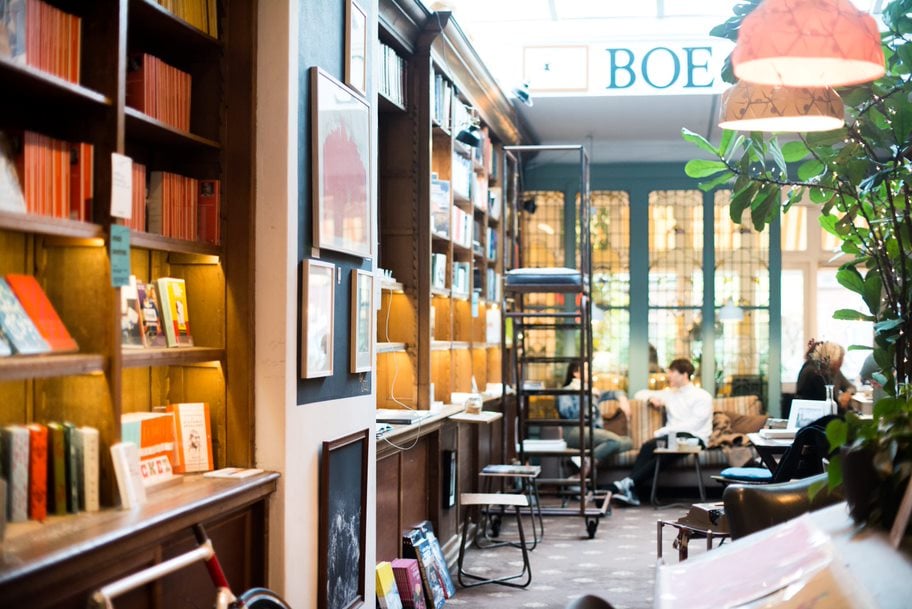
Bookstor is incredibly cosy, and incredibly cool, at the same time. Image: Bookstor Café/Supplied
You haven’t really lived in The Hague if you haven’t had a work/study sesh at the Bookstor Café — your dark-academia-bookstore-core-Pinterest-board come to life. Needless to say, it’s a great place to study and work in The Hague.
Centrally located at Noordeinde, this bookstore/café combo is perfect to escape the busy streets for some peace and quiet. The unwritten rule is that focused work is best done in the back, while the front is more chatty.
The slightly uncomfortable chairs and relative lack of table space and sockets are outweighed by the extremely cosy and productive atmosphere. Bookstor is bound to make you stay for hours, feeling like an intellectual superhero.
🏢 Type: Cafe 💰 Price: €2-4 for coffee ⏰ Opening hours: 8 AM until 7 PM, Monday to Sunday 📍 Location: Noordeinde 39, 2514 GC Den Haag
2. The Social Hub Collab: young, vibrant, and connected
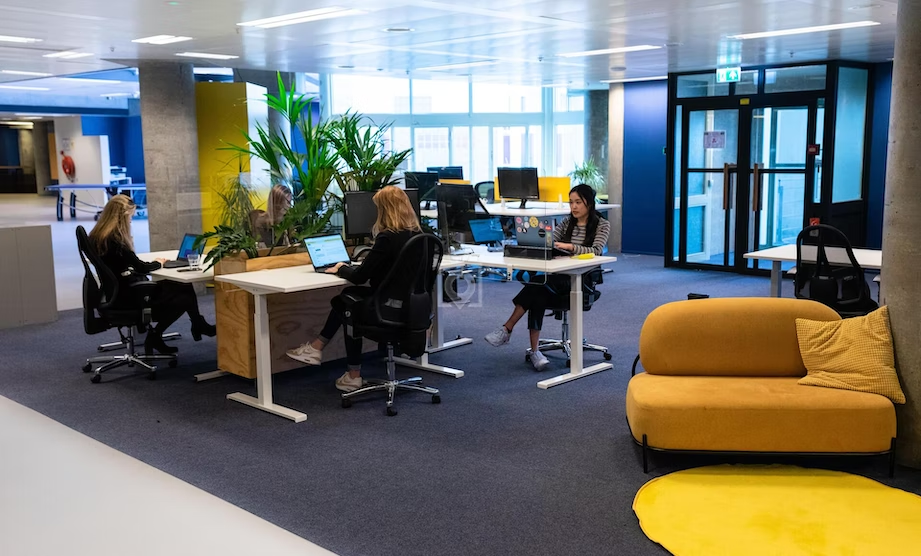
Connected to what was formerly known as The Student Hotel, The Social Hub Collab is a coworking space with a young, international community. It’s a great place to work in The Hague if you want to feel connected to the rest of the world.
The membership options are as flexible as those working there, and access to the on-site gym is even included in the price — sweet!
The fun, playful, and modern design matches the vibe of TSH perfectly, regardless of whether you’re after a silent area, a private office, or a busy communal space.
In addition, the networking events, inspirational talks, and discounts on food and drinks mean TSH will give you a lot of bang for your buck.
🏢 Type: Coworking space 💰 Price: from €109/month or €19/day ⏰ Opening hours: 8:30 AM until 6:30 PM, Monday to Friday 📍 Location: Hoefkade 9, 2526 BN Den Haag
3. Stadthuis public library: a view to die for
With a location as iconic as “The Ice Palace” (that is, The Hague City Hall — a massive and impressive glass building), the main public library in The Hague is quite the place to work and study.
With spacious desks, stable WiFi, great caffeine accessibility, and a lovely city view, it’s no wonder this library is a fan-favourite among The Hague’s students.
Popularity comes at a price, however, so if you want to secure a spot in the magically silent building, you should get there early in the morning (especially during finals season!). Oh, but the actual price? It’s free!
Fun fact! The Hague City Hall (aka the “Ice Palace”) featured as Europol headquarters in ‘Ocean’s Twelve.’
🏢 Type: Library 💰 Price: €0 ⏰ Opening hours: 12 PM until 8 PM Monday,10 AM until 8 PM Tuesday to Friday,10 AM until 5 PM Saturday, 12 PM until 5 PM Sunday. 📍 Location: Spui 68, 2511 BT Den Haag
4. House of Tribes Café: in the centre of everything
House of Tribes is a central, modern café perfect for work and study sessions. Image: Depositphotos
Smack-bang in the middle of Turfmarkt is House of Tribes, a café bustling with big-city energy. It might not be the biggest café, but it makes excellent use of its space, with plenty of spots for work and study purposes.
Sockets are easily accessible, and you’ll be surrounded by a lovely mix of busy government employees and chatty students.
Despite a sometimes slightly unstable WiFi situation, House of Tribes’ convenient location and good energy make it a lovely place to work or study in The Hague.
🏢 Type: Café 💰 Price: €3-5 for coffee ⏰ Opening hours: 8 AM until 6 PM, Monday to Sunday 📍 Location: Turfmarkt 28, 2511 CA Den Haag
5. The Hague Tech: the big brain HQ of Storktown
We all need a pop of colour in our workday. Image: The Hague Tech/Supplied
Located in the dynamic working area around Laan van NOI, you’ll find The Hague’s most tech-y coworking space.
The Hague Tech covers the basics (you know, meeting rooms, flexi-desks, offices), as well as the extras (good coffee, sleek design, and cheap croissants).
People come for the wide range of membership options — from day passes and virtual spaces to private offices — but stay for the amazing community feel and the extra dashes of sparkle (we’re talking massage chairs, ping pong, and pool tables) that give this place pizzazz.
Coffee Fellows is a great place to work or study if you need somewhere central. Image: Depositphotos
Coffee Fellows is another conveniently located café, more or less inside the City Hall.
Needless to say, it’s a favourite pitstop for busy folks running around the administrative capital of the Netherlands, but it’s also a top place to get some work done.
Although the café is on the smaller side, the WiFi — and socket accessibility and general vibe of Coffee Fellows make for a nice place to study or work in The Hague — and the coffee is top-notch.
🏢 Type: Café 💰 Price: €3-4.50 for coffee ⏰ Opening hours: 7:30 AM until 7 PM Monday to Friday, 9 AM until 6 PM Saturday, 10 AM until 6 PM Sunday. 📍 Location: Turfmarkt 22, 2511 CA Den Haag
7. Spaces Works: grand and sleek
Spaces The Hague is located in one of the most iconic buildings in town. Image: Depositphotos
Ok, the exterior is more castle than sleek, but that’s just a bonus to the interior. Spaces Works is a coworking space located in an impressive Art-Deco-meets-Hogwarts-type building that somehow manages to be super fresh and modern at the same time.
Spaces offers private parking, an on-site café, and a game room, with a community that runs on passion and productivity.
The coworking membership gives access to all Spaces locations in the world (yep, all 3000 of them), so if you’re a restless digital nomad, this should be your top pick for a place to work in The Hague!
🏢 Type: Coworking space 💰 Price: from €199/month ⏰ Opening hours: All day/night, Monday to Sunday, but access depends on membership 📍 Location: Zuid Hollandlaan 7, 2596 AL Den Haag
8. Local libraries: fuss-free and close by
Feel like getting out of your crusty room but don’t quite feel like going to the busy city centre? We hear you.
If you’re looking for a quiet space to work or study in The Hague, you’ll be happy to hear that the city has tons of local libraries scattered around, with desks waiting to be used.
Laakkwartier, Haagse Hout, Scheveningen — there’s a local library just about everywhere you look.
The space and facilities available differ between libraries, though, so be sure to double-check in advance if you have any particular needs (like extra strong coffee, for example).
🏢 Type: Library 💰 Price: €0 ⏰ Opening hours: Varies, but typically between 11 AM and 6 PM 📍 Location: Various locations
9. Coffee Company: an ode to good caffeine
Hit up Coffee Company for some seriously delicious coffee. Image: Depositphotos.
A stone’s throw away from the Royal Palace (we know, another iconic The Hague location), you’ll find the Coffee Company.
With big windows, tall ceilings, and a productive atmosphere that beats most offices, this chain café is another great place to work or study in The Hague.
The Coffee Company’s love language is centred around good coffee so this gem will hit all the caffeine spots needed for an efficient work sesh.
Also, the big community-style table in the middle of the room gives the venue a social edge — without being too distracting.
🏢 Type: Café 💰 Price: €3-5 for coffee ⏰ Opening hours: 7:30 AM until 6 PM Monday to Friday, 8:30 AM until 6 PM Saturday & Sunday 📍 Location: Noordeinde 54, 2514 GK Den Haag
10. The Sweet Spot: come as you are
The Sweet spot hits the sweet spot. Image: Depositphotos
The Sweet Spot is a coworking space that really lives up to its name: it’s relaxed, diverse, and designed to make you feel at home while getting your job done.
Creatives, scientists, tech geniuses — everyone’s welcome at this homey melting pot that can only be described as the most livingroom-esque place to work in the Hague.
Both members and non-members can use the space’s services, which include event venues, photo studios, and the option to register your business at The Sweet Spot’s address for posting purposes.
This is, of course, in addition to everything else that comes with a coworking space (work desks, coffee, stable wifi, and a cosy community).
🏢 Type: Coworking space 💰 Price: from €139(month ⏰ Opening hours: All day/night, Monday to Sunday, but access depends on membership 📍 Location: Javastraat 21, 2585 AC Den Haag
11. Lola’s Bikes and Coffee: sporty study sessions
Lola’s isn’t just for people who wear lycra. Image: Freepik
Whether you’re a biker yourself (and let’s face it, who isn’t in this country), or you just like to hang around fit people, Lola’s is for you.
The perfect mix of chill and sporty vibes makes Lola’s Bikes and Coffee a great place to work and study in The Hague. Walk upstairs for a quiet space, and although the sockets aren’t easy to find, there are usually just enough to go around.
Sit down by the big table in the centre, which gives the room a nice communal feel, and enjoy the view of the cute backyard.If you want maximum privacy, secure a seat in the winter garden-like room in the very back — it’s like having your own home office at a café!
🏢 Type: Café 💰 Price: €3-5 for coffee ⏰ Opening hours: 9 AM until 7 PM Monday & Wednesday, 9 AM until 6 PM Tuesday, Thursday, Friday, Saturday & Sunday 📍 Location:Noordeinde 91, 2514 GD Den Haag
12. New Babylon Gardens: pay for what you use
The sleek interior of New Babylon gives your work day just the right feel. Image: Depositphotos
Situated at arguably the most central location in The Hague (Central Station), New Babylon Gardens is the perfect choice for those needing a flexible place to work in The Hague.
Furnish your own office space, or make use of the ready-made options and pay only for what you actually use. It’s simple: you get a bill at the end of the month, reflecting how much you’ve used your membership, and pay less if you use it less (although you’ll probably want to hang out here all the time, so don’t get too optimistic about the pricing).
With a modern, professional design and hotel feel, New Babylon will give anything from regular workdays to important meetings quite the facelift. Users love the speedy WiFi and delicious coffee, and the welcoming reception and nice views are a bonus.
Right next to the beautiful Palace Garden, you’ll find Pistache — a cute little café with a canal view. This spot is on the smaller side, but there’s usually space among the focused workers and chatty lunchers.
While it’s not a dedicated work café, you’ll always find workers tapping away on laptops and students immersed in books at Pistache. That being said, it might not be ideal if you need absolute silence to get work done.
People come for the gezellige atmosphere and stay (for hours) for the wide selection of delicious coffee, food, and healthy juices.
🏢 Type: Café 💰 Price: €2.20-3.70 for coffee ⏰ Opening hours: 8 AM until 5 PM Monday to Friday, 8 AM until 6 PM Saturday & Sunday 📍 Location:Prinsestraat 134, 2513 CH Den Haag
14. Urban Café: a hotspot for busy city folks
Urban Café in The Hague is a great dynamic place to work. Image: Depositphotos
If you like the idea of working in the “Ice Palace” (i.e., the fancy-schmancy city hall) but prefer the café vibe to the silence of the public library, Urban Café is the perfect choice.
It’s spacious, filled with natural light, with plenty of sockets and table space available for the many students and professionals who come here to work.
You’ll sit practically in the middle of one of the city’s busiest crossings, an inspiring, if only a little distracting position, in the very heart of The Hague.
Urban Café prides itself on being “every coffee lover’s dream”, so it’s no wonder people tend to rate this one of the best places to work and study in The Hague.
🏢 Type: Café 💰 Price: €3-5 for coffee ⏰ Opening hours: 1 PM until 5:30 PM Monday, 9:30 AM until 5:30 PM Tuesday to Saturday, 12 PM until 5 PM Sunday. 📍 Location: Spui 130, 2511 BT Den Haag
15. Kaafi: popular for a reason
Often described as one of the best cafés for studying and working in The Hague, Kaafi definitely lives up to its reputation.
The whole back of the café is dedicated to working folks, and the homey vibe, spacious desks, and socket accessibility make up for its relatively small size.
The big, communal work table is covered in natural light from the ceiling — a surprising twist to a place that, from the outside, looks like it might be rather dark.
Located on one of The Hague’s cosiest streets, Kaafi is a hidden gem boasting speciality coffee and absolutely marvellous food.
🏢 Type: Café 💰 Price: €3-4.10 for coffee ⏰ Opening hours: 10 AM until 4 PM, Monday to Sunday 📍 Location:Prinsestraat 25, 2513 CA Den Haag
There you have it! Our 15 favourite places to study or work in The Hague for busy and productive hustlers. The administrative capital of the Netherlands knows how to take care of its students and workers, and there are tons of great cafés and coworking spaces to pick from.
What’s your favourite place to study or work in The Hague? Did we miss any spots on this list? Tell us in the comments below!
Utrecht is making history with Merwede—the country’s largest car-free urban district. With thousands of homes and zero private parking spots, this neighbourhood is built for bikes, not bumpers.
After multiple delays, construction finally begins next week. The goal? More homes, cleaner air, and a city designed for people—not cars.
Even bats and butterflies are getting VIP treatment with special nesting spots. 🦇🦋
Less cars, less chaos, more bikes
Merwede is replacing an old industrial estate along the Merwede Canal, just a 10-minute bike ride from Utrecht Centraal.
Other Dutch cities (looking at you, Delft, Leeuwarden, and Maastricht) have dabbled in car-free zones, but Utrecht is taking it to the next level.
In January, two women were assaulted and beaten unconscious on a Rotterdam metro. Now, a 12 and 14-year-old were arrested in connection with the violence.
The assault was caught on security footage and aired on Bureau Rijnmond, a Dutch crime investigation show, leading to the girls’ arrests.
Beaten unconscious
Late on January 21, 2025, two women were on the Rotterdam metro when they were harassed by two young girls. As NU.nl writes, one of the women tried to confront them, and the girls walked up to her.
Feeling threatened, the woman grabbed her phone to call police and take photos of the attackers.
Buying a house in the Netherlands? Congrats on taking that big step! Becoming a homeowner is a challenge for everyone but especially so for internationals who are navigating the journey without fluent Dutch.
You have a number of hurdles ahead of you — so let’s make the process much easier by decoding some of the key Dutch terms you should know.
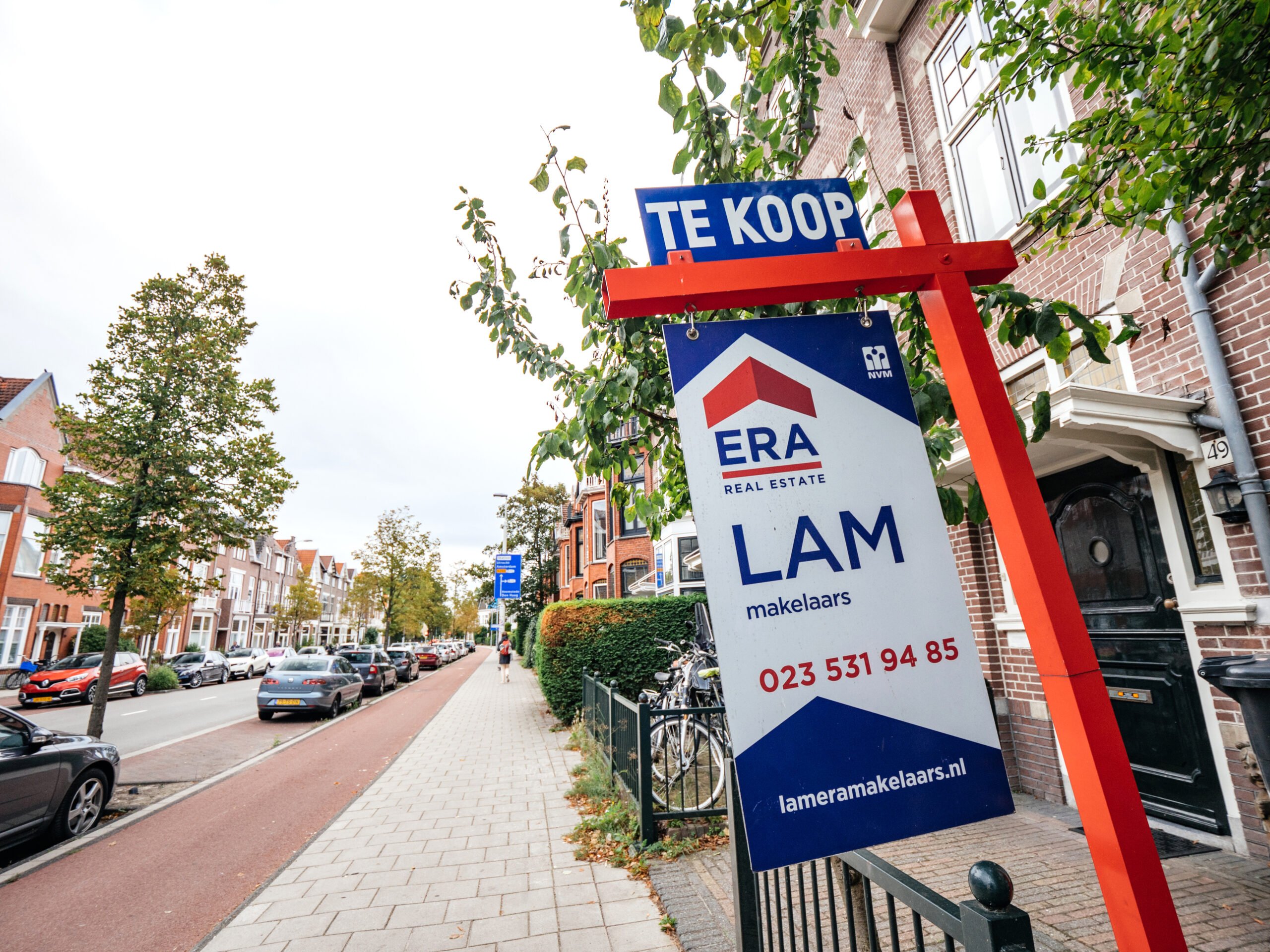
1. Te koop
These magic words are exactly where your journey to buying a home in the Netherlands begins.
As soon as you see the words “Te Koop”, you know a new Dutch house just came up on the market. Image: Dreamstime
Te koop means for sale — and as soon as you see that fresh cardboard sign stuck to the window, you better run (not walk) to your computer.
Given that there are more home-seekers than houses in the Netherlands at the moment, these signs don’t tend to stay up for too long.
In fact, in 2024, it takes an average of just over one month for a house to sell in the Netherlands.
2. Hypotheek
This is another word that you are going to become quite familiar with once you dedicate yourself to buying a house in the Netherlands.
It’ll probably start to feature in your nightly sleep-talking segment — and all your everyday grown-up conversations for the next few months.
So, what does it mean? Mortgage! Yep, makes sense now, doesn’t it?
3. Hypotheekakte
With every mortgage, there comes a hypotheekakte — a mortgage deed.
Think of this as a very important handshake between the person taking out the loan (you) and the person giving the loan (the bank). However, this handshake comes in the form of a legal document.
In this document, you metaphorically spit on your palms, shake hands, and give each other a nod that says, “I promise that if I can’t pay my mortgage, the loaner can take my property as collateral.”
The “hypotheekakte” (mortgage deed) is an important Dutch term for you to learn. Image: Freepik
The deed also contains the terms of the mortgage, such as when payments will be made, the mortgage rate, and the duration of the mortgage.
4. Taxateur
Unbelievably, a taxateur has nothing to do with taxes or taxidermy.
Instead, it’s an appraiser: a professional who will carry out a valuation of your potential home and determine if the house is worth what the sellers are asking.
You better familiarise yourself with the word because a taxateur is compulsoryif you want to apply for a mortgage in the Netherlands.
5. Taxatierapport
Once the taxateur has used their magic to evaluate your home, they will present the taxatierapport.
This is a valuation report, in which you are usually presented with not only the estimated value of the house but also information such as its energy efficiency.
6. Ontbindende voorwaarden
While this term sounds quite scary to the non-Nederlander, its meaning is actually quite simple: resolutive conditions.
“Ontbindende Voorwarden” means resolutive conditions in Dutch, and they are very important. Image: Freepik
When buying a house, the buyer may present some resolutive conditions to the seller.
For example, they might say: “I will buy your house — but on the condition that we keep the furniture in the kitchen because it’s super gezellig and gorgeous.”
More common resolutive conditions include financing, such as: “I agree to buy your house unless the bank refuses to give me a mortgage.”
7. Schuld
Technically, “schuld” means “guilt” in Dutch.
However, in the context of buying a house, this actually refers to your debt — which, we promise, you don’t need to feel guilty about, no matter what those Dutchies say!
Most people have some form of debt hanging over them, and mortgage advisors understand this.
Don’t be discouraged. Telling your adviser that you have debt doesn’t necessarily mean your housing dreams are over.
8. Hypotheekrenteaftrek
While this may sound like a complicated and scary word, it will soon sound like music to your ears.
Hypotheekrenteaftrek translates to “mortgage interest deduction” in English.
Put simply, it means that with certain mortgage types, you can deduct the mortgage interest from your gross income.
As a result, you ultimately pay lower income tax at the end of each year. Take that, Belastingdienst!
Note: In the Netherlands, this is only possible if you have a linear or annuities mortgage.
9. Fiscaal aftrekbaar
However, mortgage interest is not the only thing that can be deducted from your gross income.
For example, mortgage advice or notary costs can also be fiscaal aftrekbaar, which means they are tax deductible.
10. Bouwdepot
A bouwdepot is essentially a construction deposit.
This is a loan that can be taken from your mortgage and used to finance future renovations on your home.
Another important Dutch term you should know when buying a house is “bouwdepot”! Image: Freepik
Most of the time, your bouwdepot is set up during the process of establishing your mortgage, but in some cases, you can also be late to the party and set it up when your mortgage is already established.
Most of the time, your bouwdepot is set up during the process of establishing your mortgage.
However, in some cases, you can still set it up when your mortgage is already established.
11. Notaris
A notaris is not a thing, but a person. As you will soon learn, when you buy a house in the Netherlands, there’s a lot of legal paperwork involved. This is where a notaris, meaning notary, steps in.
Everyone who buys a home in the Netherlands will get a notary involved in the process. Not only is it mandatory to enlist the services of a notary, it’s also extremely helpful.
They ensure that you dot your Is and cross your Ts — but more importantly, they’ll oversee the transfer of funds during the sale of the home.
12. Bankgarantie
Bankgarantie means, you guessed it, the bank guarantee!
When you buy a house in the Netherlands, you have to pay for the deposit on the house. However, sometimes, people don’t have the money readily available.
In this case, you can use a bank guarantee to reassure the sellers that the deposit will be paid.
Essentially, the bank vouches for you, and you don’t have to worry about using all your savings on the deposit.
13. Onder voorbehoud van financiering
If you find your dream house on Funda, but see that it’s onder voorbehoud van financiering then you need to manage your expectations.
This means that the house has actually already been sold — but it’s subject to financing.
Sometimes there’s still a chance you can buy the home of your dreams. Image: Freepik
Basically, someone else has snapped up the home. However, they still need to come up with the money to pay the sellers.
If they fail to do so by a certain date, the sale won’t go through, and the house will be back on the market again.
14. Studiefinanciering
In the Netherlands, students can take out a loan from the Dutch government in order to help cover the costs of their third-level education.
This studiefinanciering translates as student loans when you apply for a Dutch mortgage.
While you may never have taken out a student loan through the Dutch system, if you’re asked about studiefinanciering, you should mention any student debt you may have abroad.
Most homeowners in the Netherlands once had student debt, and while it depends on how high your balance is, the good news is that this debt doesn’t mean the end of the road for you.
15. NHG (Nationale Hypotheek Garantie)
We really recommend that you familiarise yourself with this term. The NHG is the Dutch National Mortgage Guarantee — and it does exactly what it says on the tin.
If you take out a mortgage with the National Mortgage Guarantee, you have a promise that the NHG will cover the remaining costs of your mortgage should you suddenly be unable to do so (due to losing your job, for example.)
16. Toestemming of vergunning van de gemeente
Sometimes, when you buy your dream home, it still comes with a few flaws that you need to change.
In this case, you may need toestemming of vergunning van de gemeente, which means permission from your local municipality.
Bear this in mind if a big fancy extension is part of your plans for your new home.
17. Makelaar
While this word may make you think of some obscure object you would find in your Dad’s toolbox, it actually refers to a realtor.
One very important Dutch word that you should know when buying a house is makelaar! This means realtor. Image: Depositphotos
Many people looking to buy a home in the Netherlands will opt to have a realtor help them in both the search for a home and the negotiation of their bids.
The best part of a makelaar? They often have the inside scoop into homes for sale that haven’t hit housing websites yet.
18. Makelaarscourtage
The makelaarscourtage refers to the brokerage commission you pay your realtor for all their hard work.
In the Netherlands, this is usually a cost that is calculated based on the price of the house you buy or sell.
In most cases, unless you’ve agreed otherwise, this is only paid once there has been an agreement between the buyers and sellers.
19. Bouwkundig rapport
A bouwkundig rapport is an architectural report of the house.
While it sounds similar to a taxatierapport, the bouwkundig rapport looks at the structural integrity of the home.
It will highlight any potential faulty points in the house’s structure — which could save you some serious money in the long run (and we all know how much the Dutch love saving money.)
20. Overdrachtsbelasting
Ok, so you might not like the translation of this one. The overdrachtsbelasting is the transfer tax you pay when buying a house in the Netherlands.
For houses, the transfer tax amounts to a whopping 2% of the value of the property, so be prepared to factor this into your borrowing power calculations.
However, not everyone pays transfer tax in the Netherlands.
For example, if you are between the ages of 18 and 35 and buy a home worth less than €510,000, then you are eligible for an exemption from paying transfer tax — if you meet certain conditions.
21. Bedenktijd
One unique fact about buying a house in the Netherlands is that it involves a bedenktijd, which means “reflection period.”
The “bedenktijd” is an important period in the process of buying a house in the Netherlands, make sure you know what this Dutch term means! Image: Freepik
The process of placing a bid on a house doesn’t exactly allow much room for thought.
However, once your bid is in and accepted, the reflection period allows three working days to reconsider whether or not you really want to buy the house — or if the seller really wants to sell.
Germany and the Netherlands might not be polar opposites, but if you’ve had the pleasure of working in both countries, you’ll undoubtedly have noticed many little (and not-so-little) differences.
Flat landscapes, harsh-sounding languages, and a deep-rooted, unwavering love for beer — to the untrained eye, Germany and the Netherlands might seem like the same deal.
But behold, when it comes to working and professional life, there are some surprising differences between these two neighbours.
Here are seven of the Dutch/German work culture gaps.
1. Dutch lunch culture is quick and efficient
German people might have a (sometimes inaccurate) reputation for being on time, quick, and efficient. Their lunch practices, on the other hand? Compared to the Dutch, quite the opposite.
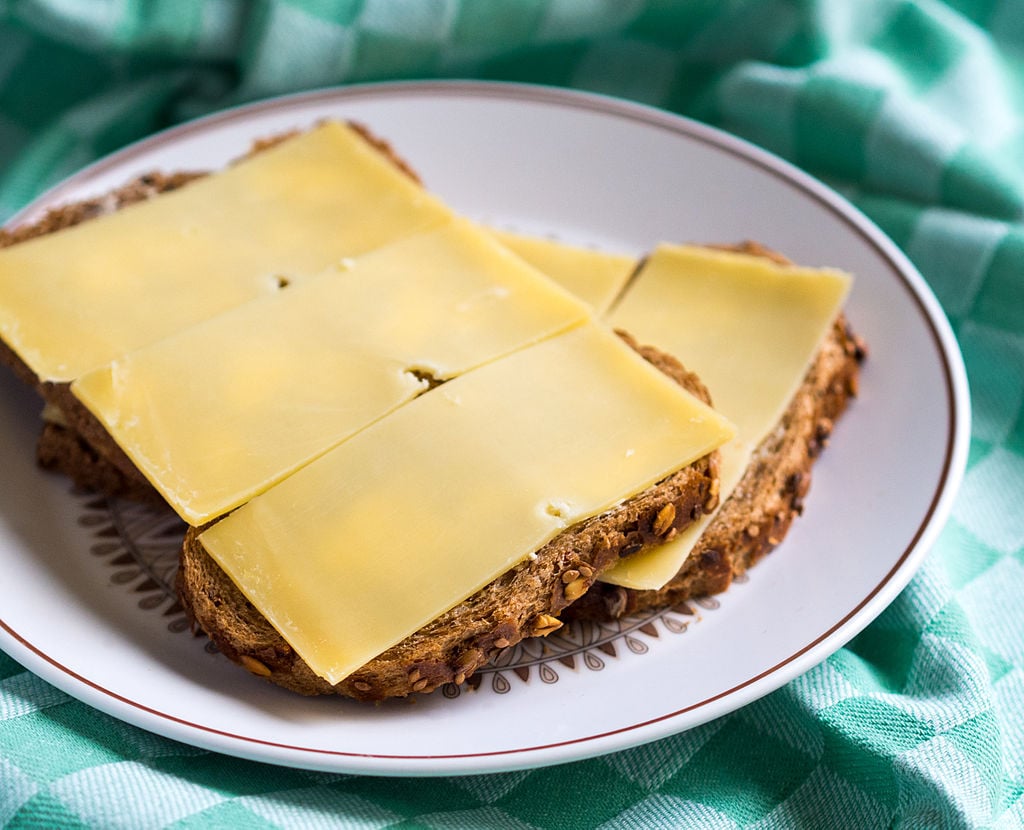
In the Netherlands, lunch typically consists of a humble broodje met kaas (sandwich with cheese), and fair enough, German lunch cuisine is not much different. The difference here lies in the fact that lunch in the Netherlands is consumed at rapid speed, with little time for anything but chewing.
It’s food, we promise. Image: Takeaway/Wikimedia Commons/CC4.0
In Germany, a worker’s lunch break is holy, and pretty much as important as the other working hours altogether. It’s so holy, in fact, that the right to minimum 30 minutes of lunch break every day is spelt out in the German labour law.
Taking up to an hour for lunch is not uncommon in Germany, whereas a Dutch worker’s lunch is over before they can say hagelslag. Why? Perhaps because a Dutch lunch break is typically unpaid — and why waste time eating when you can get paid?
It’s no secret that Germany lags behind in certain (relax, only certain) areas, when compared to the Netherlands. One such thing is the German tendency to pay in cash far more often than those in the lowlands.
That means that if you’re working as a barista, a grocery shop cashier, in retail, or pretty much anywhere else money is being transferred in Germany, you’ll likely have to deal with a lot of coins and bills.
Always bring cash to a café in Germany! Image: Depositphotos
Anecdotes from our German readers have even mentioned instances of young people (particularly in the service industry) getting their wages paid in cash.
Although that’s an extreme case, there’s no getting around the fact that working (and just generally living) in the Netherlands tends to involve way less cash than across the eastern border.
Some might call it laziness, while others call it having a work-life balance. No matter what you choose to describe it as, however, it is a fact of life that Dutch people work less than Germans.
According to the OECD Better Life Index, the Netherlands outperforms Germany in just about every category (except a minor defeat in the Environment and Income sections), snatching an impressive 5th place in the world when it comes to work-life balance.
With an average working week of just 32 hours, we’re not surprised to hear that the Dutch work the least in Europe — and far less than the Germans, who’re working 41.1 working hours a week. Yikes!
4. Dutch people speak English. A. Lot.
Until recently, tourists in Germany had to struggle their way through their holidays with the phrases they remembered from high school German class, crossing their fingers hoping they’d communicated more or less the right thing. Working in Germany was, and still is, relatively difficult without a decent understanding of the German language.
Germans are not exactly known for their English proficiency, and the frequent translation of foreign news, media, and entertainment into German doesn’t make it any easier to practice. The Dutch, on the other hand, pride themselves on their excellent command of the English language.
The job market in the Netherlands is great for people who speak English or German. Image: Depositphotos
As the number one country in the world when it comes to English proficiency (compared to Germany’s 10th place), and with over 90% of the population comfortable speaking English, it’s no surprise that the Netherlands is famous for being quite a lovely place to work as an international.
High English proficiency is seen in daily life as well as in the Dutch workplace, and it’s not uncommon to speak English on a daily basis in a Dutch job.
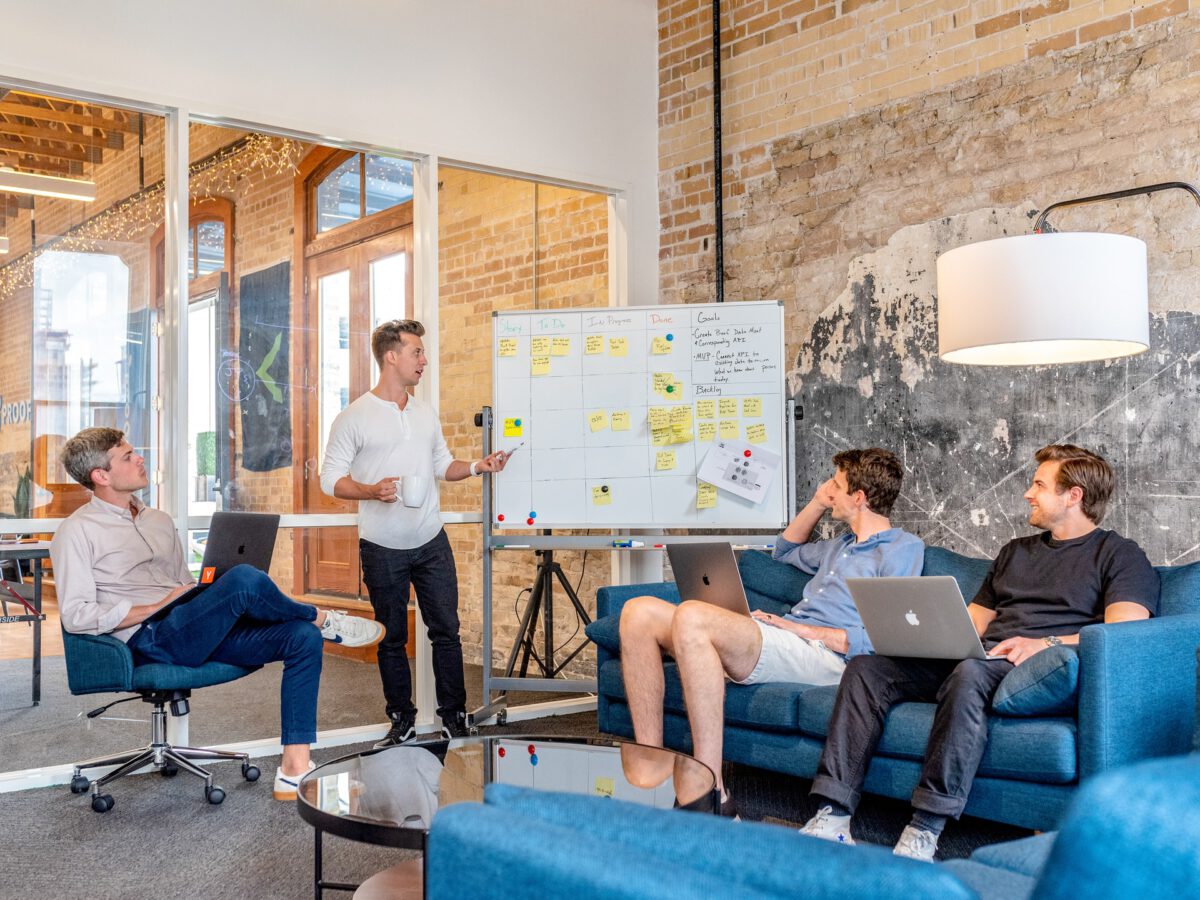
Comfortable to some, frightening to others, Dutch work culture is (in)famous for being very casual. However, being casual does not necessarily mean that the Dutch are known for being chill and relaxed in the workplace.
What the Dutch are known for is being oh-so direct — a fact that manifests in a tendency to show up to work, well, just as you are. No nonsense, lots of gezelligheid.
The Dutch workplace might be more casual than you’re used to. Image: Depositphotos
This can mean going to the office in jeans and a t-shirt, or in a three-piece suit — whatever works for you is fine for the Dutch workplace culture. It can also mean addressing your co-workers (yes, and your superiors) as the friendly Je rather than the formal U. The Germans would never — it’s “Sie”, not “Du”.
Work meetings in the Netherlands can also occur in relatively unconventional places. While Germans prefer the structure of a good table for their meetings, the Dutch can easily meet around a coffee machine, on a park bench, or over a biertje and some borrel snacks. Speaking of…
6. The Dutch borrel is the same as ‘feierabend’ — but also different
Despite the many differences, Dutch and German work cultures have one key thing in common: their love for beer. It’s an integral part of the coworking environment — the one thing that brings people together, regardless of their nationality, seniority, or position.
Where the Germans religiously celebrate the end of the workday with “feierabend” (literally meaning “evening celebration”) at 5 PM, the Dutch reserve the right to drink beer with coworkers anytime they like.
Beer is a non-negotiable part of the Dutch work culture. Image: Pexels
Of course, the Dutch typically organise borrels at the end of the work day too, but the Dutch borrel goes a lot further than the German equivalent.
Borrel at 5 PM with your coworkers before going home to your wife and kids, borrel at 8 PM with your student friends before going out dancing, or borrel on the weekend — the sky is the limit in Dutch workplace drinking culture.
7. Hierarchy in the Netherlands is just not a thing
It might be a stereotype, but Germans are generally structure-loving people. This is typically reflected in a relatively hierarchical workplace structure.
The Dutch, on the other hand, are (sometimes aggressively) egalitarian at heart, resulting in what the Germans might describe as a frightening lack of structure. The Dutch, meanwhile, will call it freedom.
Yes, this is what a flat workplace hierarchy looks like. Image: Depositphotos
From liberal dress codes and informal and direct speech to democratic and casual meeting culture — the Dutch love for hierarchy-less workplaces can be found wherever you look.
In the spirit of keeping things horizontal, it’s common practice for Dutch leaders to get feedback from their employees, not just the other way around. Oh, and coworkers typically address each other by their first name — in true direct, Dutch fashion.
Germany and the Netherlands might have a number of things in common when it comes to the two countries’ workplace cultures — but also a surprising amount of differences.
Dreaming of a Dutch job? Here’s the thing: working in the Netherlands can be dramatically different to working in other countries.
Work culture? Different. Work structure? Unconventional. Work clothes? Total change…
Whether you’re looking for your dream Dutch job or have already found it, here are seven ways that a Dutch job is, well, just different!
1. Goodbye hierarchy: egalitarianism is a real thing 👑
Tired of kissing your boss’s boots? The Netherlands’ egalitarian work culture may just be the right fit for you. While a hierarchy generally exists, it’s rarely put into force. Instead, workers are valued for what they bring to the table — not their job title.
In the Netherlands, people will be direct in giving feedback — sometimes too direct! Image: Freepik
This goes both ways though: while you may be used to looking toward your boss to lead, they’ll equally be looking back at you for your own ideas, input, and decisions.
Teamwork also plays a big role in Dutch workplaces — which may explain their fondness for team days (also known as teamuitjes)!
2. Formal clothes are (generally) not required 👖
If you’re looking to ditch the suit and tie, it’s time to move to the land of bikes. On your first day in the office, you may be shocked to discover people in t-shirts, jeans, or other casual clothing.
Have you walked in on a casual Friday? Nope! This is often the standard of dress in a Dutch workplace. Perhaps it has something to do with how many people cycle to work?
Working attire is not necessarily formal in the Netherlands. Image: Unsplash
But as with anything else, be wary: we don’t recommend wearing board shorts and flip-flops to the office on your first day — check in with your hiring manager and ask about the dress code first so you don’t make a first-day fashion faux pas.
3. Drinking with your colleagues is normal 🍻
Perhaps in your home country, you drink to forget your boss — but in the Netherlands, you drink with your boss. Remember that nice egalitarian culture we discussed? That extends to social situations too!
Say “Proost!” Drinking culture in the Netherlands is a big deal — bring on the borrelen! Image: Freepik
It’s common for workplaces to hold a borrelon a Friday night after a week well done. Get ready to tip back some beers or wine, chow down on some lekkerbitterballen, and have a laugh with your boss and colleagues.
This is so common in Dutch work culture that there’s even a handy name for it: VriMiBo a.k.a VRIdag MIddag BOrrelen (or, in English: Friday afternoon drinks).
4. Your job is likely temporary until you have the golden permanent contract ✍️
Applied, interviewed, hired, and now a long-term employee? In the Netherlands, not quite. While you may have landed that Dutch job of your dreams, there’s a chance you’ll only have it for 12 months.
Unless you’re in a highly desirable field, like tech, you’ll likely only be offered a temporary contract — to begin with.
Make an impression in your first weeks, months, and year at your Dutch job — you’ll need it! Image: Freepik
So when do you get a cherished permanent contract? Not for a while!
Your workplace will likely keep offering you temporary positions for three years, or three contracts, whichever comes first. Then, they’re required by law to make you a permanent employee, unless defined differently in your collective labour agreement.
5. Dutch directness is real 👀
If you haven’t heard about the infamous Dutch directness, oh boy — this is a doozy. Simply put, people in the Netherlands don’t beat around the bush. They’ll tell you if you have spinach in your teeth, cooked a bad meal, or gained a few extra kilos on your latest vacation.
Work not up to scratch? The Dutch will have no qualms telling you straight to your face. Image: Freepik
If you think an office is a sacred place for positive feedback, you’re wrong. If you’re doing a bad job — you’ll know about it. But on the other hand, if you know about it, you can fix it!
While your boss’s or colleague’s direct way of speaking can be a shock at first, you’ll soon get used to it. Who knows, maybe you’ll start being more direct yourself.
6. Working from home is (kinda) enshrined in law 🧑💻
We all have a life outside of work, so on top of the Netherlands having the best work-life balance in the world, it has also offered the Flexible Working Act since 2016.
This law says that if you want to work from home or have flexible working hours (for example, to pick up or care for your child), you have the right to request it from your boss.
Need to work from home? It’s a right in the Netherlands! Image: Depositphotos
To take advantage of this, you must submit the request in writing at least two months before the proposed start date. Then, your boss must consider it and get back to you within one month before the change is due to take effect.
Realistically, a boss is only supposed to decline a flexible working hours request if compelling business or service interests dictate otherwise, at which point you must be informed in writing. School pickup, here you come!
7. Team meetings are deadly efficient 🤝
Let’s step back for a second and remember that the Dutch are the ones that claimed land back from the sea — what a feat!
How did they manage to install such an impressive system of dykes, locks, and canals that often run directly through private properties? Meetings, communication, and negotiation. No joke.
Get prepared for fast-paced meetings with your coworkers. Image: Freepik
Hundreds of years on, these characteristics of the Dutch still ring true. The Dutch believe strongly in holding efficient meetings, both formally in the conference room, or informally by the coffee machine.
If you’re at a meeting, be prepared to speak up — you’re in there for a reason. And one last tip: don’t you dare be late. To the negotiations we go! 🤺
Working in the Netherlands may be different, but that’s part of what makes it so great! So what’s next?
Hospital stays are difficult and daunting for children, but thanks to a special “infusion” bike invented in Utrecht, they can at least move freely while receiving treatment.
What started as local innovation for young cancer patients at the Princess Máxima Center will now reach hospitals globally, RTV Utrecht reports. 🌍
A life-changing invention
In 2020, physician-researcher Bernadette Jeremiasse noticed that hospitalised children eager to ride their bikes were often frantically followed by a parent running with an IV pole.
Along with Jesse Bosma and Jeroen van den Berg from UMC Utrecht, she transformed this observation into a brilliant solution, and the infuuts was born.
These bikes are equipped with IVs, allowing kids to move freely while undergoing treatment.
Since its launch at the Utrecht hospital last September, the bike has brought joy and mobility to many young patients. ❤
A life-changing invention
It didn’t take long for the world to take notice of the brilliant bikes.
To meet demand, the Princess Máxima Center partnered with UMC Utrecht and TechniCare, a Ridderkerk-based medical device manufacturer, to bring the infuuts to more hospitals worldwide. 💪
“We received hundreds of messages from people who found the infusion bikes amazing, including hospitals eager to offer them to their young patients,” shared a hospital spokesperson with RTV Utrecht.
As these bikes roll out globally, they bring the Dutch spirit of cycling — freedom, joy, and movement — to many sick children! 🚴♂️
Attention, earthlings! We will have the rare chance to spot all seven other planets in our solar system in the night sky. Mark your calendars, grab your telescope and catch this celestial lineup!
According to NU.nl, the peak visibility will be this Saturday evening, March 1. 🌌
When can you see it?
Luckily, the weather forecast suggests clearer skies ahead, meaning our chances of seeing this cosmic blessing are looking up — literally.
Keep your eyes on the night skies from today until March 5.
And set a reminder for this Saturday, March 1, when the peak visibility window will be between 18:53 and 19:15 — the planets won’t wait for you. ⏰
TIP: Make sure to check whether there’s an observatory near you to get a full glimpse of the planets.
What’s the lineup?
Brighter planets like Mars, Venus and Jupiter should be easier to spot.
Saturn and Mercury need a little more stargazing effort to find, while Uranus and Neptune could require a telescope. 🔭
According to astronomer Lucas Ellerbroek, this could be an out-of-this-world chance to take a group photo of the solar system. 📸
Look for Mars, Jupiter, and Venus shining overhead tonight as bright "stars." Saturn and Mercury are also in the sky, but will be very low and faint and difficult to spot. Neptune and Uranus can be seen with a telescope. All about "planet parades" – https://t.co/Hsji6eMTx2pic.twitter.com/Vim3eh1Uah