Are you renting a self-contained flat in the Netherlands? Then you may be entitled to huurtoeslag — otherwise known as rental allowance!
So you’re renting in the Netherlands and you’re struggling? We’ve moaned enough about crazy rental prices and the housing shortage because, well, it’s a real problem.
Well, for some of you, there’s no need to struggle anymore. You may be entitled to rent allowance in the Netherlands (huurtoeslag), which will help you with your rent cost!
What is the huurtoeslag?
We’re glad you asked.
The rental allowance, also called the rent benefit, is a government contribution that will help you with rent.
If you are a low-middle income earner and live in self-contained accommodation, there is a chance that you may be eligible for the toeslag.
If you’re viewing an apartment with a real estate agent, they will usually be able to tell you whether or not the property qualifies for rent benefit. Image: Freepik
What are the conditions for rent allowance in the Netherlands?
To get rent benefit in the Netherlands in 2026, you (or your fiscal partner) must be:
18 years old or over
Renting a self-contained accommodation with your front door, bathroom and kitchen
In a signed agreement (contract) with a landlord/housing corporation
Certain that your (joint) income is not too high
Certain that your rent is not too high
Registered with the municipality at your home address
A Dutch or EU/EEA national or in possession of a valid residence or work permit
Can internationals receive rent allowance in the Netherlands?
Yes! Anybody legally registered in the Netherlands is entitled to the huurtoeslag — as long as they fit the criteria. Unfortunately, this often does not include international students (sorry guys, I don’t make the rules, I know you struggle too). 😭
Most of this has to do with the fact that you need to have your own front door to be able to get rent benefits in the Netherlands. Student houses usually don’t fall into that category (unless you live in your own studio, of course).
Living in a house with friends? That means you’re not eligible for huurtoeslag. Image: Depositphotos
Income limits and the huurtoeslag
Each year, the income and rental limits of the huurtoeslag are changed. Sometimes, these changes are quite significant; in 2025, however, the conditions do not differ significantly from the conditions of 2024.
Before 2020, there used to be a hard income limit: if you earned even €1 above the limit, you would lose your housing allowance and maybe even need to pay back several months’ worth of the subsidy.
Nowadays, there is no fixed income limit for rent allowance in the Netherlands.
Instead, the government will look at your gross annual income, your rent, your age, and your living situation. The higher your income, the less housing allowance you will receive.
The huurtoeslag helps many people to live independently in the Netherlands. Image: Depositphotos
In practice, according to Woonbood, you should be eligible for huurtoeslaag with an income of up to roughly €28,000 if you’re single and roughly €38,000 if you live with a tax partner or your family.
Do bear in mind that perhaps, even if your income is slightly higher than these numbers, you might still be eligible, and similarly, if it’s slightly less and you have an otherwise financially stable existence, you might not be granted the subsidy.
Below, we’ve included the other latest numbers for 2025.
Huurtoeslag conditions in 2025 if you are over 23 and living in a single household
Your monthly basic rent is no higher than €900.07
Your savings/investments were no higher than €37,395 as of 1 January 2025
Huurtoeslag conditions in 2025 if you are over 23 and living with a fiscal partner
Your monthly basic rent is no higher than €900.07
Your joined savings/investments are no higher than €74,790 as of 1 January 2025
Huurtoeslag conditions in 2025 if you are under 23 years old and living in a single household
Your monthly basic rent is no higher than €477.20 (unless you have a child, then the rent may be €900.07)
Your savings/investments are no higher than €37,395 as of 1 January 2025
Huurtoeslag conditions in 2025 if you are under 23 years old and living with a fiscal partner
Monthly basic rent is no higher than €477.20 (unless you have a child, then the rent may be €900.07)
Your joined savings/investments are no higher than €74,790 as of 1 January 2025
How do I apply for the rent allowance in the Netherlands?
If you want to apply for the rent subsidy in the Netherlands, then you need to go to the government website. From there, you can apply for your rent allowance.
You’ll need a DigiD to do this, so if you are without one, don’t forget to apply for it (it’s a must-have in the Netherlands anyway).
Ok you think your eligible, now how can you get the huurtoeslag? Image: Depositphotos
If you’re looking for a quick way to see if you’ll qualify and how much allowance you will receive, you can do a test calculation online. Some rental places can also tell you if you’re eligible before you even rent the property — it’s definitely worth checking!
What do you think about huurtoeslag in the Netherlands? Tell us your thoughts in the comments below!
A lot of visitors to the Netherlands refer to Holland in the same way as they would the Netherlands. They think the two are one and the same, but unfortunately, they’re wrong. So, what is the difference between Holland and the Netherlands?
It’s a mistake we’ve probably all made at some point in our lives (at least us internationals, that is), and it makes sense! The names “Holland” and “the Netherlands” are often used interchangeably in popular culture.
The history behind “Holland” vs “the Netherlands”
To really understand the difference between Holland and the Netherlands, one must, first of all, know the history of the Netherlands. So here’s a short lesson. 🤓
The Netherlands is a kingdom that was founded after Napoleon’s defeat in 1815. At the time, it included Belgium.
After Belgium’s secession in 1830, the map of the Netherlands was redrawn, and this proud, wonderful country as we know it today was born.
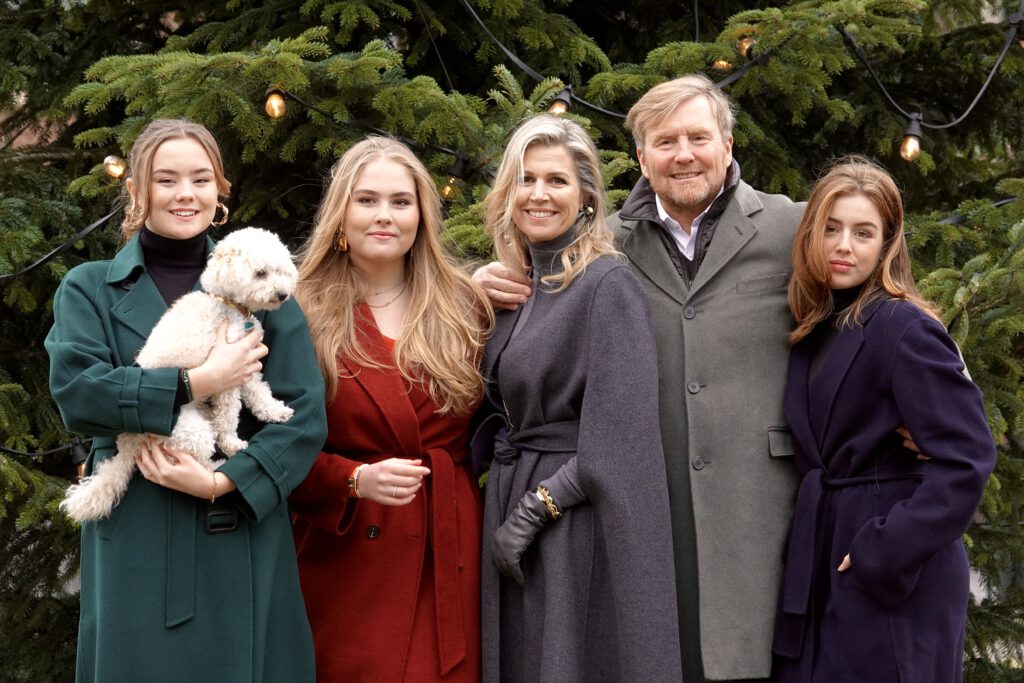
The Netherlands is a kingdom led by the Royal Family. Image: Het Koninklijk Huis
Let me take you back to the Batavian Republic. You know what? I’ll go even further and take you back to the Republic of the Seven United Netherlands. Lots of republics, right? Yeah, I know.
The Republic of the Seven United Netherlands existed from 1588 until 1795. It emerged when a part of the Netherlands separated from Spanish rule after the Eighty Years War or the Dutch War of Independence.
The war was a revolt against King Philip II of Spain by the Seventeen Provinces of modern-day the Netherlands, Belgium, and Luxembourg, as well as the French region of Hauts-de-France. The Seven United Netherlands was made up of:
The Duchy of Guelders (Gelderland in Dutch)
The County of Holland
The County of Zeeland
The Lordship of Utrecht
The Lordship of Overijssel
The Lordship of Frisia
The Lordship of Groningen and Ommelanden
The Republic’s seven provinces each had their own independent governments and were very powerful. During the period in question (the late 16th and 17th centuries), the provinces dominated world trade, conquered a large colonial empire, and had the largest fleet of merchantmen.
The County of Holland was one of the wealthiest and most urbanised regions in the world at that time.
In 1795, French troops conquered the Republic. It became known as the Batavian Republic in 1806 when Napoleon appointed his brother, Louis, as King and turned the country into a kingdom.
As history would have it, though, this United Kingdom of the Netherlands came to an end with the secession of Belgium.
Belgium went its own way, the map of the Kingdom was redrawn, and, just like that, The Kingdom of the Netherlands as we know it today was born.
Let’s summarise it
The Dutch fought the Spanish for their independence, and when they got it, they formed the Seven United Netherlands.
When the Dutch were conquered by Napoleon Bonaparte, he made his brother King and thus, the Batavian Republic was born.
After Napoleon’s defeat, William VI of Orange became King of the United Kingdom of the Netherlands.
William VI of Orange’s kingdom didn’t last long because Belgium wanted its independence.
After Belgium left in 1830, the map was redrawn, and the Netherlands as we know it today came to be.
Today’s provinces
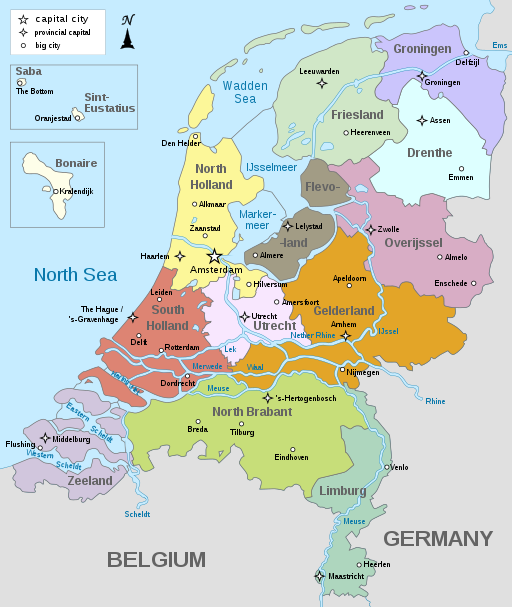
The Netherlands consists of 12 provinces: Groningen, Friesland, Drenthe, Overijssel, Flevoland, Gelderland, Utrecht, North Holland, South Holland, Zealand, North Brabant, and Limburg.
Perhaps this snazzy map will help. Image: Alphathon/Wikimedia Commons/CC3.0
Two of these 12 provinces include the name Holland: North Holland and South Holland.
Blame it on the sailors
The confusion surrounding the difference between Holland and the Netherlands must have started as a result of Dutch sailors. These sailors were known to have sailed the open seas during the Golden Age in search of new land, trade routes, and spices.
On their travels, they only mentioned the names of the city-states they hailed from when asked about their origins. A Dutch sailor could tell a fellow trader that he was from South Holland or North Holland when asked where he came from.
Understandably, this made many people think that Holland was a country. It must have been quite confusing because, at that time, a united Netherlands did not exist as a country.
Today, the official name of the country is the Kingdom of the Netherlands. King Willem-Alexander is the King, and “Holland” actually refers to the two provinces of “Noord-Holland” and “Zuid-Holland”, which, translated to English, would mean North Holland and South Holland.
So, dear visitors, what is the difference between Holland and the Netherlands? Holland is simply two provinces in the Netherlands.
Have you also mistaken Holland for the Netherlands? What do you find the most confusing? Tell us in the comments below!
The housing crisis in Amsterdam is in full swing, so stories about overpriced apartments are as common as tacky souvenir shops in the city centre.
But that didn’t scare this Amsterdam tenant when they reported their landlord to the Rent Assessment Committee — and won big time. 🥳
Not a hotel
To be fair, the tenant had just about everything pointing in their favour when they reported the landlord to the committee.
According to Het Parool, the landlord tried to present an ordinary apartment as a hotel-like property, thus only renting it out for a maximum stay of one year.
New housing laws from 2024 don’t permit temporary contracts anymore, other than in exceptional circumstances.
And, no matter how spectacular of a city Amsterdam is, living in it doesn’t exactly count as an exceptional circumstance. 😉
Putting even more salt in the wound, the landlord was asking for a whopping €1850 per month for this 34 square metre residence.
The committee swiftly deemed this unacceptable and ruled that the rent must be reduced to €633.58 per month — an enormous reduction considering the average monthly rent for a studio in Amsterdam exceeds €2000.
The landlord was also ordered to cover the costs of the committee hearing.
Not an isolated case
The tenant was assisted by the !Woon foundation in the conflict. They consider the win to be an important victory for tenants, but also warn that the case isn’t an isolated one.
They state that landlords often try to circumvent rules prohibiting temporary contracts, which leads to sky-high rents and uncertainty for tenants.
“The ruling of the Rent Assessment Committee confirms that this type of contract must be applied very restrictively”, emphasises !Woon legal officer Imre Doff.
Do you have any Amsterdam housing horror stories? Share them in the comments!
Hoera — buds are growing, the days are getting longer, and spring will soon be knocking at the door, as tulip season in Holland is on its way!
When thinking of tulips in the Netherlands, the Keukenhof immediately comes to mind.
However, there are other ways to enjoy the blooming flowers that’ll be easier on your wallet (and won’t see you fighting your way through hordes of other tourists).
Here we’ll talk about tulip fields, where to see them for free, when’s the best time to go, and what events you can’t miss. 👇
The best places to see tulips in the Netherlands
One must-see location to enjoy the tulips is a charming region aptly named the Bollenstreek (bulb region).
Between The Hague and Haarlem, the Bollenstreek comprises the cities of Lisse, Hillegom, Katwijk, Noordwijk, Noordwijkerhout, and Teylingen, which are home to a blooming tulip industry.
Gorgeous tulips in bloom at Lisse! Image: Depositphotos
In the quaint town of Lisse, you’ll also find the Keukenhof. Known as the ‘Garden of Europe’, this gem is one of the world’s largest flower gardens and boasts a whopping 7 million bulbs.
If you’re looking for quieter areas instead, you can head to the rolling countryside between Hillegom and Warmond, where you’ll find truly breathtaking flower fields.
Want to not only see tulips, but also uncover the story behind this iconic flower and how it’s grown and produced in the Netherlands? Then Tulip Experience Amsterdam is the place to go.
When to see tulips in bloom
The flowering season begins with the blossoming of crocuses in March, followed by hyacinths, narcissus/daffodils and tulips at the end of the month.
It’s during this time that the Keukenhof opens its doors (March 19) and stays open until the tail-end of the tulip season on May 10. Mid-April is likely the best time for most tourists to visit, as the tulips will be in full bloom.
However, it’s worth noting that the season changes slightly every year, so finding the prime time to visit these gorgeous blooms can be really difficult.
Climate change is also making itself known, so the kind of weather the Netherlands experiences before and during the tulip season can affect whether or not the flowers are in full bloom.
How to tour tulip fields in the Netherlands
You can start in Leiden and go for a day of cycling in the flower fields.
Take the direction of Noordwijkerhout, and come back via Sassenheim and Teylingen. You’ll be able to go through amazing fields, with windmills, for complete scenery!
Is cycling not your thing? Geen probleem (no problem), as you can also take a stroll through stunning tulip fields.
You can also hop on the train to Hillegom for an easy walk around the station. You won’t have to go far to find the fields, as they are easily accessible, and you can also book a tour of the tulip fields.
3 fabulous Dutch festivals to check out during the tulip season
Tulip season in Holland is almost like an extra holiday season in the middle of the year.
Oh, and what’s a part of every holiday? That’s right, celebrations and festivities!
Tulp Festival Amsterdam
Amsterdam’s magical Tulp Festival ushers in the coming spring with tens of thousands of blossoming tulips decorating the capital’s shopping streets and city squares.
Visitors are also treated to the entrancing sight of blooming tulips in Amsterdam’s many parks and public gardens.
Every spring, the Netherlands plays host to a stunning flower parade known as the Bloemencorso Bollenstreek.
A parade of cheerful floats bedecked with blossoms (and merry participants!) travels from Noordwijk to Haarlem in a fun spectacle that can’t be missed.
Another fabulous floral experience is the Flower Festival in Aalsmeer, which also hosts the largest trading platform for plants and flowers in the world.
Both the festival and the accompanying Flower Auction offer visitors a brightly colourful, bustling market, where each day, 19 million flowers and 2 million plants are sold.
A tragic incident has shaken a residential area in Schiedam, near Rotterdam. A 13-year-old boy was stabbed on Sunday afternoon. Despite being rushed to the hospital, he did not survive.
Later that same day, another 13-year-old boy was arrested in connection with the incident, as reported by RTL Nieuws.
Investigation and youth violence concerns
So far, the police have not disclosed further details about the suspect — but they have confirmed that he is under investigation for involvement in the crime.
During his arrest, forensic specialists were seen wrapping the boy’s hands in plastic to preserve potential evidence.
Peter Ottens, co-founder of local youth organisation YETS, highlighted the deep impact on local youth workers.
Knife violence among minors remains a pressing issue in the Rotterdam region, and in 2020, then-mayor Ahmed Aboutaleb initiated an action plan to combat youth weapon possession.
Community in shock
On Monday morning, a group of young people placed flowers at the scene of the stabbing.
Some knew the victim indirectly and expressed their disbelief. “Especially the young age affects people,” one resident told RTL Nieuws.
Authorities have acknowledged the impact of the event and have sent police officers and municipal employees to offer support.
The community is left with grief, questions, and an urgent need for solutions to prevent further violence among young people.
A picture has recently circulated on Reddit that has some Dutch people in a frenzy — a coffeeshop in central Amsterdam put up a sign with an unusual company policy.
If you want to sit back and relax the good-old-fashioned Amsterdam way, you better be a tourist.
Why’s that? Because locals are now banned from sitting inside and may only get their products for take-away.
Making the most out of Amsterdam tourism
We all know that Amsterdam can be overrun with tourists sometimes, but this coffeeshop on Brouwersgracht said that when life gives you lemons, you make lemonade.
What some see as an overcrowding nightmare, others see as a business opportunity.
At least that’s what they suggest on their controversial sign, which states that they allow only tourists to sit inside to better regulate crowds and focus on their target customer group.
Translation: PICK-UP ONLY! We have chosen to only give local clients the option to pick up products since our coffeeshop primarily focuses on tourists. This policy allows us to better tailor our services to our target group while minimising the pressure and overcrowdedness of our coffeeshop. We value all customers and hope for your understanding of this choice.
This rule is especially ironic in light of the fact that the Dutch drug toleration policy aims to make Dutch coffeeshops less attractive to drug users from abroad.
An honest tourist trap
As you can imagine, Dutch people aren’t impressed with the coffeeshop’s business model, no matter how savvy it is.
The coffeeshop received a lot of less-than-kind messages and felt compelled to respond to the controversy on Reddit.
They claim they’ve “had problems with loitering youth for a long time and have made great efforts to keep them out.”
It makes sense, then, that Dutch people would be prohibited from sitting inside while the famously polite and calm young tourists of Amsterdam get the VIP treatment.
Another Redditor had a different explanation: “English translation [of the sign]: Our prices are ridiculous. Locals, please don’t waste your time.”
See, Amsterdammers: they’re looking out for the community. ❤️
Do you think a coffee shop has the right to enforce such an exclusionary company policy? Let us know your thoughts!
Snackbars are small fast-food-like venues that serve your classic Dutch frituur (fried food) go to’s.
From friet (or is it patat?) and bitterballen to kroket and kaassoufflé, you and your empty stomach’s desires will be fulfilled. 🤰
Plenty of people, Dutchies and internationals alike, love going to a snackbar after the bar to grab a bite to eat when nothing else is open.
Why do they do it?
Frituur is the perfect type of food after a night out of drinks — it’s greasy, it’s filling, and it’s carb heaven, making it the ideal snack to eat to soak up the alcohol.
(And, most importantly, prevent the impending hangover! 😉)
Not to mention, frituur can curb your salty cravings late at night.
Friet is a great snack to have if you’re sharing it with other people but otherwise, falafel wraps or a broodje frikandel is the perfect thing to keep for yourself.
Why is it quirky?
The more you drink, the more questionable your snack choices become.
Whether it’s putting obscene amounts of mayonnaise on everything or picking an “interesting” sauce combination for your friet, we’re not here to judge your cravings. The heart wants what it wants. ❤️
And while eating a lot of snack food in the night seems like the best idea at the moment, you might find yourself feeling a little queasy from it.
We can’t tell you if that’s the alcohol or the snack food talking, though. 🤷🏻♀️
Should you join in?
This activity is definitely something to try out, especially if you want to try some fun Dutch snacks but also drink responsibly!
However, if you’re looking for a place to stretch your legs, or simply want to discover more of Rotterdam’s hidden gems, the city offers plenty of opportunities for the perfect nature escape.
Whether you’re down for a long hike or just a short afternoon walk, Rotterdam has something for everyone.
It’s also relatively close to the Kralingse Bos, which offers a relaxing walk through nature! Image: Depositphotos
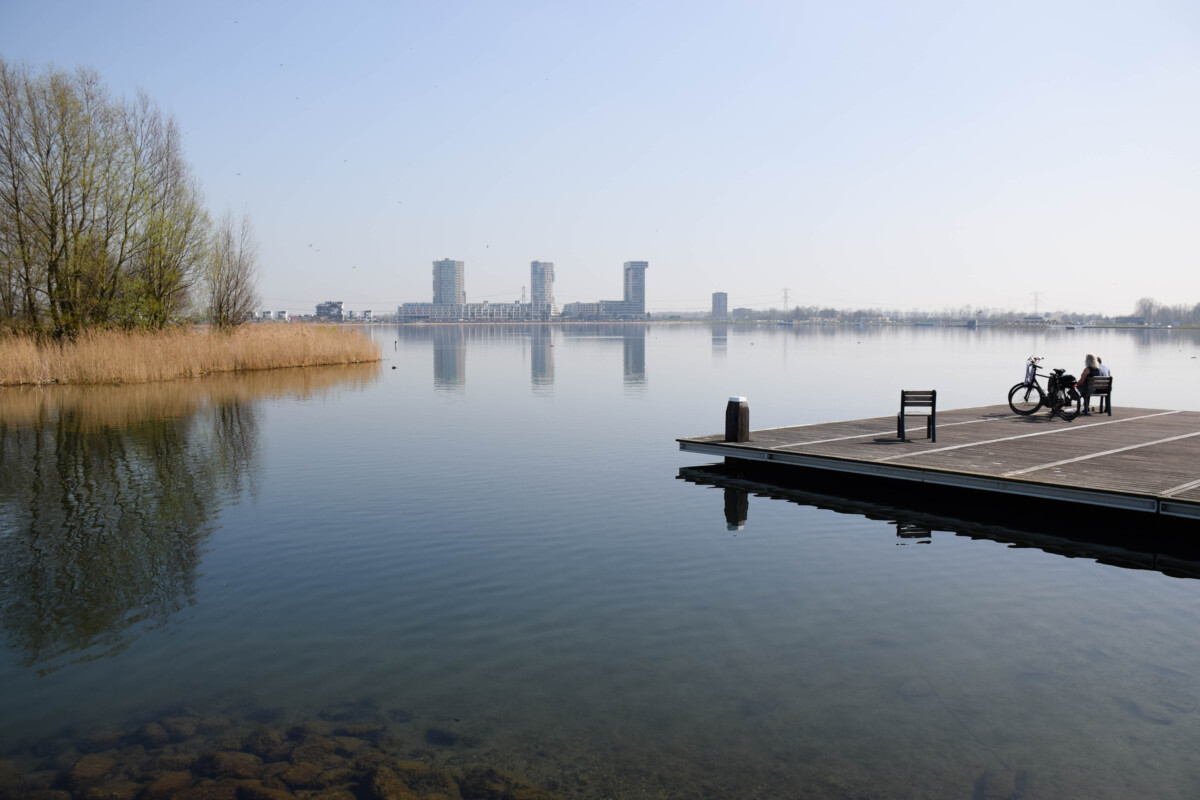
Kralingse Plas is a spot for families, couples, singles, and groups of friends alike.
Not only is it a wonderful place for a walk, but the area surrounding the lake also offers plentiful opportunities to sit down for a picnic or go for a quick swim at the local beach (if the weather and water quality allow).
There are also various restaurants and cafés on the way, where you can grab a quick bite in case you need a refresher.
The local deer farm, as well as the playing ground next to it, is sure to make the youngest members of your family happy.
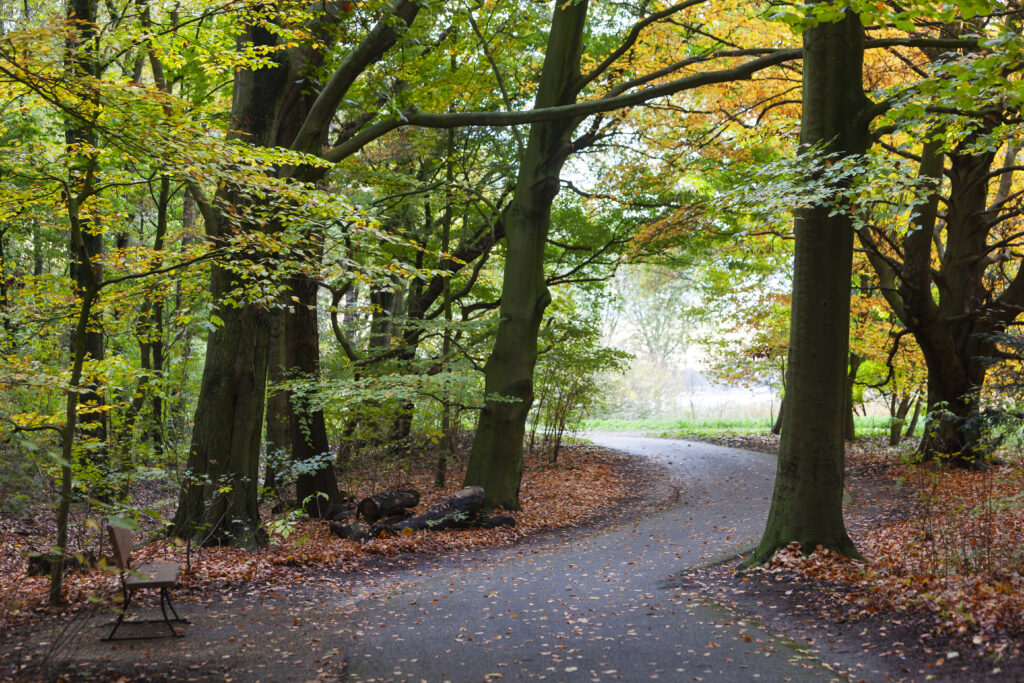
If you really enjoy the serenity of Dutch forests, and the five-kilometre walk around the lake is not enough for you, you can also venture into the Kralingse Bos.
To explore this piece of nature at a faster pace, simply bring your roller skates with you!
📏 Walk distance: A loop around the lake is about 5 kilometres. 🚲 How to get there: The Kralingse Plas is a 15-minute cycle from Rotterdam Centraal. 📍 Starting point: You can start at the Beach House restaurant and make your way around the lake from there. 🗺️ Route: We suggest walking around the lake anticlockwise to save the nicer views for later.
TIP: The wooden piers located on the north and west sides of the lake are definitely a highlight. Sit down for a moment and enjoy the sun setting over the city’s epic skyline.
2. Relax in Het Park, the perfect picnic spot
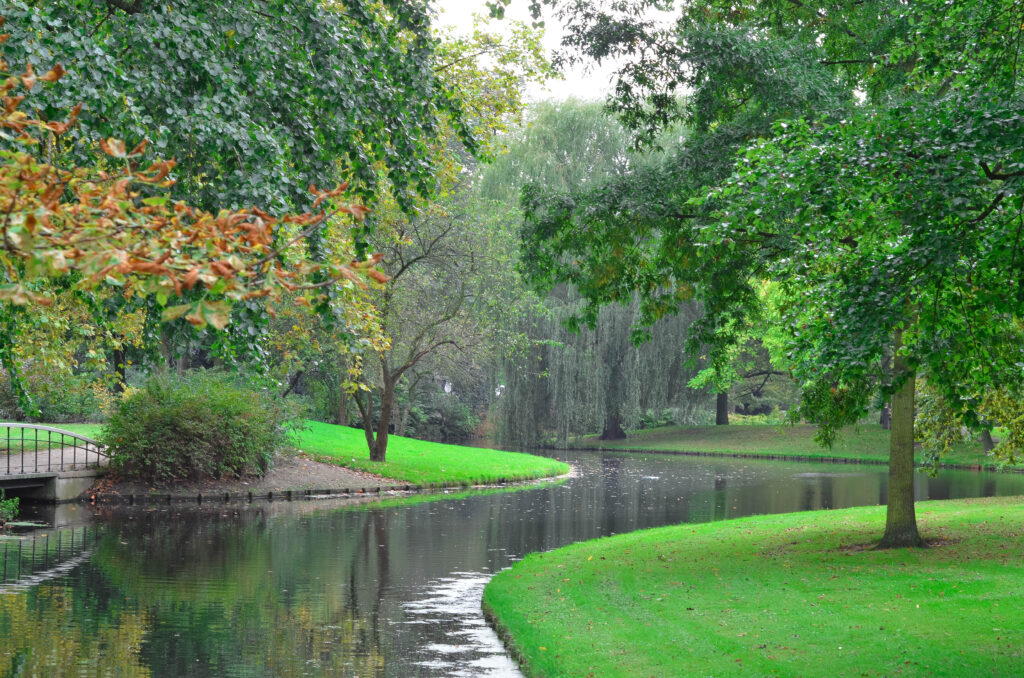
The city park is the perfect place to clear your head after a long day. Image: Depositphotos
Fancy a walk in one of the oldest parks in Rotterdam? Head to Het Park.
With trees that are over 100 years old and a French-style garden, Het Park is the perfect place to relax after a long week of work.
If you’re lucky, you may also be able to spot some woodpeckers or tawny owls.
But that’s not all: Het Park frequently turns into a lively spot with various food festivals and events, making it the perfect destination for a weekend outing.
For €12.50 you can go up the Euromast tower and enjoy the views of the entire city. Whether you go during the day, or at night when the whole of Rotterdam is lit up, you’re in for some incredible views.
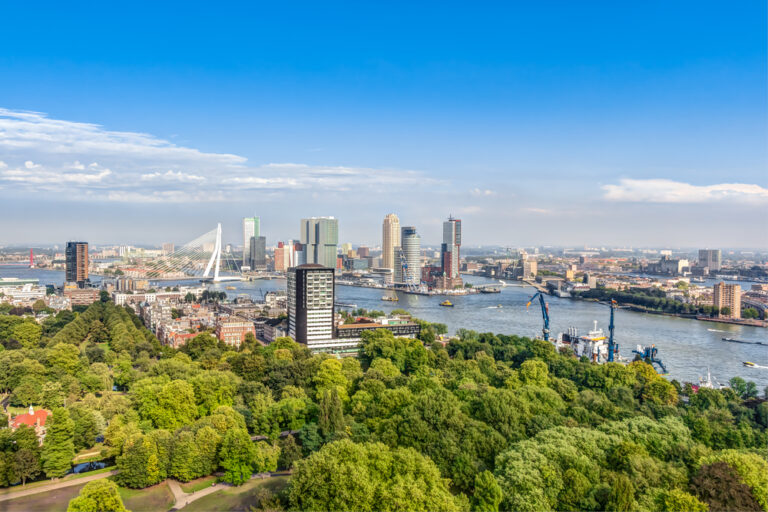
Had enough greenery for the day? Head to the nearby bank of the river Maas and enjoy some views of the Erasmus Bridge and Hotel New York.
If a moment of peace and tranquillity is what you’re looking for instead, you shouldn’t miss the nearby Schoonoord at Kievitslaan.
A true hidden gem, Schoonoord is the perfect place to unwind. You can visit from 8:30 AM to 4:30 PM.
📏 Walk distance: 1+ kilometres, depending on how quickly you find the perfect picnic spot. 🚇 How to get there: Take the metro to Erasmus MC (metro station Dijkzigt) or the tram to Kievitslaan. 📍 Starting point: If you get off at Kievitslaan, the upper edge of the park will be right in front of you. Just cross the road, and you’re there. 🗺️ Route: Make your way into the park and let the winding paths lead you.
3. Hike the Lage & Hoge Bergse Bos
Venture out of the forest and stroll in the sun along the river Rotte. Feature Image: Jana Vondráčková/Supplied
With highland cattle grazing parts of the forest, walking in Lage and Hoge Bergse Bos is probably as close as you can get to experiencing real wilderness in the Netherlands.
There are numerous different hikes you can opt for, whether they are three or 13 kilometres long.
The two forests offer space for all sorts of activities, from mountain biking and roller skating to climbing, canoeing and golf.
You may not be able to enjoy everything during a single hike, but luckily, there are camping sites you can stay at if you wish to enjoy this lovely piece of nature for longer than a day.
If you’re feeling extra adventurous, you can also combine your explorations of Lage and Hoge Bergse Bos with a walk around the Zevenhuizerplas.
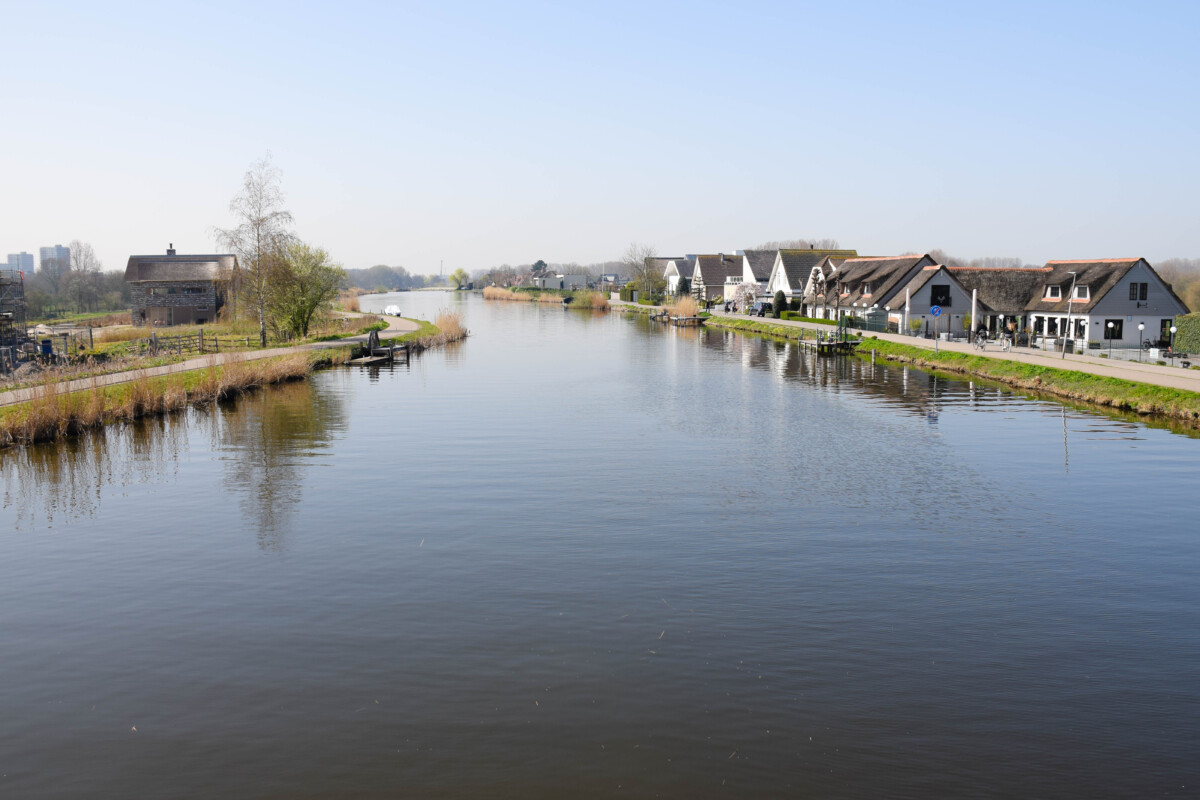
On a warm sunny day, leave the shade of the forest trees and stroll along the river Rotte instead. You’ll see plenty of cheerful Dutchies sunbathing on their boats.
📏 Walk distance: 10+ kilometres (but there are also many shorter routes). 🚗 How to get there: Put the Eekhoornplaats or Mollenplaats parking lot in your GPS and follow the directions to get to Lage Bergse Bos. To start your adventures in Hoge Bergse Bos, search for Vliegenzwamplaats parking lot or head to Oud Verlaat. Cross the Rotte river via the Rottebanbrug to enter the forest if you start your wanderings in Oud Verlaat. 📍 Starting point: Any spot in the forests is a good starting point. 🗺️ Route: Both Hoge Bergse Bos and Lage Bergse Bos have different routes to choose from. One way through both forests is about 5 km.
4. Walk around the Zevenhuizerplas
Enjoy the peace and tranquillity of your stroll around the Zevenhuizerplas. Feature Image: Jana Vondráčková/Supplied
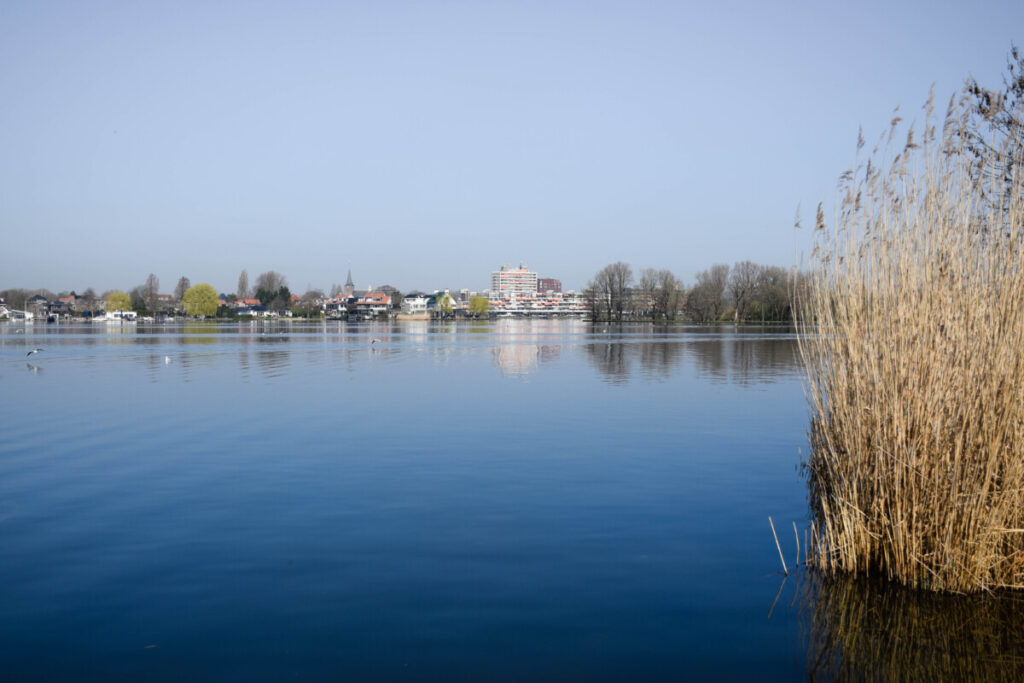
Looking for a walk through a paradise of water birds? Then a walk around the Zevenhuizerplas is the perfect option for you. You’ll have the chance to spot kingfishers, cormorants, herons, or reeds.
While you’ll find birds in the quiet areas around the lake, you can also stop by the more lively Nesselande beach for a quick swim.
This artificially created lake is a great recreational area for water sports enthusiasts, as it is well-suited for canoeing, paddleboarding, sailing, and even surfing.
📏 Walk distance: About 7.5 kilometres to walk around the lake. 🚇 How to get there: Head to Oud Verlaat or take the metro to Nesselande. 📍 Starting point: Make your way from the metro station to the Nesselande beach in about seven minutes and start your walk around the lake. Alternatively, begin your walk at Oud Verlaat. 🗺️ Route: Clockwise or anticlockwise, it’s up to you!
5. Discover the great Zuiderpark
If you want to venture to the south of Rotterdam, make sure you don’t miss out on a walk in Zuiderpark.
Zuiderpark is located in the neighbourhood of Charlois and is supposedly one of the biggest city parks in the Netherlands.
The park covers 215 hectares, which equals approximately 430 football fields.
You can come here to enjoy the swamps, the forest, a beach, little islands, and a large playground. While you’re here, try to spot the reed warbler or look out for the dozens of bats at twilight.
📏 Walk distance: 7+ kilometres (and various shorter routes). 🚇 How to get there: Take the metro to Slinge. 📍 Starting point: Walk for about four minutes from the Slinge metro station and then enter the park. 🗺️ Route: As you enter the park, pick whether you want to go left or right, and start your wanderings from there.
6. Wandelen around Prinsemolenpark & Bergse Plassen
Prinsemolenpark is the perfect place to go for some amazing water views. Image: Jana Vondráčková/Supplied
Want to enjoy some good old Dutch windmills? Then a walk through Prinsemolenpark and around the Bergse Voorplas might be something for you.
The windmill called Molen de Vier Winden (The Four Winds Mill) is located only a few minutes’ walk from the upper corner of the park.
Prinsemolenpark is a green strip of land located between the Bergse Voorplas and the river Rotte, which means you can enjoy marvellous views of the water from here.
Away from the hustle and bustle of the city centre, this is the perfect spot to come and savour a moment of tranquillity.
📏 Walk distance: 6 kilometres from Rotterdam Noord to Molen de Vier Winden and back. 🚗 How to get there: Head to Rotterdam Noord train station and make your way from there. 📍 Starting point: Rotterdam Noord. 🗺️ Route: Head north from the station via Bergweg, turn right to Ceintuurbaan, and once you get to the river Rotte just continue alongside it.
7. Venture to Het Schollebos
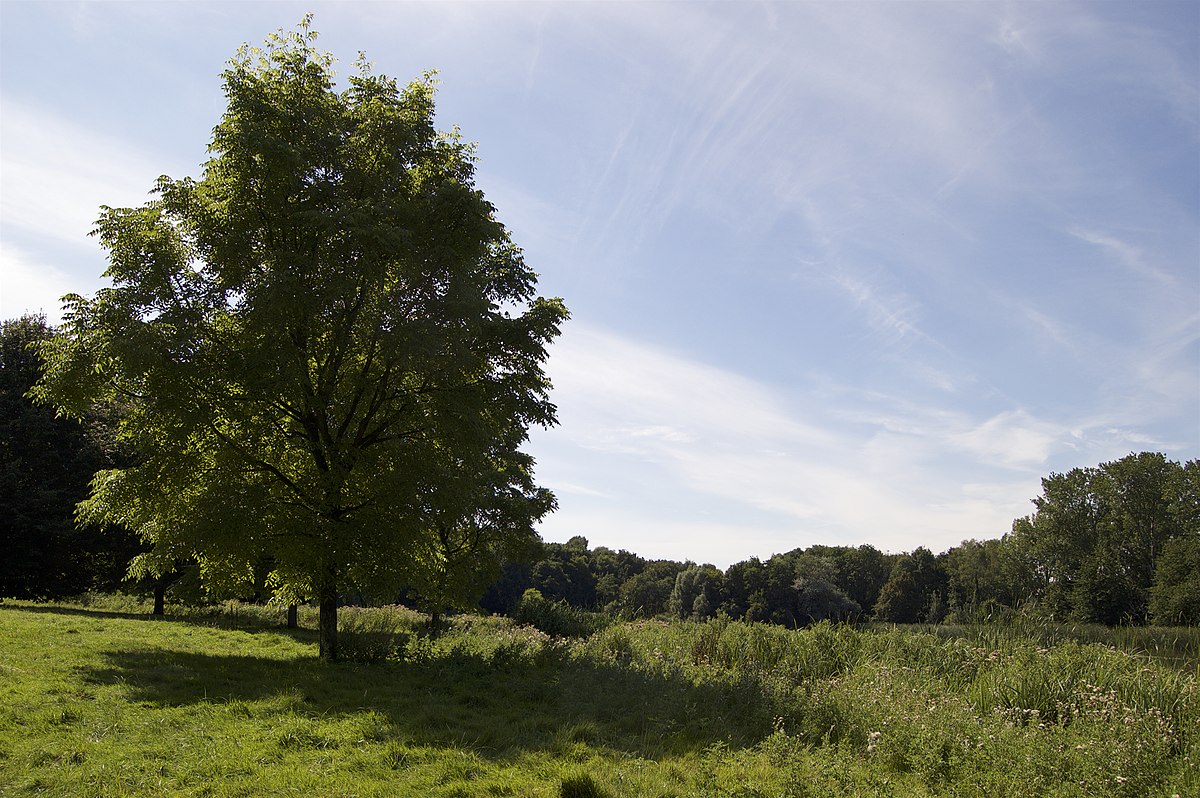
The greenery and blue skies of Het Schollebos. Image: Wouter Engler/Wikimedia Commons/CC4.0
If your wanderings take you to Capelle aan den IJssel, which is right east of Rotterdam, make sure you walk around the Schollebos.
Schollebos is home to all kinds of tree species and a great spot to encounter various animals. Think moles, hedgehogs, rabbits, and occasionally also hares and foxes.
Although the pancake place called Petit Restaurant Schollebos is a great place to start your walk, we recommend treating yourself to this tasty delight only after you’ve walked around the park. 😉
📏 Walk distance: 3+ kilometres. 🚇 How to get there: Take the metro to De Terp and walk for 15 minutes to reach the pancake house. 📍 Starting point: Start at the pancake house Petit Restaurant Schollebos at Bermweg 133 and make your way around the park. 🗺️ Route: Wander around the forest as you please, exploring the different ponds and creeks.
8. Get your nature fix in the Ackerdijkse Plassen
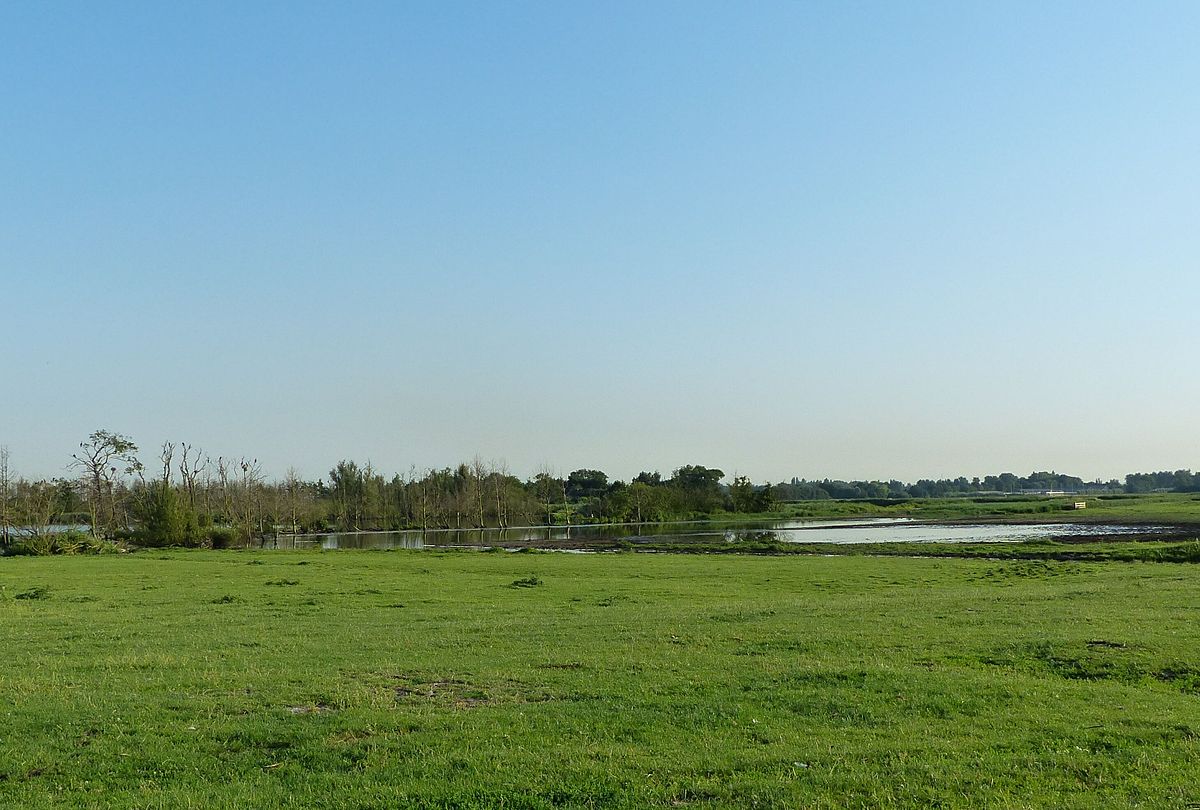
Ackerdijkse Plassen is a designated bird sanctuary. Image: A.Beijer/Wikimedia Commons/CC3.0
If the biggest port city of the Netherlands still doesn’t fulfil your water view cravings, head for a hike around the outskirts of the Ackerdijkse Plassen.
Home to numerous kinds of birds, Ackerdijkse Plassen is a closed nature reserve and a designated bird sanctuary.
But don’t worry about missing out on some great views just because the area is closed to humans. There are still three watchtowers you can spot birds from, all year round.
📏 Walk distance: Between 6 and 20 kilometres. 🚌 How to get there: Take the bus to Oude Leede, Oude Leedeweg bus stop, and head to Ackerdijkseweg to reach the starting point of the loop. 📍 Starting point: Ackerdijkseweg. Alternatively, start at Pijnacker Zuid for a longer return walk of about 20 km. 🗺️ Route: Follow the signs around the edge of the nature reserve.
9. Stroll around Prinses Beatrixpark
If you’ve ever ventured west of Rotterdam to Schiedam, you probably already know about this gem.
It’s a place to enjoy not only walking but also a botanical garden, a petting zoo, various playgrounds, and some lekker eten. With all this, it’s probably no surprise that Prinses Beatrixpark is the biggest park in Schiedam.
After the construction of Wilhelminahaven in the 1950s, the park was supposed to make up for the lost forest, and its creation was meant to provide jobs for the unemployed.
However, after the 1953 floods in Zeeland, much of the newly acquired workforce left to work in Zeeland and Prinses Beatrixpark began to decay.
In 2012, it was finally revamped, and now it offers a vibrant location in the city to be enjoyed with family and friends.
📏 Walk distance: A loop around the park is about 2.5 kilometres. 🚇 How to get there: Take the metro to Schiedam Nieuwland and walk for about five minutes from the station to reach the park. 📍 Starting point: Start at the edge of the park or head to Restaurant Parckhoeven to stock up on some carbs before beginning your walk. 🗺️ Route: Left or right, make a loop around the park, or just weave your way through it.
10. Visit Het Klauterwoud
Looking to venture even further away from Rotterdam than Schiedam? Plan a walk in Het Klauterwoud.
Located close to Vlaardingen, Het Klauterwoud is a true paradise for children. Stroll through the labyrinth of trees and bushes and find your inner adventurer as you explore the natural playgrounds.
📏 Walk distance: Anything between two and 10 kilometres, depending on how much of the forest you decide to explore. 🚗 How to get there: Park your car at Watersportweg 11 or 21. Alternatively, you can leave your car at the Broekpolder parking lot. 📍 Starting point: Start from the parking lot and slowly make your way through Klouterwoud. 🗺️ Route: Take a lap around the forest or stroll along the different paths.
11. Explore centuries of Dutch history: Kinderdijk
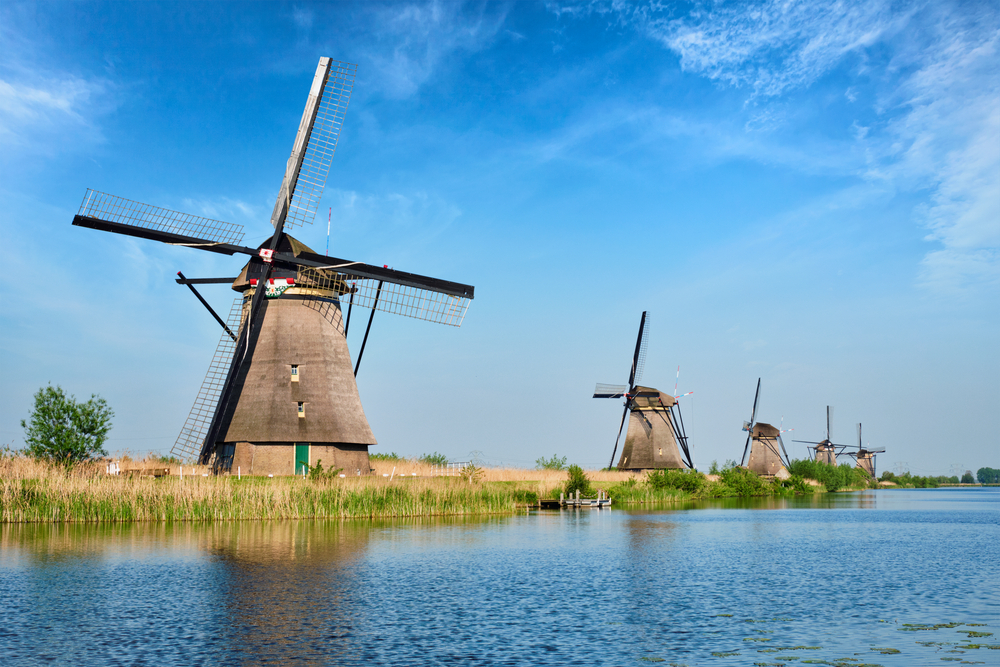
Does it get any Dutcher than this? Image: Depositphotos
Fancy a wander through seven centuries of Dutch water management?
The Dutch have shown an incredible amount of skill and persistence when it comes to managing water and fighting off the seas, and Kinderdijk is a prime example of their efforts.
Located a quick drive from the city, Kinderdijk is a UNESCO World Heritage Site and one of the Netherlands’ most popular tourist spots.
Stroll along the canals and enjoy the view of 19 picturesque windmills. People actually live in some of them, so who knows? Maybe you’ll make some friends with the locals while you’re here.
📏 Walk distance: A stroll along the canal with windmills is about 1.5 kilometres. 🚌 How to get there: Take a bus from Kralingse Zoom or come by car or bike. 📍 Starting point: Start making your way around the area from the bus stop or the parking lot. 🗺️ Route: Just follow the canal and enjoy the views of the picturesque windmills.
TIP: To beat the crowds, make sure to head to Kinderdijk early in the morning or late in the afternoon.
12. Off to the coast: Hoek van Holland
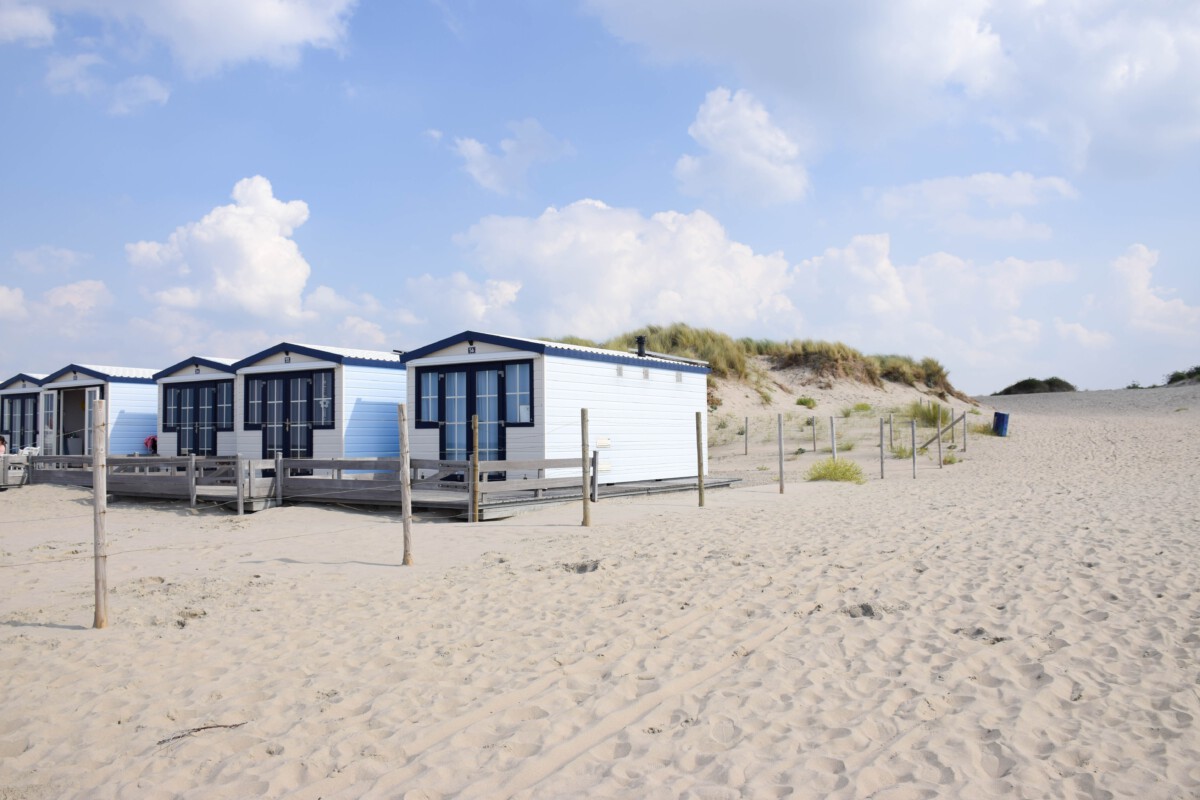
Discover these picturesque beach houses on your walk along the Hoek van Holland beach. Image: Jana Vondráčková/Supplied
What’s better to lift your mood than some vitamin sea? The Hoek van Holland beach offers plentiful opportunities for walks with scenic views.
You can opt for a short two-three kilometre walk and then spend a laid-back afternoon relaxing at the beach or instead go on a longer hike which takes you through the local dunes, forests, and charming villages.
On your way, you can explore the bunkers and underground passages of the Atlantic Wall defence line. The options here are truly endless.
📏 Walk distance: You can opt for walks and hikes between three to 10+ kilometres. 🚇 How to get there: Take the metro from Rotterdam all the way to the Hoek van Holland beach. 📍 Starting point: Many of the walking routes start at the tourist information office on Prins Hendrikstraat. 🗺️ Route: Choose directions based on which route you want to take.
If you’d like to venture beyond Rotterdam and explore other natural areas in the Lowlands, check out our guides on hiking in Amsterdam, The Hague, and Maastricht.
Have you tried any of these walks? Are there any other hikes and walks in Rotterdam that you’d like to see added to the list? Let us know in the comments below!
Germany’s exit polls reflected the wider European trend of centre-left losses amid growing support for the far-right — but unlike the Netherlands, the latter didn’t win.
The CDU/CSU Union (Christian Democrats) received 28.5% of the vote, while the far-right Alternative for Germany (AfD) surged to over 20%.
Germany’s Conservative win is being welcomed in the Netherlands with some cautious relief, reports the AD.
Big hopes for Merz among the Dutch
Friedrich Merz, leader of the CDU and soon-to-be chancellor, faces high expectations — not least in his position against AfD’s vision for Germany and Europe.
Whether swung by the voters’ rejection of Trump and Putin, or Germans wanting to remain in the EU, this win holds great international weight.
In the Netherlands, entrepreneurs, politicians, and researchers see the potential for a much-needed, strong, new German leader in Merz.
Congrats to @_FriedrichMerz on today’s election victory in 🇩🇪 Looking forward to working with you in this crucial moment for our shared security. It’s vital that Europe step up on defence spending and your leadership will be key.
The Dutch are hopeful that Merz’s leadership could urge collaborative projects, such as the building of new CO2 and hydrogen pipelines from the Netherlands to Germany.
Collaboration without far-right ideals
Unlike the Dutch PVV, the German far-right party AfD did not score a win, and Merz outright rejects cooperation with them.
A woman in Zutphen was enjoying her routine sunbed tanning when she suddenly gave birth— without knowing she was even pregnant in the first place.
Using sunbeds while pregnant is not allowed, so she had no idea she would be leaving the salon with a newborn daughter in her arms.
Unexpected UV delivery
The owner of the tanning studio, Fokko Beuker, was stunned (to say the least).
He tells Omroep Gelderland that the woman called for help several times, and he immediately called 112 before grabbing towels and making space for first responders.
Beuker witnessed the entire birth, reporting that the baby “didn’t make a sound, but she was breathing. The umbilical cord was fortunately not around her neck.”
Emergency services arrived too late
Although Beuker quickly jumped to action — the baby had places to be. She arrived in ten minutes, long before the emergency services even got there. 🏃🏻♀️💨
Once help did arrive, they were very prepared.
The midwife was accompanied by an ambulance and trauma helicopter with a medical team.
Thankfully, both the mother and baby were healthy but were taken to the hospital just to be safe.