

Whether you’re struggling with rent, health insurance, or raising kids, Dutch government allowances (toeslagen) can help out.
If you’re eligible for a toeslag, the Dutch government will give you a monthly financial contribution for the costs of health insurance, children, rent or childcare.
Whether you qualify for government allowances in the Netherlands depends on the specific allowance and several personal circumstances, but the general requirements are that you must:
-
Be over 18 years of age,
-
Live in the Netherlands (i.e. with a valid residence permit or as an EU/EEA national),
-
Fall under the income threshold for the respective allowance.
Just arrived in the Netherlands and sorting out your finances? ING, the Netherlands’ biggest bank, is your key to getting your Dutch life off its feet. Whether you’re looking for everyday banking solutions, insurance, or just tips on how to navigate Dutch bureaucracy as an international, ING is for you.
🏡 Huurtoeslag: What you need to know about rental allowance
So, you’ve arrived in the Netherlands — and if you’ve managed to score an apartment (congrats 👏), you’ve probably noticed that rent isn’t exactly… goedkoop (cheap).
The good news? You might be eligible for some financial help from the Dutch government through the huurtoeslag (rental allowance).

The huurtoeslag is a housing allowance designed to help residents on a lower income pay their rent. Besides the general eligibility requirements that apply to all allowances, whether or not you are eligible for huurtoeslag depends on:
-
Your age,
-
Your living situation (including who you live with),
-
Your rental price,
-
Your income, and
-
Your assets and savings.
Let’s break these down.
Your age affects how much huurtoeslag you can get
The first thing to consider when determining whether you’re eligible for huurtoeslag is your age. To apply for rental allowance in the Netherlands in 2026, you must be at least 18 years old.
On top of that, the rent limits differ based on age:
| Age | Maximum basic rent to be eligible for huurtoeslag in 2026 |
|---|---|
| Under 21 years old | €498.20 |
| 21 and older | €932.93 |
Since 2026, there’s no longer a maximum rent to qualify. If your rent is higher than the limit for your age, you can still get huurtoeslag; it’s just calculated over the part of your rent up to that limit.
Want to know how much exactly you could get? You can do a trial calculation on the Belastingdienst’s website.
Income thresholds for huurtoeslag in 2026
While there is no fixed income limit for huurtoeslag (rent allowance) in the Netherlands, the Dutch Tax Office does look at your toetsingsinkomen, a.k.a. your assessable income.
This assessable income includes:
-
Your salary,
-
Income from your own business,
-
Benefits, for example, unemployment benefit or sickness benefit,
-
Your pension,
-
Severance pay,
-
Side income if you’re a freelancer, childminder or newspaper deliverer, for example,
-
Partner alimony, and
-
Income from renting out a home.
If you live with a tax partner, their income usually counts toward the total household income as well. Based on this income, it is determined whether or not you will get huurtoeslag.

Generally speaking, the higher your income, the lower the allowance you’ll receive, and if your income is too high, you may not receive any huurtoeslag at all.
Your rental must be “self-contained”
You must also be able to say that your living space is “independent”. There are three main conditions that your rental must fulfil for this:
-
It has its own front door that can be locked from the inside and outside.
-
It has its own living/ bedroom area, as well as its own kitchen with a cooker and access to water.
-
It has its own private bathroom.
Even if you share an address with others (for example, you and your partner live in the attic, another person lives on the first floor, etc.), your space can be considered independent as long as it meets the conditions above.
💡 Good to know: The Dutch tax office (Belastingdienst) understands that everyone’s housing situation is unique, so they have a helpful guide for those who are unsure of whether or not the huurtoeslag applies to them.
🏥 Zorgtoeslag: What you need to know about healthcare allowance
Let’s say you’re sitting all cosy in your subsidised living space, the plants have been potted, the furniture is a colourful ensemble of IKEA and second-hand, when all of a sudden, you trip over an extension cord and break your arm.
That’s fine, you have health insurance (because, well, you legally have to) — but did you know that you can also receive an allowance to pay your health insurance premium?
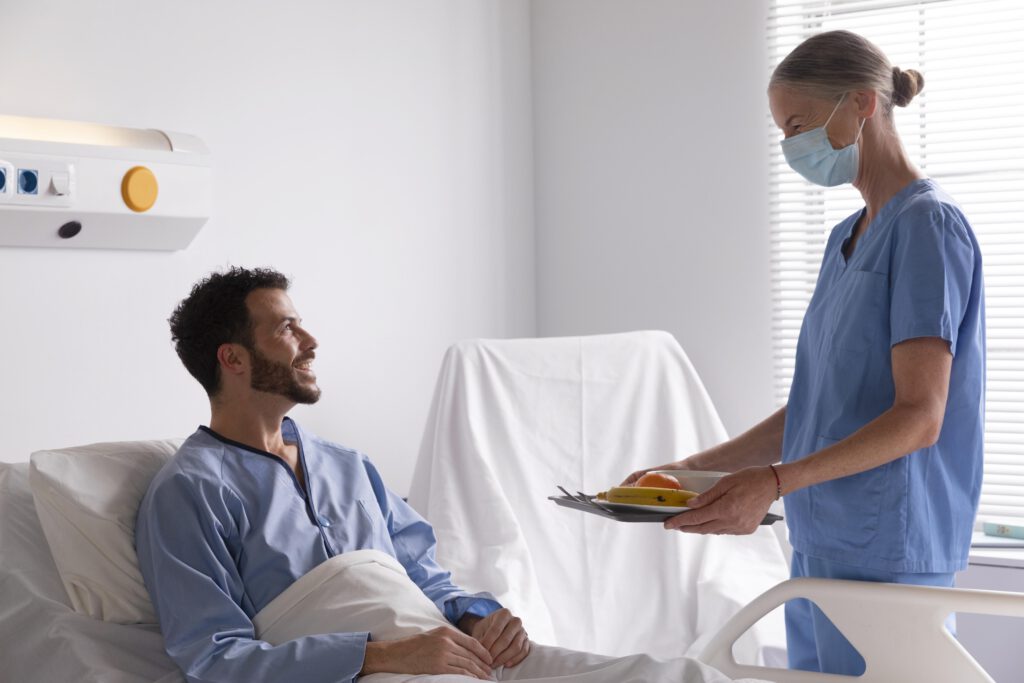
This allowance is called the zorgtoeslag, and it’s a monthly contribution from the government to help you cover the cost of your Dutch basic health insurance.
To be eligible for zorgtoeslag as an international, you must meet the general conditions that apply to all government allowances and have Dutch health insurance.
Don’t have Dutch health insurance yet? How about car insurance or liability insurance? ING’s insurance can cover all of the above. By keeping all your essential finances in one place, ING makes life in the Netherlands simpler — so you can spend less time stressing and more time enjoying what really matters (poffertjes and biertjes).
How much can I get in zorgtoeslag in 2026?
As with the huurtoeslag, the allowance given is based on your personal situation. In 2026, the maximum monthly zorgtoeslag is:
-
Up to €129 per month for single individuals
-
Up to €246 per month for fiscal partners
The actual amount you receive depends on how much you earn. The lower your income, the higher your allowance.
🚨 Let op! Zorgtoeslag is only available if you have at least a basic Dutch health insurance policy (basisverzekering), so if you’re still using a foreign or travel insurance provider, you won’t qualify. Also, health insurance is mandatory for all Dutch residents.
Income and savings limits for zorgtoeslag in 2026
To receive zorgtoeslag, your income must fall below the following thresholds:
-
Under €40,857 as a single person, or
-
Under €51,142 with a tax partner.
Your assets/savings must not exceed:
-
€146,011 as a single person, or
-
€184,633 with a tax partner
What if you’re just a bit over the threshold, you ask? Sadly, even €1 too much in income or savings means you won’t receive zorgtoeslag, as the Belastingdienst is strict when it comes to healthcare allowance.
Good news: You can apply for zorgtoeslag retroactively for up to one year, as long as you were eligible at the time.
👨👨👧 What you need to know about child-related allowances in the Netherlands
Now, let’s say that upon your arrival at the hospital with your broken arm, you meet a charming Dutchie and the two of you hit it off.
Then, let’s fast forward about seven years, and you and your partner have decided to raise a child in the Netherlands!

This is a smart move; the Netherlands is one of the best countries in the world to do so. This is for many reasons, but did you know that you can also get financial help when it comes to having children?
There are three different allowances that you can get from the Dutch government when you have a child in the Netherlands:
-
Kinderbijslag (Child benefit)
-
Kindgebonden budget (Child-related budget)
-
Kinderopvangtoeslag (Childcare allowance)
Between taxes and benefits, Dutch finances can get complicated sometimes. If you feel like you need help (or just want to save some valuable time), ING’s collaboration with TaxSavers offers expert guidance tailored to your expat situation.
Kinderbijslag: all you need to know about child benefit
Meaning “child benefit” in English, the kinderbijslag is a national allowance meant to subsidise the general costs of having a child (think: clothes, food, school stuff).
Parents will receive a payment, per child, each quarter from the SVB (Sociale Verzekeringsbank).
The amount given depends on the age of the child:
| Age | Amount per quarter |
|---|---|
| 0-5 | €298.40 |
| 6-11 | €362.35 |
| 12-17 | €426.29 |
Parents can also apply for a double child benefit if the child has extra educational needs or a health condition.
Am I eligible for the kinderbijslag?
Anyone who lives and works legally in the Netherlands will receive the kinderbijslag once they have a child.
However, if you work for an employer or client that is based outside of the Netherlands in a non-EU/EEA country, things are different.

If the employer/client does not have a social security agreement with the Netherlands, then you may not be entitled to this specific allowance.
Kindgebonden budget: all you need to know about the child budget
The next allowance to consider is the kindgebonden budget, which translates to the “child-related budget”.
This is an extra monthly payment from the Belastingdienst meant to help families with lower or middle incomes.
Those who qualify for the kindgebonden budget receive an allowance each month, which adds up to the following per year:
| Number of children | Single parent with an income of up to €29,736 | Parent with tax partner and an income of up to €39,141 |
|---|---|---|
| 1 child | €5,996 per year | €2,580 per year |
| 2 children | €8,576 per year | €5,160 per year |
| Per child above 3 | €8,576 + €2,580 per extra child per year | €5,160 + €2,580 per extra child per year |
Once your children reach a certain age, you will also get more money, with an extra €724 per year for children above 12 and an extra €964 per year for children above 16.
Am I eligible for the kindgebonden budget?
As long as you are living in the Netherlands legally, you will be able to apply for the kindgebonden budget. In fact, if you’re eligible, the Belastingdienst will usually automatically notify you.
Whether or not you are eligible to receive the kindgebonden budget depends once again on some conditions:
-
Your child must be under the age of 18,
-
You and your partner must earn below a certain level (you can calculate it here),
-
Your and your partner’s joint assets must not be too high,
-
You must already be receiving the kinderbijslag.
Kinderopvangtoeslag: all you need to know about childcare allowance
The final allowance that may be available to you as a parent in the Netherlands is the kinderopvangtoeslag.
This allowance is meant to help you pay for any childcare that your child may need, such as daycare, after-school care, or childminders.
The amount you receive depends on the number of hours you work and the type of childcare your child goes to. There is a maximum hourly rate that the government reimburses in 2026:
| Daycare | After school care | Childminder |
|---|---|---|
| €11.23 per hour | €9.98 per hour | €8.49 per hour |
Am I eligible for the kinderopvangtoeslag?
You are eligible to receive the kinderopvangtoeslag as long as both you and your partner are legal residents in the Netherlands and meet the following conditions:
-
You and your partner are both working (or studying) and therefore cannot take care of the child.
-
Your child is going to a registered daycare.
-
You and your child are both registered at the same address.
Again, the amount you’ll receive depends on your own individual situation, such as how many hours you work and the cost of your chosen childcare.
READ MORE | The ultimate guide to finding a babysitter in the Netherlands
Regardless of how much time you have with your child, it doesn’t hurt to consider whether or not you can be compensated for the cost of childcare.
How to sign up for toeslagen in the Netherlands in 2026
Now that you know about all the allowances that exist, their requirements and limitations, it’s time to learn how you can apply for them.
There are three easy steps involved in this:
1. Log in to Mijn Toeslagen using your DigiD: This is your personal portal for applying for allowances, checking your status, reporting changes (like income, address, or roommates), and stopping toeslagen if you’re no longer eligible.
2. Fill in your details, namely:
-
Your income estimate for the year
-
Details about your rent (for huurtoeslag)
-
Your health insurance information (for zorgtoeslag)
-
Childcare provider contract (for kinderopvangtoeslag)
-
Your bank account number (IBAN)
3. Submit and wait: You’ll usually receive a provisional calculation (voorschotbeschikking) of your allowance(s) within a few weeks. If approved, you’ll start receiving monthly payments.
Got a new job? Moving to a new place? Partner moved in? Exciting! Report these changes to the Belastingdienst ASAP via Mijn Toeslagen.
Otherwise, you risk overpayment and nasty surprises later (yep, they’ll make you pay it back).
Are you eligible for government allowances in the Netherlands? Or do you have any tips to make the application process easier? Let us know in the comments below!