Home Blog Page 481

Turn down the dial: Dutch gas prices just jumped to an all-time high

In the Netherlands, 1 is considered the symbolic benchmark for the maximum cost of a cubic metre of gas. However, prices surpassed that earlier this week — meaning it’s never been so expensive to heat your house.

With prices above the €1 mark, the average household in the Netherlands may pay up to €1,500 on heating costs on a yearly basis, reports NU.nl.

READ MORE | The cost of living in the Netherlands in 2021

Suppliers concerned there won’t be enough gas for the winter

One of the reasons for the increase in gas prices is the weather. (No joke, there’s always a reason to complain about the Dutch weather! 😂).

Essentially, the relatively cold winter and spring led people to keep their heating on for longer — and hence used more gas throughout the year. As a result, Dutch gas storage facilities are emptier than in previous years.

According to Martien Visser, who is professor of energy transition at Hanze University of Applied Sciences Groningen and an expert in energy supply, gas stores would normally be about 80% full this time of year.

However, they’re currently only half full.

The half-empty stores cause energy suppliers to hike up prices as they’re concerned they won’t be replenished in time for the winter.

READ MORE | 10 dang smart ways to save on energy costs in the Netherlands

Gas diverted elsewhere

What do Russia, the Middle East, and a malfunctioning processing plant have in common?

In short, they’ve all affected gas prices in the Netherlands.

However, as much as we love to blame the Dutch weather for things, it’s not entirely to blame for your high energy bills.

International developments, such as Russia pursuing different routes for its pipeline, mean less gas is coming from other parts of the world to the Netherlands (and Europe in general).

Gas from the Middle East and the US is also being diverted away from Europe. Specifically, a rapidly increasing demand for gas in Asia is pushing prices up in that part of the world and, resultingly, suppliers are more likely to sell their gas there.

An analysis from ABM AMRO also shows that a malfunction in a gas processing plant has affected the price hike.

Price increase is most noticible for consumers entering new energy contracts

If you have a permanent energy contract that’s continuing for another few years, you won’t notice the new gas prices. Instead, you continue to pay the agreed-upon rate.

However, almost half of the consumers in the Netherlands have variable energy contracts. According to those contracts, gas prices are adjusted every six months (on January 1 and July 1). While there was a slight price hike on July 1, gas prices are even higher now.

It’s not certain what consumers should expect prices to look like on January 1, but ABNA Amro foresees that the price level remains elevated until 2022.

READ MORE | Gas, electricity, water and more: ultimate guide to utilities in the Netherlands

Taxes could play a big role

The predictions by ABM Amro, however, are only half of the story.

While the bank analyses the purchasing price of suppliers, the rate consumers pay for their gas is elevated by taxes. In fact, half the price paid by consumers in the Netherlands is tax.

According to Martien Visser it’s not clear which direction the Dutch government want to take those taxes: “There are parties that want even higher taxes to stimulate the transition to sustainable energy sources. If the gas price for consumers is high, it also pays off faster to insulate the house.”

Have you noticed gas prices going up? And what do you think of a potential tax increase? Tell us in the comments below!

Feature Image: AndreyPopov/Depositphotos

Hold up! Dutch government announces new restrictions for three holiday destinations

Don’t forget to pack your certificates! The latest travel advice released by the Dutch Ministry of Foreign Affairs has announced new travel restrictions for Bulgaria, Norway, and Adriatic Croatia.

The Dutch Government recently updated its travel advisory for the three hot European travel destinations as their coronavirus status has changed from green to yellow on the European Prevention for Disease Control (EPDC) map. 

Visitors (or Dutchies on vacation) returning from these three destinations to the Netherlands are now required to show a corona certificate as of 21 August 2021.

On the bright side

The Netherlands’ number of coronavirus infections are continuing to decrease since our last update.

Four provinces on the Dutch corona map are moving in the right direction from red (4% of PCR tests coming back positive) to orange (less than 4% PCR tests are coming back positive) on the (EPDC) Map released today. Could this be a positive indication for the rest of the country? We certainly hope so!

The provinces of Gelderland, Overijssel, Utrecht, and Noord-Brabant, went from red to orange, while Groningen, Friesland, Drenthe, and Zeeland remain orange on the map for now according to the (EPDC.)

The EU’s latest

While the coronavirus news is showing some positive signs for the Netherlands, the latest ECDC map has also told a different story for Germany as the country is experiencing a speedy increase in cases compared to the previous weeks.

All German provinces have stepped backwards moving from green to orange status. France is now updated to reflect red on the map, while Spain is showing signs of improvement with certain regions moving from dark red to red.

Planning a vacation sometime soon? Always check the latest travel restrictions for a list of what’s required for your return to the Netherlands.

Follow DutchReview on Facebook for the latest coronavirus news and updates in the Netherlands.

Feature Image: Cody Black/Unsplash

Employee fired after being caught coughing at work

An employee from the chemical company DuPont in Dordrecht will be dismissed after he appeared at his work in mid-March with a heavy cough and refused to go home (yuck!). To make matters worse, he tested positive for coronavirus two days later 😱

Despite the employee working there for more than 20 years, a subdistrict court granted his dismissal — but not for the reason that you might think. 

While the company fired the employee because he came to work with a cough and refused to go home, the dismissal was upheld by the subdistrict court because the trust between the employee and employer had been irreparably damaged — echt?!

Alright, here’s what happened

On March 15, 2021, the employee arrived at work with cold symptoms. Several of his colleagues heard him coughing heavily and told him to go home, reports RTL Nieuws.

However, the man claimed that his symptoms were not that bad and were actually caused by his bronchitis (umm sure thing pal!) and refused to go home. A day later, the employee called into work sick and on March 17 he tested positive for coronavirus (surprise, surprise). 🤧

The ruling

The subdistrict court determined that the employee’s actions alone were not grounds for dismissal as he was following his employer’s protocol by staying home in the following days and getting tested for coronavirus. 

However, the district judge did find the employee guilty of violating the trust of his employer by refusing to go home after his colleagues asked him to do so multiple times. Turns out Dutch directness wasn’t enough for him to go home! 

Case dismissed

The district judge determined that the employee’s actions warranted a dismissal from DuPont, with a severance of €23,000 — a far cry from the original €200,000 the employee originally tried to get. 💰

What do you think of the ruling? Let us know in the comments below!

Feature Image: kleberpicui/Depositphotos

Goodbye freebie coronavirus tests: government wants access tests paid for

During a recent coronavirus debate in the House of Representatives, a narrow majority came out in support of people paying a contribution for access tests in the future.

Remember in the early days of the vaccination process when people were offered free herring at the vaccination sites as an incentive to get their shots? (So Dutch).

Up until this point access tests for events have been given for free. However, RTL Nieuws reports that several political parties submitted a motion asking the government to work towards a policy where people make a personal contribution to their tests in the future, now that most people have had the opportunity to be vaccinated.

Essentially, these parties are trying to incentivise people to get their jab — no more free fish.

The practicalities

Egalitarian as ever (we love that), these parties suggested that a compensation effort of some sort should be made for people who “cannot be vaccinated”.

In addition, they recommended that the policy of paying for access tests should also lapse if “testing for access becomes necessary regardless of vaccination status”. The change will also only take place once everyone has had the opportunity to be vaccinated.

Government policy  

During the press conference last Friday, the cabinet announced that it wants to introduce a policy where visitors to catering establishments, events, festivals, sports competitions, and cultural gatherings must show evidence of a negative test or vaccination if more than 75 guests are present.

How much might this contribution be?

The outgoing minister of health, Hugo de Jonge mentioned a possible amount of €7.50 for the personal contribution.

Resistance from other members of parliament

Although the majority of the House of Representatives were in favour of people making a personal contribution to their access tests, there were of course the neigh sayers — we’re looking at you Geert Wilders.

Lilian Marijnissen, the leader of the Socialist Party also opposed the motion, fearing that a scenario in which “people who do not want or cannot be vaccinated or who cannot afford the test” may be excluded from accessing events.

But since the cabinet wants it, and the majority of parliament supports it, you can bet that we’ll be paying for these tests in the upcoming fall.

What are your thoughts on the idea of people making a personal contribution to access tests? Tell us in the comments below!

Feature Image: Mufid Majnun/Unsplash

Netherlands ranks #2 among high-income countries for healthcare

The Netherlands has appeared in the top three out of 11 high-income nations when comparing the performance of healthcare.

We all love to have a good whine about the Dutch healthcare system: the insurance is too expensive, the doctors will only prescribe paracetamol, blah, blah, blah.

Well, it turns out we’re a bunch of moaners because the healthcare system in the Netherlands is among the top in the world — according to a recent study by The Commonwealth Fund.

The study identified 71 performance measures across five domains: access to care, care process, administrative efficiency, equity, and health care outcomes.

Of the 11 high-income countries compared, Norway, the Netherlands, and Australia all came out on top.

Doing healthcare the Dutch way

The Netherlands was the top-scoring country when it came to accessing care, ranking well on affordability and timeliness.

Residents of the Netherlands are far less likely than in other countries to report that their insurance denied payment of a claim or paid less than expected. They’re also far less likely to report difficulty paying medical bills.

The Netherlands also reportedly has quick and often available care outside of business hours. The study highlighted the requirement of Dutch GPs to provide at least 50 hours of after-hours at cooperative GP posts every year. If a GP fails to do so, they risk losing their medical licence.

Finally, the privatisation of the Dutch healthcare system works to the Dutch’s benefit. There’s a mandatory minimum basic benefits package, and features like keeping premiums lower for sicker individuals and cost-sharing caps mean that insurers have to compete on service and quality — not by avoiding insuring people with higher health risks.

Bottom of the heap

Any guesses as to who came in the last place? You got it! The United States.

In fact, despite spending far more of its GDP on health care, the US still was the worst in the ranking. Americans, we feel for you. ⛑

How high-income countries rank on healthcare

  1. Norway 🇳🇴
  2. Netherlands 🇳🇱
  3. Australia 🇦🇺
  4. United Kingdom 🇬🇧
  5. Germany 🇩🇪
  6. New Zealand 🇳🇿
  7. Sweden 🇸🇪
  8. France 🇫🇷
  9. Switzerland 🇨🇭
  10. Canada 🇨🇦
  11. United States 🇺🇸

Hiep hiep hoera, Netherlands! We promise we’ll try to complain less about our insurance bill in the future (key word: try).

How do you find the healthcare system in the Netherlands? Do you think it deserves this ranking? Tell us in the comments below!

Feature Image: VitalikRadko/Depositphotos

Top of the class: three Dutch universities make it into top 100 of international ranking

The Center for World-Class Universities at Shanghai Jaio Tong University, China has released its annual ranking of the best universities in the world. Three Dutch universities have claimed a spot in the top 100, with Utrecht University decisively coming out on top.

The Academic Ranking of World Universities (ARWU) has been published annually since 2003 by the Shanghai Jaio Tong University in China. The Shanghai Ranking uses six objective indicators to review 1,800 universities around the world in order to come up with a list of the best 1,000. These include:

  • The number of alumni and staff winning Nobel Prizes and Field Medals
  • Number of highly cited researchers
  • Number of articles published in journals of Nature and Science
  • Number of articles indexed in the Science Citation Index and Social Sciences Citation Index
  • The per capita performance of a university

Top performers

As usual, the top spots have been nabbed by American and British universities — think Harvard, Stanford, and Cambridge. We aren’t too surprised there. The top-performing European university this year is Paris-Saclay in 13th position on the list, with ETH Zurich coming in at spot 21.

Utrecht University leads the Dutch universities

Utrecht University (UU) has been ranked by the Shanghai Ranking as the best university in the Netherlands for the 19th year in a row. 🥳  UU came in at 50th place. Yes, that’s right, it’s the 50th best university in the whole world this year! Utrecht University has jumped up two spots in 2021, slightly improving on last year’s ranking of 52nd place.

Other Dutch universities performing well

Utrecht University wasn’t the only highly ranked Dutch university this year. Both Groningen University and Leiden University were also ranked in the top 100, coming in at 64th and 83rd place respectively.

Erasmus University Rotterdam falls just outside of the top 100 this year, being ranked in the 101-150 band. The university has slid significantly down the list in recent years, falling from 80th place in 2020.

What are your thoughts on the successes of the Dutch universities? Tell us in the comments below!

Feature Image: Mlehmann/Depositphotos

Evacuation attempt of Dutch nationals at Kabul Airport fails — citizens left at gate

A second attempt to evacuate Dutch citizens from Kabul’s airport has failed once again, leaving families behind at the gate. The city has now been held by the Taliban for four days.

A large cargo plane was sent by the Ministry of Defense to evacuate Dutch citizens waiting at Kabul airport last night. However, the huge aircraft took off with only 40 people on board — none of whom were either Dutch or Afghan, the ministry tells the NOS.

A lack of clarity

According to reports by the NOS, there are a number of reasons why the evacuation efforts failed. One source tells the news agency that American soldiers fired shots at the airport yesterday afternoon. One person was killed as a result and this is believed to have led to a tightening of security at the airport.

The soldiers are also reported to have stopped Afghans from entering the airport. On top of this, many Dutch citizens could not reach the airport due to bad traffic, according to social media reports.

Left behind

Those who could make it to the airport were met with many constraints. Aryan (20) tells the NOS about his family’s efforts to make it to the aircraft. His parents, 17-year-old sister, and 3-year-old brother had been visiting family in Kabul when the city fell.

Aryan’s family made it to the gate but they were stopped by the American soldiers on guard.

“I showed my passport there and said that I am Dutch. There was a lot of noise, I did not hear very well what the American was saying. After I said three times that I am Dutch, he said that I had to keep my distance or he would shoot. I decided to leave. I didn’t want to risk being shot.”

Aryan’s family were not the only ones left waiting at the gate. Outgoing Minister of Foreign Affairs, Sigrid Kaag, described the situation at the airport as “fluid and chaotic” explaining that the Dutch aircraft was only allowed 30 minutes to board its passengers. As a result, “a lot of people were standing at the gate of the airport.”

Hopefully better today

Today, another evacuation effort will be made with 60 Dutch soldiers involved. Kaag hopes that the aircraft will be allowed more time to carry out the evacuation, but explains that this is all in the hands of the Americans at the airport.

“We want the Americans to give us more time. There must be more time than half an hour. We will continue to work in a European context on better coordination”, she says.

Follow DutchReview on Facebook for the latest news and updates.

Feature Image: slickspics/Depositphotos

Say “Doei!” to summer: experts confirm no more tropical temperatures

Over before it began: that’s how we’ll remember the summer of 2021.

Unlike last summer when we frolicked in the seas and canals during the multiple 30+ degree days, this summer has left us in a permanent waiting room.

Temperatures are unlikely to exceed 30 degrees from here on out, says Buienradar meteorologist Maurice Middendorp, making tropical weather a no-go.

“It becomes clear that the chance is very small that we will still have high temperatures before the end of August,” he says.

Thankfully, we don’t need palm trees and white sands to feel warm (otherwise we wouldn’t live in the Netherlands, right? 😉) Middendorp says that temperatures above 25 degrees are still possible — and that’s good enough for us!

🌥 Today: grey clouds all the way

The mercury will rise to 18 to 20 degrees today, but it will remain cloudy with the odd patch of sun forcing its way through. Thankfully, the rain of previous days will be (almost) gone.

⛅️ Tomorrow: cool summer day

If Vitamin D is the name of the game, tomorrow is at least a competitor. We’ll have a little more sun compared to today, but there’s a good chance of at least one shower for those who are inland. Temperatures will top out at 20 degrees.

🌦 Friday: starting to heat up

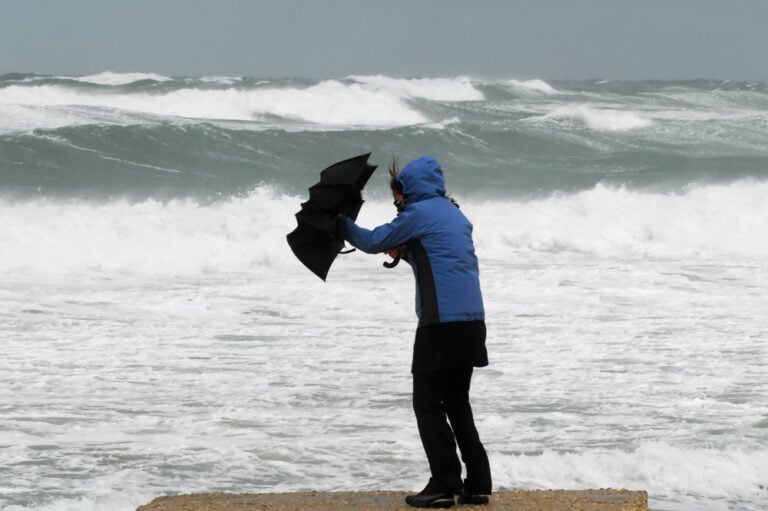
Rain, clouds, and a little bit more sun: that’s what Friday will look like. Make sure at your outdoor borrel this week you have a drink in one hand — but an umbrella in the other. Dress for 14-22 degrees.

☀️ Saturday: sun arrives for one day, one day only

Slip, slop, slap on that sunscreen on Saturday — the temps could jump over 25 degrees in the east and south of the Netherlands, 20 in the north, and 23 in the middle.

⛈ Sunday: it all goes away

Make sure you use Saturday well: Sunday has a chance of thunderstorms. 😲 However, temps will hover around 20 degrees, just warm enough to make you sweat in your raincoat.

Are you looking forward to this week’s weather? Tell us in the comments below!

Feature Image: Mimagephotos/Depositphotos

Weekly update: there’s light at the end of the tunnel

The RIVM has released its weekly coronavirus figures from August 11 to August 17. The number of infections has decreased compared to the previous week.

Over the past week, the RIVM has reported 16,564 new infections in the Netherlands. This is a drop compared to last week’s report of 18,048 new infections. The percentage of positive tests increased to 14,6% compared to 12.9% the week before.

After weeks of continuous drops in numbers, the Dutch government is starting to make plans for the restriction-free Netherlands.

Deaths

The number of patients who have died from COVID-19-related complications has gone down. This week, 42 people passed away, compared to 46 people the previous week.

Hospitalisations

Hospitalisations have continued to decrease with the number of admissions to the ICU also decreasing. The past week saw 318 new admissions to the nursing ward and 90 new patients in the ICU. The week before, there were 421 and 115, respectively.

Dutch government aims to end all coronavirus measures on November 1

At last Friday’s press conference, Mark Rutte and Hugo de Jonge outlined their plans for further relaxation of measures in the Netherlands — and it looks like big changes are coming our way!

Provided that infections and hospitalisations stay low, the Dutch government aims to abolish all restrictions on November 1. This will happen in stages, starting with the reopening of higher education without social distancing.

The next step is to remove the requirement of one and a half metres distance in society at large on September 20. If all goes well, we should be living in a coronavirus-restriction-free country by November!

Higher education in the Netherlands to reopen without social distancing

The days of taking classes in your pyjamas are over! Dutch universities and MBO education will begin on-campus teaching after the summer.

Within faculty buildings, students and staff will no longer have to adhere to the one and a half metres distance requirement. Some minor measures, such as one-way traffic in hallways and a maximum of 75 students per lecture hall are staying in place for now.

GGD data leak revealed to be more extensive than first thought

Back in January, it came out that the GGD had suffered a data leak. Now, it turns out that it was much larger than initially reported and that many victims weren’t informed.

Initially, it was reported that the data from 1,250 people — including their date of birth, address, full name, BSN, and telephone number — had been stolen.

However, the GGD recently confirmed that the actual number of victims is still unknown.

Follow DutchReview on Facebook for the latest news and coronavirus updates.

Feature Image: kiko_jimenez/Depositphotos

More good news: coronavirus recession is officially over in the Netherlands

Not only are the Dutch coronavirus measures slowly coming to an end but the Netherlands has also made it to the other side of the recession!

This is apparent from the preliminary calculations by Statistics Netherlands (CBS). The report shows that the Dutch economy has grown by 3,1% in the second quarter of 2021, compared to the first.

How the lockdown effected the Dutch economy

Moreover, GDP (gross domestic product) in the second quarter grew by 9,7% when compared to the same period last year. According to CBS, that’s the largest year-over-year growth the Netherlands has ever seen. 🤩

The phenomenal growth is mainly due to the lockdown last year which resulted in a drastic drop in GDP.

Compared to last year, it’s especially household consumption and the trade balance that’s increased.

Spendings post-lockdown

In the second quarter of 2021, consumers spent 9,3% more than during the same quarter in 2020. The reopening of the shops and catering has had a large effect on this and CBS explains that consumers mainly spent more on catering, medical services, clothing, and cars.

Although it’s the main driver of the exceptional year-over-year growth, household consumption is still 5% lower than in pre-corona times.

Almost at pre-corona levels

While the Dutch economy has made a serious comeback, it’s still not at the same height as the second quarter two years ago.

To be precise, it’s 0,4% smaller — with only government consumption and exports being higher in the second quarter of 2021 than in the second quarter of 2019.

Nevertheless, the Dutch economy is performing better than the European average.

Have you noticed your consumption patterns change over the past year? Tell us in the comments below!

Feature Image: harrybeugelink@gmail.com/Depositphotos