Does swooshing through low-pressure tubes, powered by an entirely electromagnetic propulsion system sound futuristic to you? Well, then the future just got one step closer!
Not only is that a lot of money but it also shows that the European Commission really believes the hyperloop could be the future of sustainable high-speed travel.
Hold on a second, what even is a hyperloop?
A hyperloop is the new public transport. Forget expensive and polluting flights. Forget slow but less-polluting trains. The hyperloop is an energy-efficient and CO2 neutral form of high-speed travel. 😎
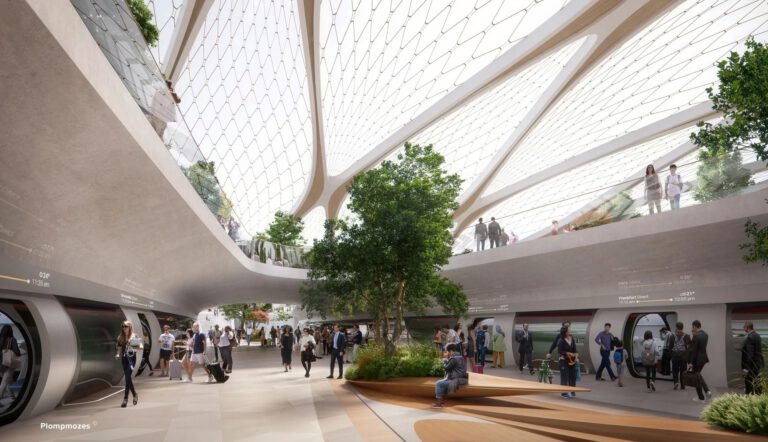
Like almost any sci-fi movie you’ve ever watched about future cities, the hyperloop will transport you from A to B in an autonomous vehicle travelling at high speed through metal pipes.
The investment technically comes from the European Innovation Council, which has awarded funding to a number of companies that are leading the way with world-changing innovations.
However, it’s also a step towards realising the European Green Deal — and hence the elimination of greenhouse gas emissions by 2050. 🙌
The co-founder of Hardt, Tim Houter, says the support from Brussels “will help to accelerate the development of a European hyperloop network, bringing us much closer to significant CO2 savings. European cities will be connected smarter, faster and cheaper.”
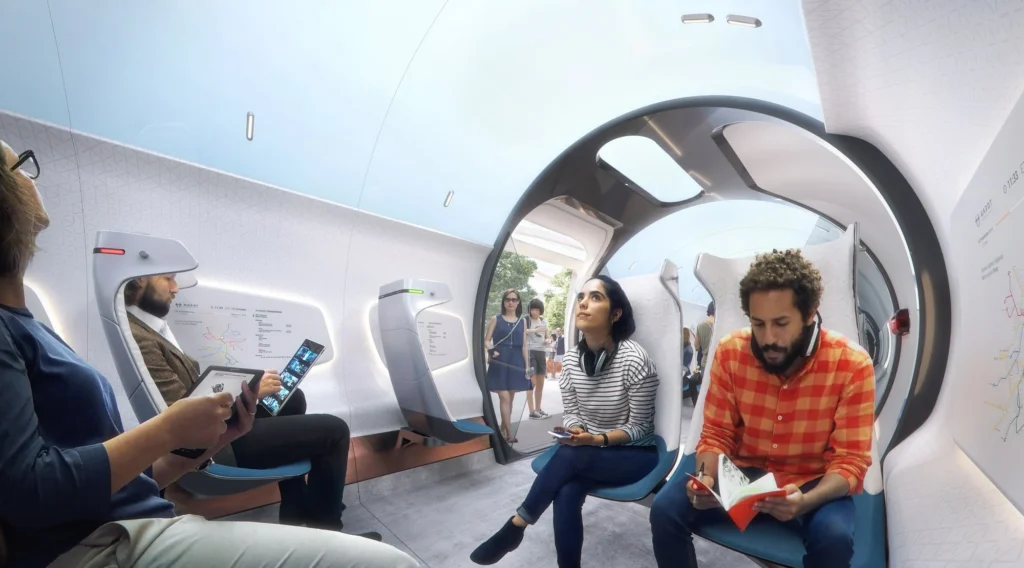
Of course, it also has a snazzy and sleek interior. Image: Hyperloop Development Foundation/Plomp/Supplied
Groningen will soon be home to the European Hyperloop Center
The €15 million will also be noticed in Groningen where a so-called Hyperloop Centre is on its way. There, a test facility will prove the hyperloop’s advantages in action.
Importantly, the Groningen test facility is due to demonstrate lane-switching for high-speed hyperloop in 2023. And while lane-switching may not sound revolutionary, it’s the key to a hyperloop network in Europe that’ll take you on vacation in France (or wherever) without any intermediary stops. Pretty neat, honestly.
What do you think of a European hyperloop network? Tell us in the comments below!
Feature Image: Hyperloop Development Foundation/Plomp/Supplied
Based on the latest figures from the Dutch National Institute for Public Health and the Environment (RIVM), the percentage of people who contracted coronavirus at their workplace or in catering establishments is on the rise.
The percentage of such cases has risen from 5.3% in September to 9% in October according to nu.nl — so keep those runny noses at home. 🤧
While the source of infection cannot be traced for everyone who tests positive for the coronavirus, the workplace and catering establishments were identified as the source of infection for 4 in 10 who tested positive in the Netherlands last week.
Not put a damper on all your working at the office plans (if any) but more than half of the positive results were traced back to infections happening at home where individuals contracted the virus from already infected housemates or family members. 🛋
Precautions
More shockingly, the RIVM was able to detect that 16% of infections were caused due to people visiting each other. Is it rude to temperature check guests at the door? 🚪😓
Dutch coronavirus infections are also on the rise in nursing homes, jumping from 1.9% in September to 3.9% in October.
What do you think of the latest RIVM data on where people are contracting coronavirus the most in the Netherlands? Tell us in the comments below.
The RIVM has released its weekly coronavirus figures from October 19 to October 26. The number of hospitalisations and ICU admissions have increased, while the number of deaths also climbed in the past week.
Over the past week, the RIVM has reported 38,733 new infections in the Netherlands. This is a significant increase compared to last week’s report of 25,751 infections.
The percentage of positive tests also increased to15.3% compared to 12% the week before.
Deaths
The number of patients who have died from coronavirus-related complications has increased significantly in the past week. This week, 78 people passed away, compared to 48 people the previous week.
Hospitalisations
Both the number of admissions to the nursing ward and the ICU has gone up. The past week saw474new admissions to the nursing ward and 110 new patients in the ICU. The week before, there were 353 and 84, respectively.
Cabinet considering new measures
The cabinet will be holding a press conference on November 2 to discuss possible new measures in light of the rising Covid-19 infections amid the relaxation of the measures — reports RTL.
It’s still not clear what the potential new measures would look like, according to outgoing Health Minister, Hugo de Jonge.
The news comes less than a week after the chairman of the Outbreak Management Team (OMT), Jaap van Dissel, said that he didn’t expect a lockdown or curfew this winter.
Booster shots are being offered to Dutchies with immune disorders
Beginning two weeks ago, Dutchies who have a serious immune disorder have started receiving their invitations for a third coronavirus shot, a.k.a. a booster shot. The process of booking a jab is the same as it was for the first two.
For the time being, the Health Council doesn’t consider it necessary for the rest of the population to receive a booster shot. However, this could change if it turns out that protection against COVID-19 offered by the vaccine declines significantly over time.
A high-risk country again: the Netherlands turns red on the coronavirus map
On October 7, the Netherlands went from red to orange on the ECDC coronavirus map, meaning that the country was no longer considered ‘high-risk’. There was even hope that some provinces would soon turn green (low-risk).
However, just a week after turning orange, the Netherlands went back to red again, as the number of infections increased significantly.
Follow DutchReview on Facebook for the latest news and coronavirus updates.
You’ve made the decision to move to Amsterdam and have read everything you could on the internet — so there’s nothing that can possibly surprise you, right?
Wrong! From quirky to mind-blowing, to cute, here are nine things that will surprise you when you move to Amsterdam.
1. There’s a lot of bureaucracy involved
Moving to a new country or city is always an adventure. Even when it’s a very well-organised country such as the Netherlands, the move involves a lot of preparation and paperwork.
There are a couple of hurdles you have to get over when starting your journey in Amsterdam, and you really have to get over the first in order to get to the second.
Ever heard of a BSN number? Well, this eight, or nine-digit number will prove essential and is the first step in sorting out your new life in Amsterdam. You are allocated this number when you register with the municipality.
You need your BSN number to set up your bank account, and you need a bank account so you can set up your insurance and mobile contract, and of course, so that you can be paid for all your hard work. But in order to be able to register you need to have a rental contract, and we all know how tricky finding an apartment in Amsterdam can be. 😅
2. Amsterdam has the most culture per capita in the world
So, whether you want to feel fancy with an evening of highbrow orchestral music at the Concertgebouw, or you prefer some dirty techno beats, Amsterdam has you covered. If you’re a museum fiend, you can marvel at the works of the Grand Masters in the Rijksmuseum and Van Gogh Museum or get that all-round Amsterdam experience by visiting the Sex Museum. This city truly has something for everyone!
3. Curtains are not really a thing…
Beautiful curtainless houses in Amsterdam. Image: Neirfys/Depositphotos
It may come as a huge surprise to you when you arrive in Amsterdam to find that the majority of Dutchies don’t have curtains. Or if they do have them, they just don’t use them. 😅
There are a multitude of theories about why Dutchies don’t like drawing their curtains — ranging from the country’s Calvinist tradition of being transparent, to showing that they’re decent, normal people who aren’t plotting anything sinister. The most practical reason for this is probably that most houses in Amsterdam are on the smaller side and closing the curtains makes them feel more claustrophobic, especially on those long summer evenings.
Strange as this may seem at first, you may — like us — grow to love being able to take a little peek at people’s quirky interior decorating styles. Just remember to draw your own blinds when you do your little happy dance after you shower.
4. …and neither are credit cards
Many internationals have been caught out over the years when their credit card has been declined in the local supermarket. Embarrassing… and a little traumatic. The reason for this? Dutchies don’t do debt, which means that credit cards are generally off the table.
Debit cards are far more commonly used in the Netherlands. For this reason, it’s pretty essential to get a Dutch bank account if you’re going to be staying in Amsterdam for any length of time.
To avoid credit card payments online, the Dutch also have their own online payment system: iDeal. It’s a secure web platform where you can transfer money directly from your bank account to the business you’re purchasing from — no credit card needed.
5. Amsterdam actually stands on millions of wooden poles
We all know the Netherlands is rainy, but did you know that Amsterdam was built on a swamp? As a result of this, the city was erected on about 11 million wooden poles which stretch 11 metres deep into the ground to support the buildings and prevent them from sinking.
It’s not just buildings either! There are even some trees in the Vondelpark that are supported by wooden poles to stop them from slipping into the soggy ground. 🌳 Alright, it won’t affect your daily life so much after moving — but it is a fun fact to surprise your new neighbours with!
6. Amsterdammers know a healthy work-life balance
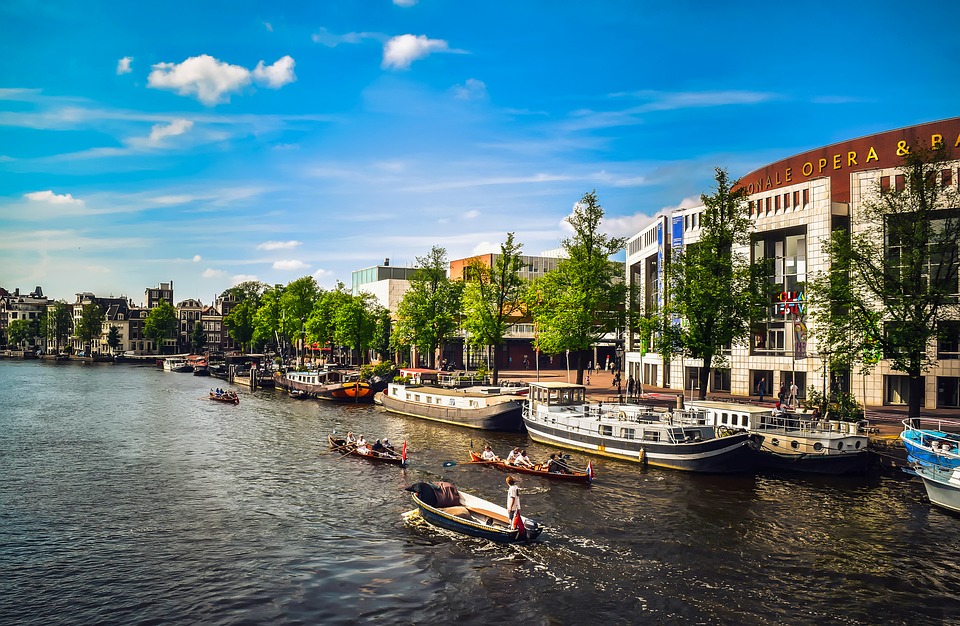
Nothing like Amsterdam on a warm summer’s day. Image: 12019/Pixabay
The Dutch work hard but they also play hard. As a result, the Netherlands is known as one of the best countries in the world for having a healthy work-life balance. An important aspect of work-life balance is the amount of time a person spends at work. The OECD Better Life Index found that only 0.4% of Dutch employees work very long hours, whilst the average for other countries is 11%.
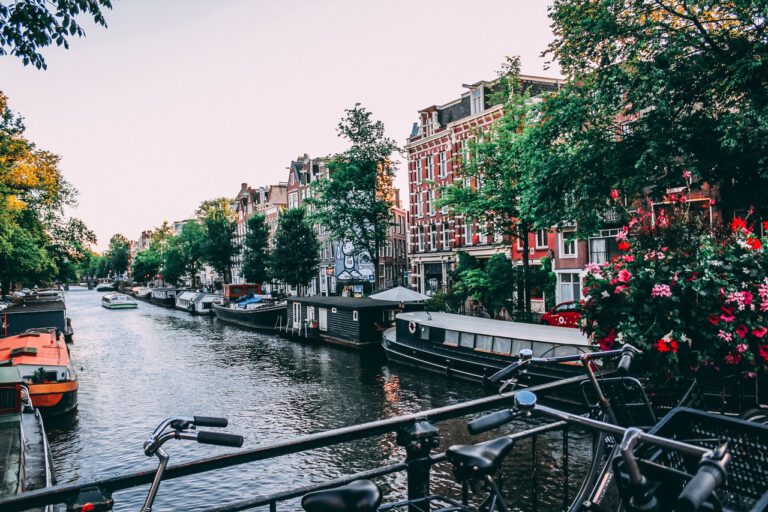
Need some proof? If you ask us, the best thing about summer is cruising down Amsterdam’s sunny canals on a late afternoon and seeing them lined with people enjoying a biertje or a bottle of wine with their friends after work — geen lange uren (no long hours) here! 💁♀️
7. Amsterdam is one of the most multicultural cities in the world
With people of 180 different nationalities calling the Dutch capital home, Amsterdam’s population is one of the most diverse in Europe. For centuries immigrants have been attracted to Amsterdam by its prosperity and tolerance.
So, if you’re an Australian missing Tim Tams or a South African missing biltong, or you’re just a little homesick and want to talk to someone with the same accent as you, you’re bound to find all of these pieces of home in Amsterdam.
8. Amsterdam has more than 2,500 houseboats
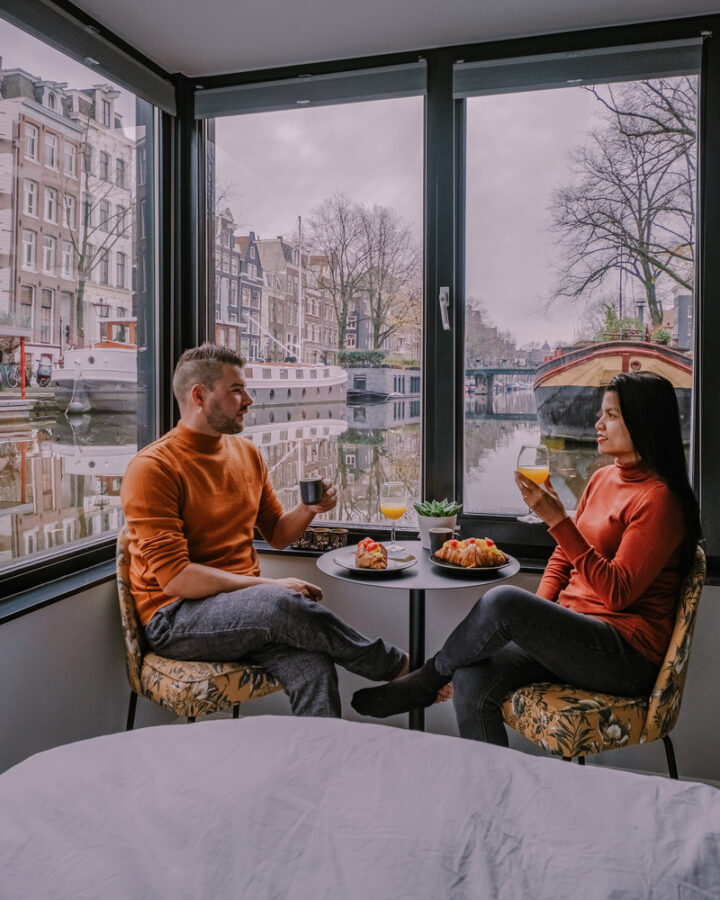
Experience life on the water firsthand. Image: fokkebok/Depositphotos
And more than 5,000 people live in them. There’s even a houseboat for cats — purrrfect! 🐈
Originally, living on a houseboat was considered a sign of poverty. Nowadays, however, houseboats are some of the trendiest accommodations in the city and are in high demand. Many of these unique homes are over 100 years old.
The houseboats in Amsterdam are all anchored at a permanent address — so no, you can’t just sail away down the canal if you want to move to a different neighbourhood. But you can book an overnight stay on a houseboat if you’d like to see for yourself what living on the water is like. Ahoy!
9. Amsterdam’s canal houses are extremely narrow
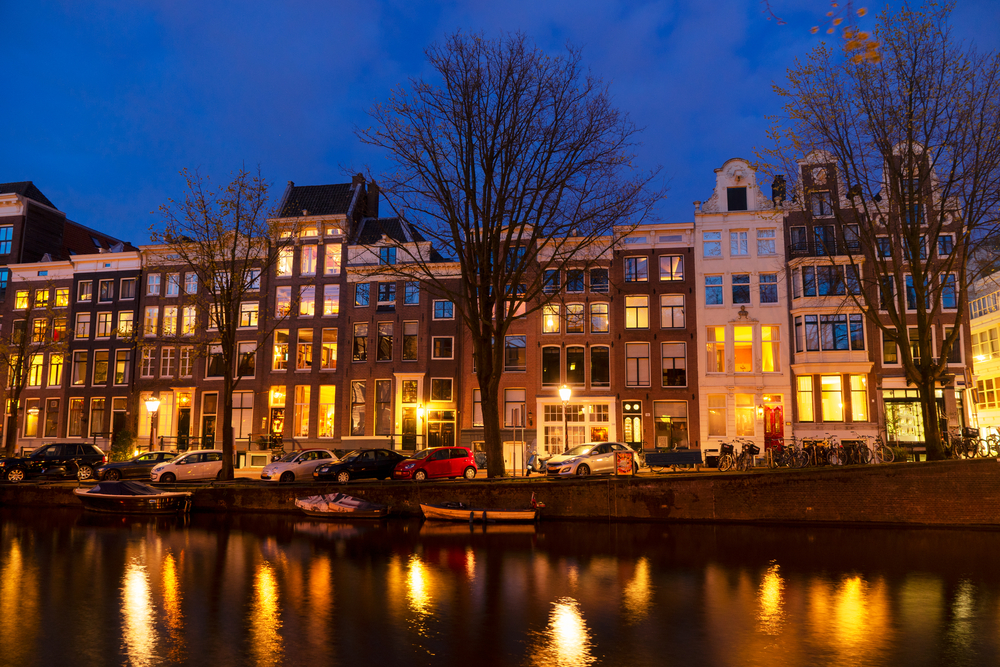
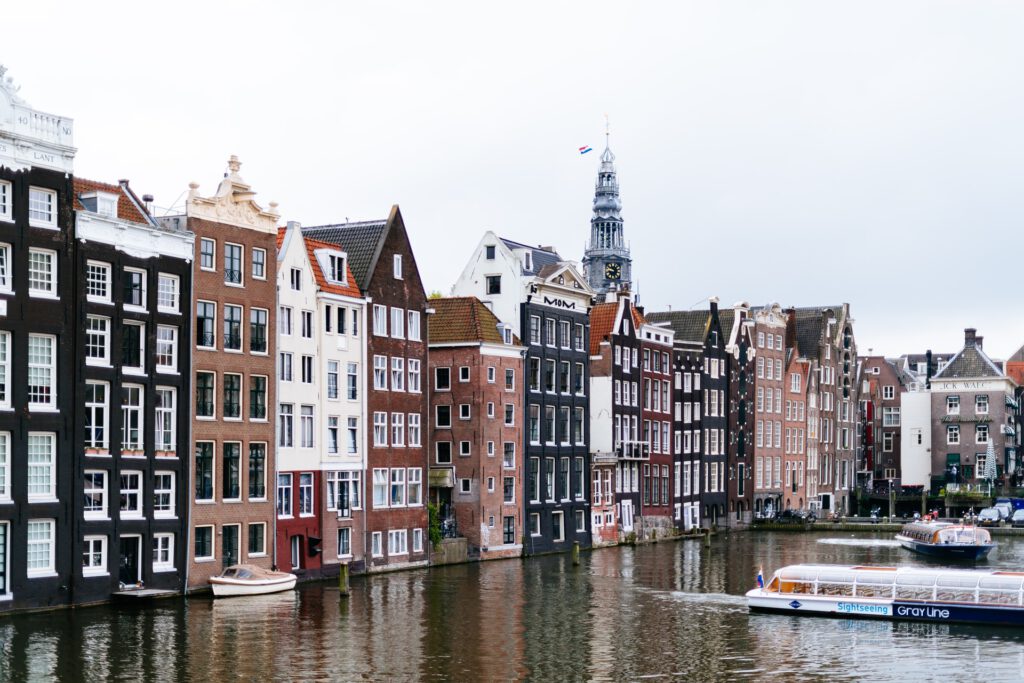
Amsterdam’s quirky canal houses. Image: Roman Kraft /Unsplash
Amsterdam’s canal houses are extremely narrow, tilted, and a treat for the eyes. So, why are they so quirky, you ask? There are a couple of theories about this, so let’s dive in.
Everyone wants to live in Amsterdam, right? Well, it was no different back in the 17th century when the city’s famous canal belt was planned. The plots of land that were sold along the waterfront were initially pretty small, to ensure that the maximum number of houses could have an entrance on the canal.
Another much-loved myth in Amsterdam is that the reason the canal houses are so narrow is that in the 17th century, Amsterdam’s residents were taxed based on the width of the facade of their property — so they built their houses narrow in the front, but deep and tall. Even back then the Dutch were cheap. 😉
What surprised you when you moved to Amsterdam? Tell us in the comments below!
“If we do nothing, our lives will change completely.”
Those were the words that accompanied the presentation of the new KNMI (Royal Netherlands Meteorological Institute) report, Climate Signal’21, writes NU.nl.
Climate Signal’21 is based on the Intergovernmental Panel on Climate Change’s (IPCC) calculations from this summer and is a preview for an even more comprehensive version that’s due in 2023.
The current report, which was released yesterday, contains additional research that focuses specifically on climate change in the Netherlands.
So, what did it say?
Sea levels will rise more than expected
The most striking thing in the report was a drastic revision of the predicted rise in sea levels. In 2014, the KNMI concluded that in a worst-case scenario the sea levels would rise by one metre by 2100.
Now, we’re looking at a rise of up to 1.2 metres in 2100. 😳 The KNMI also included a new worst-case scenario: if the ice loss in Antarctica accelerates sea levels around the Dutch coast could rise by as much as two metres — twice the increase predicted in 2014.
Weather extremes will become more common
Remember the heatwaves of last summer? And the crazy rainfall and floods in Limburg? Well, according to the KNMI, we may have to get used to it. In Climate Signal’21 they highlight that climate change is making weather patterns more extreme in the Netherlands.
Especially the Dutch summer will become hotter, drier, and wetter. (Yup, more rain is apparently possible. 🙃) The triple combo threatens the Netherlands with spring and summer droughts as well as extreme summer downpours — whoo.
For the Dutch islands in the Caribbean, hurricanes will become more frequent.
What can be done?
The Netherlands already has something called the Delta Programme, which is a collaborative project between various levels of the Dutch government and a number of NGOs. Aiming to protect the Netherlands from flooding, the Delta Programme contains targets that apply until 2050.
However, climate expert and former professor Pier Vellinga of Wageningen University (who acted as an adviser to a former climate committee) tells the NOS that the programme ought to be revised.
Vellinga argues that preventive measures should focus on the places where most people are at risk, rather than the coasts.
For example, the areas surrounding Rotterdam and Gauda should be given two dykes rather than one. Vellinga says that “with double dykes you can extend life in the Randstad perhaps 300 years.”
It is, however, uncertain how much support there is for new intensive measures.
What do you think of the new findings? Will more dykes be the solution? Tell us in the comments below!
Amid concern about the rapidly increasing number of coronavirus cases and overcrowding of hospitals, the cabinet has decided to bring the press conference that was previously scheduled for next Friday forward to next Tuesday.
And this could mean — you guessed it — new measures are in the works.
Well… the cabinet is considering new measures, such as actually checking QR codes this time, as the number of hospital admissions is now comparable to the situation in May, The NOS reports.
What new measures will we see?
At this point, the outgoing minister of health, Hugo de Jonge doesn’t know (or doesn’t want to say) what the new measures will be. Before they tell us anything, the cabinet is waiting for advice from the Outbreak Management Team (OMT).
This advice was due to be delivered on Friday but has been brought forward because the numbers are rising too quickly. 🌡
However, according to De Jonge, the government wants to avoid a situation in which difficult choices have to be made at hospital gates — namely who will be admitted and who won’t. 👀 As a result, the cabinet is faced with the difficult decision of imposing measures on specific groups, or society as a whole.
Unvaccinated people are the greatest risk
De Jonge has said that “unvaccinated people are at the greatest risk of becoming infected and infecting others”, and that it is mainly unvaccinated people who are being admitted to hospitals. As a result, he added that “the measures we have to take also have to do justice to that analysis.”
More thorough checking of QR codes
A member of the OMT Marc Bonten tells RTL Nieuws that he wants the coronavirus measures advised to the cabinet by the OMT to be better enforced. For example, he would like to see the checking of QR codes carried out more consistently. Let’s be honest, how many times have you actually had your QR code checked at an indoor venue?
Other new measures may include specific advice for people who have not been vaccinated.
Overcrowded hospitals
These measures have been deemed necessary as the number of hospital admissions is now comparable to the situation in May — we’ve taken one step forward and two steps back.
In concrete terms, the intensive care unit in Tiel, for example, is almost full again, while on Saturday a hospital in the Hague had to temporarily stop admitting patients to prevent overcrowding. Ambulances were instructed to take patients to other hospitals in the region.
What are your thoughts on the introduction of new coronavirus measures? Tell us in the comments below!
The Dutch Design Week (DDW) for 2021 shed light on our production and consumption. The result? Zwarma, snail sausage, and more were added to our future menus.
In the largest design event in Northern Europe, DDW ran between October 16 to October 24 this year, with a theme of The Greater Number. 🧮
Visitors of this year’s addition were given a chance to examine the supermarket of the future according to RTL Nieuws, as many designers focused on food waste in an attempt to find the right and creative balance. 🔍
So what about snails?
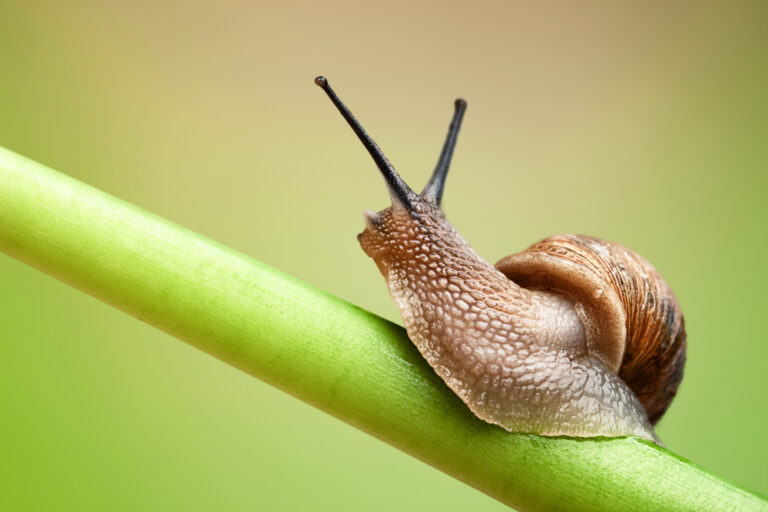
Now to the snail part. 🐌 Among the dishes presented during DDW’s food display was snail sausage, a creation by Xander Cummings in partnership with a Lebanese butcher and farmers.
According to Cummings, the product itself not only taste similar to regular sausage and is full of proteins, but it also emits much less CO2 than the production of regular sausages.
But it’s not all about the snails. Founder of Botanic Bites, Doreen Westphal, presented a range of products that rely on the legs of oyster mushrooms — a part that’s often discarded by farmers.
With hundreds of servings sold in various places, Westphal’s Zwarma — which is shawarma made from mushrooms — tasted just like pulled chicken. Vegetarian shawarma that tastes like chicken? Sign me up. 🍗
Smart labels
Another DDW notable invention is the Fresh Tag, which is a printed pH-sensitive label with ink that measures the freshness of perishable products like vegetables, meat, and fish by detecting microbacterial growth, oxygen, and carbon dioxide in an effort to combat food waste.
Notice the label changes colour? It’s time to throw away your food product according to Rui Xu. 🚮
“I want less food to be thrown away. The label is slowly changing colour. From farm-fresh to something less fresh, also showing edible and no longer edible,” Rui Xu explains.
What do you think of this year’s DDW display? Would you try any of the products shown? Tell us in the comments below!
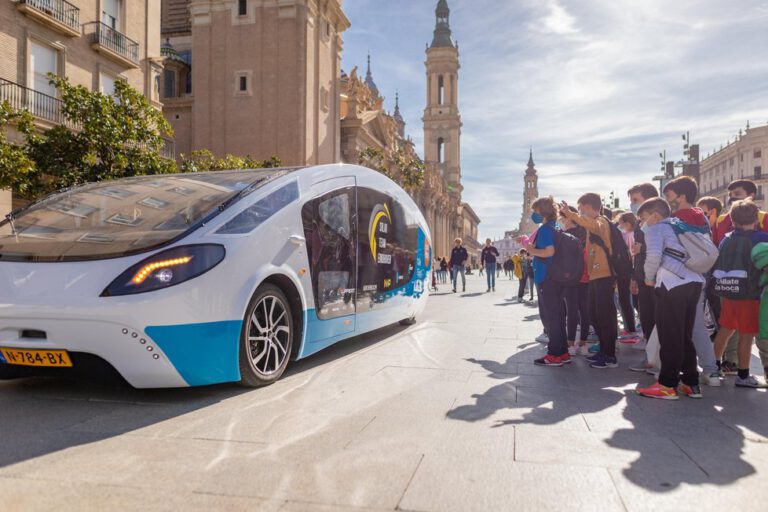
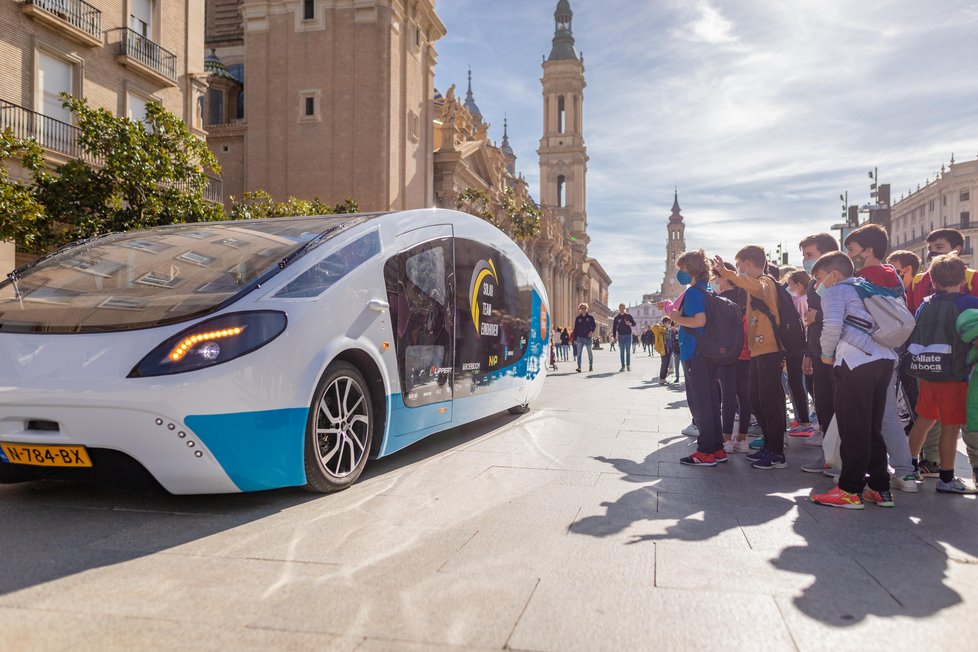
No, they expect a call from Musk because the team of 22 has invented a fully solar-powered campervan, Stella Vita.
A solar-powered campervan?
Yep, you heard that right. Stella Vita is powered by solar panels which make up its sleek-looking roof. Once parked, the roof can rise to a height of 2.5 metres. Not only does this allow for its inhabitants to comfortably stand, it also increases its solar panel surface area to 17.5 square metres.
However, the stop isn’t fun for just for the van, Stella Vita can fit two occupants and comes fitted with a kitchen, double bed, sofa, toilet, sink, shower and even a solar-powered television. Sold! 👨⚖️
From Eindhoven to southern Spain using the power of sun
Completely self-sufficient, these panels have proven that they can successfully power the camper. The team of Dutch students tested out their invention by driving Stella Vita from Eindhoven to the southern tip of Spain.
Image: STE/Rien Boonstoppel/Supplied
While our girl Stella suffered some setbacks along her journey, requiring a bit of assistance in France, she quickly got herself together (along with the help of her creators) and successfully completed her European trip.
A real head-turner
Regardless of whether Musk picks up the phone (or just communicates telepathically, who knows with that man), Stella Vita certainly turned heads as it cruised 2,000km through Europe using nothing but sunshine.
Speaking to CNN, 21-year-old Tijn Ter Horst, a member of Solar Team Eindhoven 2021, explains that “the main goal is to really inspire people and the market and society to accelerate the transition towards a more sustainable future.”
Would you take a trip using Stella Vita? Tell us your thoughts in the comments below!
Who else noticed the mooi autumn weather on Sunday? 🙋♂️ Well, that wasn’t just a one-hit wonder — the sun will be making more of an appearance starting from Wednesday.
Yes, that’s right! Before we stuff ourselves with oliebollen and warm Chocomel in a vitamin-D deficient slump, more sunshine will be headed our way! ☀
Buienradar reports an expected high of 18 degrees by the end of the week.
🌧 Today tot Tuesday
A bit of rain is expected today and tomorrow in the west and centre of the Netherlands.
However, the rain is gradually moving to the northeast. The northwest will get the bulk of the rain, which isn’t a lot — but it will be wet for a while.
On Tuesday, Limburg will see a temperature of 15 degrees — gelukkig! (lucky!) ✨
🌞 Wednesday-Friday — lekker weer!
You can shove that paraplu (umbrella) in the closet starting on Wednesday because good weather is headed our way. The temperatures will be around 16 degrees in most of the Netherlands and 18 degrees in the southeast. 🥂
So while it isn’t the warmest weather, it’s still pretty nice! Look out for Dutchies out there who will be wearing tank tops anyway, while the expats are still sporting knit sweaters. 😂
What are you going to do during the few days of sunshine? Tell us in the comments below!
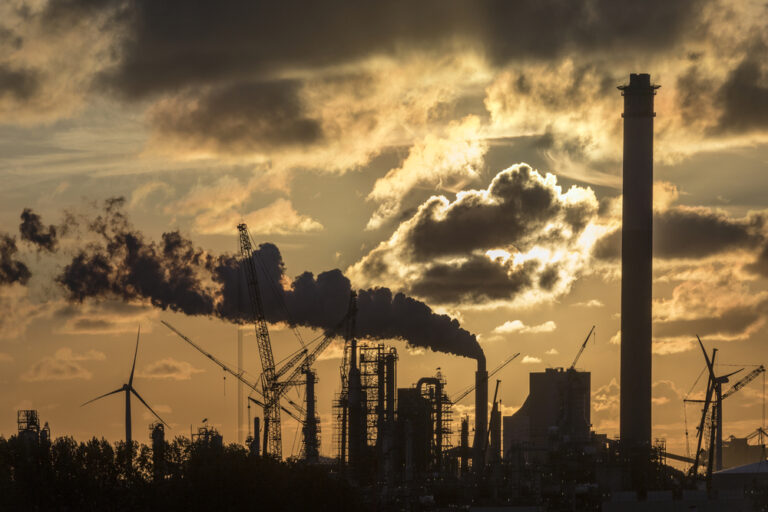
Don’t beat yourself up for taking a long shower or forgetting your metal straw when you go out. With company CO2 emissions far outpacing personal emissions, the blame has shifted; but the outlook isn’t great.
Over 50% of Dutch companies have their sights set on being virtually climate neutral by 2030 at the latest, an increase from 48% last year.
That might sound okay — until you look at the other side. Almost a quarter don’t expect to become carbon neutral before the year 2100. Last year that number was only 13%. 🏭
Not-so-fun fact: Over 70% of the world’s emissions are caused by just 100 companies.
Meanwhile, other companies have also revised their environmental goals, with the average year to eliminate a company’s carbon footprint increasing from 2045 to 2047.
The unsettling data comes from the ‘Outcomes of the Dutch Innovation Monitor 2021’ report, ordered by UvA’s Amsterdam Center for Business Innovation.
For the Dutch companies who are lagging behind, what’s worth killing the planet? 💰💰💰 (of course).
Almost half of the companies surveyed cited meer geld (more money) as their main motivation. Only one-fifth say ethical motives are their number one priority.
Professor Henk Volberda, research leader and professor of strategy & innovation at the UvA, tells RTL Nieuws the results of the survey are “a very worrying development.”
He can see a very clear difference in the approach of the two companies. Those planning to become carbon neutral look further ahead and invest more in R&D, ICT, and their own staff.
Those that don’t expect to become carbon neutral for at least another 78 years only focus on the short term and invest less in the same areas.
How do you think companies can be encouraged to reach carbon neutrality sooner? Tell us your ideas in the comments below!