Arriving in the Netherlands as an international can feel as if you’ve touched down in a land of giants 🏰 — and no wonder because, for years, Dutchies have proudly held the title of the tallest people in the world.
But could that be changing? According to a new report by Statistics Netherlands (CBS) men born after 2001 are one centimetre shorter than those born in 1980. Women are 1,4 centimetres shorter! 😱
Until the 80s, Dutchies were growing taller with every generation.
In the 50 year period from 1930-1980, men grew an average of 8,3 centimetres and women 5,3 centimetres. That led to the average height for the generation born in 1980 being 183,9 centimetres for men and 170,7 centimetres for women.
However, the new report shows that height has stagnated since that golden era of techno-pop and big hair.
What’s caused the decrease in height?
But why did height stagnate with the generations born after the early 80s?
The decrease is partly due to new Dutchies influencing the average height. The past few decades have seen an increase in the immigration of people from countries with generally shorter populations, this affects the statistics.
Nevertheless, growth also stagnated in generations whose parents and grandparents who were born in the Netherlands.
Gert Stulp, researcher of body height at the University of Groningen told de Volkskrant that the stagnation in Dutchies heights is not unique. Also in the US, the average height is decreasing.
While there are many factors affecting a person’s height, Stulp highlights that the stagnation may be caused by people eating less varied and consuming more oily foods. 😅
Are the Dutch still the tallest in the world?
Despite a decrease in average height, Dutchies are still topping the charts when it comes to height. 🥇
In 2020, more than one in five men in the Netherlands reported to be more than 190 centimetres tall and 7% were over 195 centimetres.
Dutch women also continue to reach above female populations in the rest of the world with nearly one in 10 girls born around the 80s measuring 180 centimetres —although that number is in decline.
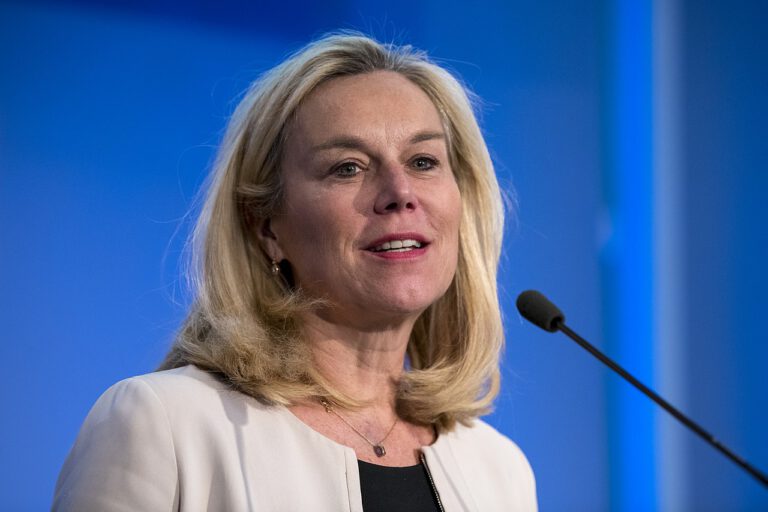
The Dutch Minister of Foreign Affairs, Sigrid Kaag, has decided to step down from her position due to heavy criticism of the Netherlands’ response to the fall of the Afghan city of Kabul.
Earlier this week, the NOS reported that the Dutch government had been receiving pleas to begin evacuation efforts from the Afghan city of Kabul since March 2020.
Dutch embassy staff in Afghanistan made pleas for the government to begin an evacuation plan as it became clear that the Taliban were advancing on the city.
However, it was not until two days before the fall of the city that the Dutch government began to decide on when the embassy employees and their families would be evacuated.
As of last week, it was reported that approximately 22 interpreters and their families were left behind in Afghanistan by the end of evacuation efforts.
Responsible for this
As Minister of Foreign Affairs, Kaag is seen as ultimately responsible for the Dutch response to the situation. As a result, a motion to censure Kaag was passed last night by the House of Representatives. After this, she immediately offered her resignation from the role.
Kaag, who is also the leader of D66 (Democrats 66) has been praised by many political parties within the House of Representatives for her decision. With Groenlinks leader, Jesse Klaver saying “Sigrid Kaag takes her responsibility for the Dutch actions in Afghanistan with her head held high”, the NOS reports.
Follow DutchReview on Facebook for the latest news and updates.
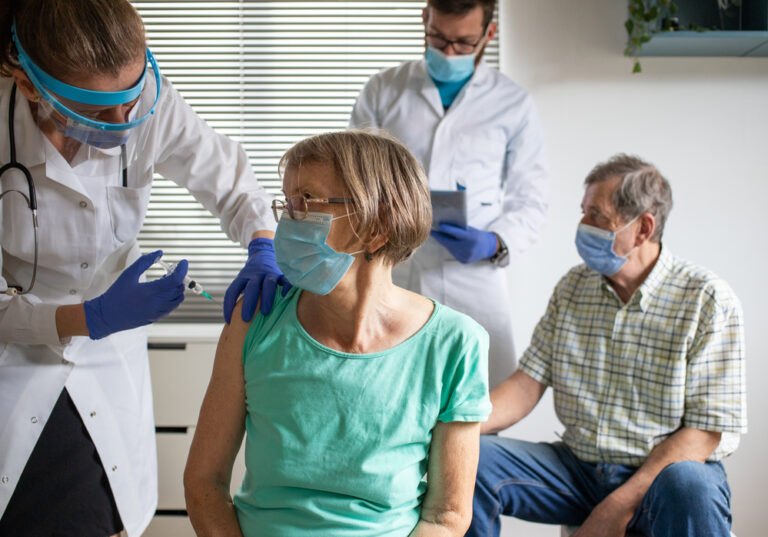
The Dutch Municipal Health Service (GGD) saw a sharp rise in vaccination appointments this week. However, this isn’t enough to shift the Netherlands’ red status on the EU’s coronavirus map this week.
The GGD has reported that about 13,000 vaccination appointments were made on Monday, and more than 15,500 on Tuesday. This is a striking rise when compared to the daily average of 8,000 from last week.
However, as of its last update on Tuesday — all twelve Dutch provinces are now categorised as red-risk (the second-highest level.) This is a slight improvement, however, as the country also had sprinkles of dark red in some provinces last week.
With the number of cases in decline, and the new relaxations announced, the Dutch National Institute for Public Health and Environment (RIVM) is yet to confirm whether this increase is related to the recent announcement that a corona pass will be needed before entry to a number of catering and entertainment events.
Good progress
Declining coronavirus cases, more vaccination appointments, that’s all positive news, right? Well, we can look at an example from our neighbours in France who went through a similar experience of rising vaccination rates in July after their government announced the use of the corona pass — so hopefully, we’ll follow in their footsteps and receive a code yellow classification soon. 🤞
While the number of coronavirus cases is currently decreasing almost everywhere in the Netherlands, with Friesland recording the highest percentage in the country, the decrease is not yet enough for a further reduction in warning levels on the map of Europe.
It is key to keep an eye on that map regardless of local relaxations as it forecasts any changes in EU travel policies when it comes to travelling from and to the Netherlands. 🛂
What do you think of the latest coronavirus developments? Tell us in the comments below!
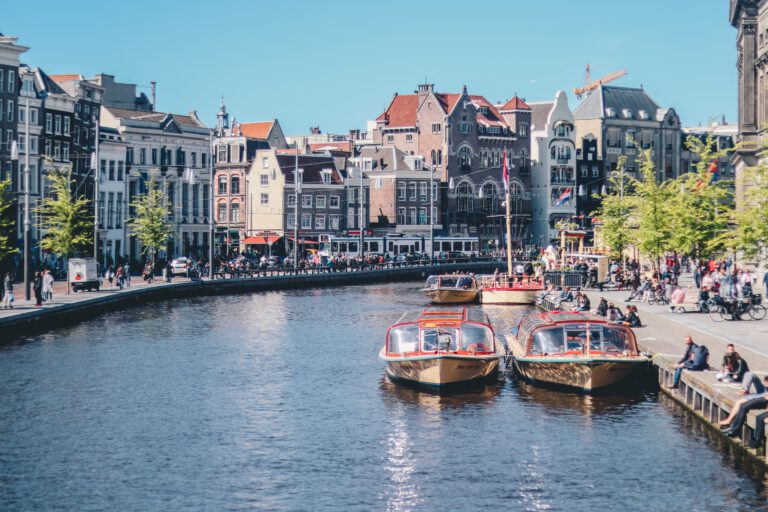
The travel magazine Time Out ranked Amsterdam as the second-best city in the world! 🥳 Amsterdammers and others praised their city for its sustainability efforts, green space, as well as food (questionable!) and culture.
Global magazine Time Out surveyed 27,000 people from cities like Melbourne, Madrid, Chicago, etc. and Amsterdam came shining through as the second-best city in the world! 🌍
The only city outranking Amsterdam is San Francisco — but who wants to live somewhere with that many hills anyway?
Points for environmental policies
Amsterdam has topped other cities for their environmental policies, according to Schroders European Sustainable Cities. The city aims to cut down on carbon emissions, convert to green energy, and improve the air quality.
Some ways that Amsterdammers keep things clean are by biking everywhere, having electric buses, and more!
Doughnut model and sustainable living
One of the things that Time Out noted was Amsterdam’s “doughnut model.” 🍩 Also known as a circular economy, the process involves re-using raw and other materials over and over again to avoid waste.
Amsterdam is also known for its sustainable fashion practices, buildings and zero-waste lifestyle. The city has low-waste restaurants and apps for all of your food cravings, for instance.
Then there’s also the mass tourism and of course the gloomy weather that might not be everyone’s cup of tea. And if you’re not a fan of how weed smells, well, better get used to it in Amsterdam. 🌿
But complaining and bragging about their city was always an Amsterdam thing anyway. 😉
What do you think about Amsterdam being the second-best city in the world? Tell us your thoughts in the comments!
As of September 25, patrons of bars and restaurants will be asked to show a corona pass before entering catering establishments. However, the city of Amsterdam will not be checking each and every single one.
Why? Because it is simply not possible.
Speaking to the city council yesterday, the mayor of Amsterdam, Femke Halsema said that the municipality will only be asking for corona passes in cases of “excesses.”
What does this mean?
According to the NOS, patrons of these establishments will only be asked to show their corona pass in cases where, for example, a large number of people remain in a café after closing time.
This also means that catering establishments will not have to worry about facing a fine if they fail to ask every patron for a pass.
With the recent coronavirus relaxations in the Netherlands, it was only a matter of time before the Dutch travel sector followed suit — September 22 is the date to look out for.
The main relaxation news involves vaccinated travellers from the United States, the United Kingdom, and other very high-risk areas. From September 22, travellers from these countries will no longer have to self-quarantine on arrival in the Netherlands as long as they have valid proof of vaccinations.
On the other hand, a group of countries have had their travel advice updated — so if you’re planning a trip to the Netherlands, always make sure you’re up to date with the latest travel checklists issued by the Dutch Ministry of Foreign Affairs ⚠
Latest travel restrictions
Let’s start with Romaniawhich has just been updated to a high-risk area and changed from green to yellow. As of September 18, travellers to the Netherlands from Romania must present a vaccination certificate, recovery certificate, or negative test certificate as part of their travel requirements.
The rules for travellers from Albania, Armenia, Bermuda, Brunei Darussalam, and Japan have also changed. These countries have been added to the European Union’s list of high-risk areas — so, travellers from this list will need a coronavirus certificate starting tomorrow.
The Dutch travel advice for Uruguay is set to be necessary trips only. Travellers to the Netherlands from this country will need a coronavirus certificate from Saturday.
Travelling from Kazakhstan, Serbia, Azerbaijan, or Dominica? Please note that you’re obliged to show a corona certificate and self-quarantine for ten days — we hope you have some good books to read.
As of Saturday, similar travel measures will apply to Anguilla and the Palestinian Territories, which have been designated earlier today as very high-risk areas.
Follow DutchReview on Facebook and Instagram for the latest travel updates!
Many of us look back at 2020 and want to simply erase the whole year from our calendars. However, some good things did happen during that dreaded year of lockdown.(Yes, we said it!).
Namely, then the purchasing power in the Netherlands grew by 2,2% on average in 2020! This is shown in a new analysis of the incomes of Dutch households and individuals by Statistics Netherlands (CBS).
A growth of 2,2% is the biggest increase since 2016. 🤑
Why is that good news?
Even if you aren’t huge into economics (fair enough!), you probably care about purchasing power because, essentially, growth in purchasing power means you can buy more stuff for the money you have — leuk!
Moreover, those who experienced the largest growth in purchasing power in 2020 were employees meaning — likely — you! On average, employees’ purchasing power grew by 4,3%.
“In 2020, the #purchasingpower grew with 2,2% on average, the highest growth since 2016. For employees, the purchasing power increased the most, with 4,3%.”
Increase in real wage development
An individual’s purchasing power is affected by both external factors and personal circumstances.
External factors include developments in collectively negotiated wages, inflation, and government policy. In 2020, the extraordinary growth in purchasing power was mainly driven by a 1,6% increase in real wage development.
Now, you might think “that’s odd, how did wages increase in 2020 when everything shut down?” Although the coronavirus crisis came to the Netherlands in 2020, many collective labour agreements were made before the crisis began — and were valid for the whole year. So, even though the economy took a beating, the collective labour agreement wage increase still amounted to 2,9%.
However, inflation of 1,3% somewhat offset this increase. 😅
Government policy
The other external factor that contributed to the positive development of purchasing power was Dutch government policy. In fact, CBS estimates that this contributed almost 1% to the overall increase.
Amongst others, the increases in general tax credit and the introduction of a two-disk income tax system contributed to the positive impact of the government’s fiscal policy.
The effect of personal circumstances were…not so great
We all had a rough year in 2020 so perhaps it comes as no surprise that changes to peoples’ personal circumstances were the one thing that depressed purchasing power. 😔
Purchasing power is namely affected by things such as unemployment or a temporary drop in business activity. With plenty of that happening in 2020, personal circumstances lowered purchasing power by -0,3%.
Luckily, businesses are now open again!
What do you think will happen to purchasing power in 2021? Tell us in the comments below!
At last night’s press conference the government announced that nightclubs will be able to reopen from September 25, but they’ll have to close at midnight. People aren’t too happy about this — and are calling it a “kid’s disco”.
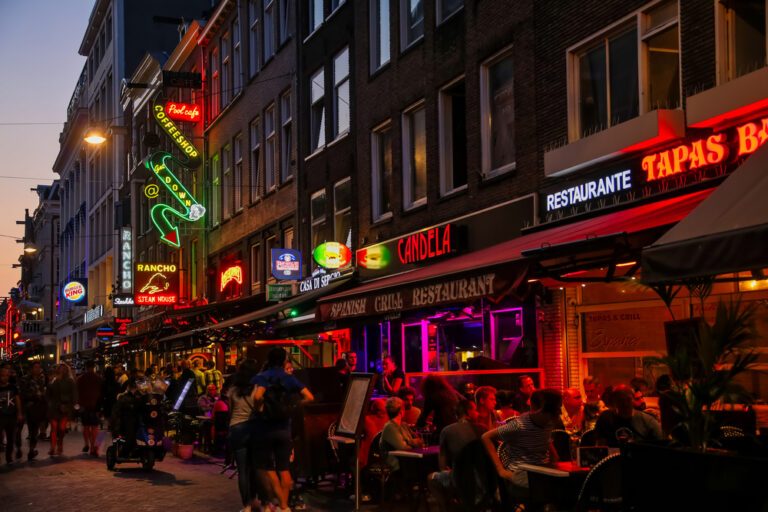
The cabinet has announced a new set of measures and relaxations which will take effect on September 25. These will include having to show a coronavirus pass (proof of vaccination, negative test, or recovery) at venues such as restaurants, cafés, theatres and cinemas.
Nightclubs and discos will also be allowed to reopen, but only until 12 AM. We’re not sure which part of that sentence is more controversial — reopening clubs when infections are still high? Or the fact that everyone will be kicked out at 12 when the night is still young — sacrilege? 🕺
Criticism and a kid’s disco
RTL Nieuws reports that Partygoers aren’t very happy about the idea of being sent home at midnight and have taken to Twitter to vocalise their frustration and confusion at the new clubbing curfew — does anyone else feel like a teenager again? 😅 👀
While most people don’t leave for the club until at least 12 AM, these new measures will have people grabbing their coats and drunk friends when the clock strikes 12 — did someone say Cinderella? 🎃
Another Twitter user pointed out that these new measures suggest that “Coronavirus slumbers in the depths of the disco until 12, so it’s safe to party before that.” Didn’t you know coronavirus only starts its night shift after 12? 🤷♀️
The mayor of Amsterdam has an issue with this too
All jokes aside, it isn’t just partygoers who are taking issue with this new advice. The mayor of Amsterdam, Femke Halsema fears that these arbitrary new rules will affect the government’s credibility in dealing with the coronavirus, and says, “Why should the system of only letting in vaccinated or tested people work at 11.30 PM but not at 12.30 AM?”
Early to the club and early to bed? 🌜 💤
There are also some clubs that have tried to put a positive spin on the matter. Like Club Perron in Rotterdam which will be opening a little earlier, from 6 PM – 12 AM.
Let’s be honest, there’s always that one person in a friend group who can’t stay awake in the club but has too much FOMO not to go, so we’re sure there are some people out there who are delighted by this new rule. 😂
What are your thoughts on the reopening of clubs with a curfew? Tell us in the comments below!
So you bought a house in the Netherlands — congrats! But life happens and things have changed. You may need a bigger home, you may have decided to move country or you may be getting a divorce. Good changes or bad, you’ll have practicalities to take care of: one being what to do with the home you own.
That’s why DutchReview has decided to address some situations that you may find yourself in after buying your home. Yes, it’s aftersales time! 💪
🍼 You’re expecting again? Congratulations! Now you need to make your house bigger
Say you just had a second kid and you can use a little more space and you might be tempted to find yourself a new home. However, as we all know housing prices are pretty high here in the Netherlands right now — so maybe just staying where you are is your best move.
How can you stay put but also get some extra space? Simple, by renovating your home! “Well, duh,” we hear you say, “that’s easier said than done.” But did you know that you can use your current mortgage to fund that extra space you need?
Now we’ve got your attention. How do you do this? There are two main ways that homeowners can make the most of their current mortgage and fund some home refurbishment and renovation:
Bouwdepot— This is a loan that can be taken out of your Dutch mortgage to finance the renovation or construction of your home. Think of it as a loan that you organise alongside your mortgage. A certain amount of money is put aside which can then be used to finance a facelift for your house.
When setting up your bouwdepot, you may have to pay notary costs. We recommend that you speak with a mortgage advisor to determine whether or not this is the case.
Refinance your mortgage — While it is possible to arrange for a bouwdepot even after you have settled the conditions of your mortgage, many current homeowners opt for this option in order to fund a little more wiggle room. By refinancing your mortgage, you can reduce your monthly payments. This additional equity can then be used to fund the renovation of your home or even finance a snazzy new car or holiday home!
📦 What to do with your mortgage in the Netherlands if you’re moving back to your home country
So you’ve decided to move back to your home country and you don’t want to own any property in the Netherlands anymore. You want to stop paying your mortgage, or you’re just looking to upgrade.
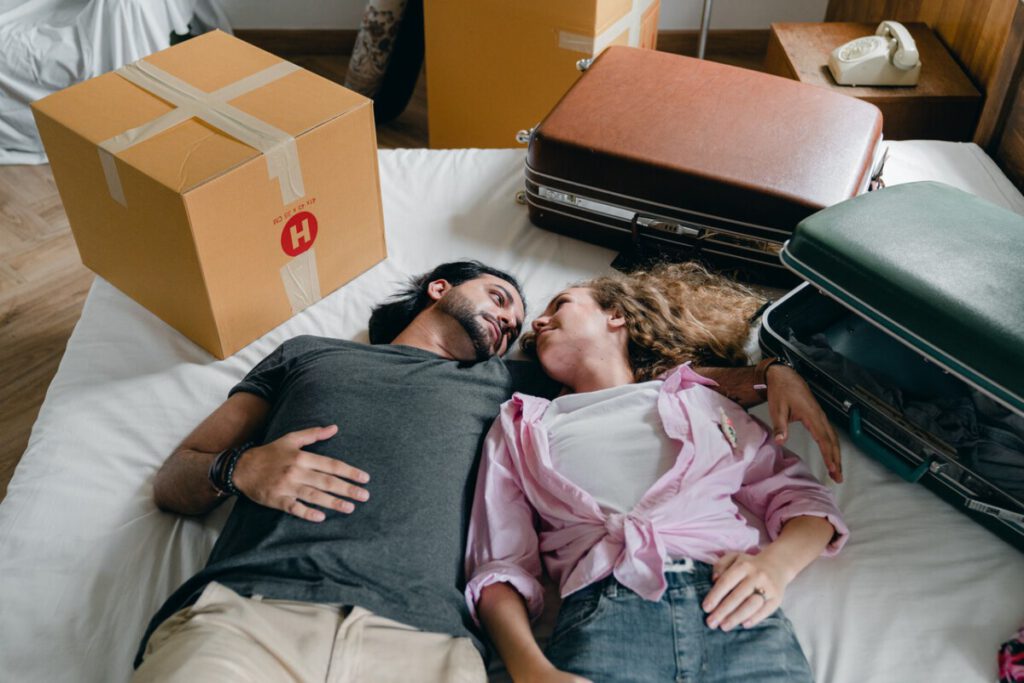
Perhaps you’ve bought a home in the Netherlands — but you’ve decided to move to a different country. What should you do? Image: Ketut Subiyanto/Pexels
Selling your home in the Netherlands
Whatever your reason may be, most of the time you will have to sell your home in order to stop paying a mortgage in the Netherlands. Selling your home in the Netherlands has a lot of important steps.
Firstly, you might want to find yourself a registered real estate agent. They should be associated with the trade association, Dutch Association of Estate Agents (Nederlandse Vereniging voor Makelaars or NVM). It is a recognised supervisory body that will be able to give you a list of registered agents in a specific area.
Once you’ve done that, your agent will do an assessment of your property for you and give you a figure for the value.
Once both of you have settled on the asking price, you will then have to negotiate on the commission fees, start-up costs, and the agreed-upon sale price.
The agent will then put the word out through different channels (social media or websites like Funda) so that potential buyers hear about your place.
Once they find people who want to see your property, the agent will accompany them on their viewings (so there’s no need for you to be there at all, which is handy if you’re in another country prepping for the move.)
When a potential buyer makes an offer, the agent will negotiate on your behalf. You don’t have to accept any price you don’t want to. You can even give a counteroffer, so don’t worry about not having control over the negotiations.
When an offer has been accepted, a purchase agreement is drawn up in consultation with a notary. The buyer can withdraw their offer without any penalties within three days of signing the agreement. Once this has passed, the lawyer will set a date for completion.
On completion, the property is signed off to the buyer through a Transfer Contract. Once you have this piece of paper, you can stop paying money towards your mortgage.
If you still want to have some income on the side, or if you plan to come back to the Netherlands, you might actually be considering renting your home out. But is that an actual possibility?
Can you rent out your house in the Netherlands?
So you have invested in real estate but you no longer can or need to live in the property you bought. If you don’t want to sell it, you might be thinking of renting it out. It could seem like a sweet deal where the money you get through rent might be higher than what you pay for your mortgage, but hold your horses there! It may not be the best deal for you.
If you’re under the impression that you will be getting more money out of this, reconsider. When you’re looking to rent out your property, it is always best advised to do it through a rental agent and agency.
Like a real estate agent, they will do everything on your behalf: property management, finding risk-free tenants and helping you determine the rent amount. However, they do cost money. Additionally, any maintenance cost that has to be carried out will be paid for through your bank account.
Also, if you do rent out your property in the Netherlands, then you will be taxed on the value (WOZ value) of the property. The rate of taxation will be around 30% annually but it all depends on whether you’re living in the Netherlands, the WOZ value and more. For more information, check out the Dutch Tax Authority’s website on investing in immovable properties.
It might seem like a sweet deal on paper but the numbers don’t always add up. Your income would be through the monthly rent, but your expenditure would be your agency costs, maintenance costs, and your mortgage.
Furthermore, and perhaps not what you heard around the watercooler, but you do officially need permission from the bank in order to sublet your house. And, as you can imagine, that’s not as easy as just a quick call.
Anybody who rents a place in the Netherlands has ‘rental protection’ (huurbescherming) — which means in practice that the renter has a pretty good amount of rights. Whatever the rental contract says, the banks don’t like this and consider a property to be worth a bit less when it’s rented out.
Note: It’s also important to remember that if you are no longer living in the house yourself, and will not do so for a long time, you are going to have to refinance your residential mortgage as an investment mortgage.
♻️ Switching mortgages in the Netherlands, is it a good idea?
Speaking of refinancing, let’s talk about changing your mortgage. With the low-interest rates of today, you might think it’s a good idea to get another mortgage with lower interest rates. And yes, that’s indeed a good idea — especially if you hope to use the additional equity to better your home.
But the question is whether there will be any additional equity. Sadly we don’t live in a land built on fairytales and you need to be realistic when making the decision to switch mortgages. You signed a 10, 20, or 30 year contract with a bank for a fixed mortgage rate — and they’re not going to let you hop onto another mortgage very easily.
We can write an entire article about switching mortgages, but let’s focus on two main reasons why you may not want to change your current Dutch mortgage.
The costs of switching mortgages
First, remember that there are also certain costs involved when switching mortgages. When you decide to switch mortgages during your contract, you must pay a ‘penalty fee.’ The fee is often a reason why some people will choose not to refinance their mortgage as it can be quite high and sometimes outweighs the benefits of reduced monthly payment.
However, there is the possibility that you can actually use your new mortgage to finance this penalty fee! On top of that, you can also deduct this penalty fee from your taxes. Your mortgage advisor will advise you on your options surrounding this — and it’s definitely worth looking into. 👀
On top of this fee, there’s also consultatory fees and notary fees to pay. So changing your mortgage is only worth your while if you have significant decreases in your mortgage rate to look forward to.
Are the interest rates worth it?
This brings us to the second thing to consider, namely your current mortgage rate. An extremely blunt rule of thumb would be that it isn’t worth changing your mortgage if you secured a mortgage in the Netherlands after 2016 — that would likely mean that your interest rate is already pretty low.
The ‘loan-to-value’ ratio: how it can help your Dutch mortgage
The concept of loan-to-value ratio (LTV ratio) is a little complex, but it’s can be a great way to save yourself a bit of money once you have settled into your mortgage. We’ve got a simple explanation to get you started:
When you first apply for a loan the bank considers what risk is involved. They’ll compare the ratio of the requested loan to the value of the house. This gives the client a risk level, called the Loan-to-Value (LTV) ratio.
You should talk to a mortgage consultant and consider whether your LTV ratio has decreased. Image: Goodluz/Depositphotos
The higher the loan is in comparison to the house value, the higher the risk for the bank, and the higher the eventual interest rate for the client.
But, the LTV ratio decreases as the loan is slowly paid off, or as the house gains value. That means that once the LTV ratio has changed you can request a discount from your bank for being a less risky customer — cha-chingg. 💶
What could this look like? For example, if you took out a loan of €200,000 for a €200,000 property, you have an LTV ratio of 100%, but, after five years of paying off that loan and your property increasing in value, perhaps your LTV is now only 85%. That could give you a sizable discount on your loan repayments if you request it from your bank.
💔 Getting a divorce? Here’s what will happen to your Dutch mortgage as an expat
Did you and your partner take the plunge together to put your names down for a joint mortgage — but then took another and decided to get a divorce? We’re sorry to hear that.
Along with dealing with the emotional trauma, you have to take care of some practical matters when it comes to your home.
One of the main things you will need to concern yourself with is a financial evaluation. You will have to submit yourself for this at your bank. They will then determine how well you or your ex can carry the load of paying the mortgage. You do have to be patient with this process though: it could take anywhere from three months to up to a year before it is processed.
Until one of you takes over the mortgage or refinances it, both you and your partner will remain responsible for paying the mortgage — regardless of who remains in the house. However, it is recommended that one partner eventually takes over the mortgage on a house, if both remain liable, then the chances of you or your partner taking out a second mortgage on another property can become complicated.
Have you done aftercare for your Dutch mortgage? Thought about switching mortgages? What did you change? Let us know in the comments below!
Following the continuous leaking of new coronavirus measures throughout the week, Prime Minister Mark Rutte and Minister for Health Hugo De Jonge have officially confirmed and clarified the latest restrictions and easings.
As of September 25, the Netherlands will indeed see a number of relaxations come into play. However, Rutte emphasised that this is not the day that the country flips the bird at coronavirus measures, saying:
“I immediately add, that is not the day when everything is back to the way it was before corona. There are still too many infections and hospital admissions for that. There are also too few people immune and that makes the autumn uncertain.
That being said, the Dutch prime minister has confirmed significant developments when it comes to clubs, festivals, concerts and multi-day events. Let’s run through what’s next for the Netherlands.
Goodbye 1.5-metres
We will indeed be waving doei to the 1.5-rule. Opening the press conference, he spoke of how integrated the phrase 1.5-metre has become in Dutch society, saying this can be tough in a time when we need a hand on our shoulder. For this reason, the Dutch cabinet has decided to ditch this measure.
Rutte has confirmed that, as of September 25, you’re going to have to wave goodbye to social distancing. In relaxing this measure, the Dutch cabinet hopes to make way for fuller capacities at large scale events, as well as make way for more emotional support for people.
“Corona pass” needed for entry
While we may say goodbye to the 1.5-metre rule, we will be welcoming a “corona pass” requirement before entering indoor restaurants, cafés, cinemas, and theatres.
This usually involves showing a QR code in the CoronaCheck app which confirms that you are either vaccinated against coronavirus, you have tested negative or you have recently recovered from the virus.
Rutte added that testing for access will remain free for now and that the “corona pass” is hopefully only a temporary solution. The cabinet will revisit the use of the pass on November 1.
He also stated that municipalities will receive funding to help with the pressure of checking these passes in bars.
Festivals, concerts and multi-day events possible under certain conditions
Grab your festival fits, according to sources in The Hague, the Netherlands will also welcome the return of festivals and multi-day events.
As of September 25, you can get your boogie on. Festivals and concerts will open with 75% capacity without fixed seating. However, at festivals and sports events with fixed seating, the capacity can be completely full.
Fuller capacity at large scale events
It has also been confirmed that football stadiums in the Netherlands will be returning to full capacity. According to the KNVB, the 1.5-metre rule was already being broken with the current 2/3 capacity — so why not go all-out?
However, those who do want to stand shoulder to shoulder and spectate live will have to submit a vaccination certificate or a negative coronavirus test before being allowed entry.
Clubs reopening once again
It won’t be all welly boots and marquees either. As of September 25, clubs and discotheques throughout the Netherlands will be allowed to swing open their doors once again. However, they will be expected to close them again at midnight.
Let’s hope this is a more smooth transition than the era of “Dancin’ with Janssen.” 😳
Education to be free from measures
The education sectors will no longer have any coronavirus measures. This applies to all levels of education.
Work from home remains for now
While you may be able to bust a few moves, you’ll have to wait a while before demonstrating to your colleagues. For now, the prime minister has urged that workplaces should continue to encourage working from home.
“Working from home when possible, at work when necessary.”
Face masks to remain on public transport
The requirement to wear face masks when travelling on public transport in the Netherlands will remain. However, there is a twist, it is no longer compulsory to wear a mask on train platforms.
Follow DutchReview on Facebook for the latest news and updates.