Following an extensive period of testing, the 3D-printed bridge connecting the quays of Oudezijds Achterburgwal in Amsterdam’s Red Light District was opened by Queen Maxima on Thursday, July 15.
We know what you’re thinking, Queen Maxima in the Red Light District…
The Gemeente Amsterdam reports that the bridge, which was first seen at Dutch Design Week in Eindhoven in 2018, will be in place for two years while the original walkway is being repaired.
Queen Maxima opens new 3D printed bridge in Amsterdam. Image: MX3D_Bridge_Opening_YourMajestyTheQueen_byJandeGroen/supplied.
Wanna know more about the bridge? Of course you do!
The bridge is constructed entirely of stainless steel and weighs more than 6,000 kgs. That’s the weight of six fully grown polar bears, or one very large elephant — if you were looking for a comparison.
The walkway was designed by Joris Laarman, and made at home in the city, by the Amsterdam 3D metal printing startup MX3D.
This futuristic pedestrian bridge is fitted with sensors that will record all kinds of measurements. This will allow the bridge itself to indicate when a repair is needed — crazy, right!? The next bridge they build will be making people cups of coffee — we can dream, can’t we?
It will also be possible to measure how many pedestrians walk across the bridge every day.
World’s first #3D-printed steel footbridge is unveiled in #Amsterdam‘s Red Light District where it will serve as a ‘living laboratory’ to assess the behaviour of metal printed structures 3D-printed bridge installed over Oudezijds Achterburgwal canal in Amsterdam pic.twitter.com/7JSYDAb6BF
When the project was first showcased at Dutch Design Week in 2018 it won numerous awards, including a Dutch Design award and the Audience Choice award. The project team was also awarded the Starts Prize from the European Commission in 2018 for their groundbreaking work.
Image: MX3D Bridge in Amsterdam city center. Credit Thea van den Heuvel/supplied
What do you think Dutchies will be 3D printing next? Tell us in the comments below!
For years the number of people moving to the Netherlands has been increasing, but the coronavirus crisis was an obstacle to this last year.In 2020, 44,000 fewer migrants arrived in the Netherlands than did in the previous year — in 2019, this number was 171,000.
According to figures from the Central Bureau of Statistics (CBS), labour migrants are the main demographic that stayed away from the Netherlands last year. Around 30,000 fewer people from outside Europe moved to the Netherlands for work.
With most of the academic year being conducted online, this also meant that fewer people came to the Netherlands for their studies. This did make it easier to find a student room for those who did though — goodbye to months of homelessness!
Population growth halved
In addition, the travel restrictions meant that fewer people moved to the Netherlands to be reunited with their families last year. There were also fewer people that applied for asylum.
The CBS concluded that this decrease in migration, coupled with the high number of deaths caused by the coronavirus crisis, meant that population growth was halved last year. This was particularly noticeable in the larger cities — they’re still crowded though!
Immigrants are arriving again
Now that what we hope will be the worst of the crisis is over, people are once again packing their clogs and loading up on cheese in order to start their lives in the Netherlands. Haha, kidding — but it is true that the number of migrants is on the rise again this year.
However, this number is still lower than the figures for 2018 and 2019. The latter was the peak year, in which the most newbies arrived seeking out the cheese, canals, and high quality of life the Netherlands has to offer.
Emigration
The chaos of 2020 also took a toll on emigration. Last year significantly fewer people moved away from the Netherlands than had done the year before. Although 52,000 people still said goodbye to the rain and bureaucracy we associate with the lowlands — most of these were people with Dutch nationality. As they say, you win some you lose some!
What are your thoughts on these figures? Tell us in the comments below!
As a result of the poor AstraZeneca campaign across the country, Dutch doctors will now likely be forced to bin tens of thousands of AstraZeneca doses. They have no other alternative, as the jabs cannot be delivered to a different country.
From the outset, the turnout rate to receive the AstraZeneca vaccine was disappointingly low across the Netherlands. This was due to fear over a handful of cases of thrombosis in recipients of the vaccine. While the Dutch government insisted that the benefits of the jab outweighed the risk, trust in the AstraZeneca jab across the Netherlands plummeted.
Elderly and at-risk patients were invited to receive the vaccine at Dutch GPs and the fridges were stocked with doses — but not enough people wanted them. And now anywhere up to 100,000 doses of the jab will likely end up in the bin, Trouw reports.
Cannot be moved to another country
Dutch GPs are extremely disappointed by this outcome, however, a spokesperson for the Health and Youth Inspectorate (IGJ), confirms to Trouw that it simply isn’t possible to move the vaccines to another country, “not even when it’s free, and for a good cause.”
This is because the quality of the vaccine cannot be guaranteed if it is continually transported, “there are high requirements for a shot when it comes to cooling, transport and shelf life,” they explain. The trip to the GP was enough of a risk, meaning that jabs must either be used there or… well, dumped there.
Majority of Dutch GPs with leftover vaccines
The National GP Association (LHV) believes that the majority of the Netherlands’ 6,000 GP practices have leftover doses of the vaccine in their fridges. One such GP, Dennis Mook-Kanamori, tells Trouw that he counts over 10,000 doses of AstraZeneca vaccine between himself and 150 other GPs in the Leiden region alone.
“We have linked the refrigerators to an alarm system, so that you can read the correct temperature per minute. The vast majority of vaccines are still in a sealed box. And yet they have to go in the trash,” Dr Mook-Kanamori tells Trouw.
To make matters worse, GP Marko Blanker — the man who coordinated the Netherlands’ “trash vaccine” website to reduce the number of wasted vaccines — suspects that the country currently has 100,000 unused doses of the vaccine.
The government’s response
The Ministry of Health, Welfare and Sport has acknowledged that “some” vaccines will be binned, Trouw reports. In a press release, the ministry calls the waste “a real shame” and emphasises that the RIVM will try to reduce the potential waste as best they can.
GPs who have leftover doses will now make these doses known to an “RIVM broker.” The jabs will then be moved to somewhere else in the country where they will be needed. Using this approach, the ministry is hopeful that there will be a “limited amount” of waste.
Follow DutchReview on Facebook for the latest news and updates.
The RIVM has released its weekly coronavirus figures from July 13 to July 20. The number of infections has risen exponentially compared to the previous week.Health Minister Hugo de Jongepredicts that the Netherlands will become a dark red country on the EU map.
Over the past week, the RIVM reported 69,731 new infections in the Netherlands. This is an increase compared to the previous week’s number of 51,957 new infections. The percentage of positive tests rose to 14.1% compared to 13.4% the week before.
Deaths
The number of patients who have died from COVID-19-related complications has gone up slightly. This week 14 people passed away, compared to 11 people the previous week.
Hospitalisations
Hospitalisations, as well as the number of admissions to the ICU, have also increased. The past week saw 205 new admissions to the nursing ward and 31 new patients in the ICU. The week before, there were 85 and 12, respectively.
The Netherlands to turn dark red
Last week, the ECDC labelled the Netherlands as red on their map of high-risk countries. This was due to the high number of coronavirus cases, reaching over 300 infections for every 100,000 inhabitants.
In a press conference last night, De Jonge predicted that when the ECDC updates the map on Thursday, the country will move to the severest colour code — dark red. This is when there are more than 500 infections per 100,000 inhabitants. This change in colour code could mean tighter restrictions on travellers coming from the Netherlands.
This has been a tough time for the service industry, and it’s not getting any easier. Many cafes and restaurants in the Netherlands have been forced to close their doors due to a lack of staff. The HORECA industry has been hit hard by coronavirus, many workers being infected or having to quarantine after being in contact with someone who has tested positive.
Second vaccination without an appointment?
This weekend, word spread on social media that you could hop over the GGD for a second jab for a walk-in appointment. It turns out this was a misunderstanding. After queues formed at a number of vaccination sites across the Netherlands, the GGD confirmed that it was only possible to get your first jab without an appointment.
The good news is that you now only have to wait four weeks between your first and second shot, rather than five.
Follow DutchReview on Facebook for the latest news and coronavirus updates.
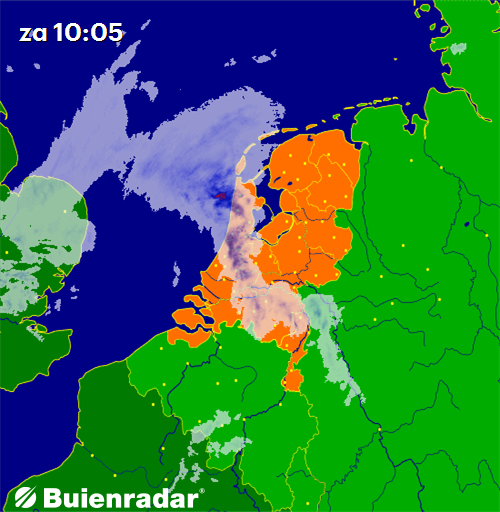
The weather will be great over the coming days — the sun will shine, but it won’t be too hot. Over the weekend, there will be a few thunderstorms.
Wondering why you were in a better mood this morning? Oh yes, that’s right — the sun is shining! According to Ed Aldus, the weatherman at Buienradar, “this afternoon we can enjoy beautiful summer weather.”
Aldus says that there will be considerable sunny periods this afternoon, with fluffy white cumulus clouds in the sky. It will be a little cloudier in the northeast of the country.
How hot will it be?
The temperature will hover around 23 degrees in the centre of the country and 25 degrees locally in the southwest. We don’t know about you, but to us that sounds like absolutely perfect weather. 😎
What’s more, today is ideal for a beach day. Thanks to a nice moderating wind along the west coast it will be pleasant but won’t get too hot. Don’t forget your sunscreen though. If the beach ain’t your thing, you could also have a refreshing dip in the pool.
This evening the clouds will dissolve and the sun will shine. Perfect for golden hour selfies — we know you need a new profile picture. A little wind tonight means you won’t be sweating while you sleep.
What will tomorrow hold?
Tomorrow morning will start out cloudy, but the sun is due to be shining by the second half of the morning. We’re in for a sunny afternoon — pack your beach bags, babes! In the centre of the country it will be 25 degrees (hope you know of a nice polder to splash in). Temperatures will rise to 27 degrees locally in the southwest.
Light to moderate winds will blow from the west throughout the afternoon.
The following days will be changeable with periods of sun and cloud. But it will remain dry and that’s the main thing! We can’t have yet another day of arriving at work looking like drowned rats.
Hitting the terrace this weekend? Remember to close your windows
Over the weekend, the sun will shine occasionally, but it will be a wet one. There will be local rain and thunderstorms. Nevertheless, temperatures are expected to range between 21-29 degrees. Dress lightly because it will be muggy. But don’t forget your raincoat!
How will you be enjoying this summery weather? Tell us in the comments below!
As an international, buying a house in a different country can be a daunting prospect. Let’s lay out the most important steps that you should take if you want to buy a house in the Netherlands.
In this guide to buying a house in Holland as an international, we have broken down the process into eight steps:
1. Figure out how much you need to borrow
With some basic salary and work contract information, you can get a quick estimate online of your maximum borrowing capability and your expected monthly mortgage repayments. Remember you’ll need an extra 5 to 10% of the purchase price to pay all the fees and taxes.
2. Find out what’s on the market — get yourself on Funda
Funda is one of the first places that anyone looks when they are on the hunt for a home. The majority of properties that come up for sale in the Netherlands are uploaded to the site and you can easily register for free at www.funda.nl.
The first step to buying a house in the Netherlands is to check out the housing market. Image: Massonforstock/Depositphotos
Once you have joined, you can set your preferences in your online account according to exactly what you are looking for. Check-in regularly and you will quickly become aware of suitable new properties coming onto the market.
3. Get yourself a ‘makelaar’ (realtor)
A makelaar, or realtor as we say in English, will help you to either buy or sell a home. When you’re looking to buy, a makelaar can be extremely helpful. Not only will they use their expertise to protect you from an increasingly cut-throat housing market, they will also carry out a lot of the heavy work involved in buying a house in the Netherlands.
They will begin by curating a buyers profile for you based on your specific circumstances and expectations. Using this, they will find the perfect property for you — but we’re getting ahead of ourselves.
Have you decided to opt for a realtor? Good for you! Juiste Makelaar can match you with the perfect realtor for your circumstances — and all for free. Their platform gives you access to over 500 makelaars throughout the Netherlands, including certified expat realtors.
3. Attend a viewing
Realtor or no realtor, the next step is to find a viewing. You can do this yourself by sending a message to listed properties on Funda. However, you may be at a slight disadvantage when compared to house hunters who have a makelaar on their side.
This is because a realtor will find you viewings for properties before they even end up on Funda. Yep, that’s right, realtors can give you access to properties before they hit the public market — a huge advantage in the current Dutch housing climate.
4. Find out how much you should bid
This is probably the single most difficult and most important part of the whole process. Unless you’ve got some great hacking skills, you won’t know the details of the other offers from your competitors. You may be asked to give your initial bid, which should be proportionately lower than your final offer, or you may be asked to give your final offer in an auction-style contest. You are playing around with numbers that equate to months or years’ worth of salary —tricky stuff!
You can try to make your own best estimate of the value of the house, which is primarily determined by the sale price of other houses in the same area. You can do this by either:
Contacting the Kadaster.You can use this site to receive information by telephone, email or SMS about the sale prices of all properties in the Netherlands. This can be related to a specific address or a post code area.
Use services available on Vereniging Eigen Huis such as “wat is dat huis waard?” which will attempt to calculate a reasonable property valuation based on recent transactions in the same area.
The next step in buying a house in the Netherlands is to figure out how much to bid. Image: Goodluz/Depositphotos
Once you have seen the house a few times, and have an estimate of the market value, you should also judge the value of the house to you. This is the true value and only you are the real expert.
That being said, you can also turn to an actual expert. if you do opt for a realtor they can offer you a stronger position when it comes to determining and negotiating the amount you should bid. Not only do they have knowledge of how much similar properties are sold for, they also have insight into what happens on the side of the seller — a big plus when you’re looking to impress them (without getting swindled.)
5. Time to call a surveyor
Once your offer has been accepted — congratulations! The first thing you need to do is conduct a technical evaluation of the property to verify that the house is not about to collapse. In the Netherlands this is called a bouwkundige keuring. A surveyor will come to the property to ensure that everything is technically and structurally sound before you dole out your cash.
6. Find a Notaris to handle the paperwork
A notaris or notary will act as the legal mitigator between you and the seller. They will draw up the relevant legal documents and make sure that everyone crosses all their T’s and dots the I’s.
If you were thinking of buying a house without a notary, think again. In the Netherlands, this is a compulsory step in the process of buying a home.
You do have some choice however when it comes to choosing your notary. You may make this decision based on the specific requirements of the property you’re buying, or more simply — the fees. Notaris fees can vary between about €1000 and €2500, (ouch we know but try to remember that they are the guardians of your legal rights.)
6. Finding a mortgage lender
So now you are ready to sell your soul to the bank — we mean, take out a mortgage. Figuring out what you want in a mortgage can lead you naturally to the right lender. Ask yourself the following questions:
How many years fixed interest rate would I like?
Do I want to be able to pay off large amounts of my mortgage without getting fined?
Can I get a cheaper interest rate if I bring a deposit?
Does my new house qualify for National Hypotheek Garantie?
An important step in how to buy a house in the Netherlands is to find yourself a mortgage lender. Image: Nattanan Kanchanaprat/Pixabay
Make a list of various possible lending organisations, then choose a few from that list and organise some meetings. You should be able to have an introductory chat for free. The lender will charge you a mortgage processing fee, perhaps including some ‘advice’ for setting up the mortgage. This can vary between about €1500 and €3000.
Once you have decided what your mortgage is going to look like and how much you are going to pay, it’s time to transfer your money. In the Netherlands, you actually don’t transfer your money to either the bank or the seller — instead, it goes to the notary.
Both you and your mortgage lender will transfer your contribution to the purchase of the property to the notary. They will then give you a notarial statement containing all the information about the transfer including the relevant costs (taxes etc) and the money owed. Once the money needed for the sale is in the notary’s account, they will deduct relevant costs (more on these below) and transfer the settled amount to the seller on your behalf.
8. Pay the little fees
The worst part of buying a house in the Netherlands is over. However, now you need to gather all the financial muscle you can accumulate so you can pay all those damn fees and taxes! In addition to those already mentioned, you may have to consider the following:
Overdrachtsbelasting (Transfer Tax): 2% of purchase price (Not applicable for new houses) (As of January 2021, first-time buyers between 18-35 will not have to pay this unless the house exceeds 400,000.)
NHG aanvraag (NHG application): 1% of purchase price
Thankfully, in the Netherlands, the interest you pay on a mortgage is tax-deductible, which means every month you can get a nice chunk of dosh back a couple of weeks after you’ve made the monthly payment (this is called the hypotheekrenteaftrek, one of the best words to set up in Dutch Wordfeud).
In addition, you can claim back tax on what you paid to the bank, the notaris, the taxatie and the request for the NHG. Get that tax back and use the extra funds to pimp up your new pad!
9. Relax and celebrate
Now you’ve really got the ball rolling! Go and take a seat on the terrasje, order a biertje and some bitterballen while you fantasise about your future life in your wonderful new Dutch palace.
Relax and look forward to your future in your Dutch home! Image: monkeybusiness/Depositphotos
The process of buying a house in the Netherlands is often much easier when you have an expert involved. Juiste Makelaar can match you with the perfect makelaar for your situation with no strings attached! Find out exactly what you need for free using this tool, then enjoy a free chat with one of their many experts.
Happy house hunting! Tell us about your experience in the comments below.
Feature Image: rognar/Depositphotos Editor’s Note: This article was originally published in April, 2015, and was fully updated in July, 2021 for your reading pleasure.
Thinking about starting fresh and living in Amsterdam? You might be wondering things like, how’s the Dutch food? And, do I have to wear clogs to fit in? Well, you’ve got the questions — and we’ve got the answers.
Amsterdam is the cultural and financial centre of the Netherlands, and life in this bustling metropolis is certainly unique. The city is known for its liberal attitude, strong business acumen, and vibrant arts and entertainment scene — so there are plenty of reasons you might be considering moving in. But what can you really expect when you’re living in Amsterdam?
Short on time? Jump to what you want to know about living in Amsterdam
First, let’s zoom out for a bigger picture of what makes this city what it is today.
Amsterdam’s size and population
Amsterdam’s small area of 219 square kilometres (85 square miles) is jam-packed with a population of over 1.1 million registered inhabitants. Each square kilometre within the city holds nearly 5,000 people.
This is made possible by rows upon rows of quintessentially Amsterdam architecture — the tall and narrow brick buildings with charming gabled facades that stand confidently crooked on the discreetly rotting wooden pilings beneath.
To give you a geographic visual, the city itself is shaped like a wonky half-circle. You’ll often hear reference to the inner and outer rings, which are separated by the A10 highway. The inner ring holds the old Amsterdam city. Outside the ring is everything else — the suburbs per se, though it’s all really quite urban.
The “Venice of the north”
Nicknamed the Venice of the north, Amsterdam holds a labyrinth of over 160 17th-century canals and over 1,700 bridges. The city’s inner canal network is referred to as the canal belt (grachtengordel). The canal belt is such an important piece of history it’s been named a UNESCO World Heritage site.
Originally, most of these canals were constructed during the Dutch Golden Age for practical purposes while the city was expanding. Now, they’re lined with houseboats and ever-buzzing with tour boats and photo-snapping tourists — a far reach from the city’s humble beginnings as a small 12th-century fishing village.
Amsterdam is an expensive city to live in. It has the highest cost of living of any city in the Netherlands and ranks as the 11th most expensive city to live in Europe. Housing costs in some regions are astronomical, menu prices in tourist areas can be comical, and income taxes take a major chunk out of the paycheck.
But along with the high price tag comes a high quality of life. And part of that quality is the ease at which you can live a cost-efficient lifestyle. Locals looking to save money will learn to avoid tourist traps and figure out without too much trouble the more affordable places to live, shop, and eat out. Many people also save money by qualifying for various government subsidies (toeslagen), as well as in simple ways like cycling and shopping at local markets.
To afford this cost of living, you’re probably curious about what the job market is like and how it is to work in Amsterdam.
What it’s like to work in Amsterdam
If you’re lucky enough to nail down a job in Amsterdam, chances are, there’s a bit of a cultural acclimation process. You’ll experience it in many areas of your Dutch life, of course, but there are some key distinctions in the workplace to be aware of.
As far as the basics, 36 to 40-hour workweeks are the norm, and part-time work is also popular. Salaries are generally high enough to meet the cost of living but not overly generous — they’re typically lower than in the US and UK, for example. You’ll also be likely to find that communication is direct, work environments are casual, and Friday happy hour (borrel) with your colleagues is common.
Another unique thing you might pick up on in the workplace is that Dutch companies don’t tend to put much emphasis on a hierarchical structure. There’s no need to bow down to your superiors; there’s more of an emphasis on equality, whether you’re entry-level or an executive.
But that equality doesn’t always translate to gender and diversity — at least not as well as you might imagine in a liberal, progressive country. Even though there are government policies in place to protect workers, many people do experience discrimination in the workplace. However, this certainly doesn’t apply to all companies, and it is a problem that many are working to improve.
Taking time off from work
Now, here’s something to knock all American’s socks off: in the Netherlands, mandatory vacations are a thing — a really nice thing. Holidays are so important to Dutchies that built into the employment structure is the requirement for companies to pay their employees what’s called the “13th-month” salary, or vakantiegeld (vacation money).
It’s 8.3% of your annual salary reserved for time off, that you’ll receive in May (usually). It’s not uncommon to take a month or more of holiday time per year (20 days is the minimum by law, in addition to public holidays). This set-aside money ensures that your time away won’t break the bank — work-life balance, baby. In fact, it’s no surprise that the Dutch boast the best work-life balance in the world.
So working in the Netherlands sounds pretty nice but how are you going to find a job? Your ease in finding employment will likely be determined by your industry and experience. For example, those working in finance or tech will likely find more opportunities than those working in social or humanitarian fields.
There are also a plethora of international companies with headquarters in Amsterdam (the Netherlands is a tax haven for large corporations). This means plenty of offices operate in English but doesn’t mean it’s easy to secure a job by only speaking English. Many companies prefer to hire candidates that can also communicate in the native language, Dutch (makes sense).
These large companies may still be your best bet for finding work in the Netherlands, but it can be a bit discouraging if that’s not the type of work that motivates you. So if you do move to Amsterdam without a job already locked down all I can say is, good luck, and hang in there. Some people find employment with relative ease but it’s certainly not common. Adjusting your expectations and being flexible is key.
If the lifestyle, cost of living, and work environment seem like the right fit, you might be ready to start packing your bags. But before you do, there are some important things to know about housing.
Amsterdam may have a shortage of housing but the houses are never short on character. Image: na4ev/Pixabay
Brace for the Amsterdam housing market
Finding a place to call home in Amsterdam is a challenge. The market is expensive and competitive. Extreme rental prices for tiny apartments in the city centre are the norm, and they’re always on the rise. Further outside the city center, costs are a bit more reasonable. Many people also choose to live in nearby suburbs or smaller cities and commute into Amsterdam to save money.
The Netherlands makes a distinction between private housing and social housing. Amsterdam housing associations must reserve a percentage of social housing for people with lower incomes. The government subsidizes the rent, which is capped at a certain amount. While some expats may qualify for social housing, it’s not generally very accessible, as the waitlists are often years long. With private housing, there are no limitations to the prices landlords can charge.
Home buying is very common in Amsterdam, due to generous tax breaks for homeownership and the steep costs of rent. If you plan to stay in Amsterdam for more than a couple of years, it could be worth buying your own place.
Although, the cost of buying a home is still quite expensive, and many people report having to pay well above the asking price. Of course, you’ll also be responsible for all of your own repairs (which can be endless in these old buildings) but you’ll also have all the freedom that goes along with being the lord of your lair.
It can be a tough decision, and there are many details to sort out, but if you decide homeownership is right for you, there are mortgage brokers and estate agents who specialise in helping expats.
Where are the best neighbourhoods to live in Amsterdam?
Where you’ll enjoy living is all about personal taste. If you like being around non-stop action and frequently puking, you’ll be right at home in the raucous city centre (Centrum). All the favourite tourist attractions, such as the Red Light District (RLD), canal belt, and Museum Quarter are situated here — meaning this area is no friend to claustrophobics. On the bright side, living in the heart of the city also means you’re surrounded by rich history, unique architecture, and close to Central Station (so you can always escape).
Some neighbourhoods just outside the centre that are popular among expats are De Pijp, Jordaan, De Plantage, and Oud-West, to name a few. Even the quickly growing Noord neighbourhood, which requires a quick ferry, is super close to the action but slightly separated by water.
Some other nice residential neighbourhoods can be found just beyond. A few of the locally-loved neighbourhoods are De Baarsjes, Bos en Lommer, and Zuidoost — all lively but removed from the central chaos.
Some family favourites in Amsterdam are Zuid, Oud-Zuid, Rivierenbuurt, Westerpark, and Watergraafsmeer, offering close proximity to schools, relaxed vibes, and space to play.
If the housing situation didn’t scare you off, good! You’re going to make it in Amsterdam. Most other aspects of living in the city are quite manageable, so it’s all downhill from here. You can ease up on those brakes and start cruising — throw caution or helmet to the wind! (Kidding of course; as a self-appointed member of the safety police, I would never advise against wearing a helmet. You just probably won’t do it in Amsterdam.)
Riding a bike in Amsterdam
Ready for Amsterdam? Bike: check; cheese: check; clogs: check. Image: Thomas Bormans/Unsplash
In Amsterdam, bikes are the boss. Cyclists rule the roads and are given priority over cars and even pedestrians. It’s the most efficient way to get around the city when it comes to cost and speed. You can easily get pretty much anywhere within city limits in under half an hour. There are even more bikes than there are people!
The cycling culture in Amsterdam can be a bit overwhelming for newcomers. Because bikes are the primary mode of transportation, cyclists move fast and don’t have much patience for bemused tourists who have unwittingly wandered off the sidewalk into the bike lane — avoid this mistake and you’ll be A-ok.
When riding on your own two wheels, you’ll likely find a similar lack of sympathy for those wandering into your bike lane, and your thumb will learn to hover effortlessly over your bell. You’ll also learn the importance of locking your bike with two locks to avoid having it stolen. Many of us learn this lesson the hard way but hopefully, you won’t have to.
Amsterdam has an extensive public transportation network, which you will come to love on wet, blustery days, of which there is an abundance. Between the trains, trams, buses, ferries, and metro, it’s easy to get wherever you need to go. For all travel within the city, GVB is your go-to. The company’s extensive transportation network travels to every nook and cranny of the city.
Single-use tickets can be purchased in advance or bought aboard a tram or bus. Locals are best off using a public transport card called an OV-chipkaart, which can be refilled as necessary. Card options are available for discounted fares on weekends, holidays, and off-peak hours.
The NS trains connect Amsterdam to the rest of the country and beyond. They’re generally super comfy, regardless of whether you’re sitting in first-class or second. You’ll find Intercity (IC) trains that travel quickly between cities, and Sprinter trains that don’t move quite as fast as their name would imply, making various stops along the way. To board the train, you’ll need at least a €20 balance on your OV-chipkaart, but you’ll only be charged for the distance you travel.
Driving a car in Amsterdam can be a feat, especially the closer you get to the centre. Not only do you have to be on high alert for preoccupied tourists and a rapid-fire succession of cyclists, but parking is a real monstrosity. Finding an available parking space is like finding a public toilet for women — good luck.
It’s also very expensive. On top of the high costs of owning a car, in the event that you’re able to secure a parking space, you’ll need more than just that spare change you have rattling around in your cup holder. Close to the centre, typical parking costs about €1+ per 15 minutes. For a full day of parking in the city, it’s not unheard of to pay around €80. You can save money by opting for long-term parking options, which are available throughout the city.
Outside the centre, it’s a bit easier to get by with a car. Parking is less expensive and more accessible.
At first glance, living in Amsterdam with children might not seem like a great idea. But don’t be fooled! Amsterdam has loads to offer for families. There are plenty of family-friendly neighbourhoods, parks, museums, and other entertainment. Plus, lots of options for education and childcare.
Lots of reasons families enjoy living in Amsterdam. Image: Skitterphoto/Pexels
Sending your kids to school
While living in Amsterdam, you’ll have the choice of sending your children to either a Dutch school or an international school. The government subsidizes Dutch public schools so they cost next to nothing for parents and offer students a great education.
There’s also a wide range of private “special schools” (bijzonder onderwijs) with various pedagogies to choose from —Waldorf, Montessori, Dalton, religious schools, you name it. About two-thirds of children in the Netherlands attend a special school.
International schools are a popular choice among expat parents. They can be a good option for families not planning to stay in the Netherlands long-term, or for older students who will require more time to pick up the language. International schools are much more expensive than Dutch schools. Sometimes, the government also subsidises international schools but to a much lesser extent. Either way, you can expect to pay a hefty amount in tuition.
There are numerous options for childcare in Amsterdam, depending on your child’s age, when you’ll need care, and what you’re comfortable spending. Here’s a breakdown:
Type of childcare
Description
Public daycare (kinderdagverblijf)
For children from the age of six weeks to four years old. The waitlist for some centres can be long, so it’s best to sign up sooner than later — even before your move, if possible, or as soon as you become pregnant.
Private daycare
More expensive but tends to have better flexibility with hours and more international options.
Preschool (peuterspeelzalen)
For children ages two to four, and helps prepare kids for primary school. It’s typically offered two or three times a week in the morning or afternoon.
Playgroup (peutergroep)
Provides activities and care for children ages two to four in a less formal setting.
After-school care (buitenschoolse/naschoolse opvang)
Available at some childcare centres for kids up to the age of 12.
Employers
Occasionally offer daycare, which can be a less expensive route.
Childminders (gastouderopvang)
Another option for babies and kids through their primary years. The childminders will look after up to six children in their home or a care centre and can be available on evenings and weekends.
Babysitters (oppas)
Can range from inexperienced teenagers to experienced childminders. If you register with a babysitting service (oppascentrales), you can easily find a sitter when you need one at a reasonable price, in exchange for a membership fee.
Au pairs
Popular in the Netherlands and can be another option on the lower end of the cost spectrum. They’ll care for your kids for up to 30 hours a week in exchange for room, board, and a small living stipend (around €350).
What are the people like in Amsterdam?
Once you’ve got the picture of what life can look like for you and your family in Amsterdam, you might be wondering what the rest of your life might look like around you. Will you be welcomed? Will it be difficult to find a community?
The Dutch: Amsterdam locals
Let’s start with Amsterdam’s Dutchies. The coronavirus pandemic offered a reminder that, indeed, many Dutch do people live in Amsterdam! Because it’s such an international city and generally packed with tourists, this can often be overlooked. But in fact, Amsterdam’s population is roughly half Dutch and half international.
As to whether you’ll be welcomed, there is no blanket statement about whether or not Dutch people will be pleased with your presence in their city —everyone is different. Some Dutch find the influx of internationals bothersome, while others embrace the diversity (don’t take it personally if you encounter the former).
Dutch traditions to spot in Amsterdam
You’ll find that the majority of Dutchies living in Amsterdam speak great English but will appreciate your hilarious attempts at speaking Dutch. You’ll also catch onto the traditional Dutch greeting of not one, not two, but three kisses on the cheek.
When walking around the streets of Amsterdam at night, you’ll notice that many people leave their curtains open. You may even catch a glimpse of what’s known as a circle party, which is exactly what it sounds like — a traditional Dutch birthday party that’s held while sitting in a circle, for hours. It’s punctuated by mandatory balloons and very light refreshments.
It would be easy to go on and on about the interesting behaviours and traditions you’ll encounter, but to sum it up, Dutchies have plenty of quirks, and living in Amsterdam you’ll collect countless observations and anecdotes of your own.
Amsterdam’s international community is made up of people from all over the world, with residents of 180 different nationalities.
A multitude of expats are drawn to the international job market, universities, and the all-around pleasant pace of life that Amsterdam offers.
There are numerous international pockets and plenty of expat groups, so if you find it difficult to break into long-established Dutch social circles (as many do), you shouldn’t have too hard a time meeting other foreign nationals.
Many others come to Amsterdam as asylum seekers. The city supports up to 2,000 asylum seekers in two temporary housing locations (Asielzoekerscentra, AZC).
Do I need to learn Dutch to live in Amsterdam?
Speaking Dutch isn’t mandatory to live in Amsterdam but it will certainly improve your experience. The majority of Dutchies you’ll come across in Amsterdam speak excellent English but it’s still courteous to learn the basics and offer up some pleasantries when you can.
Let’s be real, outside the Netherlands, speaking Dutch doesn’t serve much practical purpose (outside of being a neat party trick, of course). For many, this can be challenging in terms of motivation. But for those planning to stay long-term in the Netherlands or settle down with a Dutchie, learning the language is a great way to integrate.
Amsterdam is a great city for university students. Image: Buro Millenial/Pexels
Many students come to Amsterdam to study at university. The city’s universities offer a vast range of programmes and disciplines, tuition is relatively reasonable, and conveniently, courses are taught in English. It’s also a hugely entertaining, fascinating, and inspiring place to live and study. So it’s no wonder so many earnest young people are drawn here.
The Universiteit van Amsterdam (University of Amsterdam, UvA) is the oldest, largest, and most popular university in the city, dating back to 1632 and hosting over 35,000 students.
The second-largest university is the Vrije Universiteit (Free University, VU), with over 23,000 students currently enrolled.
Being the tourist attraction that it is, the hospitality industry also draws many students to attend the Amsterdam branch of Hotelschool Den Hague (Hotelschool The Hague), which opened in 2002. They offer a popular four-year bachelor’s degree in hotel and hospitality management.
The culture in Amsterdam is unlike anywhere else in the world. It’s quintessentially Dutch at heart, with the addition of generations of multicultural influence. In the Netherlands, there’s Dutch culture, and then there’s Amsterdam culture. You’ll find this unique flavour everywhere from the food to the festivals to the arts.
How liberal is Amsterdam?
Some of the first things that come to mind for many people when they think about Amsterdam are drugs and prostitution. Compared to the vast majority of other countries, the Dutch government is quite liberal when it comes to protecting these personal freedoms.
One thing people often get wrong about Amsterdam’s Dutchies is that they’re all about indulging in said personal freedoms. Sure, some Dutchies smoke a joint now and then, but the behaviour you find in the RLD is not terribly common in Dutch culture. They simply have liberal drug and prostitution policies, which attracts a large international party scene.
The Netherlands has a long-standing reputation for liberalism, as the world’s first country to legalise both gay marriage and euthanasia. Prostitution is also legal, and, while many are under the impression that drugs are legalised as well, they are simply tolerated (gedogen).
Drugs in Amsterdam
This tolerance, or decriminalisation of drugs, is a bit different from legalisation. In Amsterdam, the sale and use of soft drugs is overlooked, and won’t land you with any criminal charges. But technically is it not legal to sell, purchase, or use drugs. This idea of “live and let live” is a trademark of Dutch culture.
This is not to say they’ve got it all worked out; the Netherlands manufactures more ecstasy than any other country in the world, so there are some serious kinks to still be worked out regarding the control of harder drugs.
But soft drugs, such as marijuana and truffles, are openly accepted. As of 2020, there were 32 smartshops, selling paraphernalia, seeds, and psilocybin in Amsterdam, and 164 coffeeshops (marijuana cafes) — a figure that’s been steadily declining since the ‘90s, when there were upwards of 400. The City is aiming to address the concern of overtourism with upcoming policies that may further limit the availability and sale of marijuana.
The Dutch are not known for their vibrant food culture. They do, however, have a few signature staples: stroopwafels(thin syrup and waffle sandwich), poffertjes(little puffy pancakes), stamppot(mash pot — no further explanation required), bitterballen(scalding deep fried gravy balls), and drop (liquorice, often hard and salty), to name a few.
Another Dutch classic: brood met hagelslag (bread with sprinkles). Image: Amin/Wikimedia Commons/CC4.0
And, of course, we can’t forget about raw herring, which has dedicated stands throughout the city. Now, if the idea of sinking your teeth into raw fish makes your stomach do a somersault, relax! There’s very little chewing involved, as you simply tilt your head back and swallow it in one go.
There are many restaurants and kiosks serving up these and other traditional delicacies, and there’s so much more. Because Amsterdam has such a large international population, you’ll find restaurants of every variety. Surinamese food, for example, is very popular. So when you’re not in the mood for pancakes or thick pea soup, you can find pretty much anything else.
Are there vegan/vegetarian options in Amsterdam?
Amsterdam is a very easy city to get by in as a vegetarian or vegan. Although most menus generally cater more toward the meat-eater, you’d be hard-pressed to find a restaurant that doesn’t offer some kind of vegetarian option.
The city even has quite a few strictly vegetarian/vegan restaurants. Amsterdam even got its first vegan supermarket in 2021. But speciality supermarkets aside, even regular grocery stores in Amsterdam have a wide range of plant-based options and meat substitutes — and the prices are actually reasonable.
Entertainment in Amsterdam
One of the best things about living in Amsterdam is that there’s always something to see and do — even a simple walk around the city can be surprisingly interesting in itself. But for days and nights when you’re after a bit more action, there’s plenty to get into.
Of course, as we are currently in coronavirus times, these public activities are not available. So in the meantime, file them in your brain for future adventures, and be sure to stay safe and up to date with the government’s regulations.
Museums and galleries in Amsterdam
Amsterdam has phenomenal museums, galleries, and exhibitions. One of the best perks about living in the Netherlands, rather than just coming as a visitor, is the Museumkaart. For about €60 a year, you’ll have access to more than 400 museums and galleries throughout the entire country!
The highest concentration of museums is of course in Amsterdam. From the wildly popular Rijksmuseum and Anne Frank House to smaller niche locations like the Museum of Bags and Purses (Tassenmuseum) and Our Lord in the Attic (Ons’ Lieve Heer op Solder), you’ll have VIP access. With 43 attractions in Amsterdam alone, you’ll never want for something to do on a free weekend — and it pays for itself after just a few uses!
*We’re not sponsored by the Museumkaart; this is just a heartfelt tip from a superfan.
If a night on the town is what you’re after, this city will not disappoint. While many people know Amsterdam for its Red Light District (RLD), there are bars, clubs, and cosy cafes all over the city.
Bars are allowed to stay open until 1:00 AM during the week and 3:00 AM on weekends, and clubs can stay open until 3:00 AM on weeknights and 4:00 AM on weekends. Night cafes (nacht cafes) are essentially just late-night cafes that can stay open even later — until 4:00 AM and 5:00 AM on weekends.
The two wildest areas for nightlife outside the RLD are around Leidseplein and Rembrandtplein — neither far from the city centre. You’ll find far more tourists in these city squares than you will Dutchies. In each of these areas, the city has instituted a ban on drinking in the streets to protect the poor souls who live there.
The dress code is usually casual at Amsterdam’s clubs. Often, they’ll charge a cover ranging anywhere from €5 to €20.
The performing arts scene in Amsterdam is quite lively. From musical theatre to comedy, and everywhere in between, there’s always something happening on stage. The area around Leidseplein is home to some of the city’s better-known music venues. Paradiso, Melkweg, and Stagsschouwburg often host world-renowned bands and musicians. For most live shows, it’s wise to purchase tickets in advance to secure your spot and a better price.
For live theatre, modern dance, ballet, or opera, the Dutch National Opera hosts beautiful performances. The nearby Royal Theater Carré is another top destination for live performances geared more toward English speakers, with everything from cabaret and comedy to acrobatics.
Several locations around the city offer live comedy shows in English, generally geared toward expats and tourists. If you’d rather not be at the butt of the jokes, be sure not to reveal your nationality if you’re British or American — it’s too easy a target.
For a truly Dutch experience, you can head to an electronic music festival. These festivals draw massive crowds of both Dutch and international audiences alike. Amsterdam is a DJ breeding ground, claiming some of the most famous in the world (so they tell me). Even if you don’t know a thing about EDM (electronic dance music [even I know that]) while living in the city you’ll quickly pick up on a few familiar names here and there.
So that’s life in Amsterdam in a nutshell: DJs, bikes, museums, and expensive housing. Overall, it can be a wonderful place to live and comes highly recommended, but it is what you make it, of course. Oh, and about the clogs (as promised) — not the shoe of choice. So if you’re sold, the next step is to make it happen!
Do you have any other questions about what it’s like to live in Amsterdam? Or other experiences to add? Tell us in the comments below!
Last year, the Netherlands was (for the 21st time) the biggest exporter of beer in the EU, according to the Central Bureau of Statistics. After Mexico, it was also the second-largest exporter worldwide — but it has competition.
The NOS reports that in 2020, more than €2 billion worth of beer was exported from the Netherlands — whoever would’ve thought beer could be such a positive thing for a country’s GDP?
Throughout the 2000s, the Netherlands was the biggest exporter of beer in Europe. However, Belgium is the second-largest exporter, and this lead is becoming smaller — this takes the Belgian/Dutch rivalry to a whole new level.
While both countries exports are still growing, Belgium’s export market is growing faster. Belgian speciality beers have become increasingly popular in recent years. Yeah, that’s right, we’d take a Belgian blonde ale over a Heineken any day. Don’t @ us. 💁♀️
American’s love Dutch beer
The United States purchases 37% of the beer exported from the Netherlands, making them the biggest customer for Dutch beer.
Although US neighbour, Mexico, still provides stiff competition for the Netherlands. Mexican beer remains a favourite amongst Americans and people the world over. Over the past four years, Mexico has exported about $4.3 billion worth of beer and has an export market twice as large as the Netherlands.
The Netherlands makes the best non-alcoholic beer
Non-alcoholic beer has become increasingly popular in recent years that, since 2017, it has been measured on a separate index.
Initially, Germany exported the most non-alcoholic beer, but the Netherlands has since overtaken Germany in this category. Since 2017, the Dutch export of non-alcoholic beer has grown by 83% and is valued at €121 million, making the Netherlands the largest exporter of non-alcoholic beer in the European Union.
What do you think of Dutch beer? Does the Netherlands deserve this title? Tell us in the comments below!
A 27-year-old Dutchman who was brutally attacked by a gang of compatriots in Mallorca died of his injuries on Sunday morning.
The man was part of a group of friends assaulted by the gang last Wednesday in Playa de Palma at around 2:20 AM.
Three of the victims suffered minor injuries, the fourth fainted, and the fifth was taken to the hospital after suffering serious head injuries, Diario de Mallorca reports.
All suspects identified
Prior to the attack, the gang had been rioting for hours, reports the NOS. Thanks to surveillance cameras on the streets, local police were able to identify all nine suspects, aged between 18 and 20 years.
International arrest warrants
Eight of them returned back to the Netherlands before the Spanish police could arrest them. They are now subject to an international arrest warrant.
Dutch police were asked to take them to custody. However, a spokesperson said that “we first have to wait and see what’s in the request and then it will be determined which police force will arrest the young people. Perhaps the Public Prosecution Service will also be involved.”
The ninth man — an 18-year-old Dutchman — was arrested in Mallorca on Friday.
Follow DutchReview on Facebook for the latest news and updates.
Amazon will soon launch a spaceship take to the road with electric vans to deliver packages in the Netherlands.
Whether you’re a die-hard Amazon shopper or anti-Jeff Bezos, let’s agree that if delivery vehicles have to be on the road, they may as well be electric. That’s why we give a grand ol’ 👍 to the 40 electric Amazon vans that will soon deliver to major Dutch cities.
It follows the launch of Amazon’s first Dutch delivery centre, where an 8,500 square meter hall will process thousands of packages every week.
Of course, we can’t avoid the fact that the 200 vans will service the delivery centre — yet only 40 are electric. It begs the question: is it enough?
Electric or not, the vans will deliver packages to Amsterdam, Rotterdam, The Hague, Haarlem, and potentially Utrecht. Other areas in the country will have their Amazon packages delivered by PostNL, DHL Nederland, Red Je Pakketje, and independent couriers.
What do you think of this move by Amazon? Tell us your thoughts in the comments below!