Keen to enter a store that’s not your local Albert Heijn? Keep that chin up — the government wants to reopen shops as early as next week.
However, if you’re hanging out for a shopping spree you’ll need to be a little more patient. Shops will only be allowed to reopen so customers can collect orders made online or by phone.
The change could take effect from February 8, but whether it will happen or not isn’t set in stone. The cabinet remains concerned over the British coronavirus variant and will announce their final decision tomorrow.
It comes after RIVM reported 3714 infections yesterday, the lowest number seen since October 1.
The move is in line with two other recent coronavirus restriction easings made by the government. Yesterday it was announced that primary schools would also be allowed to reopen on February 8.
Meanwhile, sources from The Hague say that the government is planning to retire the 9 PM curfew from February 10.
Follow DutchReview on Facebook to stay up to date with all the coronavirus news in the Netherlands.
When talking of sex — and the Dutch do that a lot! — one cannot ignore the practice of safe sex, consent and open-mindedness. It is no wonder, then, that the first speciality condom shop in the world originated in… you guessed it! Amsterdam!
As we know, there are many niche and novelty concepts and ideas that originated in Amsterdam. The famous Red Light District in De Walletjes is synonymous with the culture of experimentation and barrier-breaking of the Netherland’s capital city.
As the leader of sexual liberty, Amsterdam opened the world’s first shop dedicated solely to all things condoms in 1987. On a Saturday in May, 34 years ago, the Dutch media set the stage for the worldwide attention centred on the first condom speciality store in the world. As if this store wasn’t ground-breaking in itself, this shop was opened by two women!
Amsterdam’s first condom shop — opened by women!
The idea to open this novelty store was born in a restaurant in Amsterdam, around which discussions about the AIDS pandemic were literally the talk of the town. Since the early 1980s, stigmas and insecurities surrounding the deadly virus caused a new infatuation with safe sex.
Although condoms were available in pharmacies and sex shops, there was no choice of useful, informative and easily-accessible information. And so, on an April evening in 1987, Riddle Marijke, Ricky Janssen and Theodoor van Boven made the decision to challenge the stigma and implement the idea of a shop dedicated solely to safe sex. Thus, Condomerie was coined.
No judgement
Check out those bad boys. Image: Kathryn van den Berg/supplied.
The philosophy of Condomerie is, ultimately, that safe sex is not a compromise and can be just as exciting and fulfilling as unprotected sex. The AIDS virus, and other sexually transmitted diseases, don’t discriminate on race, sex or status. To this day, Condomerie is committed to an atmosphere of acceptance and “service with a smile.”
In addition to offering tested condoms, the Condomerie also offers fun and fantasy condoms along with advice, and an environment of “no judgement.” Not only does this store offer a safe space in which patrons can explore and inquire (the staff even advise on condom sizes and ask about personal preferences!) but it also, naturally, breaks the taboo of sex which accompanies many international visitors.
Sex happens, even during lockdown
Condomerie’s physical store is decorated with fun, tongue-in-cheek and exotic art and illustrations. They even have a section dedicated to “Lockdown Love,” with humorous posters on their doors promoting their quirky take on the pandemic regulations. One such sign reminds passers-by that “inside, you must wear a face mask and in bed…wear a condom!”
Condomerie’s online webstore offers choices of flavoured condoms, ribbed condoms or glow in the dark condoms under the tab “Serious Fun.” As if this is not an enticing enough reason to visit the online store, custom condoms are also available for order and come with instructions for measuring the penis.
In evolving with the times, Condomerie has also taken to social media to ensure that the world’s first condom shop remains the most inviting. The Condomerie Instagram Page keeps up to date with the politics, weather, and trends of the day with humorous anecdotes and advice.
Along with quirky illustrations and dirty-humour sayings like “our favourite quarantine activity is going (lock)down”, they also provide information on latex allergies, debunk condom-related myths and, most importantly, invite open, interactive discussions around sexuality and safety.
Did you know about Amsterdam’s thriving condom shop? Tell us your thoughts in the comments below!
If the number of Dutch coronavirus infections continues to fall, the nationwide curfew will end on February 10, sources in The Hague have told the NOS.
Last week, the number of coronavirus infections dropped to the lowest rate this winter and yesterday, the RIVM reported 3714 infections, the lowest number since October 1.
According to sources in The Hague, if this rate of decline continues, curfew will not be extended past the initial end date of February 10.
While this is yet to be formally confirmed, there does not seem to be any reason why the government would wish to extend the strict measure with the current numbers.
Tomorrow
The Dutch cabinet will meet tomorrow to make a formal decision about the end of the curfew. Tomorrow evening, Prime Minister Mark Rutte and Minister for Health Hugo De Jonge will once again address the nation in a press conference.
It is believed the meeting will also discuss a roadmap, i.e a plan for how and when certain measures will be lifted throughout the Netherlands.
Do you think curfew should be lifted? Let us know your thoughts in the comments below!
Yesterday, the Dutch cabinet decided definitively that primary schools and childcare will reopen throughout the Netherlands on February 8. The majority of the Outbreak Management Team (OMT) is in agreement with this decision.
The OMT’s advice was taken into consideration during the meeting, where reportedly the majority of OMT members believe there is “room for perspective and some relaxation.”
Minister for Primary and Secondary Education, Arie Slob, says the decision is “good news for children, parents and teachers.”
A real risk
However, the OMT also warned that the relaxation will bring about a “real risk” for the number of ICU and hospital administrations, the NOS reports. According to the advice that the team gave, an unspecified number of OMT members remain against the decision to reopen schools.
Slob said during the meeting that he was aware of the concerns. For this reason, extra measures will be brought in for students and teachers.
High schools and after-school care remain closed
In accordance with these extra measures, teachers will now undergo rapid testing and students will be required to quarantine for five days if a classmate tests positive for coronavirus.
According to the cabinet, only primary schools and childcare will reopen for the time being. This means that secondary schools and after-school-care are not expected to reopen on February 8.
According to the OMT, after-school-care would mean that different groups of children would be brought together which would increase the risk of further infection. The cabinet will make a decision regarding secondary school education in next week’s meeting at the Catshuis Council.
What do you think about the reopening of primary schools and childcare? Let us know your thoughts in the comments below!
As the leading organisation for the performing arts, the Dutch National Opera & Ballet is an internationally appreciated institute and a true cornerstone of Dutch culture. Without being able to fill the auditorium or encourage visits to performances, it is easy to assume the institution is facing tough times. This is not the case, however.
For an art institution founded on a love of performance, the nationwide curfew and extended lockdown measures hit the theatre the hardest. However, despite having closed its physical doors in response to a government announcement on December 14, 2020 (until at least February 9, 2021) — the Dutch National Opera & Ballet has found ways around this unprecedented challenge.
True to the nature of the city where it is housed, this institution encompasses Amsterdam’s ability to maintain tradition while evolving with the times. After all, one doesn’t become amongst the top five of its kind in the world by stagnating.
Bringing the performance into your home
Instead of succumbing to the lockdown crisis, this proud institute of artistic expression is offering an “Online Season,” in which various performances and brilliant programmes can still be enjoyed online. Via this Online Season, the Dutch National Opera & Ballet encourage art-lovers by providing the opportunity to bring the theatre home.
The public can watch diverse, free online performances of breath-taking ballets and opulent operas by picking a seat with the best (on screen) views, preparing their favourite snacks, or even organising an online group hangout or date by streaming performances with friends.
A typical audience pre-corona times. Image: Mandyromme/ Wikimedia Commons/CC3.0.
Sadly, despite these offers, various much-anticipated Autumn performances were still postponed or cancelled altogether (including Oedipus Rex and Der Fliegende Holländ), and the institute had to create entirely new programmes for 2021.
Previous coronavirus measures
For those who look forward to physically visiting the institute in the future (whenever that may be!), the COVID-19 measures practised by the Dutch National Opera & Ballet will likely still be in effect. These measures included regulated entrances, mandatory face masks and, naturally, hygiene and sanitisation measures.
Along with the rest of Amsterdam, the Dutch National Opera & Ballet strongly advised wearing face masks indoors. This was mandatory for those viewing in-person performances, but face-shields could be removed once patrons were in their seats.
Entrances were (and will continue to be) regulated, with staff requesting that visitors disinfect their hands. Tickets, either printed or on-screen, were scanned from a distance. An adherence to social-distancing was also followed, and the box office area, foyer and auditorium maintained a 1.5-meter distance from other guests. When it came to sitting, there was a minimum of 3 seats between guests.
It is also worth mentioning that the theatre’s ventilation is circulated according to advice from the REHVA (Federation of European Heating, Ventilation and Air Conditioning Associations). No air is recirculated, and all air coming into the building is outside air.
A maximum of 4 tickets was sold to one person, and the theatre was allowed to seat only 30 guests per performance or activity. Seats were assigned upon entry to the venue, and placement was not possible.
Support the Dutch performing arts
On their website, the Dutch National Opera & Ballet requests public understanding and cooperation while they, and the rest of the country, eagerly look forward to the return of normalcy. Art has always been a means of connection and continues to join us in protest against lockdown-induced boredom and frustration.
Will you be enjoying the online performances, videos, quizzes and classes offered by this institute? Tell us your thoughts in the comments below!
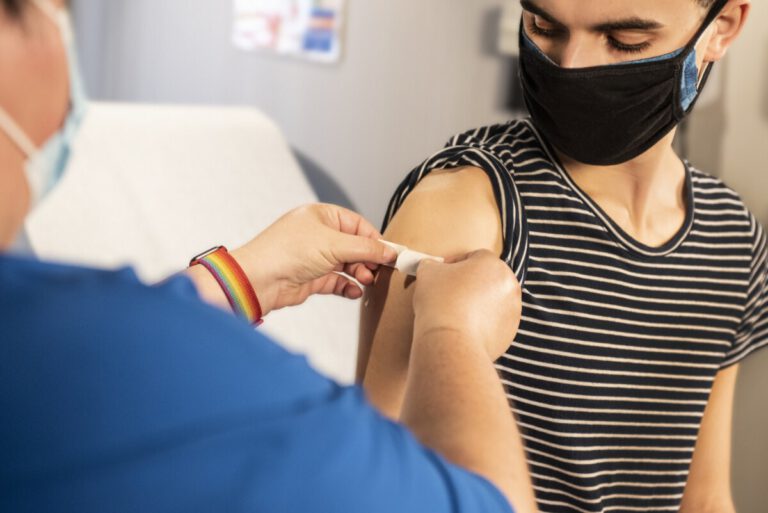
The Netherlands has been criticised for its glacial start to the coronavirus vaccination process — but, according to chairman of the National Acute Care Network, Ernst Kuipers, the biggest hold-up is people wanting a selfie while getting the jab.
That’s right. It’s not the amount of available stock, delivery, storage, the building of vaccination centres, available staff, or any other number of things that could go wrong.
Instead, people want to score with their Insta game. 👎
Kuipers made the comments on the talk show Jinek last night while discussing how to make the most out of the number of available vaccines.
“Per bottle [of the vaccine] you can get seven instead of five [doses]. So you can increase the number by 40%, meaning we have vaccines for 700,000 people,” he told host Eva Jinek.
“However, the most time restricting factor with vaccinating in the hospital, you know what that is? You will never guess, it is that everyone wants to take a selfie.”
Watch the (Dutch) video below:
De grootste beperkende factor in het zetten van een vaccinatie? "Iedereen wil een selfie maken," zegt Ernst Kuipers. Volgens Kuipers liggen er 500.000 ongebruikte vaccins te wachten, waarmee binnen één week 700.000 mensen gevaccineerd kunnen worden. #jinekpic.twitter.com/Qx0O3RLHFF
Okay, we get that being vaccinated is a huge, life-changing moment — but can we hold the selfies until we leave the vaccination centre? We’re pretty sure the other 17 million people in the Netherlands who are also waiting their turn would appreciate it 👍
#ikwildieprik Nr 2/2! Dit keer door collega Laurens! (Fijn om ook bij te praten)
A series of unfortunate (or fortunate) events have led to a woman from Lansingerland receiving the coronavirus vaccine instead of a test. It seems that a number of bureaucratic, technical and human errors allowed for such a mix-up to occur.
The woman had received a letter calling for her to get tested for the virus — but this is where the confusion began. She did not read her letter properly and assumed it was giving her the date and time for her vaccine, not a test.
When she arrived at Rotterdam The Hague Airport, her local GGD location, members of staff failed to check her letter upon entering the vaccination hall. Following this, she had to go to the registration desk and show the confirmation letter to prove she had an appointment.
Ahh, you may be thinking, surely this would have put an end to all this confusion? Nope. It seems the universe wanted this woman vaccinated. She had forgotten her letter to prove the confirmation of her appointment. Usually, when this happens, the member of staff will search the database to ensure a person has an appointment — BUT NO.
The computer was running too slowly and the staff member did not want to hold up the line. The woman was waved forward and found herself receiving a coronavirus vaccine.
Too late to take it back
Once a vaccine is given, everything must be processed. It was only at this point that staff members realised there had been a huge mistake. While a measly 1% of the Dutch population have received the coronavirus vaccine so far — this lucky woman stumbled her way into that percentile.
The woman was checked by a doctor and is in good health, she is expected to receive her second dose of the vaccine in two weeks time.
A spokesperson for the GGD tells the NOS that this accidental vaccine came down to carelessness. “If the registration had been carried out more carefully, the vaccination could not have taken place,” they said. “It shows the importance of all steps being taken carefully. We have taken steps to prevent this from happening in the future.”
What do you think of this little mix up? Tell us your thoughts in the comments below!
The Netherlands is one of the worst performing countries in Europe when it comes to distributing coronavirus vaccines. Outgoing Health Minister, Hugo de Jonge, promises that this will improve.
This is largely because the distribution of vaccines in the Netherlands is happening at a much slower pace than the arrival of the vaccines. Store rooms sit full with vaccines waiting to be injected but the process is lagging.
De Jong has promised that the gap between vaccine arrivals and distribution will be closed in the next two to three weeks. By then, the number of vaccines being distributed will be more than those arriving in the Netherlands, he says.
A slow start
The outgoing health minister is aware that the Dutch people are looking over their shoulders and comparing the systems here to their neighbours. “Of course I am also disappointed that we are currently at the bottom of the figures,” says De Jonge. “Part of the explanation lies in the somewhat slow start, and another part in more cautious stock management than other countries.”
Hesitant proceedings
De Jonge also expressed a concern with distributing vaccines too quickly. Thinking ahead, he would rather distribute the vaccines carefully and reduce risks than rush the process and have weeks with no vaccines to deliver.
“I understand that people still think differently about this now, but we must ensure that in a while we still have enough in stock to be able to take the planned injections,” says De Jonge. He noted that if the Netherlands starts vaccinating people 24 hours a day, “then you stand still for two weeks”.
What do you think of how the Dutch government have handled the distribution of vaccines in the Netherlands? Tell us in the comments below.
The Netherlands ranks 75th in the world for the quality of its coronavirus approach, according to new research from Australia. New Zealand ranks number one. The study explored how 98 countries have managed the pandemic to date.
The researchers looked at six criteria: the number of infections, confirmed deaths, confirmed cases per million people; infections as a proportion of tests; and tests per thousand people. “Collectively, these indicators point to how well or poorly countries have managed the pandemic in the 36 weeks that followed their hundredth confirmed case of COVID-19.”
Each country received an average score out of 100. New Zealand scored 94.4. Vietnam, Taiwan, and Thailand follow. According to researchers, these countries took a tough approach to eliminate the virus early on.
The Netherlands, on the other hand, weighed in at just 33.5, followed closely by Russia.
Brazil is managing the virus the worst, with a score of 4.3. They are followed by Mexico, Colombia, Iran, and the United States.
Policy choices and political circumstances
The study concludes that “systemic factors alone — a society’s regional provenance, political system, economic development, or size — cannot account fully for the differences observed in global crisis responses.”
The results identify some of the strengths and vulnerabilities in the way different countries are prepared to deal with a public policy challenge of this scale. “But policy choices and political circumstances of the day appear to be just as important in shaping national responses to the pandemic.”
How do you think the Netherlands is managing the pandemic? Tell us in the comments below.
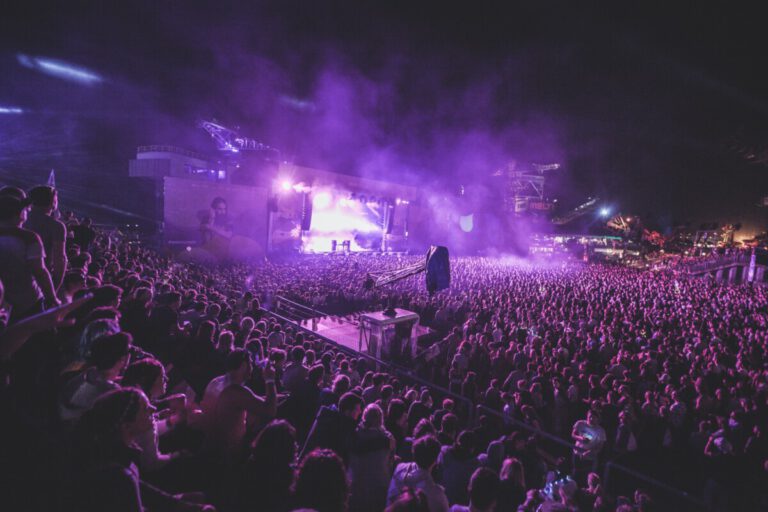
The Netherlands will begin organising trial events in which audience members will be allowed to attend conferences, festivals and matches in mid-February.
Before attending any of the planned events, audience members must first test negative for coronavirus. A negative test result must be no later than 48 hours old and the members will be required to get tested again five days after the event.
The tests will be free for audience members since they are taking part in a trial. Pieter Lubberts of Fieldlab, the organisation that represents the events sector, tells the NOS about why these trials are being conducted:
“We want to use these tests to investigate whether we can replace the current measures, such as the one and a half metres, and still organize safe and responsible events. The aim is to use the tests to gain insight into the contamination risks.”
Where will the trials take place?
The first of the trials will take place at the Beatrix Theatre in Utrecht. It is a business conference that will host 500 people — all of whom will be tested before and after attending the conference.
The second trial will take place in the same theatre but this time it will be a concert. The audience members will be broken up into three groups which will consist of 50, 200 and 250 people.
The largest number of audience members will be seen at the two football matches that will follow. Both matches will allow an audience of 1,500 people. The first match will take place on February 20 between NEC and De Graafschap in Nijmegen. In this trial, the audience will be broken up into six groups of 200 people.
The second football match to trial having an audience will take place on February 28, when Almere City will play at home against Cambuur. In this case, the audience will be broken up into separate “bubbles” of 200, 600 and 700 fans.
What do you think of these trials? Are they taking place too soon? Or is it time that the Netherlands carries out these experiments?