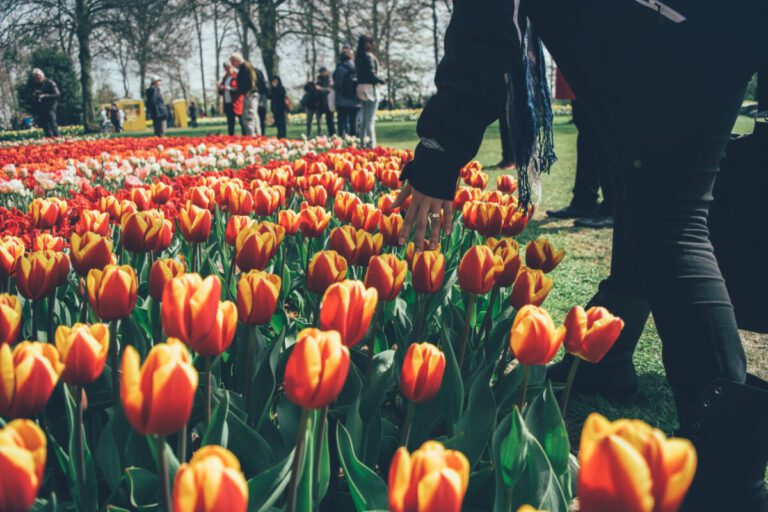
As part of a large-scale trial, members of the public will now be able to visit museums, sports matches, zoos, theatres, and even the Keukenhof, provided they can show a negative test certificate.
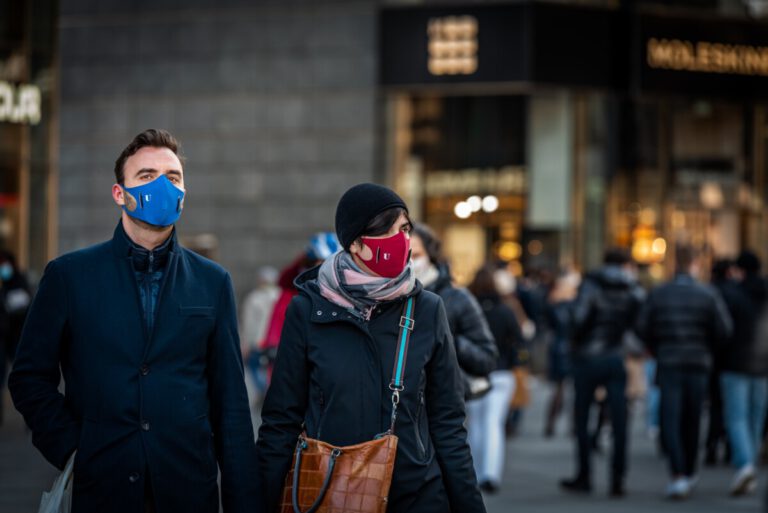
Ready to get back out there? People who want to participate in the nationwide trial must register for an event with the organizer of the activity. However, in order to gain entry to these trials, participants must first show that they have tested negative for coronavirus.
What events are part of the trial?
The government has released a list with a full rundown of the various events and activities that are open to the public as part of the trial. Notable locations that will open include the Keukenhof, Artis Zoo in Amsterdam, and The National Theatre.
Fieldlab test events such as the Eurovision song contest are also part of this nationwide trial.
How can I attend a trial event?
In order to attend one of the above activities, participants must first register for a ticket direct with the organiser. Once you have booked a ticket for an event, you must sign up for a test at one of the Open Netherlands Foundation’s test streets. The costs of the tests are currently covered by the government, so you’ll only pay for your entry to the activity.
If you test negative for coronavirus you will receive a test certificate stating your result. This will then be used in conjunction with your ticket in order to gain entry to the event.
And if you test positive? Get back home mate, the GGD (municipal health services) will be in touch.
Reopening the Netherlands
Thousands of participants are expected to take part in these trial events. The hope is that — all going well — the events will prove that Dutch society may start to reopen once again with the help of rapid testing.
Minister Grapperhaus of Justice and Security hopes to see Dutch society gradually reopen following the trials saying “it doesn’t seem to be going badly these days.” The hope is that the Dutch government may start to relax measures by April, RTL Nieuws reports.
What do you think of these trial events? Tell us your thoughts in the comments below!
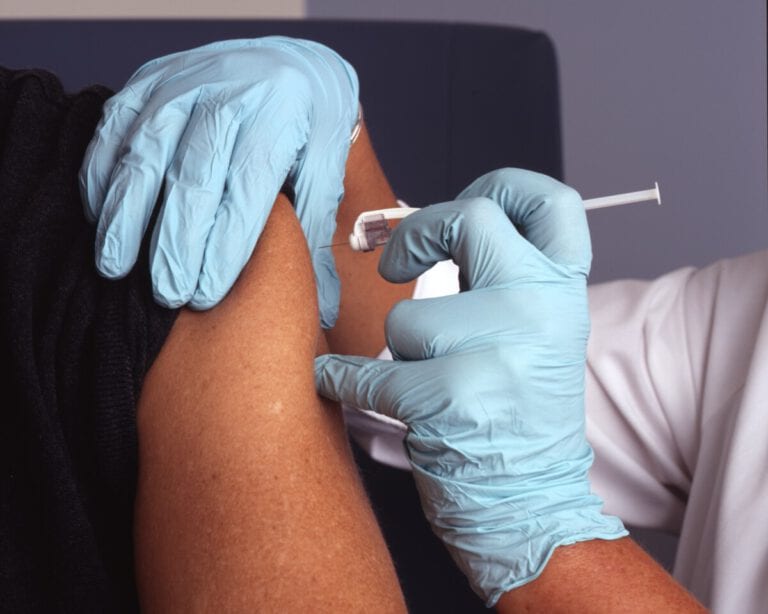
If you’re feeling exhausted by all the stops and starts in the Dutch vaccine program, we don’t blame you. But there is some good news. The RIVM has launched a calculator so you can find out when you can expect your first coronavirus jab.
In spite of this, the Dutch government remains optimistic about how many vaccinations it can roll out in the next few months. April brings an influx of vaccines, with the new one-shot Jansen vaccine, as well as the Netherlands receiving a total of 500,000 vaccines a week. The government is sticking to its guns, promising that everyone can receive their first shot by July.
When can I expect my first injection?
Due to recent developments in the vaccination timeline, this promise may seem a little hard to believe. However, there is some light at the end of the tunnel. The Ministry of Health has created an official vaccination calculator where you can find out when you can expect your first injection.
As it stands, the calculator is predicting that anyone under the age of 50 without pre-existing health conditions can expect an invitation for their first dose of the vaccine in mid-June. Just in time for summer! ☀️
Will I get vaccinated if I don’t have a Dutch passport?
If you don’t have a Dutch passport but are wondering if you will be invited to get a coronavirus vaccine, the answer is most likely yes. Anyone who is registered at a municipality in the Netherlands will be invited to get vaccinated.
There are other circumstances where you might be invited for vaccination even without being registered or holding a Dutch passport.
What do you think about this vaccination calculator? Let us know in the comments below!
The Netherlands has an addictive nature. Tourists often have this small but mighty country on their bucket list for a good reason, and the Dutch addictions have really spread far and wide.
“Dutch addictions”, I define as things the rest of the world cannot help but love. This addiction may be real or perceived. From food to iconic architecture, there’s a lot of the elements of Dutch life that are addictive. So here is my case for five truly addictive elements to living in the Netherlands.
1. Cheese
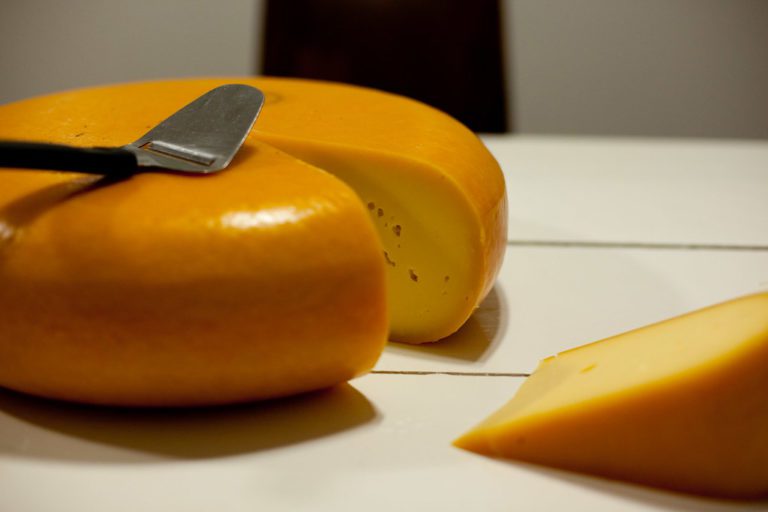
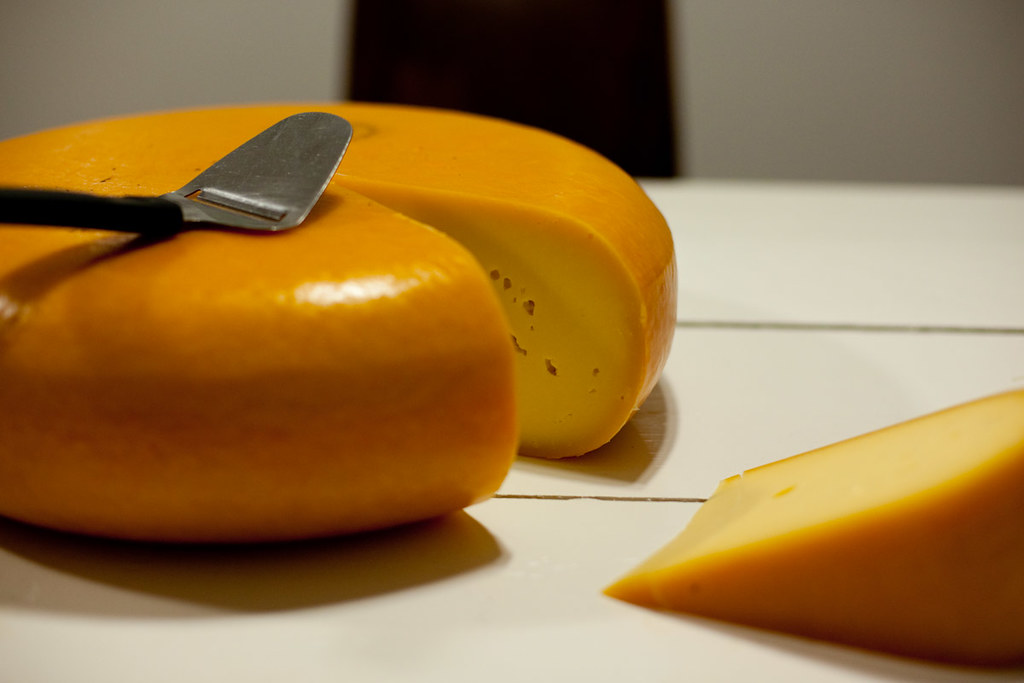
You may think 17 million Netherlanders can’t be wrong, and we agree. Who around the world doesn’t love a slice (or 10) of Gouda or Edam? Apparently, one of the Netherlands largest exports is putting a death grip on the world. I assume that means happiness and high cholesterol? In 2016, the Netherlands exported $3.3 billion in cheese which is 12.4% of their total exports.
But is cheese really an addiction? Some research says yes! It has opiate-like molecules built into it, as Forbes.com reports. These casomorphins exist in all dairy fat.
So does that mean milk is addictive? Come on! What’s next, Cheese Anonymous? Snopes.com however debunks the theory that you can have a diagnosable cheese addiction.
The USDA recommends only 1.5 oz of cheese a day maximum. Well, that’s not happening. Wait, maybe I am a cheese crackhead. If there’s a 12-step program, I’m there! I’m off to Gouda rehab. (I hope there’s wine too.) 🧀
2. Windmills
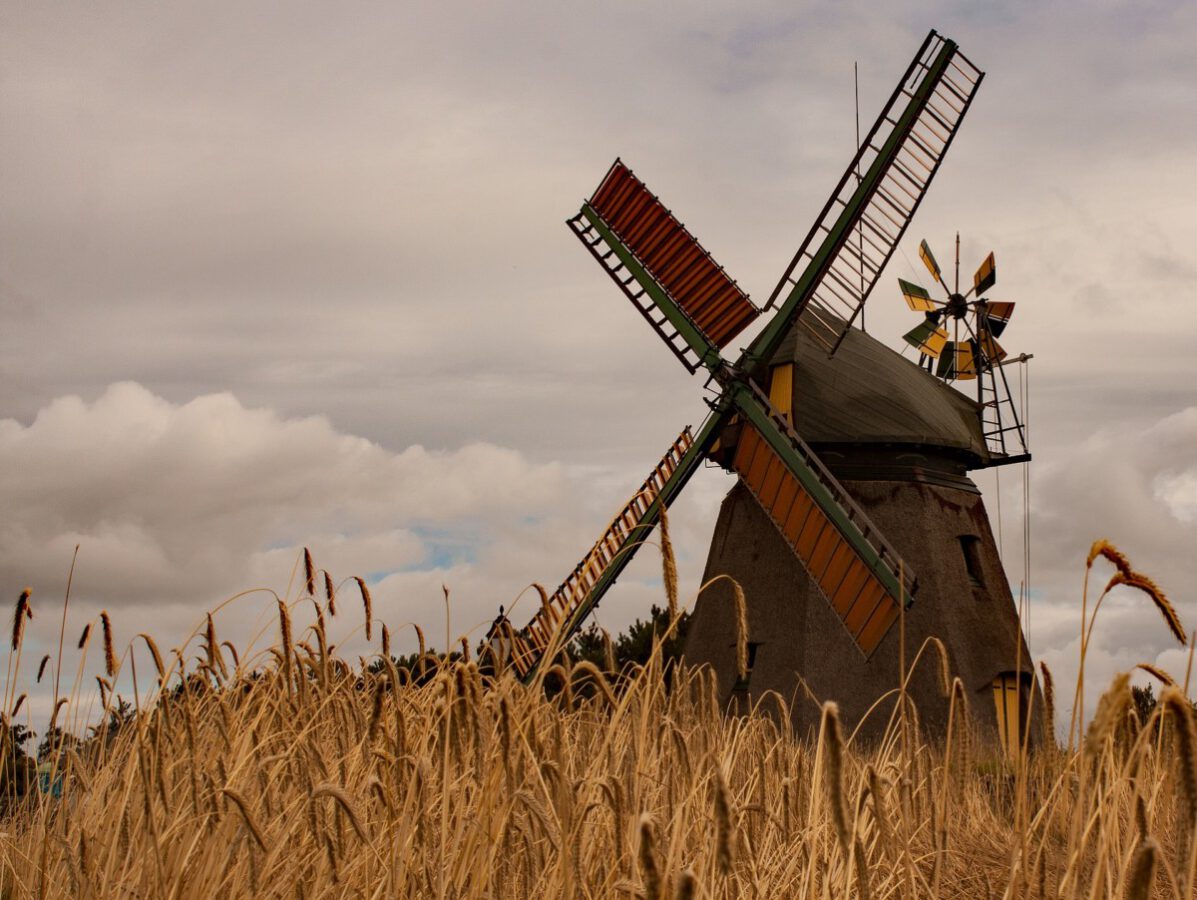
Windmills are often the first thing on your mind when the Netherlands enters a conversation. The Dutch built windmills for practical use to crush corn and to help reclaim the land starting circa 1200. But why are windmills addictive?
It could be the romantic history of windmills, helping the Dutch to claim much of their country from the seas. Windmills also were used as signals by positioning their sails to broadcast events and news, and decorated for events.
Even on a cloudy day, these beauties are still addictive. Image: AngelaHB/Pixabay
For the rest of the world, just looking at a picture of a windmill in a colourful tulip field seems to be hypnotic. Paintings, art, posters and yard models of windmills are available for purchase almost anywhere in the world. Tourists visiting Holland stand ready with a camera (sometimes for days) pleading for the sun to shine for that perfect picture. Whatever the psychological reasons, the majestic windmill is definitely one of the Dutch addiction that has gone global.
3. Clogs
Who wouldn’t want a pair of these fashionable statements? Image: monika1607/Pixabay
Another practical item that turned into a Dutch addiction is these wooden shoes. To the Dutch, clogs worn like garden crocks or wellington boots. A waterproof garden and farming shoe. They have been around since medieval times. The rest of the world doesn’t flock anywhere for rubber boots, but they do flock to the Netherlands to buy these uncomfortable wooden shoes.
Over three million are made a year, most going to tourists whether they’re plain clogs, beautifully painted, clog slippers, or custom clogs. When tourists buy a pair, they smile like a drug addict getting their daily fix. Who can blame them?
4. Stroopwafels
I can proudly confess, I am a stroopwafel addict. Image: Takeaway/Wikimedia Commons/CC3.0
As a child in the USA, I only knew waffles with maple syrup. I liked them well enough, but Stroopwafels present a waffle that is portable and ready to eat on the go. They seem to have some kind of secret addictive ingredient. These syrup waffles might accompany you on car rides, picnics, or even just while watching the TV. In the US, you can drive a thousand miles and not find a bitterballen or pannekoeken, but you will find stroopwafels on the shelves. 🥞
As reported by Bakeryandsnacks.com, Dutch baker Daelmans alone produces several million a day in his bakeries across 30 countries. The total number of stroopwafel made worldwide goes well into the billions every year. Sounds like a worldwide addiction to me!
5. Heineken
There are many famous brewers that have crossed the pond, but Dutch Heineken has been making beer since 1864. When I visited the Netherlands, my wife’s local Dutch relatives would point out the Heineken Brewery from the train, every single time. Funnily enough, it began to stick in my brain. Heineken!
Back in the states, green glass bottles became fascinating to me. Heineken would catch my eye first when browsing brews in the supermarket. The green bottle with a red star. Suddenly, six showed up in my refrigerator. I must’ve gone into a Heineken based hypnotic state. 🍻
All kidding aside, alcohol is obviously addicting to some. Although the Chief Commerce Officer of Heineken a few years back touted the health benefits of beer (fewer calories than milk, and it’s one of few natural drinks), he stressed moderation of course. Not that I need another excuse to have an occasional beer.
Nevertheless, in 2011 Heineken produced 2.74 billion litres of beer in the Zoeterwoude brewery for shipment to 170 countries. That’s a lot of “healthy” drinks! Nearly 16.5 billion litres from all 160 of their beer brands were shipped worldwide in the same year.
So Heineken, by sheer numbers and alcohol content, is a “Dutch addiction” in a number of senses. It’s a popular beer, and we must face facts, James Bond drinks it in Skyfall – so it must be cool!
Dutch Addictions
It’s clear the Netherlands is sending out addictive produce across the world. I believe I am attracted to most of these five Dutch addictions. Blame the Netherlands when they kill me.
It won’t be pretty when I trip in my clogs, distracted by my cholesterol report, as I choke on my cheese-covered stroopwafel, crash into a cheap copy of a Van Gogh windmill painting, and impale myself on my Heineken bottle. At least I will die happy. Please place tulips on my grave.
What other “Dutch addictions” have spread around the world? Share with us in the comments!
Editor’s Note: This article was originally published in March 2018, and was fully updated in April 2021 for your reading pleasure. Feature Image: Eelke/Flickr
The RIVM has released its weekly coronavirus figures for the period of March 31 to April 6. The number of infections has fallen compared to the previous week.
Over the past week, the RIVM reported 48,186 new infections in the Netherlands. This is a decrease compared to the previous week’s number of 51,866 new infections. The percentage of positive tests, however, went up to 8.9% compared to 8.5% last week.
Deaths
The number of patients who have died from COVID-19-related complications has gone down slightly. This week 142 people passed away, compared to 171 people the previous week.
Hospitalisations
Hospitalisations have decreased, however, the number of admissions to the ICU has increasedslightly. The past week saw 1,588 new admissions to the nursing ward and 376 new patients in the ICU. The week before, there were 1,633 and 317 respectively.
Shorter third wave
The RIVM had initially predicted that the Netherlands would see the peak of the third wave at around May 1. Now, the health institute believes that this might come earlier, around mid-April. The RIVM also expects to see fewer ICU admissions at the peak than originally predicted.
However, this prediction is based on the assumption that there will be no relaxation of the coronavirus measures, and that many people will be vaccinated in the coming weeks. Meanwhile, coronavirus self-test kits are being introduced in Dutch pharmacies.
People living in the Netherlands who are registered with the municipality in the Personal Records Database (BRP) or the Non-residents Registration (RNI), as well as people without a valid residence permit, people in detention centres, and asylum seekers, are all eligible to get their vaccine in the Netherlands.
The Eurovision Song Contest, which was initially set to take place in Rotterdam last year (but was cancelled due to the coronavirus) will be one of these trial events and is set to happen between May 18 and May 22.
Follow DutchReview on Facebook for the latest news about the upcoming coronavirus measures.
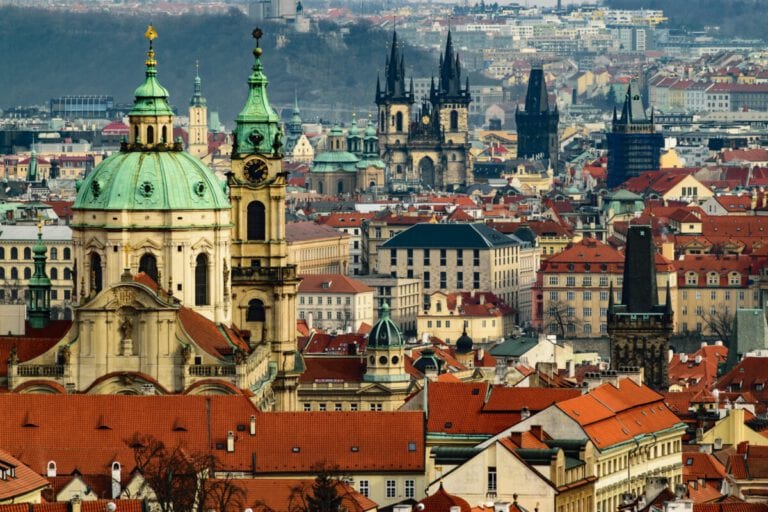
The Dutch start-up European Sleeper is introducing a night train that will take you from the Dutch capital via Rotterdam and Berlin to the city of Prague in one fell swoop.
If you’ve been planning on doing a little trip around Europe next summer, then this is the news you need to hear. With trains already running between Amsterdam and London, this is another milestone in connecting the Netherlands’ capital with different corners of Europe.
Connecting European gems
The European Sleeper night train will connect major European cities — Brussels, Antwerp, Rotterdam, Amsterdam, Hannover, Berlin, Dresden, and Prague — and is supposed to start running in April 2022.
The plan is to offer the train connection three times a week for the first months. After that, there could be as many as one of these sleepers running a day, the train operator announced on its website.
Ticket prices announced soon
Travelling by train is not only an exciting Murder-on-the-Orient-Express-like experience but it can also help reduce the environmental costs of flying, which — let’s be honest — are still very real even despite numerous flight cancellations during the pandemic.
The first private railway company to enter the Dutch market since 1999, European Sleeper aims to put overnight trains back into the limelight.
The company has partnered with the Czech railway operator RegioJet to offer their first route. Ticket prices and the exact travel times are to be announced soon.
So @EuropeanSlpr has announced their route will be Brussels-Amsterdam-Berlin-Dresden-Prague, and in cooperation with RegioJet… I will still believe this when I see it! But Brussels-Berlin – sure, I’m in! https://t.co/hX6GvHYTwipic.twitter.com/z4gMsuatV5
For the trip to Prague, the company advertises friendly staff, free internet, privacy, free coffee, and even breakfast in bed. Sounds like a pretty good way to start your adventures in the heart of Europe, right?
If you’re not jumping with excitement already (why aren’t you, though?), maybe you’ll be happy to know there have also been plans to introduce trains from Amsterdam to Scandinavia, or cities like Vienna and Zurich.
Will you be taking this overnight train from Amsterdam to Prague next year? Tell us in the comments below!
The private data of 533 million Facebook users have been leaked online. The leaked file contains data of 5.4 million Dutch users.
Your name, phone number, place of residence, relationship status, employer, and sometimes your email address — this is all information that could potentially be found in the leaked database.
According to RTL Nieuws, the file contains data that had already been stolen in 2019 by abusing the function which allows Facebook to automatically look up your contacts.
This was discovered by the website TechCrunch. At that time, Facebook said that nothing indicated that the phone numbers were being misused.
533,000,000 accounts having their personal information leaked is apparently considered “fixed” by Facebook’s definitions.
— Alon Gal (Under the Breach) (@UnderTheBreach) April 3, 2021
What’s the danger?
When such a leak occurs, the company in question is obliged to inform its users. However, with Facebook, this didn’t happen.
It’s easy to become a bit immune to Facebook scandals – there’s so many of them! – but Facebook’s comms admitting they knew of this latest breach – of 533 million people – almost 2 years ago *but did not inform users* is pretty breathtaking https://t.co/eLBqE1a3cK
“The main danger of this leak is that the data can be used for fraud, for example via WhatsApp. The more data such a scammer has on you, the more convincing he can make the message,” says journalist Daniël Verlaan.
Scammers can easily gain your trust by for example mentioning your name or employer in a text message.
Was my data stolen?
Dutch Facebook users can check whether their data was part of the leaked file by simply entering their first and last names into this tool. If any matches are found, the database will show the last three digits of the linked phone number.
The developer of this tool, Joost Schuttelaar, states that he doesn’t store any data of Facebook users who use his software. This other tool uses Dutch and Belgian phone numbers to search the leaked database and also doesn’t store any user data.
How do you feel about this leak? Let us know in the comments below!
A shorter third wave of coronavirus than previously predicted and fewer ICU admissions are the RIVM’s prognoses for the Netherlands. But hold your horses because the OMT is not entirely convinced.
According to new predictions from the RIVM on Friday, the peak of the third wave will be earlier than expected. In mid-March, it was predicted that the Netherlands would experience the peak at around May 1, but new data published by the RIVM suggest that the peak will be somewhere in mid-April.
Predicted ICU numbers also drop
The predicted number of ICU patients during the peak has also decreased, from 1,400 to 800 according to the NOS. This comes as welcome news for the Netherlands as it’s firmly settled into the third wave of coronavirus, with some hospitals already overflowing.
A spokesman for the OMT, Marc Bonten, tells Nieuwsuur that he is happy with the new predictions for the Netherlands, but he has reservations. He suggests that these figures are “on the assumption that many people will be vaccinated in the coming weeks. The second condition is that we do not relax.”
Bonten stresses that if either of these factors changes, these predictions could look very different in the coming weeks. He also says that he sees little room for easing of measures since the R number (rate of infection) is currently above one in the Netherlands.
How do you feel about the RIVM’s predictions? Let us know in the comments!
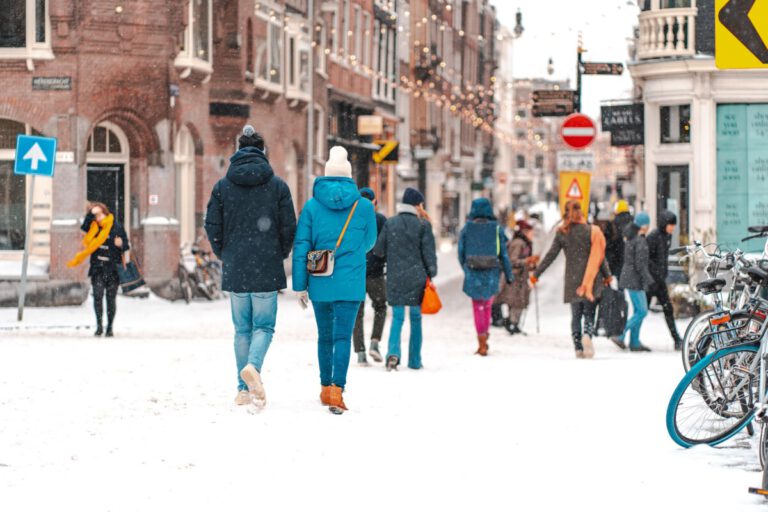
So much for those sunny rays we had last week. It’s a chilly start to the week in the Netherlands, with cold winds and wintery showers on Easter Monday.
We all knew the nice weather wouldn’t last, but we held out hope for a sunny Easter weekend. Alas, it wouldn’t be a Dutch spring without a few twists and turns. There is an icy chill coming in from the North Pole, according to Buienradar meteorologist Leander de Wit.
Sorry to the sun worshippers, the temperature will only reach a high of six degrees today. This may not sound that cold, but there is a wind chill of below zero. 😬
Snow later in the week
If you think today is cold, you’re in for a shock at what is coming ahead. Tuesday’s weather takes even more of a turn, the temperature lying between one and three degrees, with thunderstorms, hail and snowy showers. De Wit told RLT “the saying ‘April does what it wants’ does not exist for nothing.”
White Wednesday in the north of the Netherlands
The wintery weather continues into the middle of the week. From Tuesday night a precipitation layer is predicted, which will likely leave a blanket of snow over the northeast of the country. This means the northeast of the Netherlands could wake up to a white Wednesday according to Buienradar.
By the end of the week, the temperature looks like it will creep back up to double figures. Those April showers will continue throughout the week, so as we expected, it’s a bit too soon to say hello to summer. 😩
What do you make of this wintery weather? Let us know in the comments below!
Dutch weather can be just as confusing as modern dating. You get just enough to keep you interested, but there are no signs of full commitment and you’re left hanging for days on end.
But on Thursday, it all started to change. While provinces such as Limburg could enjoy an extra day of the summer-like 20 degrees, temperatures didn’t go over nine degrees in the northern parts of the Netherlands.
Not-so-good Good Friday
The high temperatures of the past days are not coming back for the time being and the weather on Good Friday will be anything but good. In most parts of the country, temperatures won’t go above 10 degrees, reports Weerplaza.
However, there is a ray of light — literally — as the sun is expected to peek through the clouds every now and then throughout the day.
Best time for Easter egg hunt
If you’re wondering when you should hide your Easter eggs, then we suggest you place your bet on Sunday. Despite a moderate wind, it will stay dry for the day.
Monday, on the other hand, will start with clouds and rain showers, particularly in the southeast of the Netherlands.
How will you be spending this Easter weekend? Let us know in the comments below!
On April 1, 2001, the Netherlands became the first country in the world to legalise same-sex marriage. Since then, 20,000 same-sex couples have said their vows.
More than 19,000 men and almost 21,000 women in the Netherlands are married to someone of the same sex. Out of these people, 1,400 men and 1,100 women walked down the aisle in 2001, reports Statistics Netherlands.
The first married gay couples
Gert Kasteel and Dolf Pasker were one of the first gay couples to ever get legally married. Today, they celebrate their 20th anniversary.
“It’s nicer to say to other people ‘he’s my husband, he’s my man,’” Dolf tells Reuters.
However, even though same-sex marriage has been legal for 20 years now in the Netherlands, about a quarter of couples who formalize their relationship still choose to enter a registered partnership instead.
Most gay marriages are in Amsterdam
While Amsterdam wasn’t always a safe haven for gay people, it now has the biggest share of same-sex marriages, with 45 in every 1,000 married couples being gay. This is followed by Nijmegen and Arnhem.
But unfortunately, not all of the Netherlands is tolerant towards the LGBTQ community. The share of same-sex marriages is especially lower in the so-called Bible Belt — an area running from the province of Zeeland, across South Holland, Utrecht, and Gelderland all the way to Overijssel, where many Orthodox Protestants live.
How will you be celebrating this anniversary? Do you think the Netherlands still has a long way to go to be fully tolerant of the LGBTQ community? Tell us in the comments!