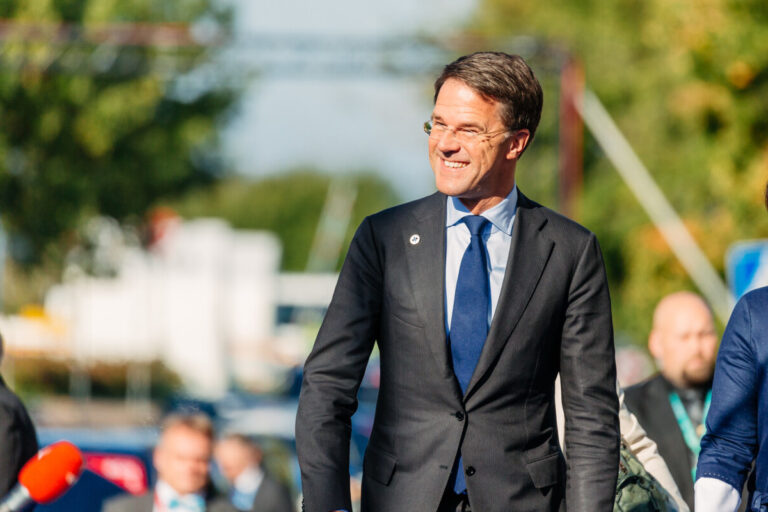
The exit poll is just in and although one or two seats might change hands the general outcome is clear. Incumbent Prime Minister Mark Rutte and the VVD wins the elections once again with an expected 35 seats of the 150 available seats in the Dutch parliament.
Normally the leader of the largest party becomes Prime Minister. Mark Rutte (VVD) therefore stands to become the longest-serving Prime Minister in Dutch history.
Right after that is Sigrid Kaag from D66 with a whopping 27 seats beating Wilders with his PVV which comes in third with 17 seats. Hoekstra and the CDA end up with 14 seats. The parties on the left: PvdA, SP and Green Left all turn in disappointing results.
Dutch elections: battle for the second place
In some way, the only element of suspense in this election is which party comes in second place. This is important, not only on a symbolic level but also because it can decide who will become the Minister of Finance. Rutte has already excluded Wilders (or Baudet for that matter) from participating in any new coalition. Therefore many people are also eyeing whether the CDA or D66 becomes the bigger party, as these parties are likely to once again participate in the upcoming coalition. It looks like D66 takes the coveted second place.
Another big takeaway from the polls is the big number of parties likely gaining their first seats in parliament. Volt for example stands to gain 4 seats.
Exit polls of the Dutch parliamentary (150 seats) elections of March 17 2021 VVD (Rutte)35 seats D66 (Kaag)27 PVV (Wilders)17 CDA (Hoekstra)14 PvdA (Ploumen)9 GL (Klaver)6 SP (Marijnissen)8 CU (Segers)4 PvdD (Ouwehand)6 FvD (Baudet)7 SGP (Van der Staaij)3
Click on the tweet to check out where the other seats go
The IPSOS/NOS exit poll is considered pretty accurate. Although this election there is a greater margin of uncertainty since the relatively large share of postal votes and the three days of voting.
So what happens next and who will be in the new Dutch coalition?
This evening we might know who the winners and losers are, but what we don’t yet know for sure is who will or won’t be in the House of Representatives. After Wednesday, the Electoral Council needs a few days to finalise the results, count the preferential votes and allocate the remaining seats.
The formation of a cabinet normally starts on Thursday, when the chair of parliament – Khadija Arib – receives the newly elected group of political party leaders. These leaders choose an explorer or scout (verkenner), who will talk to other political parties to see who wants to be part of a ruling coalition. Parties that lost votes usually don’t put themselves forward. When the verkenner has spoken with all parties and has made a final report, the new House of Representatives (which takes its seats on March 31) will appoint an informateur who will then really get to work.
It is common for the largest party to take the lead and provide verkenner and informateur (the person who puts the coalition together) and later on the formateur (who speaks to prospective ministers), but not before the votes are counted. All of this can take many months, but there is a general feeling in the country that this process should not take more than a few weeks in order to create a stable government during the coronavirus pandemic.
But you can bet that the VVD already has a list of names ready to go for the pivotal formation positions.
Looks like 4 more years of Mark Rutte after these Dutch elections! How do you feel about that and the exit polls?
How the Dutch government is organised goes back to a famous French philosopher Charles Montesquieu and his radical idea of the Trias Politica.
Politics in the Netherlands doesn’t tend to make many headlines on the world stage, at least compared to the corruption and drama many nations have to deal with. Perhaps this is thanks to the system of power in the Netherlands known as Trias Politica (which, in my opinion, other countries should take note of).
The Trias Politica
The term “Trias Politica” is a very popular term in the political corridors of the Netherlands. Before explaining how this Dutch system of government works, let me define it a little bit.
Trias Politica is a system of government where a country’s government is divided into branches, each with separate and independent powers and areas of responsibility so that the powers of one branch are not in conflict with the powers associated with the other branches.
The French philosopher and political theorist Charles Montesquieu (1689-1755) was the founder of the Trias Politica, and his work l’Esprit des Lois (The Spirit of Laws), in 1748 concludes that there are three powers that must be separated: the legislative power, the executive power and the judiciary.
According to Montesquieu, in a good political system, these three different powers must control each other and power should therefore never lie with a small select group of nobles and clergy, as was customary in his time.
To really understand the system of government that has been adopted by the Netherlands, one must take a good look at how the country made a transition from absolute monarchy to a parliamentary system of democracy, where the king still has a part to play despite not having “absolute power” anymore.
Following the People’s Spring or The Revolutions of 1848 that spread like wildfire throughout Europe, the then king of the Netherlands William II decided to allow a change of system that would usher in an era of parliamentary democracy into the Netherlands.
Seeing as the revolutions were essentially democratic and liberal in nature, with the aim of removing the old monarchies and replacing them with independent national states, King William II decided to let Dutch statesman Johan Rudolph Thorbecke revise the constitution.
Origin
When the Dutch politician, Johan Thorbecke wrote the new Dutch Constitution in 1848, he was guided by Charles Montesquieu’s work. However, he did not use the Trias Politica in its purest form. There is, of course, the three powers in the Netherlands but there is still a slight difference. These three powers are:
The legislature is the Government (Queen and Ministers) and the States General (First and Second Chamber) together.
The executive power is the government, the provinces and the municipalities.
The judiciary is in the hands of the judges.
The Legislative Branch
According to Montesquieu, the government should not have any legislative power at all. In the Netherlands, however, most legislation comes from the government. The House of Representatives always has a controlling role as a formal legislator and the possibility to amend laws (right of amendment).
In the Netherlands, both the government and the State-General have legislative power. The States-General represent the entire Dutch people and consist of the First and Second Chambers. They are also collectively referred to as the Parliament. The government and the States-General are authorized to make and amend laws.
In many cases, the government coalition is supported in the Netherlands by a majority in the House of Representatives, and for this reason, the separation of power in the Netherlands as Montesquieu intended is not exactly known.
The Executive Branch
The executive power is the seat of government. The government consists of the King or Queen and the ministers. The team of ministers is called “The Council of Ministers”, and are all under the leadership of the Prime Minister or Minister-President in Dutch.
The Council of Ministers makes decisions on matters that affect the government on every aspect of life in the Netherlands.
The Judicial Branch
The judiciary in the Netherlands is in the hands of the judges. According to Montesquieu, these judges must be controlled by citizens in the form of a jury trial but that is not the case in the Netherlands. The most important function of the judiciary is the settlement of disputes based on the laws of the land.
Furthermore, judges do not make laws and the independence of the judiciary is always of paramount importance. This is important because a judge can be asked for an opinion on the legality of acts of law or administration. For this reason, a judge is in no way subordinated to another government body.
The Dutch System of Checks and Balances
In the Dutch political system, according to the Trias Politica, none of these branches of government has the upper hand over the others. They are technically equal and none is more powerful than the other.
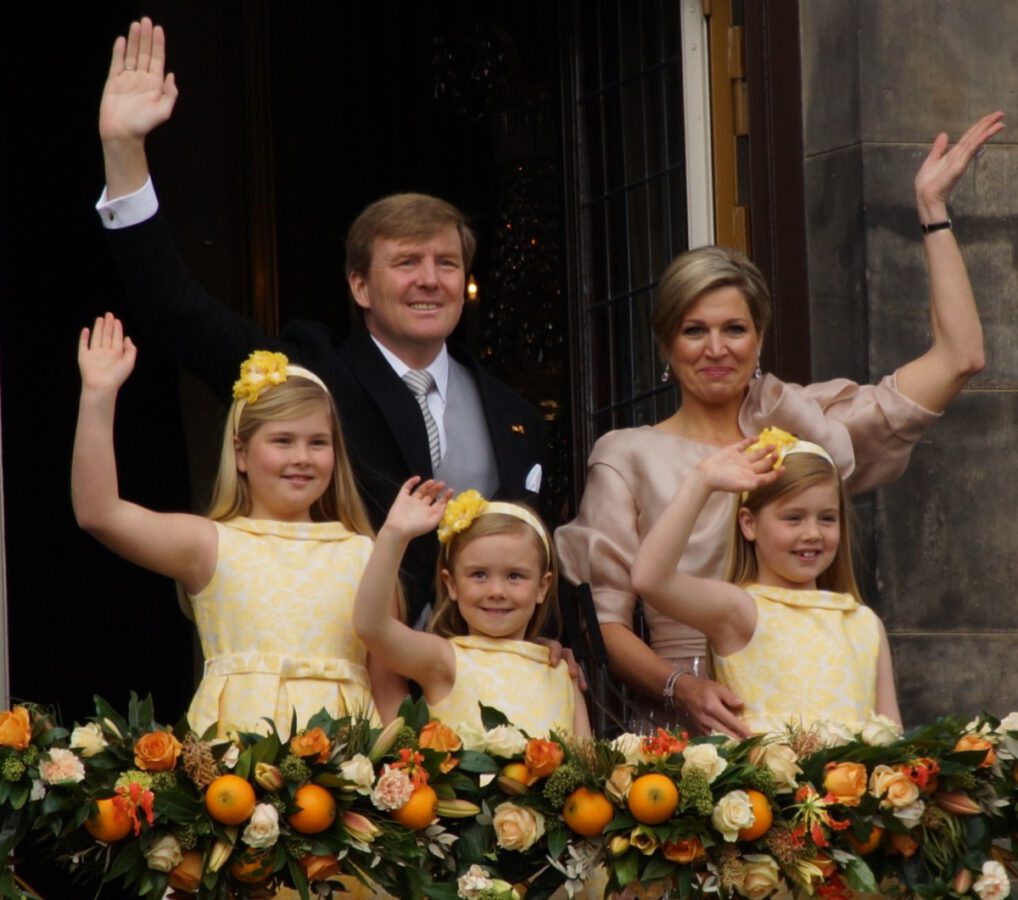
While absolute monarchy no longer exists in the Netherlands, constitutionally, the King is the head of state and has a role in the formation of the government and in the legislative process. He has to co-sign every law to make it valid.
The Government of the Netherlands constitutionally consists of the King and the cabinet ministers. The King’s role is limited to the formation of the government and he does not actively interfere in daily decision making.
The Dutch Parliament
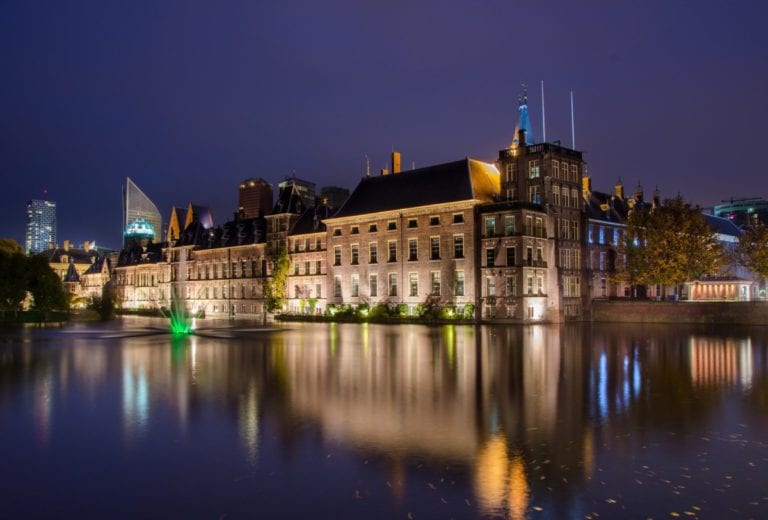
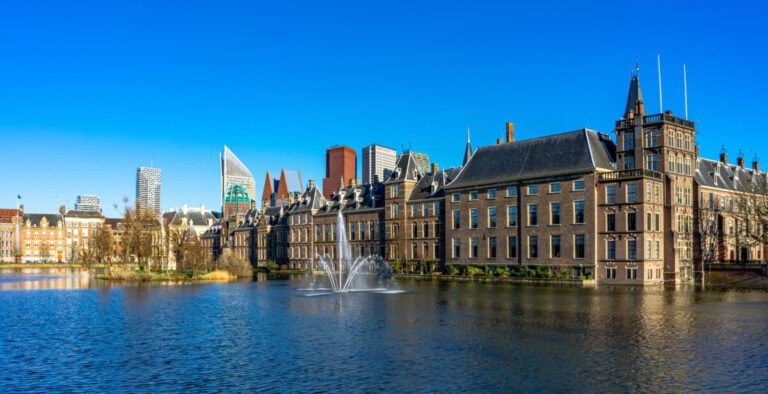
The Dutch Parliament, officially known as the States-General of the Netherlands, consists of a House of Representatives (Tweede Kamer) and a Senate (Eerste Kamer). Both chambers meet at the Binnenhof in The Hague.
The Council of State
The Council of State is an advisory body of the cabinet on constitutional and judicial aspects of legislature and policy. This council consists of members of the royal family and other members (appointed by the crown) with political, commercial, diplomatic or military experience.
All laws proposed by the cabinet have to be sent to the Council of State for advice. While the advice may not be binding, the cabinet is required to react to the advice and it often plays a significant role in the ensuing debate in Parliament.
Why the Dutch system of government matters
The Dutch system of government is very important for various reasons. The most important reason is ensuring the freedom of her citizens. Personally, I find the Netherlands to be the “true land of the free.” This is a country where no arm of the government is more powerful than the other and the system is set up in a way that it not only works, it also protects the rights and freedoms of its citizens.
It is a system with the understanding that instead of arming the populace (like the U.S) in case of government tyranny, the best solution would be to make use of a system where the government is never too powerful to oppress the people in the first place. The Dutch “Trias Politica” perfectly shows how the freedom of an individual can be protected from the power of the State.
American example:
Take the U.S Second Amendment as an example.
Second Amendment. Image: Nick Youngson/ImageCreator
It was based partially on the right to keep and bear arms in English common law and was influenced by the English Bill of Rights of 1689. It can be described as an auxiliary right, supporting the natural rights of self-defense and resistance to oppression.
Of course, the U.S. Constitution sets up the U.S. government in a way that no one branch is more powerful than the other. This is called “separation of powers” or “checks and balances.”
This involves the legislative, judicial, and executive branches, plus the 50 states. The American founding fathers did not trust the nature of men and did not want to concentrate power in one branch, so they divided power amongst all branches. In theory, it all seems perfect, but in practice, a problem has always presented itself.
There have been different times in history when the balance has been a bit off. The problem with the U.S. system of government is that if you ask her citizens to name a branch which is more powerful than the others, they always seem to name one branch of government — and it should not be so!
A lot of Americans grow up with the natural instinct that they have to be armed just in case the government becomes tyrannical, and they have to defend themselves. Unfortunately, we live in a world where such an instinct, backed by the second amendment, has seen weapons easily get into the hands of very sick people who have used them to take lots of innocent lives.
It raises the question; “why set up a government that has a chance of oppressing its citizens, and then arming the citizens against said oppression when you could have just set up a government that has no chance of ever becoming tyrannical?” In other words, the best way to fight tyranny is to set up measures that make sure no arm of government ever becomes too powerful to control.
The Trias Politica was used to make sure that William II and his descendants who later ascended the throne weren’t despotic rulers. It played a crucial role in perfectly separating power amongst the branches of government and ensuring that none of these branches would ever become too powerful to control.
It can be said that the Trias Politica curbed tyranny in the Netherlands and ensured that her people would never have to worry about rising up in arms against despotic rulers.
I’m of the opinion that if the U.S founding fathers tried the Trias Politica, arming the American populace wouldn’t have been necessary. I honestly believe that the U.S. has a thing or two to learn from Dutch statesman Johan Rudolph Thorbecke.
Do you have any opinions about the current Dutch system of government? What about your own country? Tell us in the comments!
Feature image: Rudy and Peter Skitterians/Pixabay
Editor’s Note: This article was originally published in May 2018, and was fully updated in March 2021 for your reading pleasure.
Over the past two days, approximately 1,600 polling stations were open throughout the Netherlands to enable vulnerable people to vote in this year’s general elections. Today, all 9,200 stations will open for the final day of voting.
Monday and Tuesday saw 12% of the Dutch population cast their votes (not including postal votes.) Today, the majority of the population will decide the outcome of the House of Representatives elections.
Polls open on the third and final day of Covid-dominated Dutch elections. @AFP live in The Hague pic.twitter.com/ybh8CHXdf2
It is expected that the Dutch government will not see a drastic reshuffle of power. Outgoing Prime Minister Mark Rutte’s party, the VVD (The People’s Party for Freedom and Democracy) is likely to emerge successful yet again.
However, the party will see its power drop slightly, with polls estimating that the VVD will obtain two less seats than it estimated a week ago. Meanwhile, D66 (Democrats 66), led by Sigrid Kaag, is slowly gaining power with three more seats expected to come their way.
A competition for second place
While there is no neck and neck race to observe in the bid for first place in this general election, the second place spot is unknown at this point.
According to three different polling guides (Kantar, I&O Research and IPSOS/EenVandaag), D66, PVV (Party for Freedom) and CDA (The Christian Democratic Appeal) are all second place potentials.
Special arrangements
The government have brought in various coronavirus measures for voters. At polling stations, pencils, voting booths and tables will be cleaned regularly and screens are placed between voters and workers at the stations.
De Jonge had een oud paspoort en moest terug voor een geldig ID-bewijs? Hij zit in de auto! Dan heeft hij toch z’n rijbewijs bij zich. Zou je zeggen. #TK2021pic.twitter.com/ubGIyeIkgS
Over 70’s were able to vote via post this year. However, due to lack of clarity, many elderly voters forgot to enclose their voting pass in their postal vote. If this was the case, they may still go to polling stations today and recast their vote.
If they do not feel safe doing this, they may also choose someone to vote on their behalf at the station (as long as they have their voting pass.)
The first exit poll will be released by the NOS at 9PM.
How do you feel about this year’s elections? Tell us your thoughts in the comments below!
Sorry to those who were looking forward to drinks on a terrace and King’s Day celebrations, because coronavirus is not going away anytime soon. In fact, hospitals are close to overflowing in the Netherlands.
Currently, in the Netherlands, there are more than 2000 coronavirus patients in hospitals. Minister for Medicare, Tamara van Ark, said she is preparing for code black.
Code black is the stage where there are more patients in hospitals than there are beds. In this scenario, hospitals would have to make cut-throat decisions about who to treat.
Not good in North Holland
North Holland in particular is not faring well. In Hoorn, there are 72.3 hospital admissions per 100,000 people, according to RTL Nieuws. Volendam also has a high hospital rate, at 69.1 admissions per 100,000, but Purmered comes in at the highest with 76.3 per 100,000.
The number of admissions has been so high that patients from these regions have been moved to hospitals in other parts of the country, such as Maastricht and Utrecht. Unfortunately, not all patients make it through the move, some dying in transit.
Preparing for code black
The Safety Region of North Holland Nord has stated the gravity of the coronavirus situation.
Director of the Safety Region, Martin Smeekers, tells RTL Nieuws that “if the whole of the Netherlands would have the same level of contamination as in Noord-Holland Noord, then that would be an exceptional situation in which care would no longer be able to cope with patients in the usual way.”
Smeekers added that the region is preparing for code black, but of course, is hoping it will not get to that point.
Are you surprised by the situation in hospitals? Let us know in the comments!
The RIVM has released its weekly coronavirus figures for the period of March 9 to March 16. The number of infections has risen compared to the previous week.
In light of figures rising large scale events such as King’s Day have been cancelled until May 6. The cabinet will revisit coronavirus restrictions on March 23, when they may allow terraces to open if the R rate is sufficiently low.
New number of infections
Over the past week, the RIVM reported 39,527 new infections in the Netherlands. This is an increase compared to the previous week’s number of 31,959 new infections.
However, a whopping 21% more people got tested, so the number of positive tests actually dropped: 7.7% this week compared to 8,1% last week. The RIVM calls this a good thing since more people with corona will now be detected and stay home.
Deaths
The number of patients who have died from COVID-19-related complications has decreased. This week 204 people passed away, compared to 269 people the previous week.
Hospitalisations
Hospitalisations are going down, however, the number of admissions to the ICU has gone up slightly. The past week saw 1,234 new admissions to the nursing ward and 268 new patients in the ICU. The week before, there were 1,145 and 271, respectively.
The Dutch government remains concerned over the new variants of coronavirus as well as the third wave of infections, leading to the cancellation of big public events.
King’s Day cancelled
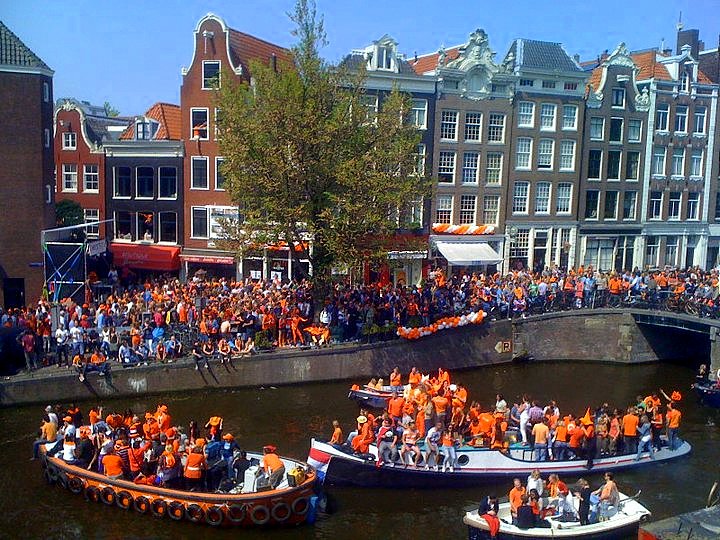
Large scale events have been cancelled until at least May 6. The Security Council has decided to ban permits for big events to reduce the spread of coronavirus. That means public holidays like King’s Day and Liberation day will be celebrated at home rather than in the streets.
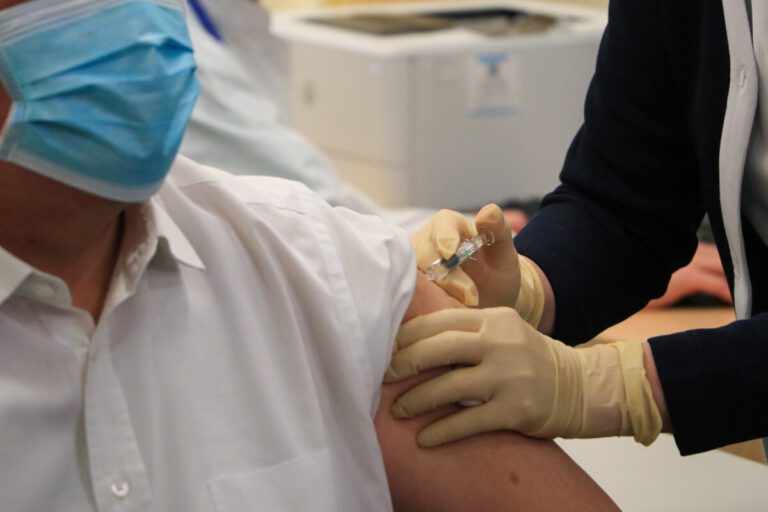
No one in the Netherlands will receive the vaccine for two weeks due to fears of a connection between the vaccine and blood clots (thrombosis). As of yet, there have been no cases in the Netherlands of vaccine recipients experiencing thrombosis.
Outgoing Minister of Health, Hugo de Jonge, assures that the vaccine is safe, but the ministry will pause the vaccine as a precaution. AstraZeneca has said there is no increased risk of blood clots in relation to the vaccine.
Sorry if you were hoping for a big King’s Day or Liberation Day celebration, because no large scale Dutch events will take place until at least May 6.
Yesterday, the Security Council made the decision to refuse permits for big events. Even if the coronavirus situation changes in the Netherlands by then and large scale events are considered possible, municipalities will still not give out permits, according to NU.nl.
The decisions were approved by the outgoing ministers Ferd Grapperhaus (Justice) and Hugo de Jonge (Health).
No King’s Day
Last year, Kings Day (April 27) and Liberation Day (May 5) celebrations were cancelled due to the pandemic. You will have to keep your orange mania indoors this year as well it seems. The May 4 and 5 Committee announced that this year the celebrations would once again be virtual, according to the NOS.
The 25 mayors of the Security Council wanted to extend this ban until June or July, but the chairman of the council, Hubert Bruls, told NU.nl “that is too far in time. If the vaccinations are well underway, this should play a role in the scaling down of measures, we think.”
The cabinet is taking this decision into consideration in its roadmap for recovery. There will be another press conference next week where the Dutch government will review the current coronavirus measures.
Are you surprised by this decision? Let us know in the comments!
The European Commission will present a plan tomorrow under which EU citizens will be freer to travel between different EU countries if they are carrying a pass stating their “corona status.”
The Commission wants to introduce a “green certificate.” This will act as a travel pass that will give those who have been vaccinated, tested negative, or those who carry antibodies, more freedom to travel, the NOS reports.
Additional restrictions remain
However, while many EU countries — particularly in southern Europe — are happy to see such a pass brought in, others are hesitant. The EU Commission must take both these positions into account and as a result, EU countries will still be able to set their own individual requirements for travellers.
This means that while the certificate will be helpful for those who wish to travel, it does not guarantee unrestricted access to all EU countries. For example, countries may decide that those who carry the green certificate may enter, but they must still quarantine for a set period of time.
If a country does decide to bring additional restrictions for travellers, it must make these restrictions known to the EU Commission and the other member states.
Not the only way
On top of this, the green certificate will not be the only way people can prove that they are safe to travel. For example, vaccination and test certificates may also be accepted.
However, these certificates should be recognised by other EU countries. The EU must now work on designing its own digital certificate. This certificate could become accessible through an app but will have to use a barcode that can be read in any EU country.
The Dutch plan
The Dutch government has discussed potentially bringing in a “vaccine passport” that will allow more freedom to travel to those who have already been vaccinated. However, Rutte has previously stated that much work has to be done in order to implement such a system.
It’s not news to us that Amsterdam is a great place to be an expat. But now it’s here in black and white — it’s officially the number two work destination in the world, despite how much we internationals like to complain about the Netherlands.
You would think the European love affair ends there, with Dubai coming in at number three on the list, but Berlin closely follows in fourth place.
A city of start-ups
One of the reasons Amsterdam ranks so highly is it’s “dynamic start-up scene”, it being a hub for innovation, according to the BCG.
This is perhaps one of the many reasons why 15% of the 200,000 participants said they would like to work in Amsterdam. That’s an increase of 3% since BCG did its last study in 2018. If we continue on this incline, the city will be drawing with London for first place. 👀
Working abroad remotely
The Dutch are no strangers to working at home, but it seems that more people are looking for a virtual commute. BCG’s research found that fewer people were likely to move to another country for work. This is partly due to coronavirus, but also due to stricter immigration policies a lot of countries are now pursuing.
BCG found that as well as a general increase in people working from home, more people were willing to work for a company not based in the same country. However, it seems those that live in the Netherlands are a fan of Dutch companies — only 43% were interested in working for an international employer.
In our recent survey, 57% of respondents say they are willing to work remotely for an employer not physically present in their home country. Why? Remote international work lets people pursue job opportunities without uprooting their lives. #DecodingTalenthttps://t.co/kPKPPkpyZ6pic.twitter.com/ZwjJCdMaqz
You know those tattoo fails where people commission tattoo designs written in another language that result in hilarity due to misspelling or misinterpretation? Imagine that — but with Chinese porcelain imported to the Netherlands.
This kind of cultural blunder has been happening throughout history. The custom-made Chinese export porcelain commissioned by the VOC in the 17th century is a prime example.
But, instead of becoming a laughing stock of the internet like that one tough guy’s Chinese Kanji tattoo which means “chicken noodle soup”, these porcelains are beautiful works of art that reflect the diversity and complexity of cultural exchange between the East and the West.
An odd mix
From the 17th to the mid-18th centuries, a large number of Chinese export porcelains were sold to Europe via the Maritime Silk Road. The VOC (Dutch East India Company) imported many custom-made porcelains with distinctive shapes and decorations that stood out from the rest.
These porcelains not only blended traditional shapes of European potteries and exotic Chinese themes, but also created decorations which interpreted European paintings from a Chinese perspective, resulting in aesthetically pleasing yet still “weird-looking” pieces of art.
The “porcelain fever”
In the first half of the 17th century, a “porcelain fever” arose in Europe. Roughly three million pieces of Chinese porcelain were sold to European countries by the VOC during that time.
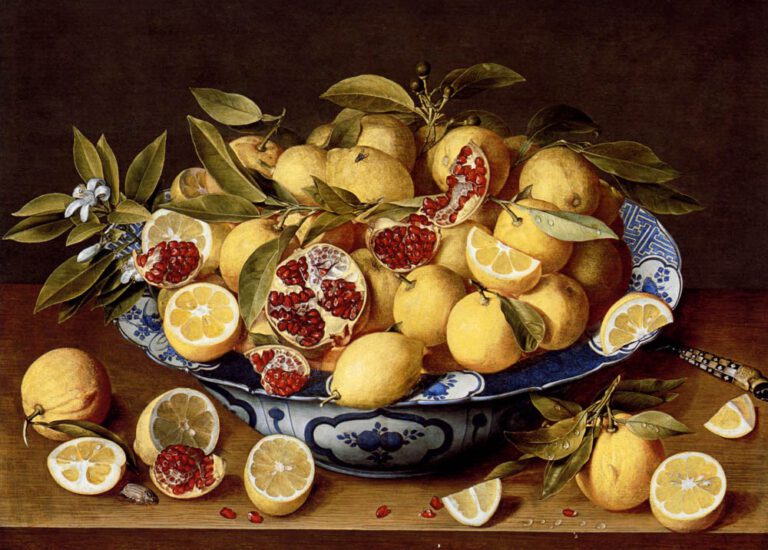
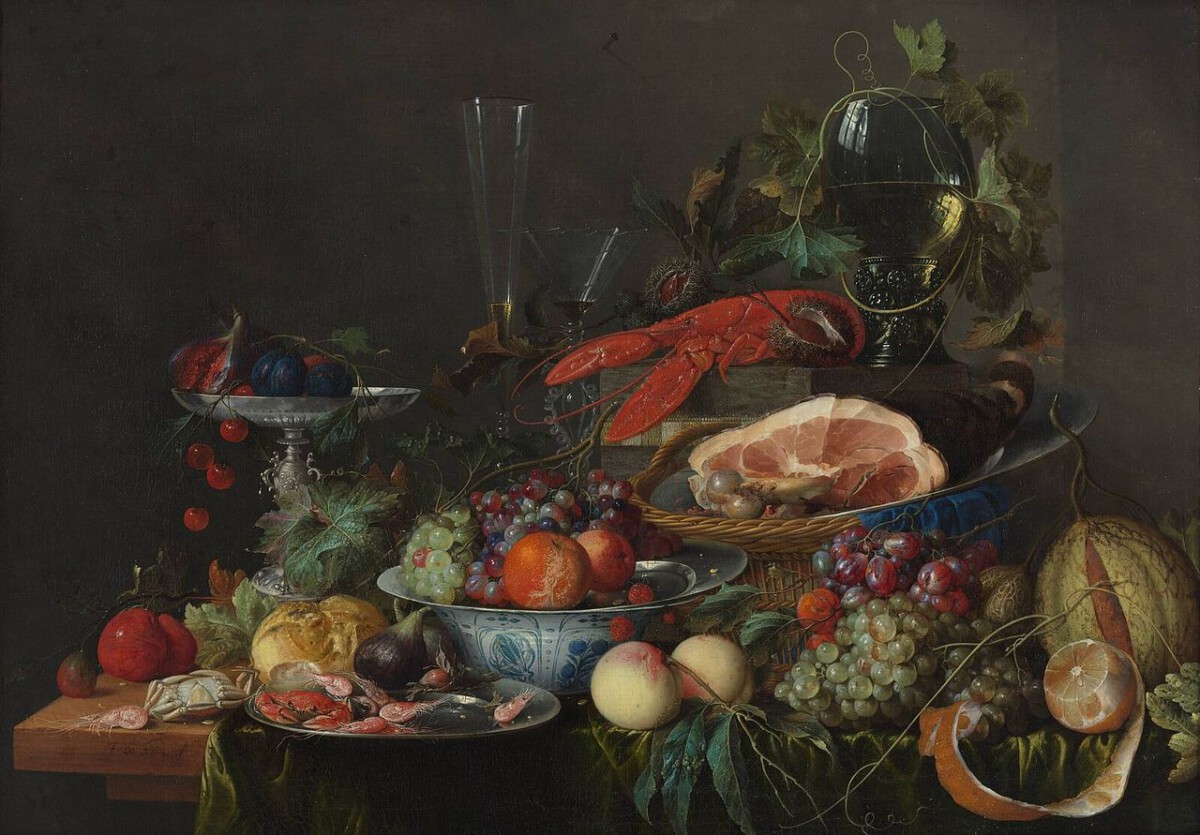
Such a huge influx of goods made the once rare and expensive “collector’s item” that was Chinese porcelain into a common household object in middle-class families. This is why you can spot many Chinese porcelains in European paintings around from this time period.
This popular porcelain features in many Dutch paintings. Image: Collectie.boijmans.nl/Wikimedia Commons/Public Domain
No longer a luxury item, the price of the Chinese porcelain decreased, bringing up less profits for the VOC. Naturally, as a profit-oriented megacorporation dominating the global trading scene, the VOC figured out other ways to rekindle the public’s interest and meet the diverse market demands.
European shapes with Chinese themes
Since the Chinese porcelain lost its status as an exotic luxury item, it made sense to make it into an actual usable item with even more exotic decorations that appealed to the public’s wild imagination of China.
Subsequently, the VOC made several requests regarding the shape, decoration and colour of the porcelain produced in China. Large quantities of custom-made Chinese porcelains were then made according to the VOC’s demands.
Letters from the VOC from 1630 to 1640 stated that porcelains with detailed depictions of Chinese elements were very much desired. The Dutch merchants also brought pottery that Europeans used in daily life for Chinese ceramicists to use as samples.
More specific demands included that large pieces of porcelain needed to depict curious images, such as Chinese people riding horses, rivers, landscapes, houses, ships, and animals, most of which were favored subject matters of the European public.
Additionally, Dutch elements such as tulips and leaves were to be avoided since porcelains with European elements weren’t as much a novelty and sold for less than half the price.
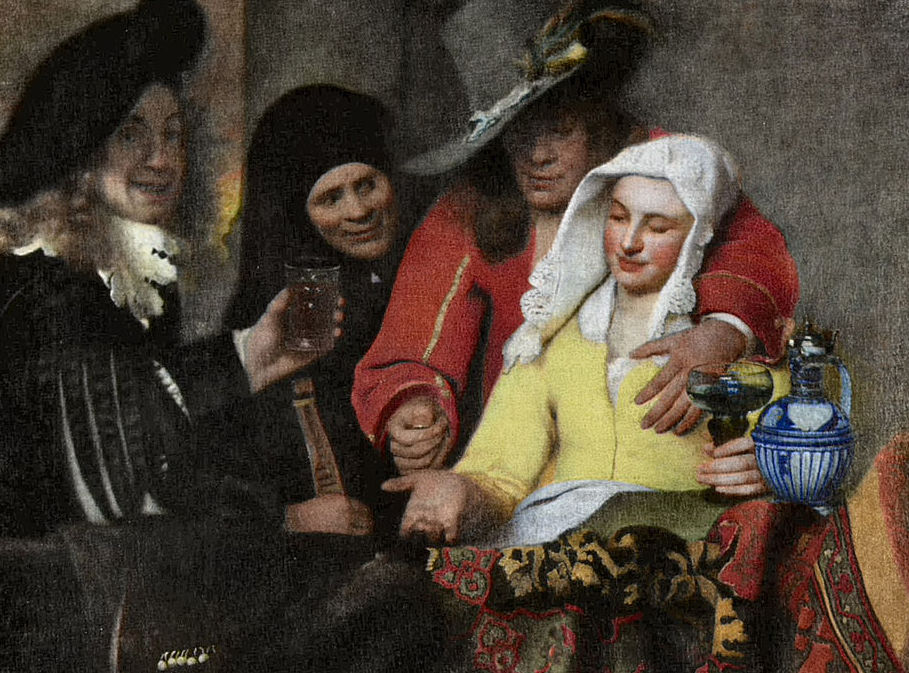
Custom-made porcelains like these can also be seen in old paintings, such as this water jar with a narrow neck in Johannes Vermeer’s painting The Procuress, an imitation of the famed Westerwald Pottery design. (Johannes Vermeer is the painter of the Girl with a Pearl Earring, by the way.)
The procuress. Image: DIRECTMEDIA/Wikimedia Commons/Public Domain
Employee benefits
In the early 18th century, some customization requirements for Chinese export porcelain took on a new direction. Employees of the VOC usually enjoyed the privilege to bring back a certain amount of foreign goods for either personal need or private trade.
The senior officials of the VOC in Guangzhou, for example, were allowed to bring home five boxes of tea or porcelain. Thus, they utilised this advantage to commission porcelains with a more distinctive style.
Because these porcelains were made as personal souvenirs of the merchants’ journey to the East, something that you could put on display for friends and families to marvel at, they needed to reflect personal tastes or have deeper meanings.
As a result, these privately commissioned porcelains usually have decorations that depict European subjects, such as famous paintings, religion, myths, historical events, seascapes, etc.
Lost in translation
The problem was, even though the Dutch commissioners provided clear reference materials like European paintings, the Chinese painters, who were unfamiliar with European culture, inevitably misinterpreted some metaphors in the original paintings and made improvements based on their traditional Chinese aesthetics.
Thus, some porcelains from that time have seemingly normal depictions of classic European landscapes. But upon closer inspection, you can spot out-of-place Chinese elements such as lucky clouds, plum blossoms, and even mountains, the one thing that the Netherlands definitely doesn’t have.
Sometimes, alterations were made to clothing as well, creating an interesting hybrid of fashion.
We want the family crest on it
As early as the mid-16th century, Portuguese royalties were commissioning porcelains decorated with family crests or coats of arms from China. The practice of adding them to silverwares and displaying them at home had long been a tradition in Europe to show off family heritage and status.
So, when Chinese exported porcelain flooded the Dutch market in the 17th century, porcelains with family or institutional coats of arms became a new market demand. And by the 18th century, the Netherlands had imported more than 500 sets of heraldic porcelain with family crests. The commissioners of such porcelains were mostly aristocrats or high officials with ties to the VOC, far above the middle class.
Not exactly picture perfect
To make such heraldic porcelains, commissioners usually gave very detailed drawings and supplementary instructions to Chinese painters about how to accurately create the design of the coat of arms.
Unfortunately, some heraldic porcelains still didn’t perfectly represent the original design due to language barrier and cultural misunderstanding.
In some instances, the commissioner would mark certain areas on the design with words like “red” and “green”, instructing the Chinese painter to fill these areas with said colours. However, the Chinese painter, who didn’t speak English, would literally write the words down on these areas and fill them with whatever colour they deemed appropriate.
The Dutch are equally guilty
These mistakes were a mutual occurrence on both sides. As it turned out, on some Delftware which imitated Chinese export porcelain in the 17th century, Chinese characters were drawn by Dutch painters with arbitrary strokes that resembled nothing but illegible scribblings. At least they don’t mean “chicken noodle soup.”
Have you seen any porcelain that just look a bit odd? Are there other examples of cultural misunderstanding like this? Let us know in the comments below!
Learning anything new can be overwhelming, not to mention a second language. Are you deciding whether or not to visit, or move to the Netherlands? Or just want to learn Dutch for the fun of it?
We’re sure we can convince you to take up Dutch and show you that some words and expressions aren’t a huge undertaking to learn.
Learning to speak Dutch online
Learning a subject online is one of the easiest methods. You can learn Dutch by finding an online teacher who fits into your schedule. Take Dutch lessons online if convenience, flexibility and comfort are at the top of your priorities.
Most guides for learning Dutch suggest using the language as often as possible. This could be hard if you live in a country where little to no people speak it.
But that shouldn’t hinder you from your dreams of mastering the language. Online classes offer a virtual environment in which to practice the Dutch language. You set your study hours and how often you have lessons. To be honest, online classes can cost a lot less than in-class learning too.
Online learning is an affordable, flexible, and less intimidating way to master the Dutch language.
How hard is Dutch to learn?
Before you even get started, questions like “Is Dutch hard to learn?”, “How hard is Dutch vs English?” and of course, “Is Dutch easy to learn for English speakers?” may already be planting some seeds of doubt in your mind.
Well, we are here to put your mind at ease as Dutch is considered one of the easiest languages to learn for a native English speaker. So that’s one question down, and two to go. ✅
Dutch and English share thousands of cognates (words that sound and mean the same things). That’s why it’s easy for English speakers to pick it up, and it also opens the doors to learning other Germanic languages (Danish, Swedish, Icelandic, Norwegian, etc).
As you know Dutch is the official language of the Netherlands, but you may be pleasantly surprised that some parts of Northern France, Germany, Suriname and Indonesia also speak a bit of Dutch. And once you can speak Dutch, you can be understood in Belgium as Flemish is verrry similar (some say it’s the same language, just with a different accent).
The Dutch language also possesses an alphabet similar to English which will help to pave your way to perfect pronunciation.
Conversing with Dutch natives
Not only other language learners but meeting and conversing with Dutch natives is extremely beneficial. Perhaps they can even teach you some colloquial terms and funny Dutch phrases to break the ice.
Language exchanges, meet-ups and cafes are great places to showcase your new skills. The best part about these methods is they are all free!
Of course, at the moment, none of these kinds of meet-ups are running due to the coronavirus situation in the Netherlands. In normal times, these are great ways to practice your language skills.
Once you meet some fellow English speakers or those learning English as a second language, it can be hard to fight the urge to speak in the language you’re more comfortable. Try hard to avoid this!
Don’t regress, force yourself to use Dutch any time you can to ensure you don’t forget any new words or phrases you’ve learned. We know it can be hard and perhaps even daunting to limit yourself to the few sentences you can string together.
Learning the language itself may be easier, but remembering to speak it is another kettle of fish. Learning a language isn’t just about understanding its roots, it’s also about being brave enough to step out of your comfort zone and actually using it.
Immersing yourself in Dutch culture
The pace of learning a language quickens when you are surrounded by it. Try to make learning Dutch a part of your everyday routine.
It’s all about exposure. If you don’t live in the country, try to watch more of their TV shows and movies, listen to more Dutch music and read Dutch books. It’s alright if the books you start reading are for toddlers, everyone has to start somewhere, right? 😂
Find someone else you know who is interested in learning Dutch and partner up for a study session a few times a week. You really get a sense of fellowship when the two of you are in the same boat.
Taking local classes in Dutch
By local classes, we don’t mean in language schools. If you are lucky enough to be spending an extended time in the Netherlands, take up a hobby or a class that interests you. Chances are, it will be taught in Dutch. This forces you to be exposed to the language without a dictionary or Google translate to help you.
The teacher may be kind enough to help you along with a few English sentences here and there, but the best way is to balance listening with speaking.
As we mentioned before, online classes can also provide the perfect scenario for you to work on all skills – speaking, listening, grammar, pronunciation, and reading.
Are you ready to go?
Many of you might have thought learning Dutch is a formidable task. However, with our guide to the Dutch language for expats, you’ll hopefully feel a weight lifted off your chest.
It is comforting to know that the Dutch language is relatively easy to learn for native English speakers, and you also get an insight into some other languages. What do we mean? Why Afrikaans of course! The two are strikingly similar and going from one to the other doesn’t require much effort.
What are your best tips for learning Dutch? Have you been making progress in learning the language? Let us know in the comments below!
Editor’s Note: This article was originally published in November 2019, and was fully updated in March 2021 for your reading pleasure. Feature Image: Startup Stock Photos/Pixabay