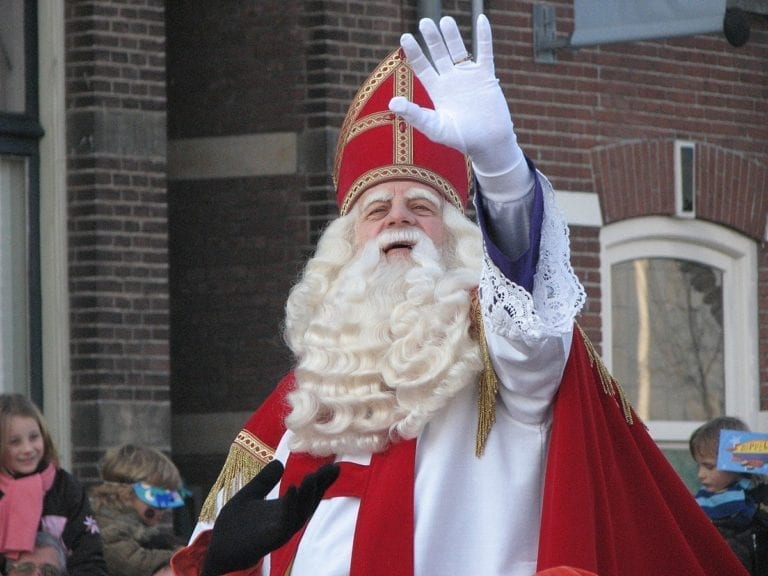
The annual national arrival of Sinterklaas into the Netherlands is set to go ahead this year. However, instead of the normal dramatic boat arrival and parade, his arrival location will be kept a secret.
There was much uncertainty surrounding whether or not Sinterklaas will be allowed into the Netherlands this year. However, for now, it looks like the jolly Sint will just have to be extra sneaky.
On November 14 at midday, Sinterklaas will arrive in the Netherlands — but no one can know where. His arrival is being kept a secret due to increasing coronavirus cases and restrictions, the organising broadcaster NTR has announced.
In order to tackle the issue of a large public gathering, Sinterklaas’s arrival will have to be quieter than usual. It will not be known in advance which city he will make his grand entrance in, but fear not, the event will be broadcasted on NPO 3 and NPOZ app.
No more than 250 people
At the moment, the maximum amount of people who can gather for such an event is 250. On top of this, organisers for an event such as the entry of Sinterklaas must be confident that participants can remain a safe distance from one another.
NPR has said that “we make every effort to give Sinterklaas a warm welcome in the Netherlands as always, but in a way that is responsible.”
Still uncertain
Whilst this is the current plan for the welcoming of Sinterklaas, we can’t get our hopes too high. As we all know by now, coronavirus may change these plans. The broadcaster has said that if tighter restrictions are introduced, the event may be cancelled altogether.
Sinterklaas will try his best to be there for us, but he also wants us to be safe. Were you looking forward to the Sint’s arrival?
You might not have expected us to be sharing private banking information with you — unless you’re one of the lovely people who spams our inbox asking for that very information.
But this time we’re giving the people what they want — at least kind of. We’re going to tell you about our experience banking with bunq, as a business in this guide. Because if corona-isolation has taught us anything, it’s that now is the time to get all this grown-up stuff sorted out.
What was the setup process like with bunq Business? How long did it take? What is bunq like for businesses? And — in typical DutchReview timely fashion — how did it do during these troubled times of coronavirus and the associated social isolation?
As you might know, we’re big fans of bunq. We’ve told you before about how they’re the perfect bank for expats, and all the ways they make being a freelancer in the Netherlands easier. Today, we thought we’d go one step further and tell you all about our experience switching to bunq as a business or freelancer.
Why did we decide to switch to bunq Business?
So why did we decide to switch to bunq Business? There were a lot of reasons — never let it be said we make a decision lightly. But honestly, the most important part for us were the features bunq offers: this bank is really set up to offer businesses the simplest ride through the complicated road of entrepreneurship possible. And as you can imagine we’re getting all kinds of international payments, and this being 2020 and all — life can be complicated and we needed a bit more from our bank. As many other startups here at PLNT are also huge fans of the rainbow-coloured bank we’ve decided to jump on the bunq-ship as well.
We’ve talked about why bunq is perfect for freelancers before, so lots of those factors apply to businesses as well, but there were a few things that stood out to us as particularly important and handy for businesses.
bunq Business allows you to cut down massively on paperwork
First of all, there’s the digital aspect of it. If you’re a business owner, you probably have enough on your plate without trudging down to your local bank, carting half a square kilometre of paperwork with you.
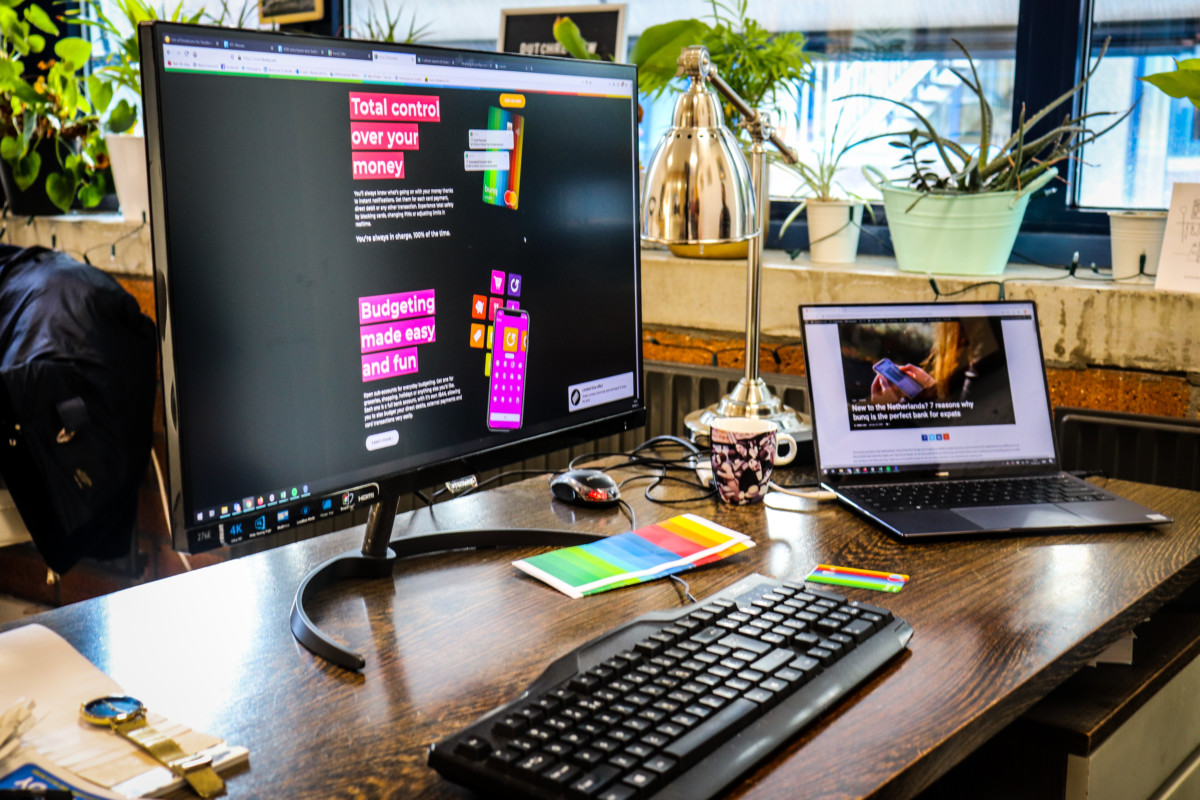
We never received more than that piece of rainbow-colored paper on the desk. Image: Abuzer van Leuwen/DutchReview
bunq is a digital bank, so you can do literally everything from the comfort of your own… office. Or home. Or street, depending on how bad things are going for you. Below, we take you step-by-step through the whole sign up process, but before we get too technical on you, here are a couple more reasons we switched to bunq.
Setting aside VAT automatically: another benefit for bunq Business
bunq Business SuperGreen allows you to set aside VAT automatically. That’s a pretty massive advantage, especially for the mathematically challenged among us. The VAT then rests in a separate account, ready for the government to demand it from you in the form of taxes, rudely presuming you want to be part of a functioning society.
Keep an eye on your finances with bunq Business
Speaking of a functioning society, it’s pretty helpful to know how much money you have in your business account and what it’s destined for. bunq’s business account allows you to put your precious dosh into separate accounts so you know exactly what it’s for — you could have one for wages, for stock purchasing, for cheese snacks… the possibilities are endless.
You can also scan all your receipts with bunq Business SuperGreen
Receipt scanning is also a really cool feature of bunq’s Business SuperGreen account. As a business owner, you’ll need to keep track of your expenses, and unfortunately, receipts are a major part of that. You can either crumple them up in a box, put the box in a really safe place, and never find it again — or you could just scan all your receipts, have them automatically link up with payments you’ve made with your bunq card, and relax. Your choice.
Integration with the camera and app is so seamless that this turned out to be a major plus of bunq. Every time we bought something, especially the small stuff, we just shot a snap of the receipt and forgot about it — like the world is supposed to be. If you’re paying with your card, the bunq app immediately pops up on your phone in a chill way asking you if you want to attach a receipt. These are the things that make our lives happier and better! (We’re +30 with kids now, so that explains that).
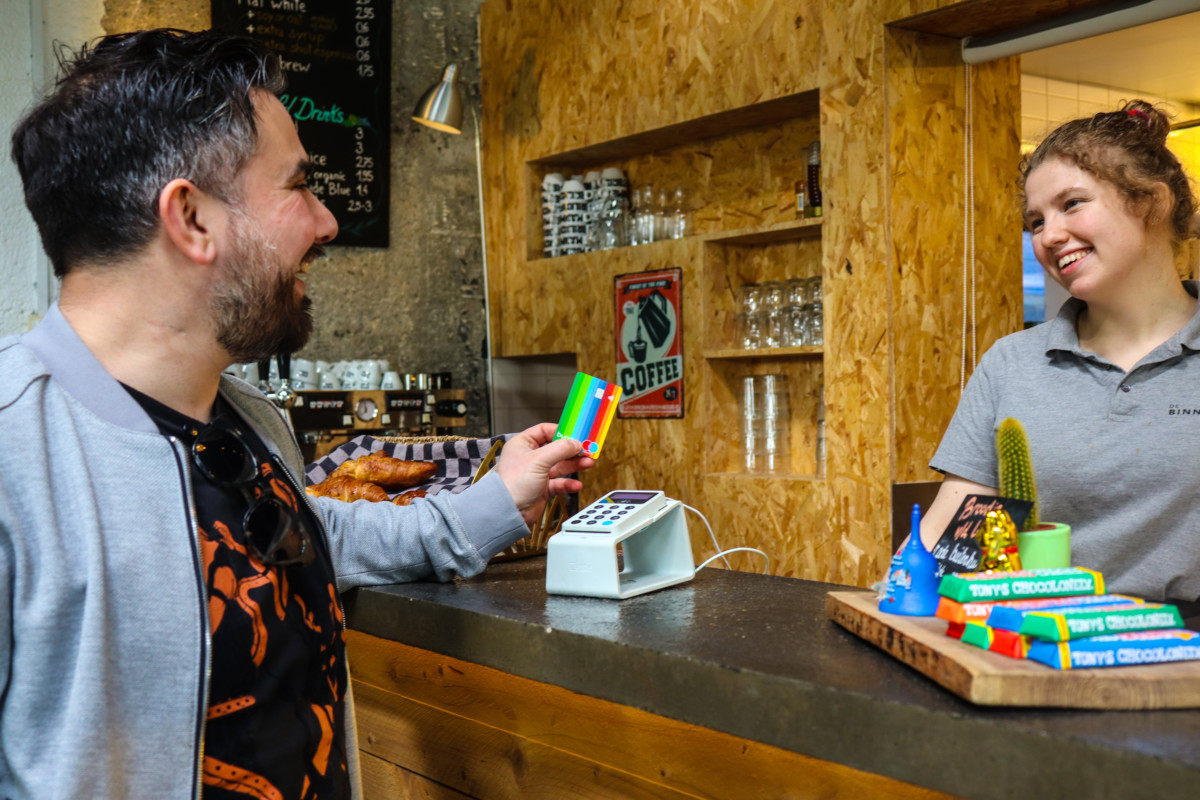
Scan and deduct that 2,50 Cappucino right away. Image: DutchReview
bunq Business invests ethically
There’s another reason we switched to bunq, and we’re not saying this only to show off how social-justice-oriented we are. bunq, as you might know, only invests ethically. You can also choose where your money is going, which is potentially extra important for businesses, who often deal with far larger sums of money than individual people do. You want to make sure all that hard-earned cash is, well, not supporting fossil fuels or child labour.
Best of this all is in bunq SuperGreen. It works like this: by simply spending money, you plant trees. For every €100 you spend as a SuperGreen member, Personal or Business, bunq plants a tree. We’re not encouraging financial irresponsibility, of course — but even if you’re bad with money, you won’t be bad for the planet with bunq SuperGreen. And although this alone won’t save the planet, trees do really crucial work as they absorb pollution. The long and short of it is that we need to stop burning fossil fuels, but we also need to plant more trees to offset the damage already done. And that’s where bunq SuperGreen becomes really valuable.
So far, the bunq community has already planted 1 million trees together!
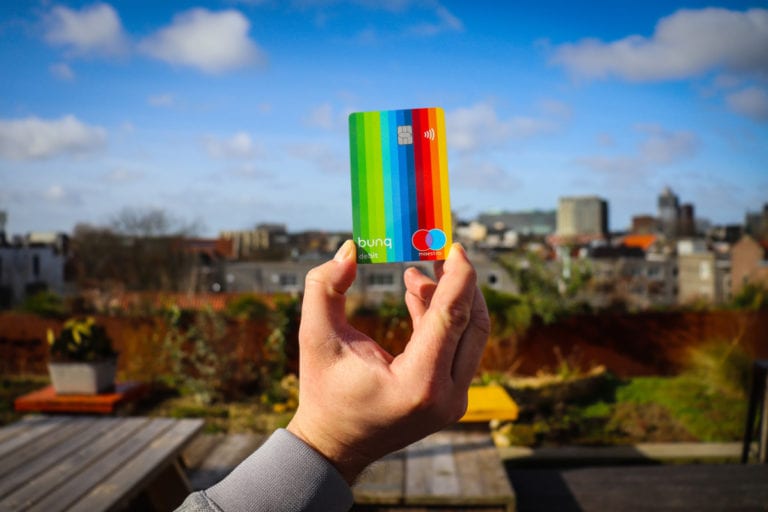
Furthermore, you also get a very aesthetically pleasing metal card. It is made out of stainless steel, which extends its lifespan in comparison to a plastic bank card by 50%. No stain on your zero-waste soul with this card, then.
… And it also makes paying invoices just a little bit easier
As a business owner, there will eventually come the tragic day in which you receive an invoice. This, for the inexperienced, means you gotta pay someone. But bunq Business massively simplifies the process — not that that makes the pain easier to deal with, but it does improve the practicalities. Just upload a PDF of the invoice you have to pay, and bunq’s app automatically adds all the details for payment — you just have to press the button. Yes, you have to press it. Sorry.
So what was our experience of signing up with bunq Business?
Signing up for bunq Business was a really chill experience. There was never any moment of weirdness or hesitation — you know that feeling of deep-seated unease you have when you are told you’ll receive a code by text and then you never do? Well: none of that with bunq Business. You feel completely in control the whole time. And also, yes, you can do the whole thing from your favourite chosen spot of self-isolation.
A few things stood out during the sign-up process at bunq:
No need to get all your administration out.
There’s a connection/hook-up with the Chamber of Commerce. So they get your business name, KVK-number and business address. So handy, and it also ensured that the signing up process was actually done in five minutes. It was so efficient.
Especially handy for all you internationals out there, bunq doesn’t need a BSN right away when you join — you have 90 days to supply it!
It’s a mobile phone-based bank, not a physical one.
Obviously, you should have your mobile phone out and ready to go. bunq will text you, and you’ll need this text to confirm your business and personal.
They still confirm your identity for full bank accounts (not just an e-money one)
First off is the general check of an ID. So I got my Dutch drivers licence out of my wallet and proceeded to take two pics with it as instructed by the bunq app. Done in under a minute — quicker than the cops.
The second way to verify my identity was a bit more original and creative. I had to open up the selfie camera and the app would instruct me to talk, shout a few digits (this was observed with great hilarity here at the office) and look over my shoulder. Thereby setting up a selfie video of myself, which looked pretty solid in terms of protecting my stuff. And hilarious:
Confirmation is super-fast
The app said confirmation would come in 24 hours. But it actually arrived in 10 minutes! Through their app of course. Again, super-efficient and easy to use.
bunq in the corona-times
To our surprise, the one thing that stayed completely the same — apart from how long we wash our hands and keep our distance, of course — was our banking. And that’s because bunq is an amazing bank to be within these times.
Of course, we secretly hate social interaction all year round, but now that social distancing is in effect in the Netherlands, keeping in-person contact to a minimum is crucial. So having all your banking completely digital is the perfect situation to be in right now.
Pay contactless, and leave the germs at the checkout! We’ve increased our contactless payment limit for a more hygienic way to pay.🛍️ Learn more here! 👇https://t.co/26bMXmGhDu
So, would we recommend switching to bunq Business?
100% yes! It’s a pretty good sign when the bank you choose does well during an international crisis. The coronavirus times have put almost every aspect of society under stress, so it’s really nice when the thing that often causes people stress, like their bank, is not contributing to that.
But we were really impressed with bunq Business well before the COVID-19 crisis took hold. The simplicity of setting up an account, the ability to digitise and simplify everything from receipts to invoices, as well as just a general sense of control over the whole process: banking with bunq was a stress-free and enjoyable process all around. And even the few questions we had were picked up on by their customer service (all in English) super fast and without any corporate stuff, so that’s a plus too.
What has your experience been with banking in the Netherlands (as a business owner)? Let us know in the comments below!
We proudly teamed up with bunq to bring you this article (and we kept our distance and washed our hands
Yesterday’s Prinsjesdag revealed the budget for 2020, complete with some significant tax changes, reports RTL Nieuws.
There’s a reduction on income tax, a new CO2 tax, and huge savings for young people buying a house — but what will affect you? We’ve got a roundup below.
Income tax is reduced
The tax rate in the first bracket of income tax is going to drop slightly, a measure that will affect everyone. Paying tax on a smaller part of our income? Yes, please.
Starters won’t pay income tax when buying a house
If you’re aged between 18 and 35 and considering buying a home in the Netherlands for the first time, congratulations — you can save a pretty pack of cash. While everyone else is subject to a 2% transfer tax, you can throw that money in a bathtub and laugh gleefully. Or, you know, update your bathroom. This is a pretty sweet deal — on a €300,000 property, you’ll save €6000!
However, if you’re an investor, bad news. From 2021 you’ll pay more transfer tax — a whopping 8%.
Your hard-earned savings will cost you less money (to an extent)
When I arrived here from Australia I was shocked to find out that
The government will also charge you a “wealth tax” on the savings sitting in your bank account (above a certain amount) — even if you don’t earn money on it.
Thankfully, the burden of #2 is going to be reduced slightly in the new year. While you were previously taxed on any amount you had saved higher than €30,846, now that number has been raised to €50,000.
There is a slight caveat to this saving — the tax rate for amounts above €50,000 has now been changed from 30% up to 31% on the assumed return.
Self-employed people will lose their tax breaks faster
Self-employed people currently enjoy a break on income tax if they meet certain conditions (zelfstandigenaftrek). However, a plan to lower that tax break has been accelerated. Currently, the tax break is €7030, but it will be lowered by €360 per year until 2032.
However, the cabinet defends its decision, arguing that the cost should be offset by the changes in income tax credits.
Small business get a tax reduction
Got a small business? You’re a winner in this year’s budget, with corporate tax for small businesses dropping from 16.5% to 15%.
Meanwhile, large companies will be disappointed after a planned tax reduction was thrown out the door — they’re stuck paying 25% for the next year.
CO2 tax introduced
Starters, individuals, and small businesses aren’t the only winners in this year’s budget: the environment is also feeling a little bit happier. Dutch companies will start to pay a CO2 tax — but because of the coronavirus, they’ll pay a little less to begin with.
When the rate does rise, they’ll start paying €30 per ton of CO2 that they create, with that number increasing to €125 in 2030.
Are you in favour of the changes introduced at Prinsjesdag? What do you think is missing? Tell us your opinion in the comments below.
Temperatures reached a record high for September on Tuesday, skyrocketing to 35.1 degrees in Gilze-Rijen, North Brabant.
Tuesday was one for the record books, setting the highest temperature for both September and Prinsjesdag. The previous September record was 34.2 degrees, way back in 1929 in Maastricht. Yesterday was a landslide victory of nearly an entire degree.
It seems Mother Nature has been making up for lost time, packing a week’s worth of heat into one day, and reminding us that summer’s not over yet.
After a particularly chilly August, Netherlanders have welcomed the warmer weather this week. Ice cream store owners, in particular, rejoiced, waking up their scooping arms for the last big day of the summer.
More sun to come
The hot temperatures aren’t going to stick around but the sun is expected to take us right up to the autumn equinox on the 22nd, before the rains promptly set in. Enjoy!
Are you doing anything special for the last week of summer? Let us know in the comments!
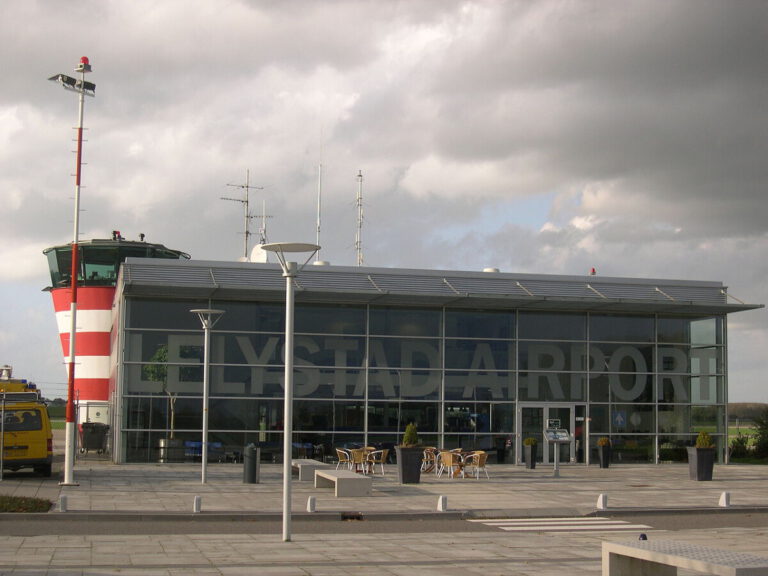
Lelystad Airport was intended to function as a sister airport to Schiphol. Certain holiday flights were to take off from the new airfield, but unfortunately due to a number of reasons, the building has yet to open.
So far, the building and upkeep of the airport has cost €214 million. These numbers follow research by Omroep Nederland and Follow the Money. The two research groups asked all the relevant authorities about the cost of the airport.
The reason for the investigation was due to an initiative called the Flevo-pitch. Through this initiative, the public could vote on what financial project they would like to see investigated — Lelystad Airport won.
This is not surprising given that the airport has been a cause of much consternation, especially amongst local residents. It is feared the airport will lower the value of the surrounding houses and increase pollution in the area.
A practice tower for air control
The research has revealed that the costs have gone towards the construction of the building, its infrastructure and the employment of air control personnel. Keeping the tower open has cost €365,000 a month.
Whilst the empty airport mostly plays host to hobby pilots and pilots in training, air traffic control personnel have been in the control tower since November 2019. This is so that they can gain experience and manage general aviation in the area.
Opening postponed
Initial hopes were that the airport would open in April 2018, but this did not happen for a number of reasons.
The opening of the airport was first postponed due to the nitrogen crisis. This was then followed by the coronavirus pandemic. The cost of postponement between November 2018 and November 2020 is expected to be 10.1 million euros.
The airport is now expected to open in November 2021.
Had you heard of Lelystad Airport before? Let us know in the comments below!
This week, 8,265 new positive coronavirus cases have been recorded by the RIVM. This is marks a 50% increase on last week’s numbers, which were 5,427. In the last 24 hours alone, a record high 1,379 infections were confirmed.
The number of infections and hospital admissions have jumped by roughly 50% each since last week. 92 new hospital admissions were recorded compared to last week’s 43.
Deaths, however, are slightly less at 14 compared to last week’s 17 new deaths.
These figures show that the R-number (indicating how many people on average are infected by a patient) has once again risen above 1.
Hot-spots
The highest numbers of infections were once again in Amsterdam, which saw 1,251 new positive tests this week. Coming in second and third were The Hague (761) and Rotterdam (701). However, in terms of the number of inhabitants per city, the highest numbers of infection were in Delft (16.9 per 10,000 inhabitants), Bergeijk (15.6) and Amsterdam (14.3).
GGDs overwhelmed
However, given that the GGD is running behind on testing, this is causing delays in statistics. Some of the deaths and hospitalisations, for example, may have occurred earlier but were only reported to the RIVM this past week.
Many people with complaints are struggling to get tested, as 80% of Dutch coronavirus testing locations are completely full. With overloaded phone lines and hardly any appointments available online, the GGD is busier than ever. A report from the GGD claims the Ministry of Health has not purchased enough lab capacity to deal with the volume of demand.
Schiphol closes its testing street as test demands increase
In the last week, we saw the testing street at Schiphol airport close down in an effort to compensate for demand at other testing locations. Increasing bottlenecks at the laboratories are overwhelming GGDs. This has made it necessary to prioritise testing of educational staff and healthcare workers, who are at the highest risk of infection.
Minister of Health Hugo de Jonge said the decision was justified as these groups of workers are essential. However, he made it clear that prioritizing these groups will be temporary. Schiphol authorities hope to bring the testing street back as soon as possible.
Switzerland, Prague and Lisbon become orange-risk zones
The highest risk areas in Switzerland are in and around Geneva, Freiburg and Vaud. In Portugal, the regions of Metropolitana de Lisboa and Leziria do Tejo have the most cases of coronavirus. The entire city of Prague is at orange-status.
Cheap flights and more train travel
As flight companies compete to fill their planes once again, airline ticket prices have plummeted as low as €5 with companies like Ryanair. Many of the destinations are code orange risk zones, meaning people could be re-entering the Netherlands with more than the luggage they set off with. MPs are calling for the drastically reduced prices to end.
Meanwhile, the Dutch public transport company OV has launched a multi-million euro advertising campaign to encourage more people to travel. The company insists that using trains, trams, buses and metro in the Netherlands is safe and managed responsibly. Pedro Peters of OV-NL explained that they will be checking more to ensure passengers are following the safety rules, and fines will be handed out faster if passengers are found breaking these rules.
The Dutch government has not banned non-essential travel but has advised the public to avoid crowds and to travel outside of rush-hour.
Do you think the Dutch government is doing enough to control the spread of coronavirus in the Netherlands? Share your comments below.
Today is Prinsjesdag, or Budget Day, in the Netherlands. What’s traditionally a day of ceremony and congregation, was instead scaled-down and televised for coronavirus safety measures.
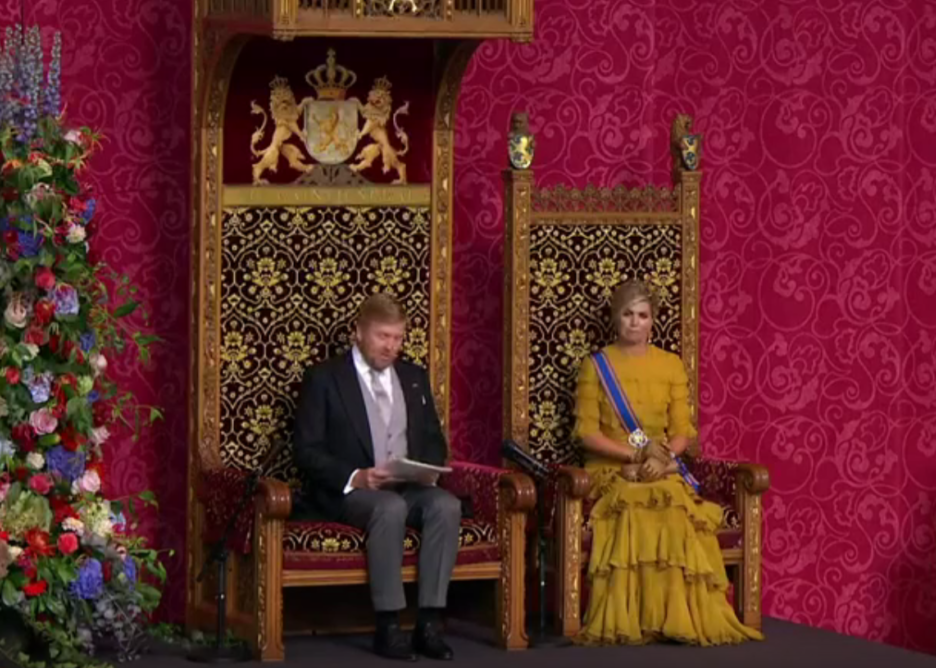
The event didn’t kick off with the king and queen’s usual carriage entrance and elegant balcony scene. Rather, they pulled up in a black Audi and bee-lined for their thrones, maintaining a proper 1.5-metre distance from other attendees.
Maxima looks lovely in mustard and ruffles. Image: NPO Radio 1/Video Screenshot
The king’s speech
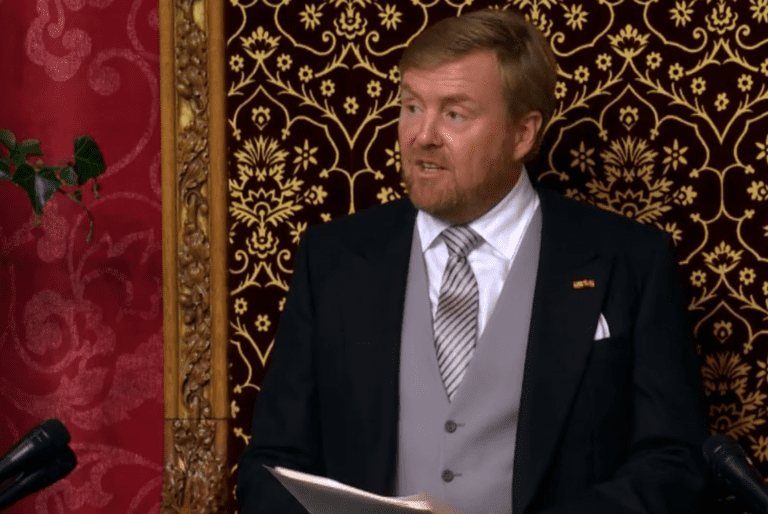
King Willem-Alexander delivered a sombre speech, emphasising that the Netherlands’ economy has been hit hard by the coronavirus and to be prepared for economic setbacks.
The king praises the resilience of business owners and teachers throughout this challenging year. “The Netherlands has shown that it is united, responsible and flexible.”
The Dutch government will be investing in “preserving jobs, good public facilities, a stronger economic structure, and a cleaner country” for the coming year.
Public spending
The king says it’s thanks to public spending that the country was able to absorb the initial impact of the coronavirus crisis.
In addition to the two current support packages for businesses, the government will be issuing a third package, available from October 1, and continuing for a period of nine months. “The goal is to preserve as many jobs as possible.”
Discrimination unacceptable
King Willem-Alexander also touched on the issue of discrimination in the Netherlands. “Too often, still, a person’s name or the colour of their skin determines their opportunities in life. That is unacceptable,” says the king.
“The public debate on this issue sometimes causes friction, but it can also help us move forward in the fight against discrimination, racism and unequal treatment. Overcoming differences begins with being prepared to listen to one another.”
As is customary, at 3 pm Minister Wopke Hoekstra handed over the briefcase with the cabinet’s budgetary plans for the coming year. He is optimistic but says that we are going through deep challenges. “We will do everything we can to limit the damage.”
Hoekstra says the cabinet wants to remain stable in these unprecedented times, so it will stick with previously arranged tax cuts and investments. It will also continue to spend money to keep jobs and help businesses.
Hoekstra also emphasises the cabinet’s goal of ensuring the economy is more resilient in the long-term. For this purpose, a National Growth Fund will be set up, which will invest 20 billion euros over the next five years.
What did you think of the king’s speech this year? Let us know in the comments!
All right, summer is officially over. No more endless terrace sessions at your favourite bar and/or sunbathing in Vondelpark (during those 72-hours of summer) with your friends. Summer in Amsterdam is a very special time, no doubt about it. Positive vibes all around and everyone seems to be out on the streets and in the parks soaking up those beautiful rays of light, but hear me out: Although nights are getting colder and you have to put on a warmer jacket, it doesn’t necessarily mean that you have to dig a hole and only come out in six months’ time. This season has its perks too, believe me. Here’s a list of five things to look forward to this autumn in Amsterdam when the thermometer goes down but the cosiness level climbs way up.
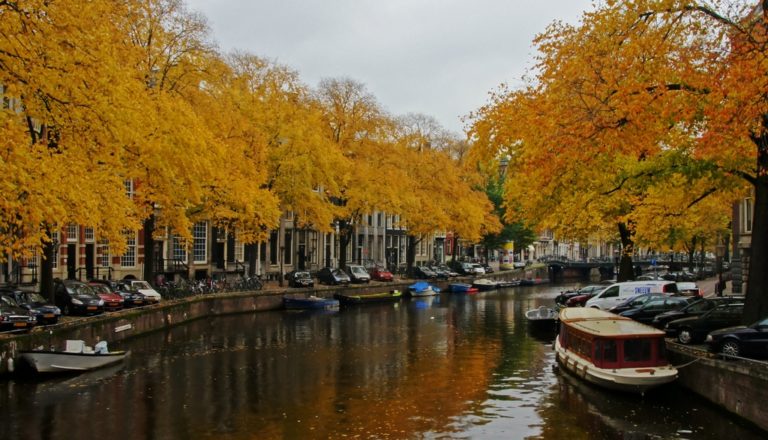
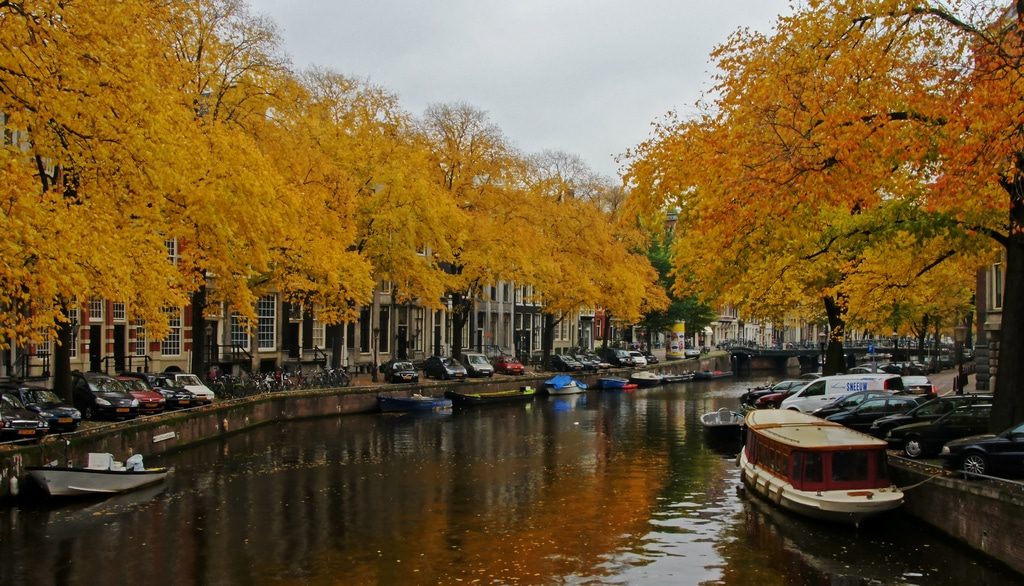
Golden leaves decorating a canal in Amsterdam
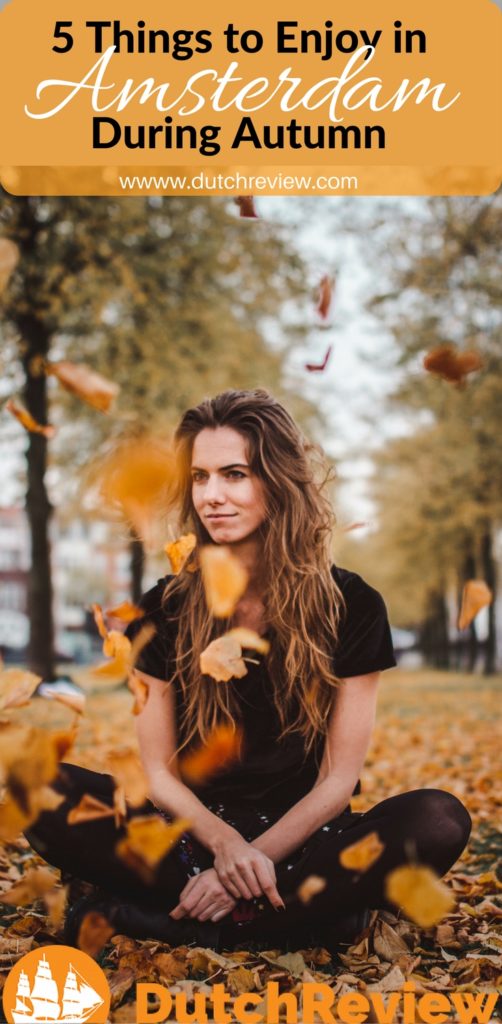
Gaze at the sky and enjoy the colourful carpet of crunchy leaves
Autumn has its magic too, especially when you look at the beautiful golden and red leaves on the streets. Don’t think you have to stay inside once it gets colder. Put on a jacket and go outside. Kick around some leaves in the park and watch the clouds travel across the sky, as its painted by the warm colours of the autumn sun. You can sit down on a terrace, wrap yourself in a cosy blanket and watch some leaves dance across the cobblestones while sipping on a steamy cup of tea.
Let loose on the dance floor like there’s no tomorrow
You think the city will fall into a coma after summer? Think again! October is the month when renowned DJs and industry types post up in the Dutch capital for five days to celebrate electronic music in all its glory with thousands of fans. Numerous venues all over the city take part in the Amsterdam Dance Event, short ADE, and music fans can enjoy interesting talks at conferences as well as dance dance dance at crazy parties and concerts.
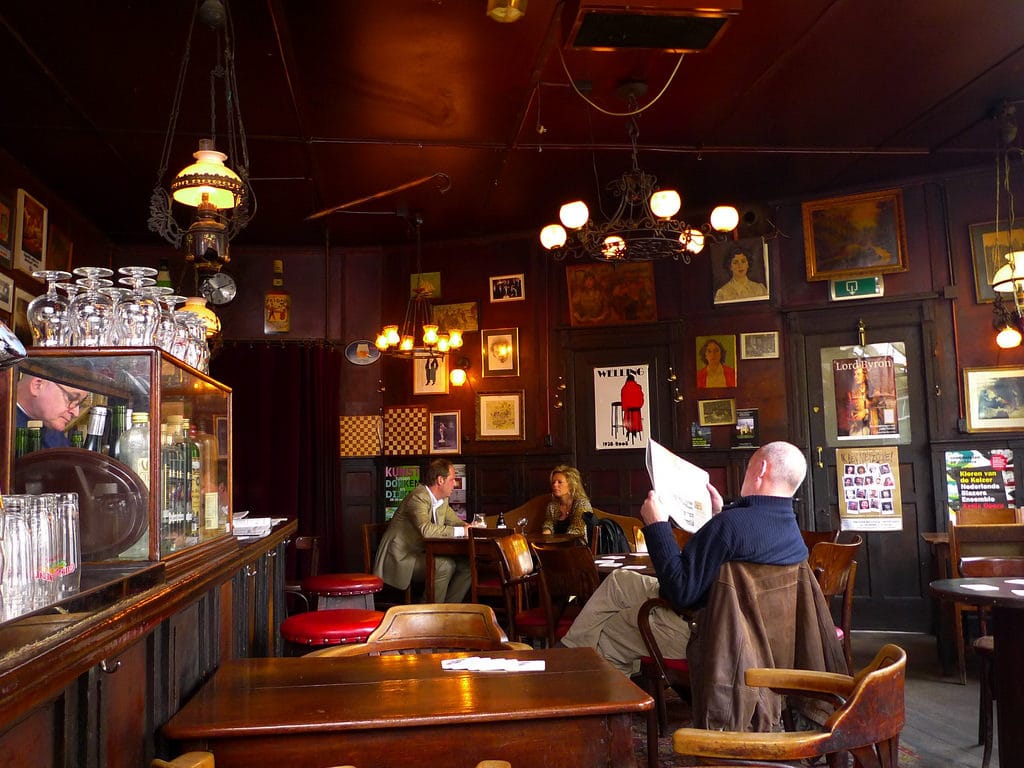
Cosy up in a brown café for a creamy latte and gossip with your girlfriends
It’s time to indulge again without feeling guilty
There’s another bonus to chillier days and longer nights during autumn in Amsterdam. Not only can you wear your fluffy jumper you got for Christmas last year, but you can also feel less guilty for indulging in fresh apple pie and hot chocomel. Summer is fun but let’s be honest, who didn’t dream of a hearty meal followed by a creamy cheesecake and some hot chocolate in July? But how to fully enjoy this avalanche of calories when you have to squeeze yourself into a teeny tiny summer dress or your bikini the next day? Exactly. Rokjesdag is long over so you can order your cake and have it too. Go out on a rainy Saturday afternoon and meet your girlfriends in a cosy brown café for a creamy latte, strawberry tart and endless hours of gossip.
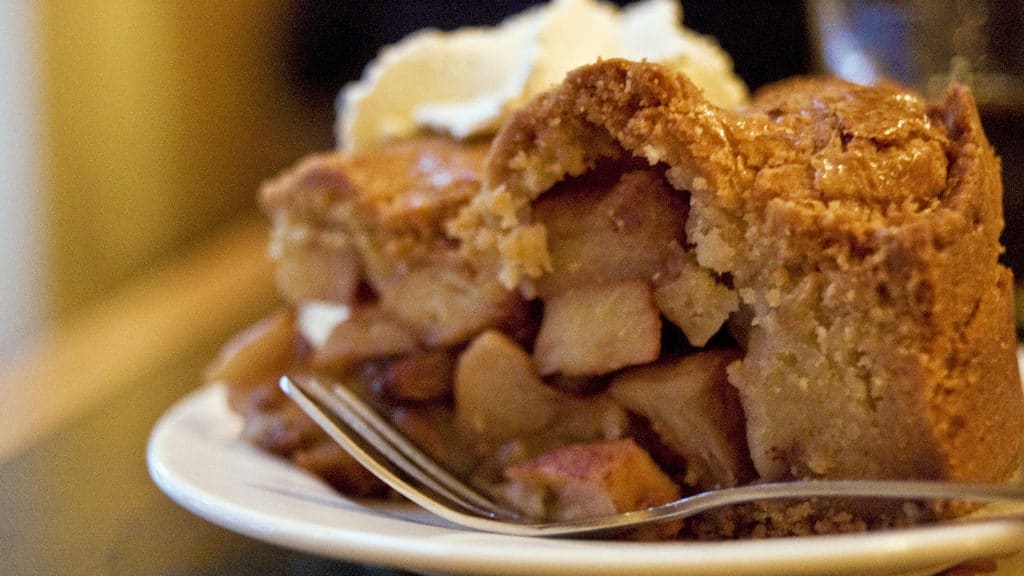
What’s better than apple pie and chocomel during autumn in Amsterdam?
Autumn in Amsterdam is film festival season
Who doesn’t love watching a good movie? Even better when it gets a bit chilly outside and you can cosy up in a comfortable cinema chair with a bucket of buttery popcorn. Between the months of September and November you’ll get to see interesting screenings during the International Documentary Film Festival (IDFA) as well as animated movies at KLIK. Even kids get their movie fix at the Cinekid Festival.
Your excuse to visit museums (at night)
Autumn in Amsterdam means that cultural season is in full swing. You don’t have to feel guilty anymore to spend time indoors like during summer. Go and visit the different museums Amsterdam has to offer to make the best of a rainy day. All right, but what if you are a night owl that only becomes alive after dark? Then you’ll feel right at home during Museum Night that takes place every November. With one single ticket you’ll get access to more than 50 museums in the city. You can stay until 2am enjoying some snacks and drinks while satisfying all your cultural needs.
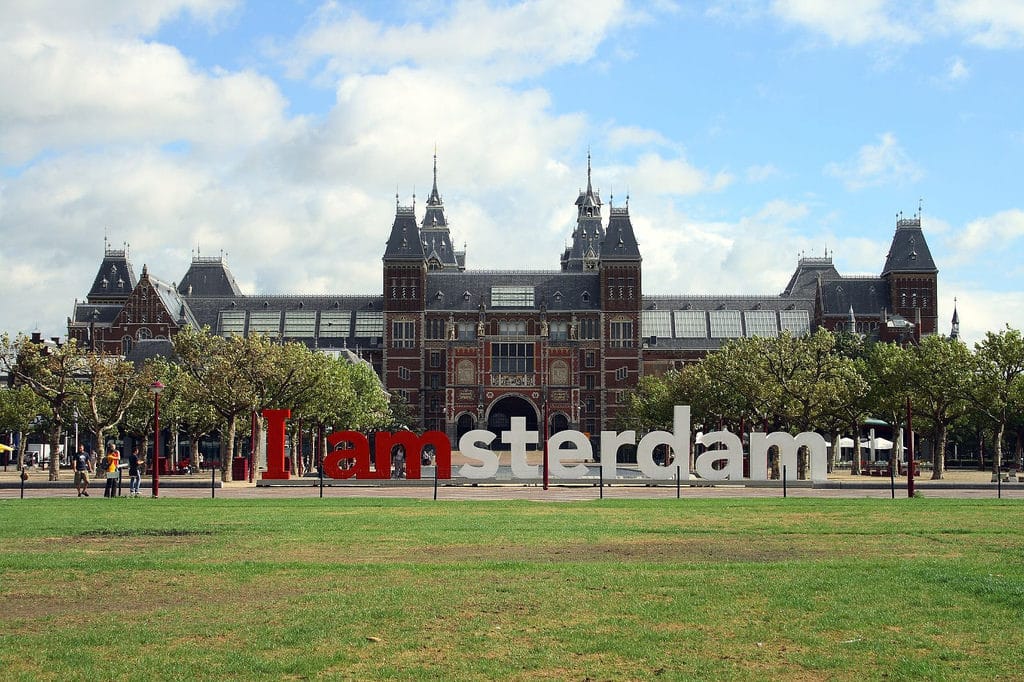
Museumplein in Amsterdam – when it’s cold outside just go and visit one of the many museums
There you go. Whether you feel like dancing the night away, walking through an exhibition at night, watching a thought-provoking movie or simply want to indulge in the sweeter things Amsterdam’s cuisine has to offer – go out and enjoy yourself during autumn in Amsterdam. And we haven’t even mentioned Sinterklaas (St. Nicholas) and Halloween…
The Ministry of Foreign Affairs has just issued orange-risk status to regions of Switzerland, Lisbon and the Czech capital, Prague. This means that travel to these regions is only advised if it is deemed necessary.
This change in status follows an increase of coronavirus cases in the regions. The entire city of Prague is now orange-risk status, along with regions of Switzerland and areas surrounding the Portuguese capital, Lisbon.
The Ministry of Foreign Affairs has reported that the risk of contamination in Portugal is highest in the regions of Metropolitana de Lisboa and Leziria do Tejo regions.
Reisadvies #Portugal: door de laatste ontwikkelingen van de besmettingscijfers in de regio Lissabon is de kleurcode van de regio’s ‘Area Metropolitana de Lisboa (AML)’ en ‘Leziria do Tejo’ oranje. Het besmettingsrisico is er hoog. https://t.co/rA2L2IDHJGpic.twitter.com/KyVp46TdpJ
In Switzerland, the risk of infection is highest in and around Geneva, Freiburg and Vaud.
Reisadvies #Zwitserland: In de kantons Genève, Freiburg en Vaud is het aantal besmettingen met het coronavirus ernstig gestegen. De kleurcode voor deze kantons is daarom aangepast van geel naar oranje. https://t.co/xq9hndBGDPpic.twitter.com/r7edd5yen8
As is the case with all orange-risk regions, travel is not advised to these areas. However, for those returning from orange-risk regions, it is asked that travellers quarantine for 10 days. Returning passengers from high-risk areas will no longer be asked to take a test in Schiphol Airport.
It was decided that the testing zone should be closed in order to free up resources for other testing centres which have been struggling to keep up with increased testing demands.
Have your holidays been affected by coronavirus? Let us know in the comments below!
It’s Prinsjesdag, or Budget Day, in the Netherlands, and this year is going to be different.
Budget Day falls each year on the third Tuesday of September. It’s the ceremonious day that the government presents its budget for legislature approval. This year, coronavirus has made for a much different sort of event.
Traditionally, the king or queen makes a grand carriage entrance, and gives a speech from their throne, announcing the government’s agenda for the coming year. The Budget Memorandum and the National Budget for 2021 are later presented in a briefcase.
Coronavirus measures
This year, there will be no public audience and no arrival in aglass or golden carriage, but you will be able to watch the speech on television. King Willem Alexander will be speaking from the Grote Kerk in The Hague, for the extra space, rather than the traditional location at the Ridderzaal.
The King and Queen will arrive by car and the parliamentarians will be bused to the Grote Kerk. The military honour guard has been sizeably scaled-down, with only 50 guards, rather than the usual 2,200 or so.
Good morning on this warm and beautiful Prinsjesdag. Today a sober Prinsjesdag. With our King and his Queen. pic.twitter.com/6Oe9QRU5zk
The real question on everyone’s mind is, will there be hats? “I don’t feel the festive spirit this time”, says Attje Kuiken of the PvdA faction. “I’m not wearing a hat. It feels different. Corona makes everything different,” reports RTL Nieuws.
Women have been wearing hats to the event since the ’70s, but this year the ceremony is taking a more sombre tone.