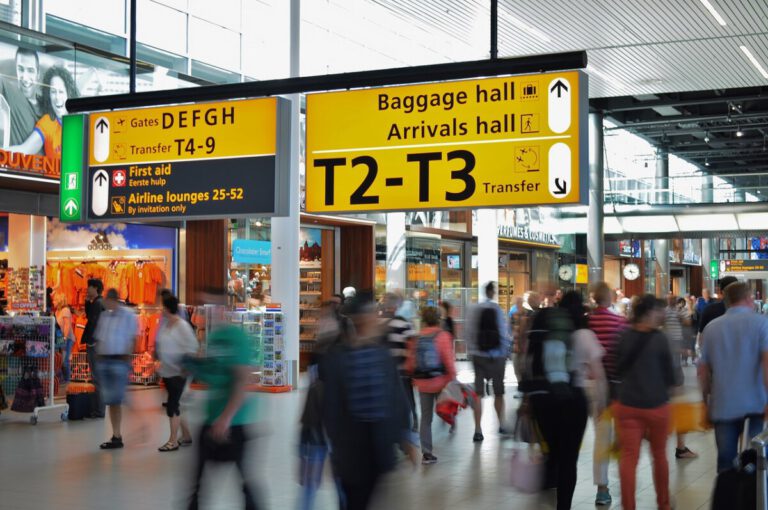
Schiphol airport has opened a coronavirus testing zone. Passengers who fly in from code orange or red risk countries are encouraged to get tested.
Travellers who arrive in Schiphol airport from high risk countries can now get tested for coronavirus within the airport. As passengers disembark their flights they will be greeted by members of the GGD and encouraged to take a coronavirus test.
Is taking a coronavirus test at Schiphol mandatory?
The Ministry of Health, Welfare and Sport has said that the test will not be made mandatory as it would be too legally complex to do so. However, passengers above the age of 13 are strongly encouraged to get tested upon arrival even if they have no complaints.
According to Schiphol airport’s website testing appears to only be optional for those who travel in from countries that are deemed either a code orange or code red risk.
All costs for testing will be reimbursed by the government and if the testing zone is too busy, passengers can arrange to get tested within their own region. Results will be given within 48 hours however, travellers are still encouraged to travel safely and quarantine for 14 days even if they get a negative result.
Those who decide not to be tested are still expected to quarantine for 14 days. However, it is not yet mandatory to quarantine upon arrival into the Netherlands (there is only “urgent advice” to do so).
According to Schiphol airport’s website the new testing zone can be found between Arrival Halls 3 and 4. Passengers will be asked to show their ID or passport to ensure that they receive the correct test result.
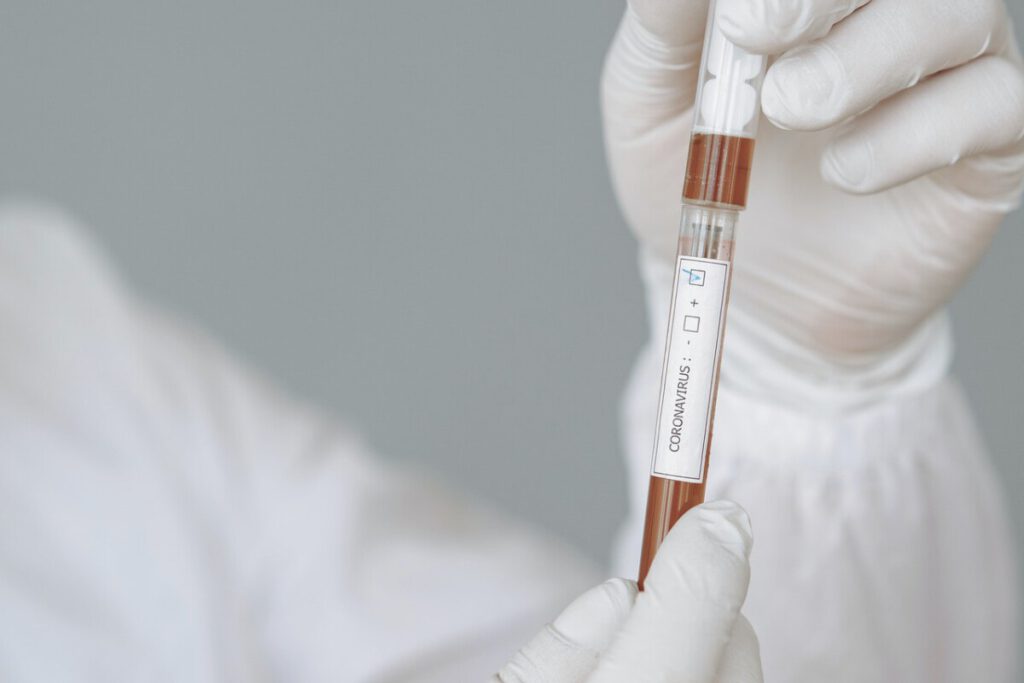
Image: Gustavo Fring/Pexels. Testing in Schiphol’s test zone will be very similar to other testing centres.
A member of the GGD told RTL Nieuws that the testing zone is much like any other testing centre. “The protocol is the same as with a regular test street. The only difference is that this is also intended for people who have no complaints.”
For now, Schiphol is the only airport in the Netherlands that has opened a testing zone. However it is hoped that other airports will soon implement the same measures.
Do I still have to quarantine if I get a negative result?
Whilst the new testing zone is likely to help to prevent the spread of coronavirus throughout the Netherlands, the Ministry of Health, Welfare and Sport has emphasised that a negative test result does not mean that incoming passengers shouldn’t go into quarantine for 14 days.
Would you get tested at Schiphol? Let us know in the comments below!
Tonight, Prime Minister Rutte and Minister for Health Hugo de Jonge will hold a press conference concerning potential new coronavirus measures. Cabinet seems to be maintaining a regional approach but new national restrictions are also being discussed.
As coronavirus cases climb across the Netherlands, cabinet is considering implementing new national measures, reports AD. Limiting group gatherings, like weddings, funerals and parties, is being discussed today as these are where coronavirus numbers have been spreading rapidly. However, De Jong does not want to anticipate national measures yet.
In preparation for the press conference, the mayors will also discuss potential regional quarantine obligations. Minister Bruls is pushing for stricter quarantine obligations. “I would like to be able to check whether someone is at home,” he said.
Cabinet’s decision on national measures will be revealed in the press conference this evening. However, they seem to still be favouring a regional approach.
Regional approach
After a cabinet meeting last night, De Jong commented that regional differences were large. Today the ministers will discuss to what extent new measure should be regional or national, in light of these differences.
However, overall the approach seems to be remaining on a regional level. After the conference tonight, mayor of Amsterdam Femke Halsema will announce new corona measures for the capital. Numbers are spreading rapidly there, as well as in Rotterdam where new regulations might be introduced later this week. Amsterdam and Rotterdam have already been experimenting with obligatory masks in public places.
Confusion and chaos
As numbers rise, cabinet has been frantically trying to deal with the issue but things have been chaotic. Source and contact research in Rotterdam and Amsterdam had major errors and the teams have been scrambling to get numbers in order. Last week, De Jonge announced a national quarantine order but this was scrapped within a day after pressure from the Lower House.
There was also confusion within cabinet. Minister Kajsa Ollongren of the Interior, for example, knew nothing about De Jonge’s plan for a quarantine obligation. “We should not surprise each other within the cabinet,” Ollongren said later.
Do you think cabinet will implement stricter measures? Follow DutchReview on Facebook to keep up to date with coronavirus news in the Netherlands.
So you’re moving to the Netherlands with your other half? Maybe love has taken you to the Netherlands — you met a dashing Dutchie and you couldn’t leave. Or maybe you met them in your country and they want to take you back to their land of stroopwafels and windmills.
Either way, they all come with their own personal struggles (after all, you are moving abroad with your one and only!) Here’s our survival guide on moving to the Netherlands with your other half.
Moving to the Netherlands when neither of you is Dutch
So you decided to say “sod it,” leave both of your beloved countries behind and move to the Netherlands. Good on ya. Join the club. But here’s a few things to remember:
You won’t have a family support system
So you’ve moved here with zero friends and family in tow. You aren’t with a lovely Dutchie, so you’re pretty much starting from square one. Plus, the only way to acquire a family here is either to start popping the babies out straight away or persuading your family to move over (sorry, guys, this probably won’t work). You’re completely on your own in this new place.
It may seem scary, but honestly, you do eventually get used to it. Wanna know a plus point? You don’t have to be dealing with the mother-in-law and their family won’t drive you up the wall, because guess what, THEY AREN’T HERE. See, we can all switch our mindset when we need to.
You’ll want to escape from your partner
We all know that spending all day every day with our significant other is relationship suicide. This is especially true when you first move and are finding your feet. Moving is stressful, and so is finding work. What makes it even worse is if they really are doing your head in, you have nowhere to escape to. When I say ‘escape’, I don’t literally mean run away from our partners.
I mean when you go out for cocktails with the girls to have a little moan and the guy may go to a bar to watch the football with a few mates (definitely wasn’t stereotypical or anything) … Oh wait, you don’t have any friends — in fact, neither of you do! You can’t make friends within the first moment without having contacts. Seeing as you have both come knowing nobody, then how can you escape for a bit!?
Join a club, join a gym, join anything which means you can do something independently and gives you the chance to make some new friends. Living abroad can be hard without family and friends around, but doing something that you love gets you out of the house and stops you annoying at other at least.
Just a note: coronavirus has made socialising in a new country harder than ever — but don’t give up! Just because you can’t join a gym or club doesn’t mean you can’t meet people: but you may need to move to meeting people online.
Cultural clashes
If you move abroad for a Dutch person you’re in a completely new place, yet they can show you around. They can get you acquainted with the Dutch culture somewhat easier and they can give you the low down on the mundane parts of life in the Netherlands (such as rent, utilities, etc).
But when you move abroad together and neither of you is Dutch, you’re let loose to run wild, with no direction. You’re aimlessly living your new life not knowing what is going on and what people are saying to you.
Embrace it! If neither of you knows what’s going on, it’s almost funny. You can muddle through together and end up stronger on the other side. It’s amazing to share an experience that is different for both of you, equally. Just make sure not to kill each other first, yeah? 😉
Moving to the Netherlands when your partner is Dutch
The new family
When you are moving to the Netherlands with your other half (a Dutchie), whatever you think it will look like, there is one thing you will get almost for sure: a new family environment.
The Dutch are usually very fond of their families, stay close and keep in regular contact. Once you join the picture, typically that’s a call to arms for your significant other’s family to support you in your new experience, sometimes to an extent that will really make you feel as if you changed planets, not countries.
Along with all the useful advice and help, you will often also be explained bloody obvious or truly unnecessary stuff (“Here we do our boodschappen on weekends”. So, if I have the time on a weekday…is it a crime against culture? “We have health insurance here, you must get one” Nooo! Really?!).
Gaining people to help
Chances are that your Dutchie’s family is not aware (yet) of your culture or the societal structure of your country of origin, they are only trying to be useful and think of all the things you may need as a newcomer. Sometimes they try to think instead of you indeed, but they do mean good.
Be prepared for invitations to a bunch of birthdays and anniversaries, where you are expected to be present (this may include all the aunts’ and cousins’ personal celebrations). There are very few proper ways to decline. Usually, such gatherings are seen as spending quality time with the family, and this is very valued by the Dutch.
In this regard, also expect to be signed on the Christmas and birthday cards the family of your Dutchie is sending, along with the other family members. It doesn’t matter if you are not an actual family (as in married or in official partnership). This may seem a bit scary or pushy to you, but look it from the bright side — this is one of their ways to show you they accept you. Look, you’ve just gained another family, awwww!
Survived yet?
Moving abroad is hard (with your other half in tow), especially when moving to the Netherlands with your partner. So whether you’ve gone together or one of you has joined the other, congrats! You’ve made it.
Letus know what it was like for you to move to the Netherlands with your other half in the comments!
Feature Image: Ketut Subiyanto/Pexels Editor’s Note: This article was originally published in March 2018, but was fully updated in August 2020 for your reading pleasure.
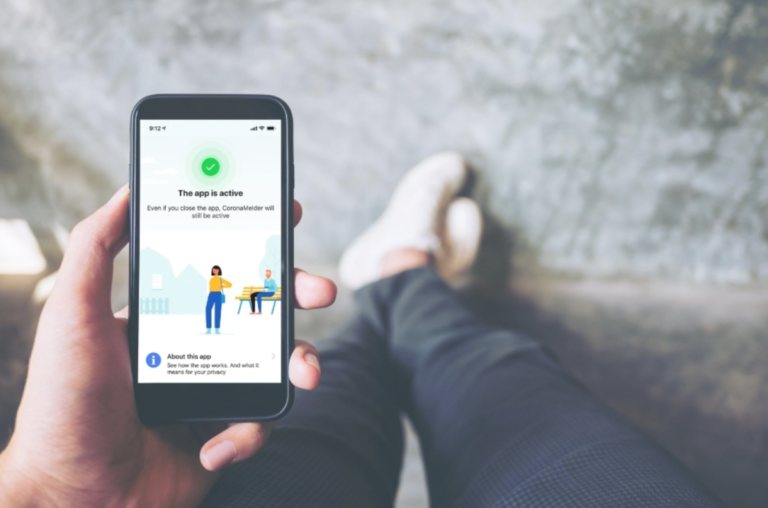
The government’s new app, CoronaMelder, warns people who may be at risk of contracting coronavirus. It’s available for download now, but will initially only be usable in the provinces of Drenthe and Overijssel. By September 1, it should be ready for use throughout the rest of the country.
For the next two weeks, the CoronaMelder app will be tested in Drenthe and Overijssel. This means people from those provinces, who receive a warning via the app, can be tested at the GGD. Testing is permitted whether or not symptoms are present.
How does the app work?
If you have been in the vicinity of someone infected with the coronavirus, the app will alert you with a notification. This message gives advice on what to do next, and how to reduce the risk of infecting others.
The more people use the app, the more effective it is. The CoronaMelder app recognises users via Bluetooth and notices when you are near another user for an extended period of time. The app doesn’t see or store any personal data — users are discerned by random code.
What to do if you test positive
If you receive a positive coronavirus test, you are encouraged to report this to the app (as well as a GGD employee). CoronaMelder then sends out its own arbitrary codes, collected over the previous days, to a central server.
If there is a possibility you have infected others, alerts will be sent to those individuals (completely anonymously). You will also receive advice on what to do to prevent spreading the virus.
Use of the CoronaMelder app is voluntary. It’s available in Dutch, English, Arabic, Bulgarian, French, German, Polish, Romanian, Spanish, and Turkish. It can be downloaded through the App Store or Play Store.
Over the past days, the Schilderswijk neighbourhood of The Hague has been in a state of unrest in the evenings. A community centre was set on fire, and there were multiple clashes with the police.
Initially, at least from an outsider’s perspective, it wasn’t clear what was happening in Schilderswijk to cause this. There was speculation that the recent heatwave and the months of disruption to normal life due to corona were playing a part in it— but as it turns out, it’s more complicated than that.
Lack of part-time jobs and community programmes
The coronavirus crisis has meant that the young people in the neighbourhood haven’t been to school since March. Most of them will also have lost part-time jobs that they would usually have taken up during the summer months. That means a lot of boredom, and potentially also the stress of reduced financial circumstances.
Moreover, community-based programmes that could have stepped in to fill the gap left by coronavirus have also been defunded by the municipality. “There have been significant cuts in the community centers in recent years. Our summer program has been cut back a lot,” says Harrie van de Louw, who runs the neighbourhood theatre De Vaillant, in an interview with NU.nl.
Disappointment of not being able to travel
Many families in the neighbourhood will also have been frustrated by the limited travel options this summer. Schilderswijk is home to a lot of people with a migration background, who would usually go to see their extended family in their country of origin every summer.
“Many families are very disappointed that they have not been able to travel to their country of origin this summer because of corona. For many of these Dutch people that is a moment that they look forward to all year,” says local entrepreneur Appie El Massaoudi.
“We do have a neighbourhood with a reputation”
Schilderswijk has been hit with a disproportionate number of coronavirus fines over the past months, according to youth worker Dean Arma. That certainly hasn’t improved the perception of the police in the neighbourhood, and might explain some of the clashes that have taken place over the past few days in the neighbourhood.
Community leaders in Schilderswijk have also pointed out that the neighbourhood suffers from very selective media attention: it only gets in the news when something is going wrong. “We do have a neighborhood with a reputation. If something goes wrong here, all media immediately get on top of it: ‘well, it’s that time again’,” says theatre director Van de Louw.
In the north of the Netherlands, the school bell has rung and students have parked their bikes, hoisted their backpacks, and headed back into the classroom. But this school year is looking a little different as students and teachers adjust to new corona rules.
While the students spent their vacations relaxing, swimming, and perhaps travelling, school administrators have been hard at work implementing the new coronavirus measures. But what are they — and how do they differ from the measures put into place before summer holidays?
Students don’t have to keep their distance
Because we all know that science has proved children can’t spread the virus (guys, that’s sarcasm, they can). Regardless, even students as old as 18 don’t have to be 1.5 metres apart, despite secondary students having to do so last year.
Coronavirus protocols ask for schools to try to take breaks with their own classes and to spread out breaks between classes as much as possible to avoid corridors being filled with students. After school, there is no loitering, and students are encouraged to make their way home on foot or bike. Public transport is also an option for students who need it.
Primary school students don’t even have to keep their distance from teachers, although high school students do. Adults must always keep their distance from each other as much as possible. However, a teacher can come closer to a student during practical lessons with students — but are encouraged to avoid it if they can.
Children will go to school five days a week
Last year, secondary students only had to go to class for a portion of days to reduce the spread. This year, they’ll be back five days a week, the same as primary school students. There are a few exceptions:
A student in a risk group (or with a family member in a risk group) can request to not have to attend class, but do distance learning instead. This is done in consultation with the school.
Students who have been in countries with orange or red travel advice should not go to school. Students above 13-years-old are not expected to go to school because of the recommended quarantine period.
While younger children do have to go to school, they should not be brought or collected by a person on quarantine.
Coronavirus symptom(s)? Stay at home
From now on, parents will only be allowed to enter school grounds after responding to coronavirus health questions — the same as at restaurants.
Students that have coronavirus symptoms cannot go to school. They can only return once the complaint has ceased for 24 hours. If a family member has a fever or shortness of breath, students must also stay home. However, students in Group 1 and Group 2 are allowed to go to school even if they have cold-like symptoms, because children of this age often have a cold.
And of course, anyone waiting for the results of a coronavirus test must stay at home. If a student tests positive, the GGD will decide if it is necessary to test other students.
Students must wash their hands
Students will be rushing to the sink regularly, for example, when class begins. Classrooms will be well-stocked with soap, handgel, and cleaning materials for door handles and tables. These rules may differ from school to school, but these are the recommended tactics.
Ventilation is also an issue. Authorities have drawn up a guide to the ventilation of classrooms. It says that rooms have to be aired out regularly, and that recirculation of air in one room should be avoided.
What do you think of the new coronavirus measures in schools? Too much, or not enough? Tell us in the comments below!
The American Book Center is an independent, family owned bookstore that sells English-language books in the Netherlands. Recently, ABC has opened a new store in Amstelveen.
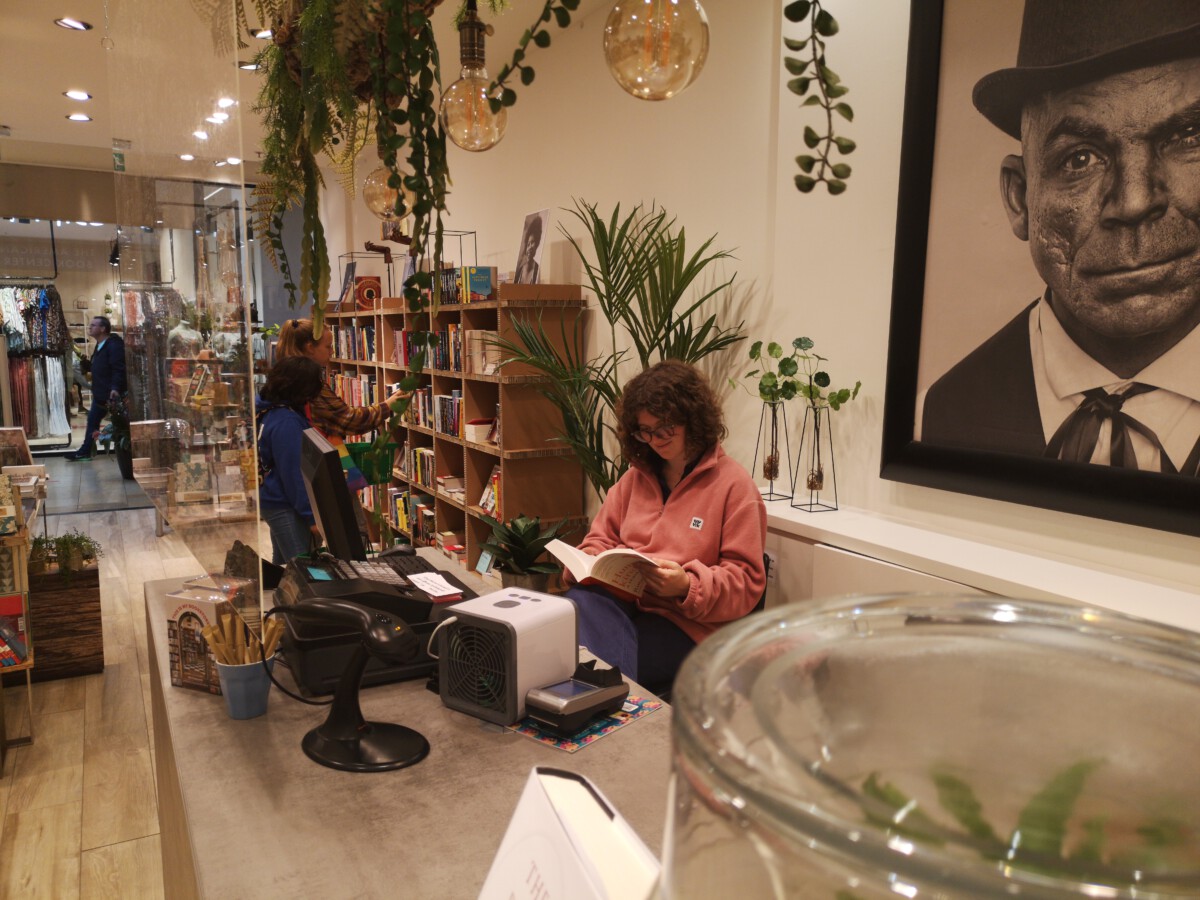
ABC has had a store in Amsterdam since 1972, and a store in The Hague since 1976. In June 2020, ABC opened a new pop-up store in Stadshart Amstelveen, Amstelveen’s shopping mall. Given that ABC’s Amsterdam store was listed as one of the most beautiful bookstores in the world, it’ll come as no surprise that the new store is very aesthetically pleasing (for some serious bookish aesthetics, you can check out ABC’s Instagram). Filled with books (and also quite a few plants), ABC’s Amstelveen store is the perfect place to pop into for a peaceful browsing session.
I’ve been a bookseller at ABC since the beginning of this year, and while I mostly work at the store in The Hague, I’ve also spent quite some time at the new store in Amstelveen- and let me tell you, it’s really wonderful. If you’re in the Amstelveen area (or if you plan your day-trips around book shopping as any normal person would) then I would highly recommend popping by to browse our leafy shelves.
Reading on the job. Image: American Book Center/Supplied.
As is the case in its Amsterdam and The Hague stores, ABC’s Amstelveen pop up is filled with carefully selected books. From manga to Young Adult to cookbooks, you can find something there for every kind of booklover. We also offer a 10% discount to students, people over 65, and anyone who has a loyalty card for Stadshart Amstelveen. If you don’t fit any of those categories, you can also get yourself an ABC Discount Card for €7 per year, which is valid at all our stores.
As in our other stores, you’ll also find a curated collection of Staff Favourites. We’re especially proud of our children’s section there- which is just as well, as we get quite a few young booklovers popping by. We’ve also got a rocking horse and a storm trooper to keep them amused, as well as lots of cozy spots for you to sit down and make the most difficult decision known to man: which book should I take home with me today?
As always, it’s good to know the details. You can find ABC’s Amstelveen store at Binnenhof 27, inside Stadshart Amstelveen. The store is located next to Footlocker and opposite The Athlete’s Foot inside the mall. You can check the opening hours here. If you live in Amstelveen, you can take Tram 5 to the mall entrance closest to the store. And, if you’re not an Amstelveen resident, then it’s good to know that the store is very well connected to public transport: once you get on a bus that stops at Amstelveen bus station, the mall is just around the corner (and so is your next read).
Have you been to the new ABC store in Amstelveen yet? Let us know how it was in the comments below!
The Dutch economy is now facing the consequences of lockdown with 322,000 fewer jobs than in the previous quarter.
The Central Bureau of Statistics (CBS) has announced that the Dutch economy shrank by 8.5% this quarter. A drop like this has never before been seen by the CBS.
This follows a drop of 1.5% in the previous quarter which measured economic growth between the months of January and March. The drop was to be expected as this figure included the March lockdown. However, the newest figures cover the months of April, May and June and thus represent the economic effects of 2 months of partial lockdown in the Netherlands.
Dutch labour market suffers
The effects of this economic drop can be seen in the Dutch labour market with 322,000 fewer jobs available than in the previous quarter. RTL Nieuws reports that those hit hardest by the loss of work include many flex workers whose annual contracts were not renewed as well as those involved in the cultural, trade and business sectors.
This goes hand in hand with a significant drop in the number of vacancies becoming available to those looking for work. The rate of vacancies per 100 unemployed people has dropped from 81 in the first quarter, to 57 in the second quarter.
This drop in available work has thus led to a 26% increase in the rate of unemployment with 349,000 people now unemployed in the Netherlands.
Aid and recovery
NOS has reported that whilst the Dutch economy will certainly suffer, governmental support measures have helped to soften the blow. This is also the opinion of Peter Hein Van Mulligan of the CBS, who told RTL Nieuws that he expects the Dutch economy to recover quickly once coronavirus has been contained.
Have you felt the economic impact of coronavirus? Let us know about your experiences in the comments below.
Last night brought another night of unrest to The Hague, again in the Schilderswijk neighbourhood. The municipality declared an emergency order for several streets in the area.
The police report that they arrested 20 people last night: quite a bit more than the night before, when four people were arrested. The situation played out similarly to Wednesday night: police were pelted with eggs and stones, and had loud fireworks set off next to them.
At first, it seemed that the unrest would be prevented altogether. The evening started quietly: neighbourhood leaders, community police and residents were actively working to maintain a good atmosphere on the streets. The Hague Mayor Jan van Zanen had also visited the area earlier in the day to encourage residents to maintain the peace.
At 11:00 PM, however, young people gathered in the streets again. Fires were started and those who gathered on the street made a lot of noise.
The 20 arrests that took place were for sedition (inciting resistance against an authority), contempt of a police officer, open violence, disregard of the emergency warrant and assault of a police officer. The police are still investigating the destruction of two police vehicles.
ME gaat ingrijpen. Wie niet van straat gaat wordt aangehouden. Er geldt een noodverordening pic.twitter.com/fiIV66IulS
The causes of the unrest are still unknown. There have been speculations that it comes down to corona boredom or the heatwave, but there’s no evidence to back that up at the moment.
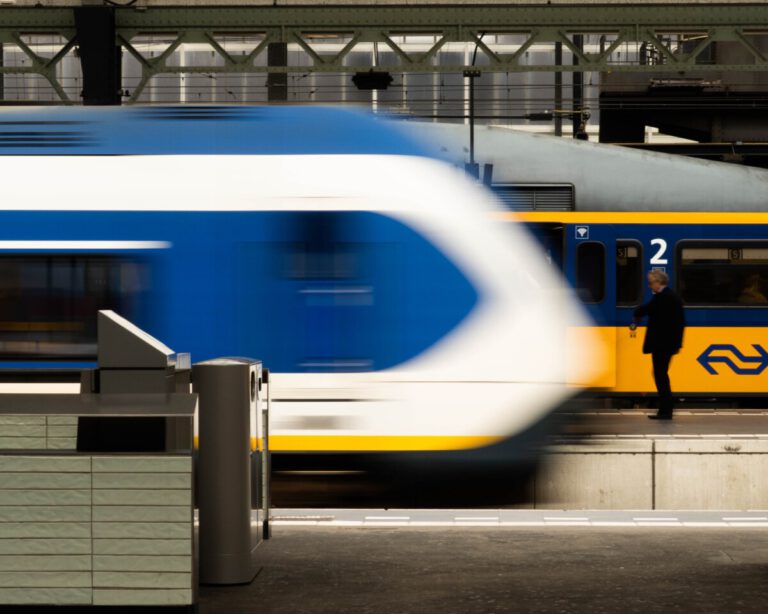
Over the past 6 months, in which travel was greatly restricted due to the coronavirus pandemic, the NS rail company has lost €185 million. Without government aid, this would have been far worse.
After March 12, when coronavirus measures were first announced in the Netherlands, passenger numbers dropped by 90%. Later, when regulations were relaxed and train timetables returned to normal, NOS reports that passengers increased to about 40% of pre-coronavirus times. Without government support, the company would have gone into debt by over a billion, RTL Nieuws reports.
Government subsidy
The UK’s government in particular opened their wallet for the NS, who operate in the UK under Abellio. NS was compensated 100% of losses due to COVID-19, which amounted to €703 million. The rail company further received €351 million from the Dutch government and €9 million from NOW aid.
But even with generous government donations, the NS remains €52 million in the red. This figure would have been even higher, but €107 million of tax owed to the authorities has been deferred. Since NS expects future profits to reduce dramatically, the company will also be taxed less in future.
Keeping NS afloat
The Dutch railway company is doing everything possible to keep train tickets affordable. To encourage more passengers, NS is introducing new subscriptions for commuters who work from home more often due to COVID-19.
NS is also in conversation with education and large business customers to better spread travelers over the working day. “Staggered travel is essential for an increase in the number of travelers,” says president-director Roger van Boxtel.
At the end of July, NS announced that reorganization was inevitable, and 2,300 jobs are expected to disappear. Van Boxtel expects passenger numbers to only return to 2019 levels in 2024. “The Dutch public transport sector has to adapt, but will not survive without further support.”
Do you think the train companies should receive more support? Follow DutchReview on Facebook to follow the latest news.