Travellers from the Netherlands to the United Kingdom will have to self-quarantine for two weeks after arrival. The changes come into place from Saturday.
If you’ve been craving a nice hot scone, tea with the queen, or just a hop across the pond, you may be forced to reconsider your travel plans. The rising number of infections in the Netherlands, France, Malta, Monaco, and Aruba has forced the UK government to impose stricter quarantine rules.
Infection control
Transport Secretary Grant Shapps announced the changes will come into effect from 4:00 AM Saturday morning, citing a significant increase in cases in those countries. “We’ve been working hard to get the number of infections down here, so we can’t allow us to import cases from other countries.”
The Netherlands has seen a jump in coronavirus cases over recent weeks. Cases on Tuesday rose by 4036 for the week prior, an increase on the previous week’s 2588 that is proving to be a trend.
The Dutch Ministry of Foreign Affairs has also changed their travel advice for residents of the Netherlands going to the UK. “Great Britain will receive a code orange as travel advice because the Dutch have to be quarantined there,” a spokesperson told NOS.
The news is expected to force a rush back to the UK from at least half a million tourists currently on continental Europe. The Eurotunnel website is already struggling with the huge volume of enquiries, according to the BBC.
Have you been affected by the change in travel advice? Tell us in the comments below!
Moving to the Netherlands? You’re going to need Health Insurance
Welcome! I figured you’re here because you want to get your head around how health insurance works in the Netherlands. Well, luckily for you, DutchReview has come to the rescue. This ultimate guide will get you well on your way to both understanding and securing health insurance in the Netherlands, and get you a ‘zorgverzekering’ that is right for you.
Before we begin, like many other countries, there is no need for a disclaimer to say that you’re going to become bankrupt once you take out health insurance in the Netherlands *loud exhale*. In fact, the Netherlands has one of the most affordable healthcare packages around – no matter what ailments you may have. Now I’ve delivered the good news, let’s get started on all you need to know about health insurance in the Netherlands – it’s gonna be a long one, prepare yourselves.
Here are all the questions we know you’d ask when thinking about healthcare insurance in the Netherlands – and we’ll answer ’em.
And we’re cracking some jokes while we’re at it, because getting health care insurance in the Netherlands should be a bit fun too
So, how do I qualify for health insurance in the Netherlands?
To get Dutch health insurance if you’re an international, you must be living in the Netherlands. If your residence permit has been denied for instance, then you will not be able to take out Dutch insurance. This also goes for temporary stays. There are special international insurances that you can take out, however, you can only apply if you do not have a permanent residence permit, you do not live in a reception facility for asylum seekers and of course, you don’t already have Dutch health insurance.
So to put it simply, if you don’t live in the Netherlands, then you either shouldn’t or won’t be able to get health insurance!
How much does it cost to have Dutch health insurance?
Dutch health insurance is actually incredibly affordable in comparison to many other countries. Although it may not have a National Health Service, the government has made sure that healthcare in this country is both affordable and accessible to all. What does this mean exactly? Well, in the Netherlands you have what you call a ‘basic healthcare’ package, which is around €100 per month. This covers you for the basics when it comes to healthcare – so this means emergency care, some mental health care, GP services, some medication, some emergency treatments abroad, ambulances, dental care for the u18’s and some maternity care, to list but a few. It is for otherwise healthy individuals who don’t need any specific and specialist treatment (then you pay another affordable fee on top for these services, it’s called ‘aanvullende verzekering’).
When getting healthcare in the Netherlands, everybody has the same premium, no matter how many illnesses you may have. So if you feel like you’re falling apart, don’t worry, you’ve got this covered! With this basic healthcare package, you pay around €100 and then your excess (your ‘own risk’ fee) is €395 for the whole year (we’ll touch more on this later). You can alter this though, so you can pay less each month, but your (voluntary) excess is much higher. You’ll notice though, as the years go by, that the basic package goes up a tad, but that’s to be expected (just look at food prices! But it’s also becoming a political thing nowadays in the Netherlands)
Lucky you won’t have to fork out thousands – yes I’m talking to you America 😉
The price of Dutch health insurance in 2018-2019
Although the prices are relatively low, having health insurance in the Netherlands still isn’t cheap, and Dutch people and expats are complaining about rising prices left and right. In 2018, basic health insurance in the Netherlands would cost 1,378 euros per year per person on average. This, however, is not the same as the annual premium paid because that differs from person to person and there’s also a thing called healthcare allowance in the Netherlands (aka zorgtoeslag). Which again differs if you get it and how much on the basis of your income.
Is Health Insurance in the Netherlands compulsory?
Yes (most likely), is the short answer. Well, if you’re here for a short stay and you’re not working, then it is not compulsory, however you must have some other form of cover (such as health insurance in another country that you can use, or an EHIC card), or it’s going to get very pricey if you happen to fall ill. For EU citizens this is up to a year if you’re not working and for non-EU citizens, 4 months. Even if you just moved to the Netherlands and start working the next day, you must take out Dutch health insurance, as you’re working. I repeat: if you’re working, you must take out Dutch health insurance!
What happens if I do not take out health insurance?
You will be penalized with hefty fines if you do not take out health insurance in the Netherlands. First of all, you will receive a letter, asking you to get health insurance within the next 3 months. If you ignore this and still don’t, then you will be issued with a fine of €386,49 (may vary after 2018). Once you’ve paid your fine, and you STILL haven’t got health insurance within 6 months (why pay the fine and then not do that?!), then you will get another fine, for the exact same amount – €386,49.
If still you’re not getting health insurance, by which point you’ve paid €772,98, then they will sign you up to a health insurance provider and just deduct the health insurance fee from your salary. Honestly, to get to that point would be stupid anyway – you’ve just paid almost €800 to NOT be insured and health insurance is around €100 per month anyway. Just pay your bills guys, be good.
Help! I can’t afford health insurance!
Okay, so maybe you literally just can’t afford health insurance and this is why you’re considering not getting health insurance. If you’re not working for whatever reason, or your wages are just not making ends meet, then the government understands this. This is why they have set up a healthcare allowance (zorgtoeslag) for people on low incomes, so there is no excuse not to be insured (affordable healthcare for all!). The maximum amount of healthcare allowance you can be entitled to is €94 per month. This is paid into your bank account a few days before the healthcare fee is due, so you won’t even notice the money is missing!
There are a few conditions to this, however. They are that:
You must be 18 or older
And you must have Dutch healthcare insurance
You (and your tax partner) must be a Dutch national or have a legal residence permit (and have a BSN)
And you have not earned more than €28,720 on your own
You have not earned more than €35,996 jointly, if you have a tax partner
And you must not have assets greater than €113,415 on your own
You must not have joint assets greater than €143,415 if you have a tax partner
Here’s a table guide, so you can work out on estimate how much Dutch healthcare allowance you will receive
Table of healthcare allowance payout in the Netherlands in 2018
Annual wage
Without fiscal partner
With fiscal partner
€0
€94
€176
€12.000
€94
€176
€16.000
€94
€176
€19.000
€94
€176
€20.500
€94
€176
€21.000
€88
€170
€21.500
€83
€164
€22.000
€77
€159
€23.000
€66
€148
€24.000
€55
€136
€25.000
€43
€125
€26.000
€32
€114
€27.000
€21
€103
€28.000
€10
€91
€28.500
€4
€86
€29.000
€0
€80
€30.000
€0
€69
€31.000
€0
€58
€32.000
€0
€46
€33.000
€0
€35
€34.000
€0
€24
€35.000
€0
€13
€35.500
€0
€7
€36.000
€0
€0
Hopefully, this is simple enough to understand! Of course, to know for sure how much you’ll get, you’ll have to apply on the government website and they will inform you.
What types of health insurances are there in the Netherlands?
There are many different healthcare packages in the Netherlands, one of these being the basic package that we mentioned earlier (which is the cheapest). You then can have optional ‘add-ons’ to your healthcare packages in order to meet your needs (the ‘aanvullende verzekeringen’).
For example, if you are pregnant in the Netherlands, you would most likely want to opt into additional maternity care. If you’re after the complete opposite, you may want a package that means that you have access to all of the contraception you may need (and trust me, that package is gonna be so much cheaper than getting accidentally pregnant).
In summary, you have the choice of two different options: Basic healthcare (basisverzekering), which is compulsory, and additional insurance (aanvullende verzekering), which is optional. These all depend on your needs and vary in price depending on what you opt for.
You’ll probably want to opt in for maternity care if you’re pregnant
What are the main health insurance providers in the Netherlands?
There are many different health insurance providers in the Netherlands – around 60 to be precise. Here are just a few of the main providers to get you started:
Achmea Zorg
Agis Zorgverzekeringen
Anderzorg
Azivo Zorgverzekeraar
CZ
Menzis
…And there’s plenty more where that came from! A simple Google search should bring up most of the healthcare providers in the Netherlands (especially the main ones). But the best thing to do is to use a comparison site, that way you can fish around for the best deals and you can easily see what kind of cover you will need, all based on your circumstances.
How do I compare different Dutch health insurance packages?
It’s important to compare different Dutch health insurance, mainly because the price can vary quite considerably, even though they are offering the same thing. When comparing health insurance, it’s important to take lots of things into consideration, such as:
How much excess you want to pay
If you want any additional insurances (and do you need them?)
Do they cover a wide range of hospitals for emergency care
If they cover you for what you need (or may need)
Good healthcare insurance comparison sites will show you all you need to know about these insurances and what will be covered. But these sites can be hard to understand because it is all in Dutch and English comparison sites are really limited at the moment.
However, Zorgwijzer is a comparison site which is available in English – yup, this means no more awkward translation! The site is easy to understand, easy to navigate and has all you need to make a quick decision about what healthcare provider is best for you. We even have an article all about this if you need any help.
How do I apply for health insurance in the Netherlands?
Applying for health insurance is relatively easy. As we have already touched on – non-EU citizens need to take health insurance out within 4 months and EU 1 year (or if you’re working, then get it right away)! So if this applies to you, then here is what you have to do.
Firstly, you need to find an insurer that you want to go with, and you then need to apply on their website (or via the phone if that is easier for you). You will be asked for your Citizen Service Number (BSN) – you’d have got one of these when you registered to the country. You also need your proof of residency, official ID (passport) and sometimes you will need your employment contract. Then you’re all set! They will send your policy to you either through the mail or to your email – keep it safe. Some insurers also send out a card to keep in your wallet.
I’m a student, do I need health insurance in the Netherlands?
Yes you do, but some health insurers offer special student rates (to under 30’s), usually at around half of the price. This means that your health insurance as a student is affordable. However if you start working or have an internship (that earns you €150 or more), then you must switch to a regular insurance company, or you’ll be looking at a hefty €300 fine! And trust me, it does happen as one of our editors ended up receiving one when she didn’t realise she had to change after working as a student. So definitely bear that in mind!
Oh, and then you can spend your money on something more worthwhile, other than silly fines. 😉
Do you need health insurance in the Netherlands to go visit a doctor?
Yes, you always need health insurance in the Netherlands anyways – but the good news is that a visit to the doctor in the Netherlands (‘huisarts’) won’t come out of your own-risk budget.
I have a child in the Netherlands, do I need to insure them?
Generally, no. They should be covered on your insurance up until they reach the age of 18 – so that’s one less thing to worry about. Once they reach the big wide and scary world of adulthood, they’re going to need their own insurance. This has become a bit of a grey area though…
Health insurance for expats in the Netherlands
Are there specific health insurances for expats? Well, all in all, health insurances are all the same, the only difference being that some insurances may be a little more expat-friendly when it comes to languages. As linked earlier, English comparison sites can help with that. Also, we live in the Netherlands, one of the best countries in the world for speaking English fluently, when it’s not their native language. So there are absolutely no worries there when it comes to communicating with your insurance company. Just use a comparison site in English and you’ll be good to go!
What’s an EHIC card and where can I get one?
An EHIC card is your knight in shining armour if you’re planning on going abroad. When I first moved to the Netherlands, I was only planning on staying for a few months, so I was able to use my (free!) EHIC card from my country to cover expenses during my stay in the Netherlands, until I began working. When you apply for your health insurance in the Netherlands, sometimes when you receive your membership card, you will have the EHIC card on the back, you can use this to travel to another country and claim healthcare. If this is not present, then you will have to apply for one on their website. It is usually free and it gets delivered to your door within the same week.
Things to remember after you have your health insurance…
Register with your local GP as soon as you have your health insurance sorted – this makes things much faster if you have an issue later on. Just turn up to your local huisarts and ask if they are taking on any new patients.
If you are eligible for healthcare allowance, then submit your form now – that way you will get your money ASAP.
You can change your health insurance once per year – with the deadline being the 31st of December. It’s best to wait as late as possible, as prices change.
Sometimes you can get healthcare through your company, so if you change jobs, you can switch (Note: counts as your once per year).
So, there you have it. All you need to know about health insurance in the Netherlands. See, it’s not that difficult once you know how is it! I remember not having a clue what I was doing, and all of the information seemed to be all over the place and not in one single place. Thank us at DutchReview for that. 😉 Before we get too big-headed, have we missed anything? Let us know in the comments if we have!
While you’re here, have you joined our DutchReview Facebook group yet? No? Well, why not! Hurry up and join us all – I promise you won’t regret it. 😉
Of course, as is the nature of the Zwarte Piet debate in the Netherlands, some Dutch are outraged that their beloved children’s character is being vilified and banned. Meanwhile, others are happy to see Facebook taking a step against institutionalised racism.
So what can you post, and what will be deleted? How will Facebook monitor the images? And what else do you need to know about Facebook’s Zwarte Piet ban? You’ve got the questions, and we’ve got the answers.
Why is the Zwarte Piet debate such a big deal?
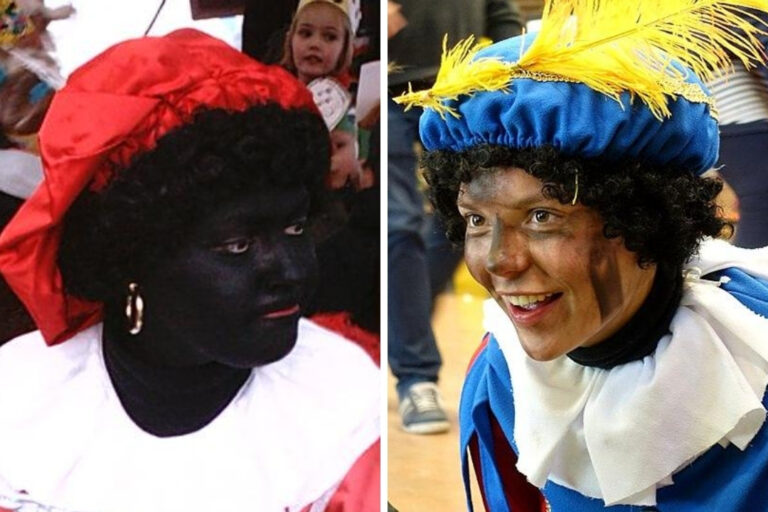
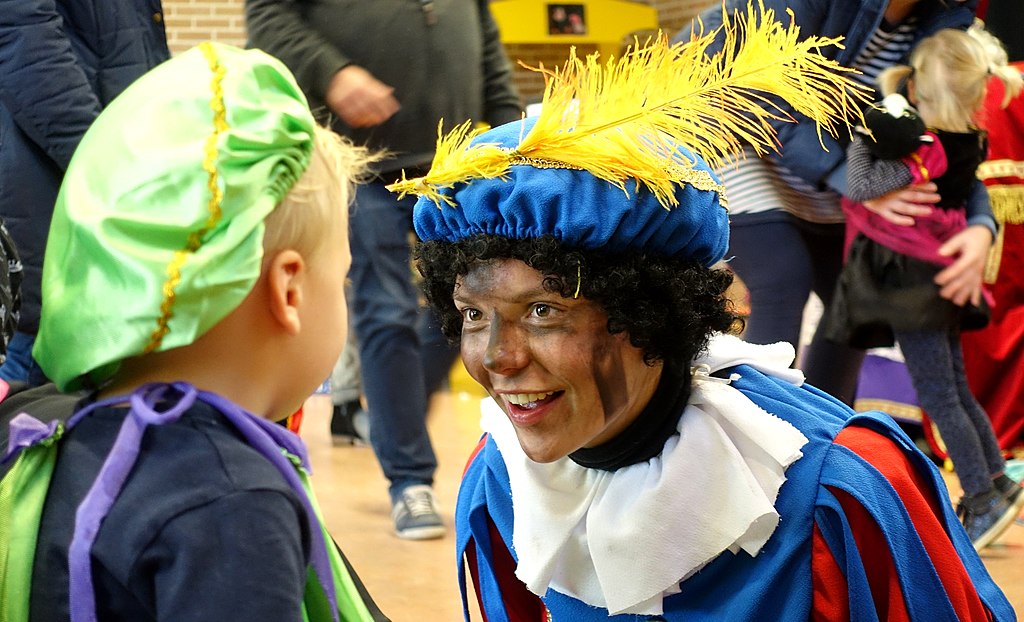
Zwarte Piet, the cheerful children’s character who accompanies Sinterklaas on a present-giving journey has come under fire in recent years. Normally depicted in blackface, with large gold hoops in the ears, wide red lips, and curly black hair, some Dutch are realising Piet may not be the most politically correct character — particularly given the Dutch history of slavery.
On the other hand, for many Dutch, Zwarte Piet doesn’t represent bonds and chains. Instead, he is an important, whimsical figure from their childhood. They hold tight to memories of catching pepernoten and candy from various Zwarte Piets during Sinterklaas parades. Of course, there was always the threat for bad children that Zwarte Piet would put them in a sack and take them back to Spain.
Of course, in the era Black Lives Matter, blackface doesn’t really fly today — in fact, it’s downright frowned upon. And slowly, Dutch people are starting to realise that their beloved childhood character is actually a representation of the institutionalized racism that’s still present in the Netherlands today — Dutch Prime Minister Mark Rutte recently came to the same conclusion, and even Kim Kardashian has weighed in on the debate (although we’re still not sure why.)
What images of Zwarte Piet are no longer allowed?
If you were planning on posting a picture or video of Zwarte Piet in the traditional blackface, or with stereotypical features, we’ve got bad news for you — you can’t. Any images with these features can be reported and subsequently removed from the platforms.
Facebook, who owns Instagram, are very clear about their decision. Any images where “plain black face paint or make-up has been used to darken the colour of the face, along with other stereotyping features such as a wig with curls or large lips’ will be prohibited,” the company states.
What images of Zwarte Piet can be posted?
Technically no images of Zwarte Piet can be posted — but, images of Piets that are dirty from climbing up and down chimneys are allowed. There are two names for these Piets, and kind of adorable reasons for their varying levels of soot.
This is a Piet at the beginning of his education of learning to help Sinterklaas. You can identify a Soot Piet by the streaks of soot on his face.
Chimney Piet (schoorsteenpiet)
Chimney Piet is far advanced at giving presents to children compared to Soot Piet. He has climbed up and down so many chimneys that he now appears grey in appearance. Take note: not black, but grey, from the soot of the chimneys.
Are there exceptions for posting Zwarte Piet images?
Simply put, yes. Images of the blackface Zwarte Piet that are part of a news article are allowed. Or, if there is a neutral or opposing discussion about Zwarte Piet on Facebook, you may also see an image of Zwarte Piet.
However, discussions in favour of the character are not allowed to have images — there is no exception in this case. “That would be a loophole,” Facebook says.
How will the images be removed?
We already have enough worries about data mining on social media — but luckily, no robots will be involved in the removal of Zwarte Piet images. There’s a simple reason for this: writing an algorithm would be complicated and would risk picking up images of black people instead of Zwarte Piet. That would be a PR disaster.
Instead, the company will rely on users to report an image. The report then goes to a human moderator, who will check for exceptions and make a decision about whether the image should be deleted. Anyone who consistently breaks the rules risks the deletion of their account on Facebook or Instagram.
When does the ban begin?
The ban is still a few weeks away from being implemented, despite being announced by Facebook earlier this week. First, the company must train its thousands of moderators on the new rules.
In the meantime, if you report a photo or video of Zwarte Piet to Facebook and Instagram it simply won’t work. Some users did try this after the announcement but were informed that the images were not against the rules.
What was the Dutch reaction to the ban?
Technically, Zwarte Piet is not banned in the Netherlands (although several municipalities have) so why is it not allowed on Facebook? This is the main argument of some of the opponents to Facebook’s new rule, claiming that it limits their right to free speech.
Those against
“I really see this as censorship. An American company that indicates what is or is not possible. It feels very authoritarian, something that is imposed, an infringement of the freedom of expression,” chairman of the Sint & Pietengilde, Marc Giling, told NOS.
Giling is frustrated that Facebook, an American company, has failed to take into account the historical and cultural significance. “It is a tradition of thousands of years, not only in the Netherlands but throughout Europe,” he says. “A masquerade, independent of colour, in different guises with different meaning. If you do not make a distinction between this in your guideline, it shows a lack of empathy and knowledge.”
Those in favour
However, other Dutch people support Facebook’s action on the polarising topic. “This is very positive, very encouraging,” says Jerry Afriyie, leader of the Kick Out Zwarte Piet action group. He believes Zwarte Piet is just blackface. “It cannot be that we continue to do this under the guise of tradition. People do not feel safe on a platform that they can unwittingly be confronted with.”
“It was about time,” added someone on Facebook. “Freedom of speech as enshrined in our constitution has nothing to do with being able to post or not post something on a social network run by a company.”
What do you think of the new rule change on Facebook and Instagram? Should it be taken further throughout the Netherlands? Tell us in the comments below!
After a record breaking seven day streak of tropical weather, the Netherlands is once again cooling down with heavy thunderstorms set to break the heat in some areas. Code orange for extreme heat ends but the National Heat Plan remains in effect.
The blasting heatwave that for some came as a terror and for others as the summer they’d been waiting for, is finally over. RTL Nieuws reports an official new Dutch record of seven consecutive days with temperatures above 30 degrees, and it sure was a roaster.
But as of today, temperatures will dip back down into the 20 degree range with thunderstorms to sweep the country. So enjoy the relief of some fresh winds, and maybe even grab some popcorn for that dramatic performance only thunder can deliver.
Today’s maximum will be between 24 and 27 degrees around the country, with an average minimum temperature of 20 degrees. By next week, maximum temperatures should be generally within the lower 20s.
The RIVM National Heat Plan will still be in place for the coming days as a precautionary measure. These include general tips on staying hydrated, wearing cool clothing and staying out of direct sunlight when possible.
What to do in a thunderstorm
Depending on the strength of the thunderstorm, winds could cause branches to snap from trees, and objects and people being struck by lightning can be a danger. Buienradar gives some basic tips on staying safe during a thunderstorm:
Stay inside as much as possible. When at home, avoid taking a shower during a thunderstorm as this is a hazard for getting hit by lightning indirectly.
When caught outside during a storm, try to find a vehicle or building to shelter in, but never use a tree for shelter as these are often hit by lighting and can offer you no protection. If there’s no shelter anywhere near you, make yourself as small as possible to reduce your chance of being struck.
Are you looking forward to cooler temperatures? Do you enjoy the drama of thunderstorms? Let us know in the comments below.
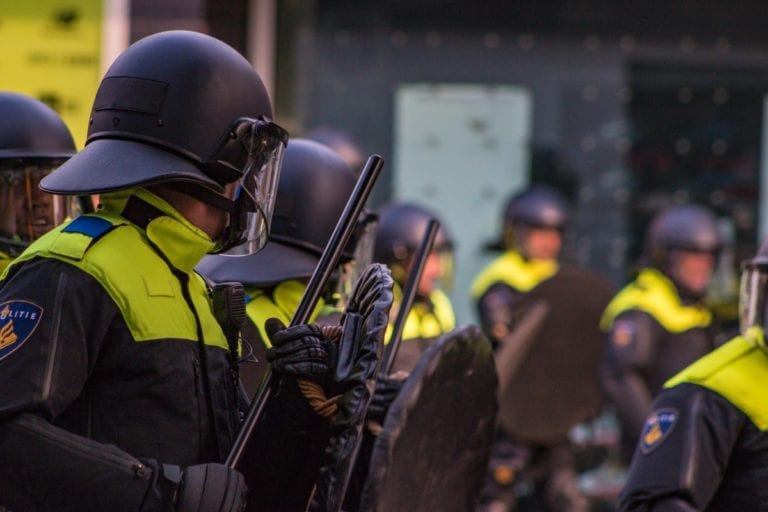
Four young people have been arrested in the Schilderswijk neighbourhood in The Hague after a night of unrest.
Between 100 and 150 young people were on the streets last night. The unrest began on Wednesday around 8:00 PM, and continued well into Thursday morning. The mobile unit of the police had to be called, and the police conducted two riot charges around 10:30 PM. Roads in the area were closed. The cause of the unrest is still unknown.
The police reported that the youths on the street committed vandalism, started fires, turned on fire hydrants and threw fireworks, stones and eggs. When the police arrived on the scene they were pelted with stones and generally harassed. The police also encountered resistance when they were clearing the street to make way for the fire brigade.
Several officers reported having ringing ears after loud fireworks were set off close to them. Furthermore, several police vehicles were damaged, as well as some cars in the area, one of which was completely destroyed.
Three of the four people arrested are held on suspicion of open assault and assembly. The fourth was arrested for vandalism.
Tensions were high in Wednesday’s all-day coronavirus debate. A roll-call vote was requested but not enough MPs were present to be able to move forward with it. Opposition parties say the coalition MPs ran away en masse. The bill for better conditions for healthcare workers was once again rejected.
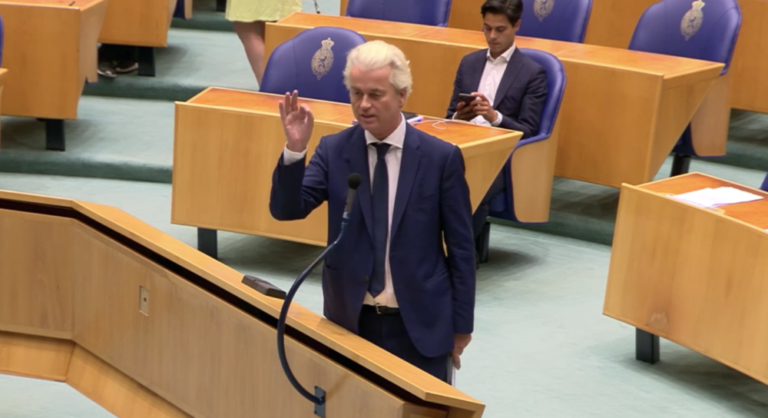
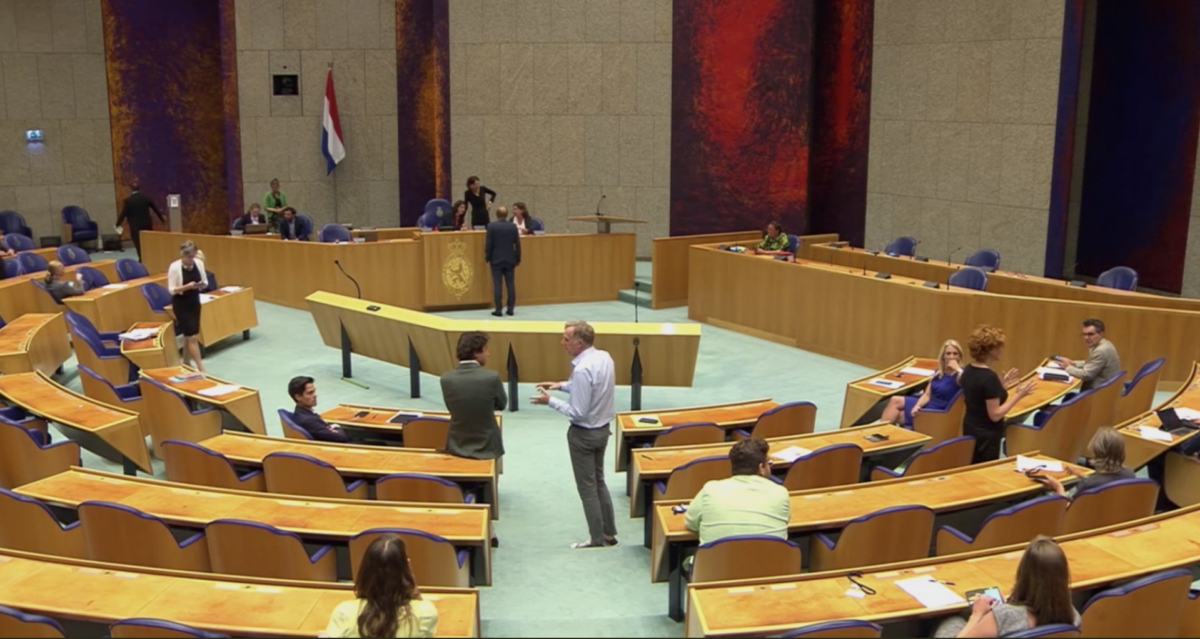
After votes were tied for each party, PVV leader Geert Wilders requested a roll-call vote for his proposal on better pay for health care workers. The vote was cancelled, as there were only 62 MPs still present in the building. A quorum of 76 is required.
Image: Screenshot/Tweede Kamer Debat Gemist
Turbulence in the courtroom
Wilders and the other leaders of opposition parties reacted angrily when President Arib made the announcement that the vote would not be held. Geert criticised the opposition party saying, “The coalition has run away en masse, which is a shame.”
Groenlinks leader Klaver calls their leaving “downright undemocratic.” PvdA leader Asscher says it was “unheard of and disrespectful.”
Parliament member Van Meenen said on Twitter that it wasn’t a question of “running away.” The House determined that a roll-call vote would need more time.
Before the recess, a motion for better healthcare pay was rejected after three votes. The proposal seeks better working conditions and pay for healthcare workers, who have been adversely affected by the working conditions presented by the coronavirus pandemic.
Chairman of the Dutch Association for Intensive Care, Diederik Gommers says, “Don’t expect us to be heroic if we can’t talk about this,” in an Op1 interview.
Five men have been arrested in connection with the death of Bas van Wijk. Van Wijk was shot dead last Saturday at De Oeverlanden park near Amsterdam.
Two of the men, aged 26 and 20, were arrested in Zandvoort. The other three, aged 20, 19 and 18, were all arrested in other locations around Amsterdam. The police have not yet released any information about why these five men were suspected, nor whether they have made any progress in determining which of the five committed the murder. Police spokesperson Marijke Stor said that “very hard police work eventually led to these five suspects.”
Van Wijk’s death has sparked commotion on social media, but it is not yet known why he was shot. Eyewitnesses report that he attempted to stop a thief stealing one of his friends’ watches, but the police say that this hasn’t been confirmed yet. “It is not yet 100% clear what happened in the park. That is why we do not rule out other scenarios,” Stor said in her statement to the press.
Next Friday, there will be a silent march around Amsterdam to commemorate Van Wijk’s death. The Van Wijk family says that anyone who wants to join the march is welcome, and they emphasise that it has no political character. On Sunday, a demonstration is planned in Amsterdam as well.
The Netherlands has come 11th in the world in a ranking of the best countries to bring up children. The research, by Asher Fergusson, considered six factors to make this ranking.
The six factors are actually six different indices: Safety, Happiness, Cost, Health, Education and Time. These six indices can then be broken down into thirty individual factors: for example, Time is broken down into: average hours worked per year, number of weeks of paid maternity and paternity leave, and the number of days of paid sick leave and vacation.
The research focused on 35 OECD countries. Unsurprisingly, all the Scandinavian countries ranked high, with Iceland narrowly beating Norway out of the top spot. The Netherlands is all the way down at number 11, with Belgium coming in a few spots above at number 9 (the biggest outrage any Dutchie can face).
In terms of the individual factors, the Netherlands came second in the Education Index, and fifth in terms of Safety. Overall, the country gets a B+ grade according to the Raising a Family index.
If you’re ready to jump ship and head to a better spot than the Netherlands, here are the top 15 countries for raising a family:
Iceland
Norway
Sweden
Finland
Luxembourg
Denmark
Germany
Austria
Belgium
Czech Republic
Netherlands
Portugal
France
Australia
Slovenia
What’s your experience of raising children in the Netherlands? What’s the worst part? Let us know in the comments below.
Despite red flags being raised at beaches along the coast of the Netherlands, bathers are still entering the sea. The rescue brigade took action 2435 times last week, in the second busiest week ever, a rescue brigade spokesperson said. Of these rescues, 188 were due to life-threatening situations.
Emergency services had to take action dozens of times over the past weekend. Sunday was a record-breaking day for rescues, with 562 reports. The same day, four bathers drowned off beaches in the North Sea.
Recent offshore winds and strong currents have created a dangerous environment for swimmers, causing the rescue brigade to hoist the red flag. This means swimming is banned in the sea.
Warnings ignored
Apparently these warnings are being ignored. Director of Rescue Brigade Netherlands, Koen Breedfield says, “We have raised the red flag and warned people with all our might. We really spend a lot of time on that, but I see that that is not enough. We need to do more work on that. The message that you should look at the flags and the coastguard before you step into the sea has not sufficiently penetrated to civilians,” reports NU.
The flags indicating safety conditions in the water are usually hung at the lifeguard post or beach entrance. The rescue brigade director wants to add more, with flags posted every 500 or 1000 meters from the beach.
Large numbers of beachgoers add an extra challenge to rescue brigade’s work, making it difficult to manoeuvre through the crowds. With so many people, the rescue brigade cannot guarantee everyone’s safety.
Breedfield is optimistic that people will get the picture after last weekend’s chaos. “I hope that after all the reports people have a better understanding of the dangers of the sea.” His message to beachgoers: “be aware we only have two hands.”
There will be a mandatory quarantine for people who seem to be possibly infected with coronavirus based on a source and contact investigation, the Minister for Health, Hugo de Jonge, has announced to parliament.
This rule will apply to people who may not have (yet) tested positive for coronavirus, but who have had close contact with someone who is confirmed to have the virus. This new rule has arisen because people are not cooperating with source and contact investigations by the GGD.
At the moment, people who have had close contact with a coronavirus patient are only urgently requested (but not required) to quarantine. Currently, the quarantine period is 14 days, but based on feedback from RIVM Director Jaap van Dissel, that could potentially be shortened soon to 10 days.
The tightening of quarantine rules will hopefully help the Netherlands avoid a second wave, Minister de Jonge says to NOS. “In recent weeks we have heard from the GGDs that people are not cooperating properly with the source and contact investigation. This is our shoring-up strategy to prevent us from having a second wave.”
This rule will come into effect halfway through next week. The regional security councils are pleased with the move. “We asked for it ourselves. We support this,” says Chairman Hubert Bruls of the Security Council. Enforcing the quarantine will fall to the regional security councils, and is already permitted under the Public Health Act.
Quarantine for travellers from code-orange zones and mandatory cooperation with GGD still in the works
Minister de Jonge also hopes to make quarantine mandatory for travellers returning from a code-orange travel zone. However, this particular mandatory quarantine would require a legislative amendment, so we probably won’t see this happening next week.
De Jonge also wants to make it punishable to not cooperate with the GGD’s source and contact investigations. “Cooperation could be enforced by imposing an order subject to penalty. This would not be an alternative to the quarantine measure, but an additional tool to improve cooperation in both source and contact investigation and quarantine.” The punishment for not complying still needs to be worked out by the Public Prosecution Service.
There will be a debate in the House of Representatives today on the government’s response to coronavirus. One potential critique will be the question of whether the security councils and police officers really have enough resources to actually enforce a mandatory quarantine.