Home Blog Page 618

Anti-racist protests in the Netherlands: how you can attend as safely as possible

0

Following the protest on the Dam yesterday in Amsterdam, there will be more anti-racism protests in The Hague and Rotterdam today and tomorrow.

The protest in The Hague will take place this evening at 6pm on Malieveld. You can find the Facebook event here. The protest is kept short, only one hour, to minimise the chance of spreading the virus. There will be markers for the 1.5m distance rule, which protestors should stick to.

The organisers encourage anyone with symptoms to stay home, and everyone should bring a face mask.

The protest in Rotterdam may only be able to accommodate 80 people, following the mayor’s decision not to let more than 80 people gather on the Schouwburgplein. Other options are being discussed.

Tips on protesting safely

Now, not everyone may feel comfortable going to a protest, and tomorrow we’ll post an article about what you can do without protesting physically. But if you do want to go to a protest in the Netherlands in these times, then here are some tips that might be helpful.

First of all, observe the coronavirus rules as much as possible. Keep 1.5m from other people. You should also wear a face mask and carry hand sanitiser, or wear gloves. Try to come to the protests by car or bike or on foot, and not by public transport. Follow the directions of the volunteers who are there to guide you.

Some general protest tips include: wear comfortable clothing that you can move easily in, and especially wear comfortable shoes. If the weather is changeable, layers are a good option. Bring snacks and water. Make sure your phone is fully charged.

Will you be going to a protest over the coming days? Let us know in the comments below.

Feature Image: Gosse Bouma/Supplied. Gosse also shoots nice pics of Amsterdam and the Netherlands, be sure to check out his profile on Instagram. 

Coronavirus update: 102 new cases, and how you can get tested

0

The latest figures on coronavirus in the Netherlands today have been released by the RIVM.

102 people have tested positive for coronavirus today, the day after the Netherlands opened up testing to anyone with symptoms. We will probably see a spike in this number over the coming days as more people get tested.

5 people sadly passed away from coronavirus today, bringing the total number of deaths to 5967. The number of hospitalisations today was also low, with 6 people admitted to hospital.

Here’s the number you can call to get tested for coronavirus

As we all know, 1 June was a big day for the Netherlands: terraces, cafes and restaurants could reopen. From 1 June, even more importantly, anyone with symptoms of coronavirus can be tested. You can call this number to get a test: 0800-1202. It’s open between 08:00 and 20:00. (It has apparently been pretty busy yesterday and today, so be ready for a bit of a wait).

Why doesn’t the Netherlands report how many people have recovered from coronavirus?

Dutch figures can look particularly overwhelming: we’re well on the way to breaching 40,000 cases. But when it comes to recoveries? Nada. Is it because the Netherlands is a black hole where everybody who catches coronavirus lives with it forever? Definitely not. But while figures are released daily on the number of positive tests, hospitalizations, and deaths, information on recovery rates is silent. Why?

NS says they don’t want to fine travellers for not wearing a mask

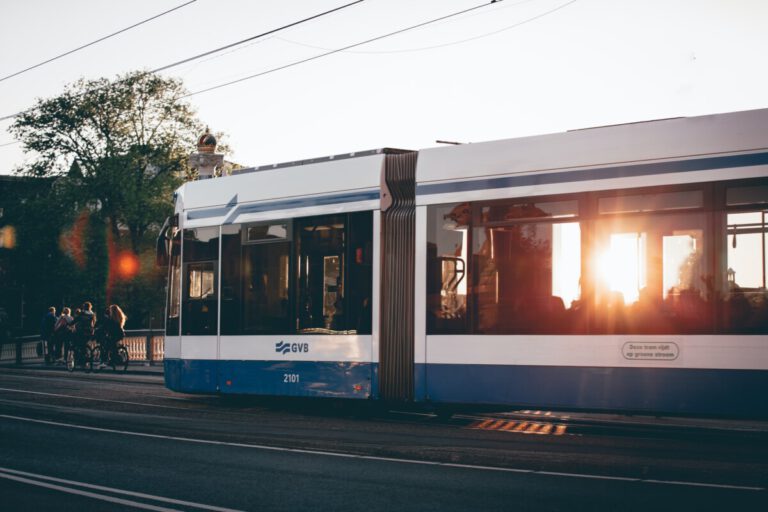
The start of this week brought with it some major relaxations of the coronavirus measures. Part of the easing involved public transport resuming its normal scheduling. However, a new rule is that passengers must use face masks, or else risk receiving a fine. The NS has nevertheless stated that giving out fines on trains is not the starting point. 

You can follow DutchReview on Facebook for more updates on coronavirus in the Netherlands. 

Feature Image: DutchReview/Canva.

Why doesn’t the Netherlands report how many people have recovered from coronavirus?

Dutch figures can look particularly overwhelming: we’re well on the way to breaching 40,000 cases. But when it comes to recoveries? Nada. 

Is it because the Netherlands is a black hole where everybody who catches coronavirus lives with it forever? Definitely not. But while figures are released daily on the number of positive tests, hospitalizations, and deaths, information on recovery rates is silent. Why?

Other countries aren’t shy about publishing these figures. In Australia, out of over 7000 cases, more than 6,600 have recovered. In the United States, there are a staggering 1.85 million infections, but more than 400,000 Americans have successfully bid the virus farewell. The reporting of these numbers offer the public a more accurate understanding of the current situation in their country.

The numberless Netherlands

But for the Netherlands, the ‘number of recovered persons’ is a blank box. According to the RIVM’s Harald Wychgel, it’s because the Dutch healthcare system is not set up to record recoveries. While COVID-19 cases must be reported by local health authorities, they don’t need to report when someone has beaten the virus.

“You don’t call your doctor if you have been given medication and you feel better later,” says Wychgel told RTL Nieuws. People are considered cured if they haven’t had any complaints in 24-hours. 

Wychgel also questions whether the numbers would be of use to the general public. Considering the Netherlands took a relaxed approach to testing, and only opened widespread testing from June 1, it’s suspected that Dutch infection rates were far higher. Then, reporting the number of healed patients would always be incomplete, just like the daily reporting of infections.

Would you like to know how much of the Netherlands has recovered from coronavirus? Tell us in the comments below!

Feature Image: Brittany Colette/Unsplash

Six months: Dutch scientists say coronavirus treatment could be released this year

The world is racing to find an effective coronavirus vaccine and treatment — but Dutch scientists say that we could have an available treatment within six months.

Frank Grosveld, a professor of cell biology at Erasmus University, said the impact of the drug could be enormous. He and several other scientists were among the first to discover antibodies against coronavirus in March.

“You can use it as a medicine if you are already infected and as a preventative for high-risk groups,” he told NPO Radio1.

What is the treatment, and when will it arrive?

After the discovery just before the Dutch lockdown, scientists had to wait for animal testing. Now, Grosveld says the amount of progress made means “the drug will be there in five, six months.”

READ MORE: Coronavirus in the Netherlands: all you need to know (updated daily)

“This antibody responds to SARS1, it also works for the current coronavirus, which is also known as SARS2. If there is a SARS3, it is likely to respond well to it,” he explained. Grosveld made the discovery of the antibodies with fellow scientists Berend Jan Bos (Utrecht University) and Bart Haagmans.

An American pharmacy company will develop the drug for release. But, the identification of the company is so far a well-kept secret. Grosveld said he received huge subsidies from the cabinet for the research.

Are you hopeful that this cure could be the one? Tell us in the comments below!

Feature Image: DutchReview/Canva

Just wear a mask: NS says they don’t want to fine travellers

0

The start of this week brought with it some major relaxations of the coronavirus measures. 

Part of the easing involved public transport resuming its normal scheduling. However, a new rule is that passengers must use face masks, or else risk receiving a fine. The NS has nevertheless stated that giving out fines on trains is not the starting point, reports NU.

Document drafted explaining to NS employees how to deal with the new measures

All travellers will now need to wear face masks and keep a distance of 1.5 metres from each other. Train conductors and stewards have the power to fine those who do not respect the measures.

However, a spokesperson from the NS stated that “We are and remain a service company. A fine is a means for us, but it is never the goal. Of course, we will address travellers where necessary.”

To raise awareness of the new rules, stickers have been placed in stations reminding travellers of the different measures, such as wearing a mask. The fine for not wearing a face mask is 95 euros.

The NS does also put its trust in the individual responsibility of travellers, stating that “What we are seeing now is that most travellers really do respond to the calls and therefore follow the rules.”

Have you stocked up on face masks for your daily public transport travels? Let us know in the comments!

Feature Image: Natydphoto/Pixabay


Thousands gathered on Dam Square to protest racism and police brutality

2

Yesterday, protests against police brutality and institutional racism took place in Amsterdam on the Dam Square. Several thousand people attended, NOS reports. 

This protest was in solidarity with those that have taken place over the past days in the US, sparked by the murder of George Floyd by the police. He died after a police officer kneeled on his neck for several minutes. Many protests in the US have been met with yet more police brutality.

Solidarity protests have been popping up all over the world, and yesterday’s gathering in Dam Square is the first of at least three anti-racist protests that will be taking place in the Netherlands: there will be another in The Hague today, and one in Rotterdam tomorrow.

Protests in the times of social distancing

Concerns were raised by members of the public and politicians yesterday about the potential impact of having a gathering during the coronavirus crisis. Most protestors did wear masks, and it seems that it was only at the very centre of the protest that people did not keep a distance from one another. No fines were given out.

On Twitter, people have expressed their concerns about the potential for the protest to increase infections again. Coronavirus has had a massive impact on the livelihoods and daily lives of many people around the world, so some frustration with this protest is to be expected.

Much of the criticism is aimed at mayor Femke Halsema

The mayor of Amsterdam, Femke Halsema, joined protestors in the square. In response to comments from CDA, VVD and PVV politicians about the perceived inappropriateness of the protest, she said that people should be responsible for themselves, and that this protest was too important to be banned or otherwise intervened with and that breaking up the protest could have only done by force by the police. Something which is of course very unwelcome these days.

Halsema also stated that the local authorities only expected a couple of hundred and protesters and that they didn’t see the influx of thousands of people happen until late into the day. She has advised protestors to quarantine themselves for two weeks to minimise the public health impact they have.

What are your thoughts on the protest? Let us know in the comments below.

Feature Image: Gosse Bouma/Supplied

Coronavirus update: 185 new cases as Netherlands creeps towards 6,000 deaths

The RIVM has released the latest numbers for Sunday, May 31. Over the weekend, the total Dutch number of confirmed coronavirus infections has climbed to 46,442, with 131 positives tests reported yesterday, and a further 185 today. 

To date, coronavirus in the Netherlands has officially claimed the lives of 5,956 people, with 25 reported over the past 48 hours. In the same time period, 13 people have been admitted to the hospital.

Residents warned to avoid taking the train to the beach

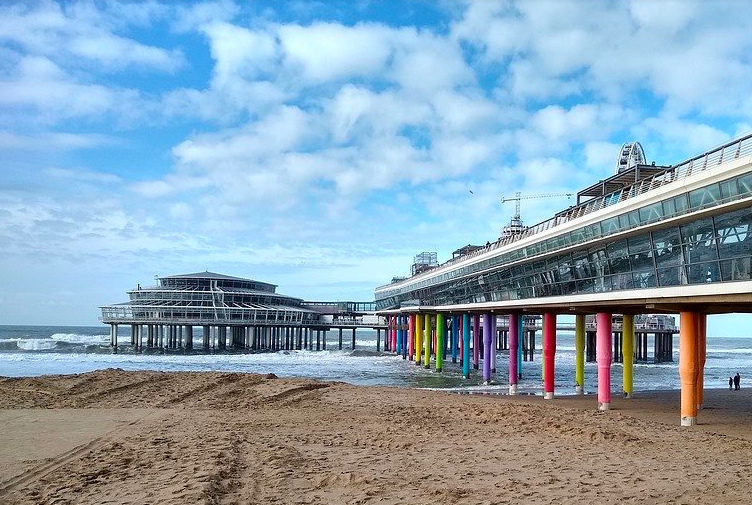
Trains between Amsterdam and Zandvoort have become so busy that people cannot keep their 1.5 metre distance. Dutchies are flocking to the beach in droves, but NS is asking people to find an alternative activity or transport.

The NS warns that the train is only intended for people who have to work or provide informal care, a.k.a necessary travel. Going to the beach is not included in this. From tomorrow, all travellers on the train must wear a mask.

Belgium surprises and angers the Netherlands by reopening borders

The Netherlands has been caught by the surprise decision of Belgium to almost completely reopen their borders. Belgians are now permitted to cross borders for tasks as little as shopping. But the mayors of Zeeland fear crowds of Belgians coming to their province and are deploying additional BOAs and police officers in response.

“We would have liked to prepare for the opening. That the Belgians suddenly do this Pentecost weekend is very clumsy,” says Jan Lonink, mayor of Terneuzen. “We would have liked to prepare better. Moreover, we were not aware of this decision at all.”

The Belgian border was previously only open for family visits, but the latest decision marks a return to the open borders that make up the Schengen zone.

Bells for coronavirus victims ring in Amsterdam

Four minutes of bell ringing at noon today commemorated the victims of coronavirus. The bells rang in Amsterdam churches throughout the city. The churches also ring in support of the next step in the coronavirus restriction period which begins on Monday, and in hope that the numbers can continue to decrease.

“Whatever our belief, we need ‘good spirit'”, the Protestant Church Amsterdam said to KRO-NCRV this week . “The church would like to contribute to that.”

Feature Image: DutchReview/Canva

Coronavirus update: Dutch infection count climbs past 46,000 as country prepares to lift measures

As the Netherlands gears up to further lift coronavirus restrictions from Monday, RIVM released the latest figures for coronavirus in Holland. 

The latest count shows a further 176 people have tested positive for coronavirus. This is expected to dramatically increase from Monday, when everyone with mild symptoms can be tested.

Over the past day, 28 people have sadly been confirmed dead from COVID-19. It brings the total Dutch death toll to 5,931.

Meanwhile, 9 people have been admitted to the hospital.

Here’s what you can and can’t do from Monday in the Netherlands

On Monday, the Netherlands enters the next phase of the gradual lifting of the intelligent lockdown. While the basic measures of social distancing and hand washing still apply, cafes, bars, restaurants, public transport, museums, theatres, cinemas, high schools and some other areas will begin the transition to the ‘new normal.’

Find out what to expect from Monday.

Cases of coronavirus emerge once more in a meat processing plant

Slaughterhouses remain one of the hotspots of coronavirus outbreaks, after 21 employees of a Helmond slaughterhouse tested positive this week.

Van Rooi Meat will close its door until next Tuesday. Testing was conducted after some employees of the Dutch Food and Consumer Product Safety Authority and the Animal Sector Quality Inspection tested positive for coronavirus. The same employees visited Van Rooi meat last week.

Returning to work during coronavirus? Here’s what you need to know

Whether you’ve been enjoying working from home or not, some businesses are beginning to request the joy of their employees presence in the physical office. But is that allowed? What precautions do they need to take? And are you allowed to say no?

In our explainer, we cover all these questions and more. Find out what you need to know about returning to work in the Netherlands during coronavirus.

Follow DutchReview on Facebook for more information about coronavirus in the Netherlands.

Feature Image: DutchReview/Canva

Weather forecast: summer shining brightly on the horizon

The memory of the cold and windy Dutch winter seems to be only a distant bad dream.

This spring has turned out to be the sunniest season in the Netherlands by a long shot. And the summer that is about to come does give any reason to believe the sun will not continue to shine bright like a diamond.

What will the weather be like this coming weekend?

Today has been really sunny, and you can expect it to stay that way, reports Weerplaza. Temperatures range from between 20 to 25 degrees Celsius. The air is quite dry and the wind is gentle, except on the Wadden Islands, where the wind is slightly more present.

Saturday will be just as warm if not even warmer in some areas inland, with some temperatures ranging from 21 degrees to 26 degrees Celsius. The wind will blow from the east and northeast but will be quite moderate.

Sunday, the first day of the Pentecost, will have some high clouds on the horizon which will drop the temperature to around 20 degrees, but nevertheless it remains warm throughout the country.

Monday, the second day of the Pentecost, is also another important date to enjoy the sun because the terraces will reopen! Beyond that, the weather will be less windy and warmer, so expect temperatures from 24 to 27 degrees!

Overall, stay safe and continue to respect the social distancing rules so that we might all have a good weekend. And of course, remember sunscreen!

Excited for the coming weekend? what are you planning on doing? Let us know in the comments!

Feature Image: Skitterphoto/Pixabay

Returning to work during coronavirus? Here’s what you need to know

Slowly but surely, we’ll have to make our way back to the office. But how will this play out in practice? 

During a live broadcast by RTL Nieuws with some expert guests, the most pressing questions about going back to work during these times were answered. The experts are vitality expert Vivian Acquah, company doctor of ArboUnie Jos van Rooyen and Pascal Besselink, labour lawyer of DAS.

Workplace rights: can you refuse to go to the office?

Jos van Rooyen confirms that it is the responsibility of the employer to provide a safe working space. If you were to get sick at the workplace, your employer is legally liable.

In the case that they do not provide you with a safe work environment, Van Rooyen suggests that you talk to your employer first. “If your employer really keeps ignoring the rules, an employee can, in the most extreme case, call in the labour inspectorate.”

If you don’t want to use public transport, what are your options?

The responsibility of having a safe journey to work falls on you, the employee, not on your employer. Van Rooyen, however, says that there are arrangements you can make for transport, as he told RTL Nieuws.

“For example, by setting up organized company transport for staff. In this case, it is best for employees and employers to talk to each other and find a solution together.”

What if you do not want to come to the office at all?

In principle, if your employer has provided a safe working environment, you are obliged to go if they request. Nevertheless, the employer must “demonstrate good employment practices”, says Van Rooyen.

“For example if someone is in a risk group or has a partner at home with health complaints. Talk about this with each other. The employer is not always aware of the medical complaints of his staff. If you do not get along well, you can always ask advice from the company doctor.”

What if a fellow work colleague does not follow rules?

It’s best to have a conversation, either with your colleague and if that does not work, with your manager or employer. Labour lawyer Besselink told RTL Nieuws that “providing feedback is very important. Many companies also take this seriously and also give their staff many visible instructions. You can always go to your supervisor if you cannot resolve it with that colleague. You are entitled to a safe surrounding.”

What about some company drinks with your colleagues?

Obviously, for now, online is the best way to go. Vivian Acquah told RTL Nieuws that nevertheless, it’s important for people that they see each other. “Some people like to work from home, others like to go to the office. But it is important to keep the connectivity between the home workers and the people in the office.” Sometimes there are also alternatives: “have a drink or a meeting outside.”

Jon van Rooyen advises not to go in small spaces with lots of people, as well as to check for good ventilation if you are planning to share a room.

How can you keep the staff healthy?

According to Vivian Acquah, there are some good options for vitality, such as online sports. Another thing he suggests is for the employees to be encouraged to walk together, at a safe distance of course.

Lastly, it’s important to not neglect mental health either. Acquah suggests organizing an online quiz to check on with employees.

How will you approach going back to work? Let us know in the comments!

Feature Image: Free-Photos/Pixabay