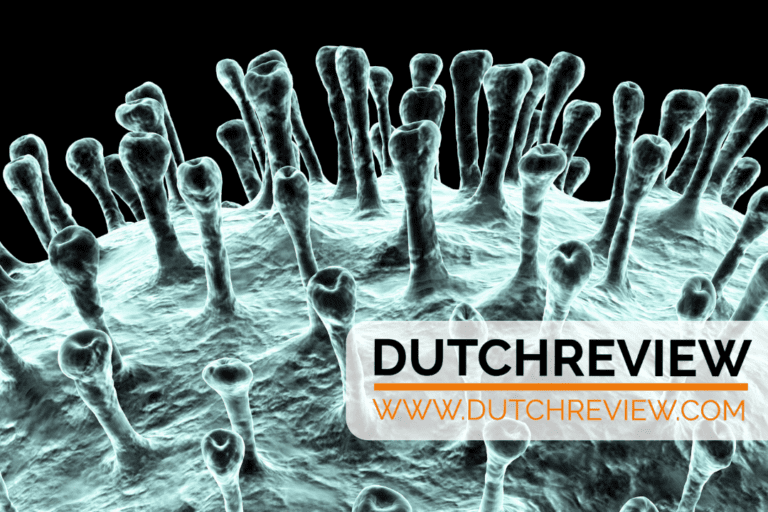
In Amsterdam, the GGD (municipal health services) will be scale-down contact-tracing of coronavirus cases immediately.
This is because there are not enough employees to keep track of all the infections, NOS reports.
Limits of contact tracing in Amsterdam and Rotterdam
Amsterdam and Rotterdam have emerged as the cities with a lot of new cases recently. The limits for contact tracing are being reached there, with employees reporting that they are feeling exhausted from the heavy workload.
The GGD Amsterdam wants to save time by temporarily not calling the contacts of people who tested positive.”In consultation with the RIVM, we have today started an adapted source and contact investigation. This means that we focus on risk groups and risk situations. All positives will, of course, be called, only that a shorter and less extensive conversation will be held.”
Contact tracing is a vital tool in keeping up with the spread of the virus. By checking the contacts of a sick person, the spread of the virus can be limited. Back in March and April, a similar situation occurred when various region’s contact tracing had to be stopped due to the high number of cases.
National contact-tracing efforts also stretched
The GGDs at a national level are also reaching a limit to how many contact investigations they can conduct. There are only enough employees to conduct 750 investigations a day. Yesterday, there were 600 new infections, meaning that the limit could soon be reached soon if cases continue to spike.
According to a spokesperson from the GGD GHOR, the capacity can be increased to 1000 examinations per day. However, those people will need to be recalled from their vacations or have to work late into the evenings.
In the meantime, GGD’s are busy training new people. The training usually lasts three to four weeks. The hope is to increase the current number of 1800 full-time jobs to 2300 total.
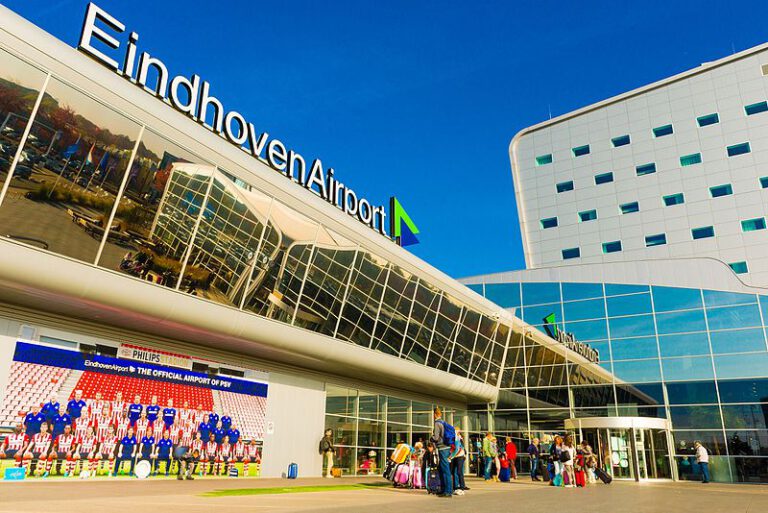
Over 1400 people were left stranded in chaos at Eindhoven Airport this morning after an air traffic controller was too ill to work, with no one available to replace them.
According to a spokesperson from the airport, 16 aeroplanes were unable to fly leaving onboarding passengers stranded — and crowded.
Airport management has attempted to enforce social distancing measures to prevent the spread of coronavirus, but images have emerged of crowded seating areas.
Eerste vertraagde vluchten vertrekken om 13.00 uur van Eindhoven Airport, chaos door ziekmelding https://t.co/aEHxrzaqG3
Passengers from three flights were taken by bus to Maastricht Airport and the Niederrhein Airport in Germany.
No air traffic controllers
Air traffic began to resume at 1:00 PM today. Passengers with flights in the afternoon will only be allowed into the airport according to the first flights scheduled. Other people, arriving early, will need to wait outside in the sun.
Rond 13.00 uur gaan de eerste vertraagde vluchten van vanmorgen vertrekken. Houd de site van #EindhovenAirport in de gaten
This is not the first time at Eindhoven Airport that flights are delayed due to missing air traffic controllers. In December last year, several flights were delayed because personnel were sick and unable to come to the job.
Over €140,000 has been crowdfunded for Marcin Kolczynski, the Polish man who lost his life after saving three children from drowning.
The 37-year-old Polish labour migrant plunged into the water at Julianadorp last Sunday. The children survived, but Kolczynski’s body washed up on the shore an hour later. He was resuscitated and taken to the hospital but died shortly afterwards.
Kolczynski had called his wife shortly before his death to ask how she was, Martina Janasz from The Hague told NOS. “He said to her, ‘Monika wait a minute, I see children in the water and I think there is something with that.’ Then he hung up.”
The breadwinner
The Pole was working in the Netherlands to provide for Monika and their three children back in Poland. “He was a seasonal worker, so I thought: his family is probably not well off,” explains Martina Janasz.
As a woman of Polish descent, Janasz felt particularly touched by Kolczynski’s sacrifice. She wanted to start a crowdfunding campaign, but needed to track down his wife, Monika, first. “That was not easy, because I had little information about the family. Ultimately, we managed to find his wife Monika via Facebook. Then we called,” Janasz told RTL Nieuws.
“Monika was very emotional. It was very painful to hear. After the conversation, I paused and started crying. It’s such a sad story.”
As Janasz expected, the family doesn’t have much money. “They can hardly afford their house. Marcin was really the breadwinner in the family.” Janasz set about starting up a crowdfunding campaign with the hope of raising €1000.
Generous donations
Already, by Friday 9:00 am, more than €140,000 has been raised for the family through GoFundMe. Almost 7000 people have donated money so far. Janasz is stunned. “I didn’t want to bet too much and had no idea that so much would come in. Now there is enough for the funeral and to transport the body to Poland.”
Dozens of Eindhoven police spent last night searching for a man with an axe.
The man used the weapon to threaten people near an Aldi supermarket around 9 PM on Thursday, before driving away in a car. At least 15 police cars were dispatched in search of the man, as well as police dogs and a helicopter.
Wij kregen vanavond een melding van een verdachte situatie in #Eindhoven waarbij een persoon met bijl iemand bedreigde. Na een achtervolging heeft deze persoon zijn auto in de op de #Oirschotsedijk verlaten en is een maisveld ingevlucht. Met oa speurhonden zijn we aan het zoeken pic.twitter.com/Fyy40Qfwjw
Police searched for the car by license plate, and when it was spotted later in the evening a chase ensued. It ended on the Oirschotsedijk, where the man fled on foot into a cornfield.
In spite of search efforts, police say around midnight the suspect managed to get away. They will continue to search.
This past month has been the world’s third-hottest July recorded ever, according to Copernicus, EU’s climate change service.
Only in 2016 and 2019 was July hotter worldwide, reports NU. The database that Copernicus has on temperature measurements extends to the middle of the 19th Century. According to Freja Vamborg from Copernicus, “It has become warmer worldwide and in all months.”
As the Netherlands braces itself for up to eight days of extreme heat, areas across the globe have broken heat records. Bahrain also recorded its hottest July ever since 1992. Up north in the Arctic, the smallest amount of sea ice for July was recorded since 1979.
The Netherlands is not the only country that is bracing itself for a heatwave. France and Belgium will also experience one. In the Italian Alps, some roads will be closed as glacial ice may melt from the intense heat.
Part of the reason for the global heat this year can be attributed to the wildfires in Siberia from June of this year, as permafrost had thawed, releasing trapped carbon into the atmosphere.
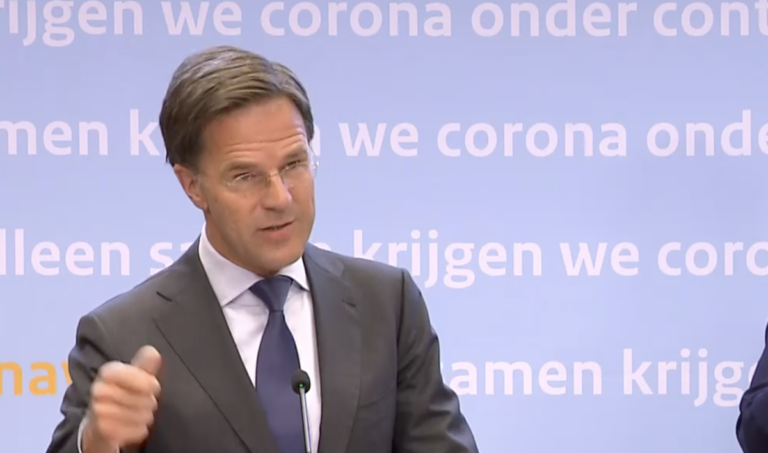
Prime Minister Mark Rutte and Minister of Health Hugo de Jonge have returned for another press conference after Dutch coronavirus infections began to soar in recent weeks.
In the past day, 601 people have tested positive. “The numbers are not lying and danger is looming” said Rutte.
“We risk losing what we’ve won” Rutte explained that he wants to avoid a second lockdown, and doesn’t believe it will be necessary. However, he also cautioned that it’s not something that happens on its own — and that the numbers speak for themselves ultimately.
A warning to all
“More people are going out with symptoms, and fewer people are getting tested. A large number of infections occur at home, at birthday parties or at dinners with friends. Coronavirus comes as an uninvited guest.”
“Don’t think you can meet with nieces, neighbours, friends, because then the virus strikes.”
Rutte called out young people especially for not following the rules. “If too many don’t follow the rules, we will soon all be inside again. Then, your parents and grandparents will be at risk. It’s not done yet, it’s not a joke, and it’s very stupid to act like it is. You’re not only responsible for yourself, but also for others.”
“Please, let’s avoid a second lockdown. We can only do it together.”
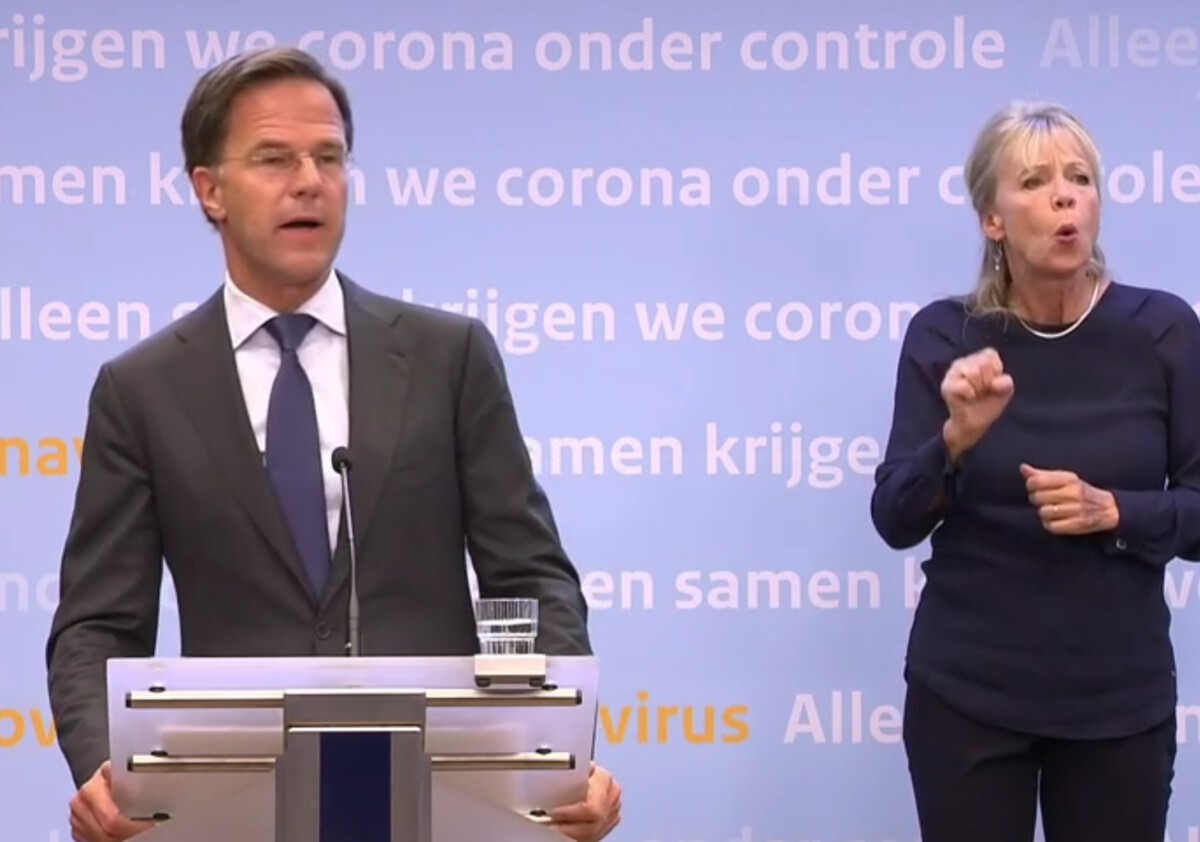
Rutte was joined by Minister Hugo de Jonge and two interpreters at tonights press conference (but not Irma Sluis) Image: still press conference
The latest measures and eye on Amsterdam
Local governments are now experimenting with mask rules, like in Amsterdam and Rotterdam. Some municipalities are closing popular parking places, like at beaches, and trialling one-way roads in busy shopping streets. Amsterdam especially was singled out by Rutte as a city where people shouldn’t gather in crowded areas.
Meanwhile, locals mayors will now have the power to reduce the number of people at professional sport matches, after reports of crowds and singing during pre-season practices. They will also have the option to close bars. Any bars or restaurants that don’t adhere to the guidelines can be closed altogether. If the numbers are necessary, the government may also implement these restrictions at a national level.
Rutte also warned bars, restaurants, and the people attending them to continue following the rules. “You must make a reservation ahead or at the door, they must ask the questions, and you have to leave your name and contact details to make contact tracing easier.” Any bars or restaurants that don’t adhere to the guidelines can be closed altogether. And, if a museum or amusement park has an infection, it must close for 14 days.
Testing at Schiphol, an app, and fast-tracked results
Health Minister Hugo de Jonge also said the rise in infections was worrying. “It’s worrying. Most infections are occurring in groups. There are now 259 clusters of at least three infections that can be linked to each other.” But, he assured us that we have made more progress since the outbreak began.
Visitors and returning residents to the Netherlands from areas marked as orange are urged to get tested when they land at Schiphol. Meanwhile, from August 17 they will continue testing the Dutch coronavirus tracing app which, if successful, will then have a national rollout.
From August 12, coronavirus test results will be fast-tracked — people will be able to go online to find out if they tested positive.
Recent coronavirus infections numbers in the Netherlands
While one additional person was reported hospitalized today, the number of people in the ICU decreased by one, to 29. In terms of deaths, three people passed yesterday, and one on Tuesday. No deaths have been reported in the past 24-hours.
The percentage of tests that confirm coronavirus has also experienced a jump, with 2.3% of tests now returning with a positive result. At the lowest point in early July, on 0.6% of tests performed were positive.
This week’s temperatures will truly bring summer to Dutch shores, although it may be a bit too hot to handle.
The country is at risk of what is called a “super heatwave”, a term developed in 2018 to better describe periods of extreme heat. A super heatwave occurs when five consecutive days or more have temperatures exceeding over 30 degrees, or when three out of the five days have temperatures exceeding 35 degrees, reports De Telegraaf.
Urban heat island
According to Weerplaza, temperatures anticipated for Saturday go up to 36 degrees. However, they noted that these measurements come from the countryside, not from the cities.
What this means is that even if the weather stations show temperatures of 36 degrees, the real-feel temperature can be higher in cities. This is due to a phenomenon called “urban heat island”. Since cities have many materials that capture heat, most notably concrete, they become much hotter than their rural counterparts. The heat accumulates, making cities quite uncomfortable and dangerous to be in during a super heatwave. This heat continues into the night but slowly dissipates.
We’re all excited for some good weather in the Netherlands, but given the current circumstances some precautions need to be taken. First, if you plan to be outside for a longer time, apply sunscreen every hour. In case you feel nauseous, try to find a cool area to stay in and avoid sitting in the sun altogether. Pay attention to at-risk groups, such as the elderly.
Beyond anything, if you are hitting a beach, make sure you respect social distancing measures as well. Speaking of beaches, you should consider these 20 beaches in the Netherlands if you are out looking for a tan.
After the devastating explosion in Lebanon’s capital city of Beirut on Tuesday, a Dutch search and rescue team USAR has arrived to help extract survivors from the rubble.
The death toll currently stands at 135 people, with 5,000 wounded. But many remain missing and for those still breathing beneath the rubble, time is running out.
USAR landed in Lebanon at 01:15 Dutch time this morning in response to Lebanon’s call for international assistance, reports USAR.NL. The 64 team members were tested for coronavirus immediately. A spokesperson confirmed that the team was also tested before departure in Eindhoven, says NOS.
The team
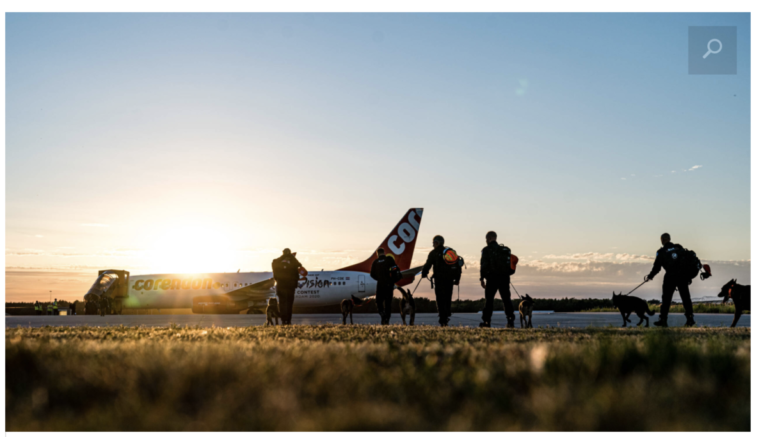
Supported by eight rescue dogs, the USAR team consists of volunteers from Dutch fire brigades, police, engineers and healthcare workers. Their first task will be to search the destroyed area before making contact with French rescue workers and Lebanese authorities.
@USARNL onderweg nu met oa 8 speurhonden van de politie. De honden worden ingezet om op moeilijk bereikbare plekken, ingestort gebouw( Beton) heeft vaak manshoge ruimte waar mensen vast kunnen zitten, te bereiken. De hond kan daar via via wel komen en ruiken of er mensen zijn. pic.twitter.com/Sl9Axks2xH
USAR is classified by the United Nations as a Heavy Team used for complex rescue operations. They have previously been deployed for aiding in disasters such as the earthquake in Nepal five years ago.
Supplies followed the team on a transport aircraft from Eindhoven, including concrete saws, microphones, cameras, water and food. They are fully equipped to free victims trapped under concrete, steel and wood, and to provide them with necessary medical care and relief upon rescue.
The Dutch cabinet wants to cancel introduction weeks for universities, given the risk of the coronavirus spreading.
An official decision will be made and announced at the press conference later today, reports RTL Nieuws. Insiders told RTL Nieuws yesterday that it is very unlikely that student introduction weeks will be held, as the government considers students a risk group when it comes to the spread of the coronavirus.
The National Student Union has expressed disappointment with the cabinet’s plan. Given that the first semester will be digital, the union considers it very important for students to be introduced to their school programmes and cities in person. “Especially if your education is going to be mainly digital, as a freshman you should have the opportunity to get to know your fellow students, your city and your college or university.”
Conference tonight
At 7 PM today, Prime Minister Mark Rutte and the Minister of Health Hugo de Jonge will hold a press conference discussing new coronavirus measures, given the recent spike in cases.
Among other things, testing is expected to be facilitated for travellers arriving at Schiphol from high-risk areas. This way people coming from countries on the orange list will be able to spend less time in quarantine if they test negative.
The cabinet additionally hopes to lower the threshold for quarantine. This can only be done on a voluntary basis, as legally the options to oblige it are limited.
The cabinet plans to support mayors of cities and chairmen of security regions with certain measures. For example in the catering industry, by introducing a registration requirement for visitors, or by having these establishments close earlier in the day.
It’s been an eventful day for the coronavirus situation in the Netherlands.
A fake RIVM letter has started circulating, telling recipients that children are getting vaccinated at school without parental consent. The RIVM has confirmed that they did not make the letter, and that legal vaccination does require consent from a parent or guardian.
Er gaat een nepbrief rond waarin staat dat kinderen op school zonder toestemming van ouders gevaccineerd worden. Dit is niet waar en de brief is niet van het RIVM.#Vaccinatie is een medische handeling waarvoor toestemming van de ouder (en het kind zelf bij 12+) noodzakelijk is. pic.twitter.com/5Di9pQmxas
Meanwhile, in Rotterdam, a rule has come into force making face masks obligatory in some busy areas of the city. A group of 50 people were so against this new policy, they met without a permit to protest the policy in the city centre, reports RTL Nieuws. Agents told the group to wear a mask or leave the centre. According to a spokesperson from the police, “A few people remain, but most people are led away by the officers.” The police are currently noting down the people who have decided to stay to protest.
The development come as RIVM report 426 new cases in the past 24-hours, with five new hospital admissions and three new deaths. Of the new cases, 89 come from Rotterdam, 63 from Amsterdam and 24 from The Hague.