Home Blog Page 651

First fines given to Dutchies for disrespecting social distancing rules

0

In a situation of crisis, common sense is not always that common. Especially when it comes to young people, who are notoriously hard to convince to follow the rules.

After the government implemented new measures with regards to social distancing this week after last weekend people flocked to parks and beaches, we’re also seeing the first fines given for breaking the new measures.

Urge for football stronger than the urge of safety

We get it. The weather is fine and dandy after a lacklustre winter, and we all wish we could have our normal day to day activities. Nevertheless, we are all making sacrifices so that we might get out of this situation sooner rather than later.

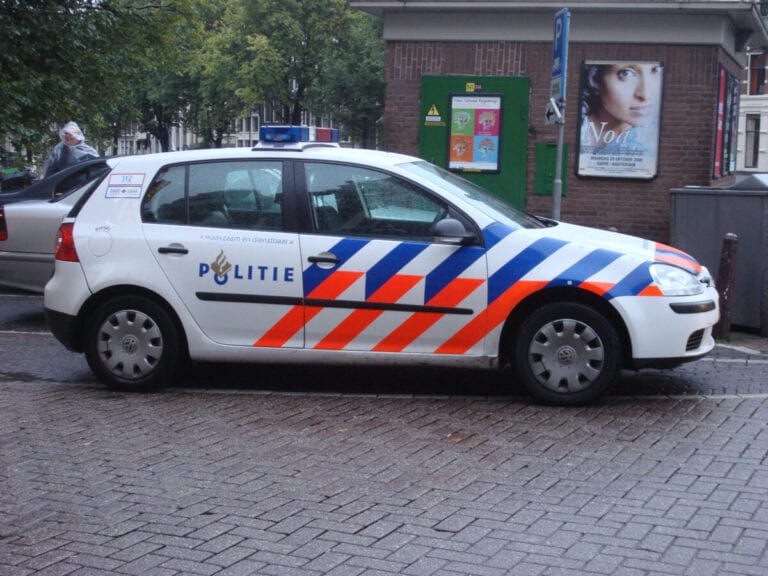
Well, some people seem to have not yet understood the gravity of the situation, reports Omroepgelderland. Five people in Duiven and Westervoort were caught playing football close to each other in an area of a park. If the common-sense response is to virtually invite your buddies for a round of FIFA, it seems like for these people they still need a bit to process the situation. Hopefully, a fine of 104 euros will bring them to their senses.

Gezond verstand.De afgelopen weken is onze wereld aan het veranderen, zowel in Nederland als daarbuiten.Over heel de…

Geplaatst door Politie Zevenaar op Zondag 22 maart 2020

The police will continue to monitor the situation around public spaces in order to make sure that everyone complies to the new regulations. And in all honesty and IMHO, that is the better approach, rather than going under a complete lockdown.

Follow DutchReview on Facebook for more information about coronavirus in the Netherlands.

Feature Image: Bo Brunsveld/Supplied 

Coronavirus update: 852 new cases and 80 people have died

As the Netherlands battles to contain the coronavirus epidemic sweeping the world, the country’s numbers continue to rise. In the past 24 hours, 852 patients have tested positive for the highly infectious disease. Meanwhile, 80 people have died. 

This is according to the latest results from the National Institute for Public Health and the Environment (RIVM). It brings the Dutch totals to 6412 infections and 356 deaths.

The Netherlands continues to operate a strict recommendation of self-isolation to reduce the spread and #FlattenTheCurve. (and obviously, #washyourhands)

What developments occurred today?

We did get some good news today. According to Jaap van Dissel, director of the Center for Infectious Disease Control (CIB) of RIVM, the growth of coronavirus infections in the Netherlands is declining.

What does this mean? Instead of patients infecting two or more other people, now they are infecting one or less. That means we could see a drop in daily infection rates soon.

READ MORE: RIVM: growth of coronavirus infections in the Netherlands is declining

Meanwhile, we got confirmation that the Dutch patient zero has recovered to a point where he can go back to work — and we’re counting that as a win.

If you have children staying at home with you while you’re trying to get some work done, the news is less good: school closures may remain in place for six more weeks — or more. It all depends on a study RIVM is undertaking to find out how much children and youth contribute to infection rates.

What measures are currently in place?

The current measures implemented in the Netherlands include:

  • Ensuring a minimum distance 1.5 metres away from other people where possible, including supermarkets.
  • Encouraging people to work from home
  • Schools to remain closed, but free childcare provided at schools and childcare centres for children of key workers, such as healthcare professionals, emergency services, and public transport.
  • Teachers to arrange distance learning for other students who are at home.
  • People with a runny nose, cough, sore throat or fever told to self-quarantine. If symptoms worsen to include a fever above 38 degrees and difficulty breathing they can call a doctor for advice.
  • Those in vulnerable groups, such as the elderly and immune-compromised people, to avoid gatherings and public transport.
  • Restaurants closed until at least Monday, April 6. However, delivery and takeaway service are still available. (This is a great way to support local businesses.)
  • Coffee shops are open for takeaway only.
  • Sports clubs, gyms, saunas, sex clubs and coffee shops will also remain closed to Monday April 6 (inclusive).
  • All gatherings of more than 100 people have been cancelled. Public places like museums, concert venues, theatres, sports clubs and sports events have been closed or cancelled.

Check out our guide to the coronavirus in the Netherlands

If you want to look at a centralized source of information about the current outbreak in the Netherlands, you can check out our guide, which is updated daily. We also have an informational video on the topic.

Follow DutchReview on Facebook for more information about coronavirus in the Netherlands.

Feature Image: DutchReview/Canva

The streets of Amsterdam: now and in 1922

It’s safe to say that we are living in truly historic times.  The coronavirus has brought Europe to a standstill and with it, we also gain a new perspective over the places we live in.

Anyone going down the streets of Amsterdam nowadays (which they probably shouldn’t) will find the normally bustling city almost completely empty. Landmarks like the main squares of the city devoid of human activity, all the shops are closed, life has come to a standstill.

An empty Amsterdam

Some might find this desolate or even post-apocalyptic. Or perhaps we are finally getting a perspective on a city without millions of drunk tourists peeing in canals, you pick.


Either way, there’s no denying that there is something eerily beautiful about the empty city. Without all the crowds down on the streets, it’s also a great opportunity to quietly appreciate the unique architecture of the city. Besides, it’s also a moment of appreciating a little gift from nature. Spring is here! So sit by your balconies, breathe in the flower-scented streets and listen to the birds singing in the trees. This too shall pass.

Some historic perspective

While now the streets are empty, it’s a great time to peek back in history to some busier times. 98 years ago, to be exact. A remastered video from 1922 in Amsterdam was recently released, all in colour and presenting an intimate look at Dutch life back in the day.

There’s so much to unpack in this video. First of all, seeing the streets filled with Dutchies instead of tourists is certainly a sight to see. The fashion is also striking. These were the days before people wore leggings in public (not that there is anything wrong with that). The men dressed elegantly and with head caps straight out of Peaky Blinders. It’s interesting to note the traditional dresses the women were wearing, now only reserved for special events.

It’s fascinating to see people’s curiosity with the video camera. No one bats an eye if you are filming something today on the streets. Back then, however, cameras were huge and clumsy devices and so many of the people in this video stop and stare at this curious machine. The fact that some of them choose to be playful and quirky in front of the camera makes it an even more heartwarming and intimate portrait of the Dutch people in a bygone area.

The streets are filled with commerce and activity, people are hanging out in what seems like Dutch social circles of death (as we affectionately like to call them) and yes, the bikes are also here! Sure, this was in the day before endless bike paths, but it didn’t take long for the Dutch to realize that their country is fit for bike-riding.

We’ll let you discover the rest of the hidden gems in this video. Spot anyone with wooden clogs?

What do you prefer, the empty and quiet Amsterdam of today or the bustling and chaotic Amsterdam of almost a century ago? Let us know in the comments!

Feature Image: Library of Congress/picryl

RIVM: growth of coronavirus infections in the Netherlands is declining

All praise and say hallelujah! We don’t have a real religious standpoint here, but lordy be we will praise the stroopwafel god for this: the coronavirus outbreak may be starting to be contained. 

At least, according to Jaap van Dissel, director of the Center for Infectious Disease Control (CIB) of RIVM — and that sounds like a pretty fancy title so we’re kind of inclined to trust him.

In a briefing with the House of Representatives this morning Van Dissel said that the measures taken to manage the outbreak have caused the outbreak to start to level off. He even said we’re seeing a “positive trend” — you hear that? Positive!

READ MORE: Good news: the first Dutch coronavirus patient has fully recovered and returned to work

Alright, alright, we won’t get our hopes too high, because he also said that this is an estimate. According to the current figures, the number of patients who infects another person is one, or less. Before, most patients transmitted the virus to at least two other people. Ladies and gentlemen, I give you: progress.

The outbreak has probably also levelled “because not all hospitalized patients are tested”. But, according to Van Dissel, even taking this into account it’s looking good. “The exponential growth of the outbreak is therefore likely to halt.” That will give hospitals a fighting chance at taking care of very sick patients.

What now?

Let’s reiterate: this doesn’t mean that we’ll necessarily see fewer infections anytime soon. It just means those who are infected are likely infecting fewer people. It could take a while before this is reflected in daily statistics.

READ MORE: Coronavirus in the Netherlands: all you need to know (updated daily)

So does that mean you should rip open your front door and go party in a nightclub? Nah mate. Let’s be clear: there is a positive trend only because of the measures in place. We all have to keep doing our part to stay at home and #FlattenTheCurve. Then, we’ll (hopefully) keep seeing progress.

Are you happy to hear the news that staying at home isn’t necessarily in vain? Tell us in the comments below! Don’t forget to follow DutchReview on Facebook for all the information (good and bad) about coronavirus in the Netherlands.

Missing the tulip fields of Keukenhof? Now you can visit from your living room

Coronavirus has been a slap in the face of huge numbers of industries, but Keukenhof rose to the occasion (get it? I’m sorry). If you’re hiding in self-isolation and dreaming of those stretching, colourful tulip fields, we have good news: you can still see them in all their glory. 

Alright, maybe not all their glory, but at least through the magic of the internet. Turns out Keukenhof has a budding romance with video, releasing incredible footage and virtual tours of their blooms for the world to see.

The Keukenhof has been hard at work growing an amazing array of flowers for the public. While every year millions of locals and tourists flock to see the blooms, this year the parking lot will be empty. The effects of coronavirus are being felt right before Keukenhof was preparing to fling open their gates for spring 2020.

Some videos have already been released online, and Keukenhof is at hard work preparing more. Look, if we can’t see the real thing this is surely a nice runner-up prize 😉

Nice one, Keukenhof — we’re rooting for you!

Will you be exploring Keukenhof via the magical internet? Tell us in the comments below!

Feature Image: skeeze/Pixabay

Airbnb will be banned in the Hague

The Hague has decided to ban Airbnb from the city — and landlords who are found renting an apartment will get a hefty fine, reports NOS.

Currently, in order to lease a place in the city you need a license from the municipality. However, licences to lease holiday rentals will not be given out anymore.

Airbnb has caused all sorts of controversies across the world. From too many tourists flocking to otherwise quiet areas, or preserved historical neighbourhoods being disturbed by too many visitors, Airbnb has certainly become unpopular in some areas.

READ MORE: Airbnb’d in the Netherlands? You too could get a hefty refund after lawsuit finds Airbnb broke Dutch law

Precedent in Amsterdam

The groundwork for the ban in the Hague emerged due to a situation in Amsterdam in January. The Council of State fined a woman because she was renting out a place without declaring it.

Thankfully for her, she did not need to pay the fine, as the highest Dutch administrative court intervened on her behalf. They decided that the argument used by the municipality was not legally valid.

READ MORE: Amsterdam Hits Illegal Airbnb Hosts with €387,000 in Fines

Afterwards, the Council of State declared that fines cannot be given for not reporting, especially because the municipality is not allowed to deviate from obligatory licensing.

With that in mind, the municipality of the Hague decided that rental permits needed to be granted in order to sublet an apartment through Airbnb. As the municipality will not give those rental permits, no Airbnbs can be made. Problem solved, right? Well, not exactly.

Inconsistent policy

The policy towards Airbnbs in the Netherlands, no matter their location, is inconsistent.  Municipalities will give out fines to people who rent out their homes for more than 30 days. Otherwise, if you want to rent out your place because you are going on vacation for a week or a couple of days, that should be fine.

Practically and legally, none of the municipalities actually have a system in place to give out holiday rental permits. This means that technically speaking, all Airbnbs are essentially illegal in the Netherlands. More time needs to pass for the different courts of law to determine exactly what system to put into place and to determine if Airbnbs are allowed and in what context.

Should Airbnbs still be allowed? Let us know in the comments!

Feature Image: Image: InstagramFOTOGRAFIN/Pixabay

Pens down: Dutch schools likely to extend closures

Dutch schools planning to reopen after April 6 may find themselves taking a far longer recess. Education Minister Slob has confirmed it’s likely schools will remain closed for up to another six weeks — or longer. 

The National Institute for Public Health and the Environment (RIVM) are undertaking a study into the role of children and young people in spreading coronavirus.

Minister Slob would like to wait for the results before ringing the school bell. However, the study only began yesterday and could take up to six weeks.

“If it is later than April 6, the measures as they have been taken will be extended and the schools will be closed for a longer time,” Slob told Op1. “Only when the investigation is finished will a decision be made whether the schools will open again.”

Six weeks would put the school reopening date back to May at the earliest.

What is the research looking at?

It is currently still being studied how infectious children are when it comes to coronavirus. The Dutch study will compile the data of 100 families infected with coronavirus throughout the Netherlands.

Do you have a child home from school? Would you like to see schools reopen sooner, or later? Tell us your thoughts in the comments below!

Feature Image: Wokandapix/Pixabay

Good news: the first Dutch coronavirus patient has fully recovered and returned to work

Today, we’re not starting the day by scratching yet another “Days in Isolation” tally line on our wall, no sir! We’re way too preoccupied with the good news that the first Dutch coronavirus patient has fully recovered — to the point where he can return to work. 

That’s right,  it’s the news we all need: there is light at the end of the tunnel. While the patient was confirmed to have recovered around two weeks ago, he’s now been given the all-clear to get back to normal life (well, the new normal anyway.)

The first recovered patient was also unsurprisingly the first patient who tested positive in the Netherlands. He is a 56-year-old from Loon op Zand, near Tilburg and tested positive on February 27 after visiting Italy’s Lombardy region.

READ MORE: Coronavirus in the Netherlands: all you need to know (updated daily)

Tilburg mayor Theo Weterings shared the news on talk show Jinek last night. We’re all breathing a sigh of relief because boy, it’s been a long month.

The man’s wife and 23-year-old daughter also tested positive for the virus — and we’re happy to report that they’re also currently symptom-free.

Of course, it’s not all good news. At last count yesterday we still had 5560 patients infected with coronavirus in the Netherlands. Sadly, Dutch fatalities from the virus are at least 213.

READ MORE: Coronavirus cases in Netherlands jump to 5560, another 63 patients dead

But, it’s still early in the morning DutchReviewers! We’ve undoubtedly got some more not-so-good news coming our way — but let’s hope there’s more good news in the pipeline too. For now, hold this close to your hearts, take a deep breath, and stay inside.

Are you happy to hear about the first Dutch recovery? Tell us how you’re feeling in the comments below!

Follow DutchReview on Facebook for more information about coronavirus in the Netherlands.

Feature Image: DutchReview/Canva

Contactless payments increased to 50 euros to reduce contact with pin machine

0

The risk of infection with coronavirus does not come only from people, but also through contact with infected surfaces — like credit card machines. 

In order to curb the risk of infection, the Dutch Payments Association has implemented a system change that now allows customers to pay up to 50 euros using contactless technology, reports RTL Nieuws.

How does the new system work?

Customers do not need to do anything to implement these changes, as they have occurred automatically in around 380,000 payment terminals. Some of them have already been updated in places like supermarkets, with more places to follow by the end of the week.

This is great news because given how many people are touching pin machines the odds for infection is quite high, both for the customer paying and the employee handling the machine.

There’s also been an increase in the cumulative limit. The cumulative limit refers to how many times you can pay contactless before a PIN is requested. It is now 100 euros, from the previous limit of 50 euros.

Once the crisis is over, the limit will go down again. A spokesperson from the Dutch Payments Association has confirmed that customers cannot manually bring down the sum.

Options for those who do not want a higher limit

The spokesperson has said that there are options for those who are not satisfied with these new measures. For example, they can deactivate contactless completely and have to enter their PIN every time. Why anyone would want to wish exposure is a different story altogether.

Pictured above: social distancing done right, except that they should be working from home

Alternatively, you can also set a daily limit to your debit card payments, or you can ask for a card from ABN AMRO which does not have contactless payment on it. Or better yet, you can just use contactless and avoid the risk of infection!

Follow DutchReview on Facebook for more information about coronavirus in the Netherlands.

Feature Image: energepic.com/Pexels

Coronavirus cases in Netherlands jump to 5560, another 63 patients dead

0

The RIVM (Netherlands National Institute for Public Health and the Environment) has published the new number of coronavirus cases, now reaching 5560 cases. This is an increase of 811 patients since the last count.

Because people have been disrespecting governmental policies on social distancing, new measures have been implemented this week.

Fewer customers allowed in supermarkets

There will be a cap on the number of customers allowed to enter supermarkets. This is in order to ensure a minimum distance of 1.5 meters between customers.

Fewer shopping baskets will be available, and once the maximum number of customers is reached, those who want to enter will need to wait so that another customer leaves. These policies are implemented to protect both the employees and the customers.

Remembrance Day and Liberation Day are cancelled

May brings with it two events of great historical significance to the Netherlands. May 4, Remembrance Day, is an opportunity to remember all Dutch people who have lost their lives in conflicts around the world. Meanwhile, May 5, Liberation Day, is dedicated to the liberation of the Netherlands during WW2 from the Nazis.

Unfortunately, both of these events have been cancelled, given the new policy banning all events until the first of June. This is not to say that the Dutch will not find a way to celebrate these events, be it from their windows and balconies.

School exams cancelled

For better or for worse, the centralized school exams for this year’s school year have been cancelled. The exams were due to start on the 7th of May. Instead, now pupils will receive their final marks based on their previous marks in school exams as not to delay their process of continuing their education. This new policy was announced by the Minister of Education this morning, reports NOS.

Check out our guide to the coronavirus in the Netherlands

If you want to look at a centralized source of information about the current outbreak in the Netherlands, you can check out our guide, which is updated daily. We also have an informational video on the topic.

Follow DutchReview on Facebook for more information about coronavirus in the Netherlands.

Feature Image: DutchReview/Canva