Home Blog Page 652

Supermarkets will implement stronger measures to protect employees and customers

0

Anyone who has been in an Albert Heijn this past couple of days might have noticed that not everyone is respecting the rules of social distancing properly.

Not only that but the fact that people were crowding in parks and beaches is what lead to the new governmental measures to be taken. Supermarkets will also implement further changes in order to comply with the new measures.

Stricter measures in supermarkets

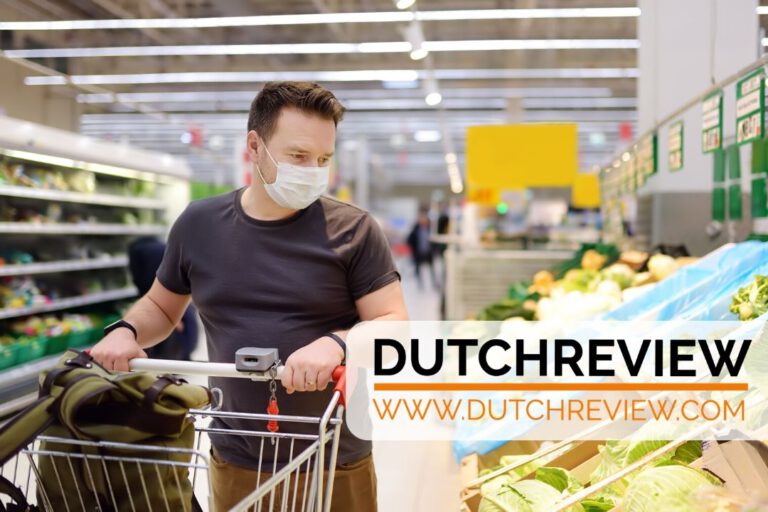
For starters, there is now a limit on the number of customers allowed in supermarkets, reports NOS. The new rule is that supermarkets need to have at most one customer per 10 square meters, thus ensuring that they can safely respect the rule of distancing of 1.5 metres.

The number of shopping baskets has been limited. In larger supermarkets, it is mandatory to now use a shopping cart, while in smaller ones without carts, shopping baskets must be used.

If the maximum number of customers has been reached and you can no longer enter the supermarket, do not worry. Once a customer leaves, you can then go in. Expect queues to form, however, at certain supermarkets due to this.

The following measures were taken to prevent the potential of contracting the virus for both the employees of supermarkets and the customers.

Follow DutchReview on Facebook for more information about coronavirus in the Netherlands.

Feature Image: pxfuel


Northern Netherlands decided to test health workers en masse for coronavirus — here’s how they did it

0

Despite the call by the WHO for “testing, testing, testing!” as a way of controlling the spread of coronavirus, the Netherlands has, due to shortages in tests, “given up” on checking the actual numbers of infected people, and opted to only test the most critical cases.

In fact, RIVM itself states that those numbers are not telling much anymore and that we should look at the numbers of patients admitted to the ICU as an indication of the transmission of coronavirus across the country. (BTW, if you want to know how many tests are performed and what percentage of those is positive per day, here’s the link: https://www.rivm.nl/coronavirus/covid-19/informatie-voor-professionals/virologische-dagstaten)

Northern provinces

Meanwhile, the northern provinces, Drenthe, Groningen, Friesland and Overijssel, are adopting a different policy: massive testing of healthcare workers and their relatives/housemates, in an effort to contain the spread of the virus within the hospitals, and extensive contact research of those who are positive (up until two days before they were symptomatic).

Dr. Alex Friedrich, head of the Medical Microbiology department at the UMC Groningen, explains that this is possible because the virus hasn’t yet spread so much in the north of the Netherlands: therefore the strategy of containment, as opposed to that of mitigation, still makes sense.

Other than the fact that the northern provinces are geographically distant from the corona epicenter in Brabant, they have also been (so far) partially spared from the epidemic because their holiday weeks came earlier, when northern Italy (a popular destination for Dutch holiday-goers) wasn’t yet so affected by the virus.

Testing, testing, testing

We have so far been told that the reason why test, test, test is not possible in the Netherlands is that the amount of tests is limited. How is this possible though, when a relatively poorer country such as Italy can conduct thousands of tests per day?

“When the virus had not yet arrived, it was said: there will soon be two test labs, at RIVM and Erasmus MC, and there will be twelve upscaling labs,” Dr. Friedrich explains. “In hindsight that was a bad choice because it resulted in an extremely strict policy for the eligibility for testing, and the test capacity was quickly exhausted.”

Comparing that to Italy and Germany, while there was no quick action at the beginning, testing is now a priority. “Now, in Italy, they can handle 100,000 and in Germany 160,000 tests per week. Adjusted per population, that would mean 33,000 tests per week for the Netherlands,” says Dr. Friedrich.

“In the north, we quickly said during a group conference: it doesn’t matter what RIVM says, we are going to prepare all labs. That’s five in total. If we look at the numbers, we are now testing three to four times more than the rest of the Netherlands, with fewer inhabitants.”

RIVM coronavirus
This map shows the number of patients as reported by the Municipal Public Health Services (GGDs) and municipalities as of 23 March 2020.
Subsequent corrections in the system may lead to changes.
The place of residence of 184 patients is still unknown. Image: RIVM

So how does he feel about the message that testing capacity is limited — and how can it be overcome?

“I never understood why this is always maintained. We don’t have a capacity problem. It is possible that a certain lab has a shortage of certain materials, but that is business as usual, you can solve that. This is not the case, as long as you are not dependent on a commercial party. We don’t need such a party either, because you can do these tests in almost any ordinary lab.”

A similar point is raised by Bert Niesters: “There are enough tests; you just need to have enough testing material, such as the plastic consumables. We have learned from previous epidemics that it is necessary to have a stock of them; that is why over the years we have accumulated a large stock of those plastics, and can afford to test more easily. Many laboratories depend on a single manufacturer. That is why testing is not possible in parts of the country. ”

The Netherlands has the highest number of medical microbiologists per capita in Europe, according to Dr. Friedrich, so it seems counter-intuitive that this does not give the Netherlands an advantage.

Dispute with Minister De Jonge

Such a ‘rogue’ approach from the northern provinces hasn’t been received enthusiastically by the health minister: his response was that every province should coordinate and follow the same guidelines.

“I understand what De Jonge wants to say” says Friedrich. “But we handle the tests very efficiently and do not use more than is determined by triage decision. We are however increasing capacity in case the next few weeks are needed”, he says. With the ‘triage decision’, Friedrich refers to the GGD’s assessment of whether a healthcare worker is eligible for a test – they must have had complaints for at least 48 hours.

Do you think the rest of the Netherlands should follow the northern provinces examples? Tell us your thoughts in the comments below!

Feature Image: DutchReview/Canva

During coronavirus, we might just have to turn back to the core values of Dutch society

In times of great collective distress, and when solutions to reduce the spread of coronavirus are easier found through cooperation, it serves us well to remember what are the shared values that bind us.

In Dutch society, according to the Dutch government, four core values serve as a compass for life in the Netherlands: freedom, equality, solidarity and work. We can unpack these guiding principles in many ways, but the exercise today is to see them through the lenses the coronavirus has temporarily lent us.

Freedom

Usually, this value is about the freedom to have any (or no) faith, to speak your mind, to choose any lifestyle, to associate as you will, and the right to self-determination. Nowadays, this value seems to be much more about protecting everyone’s rights to continue enjoying these freedoms, with no coronavirus restraints, in the shortest amount of time possible.

We must remember the limitations to the exercise of our rights and apply them here too. In the same way that you wouldn’t hold nightly dance-offs at home while exercising your right of free association, you shouldn’t accept the risk to act as a coronavirus carrier when avoiding exponential infection is so important. Even if the measure is exceptional, the guiding principle remains the same. Everyone can enjoy their freedom as long as it doesn’t infringe on other’s people’s rights. Is there a more fundamental right than the one to a healthy life?

Equality

Equality is a straightforward value. Every member of society is equal, and discrimination in any form is banned. In times of normalcy, Dutch citizens seem to pride themselves on how well they do here. Why should exceptional times change anything? Do NOT take a page out of Trump’s twitter manual and call it anything else other than coronavirus or COVID-19. High-risk groups have the same right as low-risk groups to a disease-free, full life. In the same way that higher-income citizens pay higher taxes, higher-immunity citizens should contribute more for the care of the vulnerable lower-immunity folks.

Solidarity and work

For the Dutch government, these values come hand in hand. Dutch citizens are encouraged to consider one another, as well as to engage in voluntary work. There is a social security net to catch you if you fall, but they should work together with the support of your community.

Throughout the centuries, the Netherlands became a great country through the power of community. The Guardian published an article including a curious Dutch word: polderen or the poldermodel. It refers to the Dutch habit of working together to get parts of land back from the sea. The writer of the article explains: “since the Middle Ages, everyone on the same polder, regardless of religion, politics, class and local rivalries, has had to cooperate in maintaining the complex but vital system of windmills and dykes that kept their land dry.”

No matter where we came from, we are all here now reaping the benefits of the work of these early swamp dwellers. These strange times the coronavirus has ushered in ask nothing more from us than their adverse conditions asked of them.

It is time to put all personal views and interests aside and contribute to the universal well-being of our community. Don’t hoard toilet paper and medical supplies, check in with your high-risk neighbour, they might need some groceries, take care of your mental health so you can care for loved ones. Let’s add some polderen to our social distancing!

How are you coping with the new measures of the coronavirus outbreak? Tell us your story in the comments below!

First day of social welfare for freelancers saw 10,000 applications in Amsterdam alone

0

The first application systems where freelancers can apply for social assistance are now open across several Dutch municipalities, according to NOS. This group has been hit hard by the recent coronavirus outbreak. 

The Netherlands is home to 1.2 million self-employed persons, some of whom may have lost their income completely as a result of the stringent measures in place. Normally more rigid rules are in place regarding self-employed persons and obtaining benefits from the government, but these have now been relaxed due to the coronavirus outbreak, NOS writes.

Counters open in various municipalities

Last week, the cabinet took measures to help self-employed individuals who had lost income due to the coronavirus crisis. This involved freelancers being able to register for a BBZ (assistance for the self-employed) benefit in various large cities, such as Amsterdam.

As of today, various municipalities have opened up the possibility too. 10,000 applications have already been received, primarily in Amsterdam (8,000) but many in Dordrecht as well (700).

Are you a freelancer (ZZP’er) and would like to apply for social assistance? Check out your local municipality website for information and application. 

First payments to be made in the coming weeks

When payments will be made depends on what the municipality decides — in Dordrecht, transfers will be made either today or tomorrow. In Utrecht, payments for the first batch of applicants will begin tomorrow. Zevenaar will make payments on Friday.

Not all payments will be carried out immediately. Because Amsterdam has received such high numbers, payments will be made only after a couple of weeks following the date of the application.

It should also be noted that applications are not open in every municipality. Eindhoven is one such area. However, it will become clear this week if and when this happens. Additionally, the government will decide how to organise support for Dutch independent entrepreneurs based worldwide later this week.

Are you self-employed? have you been affected by the coronavirus crisis? Let us know in the comments below. 

Feature Image: Polina Zimmermanm/Pexels

All you need to know about testing for coronavirus in the Netherlands

0

Without knowing exactly how many cases of coronavirus are out there, governments are left in the dark as they figure out how to tackle the crisis. The Netherlands has been criticised for their approach to testing: but what exactly is going on? 

Countries around the globe have taken vastly different approaches to the coronavirus pandemic. The World Health Organization (WHO) has urged governments to test as many people as possible in their respective countries, but the Netherlands has limited the testing to vulnerable groups only, reports RTL Nieuws.

We’ve written this article in order to clarify all relevant elements of testing and how it works in the Netherlands.

Who gets the test in the Netherlands?

Currently, testing is reserved only for vulnerable people. The strategy the Netherlands is currently taking is one of mitigation, not containment.

Currently, if someone suffers from a medical issue that could point to coronavirus, they must stay in self-isolation. When they haven’t experienced a symptom for 24 hours they can be released.

There’s one exception to this approach: the northern provinces, which we will discuss later.

Who does RIVM consider vulnerable?

The RIVM considers vulnerable groups as being people in their 70’s and above, as well as people with underlying health conditions that might complicate due to the coronavirus. People in this category may include:

  • people with lung conditions
  • people with heart problems
  • diabetic people
  • people with a reduced immune system
  • HIV patients
  • patients with kidney problems
To properly treat these individuals, doctors must first confirm that they have the virus. This makes them a priority group. Considering the majority of deaths from coronavirus are seniors, this approach is somewhat understandable.

What do you do if you suspect you have coronavirus?

According to the official policy by the RIVM, if you have symptoms such as a runny nose, a sore throat, fever and/or a cough, you should stay at home in self-isolation and avoid contact with any vulnerable group. You need to stay at home for as long as the symptoms persist. If you get better after a period of 24 hours without no symptoms, it is considered that you are cured, and you are free to go outside.

However, if the symptoms persist and get worse, for example, you have a fever over 38 degrees Celsius and you have difficulty breathing, you should call your GP and ask for advice.

In reality, however, it’s not clear how the policy of getting tested for coronavirus works, as you might have symptoms that are worse and still not get tested.

Is the Netherlands respecting WHO guidelines in regards to testing as much as possible?

The World Health Organization recommends that as many tests are conducted as possible, and the Netherlands is conducting up to 2000 tests daily. The National Institute for Public Health and the Environment (RIVM) say that they are complying with WHO’s recommendations. However, they’re limited by capacity.

Testing kits in the Netherlands are very limited, and so is the ability of laboratories and scientists to process results.

Regional differences in testing for coronavirus in the Netherlands

In the northern provinces, there are fewer cases but far more tests being conducted. A lot of tests are conducted on healthcare workers, their relatives, and their housemates, as a way of preventing the spread of viruses within hospitals.

Dr. Alex Friedrich, head of the Medical Microbiology department at the UMC Groningen, says that they are taking this approach because the virus hasn’t spread so much in the north of the Netherlands. Therefore, they are taking a strategy of containment, rather than mitigation.

Minister of Health De Jonge has been less than enthusiastic about the approach of the northern provinces. In his view, all provinces need to have a coordinated response to the crisis, as laid down by the RIVM.

In the meantime, Brabant has been the worst-hit area in the Netherlands. Social distancing was implemented in Brabant before the rest of the country followed, but it remains unclear how efficient the measures have been.

Pharmaceutical company not sharing secret recipe needed for producing coronavirus tests

Roche pharmaceuticals is a large part of the reason there is not yet widespread testing for coronavirus. The company does not have enough test materials to supply Dutch laboratories, but they are also standing in the way of workaround solutions, de Telegraaf reports. 

Vendor lock-in is preventing the production of coronavirus tests

Roche is a market leader in the Netherlands, and has used this privilege to create what is called a vendor lock-in, according to research by Follow the Money. That means that laboratories which use Roche machinery to make medicines or do experiments also have to use Roche materials to do so. Because Roche is experiencing a shortage of the materials necessary for coronavirus tests, Dutch laboratories haven’t been able to allow for the widespread testing that was so effective in halting the spread of coronavirus in other countries like South Korea.

Roche could share the prescription needed for corona tests with Dutch laboratories

You might feel some form of sympathy for Roche if they were just underprepared for the scale of coronavirus: almost everyone was. But the problem is that there is a solution to this shortage, but Roche is refusing to take it presently because of its impact on their profits. Roche could share the prescription for one of the elements of the testing materials, called a lysis buffer, with Dutch laboratories. It would be very easy for the laboratories to make this once they had the prescription, and that could in turn ease the shortage of tests.

How does the Netherlands fare in testing compared to other countries?

The country as of now does not have enough coronavirus testing kits to make large tests over the whole population. Countries like Germany test 200,000 people per week, but it is important to note that the country has a way bigger population than the Netherlands.

Overall, the RIVM has said that it is difficult to compare the situation in the Netherlands with other countries. To determine the current development of the virus in the Netherlands, the RIVM looks at hospital admissions and intensive care admissions. When determining if to add or remove measures, not only these numbers are considered, but also the actions of neighbouring countries.

Follow DutchReview on Facebook for more information about coronavirus in the Netherlands.

Feature Image: DutchReview/Canva

Remembrance Day and Liberation Day, as we know it, cancelled due to coronavirus measures

0

Yesterday, the Dutch government announced the imposition of stricter measures to combat the spread of the coronavirus in the Netherlands, lasting till June 1 (at the least). This means that Remembrance Day and Liberation Day in May will be cancelled, well at least in the form that we know.

Remembrance Day is held on May 4, and is a somber occasion in that it is meant to honour all Dutch casualties that occurred during the time period, in conflicts throughout the world. The following Day, May 5 is Liberation Day– the name speaks for itself. The occasion marks an end of Nazi occupation in the Netherlands.

75 years since the end of the war

This year is an important one: It marks 75 years since the end of the Second World War. Each five years, the day is dubbed a national holiday- meaning schools and businesses are closed in order to recognise and commemorate the role of the Netherlands in the war. The news naturally comes as a disappointment for those who have lived through the 75 years since. But it is this group that is one of the most vulnerable to the virus.


What will take place?

A national committee is in charge of organising events and has said that commemorative events on Remembrance day will still take place in Dam Square – but without an audience, but probably with the King. All Liberation Day events will be cancelled.

Although the exact program is uncertain, what is known is that King Willem-Alexander will give a speech on Remembrance Day, and that special attention will be drawn to the veterans.

One could say though that, now more than ever, remembering the past and sacrifices for our freedom is more important than ever. We’ll find a way to do this from our homes.

New measures in the Netherlands

Following in the footsteps of Germany, the Dutch cabinet announced a new set of regulations which include the cession of all public gatherings – including events with less than 100 people.

Additionally, a distance of 1.5 meters must be kept from others in a group of three or more people (not including family). Ignoring this measure can lead to a fine of up to 400 euros. Children are still allowed to play outside.

As of now the Netherlands has an emergency ordinance under place, according to nu.nl, which allows them to act quickly and more easily. This means that areas such as beaches, parks and campsites can be shut down at any moment.

For now, schools and businesses will be closed till April 6. But seeing how things are going perhaps this time will be elongated. In the meantime college and universities are advised to switch to online classes.

The final straw

The ministers decided upon these measures because the previous ones were not being taken seriously by the public- a mass alert was issued on Sunday to warn people to keep a distance of 1.5 meters and to stay indoors. But many overlooked this advice. The hope is that these new measures will be adhered to in order to mitigate the speed at which the virus is spreading.

How do you normally commemorate May 4 and 5? How shall we remember it in these times? Let us know in the comments.

Feature Image: Onderwijsgek/Wikimedia Commons

All public gatherings until the 1st of June are now forbidden

All meetings and events in the Netherlands are prohibited until 1 June. This also applies to events with less than 100 people. It also applies to shops  and such.

Justice minister Grapperhaus just announced this in a press conference with Prime Minister Rutte and his fellow ministers Van Rijn (Medical Care) and De Jonge (Public Health). The measure will be enforced with fines, Grapperhaus said. Mayors are getting far more power than they have now to shut down public gatherings.

“I realize it will hit hard,” said Grapperhaus. “You are really looking forward to these things. But if we want to check [the virus], we have no choice.”

People ignoring the RIVM-measure was the final straw

Ministers met this afternoon for crisis consultations. Rutte said that it was necessary to double down on the existing measures, because he still sees too many people who do not comply, including keeping the rules 1.5 meters apart. “My mind dwells on the crowded beaches of the past few days,” he said.

King’s Day celebrations, Easter gatherings and 4th and 5th of May celebrations are now effectively cancelled

So King’s Day on the 27th of April, forget about celebrating that like we usually do. Festivals and Easter are also to be celebrated on a small scale. And this is especially sad for the 4th and 5th of May commemoration and celebrations.

There’s an exception for funerals, more details will follow later regarding this exception. You’re still ok to meet in the privacy of your own home Grapperhaus said.

Summary of the press conference

For all of you people who just want the quick version, here is a super concise summary of the new information and regulations we got from the press conference tonight:

  • All events and public gatherings will not be allowed to take place until 1 June. In contract to earlier rules, this is also applicable to events and gatherings with less than 100 people in attendance. People who go ahead with their event will be fined €4000. Oof.
  • At beaches and parks, and other public locations, a hefty fine of €400 will be given to a group of three or more people who are not family members who are less than 1.5 meters apart.
  • People are advised to go to the supermarket alone.
  • If one member of a family has a fever, all members of that family have to observe quarantine, not just the one who is showing symptoms.
  • Hairdressers and nail salons must close.


Social distancing now will change our world in the future: here’s why it’s so important

0

Social distancing is particularly important in order to combat the spread of COVID-19. Today we’re diving into the in’s and out’s of social distancing — what exactly the concept entails and why it’s important. 

The coronavirus has gripped ahold of the entire world, bringing it to a standstill. Different countries have taken various measures, such as working from home as much as possible and the closure of schools and catering establishments, with the aim of “flattening the curve.”

All these measures hope to keep the number of infections as low as possible to prevent overwhelming hospitals and doctors. Another vital way of achieving this is effective social distancing.

Keeping our distances from each other

So what exactly is social distancing?

Social distancing is a term that has been used a lot lately. According to scientists and policymakers, it is one of the most important weapons in the fight against COVID-19.

The most important way to social distance is to stay at home. This makes the coronavirus much less likely to jump from one person to another, simply because fewer people are moving. When you do meet other people, social distancing influences the way you interact. For example, it is recommended to keep a distance of 1.5 meters and avoid hugs, handshakes, or other contacts.

Some people have even resorted to nods, and bows as a way of greeting and acknowledging each other. While bows may not be new for folks in Japan, it can be quite different for us here in the Netherlands. We can either make it the new way of greeting, or we can use it as a temporary measure until we have defeated COVID-19. Either way, I’m bowing a lot these days, and I honestly don’t mind.

Here are a few reasons why it is very important that we all practise social distancing in these difficult times.

Avoiding an exponential rise of affected people and casualties

Since the coronavirus made its way to Europe, scientists and policymakers have made it pretty clear that a person carrying the virus will infect two to three other people, who in turn will infect two to three more. The number of infected people is, therefore, increasing at a rapid pace. The curve representing the number of infected persons over time will, therefore, rise exponentially.

However, there are also people who have the virus and may not even show any symptoms — some will also get better. The graph with the number of infected persons will then start to level off and eventually fall again.

It is important that those who do not show symptoms stay away from high-risk individuals, and the only way to do this is through social distancing. Most young people who get the virus do not show symptoms, so it is very important that they stay away from high-risk individuals. Older folks and people (of any age) who have serious underlying medical conditions may be at higher risk for more serious complications from COVID-19. People who may be at higher risk if infected include:

  • Older adults
  • People who have serious underlying medical conditions like:
    ◦ Heart disease
    ◦ Diabetes
    ◦ Lung disease

Avoid putting our healthcare sector under immense pressure

One of the main reasons why social distancing is very important right now is due to the fact that if the curve is not flattened, our hospitals, especially the intensive care services with the limited number of respirators, will not be able to cope with the enormous influx of infected persons. Social distancing allows us to slow the spread of the virus, allowing patients to recover before other patients need the same equipment.

Without some drastic measures from policymakers, the maximum capacity of our hospitals will be exceeded. Doctors will then no longer be able to help every patient and will have to choose who they will try to keep alive. I pray to all that we hold dear, that it never comes to that. And if we don’t want such a scenario to become our reality, we need to take social distancing seriously.

So are you going to practise social distancing or not?

While it may not be so easy, we can all work together to reduce the risk of contamination by social distancing: this means taking all measures to reduce contact between people, such as keeping more than a meter away from each other, avoiding all non-essential social contacts, etc.

The less contact, the less chance that you will infect someone. The aim is, therefore, to not overwhelm our hospitals and overwork our doctors. Hopefully, if fewer people get sick in a very short time, our hospitals will be able to cope better with the influx of patients, and there will be a higher chance of saving more infected people. Hence the expressions “flatten the curve” and “social distancing.”

Standing on our balconies to applaud the healthcare professionals who are working really hard right now is wonderful, but do you know what would really help them and make their jobs easier? Social distancing.

If we do not adhere to the rules set by the RIVM and the Prime Minister, there is a chance the country might go into total lockdown and I’m sure a lot of us would not like that. So please, let us work together, take this seriously and save lives. It is not easy, but the lives of our friends and loved ones depend on it.

How are you making social distancing easy for yourself? Share it in the comment section below!

Feature Image: Markus Spiske/Pexels

Coronavirus update: official number of cases reaches 4749

0

The RIVM (Netherlands National Institute for Public Health and the Environment) has published the new numbers of coronavirus cases in the Netherlands. The new count is 4749, an increase of 545 patients since the last case.

As can be read at the RIVM website:

“Since yesterday, 545 people have tested positive for the novel coronavirus (COVID-19). This brings the total number of confirmed cases in the Netherlands to 4749. Among them are 1230 people who are or have been admitted to the hospital.

Since the last update, 34 patients have died from COVID-19. The number of COVID-19 fatalities in the Netherlands is now 213. The age of the deceased is between 55 and 97 years; the average age at the time of death is 82 years.

Most of the positively tested people live in the province of Noord- Brabant, namely 1558 people. Followed by Zuid- Holland (647) and Noord-Holland (600).”

Police guarding medical factory in Zeewolde

In Zeewolde, an incident on Sunday lead to heightened police presence around the premises of a medical factory. As of now, it is unknown what exactly happened, but police cars are currently protecting the area. Inside the facility, experimental tests are being conducted with anti-malaria medicine, in order to see if it can be used in treating the coronavirus.

Dutch police preparing for additional measures to contain the virus

Given that this past weekend, large groups of people were seen strolling relaxed in parks and on beaches, the Dutch police has started to consider new measures in order to enforce social distancing. This comes after certain mayors have asked for police to enforce the rules, as to prevent overcrowding in places like beaches. Overall, we could have new policies soon, which may close down public gathering areas such as parks or beaches.

Check out our coronavirus guide and video

If you want a source of centralized information on the coronavirus in the Netherlands, check out our guide, which is updated daily. We also have an informational video on the topic.

Follow DutchReview on Facebook for more information about coronavirus in the Netherlands.

Feature Image: DutchReview/Canva

The police are prepping for more extreme measures in response to COVID-19 in the Netherlands

0

The Dutch police are preparing in case of additional measures that the government takes in order to combat the spread of coronavirus in the Netherlands, according to the NOS

This could include, for example, police monitoring beach areas to prevent overcrowding. These measures will be taken in response to the situation yesterday, whereby even though a warning was issued in the morning, it did not deter people from going outside.

Combatting coronavirus in the Netherlands

Feature Image: Oxyman/Wikimedia Commons