After the massive surge of people obtaining pets during the coronavirus pandemic, the much-feared peak of animal returns is, so far, low.
With an increase of 200,000 in the number of both cats and dogs being welcomed to new homes in the Netherlands by the end of 2020, a concern was looming regarding the future of these animals once coronavirus measures relax.
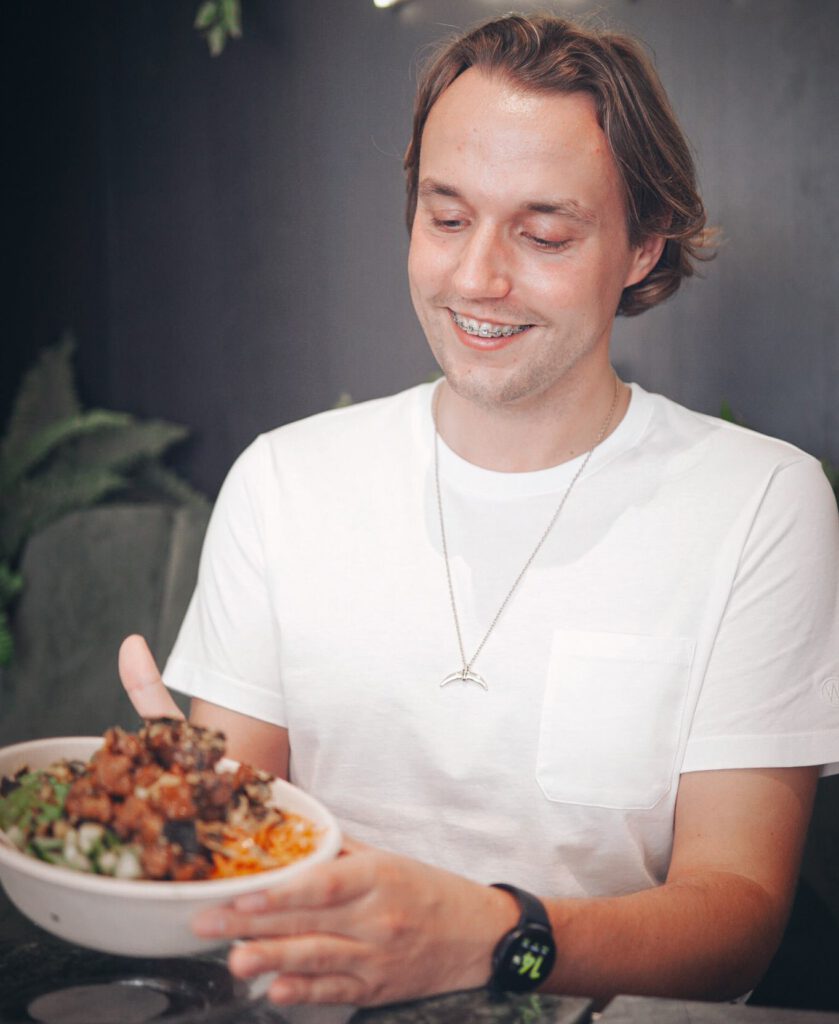
However, those fears have not amounted, with Dutchies continuing to love their furry best-friends almost 18 months into the pandemic, according to Nu.nl. 🐾🤟
“As far as we can judge now, the big feared ‘dump peak’ is not forthcoming,” says Animal Protection spokesperson Dik Nagtegaal. “When it comes to dogs and cats, the number has not increased compared to the year before corona.”
Fur-ever and ever
The representatives of 300 small and large animal organizations and shelters throughout the country, The DierenLot Foundation, confirmed that the only increase in animal returns involved rodents, rabbits, and kittens this summer. 🐇🐁
Some returns are not unusual for the summer season however, “we do not dare to attribute this trend to corona,” explains Nagtegaal, as there’s a natural peak of returns of specific animals such as kittens observed every year around the summer.
Did you or someone you know adopt an animal over the coronavirus pandemic? Tell us more in the comments below!
Starting from October, The Netherlands will be donating 27 million vaccines to countries around the world! 🌍
The Netherlands will be donating vaccines to Covax, the UN system for distributing vaccines around the world — according to the Ministry of Health, Wellness and Sport.
The goal is to increase the vaccination rate worldwide to reduce infections and prevent the virus from mutating.
1.5 million vaccines have already been donated by the Netherlands to Indonesia, Suriname, Cape Verde, and more. In the coming weeks, 3.5 million more doses will be donated specifically to Indonesia. 💉
The Dutch Minister of Health, Hugo de Jonge, says that this year, they want to donate as many vaccines abroad (27 million) as have been used in the Netherlands (25 million).
The new motto about donating vaccines in the Netherlands is, “Get one, give one.” 🤝
So will there be any vaccines left in the Netherlands?
Absolutely! The Netherlands will hold onto approximately 4 million vaccines for those who have not yet been vaccinated and for immunocompromised people who need a third shot. They also are keeping some for a potential future booster.
Every day, tourists, locals, and politicians alike walk through the cobbled courtyard of the Dutch parliament. Even in light of the recent news of plotted attacks on Prime Minister Mark Rutte, the Binnenhof is usually quite calm.
The keyword above being “usually.” Because yesterday evening a man tried to set fire to himself within the Binnenhof — you read that right. 😳
It seems he also tried to set fire to several doors, amongst others that of the Ridderzaal and the Council of State. While unsuccessful in getting a big fire going, traces of flames can be seen on the wooden doors.
Known to the police
The man was arrested and will be questioned today, reports the NOS.
While nothing is known about his motive, the police clarify that he’s known to them for exhibiting confused behaviour.
Op het #Binnenhof is vanavond een man aangehouden die probeerde brand te stichten en zichzelf iets aan te doen. De man is bij de politie bekend vanwege verward gedrag. Tijdens zijn aanhouding raakte een agent lichtgewond. De man is op het bureau ingesloten.
“Tonight, a man was arrested in the #Binnenhof for trying to set fire to himself. The man is known to the police for confused behaviour. One officer suffered minor injuries during his arrest. The man is held in custody at the police station.”
For more news about the Netherlands, follow DutchReview on Facebook.
Let’s be honest, times have changed since the days when our grandparents could walk into a company, inform the manager they were looking for a job, and then be told to report for work the next day. In 2021 it’s safe to say that the process is well… complicated.
The Netherlands is an increasingly popular destination for international job-seekers, and there are lots of jobs to be had. But they’re also hard to land — especially as an international.
Who are The Ambitious and what do they do?
Luckily, Madeline and Dorian (a sibling combo) from The Ambitious are here to help you nail the process. From helping you polish your resume so you get invited to those interviews, to landing your dream job — these online career coaches will transform you from a job seeker into a professional in your field.
They’re young and in touch, and really know what it’s like to be a graduate faced with the daunting process of trying to find a job. In their upcoming free webinar on “How to be the best candidate in job interviews in 2021” held on Tuesday, October 19, they’ll tell you everything you need to know about getting hired in the Netherlands — before, during, and after the interview.
1. Polish your resume so it stands out
One of the very first — and most essential — steps in the process of landing a job is your resume. During this webinar, Madeline and Dorian will give you tips on how to make sure your resume is ATS-friendly (application tracking system) so recruiters are able to find you and invite you to interviews. Gotta be friends with the algorithms, baby. They’ll tell you what to include and what not to, to ensure that you stand out from the other applicants.
2. Optimise your LinkedIn — it’s essential
A strong LinkedIn presence is key. Image: AntonMatyukha/Depositphotos
You know you’re getting old when LinkedIn excites you more than Instagram. Jokes aside, having a strong LinkedIn presence is essential in the job search.
The Ambitious will help you boost your LinkedIn profile to 2021 standards so that recruiters and hiring managers are able to find you. They’ll also tell you about the best platforms for finding a job in 2021.
3. Help you bring your best professional self to the interview
What to prepare, what to wear? Let’s be honest, interviews are nerve-wracking for everyone. The Ambitious will equip you with strategies to feel cool, calm, and confident on the big day.
4. Prepare you to nail the interview questions
The Ambitious will help you wow the hiring managers. Image: VitalikRadko/Depositphotos
Dorian and Madeline will help you prepare for different types of interview questions — the challenging and the straightforward — so you’re able to present the best version of yourself (the level-headed one, not the stressed one) whilst giving the hiring manager a sense of what you really believe in.
5. Nailed your interview — what comes next?
There’s nothing worse than staring longingly at your phone waiting for a call that never seems to come. Madeline and Dorian will teach you how to follow up and how to prepare for the next interview.
6. Expand your horizons
They’ll help you realise there are more opportunities out there than you think. They’ll also help you get to grips with what those opportunities are and land a job that you maybe didn’t even know existed.
7. Answer your questions and get you discounts
This webinar won’t just be them lecturing to you. There’ll be opportunities for you to ask your burning, specific to you questions. If you stick it out to the end you’ll also be able to get discounts on job search booster materials and coaching sessions!
Check out The Ambitious
Interested? We knew it. 😉 Sign up for their free webinar on Tuesday, October 19, 2021 via The Ambitious website — where they’ll pass on all the knowledge and experience they’ve gained through helping thousands of graduates land great jobs. You can also get in touch with them by emailing contact@jointheambitious.com.
What was your experience of finding a job in the Netherlands? Tell us in the comments below!
Autumn has officially set in and, in the Netherlands, that means the months ahead will bring rain, wind, and — not to sound too depressing but — darkness.
So, to find out how to enter the new season with a good mindset and prolong those summer feelings of ease and energy, we sat down with Ignas — a Health and Life coach based in Amsterdam.
Wellbeing and health as an international in the Netherlands
Living in a foreign country can be a great adventure; maybe you’ve picked up new hobbies, new habits, and perhaps you’ve even started cycling everywhere after moving to the land of more bikes than people!
Being an international, however, also brings challenges. You need to form new habits that suit your life in the Netherlands, make new friends, and perhaps adapt to a climate which…isn’t exactly the most motivating on earth. 🌧️
And while we can make fun of the Dutch weather all we want, it does have an effect on our wellbeing. Ignas explained that internationals can have a hard time adapting to the darker months, consequently experiencing a lack of energy and motivation.
So, oftentimes what is needed is a reset. A reset not just of our habits but also the way we understand our own capabilities — and that is where Ignas and his company, Practical Wellness, comes in.
Meet Ignas, a Health and Life Coach committed to your wellness
Ignas moved to the Netherlands almost 10 years ago to complete his studies in Finance but after entering and making his way through the corporate world, he realised his path was to be found somewhere else.
Deciding to learn more about health and how we can take control of our own wellbeing — something he’d been interested in and experienced on a very personal level in dealing with an autoimmune disease — he enrolled in a Health and Life Coach program.
From talking about his passion for health with friends to sharing his knowledge with a wider audience on YouTube and via blog posts, Ignas ultimately found his path in coaching.
Now, he wants to share his journey towards a healthier and more fulfilling life — and help internationals in the Netherlands achieve theirs.
That’s why he founded Practical Wellness.
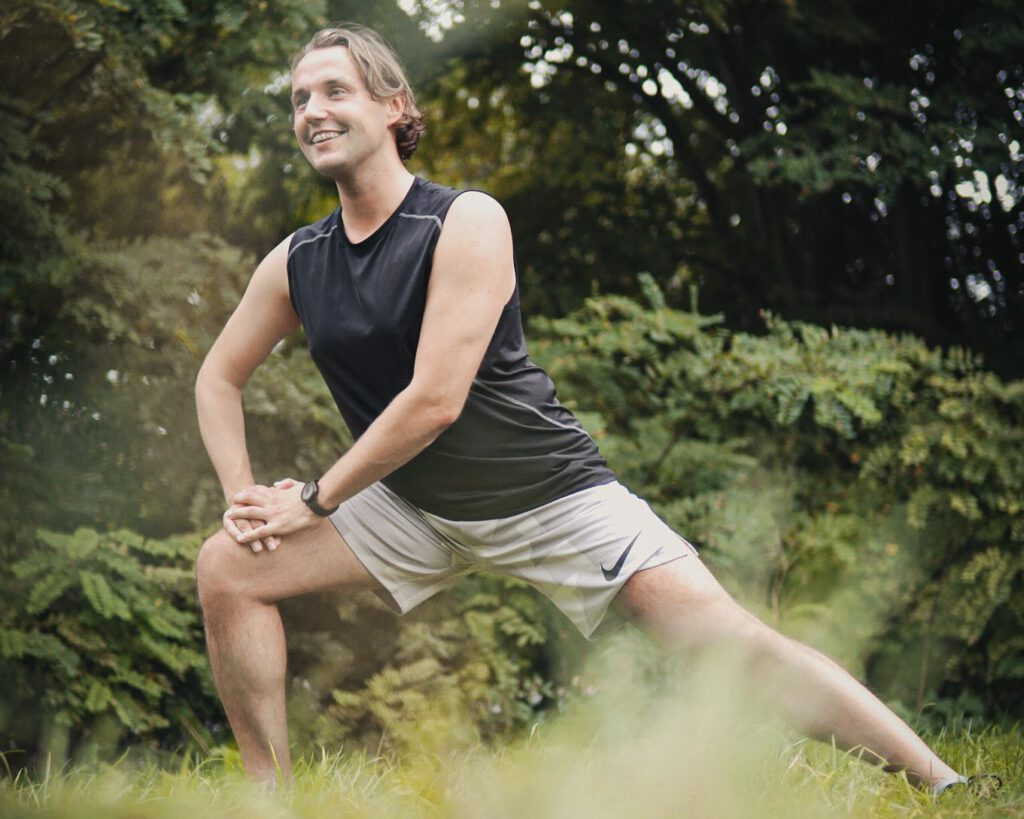
That one day of Dutch summer when you can actually exercise outside. Image: Ignas Meskauskas/Supplied
Practical Wellness — the ultimate resource for resetting your life
Practical Wellness isn’t just a coaching company but also a free platform for people to learn more about the four elements that make up wellness: movement, food and nutrition, mindfulness, and motivation.
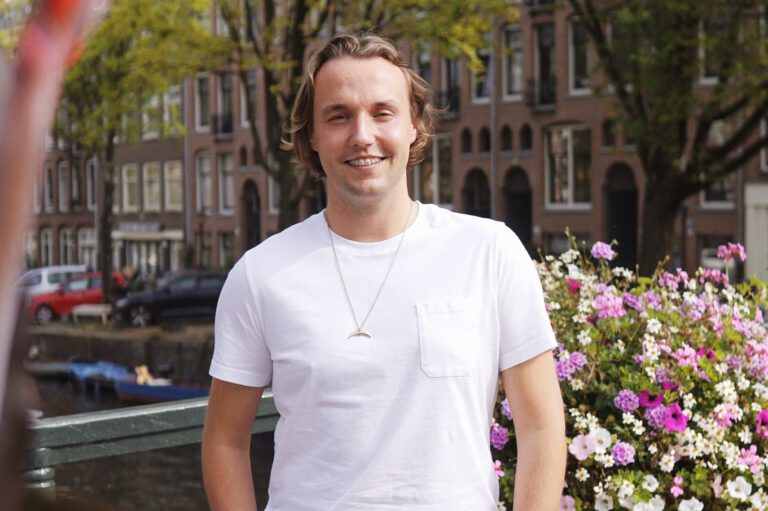
Ignas Meskauskas
The focus is on personal choices, cultivating intrinsic motivation, and the uniqueness of each person’s body.
Ignas explains that “wellness is a very broad field but if we really want to build a new lifestyle, we need to make it practical.” Emphasising those four categories, he helps make lifestyle changes actionable by focusing on motivation as the why we want to create change, mindfulness as the how-to sustain change, and movement, food, and nutrition as what can help facilitate change.
So let’s dive into the most crucial things about each category, shall we?
🤸♀️ Movement
“Our bodies are made to move!” says Ignas passionately. But if the thought of hundreds of burpees (or 10) scares you — it definitely does us — then there’s no need to flee back to the couch just yet. In his coaching, he highlights the importance of finding the right movement type for you.
🥑 Food and nutrition
While you should definitely try delicious deep-fried Dutch snacks during your time in the Netherlands, these aren’t the most nutritious in the world.
Ignas, however, makes it clear that “deprivation diets aren’t the way forward” rather he focuses on finding the foods that serve your specific body and needs.
In his coaching, he works with people to reprogram (so to say) negative thought patterns about food and create a greater awareness of what their body is telling them — and if that’s to buy a freshly made stroopwafel then that’s okay once in a while!
Focus on all the amazing food that gives you energy, not the few things you “can’t have.” Image: Ignas Meskauskas/Supplied
🧘♂️ Mindfulness
Ignas also explains that mindfulness is the way to implement good, long-lasting, movement and eating habits. Being present whenever you move or eat can often make the difference between just completing another 30-day yoga challenge and implementing exercise as an integral part of your daily routine.
So by helping people cultivate mindfulness, Ignas finds that they achieve more sustainable results.
💪 Motivation
But how do you get started? By finding out why the above categories are important to you! What do you want to achieve? Why?
Once you have established your reasons why it’ll be a lot easier to get your kont to the gym in the dark morning hours of October! You also won’t be reliant on those sporadic bursts of motivation you get from watching The Game Changers or Cheer on Netflix but will be driven by an understanding of your own needs and wants.
Need some help to kick off your journey? Join others who are on the habit change journey!
If you’re thinking, “well, all this talk about intrinsic motivation and understanding of myself is great, but what if I don’t know how to find that right now?” then don’t worry.
Ignas is leading a 14-day reset program beginning on October 7 and rather than just another detox, it’s the kick-off for future habit change!
With group coaching, you’ll receive support and encouragement from others venturing on a similar path as you, while benefiting from three targeted group workshops with Ignas.
The reset program is grounded in Practical Wellness’ constructive approach, focusing on actionable change that’ll help you transition into the colder seasons with a great mindset. 😍
Get in touch with Ignas! If you want to know more about Ignas and Practical Wellness, you can visit his website, or connect with him on Instagram.
What habits would you like to implement in your life? Tell us in the comments below!
Hoping to pick up your pack of ciggies while doing the food shop? Well, if your local is Lidl, it’s no longer possible. The supermarket chain has immediately stopped selling cigarettes in its stores.
Lidl is the first of many. As part of the 2018 National Prevention Agreement, all Dutch supermarkets agreed to ditch the cigarettes by 2024.
This is all part of the Dutch campaign “Towards a smoke-free generation” — an initiative that hopes to create a generation of young people in the Netherlands who never smoke.
10 points to Lidl!
While most Dutch supermarkets will keep cigarettes on the shelves for the time being, Lidl acted on the upcoming goal as soon as it was announced in 2018.
Cigarettes were never stocked in any new stores that cropped up in the Netherlands — and as of now, they will be removed from the old too.
Speaking to the NOS, a spokesperson explains that ‘All branches that we have opened in recent years were immediately smoke-free. The phasing out in the other branches went well and this gave us the opportunity to realise our ambition to stop selling cigarettes and tobacco even earlier.’ Good job guys. 💪
What are your thoughts on this step by Lidl? Tell us in the comments below!
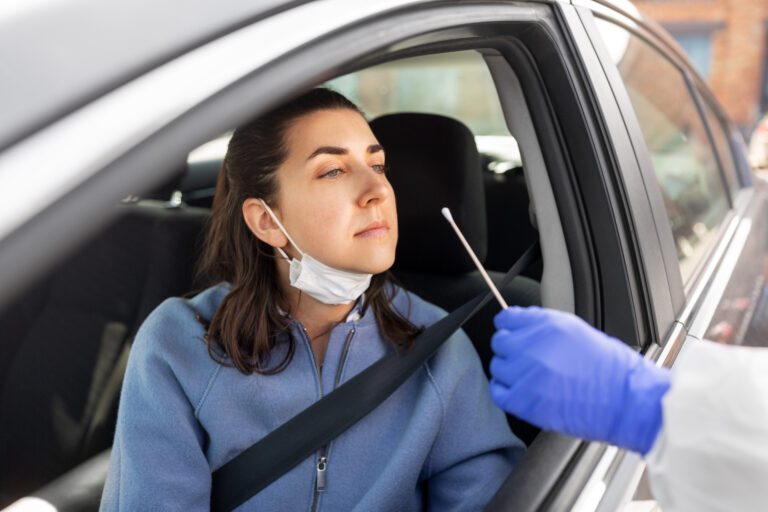
Starting today, it’ll cost money to get tested before embarking on a holiday or that much-needed visit home from the Netherlands, reports RTL Nieuws.
Until now, it has been gratis to get tested in the Netherlands before travelling — a perk that was initially supposed to end already on August 31.
Cost varies per test provider
So the short, slightly salty version, of the story is that the Dutch government essentially decided to make holidaying a tad bit more expensive — but how much will it really cost you?
Well, that depends on where you get the test done!
For the goedkoper (cheapest) option, head to coronalab where a PCR test costs you €69 and a rapid test €39.
Alternatively, you can get tested by spoedtest.nl, which is slightly more expensive. Namely, €79,95 for a PCR test and €39,95 for a rapid test.
Finally, people in the Rotterdam area can get their PCR test done by travelclinic at Erasmus MC for €95.
Testing for accees and the GGD
It’s also possible to use rapid test results obtained via the testing for access system. Although these are meant to grant access to things like concerts and indoor dining, you can also use the results for travel — though you’re not really supposed to! 😅
Similarly, PCR tests done by the GGD will also give you a QR code that can be used internationally (given that you test negative of course). However, to be tested by the GGD you need to have coronavirus symptoms.
What do you think of having to pay for tests before travelling? Tell us in the comments below!
Choosing higher education is hard — especially considering the countless options that are out there.
But the endless scrolling through university websites and programmes ends now. The QS Virtual Connect Masters event is your unique opportunity to meet the world’s top education providers and find a degree that truly suits your career goals.
Who will I meet?
It doesn’t matter whether you’re looking to pursue your next education in Europe, America, Asia, or Australia. At the QS Virtual Connect Masters event, you can expect to meet representatives from world-renowned universities such as:
University Bocconi (Italy)
The University of Cambridge (UK)
Católica Lisbon (Portugal)
University of Deusto (Spain)
ESCP Business School (France)
ESSEC (France)
EU Business School (Switzerland)
Hult International Business School (US)
IE Business School (Spain)
IESE Business School (Spain)
Imperial College London (UK)
INSEAD (France)
NYU – Tandon School of Engineering (USA)
Warwick Business School (UK)
The practicalities
The event is completely free of charge (what more could you ask for?) and you can join from the comfort of your own living room.
The only thing you have to do is register. Then, you’ll be paired with schools and programmes that best suit your professional goals and ambitions. On the day of the event, October 7, you’ll receive an email with a link to join — pretty easy, right?
TIP: Although there is no particular dress code for the event, QS recommends dressing in business casual attire. After all, you do want to make a good impression on your future university’s admission representatives. 😉
There’s even more benefits
Besides the obvious benefit — finding the master programme of your dreams — you’ll be able to attend a workshop on the essentials of an academic CV and will get access to a platform of scholarships worth $45,000.
Yep, you heard that right — you can find the perfect school AND a scholarship to help you finance it. However, there are limited spots available, so you better sign up as soon as possible. All attendees will receive a €25 voucher for Bol.com!
Quick details: QS Virtual Connect Masters
When: October 7, 6:30-9 PM Where: Online on Zoom How to register: At the QS website Cost: €0
Will you be going back to school? What’s your dream university? Tell us in the comments!
Retired women in the Netherlands receive pensions more than 40% lower than men, finds Netspare a Tillburg think tank. Cyprian women are the only ones that make less than the Dutch in comparison to men.
One of our writers breaks down this finding, and what it says about Dutch society and the female workforce.
It is a well-known fact to women living in The Netherlands that the gender pay gap discussion is far from over. Always a heated topic (check out the comments on our articles on Facebook), the lingering debate reflects Dutch reality.
Here, women get paid on average 14,6% less than men, which puts the Netherlands below the EU pay gap average and in 10th place among the 27 EU countries. Now a new report has made it clear how this issue affects women’s pension income too.
A justifiable pay gap?
Those who don’t see the status quo as problematic will say that these numbers reflect women’s “preference” for part-time work in the Netherlands, and that, in any case, this is changing.
But is it? Netspar’s report shows that although women nowadays work more and make more money than older generations, the pension convergence curve is flattening. At this rate, the pension gap won’t be closed in the next 20 years (yes ladies, your pension too is on the line!).
Fixing the Dutch pension blues
So how to fix it? The publication of this report is a step in the right direction. Gender-disaggregated data is essential for the creation of policies that consider the differences between women’s and men’s work experiences. And a change in policy is as sorely needed as a change in mentality.
Child care responsibilities
In The Netherlands, one in three Dutchies still thinks that women are more suitable to care for children, something that hasn’t changed in the last 20 years. Although this is a view more widely held by Dutch men than women, the consequences of de-prioritising work to care for the future burdens women disproportionately.
Childcare responsibilities are more often handed to women, making the return to work difficult. Image: Ketut Subiyanto/Pexels
About 40% more apparently… With social views that are still (surprisingly) traditional, Netspar’s recommendation to increase pension accumulation during parental leave seems like a no-brainer. Hallo, Rutte?
Another takeaway from the report is the worst kept secret in the Dutch samenleving: there should be more leave options for fathers and parents. As some of our nordic neighbours show us, better parental leave assures care responsibilities hurt mums less in their opportunities at work. If Dutch society is as progressive as advertised, shouldn’t this be common practice by now?
Better pensions for women-dominated industries
One of the issues identified by the report was the difference in the pension of workers from sectors dominated by men and women. Lo and behold, the pension plans of male-dominated industries are more generous.
A possible factor in this discrepancy is the fact that women’s higher life expectancy influences pension plans negotiations. But as women are financially penalised for taking up more care work, compensation needs to trickle in somehow. Better pension plans for industries with a female majority seems like a logical place to start.
Knowledge is power
Since a different pension system for men and women in The Netherlands is unlikely, the report suggests improving women’s knowledge about their pensions. Especially, about how making the choice to work less now will impact their pension income.
While government policy doesn’t catch up, knowing where you stand means women can protect themselves better. Call up HR and do your homework, ladies!
No need for feminism in the Netherlands?
Feminists in the Netherlands have long understood the risks of believing in the myth of a perfectly progressive society. In this magical place, fighting for equality for all women is no longer needed.
However, as the report demonstrates, equal rights don’t mean equal outcomes. And as statistic after statistic shows, although Dutch society has come a long way, legalising prostitution doesn’t make us progressive on all women’s issues. There’s much work to be done, and it starts with the recognition that we, our society, and our laws are imperfect.
Are you surprised by the Dutch pension pay gap? Tell us your thoughts in the comments below!
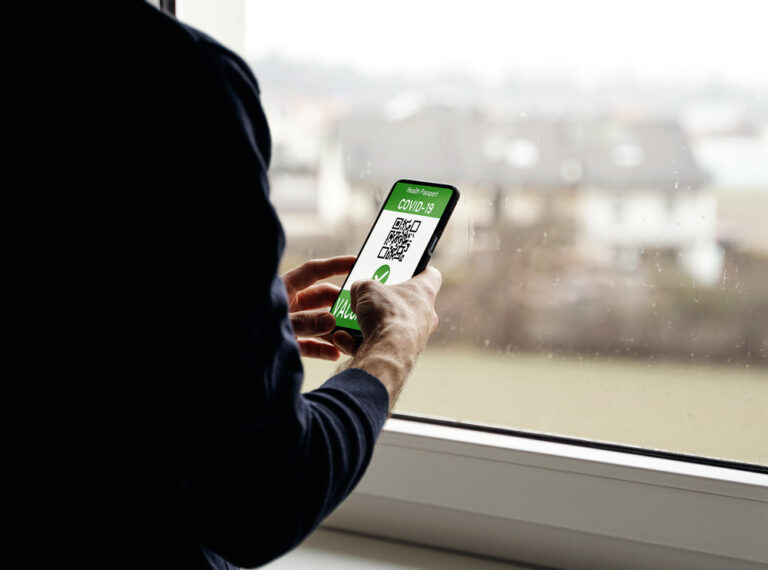
Currently, employers in the Netherlands can’t require their staff to disclose their vaccination status. While they can enquire about it, employees are not obliged to answer — and no consequences should be attached to whether they are vaccinated or not.
However, sources inform NU.nl that several Dutch companies do indeed ask their employees for proof of vaccination.
Meanwhile, the Ministry of Social Affairs and Employment (SZW) says it cannot do anything about this transgression. 🤨
Employers and employees just have to come to agreements
Why can’t the ministry do anything when employers ask for vaccination proof although they aren’t technically allowed to do so?
Because it isn’t written in law.
A spokesperson told NU.nl that while employers shouldn’t ask about peoples’ vaccination status, “employers and employees must come to a solution.” According to the spokesperson, such a solution could be that the employee agrees to work from home or wear a mask at the office.
If employers and employees can’t come to a satisfactory solution for all parties, “a disgruntled employee can still go to court.”
Unique situation
The ministry further clarifies that, as long as there’s no constitutional amendment, the government cannot check up on companies’ policies regarding employees’ vaccination statuses.
So far, the Dutch government has been reluctant to make any laws about vaccination proof at the workplace as it is a very unique situation.
However, outgoing Minister of Health, Hugo de Jonge, said during the last press conference that he’s looking into possibilities in the area.
Companies known to ask for proof of vaccination
Previously, it surfaced that the company Ticketmaster asks employees for proof of vaccination before they’re allowed to return to the office. If they cannot provide such proof, they’re called and asked to stay home.
A letter from a supplier of flex workers at the Amsterdam RAI centre stating that unvaccinated flex workers will be banned from events has also been leaked to NU.nl. The letter stated that workers could, alternatively, show proof of a negative coronavirus test. NU.nl cannot confirm the origin of the latter.
Other companies urge unvaccinated employees to stay home but will not actively enforce it.
What do you think of the ministry’s actions? Tell us in the comments below!