It looks like we will be bidding doei to the 1.5-metre rule in the Netherlands. However, it’s not all easing. It will soon be required that you show either proof of vaccination or a negative test result in many sectors.
Following a meeting of government officials in the Catshuis today, sources tell the NOS that from September 25th, it will no longer be necessary to practice social distancing.
Corona admission tickets
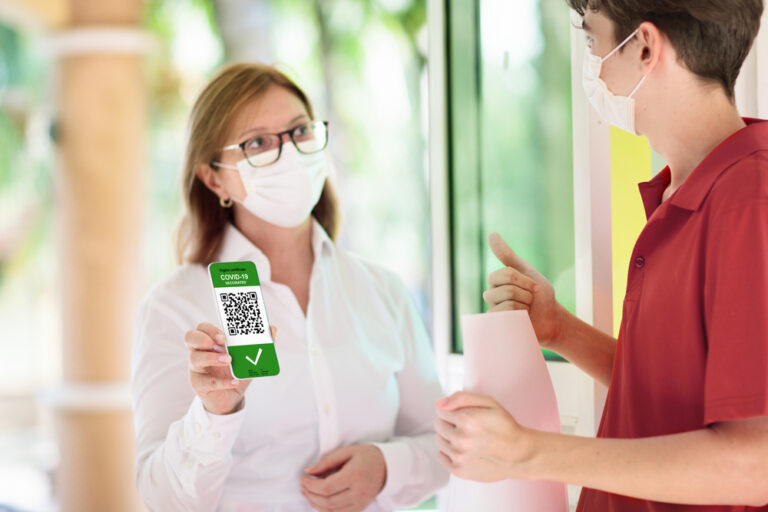
According to the sources, a “corona admission ticket” will be required before entry to cafés, restaurants, cinemas and theatres. This usually means that proof of vaccination or a negative test result must be shown.
Not quite ready for a complete easing
The Dutch cabinet does not yet feel ready to drop restrictions completely, the NOS reports. This is due to a large number of people (1.8 million) remaining unvaccinated in the Netherlands.
The government fears that if the Netherlands was to follow in the footsteps of countries such as Denmark — which has dropped all restrictions — the healthcare system may become overwhelmed once again.
As a result, other restrictions will remain in place, the sources claim. Masks will still be necessary on public transport and opening hours for the catering industry will remain unchanged.
Prime Minister Mark Rutte and Minister for Health Hugo De Jonge, will officially announce these changes and further developments this Tuesday.
What are your thoughts on the Dutch cabinet’s approach? Let us know in the comments below!
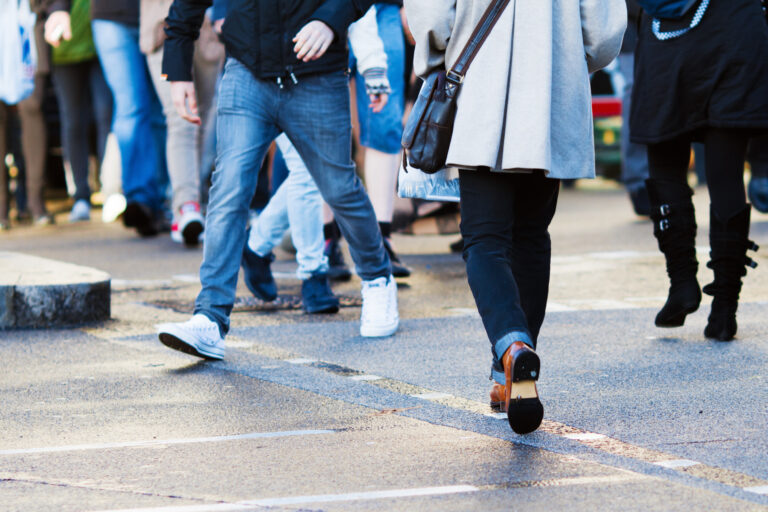
Researchers at the Eindhoven University of Technology have been awarded the Ig Nobel prize for their study of…people bumping into each other?
Yep, you read that right. The researchers, Alessandro Corbetta and Federico Toschi, were presented with the prize for their research into pedestrians’ behaviour in crowds. 🚶♂️🚶♂️
The Ig Nobel Prizes are awarded for unusual scientific research or achievements, and they take place before the prestigious Nobel Prizes in Stockholm.
The study
The 2018 study analysed the movements of five million pedestrians in the Eindhoven train station, using sensors under the station platforms.
Their study found that people keep an average of 75 centimetres away from one another to avoid bumping into them. 💥
“People are constantly avoiding collisions with oncoming traffic by pre-changing their walking path if a collision is imminent,” says Corbetta.
If people didn’t change their walking path, 18,000 people would have crashed into each other! 😲
In the end, only 80 pedestrians ran into each other.
Making places safer
Researchers hope that the study will make places where lots of people gather, like museums and festivals, safer and more organised.
Did you know? Japanese researchers also won an Ig Nobel Prize for studying why pedestrians sometimes collide.
What do you think about the research? Let us know in the comments below!
In a government campaign to raise climate awareness among citizens, it has been found that the Ministry of Economic Affairs and Climate (EZK) deliberately omitted a call to eat less meat — considering the advice to be too controversial and “politically sensitive.”
The “Everyone does what” campaign started in 2019 as an effort by the government to make citizens more aware of their own contribution to climate change.
The campaign provides tips on small personal changes that individuals can make to prevent global warming, such as properly insulating homes and not travelling by car as often — we know you can do it, Dutchies. 🚲
The campaign also promotes eating more sustainably — choosing seasonal foods more often and wasting less. 🥕 However, the advice to eat less meat was intentionally removed because it was considered too controversial, The Volkskrant reports.
A politically polarizing issue?
Documents requested by the animal welfare organisation, Wakker Dier, show that in April 2019, the subject of eating less meat was removed from the campaign.
“We don’t want to explicitly communicate ‘less meat’” the EZK wrote in internal communication because it is a “politically very sensitive subject”. For a country that prides itself on being super climate-conscious, this seems odd. 🤔
Proven to reduce emissions
Eating less meat is proven to reduce emissions of CO2 which cause climate change. According to the Dutch Government’s Nutrition Center, “by eating 100 grams less meat per week, you reduce your environmental impact by 7-10%.”
Government response
The ministry responded to this revelation by saying that “Everyone does what” was designed to “enthuse citizens to take small steps towards sustainability.” They added, “We noticed that eating ‘less meat’ was a measure that provoked controversy.”
Basically, the Dutch government thinks that advising people to eat less meat will make them reject a more sustainable lifestyle altogether.
What are your thoughts on the Ministry of Economic and Climate omitting the advice to eat less meat from its sustainability campaign?
You know that frustrating feeling when, after having meticulously measured your apartment, that super cute, newly purchased, side table just will not fit into the nook you’d intended it for?
As with your (granted imaginary) trendy side table, the Dutch Ministry of Defence’s brand new trucks are just a couple of centimetres too big for Dutch roads reports the NOS. 😅
With a height a few centimetres taller than the legal four metres, turns out they aren’t allowed to drive on Dutch roads — making the 1600 trucks pretty redundant.
Eén van Scania Gryphus-varianten van Defensie blijkt i.c.m. de ISO-standaard 8-voet container hoger te zijn dan de wettelijk toegestane 4 meter. Samen met Defensie zal de leverancier ter bevestiging metingen uitvoeren en indien nodig het probleem oplossen. https://t.co/PBKukOtz2Cpic.twitter.com/BPsXjYOoIJ
Translation: “One of the Scania Gryphus variants of the Ministry of Defense appears, in combination with the ISO standard, to be an 8-foot container higher than the legally permitted 4 metres. Together with the Ministry of Defense, the supplier will carry out measurements for confirmation and, if necessary, solve the problem.”
Exemption request
The outgoing Minister of Defense, Ank Bijleveld, has written to the House of Representatives to ask that the military vehicles be exempted from the Road Traffic Act.
Bijleveld is hoping they’ll consent to the trucks being used for “a specific period of time and specific routes in the Netherlands.” Meanwhile, she must be dealing with some pretty heavy buyers remorse, as the trucks must remain parked for the time being. 🤦♀️
The Ministry had previously been assured that the Scania Gryphus type trucks with special containers were less than four metres high and perfectly suitable for Dutch roads.
As that turns out not to be the case (whoops!), the Ministry announced that the supplier has agreed to solve the problem.
If everything works out, the trucks are meant to replace the current vehicles which are more than 30 years old.
Do you think the military trucks should be cleared for Dutch roads? Tell us in the comments below!
Today, the European Centre for Disease Prevention and Control (ECDC) forecasted that the Netherlands will remain red on the EU’s coronavirus map for the coming week — yet news of Dutch travel relaxations are reported. 😵
The ECDC’s decision to keep the Netherlands within the red status comes in light of recent coronavirus testing which reported more than 5% of tests performed in the Netherlands are positive — not sounding so good. 👎
Additionally, last week, all 12 Dutch provinces were red on the ECDC’s map, which is updated every Thursday.
Plans of optimism
Despite the ECDC’s grim outlook on coronavirus in the Netherlands, a separate report brought news of optimistic plans from the Dutch ministry of foreign affairs regarding travel relaxations for trips heading outside Europe.
“The virus is not going anywhere. You can’t keep the world locked up and we recognize the importance of travel.” A spokesman from the ministry of foreign affairs told the Telegraaf.
The discussed relaxations could be of great impact to the current travel insurance policy coverage which is limited for travellers heading to code orange areas. And what if you got any Coronavirus-related expenses while stranded on a holiday in an orange cursed destination? No reimbursement for you — says the current travel insurance policy. 💔
What do you think of relaxing current Dutch travel restrictions with the latest ECDC report? Tell us in the comments below!
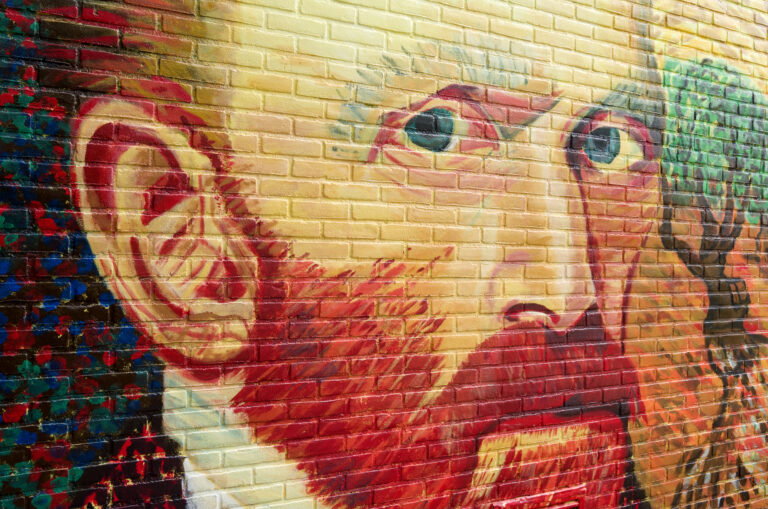
A man named Kerst W. is facing a prison sentence of 11 months for (accidentally?) attempting to sell a fake Van Gogh. 👨🎨🎨
The farmer from Wanneperveen — a small village near Giethoorn — had in his possession a falsified preliminary study of Van Gogh’s The Harvest, worth €250.
The Van Gogh Museum informed him by letter that, “it was not an authentic work by Van Gogh.” 🙅
However, in said letter from the museum, the word “not” had been left out of the sentence. Instead, the letter appeared to say that the work was authentic.
As a result, the farmer showed the museum’s letter along with the painting and asked for €15 million for the work. 😱
Unfair sentence?
According to RTV Oost, Kerst claims that he believed the work was authentic and denies committing fraud.
He said that he isn’t good with computers and processing systems and also stated, “Someone else manages my mail and stuff.”
Meanwhile, the Public Prosecution Service wants Kerst to serve a sentence of almost a year for the fraud.
Kerst’s counsel, Cees Korvinus, thinks the sentence is too harsh for his client. “No one was harmed because it soon became clear that it was about false papers. My client acted naive at most,” he says.
In two weeks, Kerst will find out what his sentence will be and whether he will go to prison.
What do you think? Was it an innocent mistake? Tell us in the comments below!
The associationfor Dutch hospitality (KHN) is strongly against the government’s plan for staff to request QR codes or proof of vaccination from patrons who want to wine and dine indoors — why?
It’s simple, because it’s not their job.
This is the opinion of the KHN. “[It] is not an assignment that you can leave to the catering industry”, Director of KHN, Dirk Belijaarts tells Nieuwsuur. “You really have to do that as a cabinet yourself.”
The cabinet’s plan
But what exactly is this all referring to? Recently, the Dutch cabinet introduced their plan to implement stricter measures for those who want to have a meal or a drink inside restaurants and cafés.
In this way, the government is leaving it to workers in Horeca to put pressure on society to get vaccinated — and this burden shouldn’t fall to them, the KHN claims. “The catering industry has played policeman long enough,” Belijaarts says.
Workers in Horeca will not be alone in facing this challenge, those working in the cultural industry such as in cinemas and theatres may also have to ask patrons for proof of vaccination.
When will we know more?
The cabinet will announce at Tuesday’s press conference whether or not they will go ahead with this plan. If so, from September 25, it will be compulsory to show proof of vaccination or a test certificate before wining, dining, and hitting the cinema in the Netherlands.
What do you think? Should we show proof of vaccination or a negative test result before we sit indoors? Tell us your thoughts in the comments below!
You’ve checked your documents, packed your bags, tied up your shoelaces and voyaged to the Netherlands to start your study at a dream university abroad!
Although you deserve to take a deep breath, as an international student setting foot in the lowlands for the first time, you’ll still have a few decisions to make.
But don’t sweat it! We’re talking about some basic choices that are faced by most incoming international students.
My name is Anwesh, an Indian student who is currently finishing his master’s course in computer science at TU Delft.
Considering myself to be a veteran in terms of my stay in the Netherlands as an international student, I feel wise enough to put down some thoughts that I’ve neatly gathered since I landed in the flatlands back in August of 2019.
Now let me quickly ready my Pensieve and recount memories that should serve as sound advice.
In the Netherlands, with university towns like Amsterdam, Eindhoven, Utrecht or even Delft, you are usually faced with the dilemma of either getting a place on (or around) campus or living near the city centre. However, given the admittedly crazy housing situation in this country, it is more likely to be a snap decision rather than a choice anyway.
Living in the city centre can be great for obvious reasons. You are closer to most of the good cafes and watering holes the place has to offer in addition to having a shorter walk to the grocery store and the marketplace in general.
Shared university accommodation can be a one-way ticket to new friends. Image: DGL Images/Depositphotos
Living around the campus, on the other hand, has its own perks which I personally endorse.
Firstly, an initial benefit straight off the bat is that you have to be super lazy to miss your early morning classes when you live on campus as most of the academic buildings are at a walkable distance.
Secondly, with the multitude of events that take place all over campus, you’re pretty much out of excuses like, ‘That’s too far, I can’t make it!’
Participate in new activities
Looking back at my time in Delft, I would never know I was good at bouldering or that I liked any form of Latin dancing if I had stuck to my excuse of being lazy and excused myself from university events.
I would also be completely oblivious to the fact that students could make and share food with fellow students every month as a ‘no-waste food-sharing meal initiative at TU Delft’s own sports centre (super fun!!).
But I have to be honest, these observations are a direct result of me being dragged to events that I was sceptical of attending in the first place. Therefore, a generous piece of advice to all of you reading this would be to try your hand at various activities that are a regular fixture in and around the university.
Since you never know where you find your odd element, it doesn’t hurt to get out of your comfort zone and embrace the melange of activities available at your disposal!
💡 A time-saving tip: platforms like Facebook and Meetup come in handy in terms of keeping a track of all these events and activities as most of the organisers like to spread the word through social media.
Study in groups to find your new crew
In addition to taking a shot at attempting new things and having enriching experiences, university events allow you to develop your network both for social and study/academic purposes.
Another choice that you can take advantage of is the possibility of studying in groups which is quite usual here (in contrast to India where usually we studied by ourselves).
For me personally, this turned out to be a great way to finish my assignments or even prepare for exams while getting to meet awesome new people and of course indulging in post-work social evenings of what the Dutch call, gezelligheid (loosely translated to cosiness). Give it time, the phenomenon grows on you!
Making friends and improving your grades? How efficient of you. Image: CandyBoxImages/Depositphotos
Studying in groups especially helps when you get stuck trying to figure out the solution to a “take home” assignment for example, especially in the beginning (which happened more times than I am willing to accept).
Studying with your brand new fellow students (and potential new friends) really speeds up your academic work as all of you figure out the nitty-gritties of student life together.
Chat with everyone (literally everyone)
Admittedly the act of greeting everyone, even people you pass by randomly on Dutch streets was something that caught me off-guard initially. You’d be surprised at how easy it is to strike up a casual conversation with a total stranger!
Believe me, the simple act of exchanging greetings with people does tend to brighten up the otherwise dreary Dutch weather.
Coming back to the importance of networking as a student, it always helps to have even the most random conversations with people, whether it involves sharing similar academic/life concerns, getting something done or looking for an opportunity to work, the list is endless.
I once found myself interviewing for a part-time job after a random chat with an acquaintance who motivated me to reach out to recruiters on LinkedIn. In fact, I know many friends and colleagues who’ve landed a gig this way!
Fortuitously, things do work out, but maybe not without networking or getting motivated by inspiring articles like this one (haha) and eventually, acting on it by fearlessly immersing yourself in an eclectic selection of activities at the university!
With these tips, I hope you’re well-armed to navigate at least the early days and get yourself set up.
What tips do you have for international students arriving in the Netherlands? Or, if you’re an international student, what would you like to know? Leave your thoughts in the comments below!
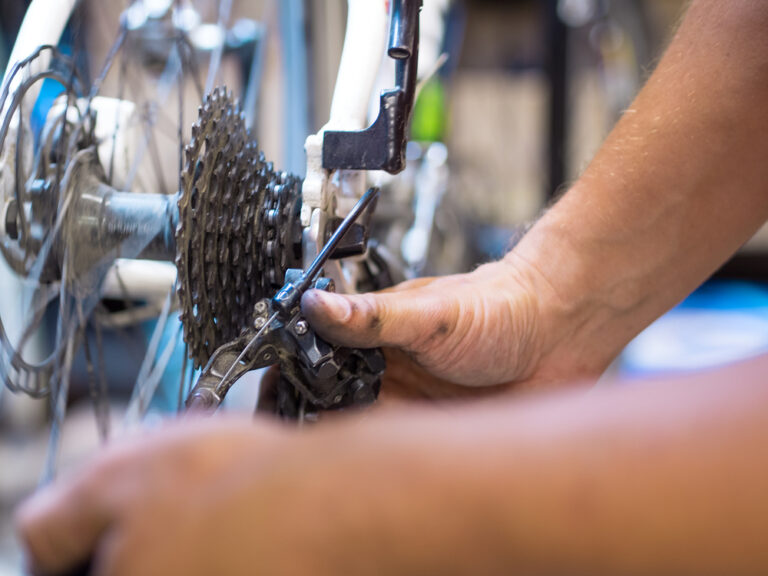
With a dream of never going to a bicycle repair shop ever again, tax specialist and Amsterdammer, Pieter van der Straaten, developed a bike with almost unbreakable components.
Dubbing the design bombproof, van der Straaten opted for a necessities-only concept: no brake cables, no hand brakes, no bike chain, no levers to operate the gears, and no vulnerable lighting in the front and rear — fewer pieces, less maintenance! 💡
With a name that matches the concept, the Bloker Naked Bike comes with the promise of a slim design that weighs next to nothing, is rust-resistant, and is suitable for every type of Dutchie (and international) out there. Hear that guys? 📣
Cycle Simply
Inspired during a visit to New York, the simplicity of rental bikes there captured van der Straaten’s attention and he decided to bring the simple biking experience home.
“They were perfect bikes; very very basic. Sturdy ones that did exactly what they were supposed to do: travel through the city without any hassle. No hassle with hand brakes or gears, just cycle without worries”, says Van der Straaten.
A design without bells and whistles took a lot of work and investment from the entrepreneur. Van der Straaten aims to conquer the area of IJburg first and then expand nationally. With the current design, users can cycle at up to 20 kilometres per hour so there are no plans to go electric in the near future.
Would you go for a nine-component bicycle in the future? Tell us your thoughts in the comments below!
Hundreds of international students have arrived in Groningen to start their studies — with the added challenge of being homeless.
The volunteer organisation, Shelter Our Students is trying to help these newbies find temporary accommodation but it’s proving to be difficult.
As if moving to a new city and starting a new life alongside studying full-time isn’t hard enough already, hundreds of happy-go-lucky international students are doing all this whilst frantically trying to find a place with a bed and a desk they can call their own, reports The NOS.
International students in Groningen — and, who are we kidding, the rest of the Netherlands — struggle to find accommodation every year. However, Marinus Jongman from Shelter Our Students says that “it is worse than ever this year.”
Why aren’t there enough places for international students?
According to Jongman, “the housing market is completely locked up, so graduates aren’t moving on to starter homes.” Clearly, these astronomical housing prices and of course, the chronic shortage is having a knock-on effect.
In addition, more and more students are choosing to study in Groningen. In 2018, the university had 30,000 students. Now, just three years later the university has 36,000 students. The city and university don’t seem to be keeping pace with this growth.
Foreign students find themselves in a Catch-22 situation: student houses don’t want internationals, and apartments that are open to internationals don’t want students. 🤷♀️
An emergency shelter has been set up for these homeless students in Groningen. However, it only has 240 spaces and is already full. 🥵 Many students are also having to stay in hostels which cost around €25 per night — definitely not student budget-friendly.
So far about 600 international students have registered with Shelter Our Students to be placed with temporary hosts. Emphasis on the word temporary. Jongman says that this number is increasing by about 30-40 per day.
What are your thoughts on this crisis of homeless students? Should the universities and municipalities do more?