Albert Heijn is a beloved Dutch supermarket chain, but would you go so far as to tattoo their logo onto your face? Well, this American thought it was a great idea.
From all the way across the Atlantic, Carl Adams fell in love with the store when he came to visit the Netherlands. So much so that he tattooed the logo right beside his left eye, and shared the images on his Reddit profile.
“I’ve heard this is the way to get free sugar waffles for life,” Adams writes, adding that since he lives in the US, it’ll be “our little Dutch secret”.
Adams came to Amsterdam at the end of last year, where he lived for about six months before returning home. During this time, he worked at a local Albert Heijn where the cheeses and chocolates swept him off his feet. “The supermarket looks so much nicer than the one in America.”
So, when a friend offered to do another tattoo for him, Adams knew just what he wanted. “I immediately thought of Albert Heijn,” says Adams.
Although Adams is currently stuck in his home in New York, he promises that “as soon as Americans are allowed to return to the Netherlands, I’ll take the first flight back. Then I go to the Albert Heijn every day to show my tattoo.”
But for now, Adams is working on some songs and videos about his beloved store.
Online craze
His tattoo may not be getting much attention in the US, but online his Reddit fans have been going crazy over it. “Maybe a bonus card barcode is a good idea,” one reader suggests. Adams is crossing his fingers that Albert Heijn management will notice, signing his Reddit post off with: “❤ (p.s. I hope someone from management can see this) xxx”.
What do you think of Adams’ tattoo? Tell us your thoughts in the comments below.
In the first half of 2021, The Netherlands will have 21.7 million coronavirus vaccines available, according to a letter from Minister of Health Hugo de Jonge.
During the first quarter of the year, De Jonge says the country expects to receive 7.7 million vaccines, and in the second quarter, 14 million.
First quarter
Of the vaccines supplied in the first quarter, 4.5 million will come from pharmaceutical company AstraZeneca. BioNTech and Pfizer will supply another 2.2 million doses in the first three months of the year, and Moderna and Curevac will make up the last one million doses.
Because each of the vaccines requires two injections, the Netherlands will be able to vaccinate 3.85 million people in the first quarter.
This is, of course, under the assumption that the drugs will be approved by the European Medicines Authority (EMA). For Pfizer and BioNTech, the assessment is scheduled for December 29, for Moderna, it will be January 12. The dates are not yet known for the other vaccines.
The remainder of the year
In the second quarter, the 14 million doses will come from the same variety of drug companies, in addition to the Dutch company, Janssen, based in Leiden.
A total of 20.6 million doses are anticipated to arrive in the Netherlands in the third quarter. In the fourth, the Ministry of Health anticipates receiving 13.5 million more.
Finally, in the first quarter of 2022, 2.2 million vaccines are expected to arrive.
First to receive
Care workers in nursing homes will be the first to receive the vaccine, followed by other employees working in care institutions and residents of nursing homes and institutions for people with intellectual disabilities.
What do you think of the cabinet’s approach to vaccination? Tell us your thoughts in the comments below.
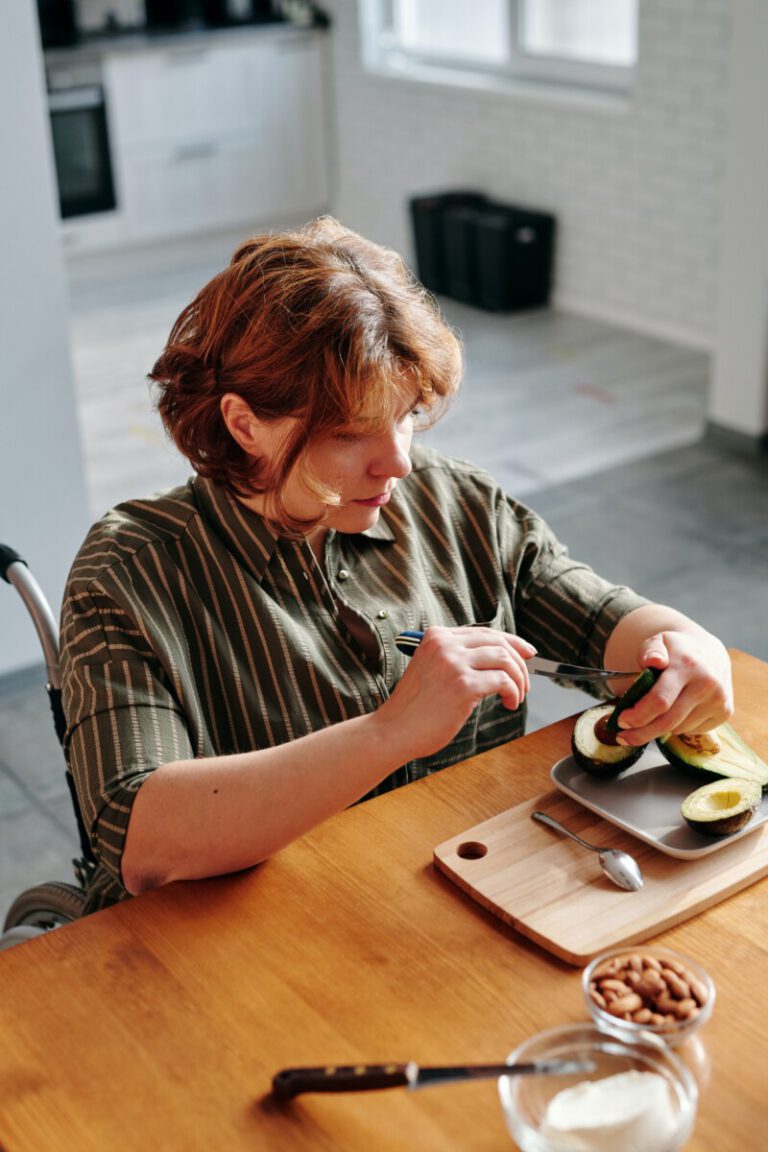
Dutch plastic surgeons are appealing to the public in a warning against a rise in serious avocado-related hand lesions. “We often see that sensory nerves in the fingers are damaged or cut,” says plastic surgeon Annekatrien van de Kar. “Sometimes people even hit a tendon.”
The Dutch Association for Plastic Surgery (NVPC) says that more and more, they’re treating patients with what they call an “avocado injury,” a cut at the base of the finger with nerve damage.
The professional association can’t confirm exactly how many serious avocado injuries have taken place in the Netherlands, although, many surgeons report treating patients with avocado injuries a few times a week.
Avocado consumption on the rise
The Netherlands is the second highest importer of avocados in the world, after the US. So it’s no surprise that the US also has experience with this hazardous phenomenon — in 2019 alone, 8,900 Americans rushed to ERs for avocado-related injuries.
In Europe, the uptick in injuries could be related to the avocado’s recent labelling as a “pandemic-resistant superfood.” It’s estimated that Europeans are eating 15% more avocados in 2020 than they were in 2019.
Not long ago, Amsterdam even opened a restaurant solely-dedicated to the savoury fruit, The Avocado Show, with several popular locations. The NVPC says they can mark a steady increase in injuries along with this rise in consumption.
Scoop, don’t stab
The professional association advises people to pit their avocados with a spoon to prevent injuries. “When stoning, consumers often hold an avocado half in the palm of their hand,” says Van de Kar. “If the knife slips, they cut their hand.”
The plastic surgeon explains that avocado injuries are a growing concern in the medical world but the everyday consumer isn’t usually aware of the dangers. “The consequences can be annoying and permanent. Unfortunately, the risks are unknown or underestimated by the consumer.”
The NVPC recommends that supermarkets and growers offer safety instructions for opening an avocado. Their video explains how:
You may notice in the video that the host is using a special tool to remove the avocado pit. Many people won’t have such a device in their kitchen, and that’s ok, a spoon works fine.
Another thing that stands out is how the expert shows how some people are trying to stab or flick out the pit with a knife — clearly an amateur move. If you ARE going to use a knife, there are much safer ways. Like this, for example:
The surgeons might not appreciate our recommending this technique though, so to be extra safe if you don’t have the knife skills maybe avoid cutting anything into your hand. Just as a general rule.
Warning sticker
The professional association even takes it a step further to suggest including a warning sticker to make consumers aware of the risks.
“Doctors in England already advocated in 2004 for warning stickers on avocados because of the risk of hand injury during stoning,” says Van den Kar. “Hopefully, we can set a good example in the Netherlands.”
Have you or someone you know ever suffered from an avocado injury? Tell us in the comments below.
Another explosion has gone off at a Polish supermarket, this time in the Beverhof Shopping Center in Beverwijk, a half-hour drive from Amsterdam.
This store carries the same name as the supermarkets hit in Aalsmeer (also in North Holland) and Heeswijk-Dinther (in North Brabant) yesterday, reports NOS.
Police are investigating whether the explosion in Beverwijk, which went off at 5:15 AM this morning, has any connection to the explosions from yesterday.
The damage
Stones lie in the streets outside the Beverwijk supermarket, and the back wall is most damaged. But a police spokesperson has confirmed that no one was injured since no one lives in or above this mall. The building is still structurally sound.
Flinke schade in Heeswijk-Dinther na de explosie vannacht bij een Poolse supermarkt. 20 omwonenden mogen nu weer terug naar hun huis. pic.twitter.com/fzHszXIZne
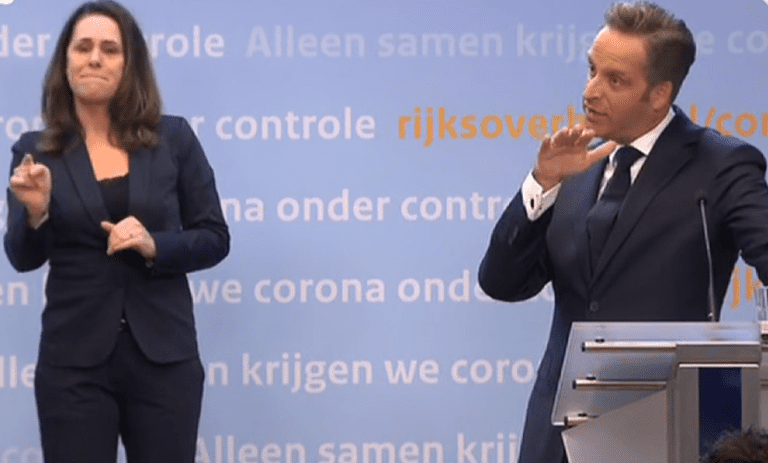
Tonight, Prime Minister Mark Rutte and Minister for Health Hugo De Jonge focused primarily on the question of Christmas in the Netherlands.
Christmas measures
In spite of earlier speculation that larger group sizes would be allowed in people’s homes for Christmas, this will not be the case. It was announced earlier today that the number of house guests that can visit per day will remain at three.
Tonight, the ministers clarified the government’s position on the subject. Rutte began by acknowledging that we would all like to be surrounded by friends and family this Christmas, but we cannot afford to do more than we are already doing now.
The prime minister reiterated that restrictions will remain in place as they are, meaning no extra guests and no dining out. The number of guests allowed over for the Christmas period will therefore stay at three. “We hoped for more, but numbers are no good.”
When asked whether he thinks this number is really possible, the Prime Minister warns that even this number cannot be guaranteed. If the number of positive cases continues to climb, this may change.
One reporter points out that the prime minister is hoping for coronavirus infections to drop over Christmas, yet he has not implemented any new measures.
At a crossroads
Rutte has said that coronavirus numbers are simply too high and the Netherlands now stands at a crossroads. He says that the country has two options: we either get the ICU number down to 10 intakes per day over Christmas and then lift restrictions slightly after, or we carry on as usual.
If the country carries on as it is now, stricter measures may be necessary. He warns these restrictions may be instituted before the holiday: “I might be back with heavier measures before Christmas.”
When asked about what the measures may be, the prime minister says he does not want to speculate on what later measures could be.
What can we do to help
Rutte asks that people take a number of precautions in order to prevent the spread of coronavirus over Christmas. He advises that people stay inside and wash their hands thoroughly. He also asks that anyone with symptoms gets tested and that anyone who tests positive should not leave quarantine; they should instead ask for help.
Testing for an open society
In January, the Netherlands will begin running tests for opening up society. Participants will be able to attend events such as sports matches and the rate of infection, if any, will be monitored.
The test runs will not take place in restaurants, the prime minister has confirmed.
Economic support
There will be a further press conference tomorrow to discuss economic measures for the restaurant industry. The industry has suffered immensely this year and certain establishments are now threatening to open again in January, regardless of restrictions.
The prime minister suggested that families should order their Christmas dinners from their favourite restaurants in order to support the industry.
Rutte finished his section of the press conference with an acknowledgement of the hard work of healthcare workers. He says to “support the healthcare workers” by abiding by coronavirus measures.
When later asked about when restaurants can expect to be opened once again, Rutte said this will only be possible once the numbers are low enough. When pressed, he repeats that the goal of 10 ICU patients per day needs to be reached.
Vaccination
De Jonge then addressed the issue of vaccination in the Netherlands and particularly, how it will work. Health care workers will be the first to be vaccinated, followed by those who are vulnerable or work with vulnerable people.
He says the process will be a long one and that the entire country will most likely not be vaccinated until after the summer of 2021. He hopes that vaccinations will begin in January.
The minister for health finished his statement by asking that people stand by the current measures and “don’t give the virus as a present for Christmas.”
Coronavirus numbers climb
Coronavirus cases drastically increased in the last week, spiking up to 43,103 new positive test results from the previous week’s 33,949, according to the RIVM.
Although the number of people who were tested in the past week has increased from 259,377 to 320,205, so has the percentage of positive cases compared to the previous week, which went up to 11.6% from 11.1%. This means that the rise in cases cannot be explained by a rise in testing.
Current measures may extend past mid-January
While it was initially hoped that the current coronavirus measures would last until mid-January, it is now more likely that they will extend past this point. With coronavirus cases only going up as the country heads into Christmas, measures may indeed need to be tightened.
Further measures to be announced later
The cabinet has claimed that if new measures are to be brought in, these will be at a later point. De Jonge has warned that the length and strictness of the measures will depend on how high coronavirus infection rates are in the Netherlands.
Follow DutchReview on Facebook and tune in to our Live Blog to receive the latest coronavirus updates and news.
Coronavirus cases drastically increased in the last week, spiking up to 43,103 new positive test results from the previous week’s 33,949, according to the RIVM.
Although the number of people who were tested in the past week has increased from 259,377 to 320,205, so has the percentage of positive cases compared to the previous week, which went up to 11.6% from 11.1%. This means that the rise in cases cannot be explained by a rise in testing.
Hospitalizations also increased in the last week with a total of 1,229 admitted patients compared to the previous week’s 1,007.
There was a decrease in those who passed away from the coronavirus in the past week, down to 338 from 406. However, the death rate is most likely lagging behind real time and we can expect that in reality this number is higher.
Press conference tonight
Tonight, Prime Minister Mark Rutte and Health Minister Hugo de Jonge will address the nation regarding coronavirus measures over Christmas. Considering the dramatic increase in positive infections over the last week, they are reluctant to open the country up for Christmas. Slightly larger group sizes are expected to be allowed, but other than that the current measures will remain in place.
Should Rutte and the King be vaccinated in public?
Three former US presidents have agreed to receive their vaccinations in public in order to promote the safety of the vaccines. Now some are suggesting that the Dutch Prime Minister and King should follow suit. However, the Dutch ministers and royal family alike don’t seem to keen on the idea, saying that vaccination is a private matter and being immunized in public won’t make much of a difference to public opinion.
Restaurant industry threatens to open regardless of measures
The restaurant industry across the Netherlands is at a breaking point. After months of a partial lockdown which promises to only stop around mid-January, more than 50 restaurants around the country say they will open their doors again on January 17 and stay open, in spite of regulations. They feel their cries for help have been ignored by the government and they cannot survive any longer. The government has since promised to set aside millions of euros for the catering and culture industry.
Extension of measures
Health Minister Hugo de Jonge has warned that with the rising coronavirus numbers, the partial lockdown is likely to be extended beyond mid-January. These restaurants say that if the measures are extended, they will have no choice but to break them.
Another week, a new round of coronavirus numbers and news! Stay inside and keep warm with us while we update you on the latest coronavirus stories and figures from the RIVM.
The latest headlines:
Weekly update: 43,103 new coronavirus cases in the Netherlands
Current measures likely to be extended beyond mid-January
Health care workers to be vaccinated before the elderly
“No changes, just three guests with Christmas”
It’s almost time for the press conference, here we go, wait a second for the liveblog module to load – it’s getting there.
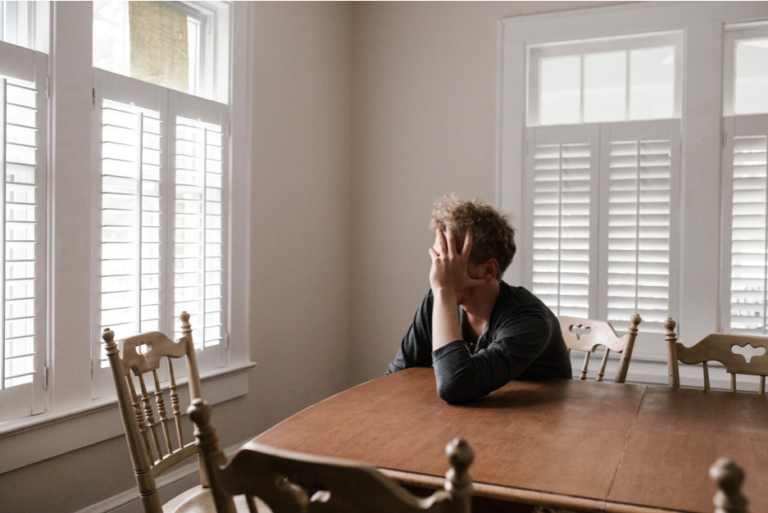
Spending so much time at home in isolation can be challenging. For most of us, this is our first experience of being indoors for such a long time, not to mention missing our usual restaurants, theatres, and friends. But there are some great ways to beat home isolation.
Especially for those of us who are usually energetic people, finding some daily activities to do in order to burn off that excess energy, or at least to do something that is useful for yourself, is crucial to keeping semi-sane, as we demonstrate here:
On a serious note, we don’t condone excessive productivity or trying to obsessively better yourself in this period of time. We understand that going through a global pandemic is stressful. Still, we decided to make a list of potential activities you can do at home to help you throughout these coming months.
Do some seasonal cleaning
Spending so much time at home might reveal those little corners in your house that haven’t gotten the attention they deserve. Or maybe you can rearrange your living space in a way that is more fitting for you. Working from home when your home is messy can be difficult.
Why not do some clearing out? You can declutter your living space of things you don’t need and give those corners the love they deserve. After you have thrown away all unnecessary stuff, you can just fill your space with plants; make yourself a living jungle. All that greenery will surely help with your mental wellbeing (and no, we’re not talking about weed — this time).
Reorganise your workspace
Obviously, one of the main activities you will be doing at home is working. This is where some cleaning comes into play because minimising the clutter around you will allow you to focus more on the task at hand. This especially applies to your desk.
Besides, when setting up your home work station, make sure it’s somewhere where you can sit comfortably and can access some light (so you can photosynthesise like one of your new plants). And just like you would in an office, if you’re working for eight hours, don’t forget to take a moment every hour just to stand up and stretch a bit.
Get on top of your finances
We know, we know, doing finances can be a bit of a chore. But considering you’re staying at home anyway, you might as well take the time to consider your finances and whether you’re banking on the right bank (see what we did there).
On a serious note, it’s important to get your finances straight, keep track of spending and maybe even save up some money in these uncertain financial times.
Being an expat in the Netherlands can be a complicated ordeal, but thankfully, you do have some great options. If you’re looking for an expat-friendly bank option, check out bunq, which has great customer support in several languages as well as the option to have a Green Card that plants a tree for every 100 euros spent — perfect for those of you who are eco-conscious.
Alternatively, you can check out N26, which has great options when it comes to tracking your spending, so you know when it’s time to pump the brakes on your new takeaway habit. Both banks are digital, so a sign-up is very easy through their apps — you can do it from home.
Streaming services
Watching TV shows and films might be slightly escapist, but hey, no judgement! This seems to be an ideal season for being indoors, grabbing some popcorn and watching those series you’ve had eternally “saved to your list”.
There’s quite a variety of options when it comes to streaming services in the Netherlands. Of course, there’s the classic Netflix, which will come at 7.99 euros a month for one screen. You could also consider the Dutch-bred Netflix called Videoland, which will be slightly more expensive, at 8.99 euros a month.
If you want to be extra safe during this time and avoid all travel outside, your best option is to order your groceries online.
Many of the main grocery chains, such as Albert Heijn, Jumbo, Coop and Dirk offer great options for ordering your groceries straight to your home, for a fee of around 6 euros.
Do take into consideration that the waiting lists can be quite long — up to two weeks out. It’s best to check around midnight or early in the morning to see if any additional slots have opened up.
For Albert Heijn, you have the option of purchasing their Bezorgbundel, which will give you a dedicated slot every week if you pay for six months or a year. It will also open more slots in general for you to order groceries from AH.
One of the advantages of shopping for groceries online, besides not having to go outside that often, is that you are supporting the store pickers and the delivery riders. The disadvantage is really just a logistic one, namely that you need to plan your groceries up to two weeks in advance.
Yoga workout
Especially now when you are working at home, you might have noticed that unless you take initiative, you could be sitting down for eight hours working and then spending the rest of the day also sitting down.
That’s why it’s very important that you move your body to ensure that you continue to stay healthy and fresh, rather than becoming a couch potato. And we get it, the couch can be awfully enticing these days, especially with all the streaming services mentioned above.
Nevertheless, as you don’t want to amplify the back problems you (probably) already have, there are enough online resources to get you going. We definitely recommend doing some yoga, as it will help with stretching and ease off that tension in the muscles. Why not even try a 30-day challenge while you’re at it?
Of course, this is just one potential workout you can do. You could also go for a run (but be warned, you might still risk infection even if you keep your distance). Overall, it’s best to work out, whatever that entails, in the confinement of your home.
Chat with friends
This one is probably one of the most important ones. Don’t forget to reach out to your friends. Whether calling them by phone, texting or video-calling, keeping contact with your loved ones will certainly help your state of mind and theirs as well!
And if you fatigue of the usual conversations, there are still plenty of options for a virtual connection. You can try Houseparty, a social app in which you can play interactive games with your friends.
Or you could make up a profile for an online game like chess and geek out with your friends over strategies. Or just play video games if that’s your cup of tea.
This sums up our list of potential activities you can do during the quarantine. And of course, if you just wanna take a day off and be a full-on couch potato, there’s no shame in that. Just take care of your mental wellbeing and try to develop a healthy routine for these strange and trying days.
What other activities have been helping you these days? Let us know in the comments!
Yesterday, 7,134 new daily coronavirus cases were reported by the RIVM. Over the past week, that number has risen sharply. On December 1, the number of daily cases was 4,056 — a 76% rise in new daily infections in just one week.
In the past six days, 36,600 new positive tests were registered — a figure that already exceeds the previous week’s new cases, reports NU.
From November 25 to December 1, the RIVM reported 33,949 positive coronavirus tests.
This afternoon, the RIVM will give its weekly coronavirus update. Today’s figures are expected to contribute to a weekly sum high enough to arguably be considered the “third wave”.
This month's coronavirus figures in the Netherlands:
With the increase in new cases, it’s no surprise that hospitals admissions haven’t slowed either. Ernst Kuipers, chairman of the National Network of Acute Care (LNAZ), says they likely won’t any time soon.
Hospitals are now treating 1,660 coronavirus patients, a total that Kuipers expects to increase in the coming weeks. He doesn’t see much sense in relaxing the measures for Christmas. “I am wary of any form of relaxation when you consider the large number of infections and the influx into hospitals.”
Since December 1, anyone who receives a notification from the GGD or CoronaMelder app that they’ve been in contact with a person infected with the virus can receive a test.
What do you make of the increase in coronavirus cases? Would you consider this to be a third wave? Tell us your thoughts in the comments below.
After a third day in a row of rocketing coronavirus numbers, the Dutch government is reluctant to loosen restrictions too much ahead of the Christmas holidays. Group sizes may be expanded slightly in tonight’s press conference but it seems we can’t hope for much more than that.
In their last press conference, Prime Minister Mark Rutte and Health Minister Hugo de Jonge explained that if numbers went down enough, they might be able to consider opening things up for Christmas. But with the numbers as they are, a source has confirmed to NU.nl that “maybe the group size will be expanded a bit, that’s all there is to it.”
Rutte explained that if infections had dropped to around 3,000 a day, cabinet would have been able to consider looser restrictions, but just yesterday the RIVM reported 7,134 positive tests. As a result, Rutte has already concluded that the Netherlands will not be opening up for Christmas.
This month’s coronavirus figures in the Netherlands:
How long will the partial lockdown remain in affect?
As the decline in corona numbers appears to have halted, Rutte and De Jonge will have to consider carefully how to deal with the Christmas holidays. When Minister De Jonge first announced the partial lockdown he expressed that it would likely only last until mid-January.
However, De Jonge has recently said that with the numbers as they are, loosening measures in mid-January is unlikely. “You have to assume that it will really take longer.”
In the meantime, an outline is being planned as to what numbers will equate to removing certain restrictions. This is proving to be quite difficult and there are no concrete decisions on this yet.
Preventing a third wave
Although vaccinations are promised to start in the early months of 2021, suppressing the virus during this time will still be heavily dependant on the public sticking to the measures.
Tonight’s press conference is expected to explain that there is no room for relaxation, and that Christmas must be celebrated with caution in order to not initiate a third wave of the coronavirus in the Netherlands.
In fact, stricter measures for the Christmas period are still a possibility, although if cabinet decides to go with this route, the new measures are only expected to be announced in a later press conference.
Wavering public behaviour
For now, cabinet is urging people to follow the current measures. Ernst Kuipers, the chairman of the National Acute Care Network (LNAZ), noted that the roads are getting busier.
“I am regularly in traffic jams again. That is a sign that we are going back to work or to the shopping streets”, says Kuipers.
He stressed that while hospitals may be coping now, should the trend increase the health system will be under significant strain in around two weeks. For this reason, he believes loosening restrictions now would be unwise, “no matter how much everyone craves it”.
What do you think of the government’s approach to the Christmas holidays? Share your thoughts in the comments below.







.jpg)