Home Blog Page 587

OPINION | Zwarte Piet: a white South African’s perspective

Zwarte Piet has been causing controversy for years in the Netherlands, dividing the nation over whether the tradition should be continued or not. Yet, despite the public outcry, the practice continues. 

Zwarte Piet is by far the most horrifying thing I have encountered in the Netherlands, probably because I wasn’t expecting it at all. Growing up on the other side of the world, I had never heard of this tradition and when I arrived, no one warned me about it.

Of course, let me first say that I do not presume to represent the opinions of all white South Africans. But I think many South Africans, whatever hue of the rainbow they may be, will agree with some of the things I’m about to talk about.

READ MORE: Google steps into Zwarte Piet debate: blocks ads for ALL depictions (even Soot Piet!)

My first encounter

You can imagine the shock I got when one crisp November (2017) morning, I encountered a brown-faced doll hanging from a lamppost in my street in Maastricht. The doll had black curly hair, big red lips, and a servant’s outfit. The sight disturbed me, but I was late for a lecture so I kept cycling. Then I saw another lamppost and another, and I realised the entire street was lined with what looked like lynched black dolls. Something heavy twisted in my stomach.

As I made my way further into the centre of the city, it only got worse. Shops were decorated with the same brown dolls, ribbons and banners. Strange jolly Dutch music echoed through the streets. 

And then I saw them — the Zwarte Pieten. 

Dutch men and women, mostly caucasian, with brown and black paint covering their faces. Exaggerated red lips. Curly black wigs. They were running about laughing and joking, putting on weird accents and acting like complete idiots. My first thought was, “What the f***?”
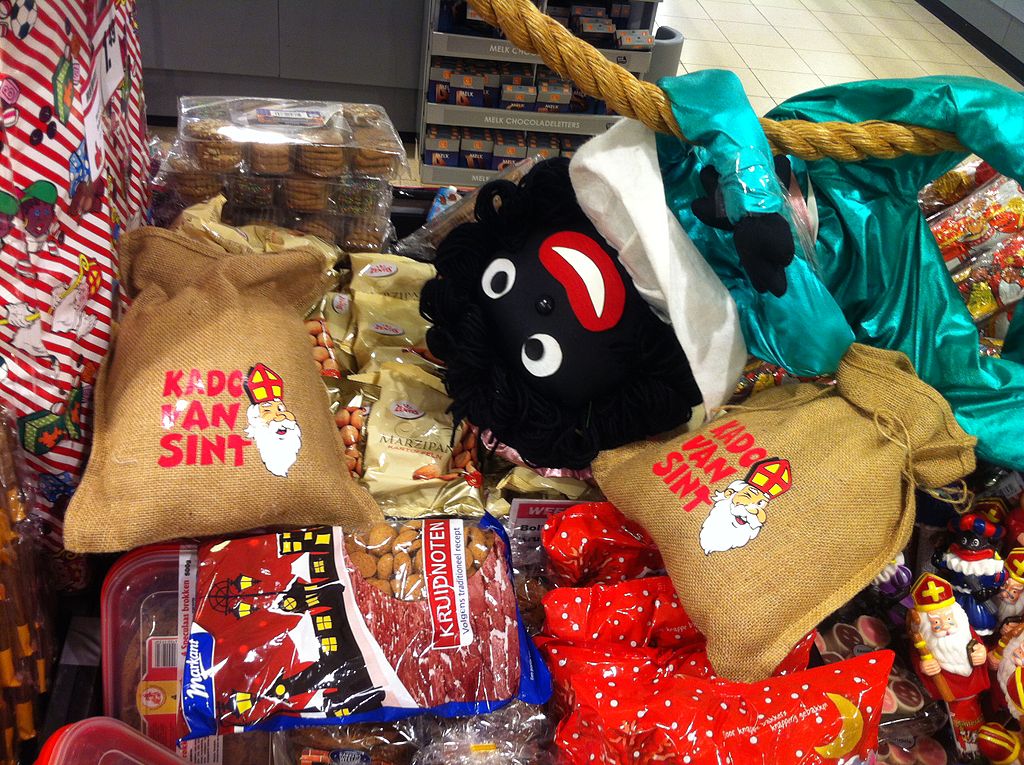
Zwarte Piet dolls in a grocery store. Image: MysteriousVP/Wikimedia Commons/CC3.0

Later that day, some Dutch friends of mine explained that the Zwarte Pieten were the helpers of some old white guy called Sinterklaas. They weren’t ethnically black, my friends assured me, just covered in soot from climbing the chimneys. “Oh, of course, that explains the oversized red lips!” I retorted, feeling the most acute anger sizzling through my veins. The more they tried to defend the character, the angrier I got.

“It’s just a harmless tradition.”

“Zwarte Pieten come from Spain, not Africa.”

“They’re nice! They hand out free candy!”

I learned that Sinterklaas arrives on a boat every year, surrounded by the black servants he supposedly brought with him from Spain. I was, and still am, mortified. I thought the Netherlands was a liberal, forward thinking country? I thought we were in the 21st Century? I can’t even imagine the outrage if this were to happen in South Africa.

Coming from South Africa

It’s often outsiders that challenge this Dutch tradition, and locals tend to get extremely defensive when you question it. Sure, we all come from different countries, and we don’t really have the right to judge other cultures — this is true, to an extent. 

But I think I’m in a unique position here. No, my passport is not Dutch, but my blood is. I — a white-skinned person born and raised in Africa — exist because the Dutch colonised the tip of Africa 200 years ago. 

From a young age in South Africa, we learn about these (and other) colonizers that spilt blood over the possession of our lands, enslaving and exploiting many Africans and Asians in the process. A few generations later, descendants of the Dutch developed a regime that systematically oppressed and persecuted black people in our country — Apartheid. 

The repercussions of such a traumatic history are too vast for me to cover. But, being born just three years after the end of Apartheid, I have personally witnessed the pain and chaos of a nation trying to heal itself from centuries of racial violence. 

South Africa likes to advertise itself as the Rainbow Nation, where different colours now live in harmony. There has been progress in my lifetime, but don’t be fooled, our nation sometimes feels on the verge of civil war. Racial division, to this day, is tearing our beautiful country apart.

So, when I look into the face of Zwarte Piet, I see the pain of my country, the crimes of Dutch colonisers, and the ignorance of privileged Europeans. 

READ MORE: Culture shock when moving to the Netherlands: from South Africa to Holland

Romanticising Dutch history

I suspect that Zwarte Piet has not been banned yet because many Dutch people are somewhat unaware of their own history. During my first year in the Netherlands, I took a pre-academic training programme to help integrate myself into Dutch society. Among other things, we were given the Dutch canon of history to study, which the Dutch, apparently, learn in school. 

The Dutch East India Company (VOC) was something I was already familiar with, but the history I was presented with here was vastly different from the content I had learned in South Africa. The company employees were worshipped as Dutch heroes, sailing across the treacherous seas to discover new lands and establish new trade routes. They were held up as pioneers.

Where was the slavery? The mass exploitation? The word “rape” didn’t even feature.

Now, the Dutch history cannon by no means denied that these events happened. But what shocked me was the narrative I was presented with. A narrative which treated the “dark side” of the VOC as a side note. The slavery, exploitation and forced migration of Africans and Asians were briefly mentioned and then brushed aside. 

I recognise that the world is not as simple as “good” versus “evil”, in that the VOC was both a pioneering force of new trade routes and the hand of oppression. But to belittle the very real damage that the Dutch inflicted upon the people groups that they ruled is in my view, appalling.

The canon was recently updated to include more information on the Dutch Transatlantic Slave Trade, which is great — but doesn’t correct decades of white-washed history teachings. 

READ MORE: Arnhem and Nijmegen ban Zwarte Piet following anti-racism protests

The colonial hangover

I think Russel Brand put it perfectly when he called this Dutch tradition a “colonial hangover.” Zwarte Piet reduces people of colour to an object to laugh at, which is a slap in the face for all the people that the Dutch oppressed. It laughs at their pain, at the exploitation that established the Netherlands as one of the most powerful countries in the world.

I struggled for years with guilt and shame over my skin colour, because it represented the oppression of the people around me. I have since learned that I don’t have to live in shame, because I am my own individual. I did not personally enslave black South Africans, or enforce the legal segregation of races in my country. But it is my responsibility to acknowledge what my ancestors did, how I benefited, and to treat people of colour with the respect and love that my ancestors denied them. 

Likewise, I do not blame the Dutch people of today for the crimes of their forefathers. The streets you walk on, the public buildings you use, were indeed funded by your colonial history. For that, we cannot blame you. 

What we can judge, however, is how you treat those that your predecessors enslaved. We can judge your lack of awareness, your offensive behaviour, and your precious traditions, because choosing to continue with those is on you. 

What do you think of the Zwarte Piet tradition? Share your thoughts in the comments below.

Disclaimer: The views and opinions expressed here are those of the author and do not necessarily reflect the editorial position of DutchReview.

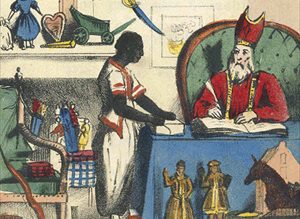
Feature Image: Image: Jan Schenkman – St. Nikolaas en zijn knecht/Wikimedia/Public Domain
5 Reasons to try ClinkNOORD Hostel for a long stay in Amsterdam

Life is full of transitions, and one of the trickiest is when you’re moving houses. A short-term home is sometimes necessary, and if you ever need one in Amsterdam, save yourself hours of Google searching, and head to ClinkNOORD Hostel.

If you’re moving house to or within Amsterdam, we feel you. House hunting in this city is brutal. Finding something that fits within your desired budget, neighbourhood, and style can be a serious feat, and when you do find something you like, it’s a mad dash to lock it down before someone else does. You certainly don’t want to enter into this dramatic competition from a place of desperation. So in the meantime, ClinkNOORD is a great place to stay; you can take your time and do it right. 

ClinkNOORD Hostel’s long-stay options allow you to settle in for a month or more while you get your situation sorted. You’ll get the same great experience you would staying for a weekend, only with extra perks, discounts, and the comfort of calling it home.

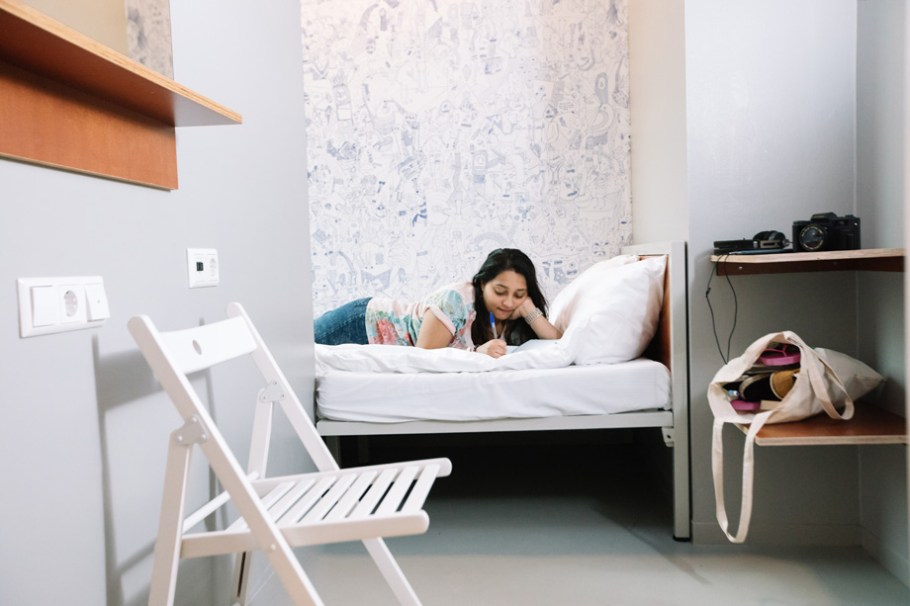
A comfy private room to settle in. Image: ClinkNOORD/Supplied
We received a very warm welcome on our visit to ClinkNOORD and couldn’t have been more impressed with everything they offer their long-term guests. We partnered up with them to bring you this heartfelt recommendation, and to share with you the top five reasons we think it’s a great choice for a short or long stay in Amsterdam.

An ideal location in Amsterdam Noord

Amsterdam Noord has recently become one of the trendier neighbourhoods in the city, and many people don’t realize just how conveniently located it is. It’s essentially right in the centre, only across the water. So you get all the convenience and access to the city without the constant hustle and bustle. 

The neighbourhood is home to the largest flea market in Europe, the A’dam Tower, THE BUTCHER Social Club, the Eye Filmmuseum, and the brand new NXT Museum. It’s quiet, but still vibrant, with plenty of nice places to eat and drink just steps away from the hostel. 

To get to Amsterdam Noord from Central Station, you just hop on a ferry. And it cannot be emphasized enough how easy, quick, and free this ferry is. It takes less than five minutes to cross the water and departs from directly behind the station. You just walk or bike right on, and in no time you’re in Amsterdam Noord. Once docked, it’s just a few hundred metres to the hostel.

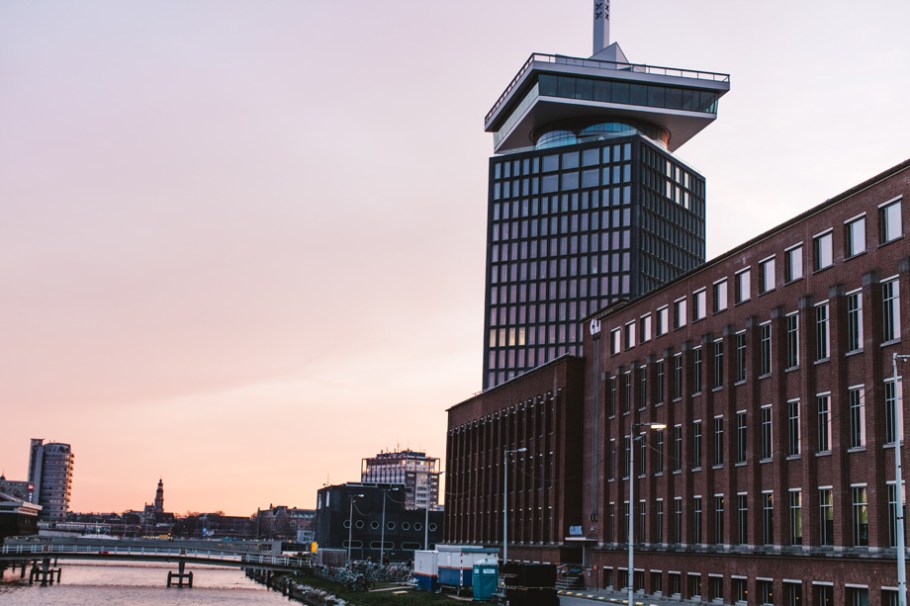
See the sunset from Amsterdam Noord. Image: ClinkNOORD/Supplied

Commitment to community

If you’re moving to Amsterdam for the first time, finding some kind of community is essential, and at ClinkNOORD you can easily meet other people new to the city. Sure, some other hostel guests may be just passing through for a quick stroopwafel, but others are in transitional situations just like you. 

In regular times ClinkNOORD hosts a whole slew of events and activities for their guests, to help them meet and mingle. They’ve got everything from Bingo to yoga (of course, in corona times these are scaled way back). They also have a special Facebook group just for their long-term guests to help folks stay in touch, so you’ll be making friends in no time. 

Incredible space and amenities

Games and entertainment

You’ll never be wanting for something to do in this spacious, kitted-out hostel. You can hit the pool table, play foosball, or wear out your wrist with free-to-play ping-pong. The vast range of games and shared space supports their intention of building community — it really couldn’t be easier to socialise and stay entertained. 

For chiller vibes, relax with a book from their darling library, or focus in at one of the low-key working spaces.

The ambience

It doesn’t really matter what you do though, you can just enjoy being there. You’ll see interesting and varied artwork all over the walls from artists they’ve hosted from around the world. Their special blacklight room called “The Box” is a real showstopper. Pop by the bar on your way in and have them whip you up a special glow-in-the-dark beverage to enhance the otherworldly experience.

ClinkNOORD-Hostel-glow-in-the-dark-cocktail
We give this room an especially glowing recommendation. Image: ClinkNOORD/Supplied

The awesome food

Then there’s the food, the delicious, impossibly convenient food. Breakfast is served every morning for a steal — just €3 for long-term guests. Their on-site cafe offers all the sustenance you need to make it through a day of working from home, so you can grab a sandwich and espresso and get cracking. 

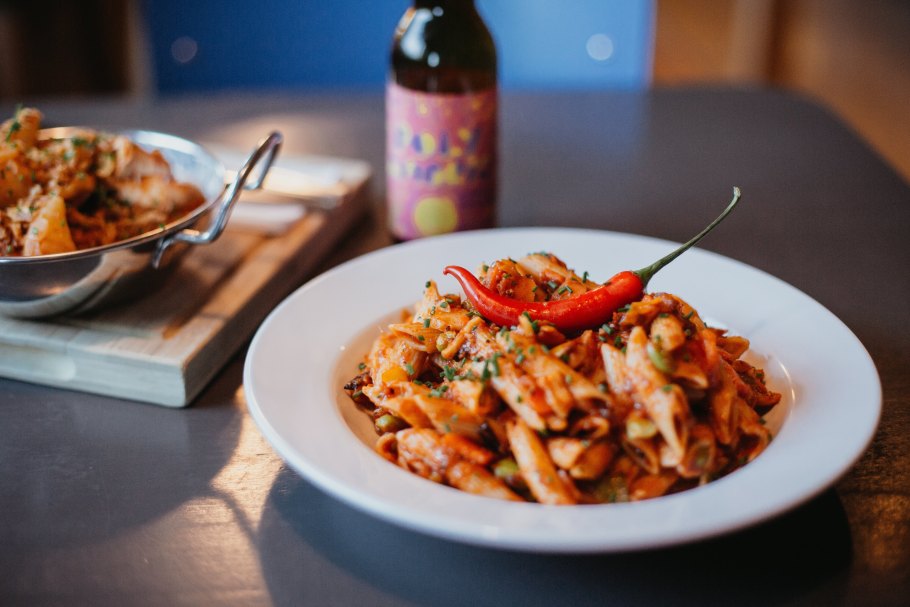
Into the evening, when you don’t feel like cooking but want a hot, cheap meal, you can opt for their “lazy dinner.”  Every night, the kitchen offers its guests this five euro option — a fresh, hearty meal for next to nothing. Pair with a glass of wine, then roll yourself up to bed.

ClinkNOORD Hostel pasta dinner
Why cook when you can have a €5 lazy dinner? Image: ClinkNOORD/Supplied

The rooms 

The rooms themselves are fresh and clean, with all the basics. Let’s be real, they are pretty basic — it’s a hostel after all, not the Waldorf Astoria. But if you’re between houses, keeping it simple is the name of the game. Your room probably won’t be big enough to unpack your whole life and settle in for good, and that’s not really the point here. But you can get comfortably nested and maximise your space by utilising their handy luggage storage.

Students and professionals working from home will appreciate the “Ultimate Study Suites.” These rooms have more space, a double bed, en-suite, and a personal study area. Not to mention a stunning canal view for your daydreaming delight.

The kitchen

If you feel like cooking, it’s easy to whip up whatever you’re in the mood for in their fully equipped kitchen. Store your food in one of the large refrigerators, and you’ll be feeling right at home. And bonus: the Albert Heijn grocery store is right around the corner.

Jaw-dropping value

ClinkNOORD’s long-stay options start at €340 a month for four-person dorms, perfect for making those new friends we keep talking about. From as low as €750 per month you can have your own private room. Higher-end options can include a double bed, canal-view, and en-suite, and each offers truly great value. 

Plus, you won’t be bothered by utility bills, contracts, or deposits. ClinkNOORD also provides free WiFi, bed linens, and even weekly cleaning. With the cost of living in Amsterdam at an all-time high, these savings are huge. 

But the best part of all: the discounts. You don’t have to be Dutch to appreciate a good discount. The hostel offers 50% off all food to long-stay guests, and 15% off drinks. You can even gain popularity points with your family and friends when you hand them a 20% discount off their own stay when they come to visit.

ClinkNOORD has the details covered[td_smart_list_end]

ClinkNOORD-Hostel-staff
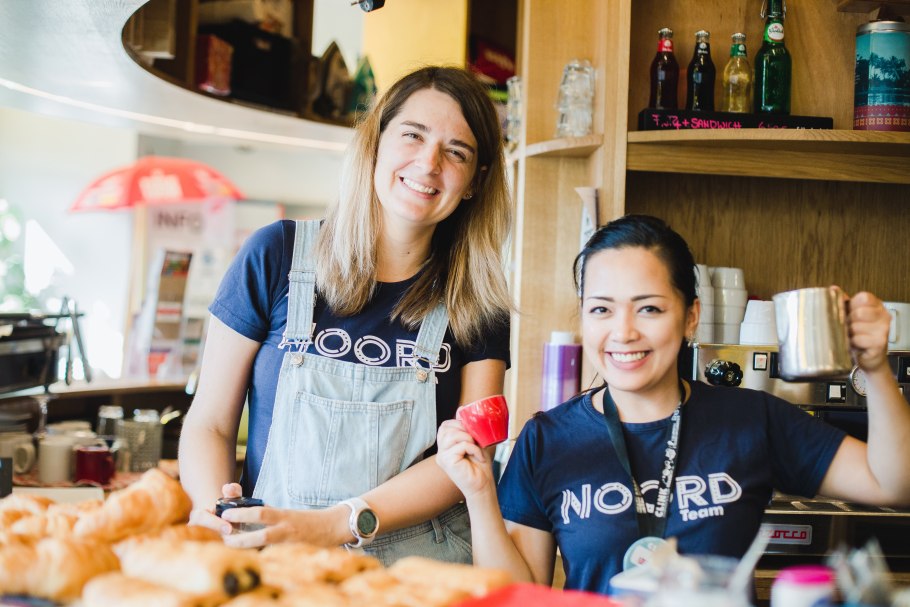
These folks know what you need before you even realize you need it. Image: ClinkNOORD/Supplied

Looking out for your comfort

The hostel is determined to make your experience the best possible. If you’re staying in a dorm, ClinkNOORD will take care to pair you with someone compatible. Students with other students, professionals with other professionals, night owls with other night owls. 

Making your life easier

For guests moving to the Netherlands from abroad, ClinkNOORD even offers to help you register in the Netherlands. This means, once you’ve stayed in the hostel for three months, you’re provided with a permanent home address to use when applying for your BSN number. So for all you international movers, there’s one huge burden already relieved.  

The little things

To simplify your stay, ClinkNOORD has bikes available for hire, laundry on-site, 24/7 reception, a travel shop, and even small things like hair dryers. 

The specifics

How ClinkNOORD is managing coronavirus

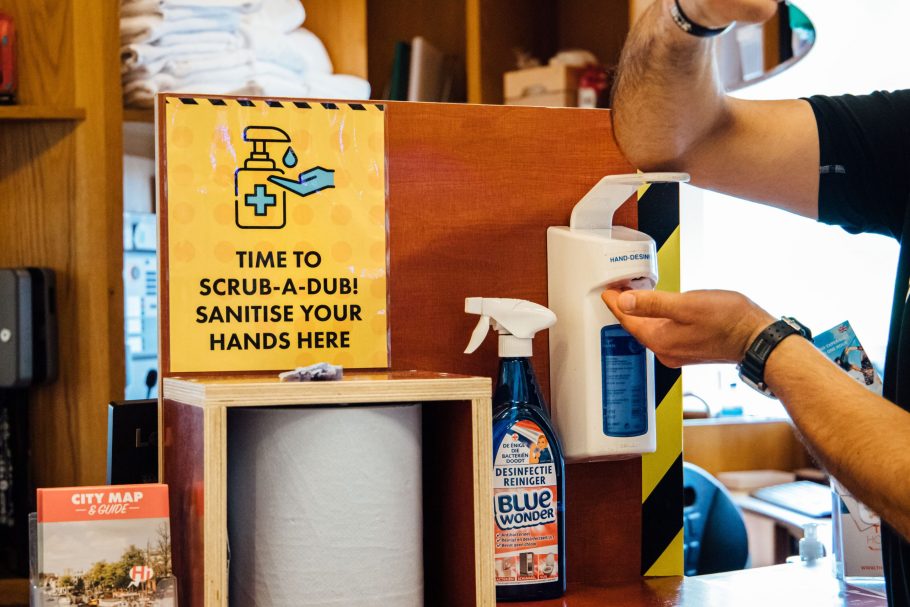
Finally, how they’re handling coronavirus. The building is incredibly open and airy as it is, and the hostel is operating at 50% occupancy. Everything is squeaky clean and sterile, with appropriate social distancing. They track visitors, provide hand sanitiser, and follow all of the other recommended guidelines.

ClinkNOORD-Hostel-coronavirus-measure
So fresh and so clean. Image: ClinkNOORD/Supplied

Get in touch

Contact ClinkNOORD by email or phone, and check out their website. Keep in mind that because they’re operating at half-capacity, it’s wise to reach out sooner than later to secure your spot. 

If you love the ClinkNOORD Hostel as much as we do, you may also want to check out their other smaller, eco-friendly, boutique locations in the city centre, Ecomama and Cocomama.

Would you have a long-term stay at ClinkNOORD? Let us know in the comments below!

Dutch metro misses end of the line, balances on sculpture 10 metres high

0

In a whale of a tale, a Dutch metro driver has narrowly avoided catastrophe after the metro ran through a buffer stop at the end of the line.

The car of the metro was left dangling 10 metres off the ground. It’s currently balancing on a conveniently placed sculpture of a whale tail.

Emergency services turned out en masse for the incident, which happened around 12:30 AM at metro station De Akkers in Spijkenisse, south-west of Rotterdam.

Luckily, the train driver was able to extract himself from the vehicle. While he is reportedly not injured, he was taken to hospital as a precaution. As far as the driver knows, there were no passengers in the vehicle at the time.

Lucky catch

The incident could have been much worse, if not for the sculpture at the end of the track. In a stroke of luck, the artwork ‘Whale tails’ by architect and visual artist Maarten Struijs managed to catch the metro before it landed on the walking path below.

It is currently unknown how the incident occurred. However, since the accident took place at the end of the metro line an RET spokesperson think the incident will not affect the timetable, reports Nu.nl.

However, salvaging the metro will take some time. “It is at a height of 10 meters at the end of the rail. It will be quite an exercise,” the spokesperson said.

Follow DutchReview on Facebook to stay up to date with news in the Netherlands. 

Feature Image: Rodney Youandi Kastelan @Rodjoch/Twitter

Four-month-old baby hospitalised after firework lands in pram

0

A four-month-old baby has been injured and hospitalised after a firework landed in its pram. 

On Saturday around 1:15 PM, three children were setting off fireworks in the Willem van Heesstraat in Breda. A couple walked past with a pram and one of the fireworks landed inside and exploded.

The baby boy is now being treated for injuries in the burns centre in Rotterdam.

According to police, the fireworks being set off were in category 1, meaning specific “children’s fireworks.” These are available for sale year-round.

An accident

The mother of the children (a 12-year old and two four-year-olds) who set off the fireworks says the children had her permission. She tells Omroep Brabant it was “really an accident.”

The children had just thrown up another spinner further than intended before they saw the couple approaching.

READ MORE | What is the future of fireworks in the Netherlands?

The baby’s mother picked up the still-burning firework from the pram with her bare hands and threw it out. The parents then immediately called 112.

The children were very shocked by the accident and have barely slept, says the mother. She is worried about them, but more about the baby who was injured.

Police continue to investigate the incident. The mother of the children is in contact with the parents of the baby and has offered to help.

Do you think children be allowed to play with fireworks? Let us know in the comments.

Feature Image: Micael Widell/Unsplash

Stricter measures coming to the Netherlands this week

8

Tighter coronavirus measures are in the making for the Netherlands. Inside sources have told RTL Nieuws that new restrictions will include a further limit on outside group sizes from four to two, and the closure of museums, cinemas, and theatres.

The measures were discussed yesterday during an informal meeting among ministers at the Cathuis, the official residence of the Prime Minister. Details are to be worked out today and the final decision will be announced during Tuesday night’s press conference. 

Stricter measures

The new restrictions will be in addition to the current measures and are expected to last two weeks, taking effect from Thursday. 

The government is also discussing whether stricter measures may be taken regionally, such as a curfew or full lockdown. 

Not all agree

The decision has not come lightly. While Prime Minister Rutte, Health Minister De Jonge, and Public Health Minster Van Arkel have proposed a two-week closure of the country, other officials are in opposition. Minsters Hoekstra, Grapperaus and Ollongren say the measures are going too far.

Do you think stricter measures are necessary? Let us know in the comments.

Feature Image: Gustavo Fring/Pexels

Former healthcare professionals urged to come out of retirement, again

Healthcare organizations in the Netherlands are making an urgent call for extra hands to ease the pressure on the health system. 

“The situation is not tenable for much longer,” a spokesperson for elderly care ActiZ tells AD. The healthcare industry is pleading for people with and without a healthcare background to register to work during the crisis. Students studying medicine or nursing are also urged to get involved.

Those who haven’t been in the industry recently, or who have no experience in healthcare, can take a one-week crash course designed to teach them essential skills to work in the industry.

Nursing homes are under particular stress, although the pandemic is already pushing hospitals to a breaking point.

Less support in the second wave

At the start of the pandemic in March, thousands of former care workers came forward to help. The website Extrahandenvoordezorg.nl was set up to register all the potential workers. Over 20,000 participants came forward in the first wave.

However, in the second wave, there is much less enthusiasm, a spokesperson tells AD. “Between March and June, we introduced nearly 8,000 people to a healthcare organization. Only about 2,500 people this autumn indicated that they are available.”

Healthcare organizations hope that staff from industries that are struggling, such as hotels, catering, and travel, will register to help.

“All support is welcome”

Moral support from society has also faded since the first wave, says Hans Huizer, chairman of the board of the Rotterdam elderly care organization Laurens.

“Our nursing homes were overloaded with fruit baskets, cakes and performances,” he tells AD. “Now it is quiet, right when our employees need all the support. Tired of fighting, they are at the front every day to fight this crisis for all of us. Right now, all support is welcome.”

What do you think of this initiative? Tell us in the comments below!

Feature Image: Karolina Grabowska/Pexels

CDA wants 250,000 new homes dedicated to first-time home buyers

1

The CDA (Christian Democratic Appeal) is pushing for one in four of all new homes built in the Netherlands to be intended for home seekers under the age of 35, whom the Dutch refer to as “starters.” This would amount to 250,000 new affordable homes in the next 10 years. 

The starters would be required to live in the house themselves and can only sell the house for a profit after five years, reports RTL Nieuws. They would also receive a €50,000 low-interest loan which would allow for a lower mortgage. 

The new houses would have total price caps at €310,000. It’s being investigated whether that can be even lower in areas with higher pressure housing markets.

Less control for municipalities

The plan will need to be implemented by a minister of housing, and be included in the National Housing Plan. This will force municipalities to give up the power to decide which type of housing may be built where. They will be obliged to ensure that a quarter of all new housing is categorised as affordable.

The CDA may also push for the National Housing Plan to include more mid-range rental homes with a rent of up to around €1000 per month.

Would you be interested in buying one of these affordable homes? Let us know in the comments.

Feature Image: PhotoMIX/Pexels 

Prime Minister Rutte to continue as VVD party leader

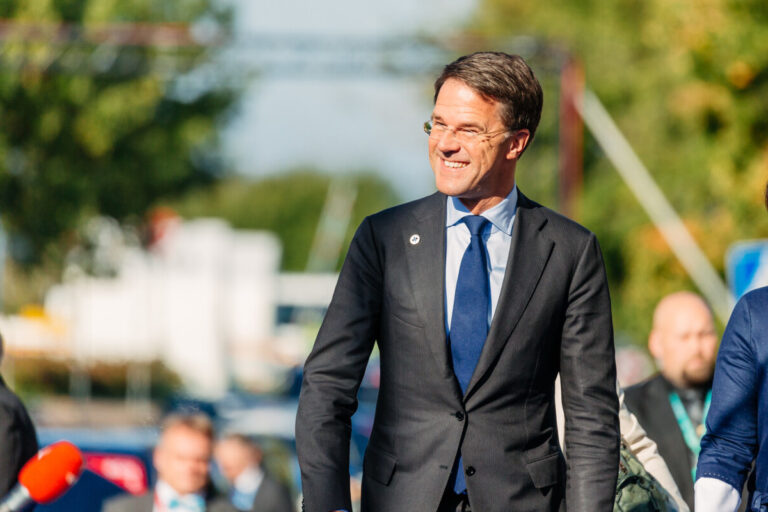
This week, Prime Minister Rutte will officially announce his decision to continue on as the VVD party leader. The news comes as no surprise.

Rutte’s popularity has been strong in the last few years, and his leadership of the Netherlands through the corona crisis has been particularly praised. The VVD continues to dominate the polls, so it is very likely that Rutte will continue as Prime Minister for another four years, reports RTL Nieuws.

Limited options

VVD members encouraged Rutte before the summer to continue with leadership of the party, but initially Rutte was hesitant to make a decision. He expressed that he would decide a few months before the next elections.

Klaas Dijkhoff, who would have taken over from Rutte, announced recently that he would not be returning to the party after the new elections. This left few suitable candidates to take Rutte’s place.

Rutte’s track record

Rutte has led the VVD for over fourteen years now, and has been Prime Minister of the Netherlands since 2010. If you’re wondering, the Netherlands does not have a cap on how long a Prime Minister can be in office for.

His popularity thus goes back a long time, and he has proven himself a reliable leader in the eyes of many Dutch. Fellow politicians value his experience. Should he win the next elections, Rutte will surpass former CDA Prime Minister Ruud Lubbers as the longest serving Dutch Prime Minister since the end of the war.

What do you make of Rutte running for office again? Let us know in the comments.

Feature Image: Arno Mikkor/Flickr/CC2.0

Five suspects arrested following fatal assault of elderly man in Arnhem

Following Wednesday night’s report of a fatal attack against an elderly man, five boys have been arrested. The group consists of one 18-year-old and four underage boys. 

At approximately 9:15 PM on Wednesday night in Arnhem, an elderly man (73) was beaten so badly that he had to be resuscitated on scene. The man later died from his injuries. The assailants fled the scene after the attack.

Police released an appeal through Burgernet asking for help finding five youths, all in black apart from one, who wore a white hoodie. The police tweeted that almost 6,000 people had reached out to help.

Suspects arrested

By Thursday morning, the police had been unable to locate the assailants. The Mayor of Arnhem, Ahmend Marcouch, made an appeal to the attackers on Twitter, asking that they report to the police.

“Terrible for the next of kin and very bad for the whole of Arnhem. The only thing the perpetrators can do is report themselves.”

It has not been disclosed whether or not the assailants turned themselves in. However, Marcouch later announced that the police had arrested five suspects, the NOS reports.

Four underage suspects

The suspects consist of one 18-year-old man and four underage boys from the regions of Rozendaal, Westervoort, and Arnhem.

Mayor Marcouch took to Twitter once more to describe the situation as “even more tragic than it already is” given the fact that four of the suspects are underage. For now, the suspects are being questioned by police.

Follow DutchReview on Facebook for the latest news and updates. 

Feature Image: DutchReview/Canva

Moving to the Netherlands for the first time: difficulties with language, orders and groceries

4

I am learning Dutch.

I say that with a small, proud smile, even though in reality I’ve completed one Dutch course that is apparently below the A1 level. So maybe I’m at A0.

For a language-lover like myself though, moving to the Netherlands for the first time whilst learning to speak Dutch is a great opportunity. After all, doesn’t everyone say it’s easy to learn a language when you live in the place; when you have no option but to learn the language?

Yet, one thing I often hear as an expat living in Amsterdam is that “It’s hard to get people to speak Dutch to you because everyone in the Netherlands speaks English.”

I don’t dispute it. Us English-speaking expats are spoilt with the knowledge that should we walk into a shop or cafe and place an order in English it will be easily understood; no Google Translate or hand gesticulation mimicking drinking a cup of coffee, necessary.

Having taken a beginner Dutch course though, I try my best to speak some Dutch where I can. Ironically the problem actually comes when I do try and order in Dutch.

Sorry… what?

“Mag ik een latte macchiato met kokosmelk alstublieft.” The spell is cast; the Dutch rolls off my tongue and I have a glowing feeling of belonging. Pretty soon I’ll also be eating bread with butter and hagelslag for lunch, I think to myself with a chuckle.


But then the barista, naturally assuming I speak Dutch, responds to me with a long comment/question/ statement which I don’t understand. I stand there, blinking like a deer caught in the headlights, frantically trying to think if there’s a single word in his comment/ question/ statement that I recognise.

What is the right response!? It’s not even one of those situations where someone has repeated themselves so many times that you just smile or laugh and hope that passes as an appropriate response. The barista could be telling me they’re no longer serving coffee and responding with a generic smile or laugh would be awkward.

Eventually, though, I have to admit defeat: “Errrm…sorry?” I ask with an apologetic smile.  The illusion is shattered. He realises I’m a native English speaker, disappointedly says: “Ah, English,” and repeats his question in English for my understanding. I take my coffee, find a seat and ponder the small, everyday changes that accompany this new life in the Netherlands.

Gambling with groceries as a new expat

When moving from a country where English is the main language, the last thing you’re expecting to struggle with is grocery shopping. I remember confidently walking into an Albert Heijn in my first week in the Netherlands, thinking I’ll probably make an easy pasta for dinner that night with my ultimate favourite vegetable: mushrooms.

Until I realised I don’t know what the difference is between “Paddenstoelen” and “Champignon’s”. Or that I actually had no idea what was in the pasta sauce I wanted to buy because the ingredients are listed in Dutch… Dinner that night was a tasty gamble.

I can look back and laugh now because it’s just so easy to get it wrong. I have a friend who mistakenly bought body cream when all he really wanted was a shower gel. I’ve erroneously bought buttermilk (karne melk) before thinking it was fat-free milk (magere melk).

Another time I mistakenly purchased some sort of cottage cheese yoghurt (hutten kwark), thinking it was normal yoghurt, on my way to work — needless to say I skipped breakfast that day.

Oh, the precious euros wasted on trying to understand local products!

Dutch people will speak English where they can, but your day-to-day lifestyle aspects will not be in English. Bills and community notifications, the receipts you’ll need to be able to return those guilty purchases from De Bijenkorf, the comforting blurb explaining all the benefits of that health food you just splurged on, and the automated part of a telephone call you make to an institution that tells you to “Press 1 for English” — in Dutch.

But we love the challenge…

The challenge keeps things interesting though; the mistakes too, are hilarious when you think about it. What unknown product will I mistakenly purchase tonight? Which operator will answer my call and will I be redirected correctly or berated for choosing the wrong option? Which Dutch word will I realise I don’t truly understand, but from now on will never forget?

It’s more of a learning experience if you will. An opportunity for growth through making (costly) mistakes- After all, how does that Instagrammable saying go? “If you aren’t learning, you aren’t growing!”

What were your experiences when moving to the Netherlands for the first time? Let us know in the comments.

Feature Image: Chait Goli/Pexels
Editor’s Note: this article was originally published in February 2019, but was updated in October 2020 for your reading pleasure.