
Moving to a new country can bring with it mental health challenges, and expats often struggle with adjusting to a new place. Whether it’s a language barrier, new customs and mannerisms, or very grey weather (looking at you, Netherlands) there are lots of changes to deal with. Relocation can also bring with it isolation and general stress.
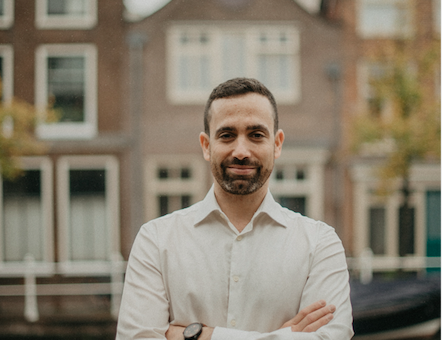
In order to understand this further, we sat down with Roy Kamienchik, an international psychologist in Leiden who operates just around the corner from our office. We sat down with him to talk about mental health in the Netherlands, environmental anxiety, and the Dutch approach to mental health – this was right before the pandemic. So in June 2020, we talked with Roy again about the impact of coronavirus on mental health.
Introducing Roy, an international psychologist in Leiden
Roy is from Israel and did a bachelor in Film and Psychology, and then did a masters in Organisational Psychology. But after a while, he realised that he wanted more connection with individual patients, and began working to make the switch to clinical psychology. It was then that he moved to the Netherlands, where he did a second masters degree at Leiden University in Clinical Psychology. Since then, Roy has been working at an established clinic, as well as setting up his own practice, BrightMind Practice, here in Leiden, where he offers therapy and coaching in Hebrew, English, and Dutch. He often works with expats and international people living in the Netherlands.
Coronavirus and mental health
Since we originally published this article, back in the pre-corona days, the question of how coronavirus has been affecting our mental health has a topic a lot of people are talking about. So, we asked Roy to share his perspective on the global pandemic and its impact on mental health.
“The global Covid-19 pandemic has brought with it copious challenges for mental well-being. One such challenge is the imposed limitation on social contact and basic everyday human contact,” Roy says. “A robust body of evidence from a large variety of disciplines has long made it clear: social contact and even mundane human contact is vital for psychological and mental wellbeing.”
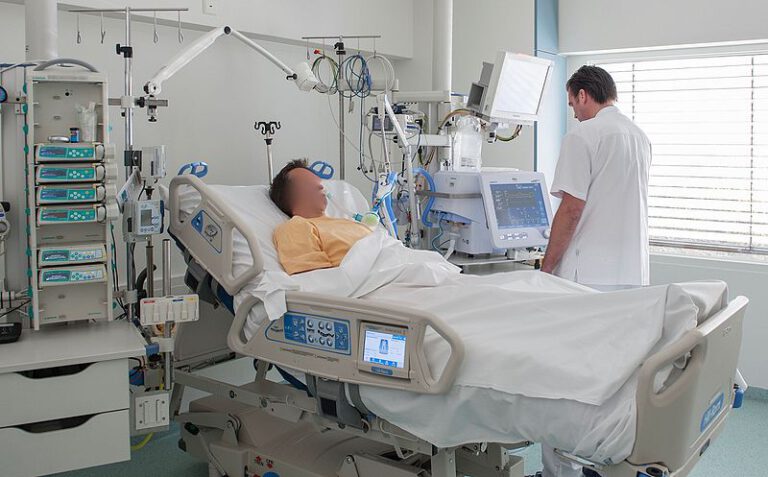
When people miss out on those everyday human interactions- as many of us have been over the past few months- that absence “swiftly and dramatically affects mood, anxiety levels and overall feelings of vitality and meaning,” Roy says. Loneliness and isolation can even have an impact on a neurobiological and immunological level. And then, of course, Roy adds, the fact that there is “a real degree of existential danger brought by the pandemic, as well as the accompanying uncertainty, add further psychic pain.”
Already, we’re seeing a significant rise of depressive, anxiety and loneliness symptoms, as reported in national and international surveys, Roy says. He advises anyone experiencing these feelings to, first of all, treat them with the appropriate gravity: for different people, that can mean dealing with them yourself, or seeking professional help.
Most importantly, though, you should realise that such mental reactions “are not ‘strange’, or ‘disturbances’, or to be considered a source of embarrassment. These are in fact normal healthy reactions to not-normal disturbances in our physical and social world.” This realisation, he adds, should always be the approach, whether a global pandemic is raging or not.
The psychological impact of being an expat
Anyone who has ever moved country knows it can be a stressful and emotionally challenging experience. You’re leaving familiarity behind for uncertainty, and you’re often left with the task of building your social circle from scratch. We wanted to ask Roy about this- as a psychologist who often works with expats, did he notice any common complaints among them?
Expats often have a sense of isolation
“Of course you have a sense of isolation very often. Many people uproot themselves from where they were and they have to rebuild a network of connections. And for people who might find that difficult in general, it’s extra difficult to do so in a new country. So there’s that sense of isolation, but there is also isolation in the feeling of being in a bubble because of the language.” Roy says. “When you speak English and move to an English speaking country, you feel some connection to the people who live in that country. But here, because people in the street speak Dutch, there is an extra sense of being in a bubble, which creates a sense of disconnect. And we know disconnect really affects wellbeing.”
Connection is crucial to wellbeing
“People often don’t realise how much connection influences wellbeing.” Roy says. We’ve all heard the basic tips for establishing a social circle in a new country before: start a new hobby, go to events, and so on. For Roy, all that leads back to the idea that you need to consider making connections as a task you need to do when you move somewhere new- just like finding a new job or registering at the municipality. Connections will make other aspects of moving to a new country much easier to deal with: “It matters less if it’s cloudy and rainy when you have connections.”
There is often a spike in complaints around September each year, as it gets grey, cold and dark again. In my experience, even more than around Christmas.
Dutch weather can be another psychological stressor
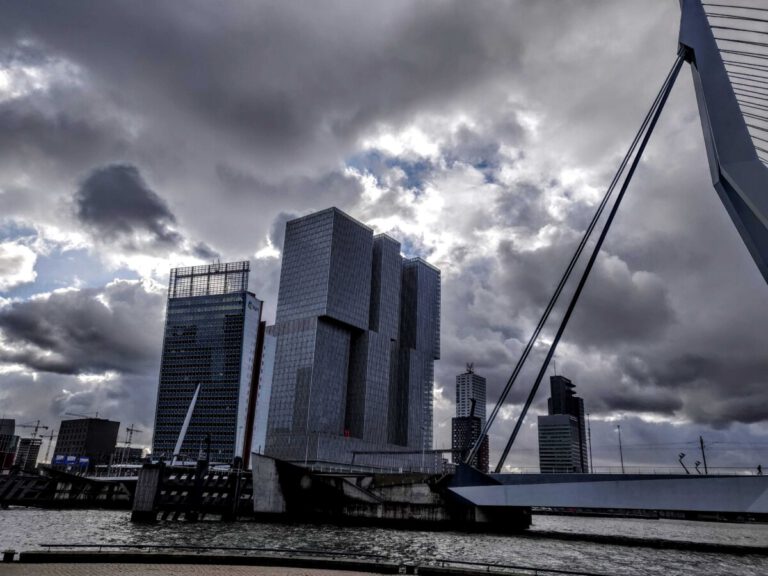
The weather is another factor that makes adapting to life in the Netherlands difficult for a lot of internationals, particularly those who, like Roy, hail from much warmer countries. “I don’t think I’d seen more than two days of cloudy weather in a row in Israel. When I came here, I actually had dreams about the sun. But it’s of course difficult for Dutch people, too. I have noticed there is often a spike in complaints around September each year, as it gets grey, cold and dark again. In my experience, even more than around Christmas.”
Is the Netherlands really happy?
We also had a fascinating conversation with Roy about the Netherlands’ generally high score in international happiness indexes. Given everything he’d noticed about Dutch people’s mental health, did he think that these indexes were wrong? “Actually, the story is more complicated than that,” Roy says. “In this research, the way happiness is measured is not always about emotional wellbeing. There is a difference between life satisfaction, and happiness in terms of emotional wellbeing.”
Difference between emotional wellbeing and being content
These indexes tend to be based on the former, rather than the latter, which means that people who might not feel that great emotionally could still be counted as “happy”, because they are satisfied with their life. “People can be very satisfied with their life, it’s very nice, goed geregeld, safe. That doesn’t necessarily mean that they measure their emotional wellbeing. And, when it comes to these studies, there are often high scores for life satisfaction in places like Bhutan and Mexico, which are countries where the conditions are not as convenient.”
There is some degree of delegitimisation of negative emotions and suffering here. So I think this all gives rise to “coaching”, because people find it easier to say, ” I’m going to coaching” rather than “I’m going to therapy”.
The rise of coaching in the Netherlands
As part of his own practice, BrightMind, Roy offers coaching as well as therapy. The first question we asked him about this was about the difference between the two. “It’s a fine line. Sometimes in therapy you give some coaching, and vice versa. But the difference is that therapy is for something that is causing you considerable distress and mental suffering. Of course someone might come to coaching for something that is causing them distress, but we’re not talking mental distress to the extent of significant mental suffering there. Sometimes in coaching you will notice a deeper issue, and it’s important not to brush over it. But generally coaching is about helping someone develop some skills that are lacking, for example in planning or interpersonal skills. But it’s not for something that is overwhelming in terms of psychological distress.”
Dutchies prefer coaching to therapy because of social pressure
The lines are becoming even more blurred due to a recent phenomenon. “There is some stigma around therapy, in some countries more than others- and here in the Netherlands, I personally notice it is surprisingly strong.” This is probably a result of several things, including a fear of looking “weak” when asking for help, but also in the Netherlands a particular result of the Dutch Calvinistic attitude, Roy thinks. “There is a lot of doe normaal, het gaat door, geen zorgen, geen klachten. So there is something in the culture here that is more austere. There is some degree of delegitimisation of negative emotions and suffering here. So I think this all gives rise to “coaching”, because people find it easier to say, ” I’m going to coaching” rather than “I’m going to therapy”.”
Culture and language play a huge role in therapy
We also asked Roy how this played out with internationals. “I get more people coming from countries that are more open to therapy, of course,” Roy said. “It depends hugely on the culture.” Given that Roy gives therapy and coaching in several different languages, we wondered if he noticed differences in himself when he switched languages, as some bilinguals do. He said no- rather, he feels like a combination of all those languages and not as much a different person in each language. He also mentioned that being able to borrow words from different languages allowed him to give more nuance to certain ideas. It was fascinating to hear about how much of a role culture and language played in therapy and coaching sessions.
International students and mental health
Given that international students are a significant proportion of internationals in the Netherlands, we were curious about whether Roy ever worked with them, and whether they had any particular issues. He does: about forty percent of his clients are students. They often struggle with “the fact that this is their very first time away from home, on top of all the regular issues that you have when you move to a new country.”
There are some people who have this sense that we probably won’t be here in fifty years or so. Their mere sense of existence is questioned. One big factor in this anxiety is the uncertainty: we don’t know exactly what is going to happen.
Environmental anxiety in young people
We also asked him about environmental anxiety- fears about the future of the planet that are particularly prevalent among younger people at the moment. It’s something that can feel totally overwhelming and all-encompassing, and is coming up more and more frequently in conversation with his clients. “There are some people who have this sense that we probably won’t be here in fifty years or so. Their mere sense of existence is questioned. One big factor in this anxiety is the uncertainty: we don’t know exactly what is going to happen.” Something else that came up at this point in the conversation was the rise of mindfulness, and an increasing awareness of and interest in Asian philosophies. When it comes to climate change, it can be helpful to realise that uncertainty is simply a part of life, even while recognising the importance of fighting for climate justice. Many psychological approaches have been incorporating these cultural philosophies in recent decades.
Mental healthcare in the Netherlands from the perspective of an international psychologist
Mental health care has become a frequent topic of discussion in the Netherlands in recent years, largely because getting access to it can be difficult. There are long waiting lists for seeing a therapist through your insurance, particularly in the Randstad. It’s a tough situation for those who need help. Roy reckons the best way to deal with the situation is to get on the waiting list for a clinic which your insurance will pay for, but in the meantime, prioritise getting help, even if that means you have to pay for it out of your own pocket. Some people might be able to give up a hobby for a couple of months, which would be worth it if they got the help they needed. But of course, Roy emphasises, this is not possible for everyone, and in an ideal world, no one would need to worry about money when getting the help they need. Most of Roy’s clients do get reimbursed by their insurance companies, he says.
We really enjoyed hearing Roy’s perspectives on mental health in the Netherlands, and particularly on how expats and internationals experienced the adjustment to life here. We also loved getting to know Roy because he’s basically our neighbour, operating just around the corner from us here in Leiden! If you’re interested in booking a session with Roy, you can head over to his website BrightMind Practice and learn more about the registration procedure.
What has your experience of mental healthcare in the Netherlands been? Let us know in the comments below.
Editor’s Note: This article was originally published on 4 March 2020, but was updated with extra information about coronavirus’s impact on mental health in June 2020.
Feature Image: Roy Kamienchik/Supplied.









.jpg)