Home Blog Page 660

Too big to fail: billions from the Dutch government for KLM bail out

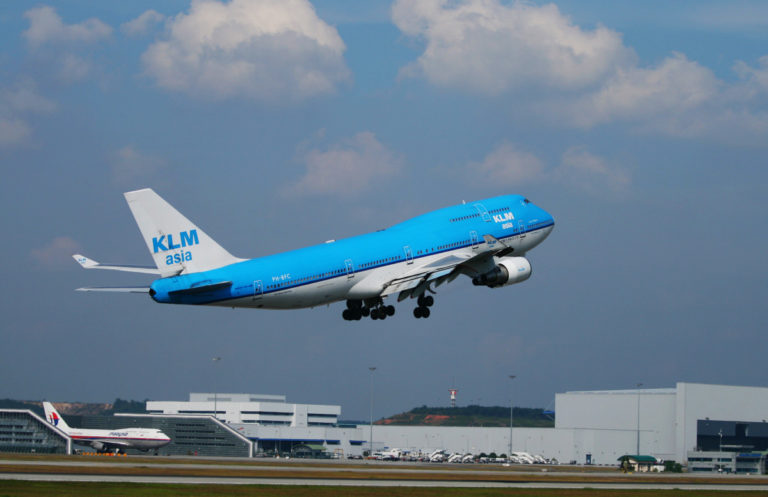
In last night’s press conference, finance minister Hoekstra and infrastructure minister Van Nieuwenhuizen announced that the Dutch state pledges to bailout KLM, the iconic Dutch airliner, for an amount of up to four billion euro. 

Exactly how the financial aid will be structured remains to be determined. Minister Hoekstra is thinking of guarantees and loans. “KLM is vital for the Dutch economy and Dutch employment,” he said. The Royal Dutch Aviation Company is hit hard by the corona crisis. Due to travel restrictions, 90% of the fleet is grounded.

Conditions for KLM bailout

There will be conditions for the bailout though. Staff salaries need to be moderated, starting at the very top (just this week KLM messed up twice by announcing, and retracting, intentions to award big bonuses to their managers). Also, no dividends or profits may be given to shareholders, no bonuses will be awarded, and efforts must be made to ensure sustainability and noise-reduction.

“It’s about tax money,” said Minister Hoekstra. “It is reasonable that the strongest shoulders also carry the heaviest loads.” It cannot be ruled out that pilots’ salaries must also go down. The cabinet emphasizes the economic importance of KLM, especially in connection with Schiphol’s as its home port. KLM employs around 35,000 people, but many Dutch companies are also indirectly dependent on the airline company and Schiphol.

“KLM is like a domino at the start of a long line,” said Hoekstra. “If that stone falls, it has consequences for companies in loading and unloading, distribution centres, events and tourism. Companies of all shapes and sizes.”

The French will support Air France

The support of up to 4 billion is specifically intended for KLM and not for the parent company Air France-KLM. The French government has its own support package worth seven billion euros for Air France.

The amount consists of four billion euros in bank loans, which the French state guarantees. In addition, Air France will receive three billion in direct aid. According to French minister Le Maire, the airline is not nationalized.

What could and maybe should have been the first question at the presser yesterday:

Translation: First question from the NOS: “For years we have seen that KLM does not pay tax covering airline tickets and kerosene and what do they get in return? Another batch of government money? How does that add up?”

Is a bailout for KLM justified?

While I can’t deny the economic importance of KLM for the Dutch economy and that I’m happy for their employees. Many are wondering if this is all worth it. KLM already has an advantage when it comes to its tax situation and was in an economically turbulent situation with Air France before the coronavirus crisis started.

The PR-debacle around the possible bonuses for the top-management signalled that there are some persistent flaws in the management of the company.

Furthermore, many customers of KLM are wondering where their refund is as they wait for a refund on cancelled tickets, money they also surely need personally in these times. A heated debate in the DutchReview group is sure to break out.

What do you think of the KLM bailout? How are your feelings about KLM? Let us know in the DutchReview group or in the comments!

Feature Image: Abuzer van Leeuwen
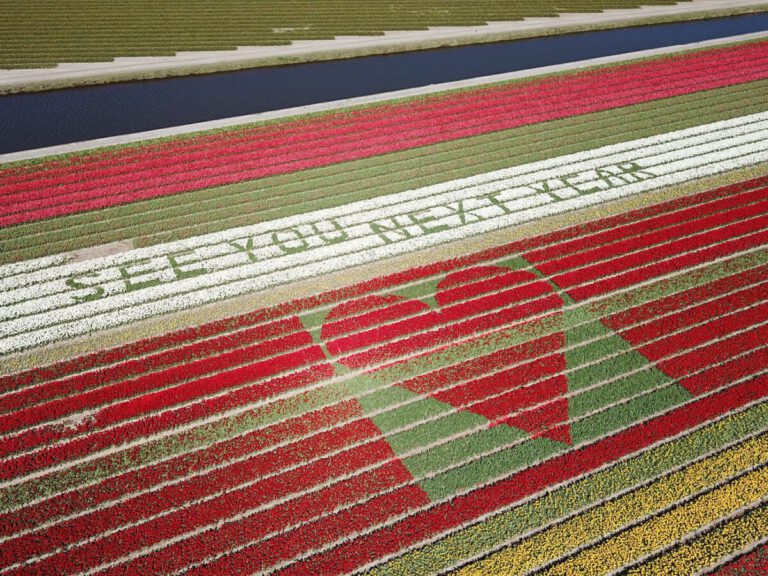
Dutch tulip farm sends a bloomin’ great message to tourists forced to cancel their travel plans

A family-owned tulip farm has had spelt out a dandy message using their flowers after having to close due to the coronavirus crisis. 

Dutch Daffodils is normally swarmed with tourists at this time of the year. But, this year their tulip fields are empty of people. So, they decided to get creative.

Every year the farm must remove the heads of tulips after they reach their peak bloom. By doing this, they divert the flowers’ energy back into the bulbs below for the next year.

Owners Rik and Ilse Pennings decided to use this process to send a message. They partnered with the travel company Tulips in Holland to spell out ‘See you next year” utilising the stems of the tulips. Below? A giant red heart ❤️

View this post on Instagram

Due to Covid-19 travel plans has changed. Many of you were planning to travel to The Netherlands to see the flower fields in bloom. Unfortunately this isn’t possible this year. And many of you won’t see the flower field in full bloom. . This week the @dutchdaffodils and the Tulips in Holland family teamed up to create something for all people who suppose to travel to The Netherlands. You may miss The Netherlands, but we miss you too! . This Sunday we spend with our families in the flower field to create something special for you. We headed the tulips a bit earlier to write this message. From our families to yours! . We hope that this brighten your day a bit and we hope to see you next year! Much love! ❤️ . @dutchdaffodils & Tulips in Holland #travel digitally to the #tulipsinholland spring 2020 tulipsinholland.com

A post shared by Tulips in Holland (@tulipsinholland) on

The project stretches for 45 metres, and took twenty-five hours of manpower. Owner Rik said that the project was “spontaneous” and not just for the tourists, but also for the locals, the workers, and Keukenhof.

On Facebook, Dutch Daffodils described their reason to complete the design:

“Due to COVID-19 travel plans have changed. Many of you were planning to travel to The Netherlands to see the flower fields in bloom. Unfortunately, this isn’t possible this year. And many of you won’t see the flower field in full bloom.”

“This week the Dutch Daffodils family and the Tulips in Holland family teamed up to create something for all people who suppose to travel to the Netherlands. You may miss the Netherlands, but we miss you too!”

Us? We love the message! We hope that we’ll be able to get to see the fields next year.

What do you think of this idea? Tell us your thoughts in the comments below!

Feature Image: Dutch Daffodils/TulipsInHolland.com

Coronavirus update: number of ICU patients falls for 12th day in a row

0

The RIVM has published the latest count of coronavirus cases in the Netherlands.

As of now, there are 36,535 confirmed cases, 806 more than yesterday. The number of hospitalisations has reached 10,281 an increase of 123 from the last count. There have also been 112 more deaths since yesterday, reaching a total of 4289 deaths.

How are things looking in the ICUs?

The number of beds occupied by coronavirus patients in intensive care units is one of the best ways of monitoring the progress of the virus. Things are continuing to improve in that regard, as the number of patients in ICU beds associated with coronavirus has dropped for the 12th day in the row as of yesterday.

Taking public transport while social distancing

Public transport organisations are working together with the Ministry for Infrastructure to build an app for seat reservations. If more regulations are relaxed, pressure on public transport will increase, which is problematic if you want to maintain a 1.5m distance from everyone. Only 25% of seats can be filled if this distance is to be maintained.

Eurovision Rotterdam 2021?

Coronavirus has caused many major events to be cancelled, including Eurovision 2020, which was to be hosted by Rotterdam. But, there could be light at the end of the tunnel: Rotterdam City Council has put money towards hosting it in the city next year, and giving healthcare workers free tickets.

New coronavirus patients in the north of the Netherlands will head straight to Groningen

Three hospitals in the north of the Netherlands will return to regular care, with new coronavirus patients to be directed to UMCG or Martini Hospital in Groningen. This will allow hospitals to resume regular care for patients, as 70% of regular treatments were postponed as a result of the coronavirus crisis.

Follow DutchReview on Facebook for more coronavirus updates in the Netherlands. 

Feature Image: DutchReview/Canva

Northern hospitals divide and conquer: all coronavirus patients to Groningen

New coronavirus patients in the north of the Netherlands will now receive care at only two hospitals in Groningen. Three northern hospitals will return to regular care. 

Hospitals in Assen, Emmen, and Scheemda will not move their current coronavirus patients. However, newly diagnosed cases requiring hospitalization will now be redirected to UMCG or Martini Hospital in Groningen, reports RTV Drenthe.

The move will reduce pressure and resources on hospitals so they can return to general hospital duties. For example, it is estimated that 70% of regular treatments were postponed while attention was on coronavirus.

Attending to cancer patients will be a high priority for the hospitals, but the main practitioners will make decisions about who is prioritised.

According to surgeon Ger Sieders of the UMCG, the move will be better for the hospitals and the patients. “Clustering patients allows you to optimize care. It is better to have a larger group than a single patient with a particular condition,” he says.

Do you support the move to cluster hospitals? Tell us your thoughts in the comments below 👇

Feature Image: Pixabay/Pexels

News stories you might have missed during the pandemic

0

While the coronavirus pandemic dominates every front page, other news is getting bumped to less prestigious places. Here is a recap of the news stories you might have missed since the virus snatched the news cycle.

February

False claims of harassment by Dutch politician

Dutch police are investigating if the founder of the Netherlands’ anti-immigration Forum for Democracy (FvD) party, Thierry Baudet, committed a criminal offence when he falsely claimed two female friends had been “seriously harassed by four Moroccans on a train”.

After he posted the claim on Twitter, other commuters who had been on the train rebutted his claims. After Baudet posted a picture of the alleged suspects on his Instagram, the NS stated that the men were a police officer and three tickets inspectors.

It was later revealed that the women did not believe the men were ticket inspectors and refused to show them their tickets, which led them to identify themselves and call the police officer. The NS clarified that it is common practice for inspectors not to wear a uniform, in order to avoid people escaping checks.

March

Mothers going missing from Dutch shelters

After dozens of pregnant African women living in asylum shelters in the Netherlands went missing, the Dutch government issued an alert in the hopes of locating them. They believe these women were taken against their will, and are likely victims of human traffickers and illegal adoptions schemes.

An investigation conducted by The Guardian and Argos Radio of Netherlands established that women continue to vanish weekly from asylum shelters in the whole of the Netherlands.

Post-consumer age mall opens in Groningen

In a time when the overconsumption model is proving unstainable, Groeningen placed its bet for the future with a ten storey “multi-space” mall that sells almost nothing.

Created to be a hub for the whole community, the mall is the result of a €101m investment. It has a big library, movie theatres, exhibition halls, cafes, a museum about comics, an auditorium and a top-floor restaurant and bar.

It is possible to spend very little – or nothing – to do something fun downtown. That’s Groeningen’s rebuttal to the commercialisation of public space and its bet for the future of cities and communities.

Dagger from Indonesian hero returned with a 45 year delay

The Dagger belongs to Diponegoro, a prince who led an unsuccessful uprising against Dutch rule in Indonesia in 1830. It is reported that after his defeat, he laid the dagger at the Dutch governor-general of the Dutch East Indies’ feet. In 1975, the Dutch government promised to return Diponegoro’s treasures to Indonesia, but the dagger went missing.

Despite efforts by Dutch ambassadors to Indonesia to return the object, museum officials considered the return undesirable – they had also mislabeled it. After the publication of secret memos in a historian’s book, the issue of the dagger was raised again. Outside experts came in and found the dagger, which the Dutch culture minister was finally able to return.

April

Hague court orders the Dutch state to pay compensation over colonial massacres

During World War II Japan occupied Indonesia, after its defeat nationalist leaders proclaimed in 1945 the Republic of Indonesia. In the next four years, the Netherlands fought to keep its 350-year-old colonial grip on the country.

Now, the families of 11 men who died through the hands of Dutch soldiers, as a consequence of their misbehaviour, will get compensation. One man saw his father being shot when he was 10 years old, another was the family member of a man who was randomly killed. It was an uphill battle for the claimants that lasted eight years, some died before the ruling.

Dutch court rules in favour of euthanasia for advanced dementia patients

Dutch doctors are allowed to carry out euthanasia of patients with advanced dementia who have asked for the procedure in the past. The Supreme Court upheld a ruling from a lower court, which cleared a doctor from carrying out the euthanasia of a patient with severe dementia. The patient could not ask for the procedure at the moment but had asked for it in writing in the past.

What other news stories have you noticed being overshadowed by coronavirus? Let us know in the comments below.

Feature Image: Hasan Albari/Pexels

Rotterdam to organize Eurovision again in 2021

0

The current coronavirus crisis has lead to the cancellation of many events that people were looking forwards to this year, from King’s Day to Eurovision.

Nevertheless, the city of Rotterdam is planning to host Eurovision next year in 2021, reports NOS.

6.7 million euros set aside for next year

The city has already decided to set aside 6.7 million euros, in order to invest them in Eurovision next year. This sum comes as an addition to the 15 million euros already invested in Eurovision for this year.

Eurovision would normally have happened in a few weeks from now, but given the current circumstances, that is not possible. In order to participate again as a city, the city council needs to stand behind the candidacy and invest money. A decision will be taken around mid-May if Rotterdam is to truly host it in 2021.

Eurovision care festival

Another plan for next year if plans to host Eurovision come to fruition is to support the care workers from Rotterdam which are now on the frontlines of the coronavirus crisis. The plan, laid down by the city council, is to give care workers free tickets to the show and to honour them during the tv show.

Alderman Kasmi is the one responsible for implementing the plan and is currently looking planning to invite care workers to a show or to a rehearsal.

Follow DutchReview on Facebook for the latest news on the coronavirus in the Netherlands.

Feature Image: David Jones/Flickr

Social distancing on public transport: seat reservation app in the works

0

You might have been wondering how public transport will work in a 1.5m society, especially when businesses reopen and more people need to travel. Well, like most problems that have arisen as a result of the coronavirus crisis, an app will come to the rescue. Hopefully. 

It’s not expected that the number of people needing to travel by public transport will increase much as a result of the primary schools reopening in May, but if other relaxations come, space will certainly be at a premium.

Trains can be 25% full if the 1.5m rule is observed

If the 1.5m rule is kept to, trains can be 25% filled. At the moment, they’re currently 10-15% full, so there is not a huge amount of wiggle room. For that reason, a reservations app for seats is being considered.

How to decide who should travel, and when

In theory, this should be pretty easy: plenty of transport systems in other countries run on a reservations basis all year round. But the question here is rather who can travel, and when.

Of course, essential workers should get priority, and there should be special hours for vulnerable people to travel. There is also the question of how you enforce such a thing: who checks if someone is an essential worker? And should there be a complete ban on non-essential travel?

“You cannot leave that to the personnel of the transport companies.”

These are the questions that a working group made up of employees of the Ministry of Infrastructure, public transport companies, and passenger organisations.

“You can already see that the grumpiness among passengers is increasing,” says Pedro Peters in an interview with NOS. “If you are going to keep passengers out, you cannot leave that to the personnel of the transport companies. That is a government task. That has to be arranged.”

Would you support a ban on non-essential travel with public transport? Let us know in the comments below.

Feature Image: DutchReview/Canva

Coronavirus update: one third of nursing homes may have an infected person, says RIVM

0

The RIVM has published the latest count of coronavirus cases in the Netherlands.

As of now, there are 35,729 confirmed cases, 887 more than yesterday. The number of hospitalizations has reached 10,158 an increase of 137 from the last count. There have also been 123 more deaths since yesterday, reaching a total of 4,177 deaths.

How are things looking in the ICUs?

As we know by now, the number of beds occupied by coronavirus patients in intensive care units is one of the best ways of monitoring the progress of the virus. Things are continuing to improve in that regard, as the number of patients in ICU beds associated with coronavirus has dropped for the 11th day in the row as of yesterday.

Air France-KLM CEO to get bigger bonus if he secures financial aid for company

The KLM storm rages on, after it was revealed that Air France-KLM CEO Ben Smith’s bonus will be increased if he brings in financial support for the company. Like all of the aviation industry, the company has been hit hard by the coronavirus crisis: but people are pretty angry about a portion of the suggested 10 billion euros heading straight for one man’s pockets.

Primary schools could reopen fully by 1 June

If all goes well with the partial reopening of primary schools after the May vacation, the cabinet has recommended that they fully reopen on 1 June. This would mean that all children under 12 would get between four and six weeks of regular school before the summer holidays begin.

Cafes and restaurants not likely to reopen soon says Rutte

Yesterday in the weekly debate about coronavirus in the House of Representatives, Rutte said he didn’t foresee the catering industry being able to reopen any time soon. He said he was already worried about the restrictions lifted on Tuesday, and that he wanted to make sure the healthcare system could cope.

What will cinemas look like in a 1.5m society?

Like cafes, cinemas can’t reopen yet. But they already have a plan for how they could do it, and it involves allowing only a quarter of the seats in each theatre to be filled. Furthermore, tickets might become more expensive, and cinema-goers will be advised not to arrive early, to avoid crowding in the foyer.

Coronavirus was probably in the Netherlands long before we initially thought

Based on an RIVM model, it seems that coronavirus was present in the Netherlands from at least mid-February onwards, although the first case was only reported on 27 February. Individuals who were tested later than this said that they had symptoms in early February already.

Follow DutchReview on Facebook for more coronavirus updates in the Netherlands. 

Feature Image: Gustavo Fring/Pexels

Air France-KLM CEO will get bigger bonus if he brings in financial support for the company

0

The aviation industry has been one of the hardest hit by the coronavirus, with many cancelled flights around the world.

Nevertheless, there has been controversy over how governments should aid this industry, as employees and CEO’s are known for the big bonuses associated with their salaries.

Air France-KLM hit hard by the crisis, but will receive government support

As most of the fleet of the company has been grounded due to the current crisis, Air France-KLM is going through difficulties, reports NU.

The CEO of the company, Ben Smith, will receive a higher bonus if he manages to secure financial support for the company. This is part of a wider strategy by the company to cut all unnecessary costs.

AS much as they’re making noise about cutting costs, the company will almost certainly receive a 10 billion euro state aid package in the form of bank loans guaranteed by both the Netherlands and France.

Lots of criticism as a result of this bonus scheme

The company is under scrutiny as a result of this, with several politicians calling for strict conditions.

Part of the criticism comes from the reveal that KLM intended to increase its bonus ceiling during the crisis. KLM CEO Pieter Elbers renounced his higher bonus after this information was revealed. Further controversy was caused when it was discovered that hundreds of KLM pilots were planning on avoiding taxation.

Should the government be strict on giving aid to flight companies? Let us know in the comments.

Feature Image: Jyi1693/ Wikimedia Commons

Coronavirus probably arrived in the Netherlands earlier than initially thought

0

According to a model run by the RIVM, the coronavirus might have travelled and spread through the Netherlands earlier than the first confirmed case.

February 27 was the date when the first official coronavirus case was reported. However, the coronavirus might have been in the Netherlands since February 15, reports AD.

Business as usual in February

Back in February, the coronavirus did not inspire the same amount of urgency and concern as it does now. Testing procedures were limited and so was the level of alertness.

A woman from Brabant ended up in intensive care on February 21, with a coronavirus test being conducted on her much later (she tested positive). The woman had medical complaints for weeks leading up to her arrival in an ICU.

Similarly, a poll among hospital staff in Brabant showed that seven out of 86 infected employees had complaints since mid-February.

In mid-February, things were normal in Netherlands. Thousands of people flocked to football stadiums and to music festivals, unaware that there were several cases of coronavirus already throughout the country. This was a full two weeks before Minister Bruins announced the first case.

How did the virus spread to the Netherlands?

From what is known so far, the coronavirus spread from other highly infected regions, such as from Lombardy in Italy.

This was caused by many Dutch people travelling there for winter sports. As no travel restrictions or medical check-ups on arrival were in place, people carrying the virus escaped attention when they arrived from Italy to the Netherlands.  This is confirmed by professor virology Marion Koopmans from Erasmus MC, who has said that “winter sports were a super spreader”.

Another area from which the virus spread is from Austria, again due to winter sports. In the city of Ischgl, which has a ski-resort, quite a large number of Dutch people got infected and then spread the virus when returning back home in the Netherlands.

You can get more information about the overall situation of the coronavirus in our article here.

Follow DutchReview on Facebook for the latest news on the coronavirus in the Netherlands.

Feature Image: Fusion Medical Animation/Unsplash