Home Blog Page 661

128 patients with Corona, Ajax staff to stay at home out of COVID-19 fear

0

46 new patients have been diagnosed with coronavirus in the Netherlands, bringing the official number to 128.

Meanwhile, football club Ajax’s assistant coach, Cristian Poulsen has been asked to stay home along with two other Ajax staff members until next Firday due to a suspected coronavirus infection, RTL Nieuws reports.

As of now, these are precautionary measures, as Poulsen celebrated his 40th birthday party where a guest had tested positive for COVID-19. Alongside Poulsen, the team’s physiologist, Alessandro Schoenmaker as well as one of the physiotherapists are also under home isolation, according to De Telegraaf.

Naturally, the team does not want to take any risks in the case that the virus breaks out further.
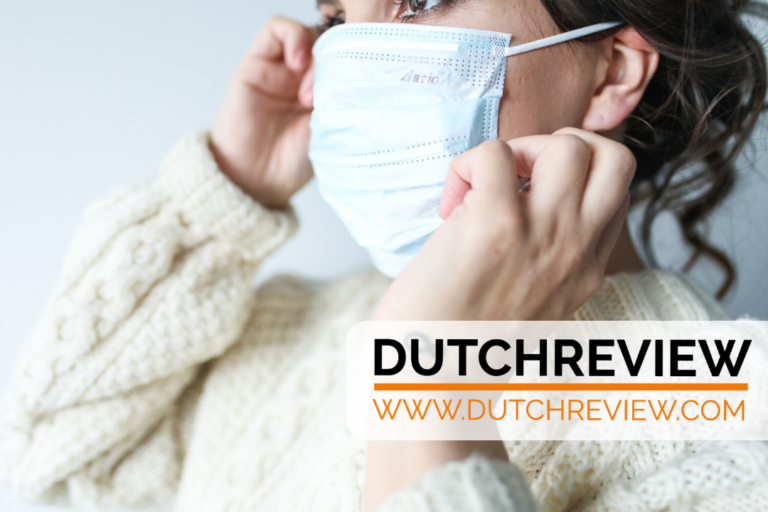
As of yesterday coronavirus cases in the Netherlands have increased rapidly, and the first casualty has occurred in the Netherlands. Read more about what you can do to prevent being infected, and watch our video on the most asked questions regarding coronavirus.
For updates on coronavirus in the Netherlands, follow DutchReview on Facebook, Twitter and Instagram
Feature image: Gajendra Bhati/Pexels 

The Netherlands to recycle all plastic packaging by 2025

0

15 European countries and 66 companies have come together under the Europe Plastics Pact to agree that not some, not a lot, but all plastic packaging must be made recyclable or otherwise reusable in Europe in the next five years, of other objectives. This pact will be presented in Brussels today by the Dutch Minister for the Environment and Housing, Stientje van Veldhoven.

The idea blossomed a year ago during the meeting of environmental ministers in Brussels, when van Veldhoven came together with her French and Danish colleagues.

Reduce, Reuse, Recycle

According to the nos, Europe produced approximately 65 million tons of plastic, of which 40%  was used for packaging. Shockingly only 30% of these products are currently being recycled in Europe. Furthermore, all plastics end up in a large heap, making it problematic to sort through.

The European Plastics Pact has four elements that the signatories are committed to achieving by 2025: making plastic fully recyclable or otherwise reusable, reducing unnecessary plastic and plastic made using petroleum by a minimum of 20%, improving the sorting and recycling capacity of current plastic by 25% and using a minimum of 30% recycled plastic in new packaging and products.

Baby steps

According to van Veldhoven, ‘if we want to achieve the Paris climate goals, we must look at clean raw materials as well as clean energy. I think we should be able to reuse every little bit of plastic in the future and keep it out of our oceans and environment . . . I am proud that we are taking the first steps here today.’

How might plastic be reduced by supermarkets? Let us know in the comments!

Feature image: Abuzer van Leeuwen/supplied

Leiden ready to shelter orphaned refugee children from Greece

2

The municipality of Leiden is open to receiving orphaned refugee children currently homed in the Greek islands, according to the nos. Although the precise number has not been set as yet, 25 children are currently being considered. 

The municipality claims to be the first to be open to the idea of for these children. ‘We see that this is desperately needed now,’ Leiden’s mayor, Henri Lenferink has stated. ‘Leiden has traditionally been a city of refugees, I am confident that we can take good care of these children.’ Other regions (such as Utrecht) are also receptive should the country decide to accept refugee children.

Call to action

Leiden’s statement is a response to a call made by the Refugee Foundation and the Council for Refugees and Defence for Children, who would like the Netherlands to take in approximately 500 young asylum seekers in the Greek camps. The organisations hope that working with Dutch municipalities will encourage the country as a whole and take in underage refugees, like other countries are currently doing.

But of course, it is not up to the municipality but the country to make any final decisions. State Secretary Ankie Broekers-Knol was in Brussels yesterday to discuss this issue but it is not as yet known whether an agreement was finalised.

Can the Netherlands do more?

In October 2019, Greece asked EU countries to take in more than 2500 children from overcrowded camps in the region. The Netherlands did not respond, however. Numbers of orphaned refugee children seeing shelter in Greece are only on the rise. So perhaps it wouldn’t be a bad idea to provide shelter for minors.

Any Leiden folks reading this? How do you feel about your city stepping up?

Feature image: jeyeonwon/Pixabay

12 things the Netherlands and Costa Rica have in common

The Netherlands and Costa where? But isn’t Costa Rica a jungle or an island? There is nothing similar between these two countries! Well, I think the Netherlands has more similar aspects with my home country, Costa Rica, than others, even compared to other Latin countries.

Of course, there are many more differences, but let’s concentrate only on the ones that make us similar (let’s be the difference of finding things that bring us together, instead of differences that set us apart!)

Maybe you plan to go to that exotic country located just in the belly button of the American continent one day — but, you wonder how crazy it would be because the country is so different to the Netherlands. Well, if you read this post you’ll find that there is a lot more in common between Costa Rica and the Netherlands than you think!

Netherlands and Costa Rica: both are tiny countries

Comparison in size of Costa Rica and the Netherlands. Image: thetruesize.com

Costa Rica is slightly bigger than the Netherlands (51,100km² vs 41,543 km²). Nevertheless, the Dutch population is three times bigger than in Costa Rica. The reason behind that is because Costa Rica is full of mountains and national parks, so most of the people do not live there and almost all the population is concentrated in the central valley. On the other hand, in the Netherlands, all the population is nicely distributed throughout the space, while also concentrated in the cities.

Netherlands and Costa Rica: football is important

Both countries know how to support their national team. Definitely some booze, colourful dress code, and weird dances are mandatory. Although the Costa Rican team has been in less World Cups than the NL team, both countries have maintained an overall high score.

READ MORE: Oranje Fever and Dutch Fans: 7 Tips to Survive an International Dutch Football Match

Maybe one day we will see each other in the final (I wish….), but for the moment Costa Rica is waiting for the revenge of the quarter finals of Brazil in 2014. Costa Rica lost the ticket to be in the semi-finals against the great orange team. But honestly, just to be in the quarterfinals for us was enough to celebrate.

Netherlands and Costa Rica: it rains a lot

I think of the most common complaints about the Netherlands is the weather. Although in Costa Rica there is warmer weather, the rain is very common, especially in the rainy season, from May to December. But, you can experience rain even in February — so almost all year round, like in the Netherlands!

Netherlands and Costa Rica: both countries names get confused

While the Netherlands is wrongly called Holland in many countries, Costa Rica is often confused with Puerto Rico — they’re not even the same country! Probably many of us are tired of telling the difference every time somebody says our country names wrong.

READ MORE: Rebranding the Netherlands: Goodbye ‘Holland’!

Netherlands and Costa Rica: sarcasm

This was a big surprise for me. Not even in Italy and France are people sarcastic like the Dutch. The Dutch just don’t get offended easily over small jokes, and they laugh about themselves freely. In Costa Rica, we do this very often, almost every news item we turn into a joke and laugh about it. Dutch humour is very similar to the Costa Rican one.

Netherlands and Costa Rica: dangerous animals when hiking

Not the same dangerous animals, but dangerous nonetheless. Image: Carmen Monge

You are kidding, right? Well, yes and no. I grew up hiking all around in Costa Rica. Since 25 percent of the country is a protected area, that means there are several trails to do. My parents took us every weekend to hike in different national parks.

In Costa Rica, you can see many types of animals, and you learn to respect every animal. It doesn’t matter if it is big or small, dangerous or safe. You know that even the cutest bird or smallest frog could be somehow dangerous.

READ MORE: Hiking in the Netherlands: 4 myths, busted.

Because I grew up with this knowledge, I have been cautious when hiking in the Netherlands. Apparently, a sheep could be very aggressive and there are more loslopende stier (stray bulls) than you might think. Of course in Costa Rica, you might find snakes, tapirs, or big cats, but probably they are more afraid of you than you of them (or maybe kinda the same).

Netherlands and Costa Rica: beach lovers

costa rice and the netherlands beaches
A beach in the Netherlands: not bad. A beach in Costa Rica – wow. Image: Carmen Monge

Although the beaches are very different, in both countries you can reach the beach in less than two hours, and when the weather is good or when there are school holidays, you will see the beaches full of people. There is also some nature around the beach in both countries, in the Netherlands, you have the dunes, in Costa Rica, well you have the jungle.

Netherlands and Costa Rica: family time

I think for both cultures family is very important. I was surprised when I asked my Dutch co-workers what they did on the weekend. Many of them had spent time with family, had coffee at grandma’s or gone shopping with their moms. You might think this is common, but no. In many countries, you just see your relatives on special occasions like weddings, Christmas or funerals.

Costa Ricans are very similar to the Netherlands in this aspect. On the weekends, we spend at least one day with the family that we don’t see the rest of the week. We tried to keep in touch with relatives the most we can.

Another reason why I think family is important in the Netherlands is for the main question the Dutch ask me about living away from home: Do you miss your family? The answer is always yes! and I think they understand that very well.

Netherlands and Costa Rica: Grandma’s food

Homemade Dutch hutspot and homemade Costa Rican fish soup. Image: Carmen Monge

There is nothing that both cultures appreciated more than homemade traditional food. Sure you can find many recipes for appeltart, hutspot or pannenkoeken. But none of them is like grandmas. The same happen in Costa Rica, you can have Gallo Pinto, tortillas and fish soup in a restaurant but nothing will taste as good as in your grandparent’s house.

READ MORE: The Dutch food dream: 13 unmissable dishes in the Netherlands

Netherlands and Costa Rica: both love sugar

Yeap, I was shocked by the traditional Dutch breakfast, hagelslag with toast. So much sugar early in the morning. Well, the Dutch have their sugar from very early in the morning and regular doses during the day. Costa Ricans have it in small doses all day in many types of presentations.

I know the traditional Costa Rica breakfast is the Gallo Pinto (Rice with bean) and eggs. But nowadays, few people have the time to have this dish every morning, so I grew up eating cereal (loaded with sugar) before school or bread with something (cream cheese, jam or eggs). Then in Costa Rica is very usual to have a dessert after every meal and something sweet in the afternoon with the coffee, or some ice cream when is hot. Sugar lovers? Both of us.

Netherlands and Costa Rica: appreciating borrels & birritas

Costa Rican beers and Patacones (fried plantain) with all sorts of fillings. Image: Carmen Monge

In both cultures, we love to go for some beer with snacks after work, especially on Fridays. Instead of bitterballen, in Costa Rica you might find something called chifrijo or patacones (fried plantains, curious fact: you can find them in here in the Tokos!). Even some fried cheese could be in the Costa Rican borrel, so do not worry about not finding something less exotic.

Netherlands and Costa Rica: pura vida and gezellig

It does not mean the same, but both are expressions are kinda representative of each country, and both have a positive connotation. Pura vida means “pure life”, and it is more like a way of living.

In Costa Rica, we use it for everything: to ask how someone is, as a response to say well, to say goodbye, to say that something is nice, or that we had a nice time. When somebody explained to me the meaning of gezellig the first association I made was with the Pura Vida, so it was easy for me to understand the true meaning, even if the use is different.


Well, that is it: my perception of the similarities between the two countries. If this convinces you enough to visit Costa Rica, hurry up there are direct flight from November to March and it is just perfect to escape winter!

Do you think your country has more similarities or differences with the Netherlands, or if one of these also applies to your country? We want to know — tell us in the comments below!

Feature Image: Canva

Coronavirus cases in the Netherlands jump from 38 to 82

0

Today, COVID-19 has registered a huge spike of cases in the Netherlands, jumping from 38 to 82 infected persons.

This has been confirmed by RIVM (Netherlands National Institute for Public Health and the Environment) and it also has been announced by the Health Minister of the Netherlands, Bruno Bruins.

Many infections at hospitals in the Netherlands

Many of the new cases are hospital staff that became infected after treating sick individuals who already had the coronavirus.

An employee at Catharina Hospital in Eindhoven became infected after treating a patient, and another hospital employee at Jeroen Bosch Hospital in Den Bosch also became infected under similar circumstances. Both of the employees are currently undergoing home quarantine.

You can read more about if the Netherlands is doing enough to contain the spread, as well as some reassurance about the coronavirus.

Follow DutchReview for updates about the coronavirus. 

Feature Image: Geralt/Pixabay

Say goodbye to talking to your neighbours: packages to be delivered to bus stations

Don’t you just hate it when your introverted self has to talk to your neighbours because they had received your package while you were away at work?

Worry no longer, because a company called EVAnet is planning to implement pick-up points at bus stations in the Netherlands, reports RTL Nieuws.

Lowering CO2 emissions

The plan is being developed due to several reasons. First, pick-up points for packages are becoming insanely overcrowded and secondly, this will reduce CO2 emissions caused by delivery vans.

The plan is to install 60 package delivery safes across three bus stations in South Holland, as part of the pilot project. The project will run for 8 months, and if successful, it will be implemented throughout the Netherlands further.

Why bus stations? Laurens Tuinhout from EVAnet argues that bus stations are found in many residential areas in the Netherlands and are easily accessible, even by car.

What about just dropping the package in the trunk of your car?

Another company, called 2DEAL, is planning a different system of delivery entirely. Instead of delivering the packages to bus stations or to pick-up points, they plan to have an app that allows the courier to open the trunk of your car and leave the package there. Because nothing says privacy like allowing a stranger to access the trunk of your car!

Richard Klomp, a representative of the company, argues that this method is efficient because you no longer need to drive anywhere and the delivery can be done overnight. The technology has already been developed but hasn’t made it onto the market yet.

People would still rather receive their packages at home

Jesse Weltevreden, who is an e-commerce specialist at the Hogeschool in Amsterdam, considers that all of these options have potential. However, research suggests that people still prefer to receive their packages at home.

He says that safes have already been introduced some years ago for delivery of packages, yet they have not been used extensively. Not all packages fit in a safe and he does not understand placing safes in bus stations, as few Dutch people travel by bus. A better location would be one where people already go to, like the supermarket, Weltevreden states.

Greener options for delivery

According to him, there are much better, ecological and more efficient methods of delivery. The client, for example, could specifically state the time and place where he will be in order to receive the package. Also, investments can be made for electric vans or bike couriers.

How do you prefer to receive your packages? Let us know in the comments.

Feature Image: Donald Trung/Wikimedia Commons

Coronavirus update: hospital staff in Eindhoven, Breda and Den Bosch infected

0

Yesterday it was announced that an employee at the OLVG hospital in Amsterdam was infected with coronavirus. Today, staff in Eindhoven,’s-Hertogenbosch and Breda are reported to have been infected as well, according to the NOS. In Eindhoven, it was a nurse from the Catharina Hospital. In Den Bosch, a physician’s assistance was infected at Jeroen Bosch Hospital, and in Breda an employee at the neurology clinic was infected at the Amphia Hospital. 

Den Bosch

The patient in Den Bosch had been in contact with someone infected in Gelderland on Friday and reported flu symptoms on Tuesday. Tests confirmed he was coronavirus-positive yesterday. The patient is currently in home isolation, the patients he had been in contact with in the oncology wing are also in isolation, and his colleagues have been asked to take precaution.

Eindhoven

The employee in Eindhoven was likely infected while taking care of a patient who had been diagnosed this Monday. The patient is currently in home isolation, as are all the patients in the department where he or she works, and are currently being tested.

Breda

The employee in Breda is also in home isolation and has fortunately not been in contact with patients. Employees working closely with the infected have been sent home for a period of two weeks, and the clinic was cleaned thoroughly.

Yesterday it was reported that there were 15 new contaminations bringing total up to 38, but it’s highly probable that these newly infected patients were not included in the total. The RIVM will provide updates later today.

COVID-19 is now rapidly spreading through the Netherlands, make sure to do your part in order to prevent getting infected.

For more updates on coronavirus, follow DutchReview. 

Feature Image: FaceMePLS/Flickr

Coronavirus: is the Netherlands doing enough to prevent the spread?

In the midst of all the information surrounding the new coronavirus, it’s easy to give in to two types of reaction: panic or carelessness.

Neither of them is optimal nor provides appropriate protection. As an Italian expat professionally working on viruses and keeping an eye on the situation back home, I feel the need to keep the discussion in the Netherlands scientific.

Is this virus considerably worse than the flu?

Yes.

While this is not one of the most dangerous viruses to ever exist, the latest (global, which means mainly China) estimates suggest a case fatality rate (CFR) of about 3.4 percent. Since the usual flu causes around 0.1% mortality, there’s more than 30 fold increase with this new virus.

The danger of comparing it to the flu lies also in the fact that we’ve all encountered the influenza virus in our lives and are equipped with pre-existing immunity against it, not to mention vaccines, treatments and data.

Does that mean that we’re all gonna die?

No.

While the mortality rate is not dismissable, it’s not as high as in epidemics such as Ebola, SARS and MERS (these last two were also caused by coronaviruses).

Furthermore, the calculated CFR is an average of many age groups; young healthy people seem to be in relatively small danger.

The Case Fatality Rate (CFR) of the flu compared to COVID-19. Data: CDC

These numbers can vary a lot in different countries, due to the quality of care as well as the age of the population. For example, a country like Italy has good healthcare (especially in the North, where the outbreak started) but has a relatively old population – that often lives together with their young relatives – so the CFR there is about 3.1 percent.

Keep in mind that these numbers are likely to change as more asymptomatic cases are discovered; we probably won’t have the real CFR well after the epidemic has passed and studies of antibodies can be performed.

So it’s all fine?

Again, no.

The mortality rate of a disease is only one of the various factors contributing to its gravity. Looking at a Western world country like Italy, it’s obvious that while the virus itself isn’t decimating the population, it is putting its healthcare system under some serious strain.

Several hospitals have been completely converted to treat solely virus-infected patients; doctors and nurses have been working overtime, many of them with no shift to replace them for two weeks now (so barely going home, some not at all).

Additionally, while it is true that COVID-19 has not such high mortality and that most people develop a mild form of the disease, 10 percent of them (in Italy) need to be placed in the ICU. This means a reduction of the number of beds available in intensive care for all the other types of patients that do not disappear just because there is a new virus in town.

Source: CDC (https://wwwnc.cdc.gov/eid/article/26/5/19-0995-f1)

Are preventive measures being put in place in the Netherlands to prevent the virus from further spreading?

In the opinion of several experts, the virus will continue to spread to many other countries, and cases across the Netherlands will also rise. What will determine if the cases will peak all at the same time – and cause vast disruption to hospitals, transports, schools, etc – is whether appropriate measures to contain it (or at least slow its course) will be put in place.

In my opinion, looking at the massive impact this epidemic is having on my country, the Netherlands has missed an opportunity in the past weeks by not issuing (serious) travel advice against unnecessarily visiting infected areas. Up until yesterday, the north of Italy had only code yellow (which is the code given at all times to places such as Thailand). Only yesterday, this was changed to code orange. In the meantime, people returning from their holiday in Lombardy back to the low lands have been confirmed positive.

Furthermore, the present indication to doctors on whether they are allowed to request testing is only when severe symptoms are present, even when they have been in contact with confirmed infected patients. Given that the working theory (proposed by many peer-reviewed scientific articles) suggests that also people with very mild symptoms can be infectious, you can see how this would not stop the chain of infections (particularly if the infected person continues working in, say, a hospital).

Halting major events would also seem like the most logical choice; however, both the government and the population appear satisfied with a relaxed approach, even though that same (initial) approach is leading to a critical situation within the same continent.

This can, of course, be proven unnecessary in due time. However, in some cases (nuclear energy, infectious diseases, space travel to mention a few) it has been shown time and again that it is better to err on the side of caution until new reassuring information is confirmed; applying a normalcy bias at the beginning of an epidemic can prove to be naïve and even dangerous in the long run.

So what can you do about coronavirus in the Netherlands?

First of all don’t panic or fall into the train of collective hysteria.

Second of all, wash your hands. Frequently, particularly if you have touched any metal surface, where the virus can survive longer. As students of preventive medicine learn on their very first class, 98 percent of known microbes are destroyed with water and soap — and COVID-19 is no exception.

However – and this is important – most people do not wash their hands properly; it is necessary to wash for an appropriate amount of time (about the length of two “happy birthday” songs) and to really scrub with soap around your fingers. Also, make sure that you’re drying them correctly – a shared towel at your work space is a no-go, better use paper towels.

And finally, if you are sick: don’t go to the GP, but call; keep yourself and others healthy by allowing your body to rest and recover at home – that is, of course, if your symptoms are mild and don’t require hospitalization.

How are you feeling about the spread of coronavirus in the Netherlands? Tell us your story in the comments below.

Feature Image: Coyot/Pixabay

Coronavirus spreading rapidly in the Netherlands: number of infected rises to 38

0

As of today, 15 new cases of coronavirus in the Netherlands have been reported, according to nu.nl. This brings the number of people affected by coronavirus in the Netherlands to 38, according to the Netherlands National Institute for Public Health and the Environment (RIVM). 

Four of the 15 affected have been admitted to hospitals, the rest are to remain at home in isolation. These individuals must be monitored and are to report their temperature two times a day. This data must then be passed on to the local GGD (public health service).

The Department of Oral Diseases, Dental and Facial Surgery in Onze Lieve Vrouwen Gasthuis in Amsterdam has also closed as an employee has been suspected to have coronavirus.

Although numbers are rising, don’t panic. Of course, it’s worrying that a virus has begun to spread, but keep in mind that it’s only slightly more infectious than the flu, and has a higher probability of not being fatal than the other way around.

For now, just continue going about your daily life and don’t be afraid of travelling within the country – just make sure you wash your hands often and avoid touching your face.

Follow DutchReview for the latest updates about coronavirus in the Netherlands.

Feature Image: Gerd Altmann/Pixabay

New coronavirus patient works at the OLVG hospital in Amsterdam

An employee of the OLVG hospital in Amsterdam has probably contracted the coronavirus. The employee tested positive during the first test, a second test by the RIVM will now follow.

The employee had returned from a holiday in northern Italy, an area that was later labeled as a risk area. He or she then spent four days working at the OLVG, both at the East and West locations. If you’re now at home wondering if this was a smart move by the employee and the OLVG, well, yours truly is also wondering.

The employee works in the department of oral diseases, dental and facial surgery (MKA is the abbreviation in Dutch). These departments of the East and West locations are closed as a precaution.

OLVG Hospital in Amsterdam (source: wikipedia/CC/Apus)

After the employee had some complaints, a test was performed. The employee is now put in quarantine at home and shows slight symptoms of Corona.

Contact investigation – have you been to the OLVG?

Channel AT5 writes that there will be a contact investigation among colleagues and patients. Colleagues who have had contact with the employee are requested to wait for any symptoms of illness at home. There are information meetings at both locations between 12:00 and 12:45.