Home Blog Page 673

Own people first: Dutch province sends away non-registered people

The Dutch province of Zeeland has closed the area to tourists. Dutch families with a second home in the beach region have also been told by neighbours and authorities to leave. 

The ban on non-registered people came into effect at noon today, Het Parool reports. Veiligheidsregio (The Safety Region) has banned all tourist accommodation “in view of the limited size of the care capacity and the urgent shortage of GPs.”

But the region hasn’t limited the bans just to holiday homes. Ebel Kemeling (52) from Amsterdam wanted to escape to their second home in Zeeland with his girlfriend and two children. However, they found they weren’t welcome. A neighbourhood Whatsapp group said Eigen volk eerst — or, ‘own people first.’

“People have also come to the door to tell us to leave. That was very emotional for my wife and that was also the main reason to leave,” Kemeling told Het Parool.

“I don’t think they can prohibit us from using our own home at all. They do not have that authority at all,” he continued. “Moreover, the house is designated as a second home on the zoning plan, not as a holiday home.”

Not allowed

Kemeling has been told that even though his family has owned the home for 70 years, his family cannot be there. “They want to send everyone to the house where they are registered.”

He can understand why holiday-makers should not be allowed in the region but says he works from home. “We don’t have any time off at all, we’re just working. So there is no question of recreational stay at all. Strange,” said Kemeling.

The Amsterdammer plans to take his case further. “I am considering summary proceedings. The house has been in the family for seventy years and now we are being expelled. That is simply not allowed. I am convinced that I win.”

Do you think Dutch provinces should be able to turn away non-registered residents during the pandemic? Tell us your thoughts in the comments below!

Feature Image: Andreas Poznanski/Pixabay

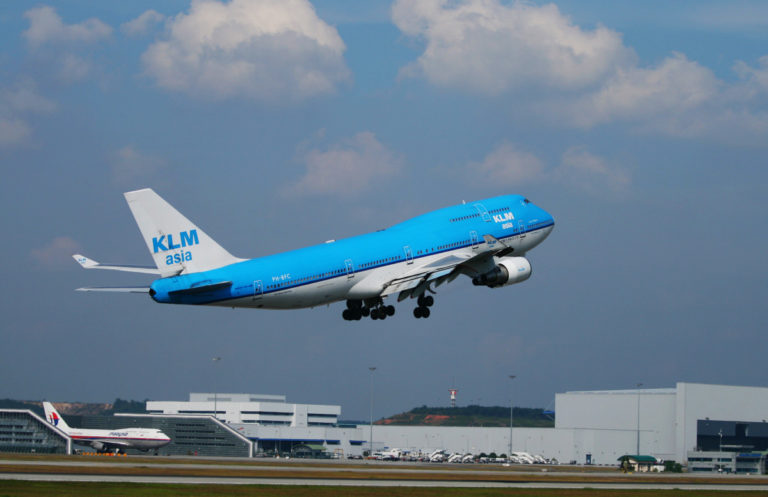
Passengers coming from New York to the Netherlands receive no additional medical checks at the airport

0

The state of New York in the United States has been one of the hardest struck regions by the coronavirus. 

While the region is now undergoing a lockdown, that does not prevent passengers from leaving by plane and travelling abroad. Those who arrive in the Netherlands from the hard-hit region do not undergo any additional check-ups once arriving on Dutch soil, reports RTL Nieuws.

No medical check-ups

While in other countries, passengers arriving from regions which are strongly hit by the coronavirus have their temperature checked and asked if they have any complaints, at Schiphol, they are free to go. They need to respect, however, the necessary social distancing rules of 1.5 metres.

According to Schiphol, it is not their choice to make if to give medical check-ups or not. That choice belongs to the Government.

Dutch Cabin Crew Association expresses concerns

The Dutch Cabin Crew Association (VNC) have expressed their concerns over the current policy in regards to passengers coming from New York. They are worried about the risks presented to cabin crews coming in contact with potentially infected passengers. So far, seven flights occur per week to New York.

The VNC would like that New York is added to the list of risk countries, which are then prevented from flying to the Netherlands. So far on the list, there’s China, Iran, Italy, South Korea, Spain and Austria.

Who determines exactly which countries go on the risk list?

The risk countries are determined by the RIVM and the Ministry of Health, Welfare and Sports. As of now, the United States is not considered a risk country.

When asked about the issue, a spokesperson from the RIVM has said that given the current measures, the assumption is that who presents symptoms will simply stay home.

How much people respect the current measures is, however, a different issue entirely.

Follow DutchReview on Facebook for all news about the coronavirus in the Netherlands.

Feature Image: Jyi1693/ Wikimedia Commons

Philips doubles down on ventilator production, which the Netherlands ordered only two weeks ago

0

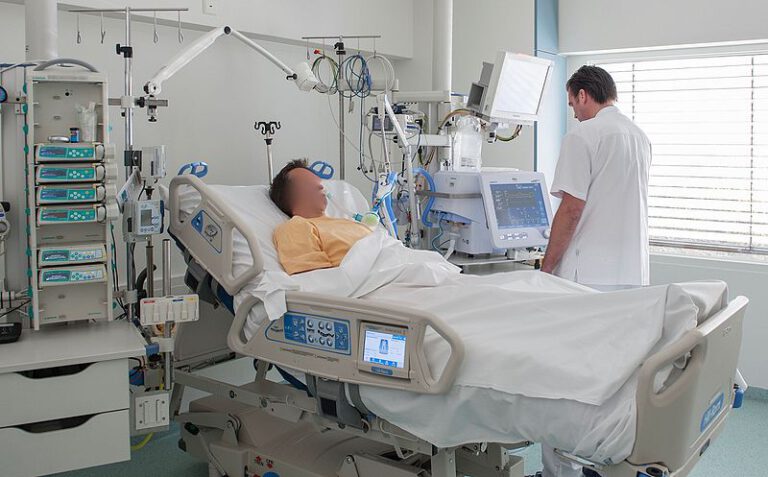
In order to properly treat patients with severe cases of coronavirus in intensive care units, ventilators are required in order to help the patient breathe. Many countries have a deficit of ventilators and are trying to find ways to bring more in their respective hospitals.

The Netherlands ordered ventilators two weeks ago from the company Philips, according to their CEO, who was part of the talk show Op1 this Sunday, reports NU.

The world should have paid more attention to the situation in China, according to Philips CEO

On the talk show Op1, Philips CEO, Frans van Houten, presented the situation of ventilators. According to him, throughout the months of January and February, many ventilators were delivered to China, back when it was the epicentre of the outbreak.

Afterwards, in February, when the outbreak started in Italy, more ventilators were shipped there, up to the point when the stock ran out. Ever since the company has been trying to scale up its production operations in order to meet the ever-increasing demand for ventilators, not only in the Netherlands but worldwide.

As of now, the Netherlands ordered 1000 ventilators two weeks ago, and a hundred of them were delivered this Saturday. The rest of the order will arrive depending on how fast the company can scale up their operations successfully and produce more. According to their CEO, they are now trying to produce what normally would have taken a year, in just a matter of weeks.

Besides ventilators, the company will also produce additional medical equipment that might be lacking in different countries and hospitals.

Concerns over US protectionism seizing the ventilators produced by Philips

Philips produces part of its ventilators within the United States, with production centres in California and Pennsylvania. President Donald Trump could potentially enforce the Defence Production Act, which would expand the supply of resources in US factories, including the Philips plants located in the country.

If this happens, then it would be much harder to deliver the ventilators from the US to Europe, the Netherlands included. As of now, the Dutch Ministry of Foreign Affairs is in talks with the Trump Administration and Philips, and as long as the talks continue successfully, the exports of ventilators should continue smoothly.

Follow DutchReview on Facebook for all news on the coronavirus in the Netherlands.

Feature Image: J. van Rosmalen/Wikimedia Commons


Coronavirus update: number of cases reaches 10,866; 132 people died since yesterday

0

The new count of coronavirus cases in the Netherlands for Sunday has been published by the RIVM, reaching 10,866 cases. 132 patients have also passed away, bringing the grim number to 771.

The Netherlands has implemented even harsher measures when it comes to social distancing, such as banning all groups of three people or more going out on the streets, regardless if they respect the distance of 1.5 meters or not. These new rules have not been, however, respected equally by all.

Police called to close down parties

Throughout this weekend, police had to intervene in different places in order to close down parties. In Rotterdam, the Grand Hotel had to be closed down after a group of youth drank and did laughing gas in a hotel room, and then proceeded to set a fire in one of the staircases. They’ve been arrested and fined by the police.

Parties also had to be closed down elsewhere, with one of the partygoers disrespectfully mentioning to the police that the coronavirus only affects old people.

Nevertheless, throughout the country, many normally busy places were empty.

Empty beaches, nature parks and streets

Despite the irresponsible behaviour of some youth, many places in the Netherlands this weekend were empty. Certain beaches were closed down, or the municipalities urged people to not go to the beaches. Despite the good weather, people respected the measures and very few people showed up.

Forests have also been closed off or had few visitors, and in the Dutch cities, many normally bustling areas were empty, including in high-density areas like in Amsterdam.

Check out our coronavirus guide

We’ve centralized all that you need to know about the coronavirus in the Netherlands in one article, which is updated daily. And also, here’s what we know about the statistics surrounding coronavirus deaths in the Netherlands.

Follow DutchReview on Facebook for all news about the coronavirus in the Netherlands.

Feature Image: DutchReview/Canva

Empty beaches and streets after a busy last weekend

0

Slowly but surely, the Dutch seem to finally take social distancing more seriously. After last weekend saw large groups of people going to beaches, nature reserves and on the streets, it seems that now more people are finally respecting new rules.

Besides some youth getting fined for partying and disrespecting the rules, it seems that this weekend has been much quieter, reports NOS.

Some beaches and forests closed

Because of the crowds last weekend, some municipalities have decided to deter any potential beach-goers by closing down beaches, or the roads leading to them. This is the case for the beaches in Westland, which have their entrances closed down, or the road to Wassenaarse Slag, which has also been closed.

Elsewhere, municipalities have asked potential beachgoers to simply not go, such as in Noordwijk, Zaandvort and Bloemendaal. And despite the good weather, the call seems to have worked, as few people have shown up this weekend to soak up on Vitamin D.

For natural reserves like forests, authorities have been quick to issue fines for those who did not respect the necessary social distance of 1.5 metres. For example, in the forests close to Baarn, which was infamously busy last weekend, now have limited access, and the parking areas have been disabled.

People have still tried to avoid these new rules by parking by the roadside, but rest assured that they got fined nonetheless.

Organic markets in The Hague and Ede closed down

Some market stalls in the Hague tried to get rid of their produce for cheap, thus risking to attract a lot of customers. The police intervened quickly, and some of these stalls were closed in the meantime.

A similar situation occurred in Ede, where people were forced down to close down their fruit and vegetable stalls after too many people showed up to buy.

Sellers in Gouda were luckier and allowed to keep their stalls open, as people respected the social distancing rules.

Throughout the Netherlands, empty streets

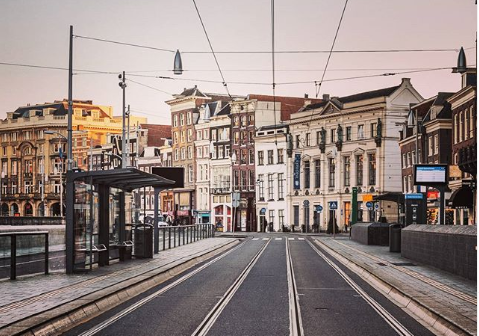
This weekend, normally busy areas bustling with activity were eerily empty. While it can be a bit disheartening to see these places empty, they also provide for some interesting new views and perspectives over places that we might be too busy to observe in our day to day lives.

View this post on Instagram

An Empty @rokinamsterdam @amsterdam. My boyfriend and I decided to take a small drive through the city on our way to our apartment because we had to get our stuff as we are temporarily moving into the bnb of my parents in law. I was very happy to see that even though we're not forced inside most of us here take the warnings seriously and stay inside. While driving over the empty Rokin I had to step out of the car and take this photo, it is a sight I had never seen before. . . #stayhome #pleasestayhome . . .. .#yumsterdam #visitAmsterdam #amsterdamworld #igersholland #super_holland #bestcitypics #hello_worldpics #awesome_earthpix #travelingourplanet #exploringtheglobe #beautifuldestinations #living_europe #amazingdestination #beautifuldestinations #living_europe #iamsterdam #discover_europe_ ttycities #topeuropephoto #discover_europe_ #agameoftones #kings_villages #shotzdelight #hello_worldpics #europestyle_ #travellingthroughtheworld #ig_europa #nowdiscovering #discover_europe_

A post shared by Nora Maria (@n0ramaria) on

If you’d like to see more of a place like Amsterdam being empty, we have an article for you about that. It also has a video from 1922, in case you want to see these now empty streets full of activity again, a full century ago.

Do you have any interesting photographs of our now empty cities? Share them below in the comments or on our Facebook page.

Feature Image: n0ramaria/Instagram

Corona who? Parties of youths shut down and fined by the police around the Netherlands

0

The Netherlands is close to the mark of 10,000 confirmed cases of coronavirus. New social distancing rules were implemented at the beginning of this week, but unfortunately, some of the youth does not seem to realize the gravity of the situation.

Over the weekend, police had to intervene in different cities around the Netherlands in order to shut down parties, reports NOS.

Grand Hotel in Rotterdam shut down

The Grand Hotel in the centre of Rotterdam had to be closed last night.  A group of 24 youngsters went in one of the hotel rooms, got drunk and sniffed laughing gas, started a fire in the staircase, while also disrespecting any of the social distancing norms such as the necessary safety distance of 1.5 metres.

While initially just warned off by the police, the youngsters seemed to persist in their wrongdoings and ended up getting fines.

The Mayor of Rotterdam decided that it is best to close down the Grand Hotel in order to prevent any other incidents.

Campfire in the forest

Elsewhere, in the Urkerbos in the locality of Urk, some youth were spotted partying around a campfire from a police helicopter. They planned this ‘anti-corona party’ all through Facebook and that why the fuzz managed to get the drop on them. While some of the youngsters managed to run away before authorities arrived on the scene, a couple of them were arrested by the police.

A similar situation occurred on a beach near Bunschoten, where 10 youth were found relaxing by the police. Three of them got fined for the act.

Fines of up to 400 euros

Despite the high fines of 400 euros for disrespecting social distancing rules, it seems that some young people are completely unphased, both by the seriousness of the situation or the fines.

Case in point, after police shut down and fined youngsters at a party in the Frisian town of Lemmer, one of the youth told authorities that coronavirus affects only old people.

This is a grossly irresponsible statement, not only because young people can pass on the virus to older people, but because some young people can also get severe complications from the virus that will require hospitalization.

Should Dutch authorities implement harsher fines or other penalties for people who break social distancing rules? Let us know in the comments.

Feature Image: DutchReview/Canva


Coronavirus update Saturday: 1159 official new cases, 93 people have died

The coronavirus count for the Netherlands this Saturday the 28th has climbed to 9762 after 1159 patients tested positive since the last update. 93 people have died in the same period of time. This news is not good, but the new numbers are not as high as they were yesterday – so that’s something.

It brings the total death count for the infectious disease in the Netherlands to 639. A further 454 people were admitted to hospital, with 2954 beds occupied, or previously used.

Earlier this week, the National Institute for Public Health and the Environment (RIVM) says the number of patients admitted to hospital and the death rate is increasing slower than without containment measures in place. That means self-isolation and quarantine tactics could be having the desired effect. We’ll know more later this week.


What else has been going on?

Germany helping Europe out

Germany might be coming to aid of the Netherlands (and many other European countries) as German hospitals are willing and able to take in a good number of corona patients who need to go to the ICU. Germany has a much higher capacity when it comes to ICU beds and is already helping French and Italian patients, and hospital directors from both Dutch and German hospitals have confirmed that if needed – they will help each other out. Which is exactly the mindset we need in these dark days.

Sun’s out, but we stay in!

As you’ve noticed, the sun’s out and the temperatures are nice. But we’re not going to enjoy that as much as we can because besides a little bit of work in the garden, a coffee on the balcony or a solitary walk in a quiet forest – we’re going to stay inside and give our hero’s in the medical sector a fighting chance against coronavirus.

Some hopeful news; 20.000 more heroes

20,000 retired healthcare workers have decided to return to work in the Netherlands to help with the coronavirus outbreak. This is possible thanks to a relaxed law instituted by Minister Bruins, which allows those who retired after 2017 to return to work.

And finally, here’s what we know about the statistics surrounding coronavirus deaths in the Netherlands.

Follow DutchReview on Facebook for more information about coronavirus in the Netherlands.

Feature Image: DutchReview/Canva

Germany may be able to help the Netherlands out if ICUs are overcrowded

0

French and Italian patients suffering from the novel coronavirus have been transferred to Germany. Perhaps the same can be done for the Netherlands should ICUs reach their full capacity.

Normally, there are 1150 beds in ICUs across the Netherlands. As of yesterday, the Dutch Association for Intensive Care (NVIC) reported that 761 of these beds were occupied by coronavirus patients. However, the Netherlands is working on building the capacity of hospitals to accommodate more people.

Nonetheless, seeing how fast the number of cases is climbing, it is possible that at some stage hospitals will be overwhelmed — in which case Germany may be able to help. The country has greater capacity, according to RTLNieuws.

“It would be great if they could take over patients from us, says Diederik Gommers, the chairman of the NVIC. “UMC Maastricht is in close contact with the university hospital in Aachen.” Of course, the details, such as how patients will be transferred has not been discussed as yet.

Transfer of foreign patients

RTLNieuws stated that a patient in critical condition from Northern Italy was transferred to Dresden in the state of Saxony, by a military plane. So far, eight patients have been admitted.

In Baden-Württemberg, foreign patients (reportedly from France) are also being treated. The region has nearly 2.5 times more ICUs with ventilation equipment than the Netherlands, with fewer inhabitants (10 million).

Germany has the most ICU beds available in Europe. This amounts to over 25,000 beds with respiratory equipment compared to the Netherlands with 1150 beds.

Is Germany up for it?

Well for now RTLNieuws reports that the answer is yes, Germany could help the Netherlands out if ICUs are overwhelmed.

But given the spread of coronavirus, things change everyday. It could indeed happen that circumstances change and that Germany will no longer accept foreign patients.

But for now, we can hope that if things get bad in the Netherlands, our eastern neighbour can lend a hand.

Follow DutchReview on Facebook for more information about coronavirus in the Netherlands.

Feature Image: DutchReview/Canva

8 Reasons why studying abroad in the Netherlands is the best

So you’re studying abroad in the Netherlands! Welkom to the Netherlands, the low-lying region with the high-ranking student life! Settle in and kick back, while we give you eight of the greatest reasons why studying in the Netherlands will top your educational experience.

Studying abroad in the Netherlands: life by bike

It’s hard to describe the exact feeling that comes from gliding along on a human-powered transport machine, where the only limits are your leg muscles (okay, and the sheer amount of rust on the bike).

Not all bikes are created equal in the Netherlands – don’t buy a lemon to avoid scenes like this.

But, this indescribable feeling is even greater in the Netherlands when you are surrounded by other humans on these mechanical steeds, a flock of twisted metal, dinging bells, and the occasional squeaky brake, bumping over the cobblestone paths or sailing along the designated red aisles, knowing that you are truly the king or queen of the road. Even better, ride with a group of friends to feel like a true #bikegang.

Remember, man versus car always loses, unless you’re living in the Netherlands. What a nation!

Studying abroad in the Netherlands: #StudentLyf

Ever wanted to get drunk on cheap crated beer, then dance a conga line singing a traditional tune? Welcome to a Dutch student party.

Dutch students in their native habit, celebrating after a successful drink at the local watering hole by dancing the peculiar social ritual: polonaise.

The Dutch are great at being students, which makes student life in the Netherlands particularly leuk. Being an international-student is even more fun, with various societies set up to help you fully integrate into Dutch study life – The Erasmus Student Network (ESN) run heaps of activities all over the country!

Even better, studying abroad gives you the best cultural exchange possible. And while the Dutch aren’t particularly known for their national food, their historical attraction of migrants has given a gastronomically diverse culture – and some of the best kebabs in town – perfect for when you get a little van de kaart (off the map drunk).

And the bonus? No expensive taxis home. Just try to keep your balance on your bike (and don’t get caught by the politie!)

Studying abroad in the Netherlands: Engels, Engels, Engels

Studying in a foreign country? Geen probleem! The Netherlands continually scores in the top three of non-native speaking countries for the English proficiency! What does this mean for the foreign student?

Well, when studying, as long as your English is prima (we’re looking at you Spaniards and Frenchies!), you will be able to understand your professors, and even turn in assignments*!

* Disclosure: the ability to turn in assignments is also directly associated with how much beer you drink the night before the due date.

The Dutch’s English talent also means they have one of the largest offerings of English-taught courses in continental Europe. Why are the Dutch so good at English? Find out here!

Studying abroad in the Netherlands: Nederlands, Nederlands, Nederlands

“You only speak one language?!” – Every European ever.

On the flip side of the Dutch/English equation: if you’re a American, Australian, British etc. and are jealous of all of these Europeans and their ‘bilingualism’ from ‘being culturally aware and diverse’ there is an upside: learning Dutch is one of the easiest languages for native-English speakers to learn. 

So if you want to return from your European study-abroad and show-off to your friends back home how European you have become, just slide a few words into sentences to remind them of your ultimate far-reaching superiority. Example? See this article.

Studying abroad in the Netherlands: a chance to open your mind (and see new colours)

The Dutch have had a long reputation for their relatively relaxed attitude towards drug use. The famous (infamous?) Dutch coffeeshops are an excellent example of this (don’t expect a caffeine hit).

But other drug use is also common. In fact, a 2017 study showed the Netherlands had the top use of MDMA and amphetamines in the European Union. The Dutch’s pragmatic approach to drugs recognises that it is impossible to stamp out all drug use in the Netherlands, instead shifting the focus to responsible consumption. The results? The legalisation of marijuana purchase from licensed coffee shops, and anonymous pill-testing clinics – gratis!

Light up your brain and find out some myths about drugs in the Netherlands.

Studying abroad in the Netherlands: travel inside and out

Studying in the Netherlands and sick of dining on bitterballen and kaassouffle? Need a little break that’s further than a bike-ride away? Welcome to the excellent transport links of Western Europe!

Hop on board Nederlandse Spoorwegen (NS) train service, for direct links all over the country! What’s that? Tickets are far too expensive? Don’t jump the barrier! Find out the tips and tricks to the cheapest train tickets available!

For an even further journey, thank your lucky stars that the Netherlands isn’t an island, making bus journeys the option of choice for the young student traveller! There are multiple cheap bus lines that offer direct and indirect connections to cities all over Europe. Or, hop on a flight with an array of low-cost airlines (if you don’t mind carry-on luggage and squishy seating arrangements!).

Studying abroad in the Netherlands: progressive and diverse

If you’re looking to broaden your horizons and outlook, the Netherlands is a great option. The country has an excellent reputation for progressiveness and acceptance in relation to drugs, euthanasia, same-sex marriage, and sex. However, this isn’t the same for all of the Netherlands (check out the Dutch Bible-Belt for examples).

Studying abroad in the Netherlands: top-notch education

Last, but certainly not least, we can’t go without mentioning one of the best reasons for studying in the Netherlands – the education is truly great!

Many of the Dutch universities are ranked among some of the best in the world, so when you’re not riding your fiets, drinking your bier, speaking different languages, experimenting with recreational drugs, travelling, or enjoying the progressive life of the Netherlands, you’ll be getting a top-notch education.

Studying in the Netherlands? What did we miss? Tell us the best parts about studying in the Holland below!

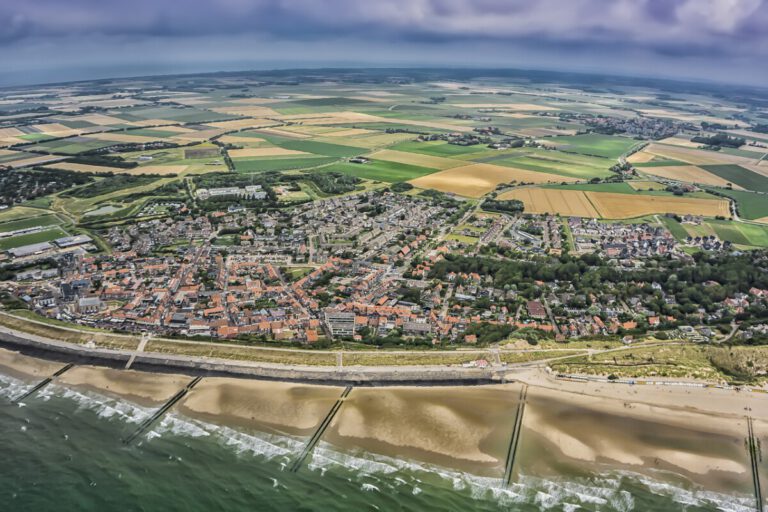
Dutch engineering expertise and water management — a big business in the Netherlands

2

For 700 years the Dutch have developed their expertise in keeping their country dry. It began with cordoning off sections of the shallow sea, draining them dry, and building a bigger country.

Now, no place in Europe is under greater threat than this waterlogged country on the edge of the continent. It’s a constant battle as climate change with its rising sea levels makes its impact felt on sea-level communities around the globe. The Dutch (famous for their frugality, inventiveness and foresight) are forced to invest billions of euros to move mountains of sand to fortify their dikes and protect their next generation.

Fertile polder farmlands

‘Netherlands’ literally means ‘lower countries‘ in reference to its low elevation and flat topography. Most of this small country (in fact 27% of it) is actually below sea level, with only about 50% of its land exceeding 1 metre above sea level.

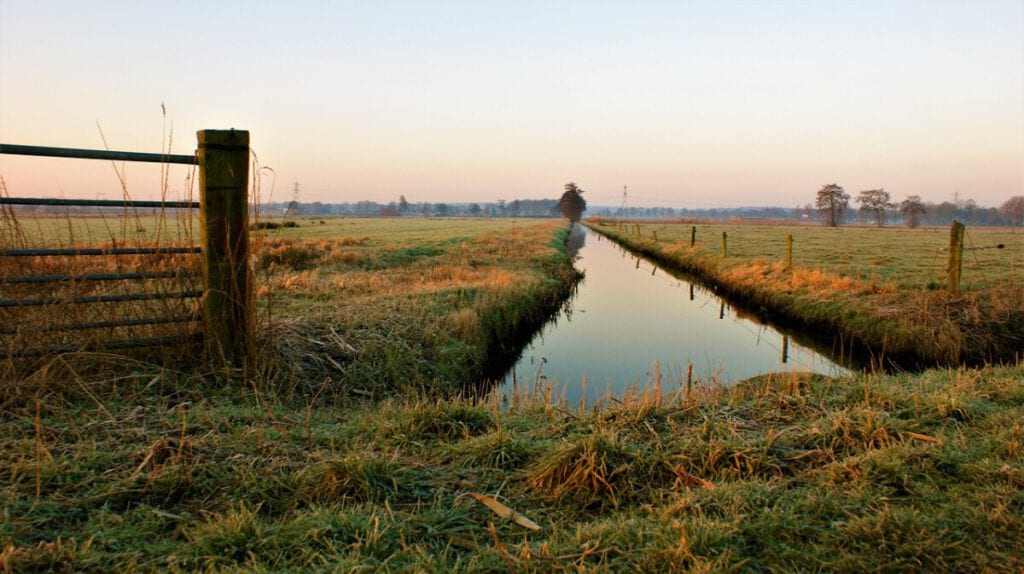
Of the country’s 17.4 million people, 21% lives in areas below sea level. Most of the areas below sea level, known as polders, are the result of gradual and painstaking land reclamation from water. Today’s wide open, fertile fields once marked the bottom of the seabed.

polder-netherlands
A polder in the Dutch countryside. Image: FotoRieth/Pixabay

Today the Netherlands is twice the size it was 400 years ago! As recently as 1986, the Netherlands proclaimed the 12th and youngest province of Flevoland, but they didn’t do that by annexing any of their neighbour’s territories. Flevoland was created on land that was mostly reclaimed from the sea in the 1950’s and 1960’s, where the former Zuiderzee was.

Over many centuries the Dutch and their ancestors have had an ongoing battle with the North Sea

They’ve had to build mighty dikes to protect their communities, and worked to hold back and reclaim land from the sea for over 2000 years, thus affirming the old Dutch adage ‘God created the Earth, but the Dutch created the Netherlands.’ 

Around 400 BC, the Frisians were first to settle the Netherlands. It was they who built terpen, which were earth mounds upon which they built their villages, providing safe ground during storm surges, high tides and sea or river flooding. Small dikes were also built around this time, measuring about 70 centimetres.

On December 14, 1287, the terpen and dikes that held back the North Sea failed, and water flooded the country. Known as the St. Lucia’s Flood, it killed over 50,000 people and is considered one of the worst floods in history. A result of the St. Lucia’s Flood was the creation of a new inland sea, called Zuiderzee.

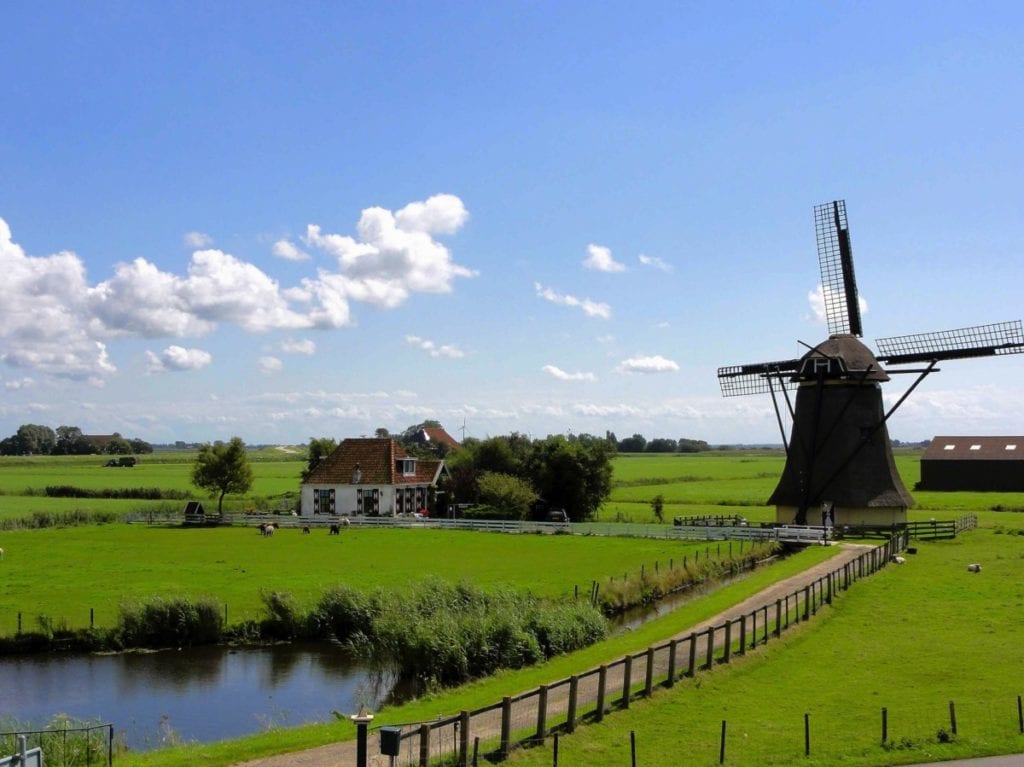
This event also created direct sea access for the village of Amsterdam, allowing its development into a major port city. Since the 1200s, the Dutch employed the rotator power of windmills to drain the low-lying, waterlogged land and expose the fertile soil. By diverting water upwards and away from marshes by giant Archimedes screws, windmills worked faithfully to power the creation of the Netherlands.

windmill in the netherlands
Windmills work tirelessly to keep the Netherlands above water. Image: David Mark/Pixabay

These Dutch icons were used for centuries to drain peatland for grazing and agriculture (these days it’s done by electrical and diesel-driven pumping stations). For the next few centuries, the Dutch worked to push back the water of the Zuiderzee, building dikes and creating polders.

Storms, high tides and deep water

Storms and floods in 1916 provided the impetus for the Dutch to start a major project to reclaim the Zuiderzee. From 1927 to 1932, a 30.5 km long dike called Afsluitdijk was built, turning the Zuiderzee into the IJsselmeer, a freshwater lake. On February 1, 1953, another devastating flood hit the Netherlands.

Caused by a combination of a storm over the North Sea and spring tide, waves along the sea wall rose to 4.5 meters. In some areas, the water rose above existing dikes and flooded unsuspecting, sleeping towns. Just over 1,800 people in the Netherlands died, 72,000 people had to be evacuated and thousands of livestock died. This devastation prompted the Dutch to pass the Delta Act in 1958, changing the structure and administration of the dikes in the Netherlands.

Zuid-Beveland, North Sea flood of 1953. Image: Agency for International Development/Wikipedia

Monumental marvels of the modern world

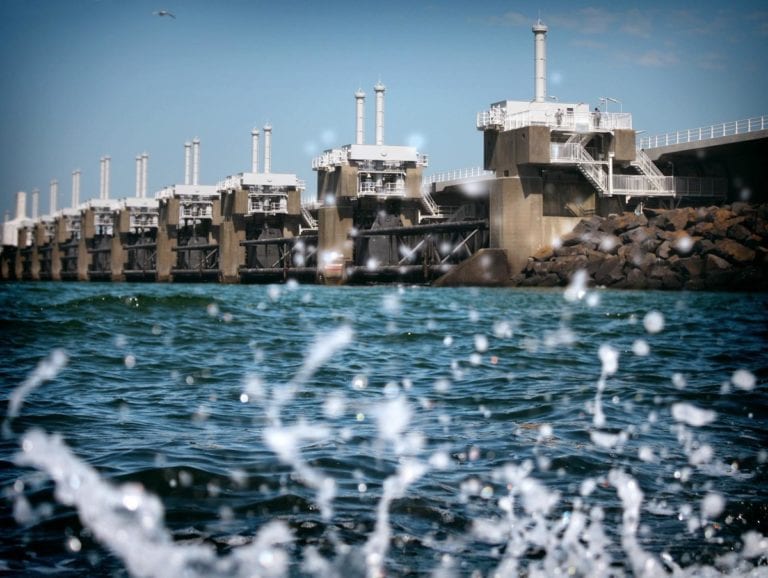
In turn, this new administrative system created the project known as the North Sea Protection Works, which included building a dam and barriers across the sea. The Zuiderzee and Delta Works (the world’s biggest storm surge barrier) took half of the 20th century to complete (ended 1997), and together these vast engineering feats are considered one of the Seven Wonders of the Modern World.

It’s a vast and complex system of 13 dams, floodgates and storm surge barriers (massive, moveable structures which shut (automatically or otherwise) during extreme sea levels). It included the laying of 16.4 km of dikes and around 300 structures, having reduced the risk of flooding to one in 4,000 years.

The Oosterschelde storm surge barrier – Watersnoodmuseum

The Maeslant storm surge barrier was the final stage of the Delta Works, and was built to protect Rotterdam – the most important port in Europe, serving tens of thousands of ships from around the world and supplying pretty much everything to everywhere. The idea behind the barrier was unprecedented — a monumental gate with two arms, resting on either side of the canal, each arm as tall and twice as heavy as the Eiffel Tower. It was a staggering work of engineering, one of modern Europe’s lesser-known marvels.

Costly… but life saving!

Constructing these massive structures has cost approximately 7.4 billion euros. Now it almost never floods in the Netherlands — this being one of the most flood-prone countries where nearly 70 per cent of economic output is generated below sea level!

Minister of Infrastructure and Water Management Cora van Nieuwenhuizen believes that if you ask any Dutch person if they live below the sea level, a lot of people wouldn’t even wonder about it. The Minister adds, “If you realize that one-third of our country is below sea level and another third is at the risk of flooding, then you immediately realize why it’s always on our minds. We spent a lot of money to prepare ourselves for the future and make sure we are resilient for storms like that. That is also the reason why everyone can live here fearless.”

What do you think of the Dutch living under the sea? Were you surprised when you found out? Tell us your thoughts in the comments below!

Feature Image: Martin Terber/Flickr