


The Netherlands is a progressive, innovative, forward-thinking country… with its very own deeply religious bible belt. 🙏🏻
Yup, you’ve read that correctly. Estimates suggest that about 2.5% of the Dutch population that lives in the Bible Belt directs their lives according to the dogma of orthodox Protestantism.
If pro-life, anti-vax or traditional dress comes to mind — you’re entirely on the right track!
Where is the Dutch Bible Belt?
The Dutch Bible Belt (or, as they say, bijbelgordel or refoband) is a stretch of land with the highest concentration of conservative, orthodox Protestants (Calvinists) in the country.
It reaches from the province of Zeeland in the southwest, past the provinces of South Holland, North Brabant, Utrecht, and Gelderland, to parts of the province of Overijssel in the northeast.
READ MORE | Provinces in the Netherlands: the easy guide
Not-so coincidentally, the Bible Belt’s territory overlaps with the voting pool of the SGP, the Dutch Reformed Political Party — which strives towards a government entirely based on the Bible.
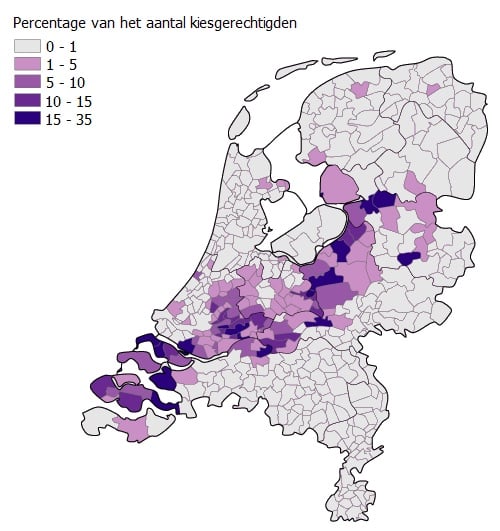
The stretch of land is called a ‘belt’ because of its upwards curve, which snuggly hugs the Netherlands at its imagined waist.
A (very) brief history of the Dutch Bible Belt
The Dutch Bible Belt as we know it today wasn’t actually formed until the 19th century. But does that make it modern and progressive? Not exactly.
So, how did it come into being?
When Flanders and North Brabant were conquered by the Spanish during the Eighty Years’ War, the Protestant inhabitants of the areas were forced to convert to Catholicism or, well, leave.
READ MORE | What was the Eighty Years’ War? The Dutch War of Independence explained
Many of them opted for the second option and moved up north. There, the new population critiqued the existing Dutch Reformed Church and eventually formed their own, more conservative subcultures within the religion.
The subcultures remixed some of the most conservative doctrines, and ta-da: the Bible Belt was born.
Who lives in the Dutch Bible Belt?
The Christian conservatives are actually not the majority in most towns in the Bible Belt. Instead, they often live alongside non-religious Nederlanders. This usually happens very peacefully.

In reality, the fundamentalist Christians are only the majority in some select villages, such as Elspeet or Uddel, both in the province of Gelderland.
Here, certain political parties are especially popular, such as the ChristenUnie (Christian Union) and the SGP (Reformed Political Party) — who share some pretty conservative (and very questionable) values — but more on that later.
READ MORE | Calvinism in the Netherlands: why are the Dutch so Calvinist in nature?

Those who are members of the conservative subcultures are often referred to as “Refo” (reformed), and there are about half a million of them. That’s about 2.5% of the overall Dutch population!
These hardcore bible-belters pair orthodox theology with a modest and obedient lifestyle. They strictly adhere to the word of God, and, in their view, the only valid truth can be found in the Bible. 📖
While the rest of the country sometimes likes to ridicule the Bible Belt, the community enjoys their quiet, peaceful life, unaware of what is being said about them (they’re not allowed access to TVs or the internet, after all).
The controversies of the Dutch Bible Belt
While people (mostly) respect the traditions and beliefs of the Bible Belt communities in the Netherlands, there are some controversies that many of the rest of the Dutch population are happy to call out.
Against same-sex marriage
As devout believers in their Lord’s word, Bible Belters are against any form of same-sex relationships or LGBTQIA+ identification. Why? Because “God forbids it”.
In 2019, a Dutch version of the American Nashville Statement (Nashvilleverklaring) made headlines because it openly opposed gay marriage, non-monogamy, and transsexuality.
The statement found widespread support across the Dutch Bible Belt, and declared, among other things, that “it is sinful to approve of homosexual uncleanness or transgenderism” — and that any faithful Christian would understand this.
Against vaccination
The population of the Bible Belt has long been subject to heavy criticism for its stance against vaccinations. For religious reasons, many members of the community are not immunised against multiple common diseases.
This, of course, became a hot topic during the COVID-19 pandemic, when the conservative Calvinists refused to get vaccinated.
The result? They put countless others at risk of infection. Which wasn’t very “love thy neighbour” of them… 🤨
Why do they refuse to get vaccinated? Well, because they believe that “people should not use medicine that prevents God from punishing them.”
It goes as far as some of them claiming that even insurance policies are fundamentally wrong, “because they stand in opposition to the perfection of God”, who “knows what’s good for us.”
The village of Urk
Now, let’s be real: the above controversies are not too shocking coming from a conservative group of conservative believers.
So now, let’s move on to the village of Urk, a place that is known (and we mean New York Times-kinda known) for being the most conservative place in the Netherlands — and as a result, quite controversial.
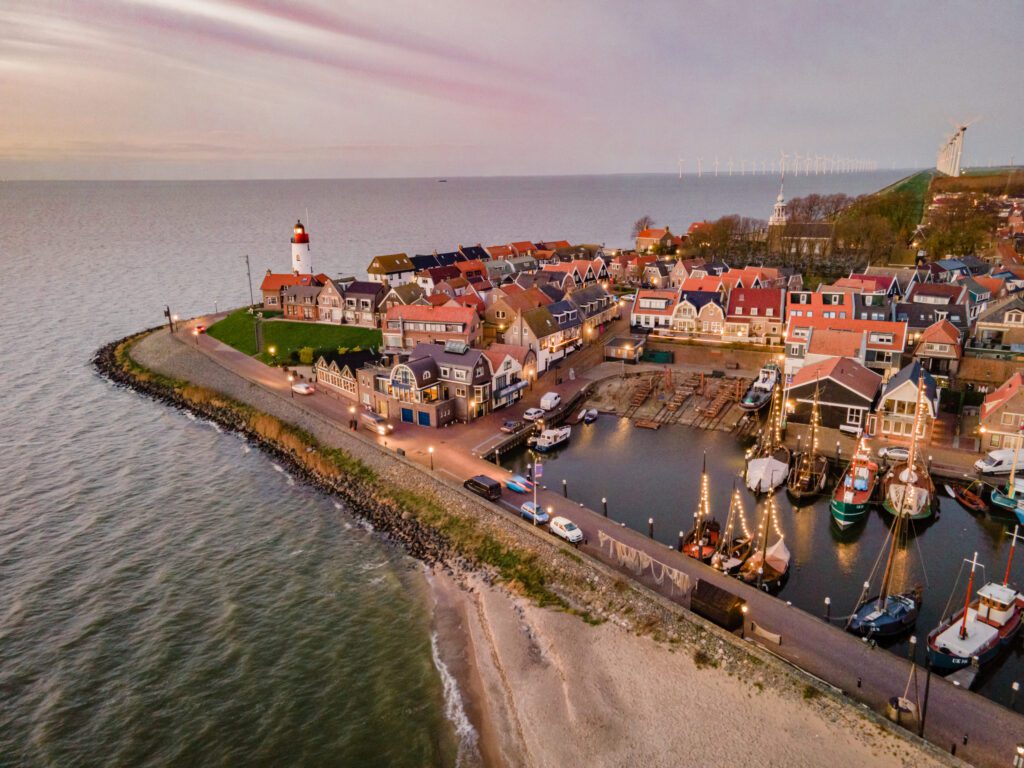
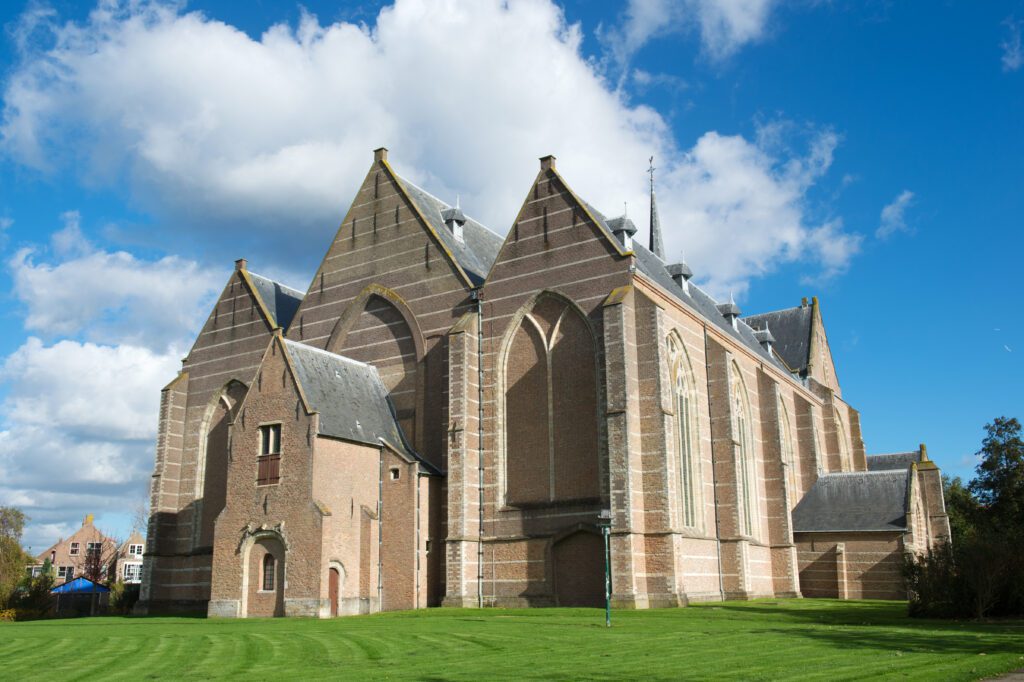
Located in the Dutch province of Flevoland and home to a whopping 21 Protestant churches, this small village is a cultural phenomenon in itself.
How do you sum up this special place? Well, according to this person on Reddit:
Comment
byu/skennie from discussion
inNetherlands
Seems like Urk… irks the people.
The reason for the fishy smell (and activity), but also for why religion has remained such an important societal pillar in Urk, is that, up until 1939, the village was an island off the coast.
We can only guess that the isolation of Urk’s residents is what has resulted in their old-fashioned beliefs (compared to the rest of the Netherlands).
One Redditor claims that “despite now being connected to the mainland, Urk’s cultural uniqueness stubbornly refuses to die.”
Beliefs, traditions and particularities of the Dutch Bible Belt
Wondering what the Bible Belters get up to in their day-to-day lives? Let’s have a look. 👇
They enjoy entertainment that aligns with their religion
TV? Not allowed. Non-religious music? Strictly forbidden. Internet? Taboo.
In many Bible Belt homes, the entire day revolves around one thing: God.
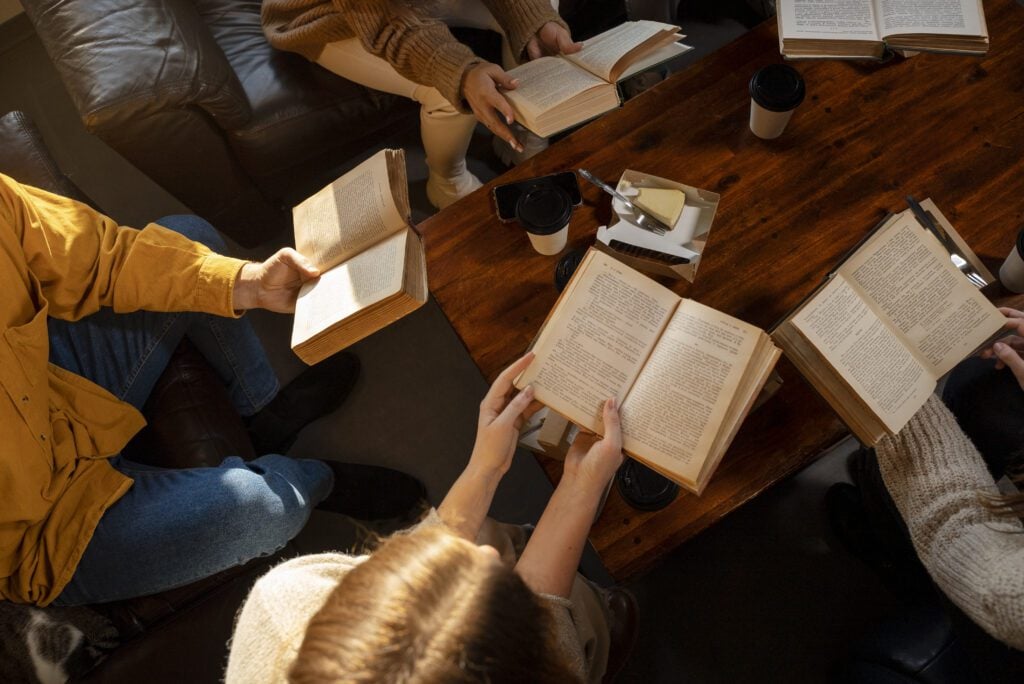
In these families, they read from the Bible before and after dinner, pray together, and listen to worship music — all while they avoid any activities that could be viewed as sinful.
They wear a traditional mode of dress
The fashion trends in the Bible Belt are, well, biblical. At church, but also in everyday life, modesty is most important.
What does that look like in practice? Well, the women wear conservative clothing that covers their bodies, and men dress modestly as well.
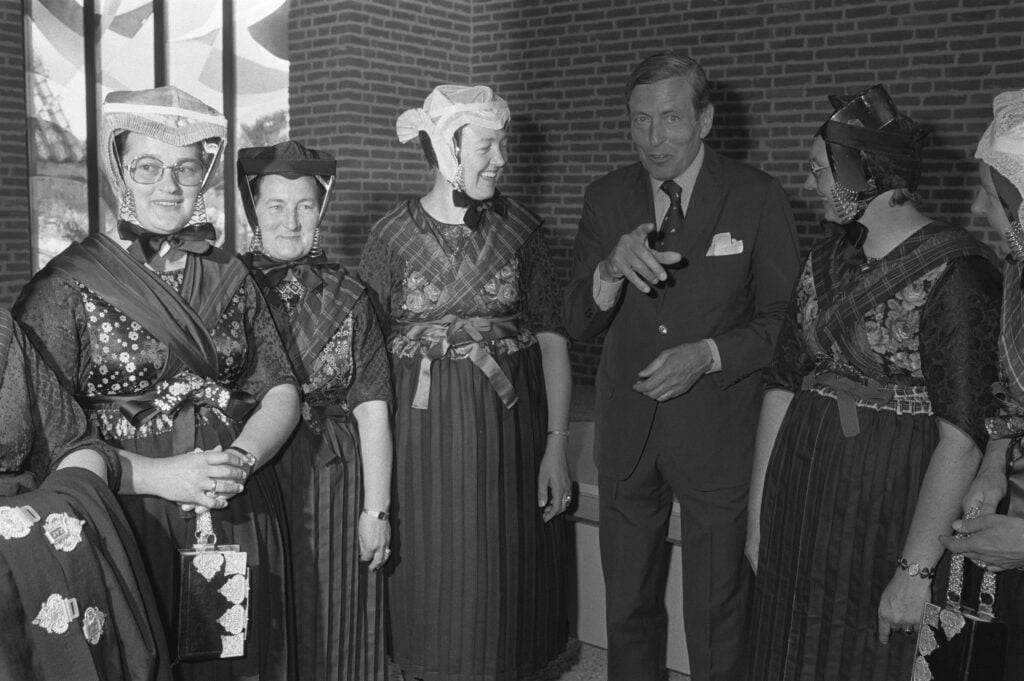
On Sundays specifically, to go to church, women in the Bible Belt wear a traditional black ensemble, which is made up of over a dozen items of clothing, including a calf-length, black, pleated skirt; an apron; a shawl and bonnet; and black shoes or wooden clogs.
They also wear hand-knitted black thigh-high socks. These are what gave rise to the Bible Belters’ nickname of Zwartekousen (black stockings).
They attend regular church services
It comes as no surprise that the inhabitants of the Bible Belt go to church regularly. But they seem not just to go to church — they live for church.
On Sundays (when the traditional dress comes on), some people head to church not just once, but twice!
In some places, you even have to report to the local congregation if (and why) you have to miss church on a Sunday.
They have plenty of babies
Of course, no good believer would ever try to prevent God’s will by using contraception or getting abortions.
It’s no surprise, then, that statistics prove that the villages in the Dutch bible belt have extraordinarily high birth and fertility rates. In communities where people get married young, it is no exception for a family to have up to seven children.

Of course, Urk has the highest birth rate in the whole country. One family specifically took it to the next level and has a total of 18(!) children. Lekker bezig? 😳
The Dutch Bible Belt is as devout as it is fascinating. In the country of decriminalised drugs and the Red Light District, the Bible Belt towns are unique cultural phenomena that offer a religious haven for many Dutch people.
So, if you ever find yourself in the Netherlands’ Bible Belt (for whatever reason), remember to dress respectfully, keep the music down, and take in all of the quirkiness that opposes the rest of the country. 🙌
Do you have any more fun (or shocking) facts about the Dutch Bible Belt? Tell us in the comments!

When referring to the family with 18 children, the article says “one woman specifically took it to the next level”. Why not “the family took it to the next level”? To me, 18 children is not solely the decision of the mother.
It takes two to tango.
While I do not agree with the severity of the article as it makes all Christians guilty by association, I do not see why these people should be so condemned. While I think they are missing the point of what Jesus taught and that we all fail every day I do believe Jesus existed, died on a wooden cross and broke the power of death leaving behind an empty tomb. We certainly now see that they were right not to take the clot shots. People were foolish in taking shots that the pharma companies had arranged indemnity for. Clearly they did not trust the safety or effectiveness of the shots.
This article comes from a Secular point of view which is pretending to be neutral but it is not neutral. Secularism has its own fundamentals like: God does not exist, those who believe in God are nutters, everything came from nothing, the vast complexity and interdependence of life just happened by blind random chance events. I am sorry but the Secularist fundamentals, which are non-negotiable, are utter nonsense. The digital information and the foundation of life is so highly complex that to say it came together by chance is to move away from all pretence of science and probability to pure wishful thinking. Secularism is an extreme fundamentalist religion of the irrational based on lies.
All right, I’ll bite. Some inaccuracies you stated:
“Secularism has its own fundamentals like: God does not exist”
Secularism and atheism aren’t the thing.
Definition: Religious skepticism or indifference. The view that religious considerations should be excluded from civil affairs or public education
Secularists just don’t want religion dictating laws and public policy. But within secularitist populations, you may find individuals with alternative spiritual beliefs, religious folks who believe in separation of church & state, agnostics, atheists, etc.
So since your main beef seems to ACTUALLY be with atheists, here ya go: atheists just wanna see undeniable PROOF of God or gods existing before they’ll buy into it. We don’t know that there FOR-SURE isn’t a god, but we are going with our best guess based on the evidence available (which is, little-to-none). There is more scientific proof that there are no gods, than that there are. It’s wishful thinking to believe in Intelligent Design and that a supernatural sky-daddy is watching over us. But we are open to new information being presented and changing our minds. It simply hasn’t been. And there are a LOT of examples of religious people making claims without the proof to back them up and a whole human world history of examples of religion being used as a tool by powerful people to manipulate the populace, so it should come as no surprise that we tend to err on the skeptical side.
“those who believe in God are nutters”
It’s mean-spirited to put it like THAT (toward religious people), as one can understand how after being raised with and indoctrinated with religious beliefs, a whole family line of people and societies came to believe the way they do, but yeah…to put it bluntly, show me PROOF. Otherwise, I’m not buying what you’re selling. And I don’t want your superstitions to effect me or the people I care about, I don’t want to live in a society based on magical thinking. I WILL vote against your religion having any influence in government. That said, I will ALWAYS defend your right to believe as you please. Freedom FOR religion snd freedom FROM religion are not mutually exclusive.
“everything came from nothing, the vast complexity and interdependence of life just happened by blind random chance events.”
The honest answer is, we don’t KNOW for sure. And we might NEVER know for sure, how all this (the universe) started. And learning to live with that uncertainty and be okay with it, that is a part of growing up, being humble in our lack of knowledge (but being open to more info being discovered), and admitting that we simply, PROBABLY, can’t know everything. But not being lazy by inserting God into the knowledge gaps. And yes, all of this MIGHT have very well happened randomly. Is that too scary or uncomfortable a notion for you to consider being true? Why MUST this all have been designed by divine intelligence? Who says that has to be the case? If it’s just how you FEEL it must all work, sorry, but your feelings are not facts and not solid evidence of anything. There is a cause and effect of all things in nature on this planet and presumably outside of this planet as well. There is still much to discover and that is exciting. And much of it will be discovered after you and I are dead and that’s okay. But “God did it” isn’t a viable answer unless you (or someone else) can prove that there IS a god. Or unless He/She/It/They materialize and start performing extraordinary feats to prove themselves (even then, I’d be suspecting it was some advanced alien playing a joke on us).
“I am sorry but the Secularist fundamentals, which are non-negotiable, are utter nonsense.”
I just demonstrated to you that atheism is and never HAS been non-negotiable. New scientific discoveries happen, tested and retested, and so our knowledge base grows. You sound a lot more rigid in what you THINK atheism and secularism are than what those two things ACTUALLY are.
“The digital information and the foundation of life is so highly complex that to say it came together by chance is to move away from all pretence of science and probability to pure wishful thinking. Secularism is an extreme fundamentalist religion of the irrational based on lies.”
What lies is it based on?
Wishful thinking? A LOT of atheists and others who don’t believe in God or gods wish those things DID exist so that we knew we had an all-powerful being in our corner. So that we could be SURE there was an afterlife or reincarnation or something in order to feel that reassurance that our consciousness and essence or whatever survives beyond this one life, that we DON’T just break down into component parts after we die and our minds die with the body. That would be very nice (not ALL atheists want this, but many). So where does the “wishful thinking” part of “no God” and “random existence” come into your thinking? Who would wish for LESS ? That doesn’t add up.
A well balanced article by a non-Dutch on a touchy subject. Though many Dutch dislike the strickt adherence to the Bible (regardles of ‘which version’) you will find in real life that many will agree to some of the believes practised by these ZwarteKousen. That explains also why those people are easily accepted by the Dutch. Live and let live and Love thy neighbour still works for many people in the Netherlands.