Women in the Netherlands will start “working for free” today, November 24, until 2026. And, no, it’s not because companies have suddenly become NGOs.
It’s Equal Pay Day, the annual reminder that the gender pay gap is very much alive, kicking, and sipping a koffie while women do unpaid labour (symbolically).
If men and women earned the same on average, Equal Pay Day would fall neatly on the last day of the year.
But because women earn 10.5% less per hour, today, November 24, is the point in the year when the average man has already earned what an average woman would earn by the end of the year.
So from now until New Year’s Eve, women are symbolically “working for free,” while men continue earning and (still) sending tikkies.
However, according to Nu.nl, Equal Pay Day has moved ten whole days later compared to last year, signalling a decrease in the wage gap.
Is this progress? Definitely not
Experts say the improvement has less to do with dismantling discrimination and more to do with the minimum wage going up as of January 1, 2025.
What does that have to do with women’s pay? Well, many women earn minimum wage or slightly more, meaning their average pay got a little boost.
While plenty of men earn minimum wage as well, many men also earn well above minimum wage, so they didn’t experience the same boost.
So, the gap did shrink, but not necessarily because we progressed as a society.
Reasons for the wage gap
The pay gap still costs women in the Netherlands €1.9 billion annually, estimates the FNV (Netherlands Trade Union Confederation) — but what causes it?
Men are more likely to work full-time, as women are hit with the “mother penalty,” a marked drop in earnings after having children.
The labour of a mother is valorised as care, love, but weaponised to make the labour market an all-boys party. Not gezellig.
Then there’s the career progression. Men move into higher-paid roles faster and accumulate more experience over time, widening the wage gap later in life, even if young women start out strong.
Equal work should mean equal pay.
The gender pay gap is real, with women in the EU earning on average 12% less per hour than men.
Today's EU Equal Pay Day marks the date when working women in the EU, on average, stop earning for the year compared to men. pic.twitter.com/AgH8VGqHjK
But could there be light at the end of the tunnel? A new EU law called the Gender Pay Directive is coming in 2027, and it intends to lessen the gender pay gap.
Whether this new directive will fix everything is hard to say. But at least by then, Equal Pay Day might land closer to Christmas, and not in November.
The Netherlands has a reputation for being progressive on women’s rights. As a woman working here, how has that felt in practice? Tell us about your experience in the comments below.
There is a little joke we make in India: “First comes the software boom, and along come our countrymen.”
When I arrived at Schiphol five years ago, I had no idea this country of windmills would soon make space for so many Indians like me.
Thanks to growing computerisation and open borders, today the Dutch cultural sphere is brightened by the colourful Indian diaspora.
But this connection is anything but recent. There is a long history between the Netherlands and India, from before the advent of any computer prototype.
A blast from the past
Many people know about the Netherlands’ history with Indonesia, but few talk about its relationship with India.
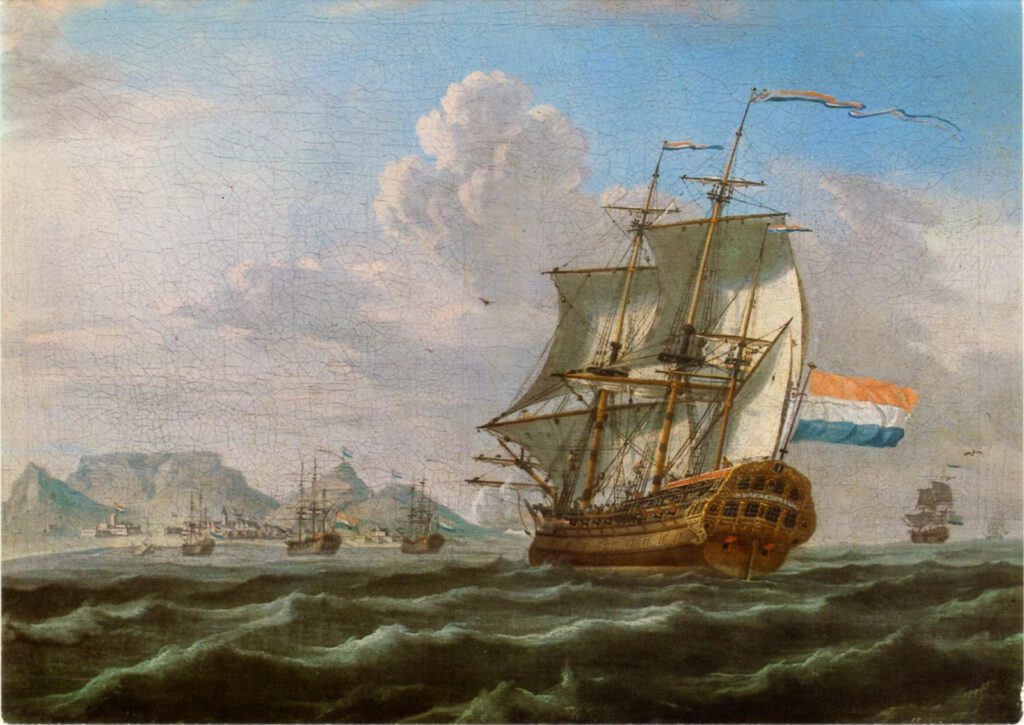
Back in 1602, voyagers of the Dutch East India Company (VOC) camped on the shores of India for a solid 200 years.
The VOC (Dutch East India Company) is a crucial part of Dutch history. Image: Anonimo (XVIII sec.)/Wikimedia Commons/Public Domain
While other colonial powers pushed to gain political control, the VOC was mostly after gold, business, deals, and fortune.
Textiles and spices made the biggest buck for Dutch traders as they acquired larger parts of the country. They employed local labourers and transported goods to trade with other countries.
That is how an entire generation of people of Indian origin came to live in Suriname and subsequently in the Netherlands.
A Dutch-Indian love story?
While “doe normaal” feels almost like an anthem, this story about the Dutch is filled with drama!
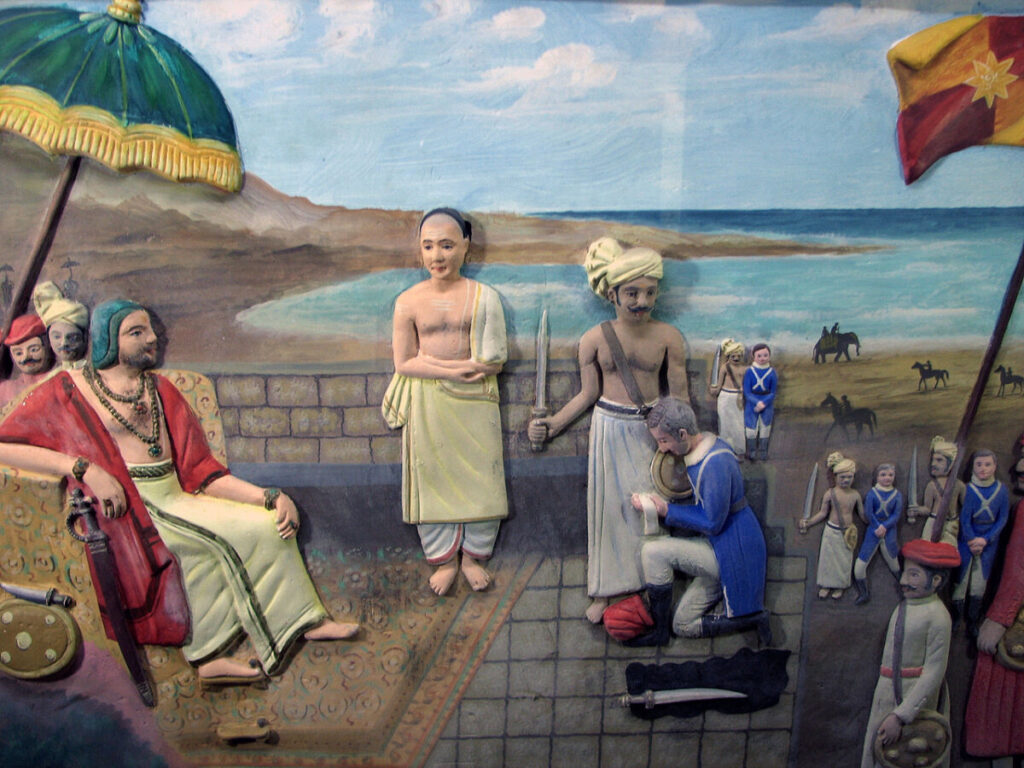
Once upon a time, a Dutch commander with the VOC, called Eustachius de Lannoy, led an attack on the Kingdom of Travancore in South India.
His forces were defeated by Maharaja (King) Marthanda Varma, marking a rare instance of an Asian kingdom defeating a European power’s attempt at colonisation in open battle.
Instead of executing him, the Maharaja spared de Lannoy and made him a top general in his army.
Here’s where it gets interesting…
The lover of de Lannoy was a woman named Margaret, who lived in the British-controlled territory of India and wasn’t allowed to marry him.
That is where the Maharaja stepped in, and Marthanda Varma threatened to send his army if Margaret’s parents didn’t agree to the union.
As it happened, de Lannoy and Margaret lived happily ever after. (Perhaps this is where Bollywood got its inspiration from!)
A depiction of De Lannoy. Image: Infocaster/Wikimedia Commons/CC3.0.
An interculinary coupling
Talking about love stories, how can we overrule the lowlanders’ love for bread?
Did you know that the mundane ontbijtkoek is a celebratory breakfast on feestdagen for certain ethnic communities in parts of India and Sri Lanka? 👀
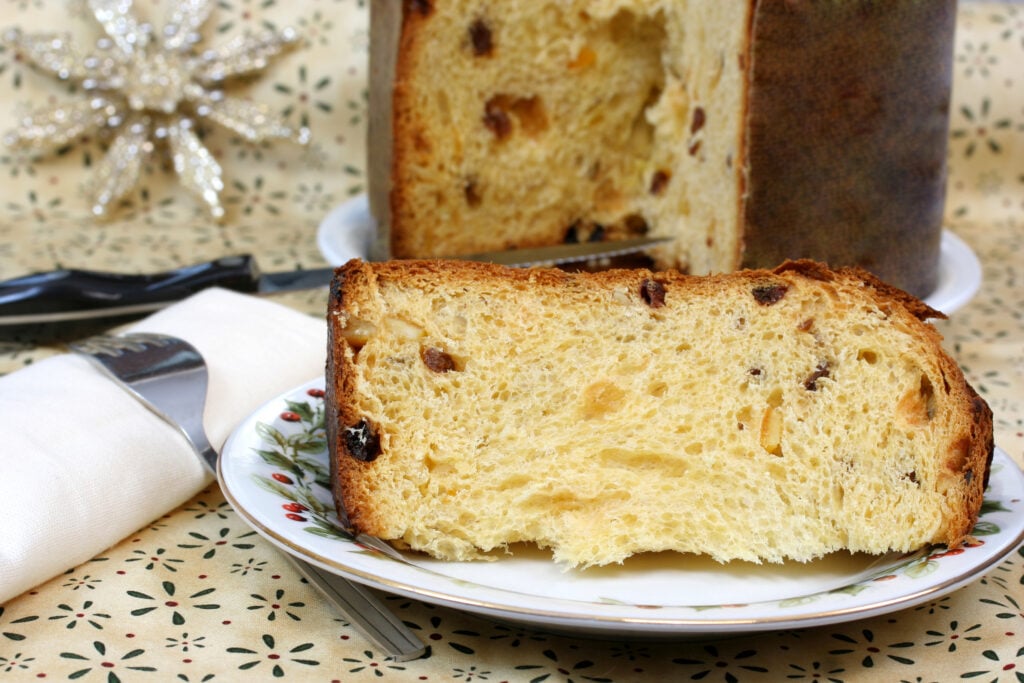
Breudher (like brood) is made with flour, butter, eggs, spices, raisins or sultanas, and sometimes candied citrus peels to lend extra flavour.
The result is dense bread that tastes like cake and can be eaten steamed or straight-up with a slice of cheese. 😋
The Italian panettone is very similar to Breudher. Image: Dreamstime
Where the Dutch have been, so have poffertjes; the dish that disguises itself as breakfast, snack and dessert.
Many countries in Asia practice this love for baby pancakes, albeit with different names and forms.
However, India has its own version of this Dutch delight, and their take is even more varied.
Paniyaram is popular in the south of the country, which celebrates rice, spice, and everything nice. It goes by several other names in every part of the country.
It is made with a fermented rice batter, sweetened with brown sugar, and spiced with cardamom.
The batter is shallow-fried in an indented pan with clarified butter to make delicious golden-brown balls, not too different from poffertjes.
No sweet tooth? There is also a savoury version that uses intensely hot chilli peppers, ginger, and coriander.
Whether the former colonies twisted a Dutch classic or if the Dutch twisted a local classic, it is safe to assume that most of humankind agrees on one thing — fried bits of dough taste divine.
The Netherlands and India today
While all these commonalities and history are interesting, Indians today are just as enamoured by Nederlanders.
Many now choose to send their kids to Dutch-medium schools, celebrate Sinterklaas and gobble pepernoten by the dozen!
Did you know about this secret affair? Tell us your thoughts in the comments below!
An African proverb may stress that it takes a village to raise a child, but if a new Dutch law is passed, four people should do the trick.
The VVD (People’s Party for Freedom and Democracy) submitted a new bill to parliament on Wednesday, which would make multi-parenting possible.
If the bill is enacted, a Dutch child could have a maximum of four parents divided between a maximum of two households, reports NU.nl. Each guardian would have a say over parental decisions like medical treatments, schooling, inheritance, or taking a vacation abroad.
You read that right. Christmas is about to get crazy!
Who will this help?
As legal multi-parenthood must be intentional and granted by a judge before a child is born, this law would not apply to those who already have children in such situations.
Perhaps you’re thinking: “I had two parents, or even one, but I am doing just fine.” Are you really though? Jokes apart, there are many situations where multi-parenthood could be a blessing.
In particular, VVD’s MP Ingrid Michon-Derkzen pictures this bill aiding rainbow parents.
Think of situations where two women have a child with a man, or two men have a child with a woman, or a transman and a cis-woman decide to involve a sperm donor in making parental decisions.
The bill would also help two families share custody after a divorce. Or if you’re completely stumped by the Dutch dating scene, you could raise a child with your three best friends!
A law long overdue?
“With this bill, we will legally enshrine what has long been a reality in practice. Legislation lagged behind current practice. With this bill, we will rectify that,” says Michon-Derzken.
The Tweede Kamer (House of Representatives) has been looking into possible legal frameworks for multi-parenthood since 2016, but no legislation has been passed, even though there are 150,000 such families in the Netherlands.
What now
As of now, citizens and institutions can share their thoughts on this bill online.
Then it will be passed on to the Council of State, the highest advisory body to the Dutch government, before being handed over to the House of Representatives.
This October, a majority of seven parties in the current House of Representatives signed a “rainbow ballot agreement” with the COC (an international LGBTI human rights organisation).
In doing so, they’ve pledged to safeguard the rights of queer people, which happens to include multi-parenthood.
The actual likelihood of the bill, however, depends on coalition negotiations that, as we know now, seem to go on forever.
What’s your take on this parenting set-up? Is it a recipe for chaos or a smarter way to raise kids? Join the conversation.
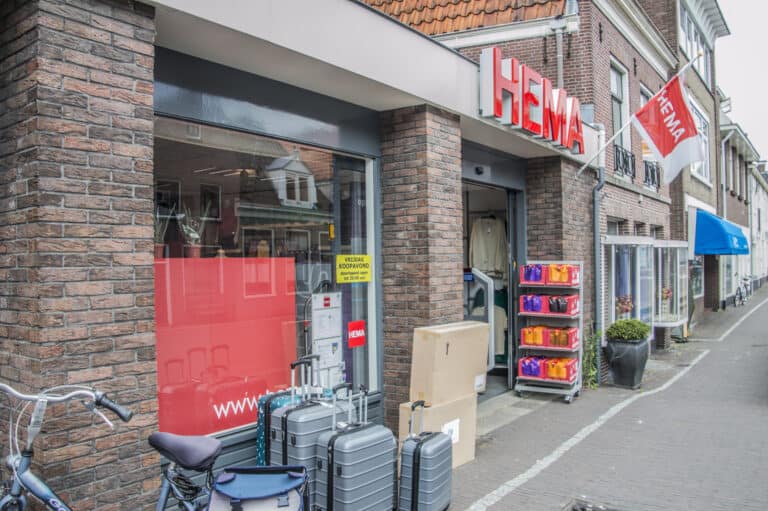
After four decades of loyal service, a HEMA store manager was met with immediate dismissal for allegedly stealing a pair of pyjamas. A court found she was treated unfairly.
As reported by AD, the employee in question was initially suspected of partially falsifying her hours when her theft of a pair of pyjamas sealed the deal.
An innocent mistake
Due to health concerns, the woman worked part-time from 9 AM to 1 PM. She would log the rest of her hours as sick leave (from 1 PM to 6 PM).
In court, the woman claimed that she logged her hours based on store opening times (9 AM to 6 PM), and made the innocent mistake of forgetting to account for a one-hour break daily. As such, her log of five hours of sick leave a day, rather than four, was accidental.
Corporate espionage? Really?
Due to the false hours being logged, HEMA hired a corporate investigator to investigate the employee for further wrongs.
After reviewing security footage, the super-spy saw the woman take the aforementioned pyjamas.
The footage revealed that she took the pyjamas to the cashier, who let them sit on the counter for a while. Some time later, the dismissed employee took them without paying.
This theft, in addition to the suspected time-sheet fraud, was enough for HEMA to fire the employee immediately.
Judge sides with the underdog
The woman took her case to court, which proved to be a wise choice. The judge sided with her, indicating that HEMA had acted rashly without proper evidence or investigation.
As the woman was never questioned regarding her suspected timesheet fraud, and the cashier was never questioned regarding the pyjamas, a summary and immediate dismissal could not be justified.
Essentially, HEMA jumped the gun — or rather, put on their pyjamas before the day was over.
The judge argued that for an employee of such longevity and loyalty, the complete lack of corrective feedback or direct communication is unacceptable.
Employee remains loyal
The court annulled the dismissal, reversing HEMA’s decision entirely. Despite the ordeal, however, the employee chose not to terminate the contract in court.
The woman indicated a desire to work till retirement. We only hope she receives better treatment this time around.
Do you think HEMA was in the right? Let us know in the comments!
If you’re on the hunt for a new internet provider, Ziggois here to sweeten the deal with a snazzy welcome gift: a 55-inch Samsung Smart TV worth €649.
Even better, if you’d prefer not being locked into a two-year subscription, you can also get a 50% discount on a 12-month internet and TV subscription instead.
Youfonejust rolled out one of their best Black Friday offers yet: a free 43-inch TCL TV if you sign up for their 2-year fibre optic internet plan.
Though the deal is only valid for a limited time, you could also opt for a 50% discount on the first eight months of your subscription. Talk about a steal!
In addition to being super affordable and easy to use, eSIMs will get you connected in a jiffy. These are some of the best deals on the market, and we’ve even sprinkled in some exclusive discounts.
With plans starting from $3, Orbit Mobile’s plans are already super affordable — but those prices are going even lower with Black Friday discounts up to 40%.
Psst… want to get even more off your order? Use our code DUTCH10 for 10% off your travel eSIM.
Proving that data bundles don’t have to cost the earth, Simyo’sBlack Friday deals give you discounted access to KPN’s super-fast and reliable 5G network.
You can choose between €0.50 for 2GB or €1.50 for a generous 30GB — with zero activation costs.
When it comes to sheer affordability, prepaid SIMs are an excellent choice. Plus, they save you from needing to commit to a one- or two-year-long subscription. 🙌
Already one of the most affordable prepaid providers in the Netherlands, Lebarais slashing their prices even further this season — with discounts of up to 50%.
This means you can now nab up to €20 worth of prepaid call credit for just €10 per month!
Dutch kids are a marvel: cycling around town, hanging onto the back of their parents’ bike, and eating hagelslag like there’s no tomorrow. No wonder they’re among the happiest children in the world — but why is that?
In the meantime, American children score among the lowest in most dimensions measured, stemming primarily from inequality and exceptionally high child poverty rate (with nearly a quarter of children in the U.S. growing up under the federal poverty limit).
When I came to the Netherlands to study Social Policies and Social Interventions for my master’s degree, I had no idea how much subtle cultural differences played a role in national policies and how different childhood in the Netherlands was from my own American upbringing.
These are some of the biggest things I’ve noticed after living in the Netherlands for a few years:
1. Dutch kids know about “the birds and the bees”
I grew up going to a Catholic school in a really conservative state, where it is still illegal in most places to buy alcohol on Sundays.
Our idea of sex education consisted of instilling fear of incurable STDs, calling birth control unreliable, and having a man pass out white roses and pledge cards to make us promise that we’d “save ourselves for marriage.” 🙄
Conversely, the Dutch are known for their tolerance surrounding sexuality — they even appear to be somewhat proud of it. Many people know Amsterdam’s Red Light District, the suggestive Dutch art, and the country’s commitment to sexual equality.
The Dutch approach is one of openness, practicality, and liberalism. They believe that sexuality is a natural part of life.
They are practical about it and think that people will have sex anyway, so they might as well create a safe, well-informed environment. Liberalism also ensures that people have the right to do what they want in their bedrooms.
Unlike a lot of American children, Dutch children receive subsidised comprehensive sex education, teaching children about love, sex, and relationships.
The Dutch mentality towards sex education puts America to shame. Because Dutch people have an open attitude towards sexuality and contraception, the tiny country boasts some of the lowest rates of teen pregnancy, abortion, and STDs.
Contraception is discussed openly in most places in the Netherlands. Image: Depositphotos
The U.S. not only has a famously high teen pregnancy rate, but nearly half of all pregnancies in the U.S. are unintended or unplanned, which can have severe negative effects on unprepared mothers and their children.
In the Netherlands, however, openness about sexuality and the ease of availability of contraception help Dutch people to plan their family life and have children when they feel ready.
Dutch parents may allow a teenager’s partner to spend the night and are realistic about the fact that they may have sex and are willing to give the couple contraception. The American approach is definitely a far cry from that.
2. Mothers are given support from the very start
Nearly a quarter of Dutch women give birth at home under the supervision of a midwife. On top of assisting during the birth, Dutch midwives also provide prenatal care and advice for pregnant women. 🫄
I was shocked the first time I heard that home birth was still reasonably common in the Netherlands. However, the majority of people live within 15 minutes of a hospital, so at the slightest complication in the home birth, the hospital really is a couple of steps away.
As soon as you give birth in the Netherlands, you and your child are shown support. Image: Depositphotos
After giving birth, either at home or in a hospital, women are entitled to maternity care (something which is apparently a luxury in the US).
In what may be a magical cross between the Fairy Godmother and Mary Poppins, a qualified maternity nurse provides kraamzorg (postnatal care) to women who give birth under the Dutch healthcare system.
The maternity nurse helps new mothers care for their newborns with advice, health checks, and even assists with household chores like laundry and making meals for other children. Wat leuk!
Meanwhile, in the U.S., most women give birth in hospitals with medical doctors assisting their deliveries. And while the doctors may assist with some prenatal care and with the birth itself, post-natal care isn’t often a thing.
3. Play is encouraged in education
Another difference between Dutch children and American children is the approach toward “playtime.” In the Netherlands, play is encouraged and considered an important part of childhood development.
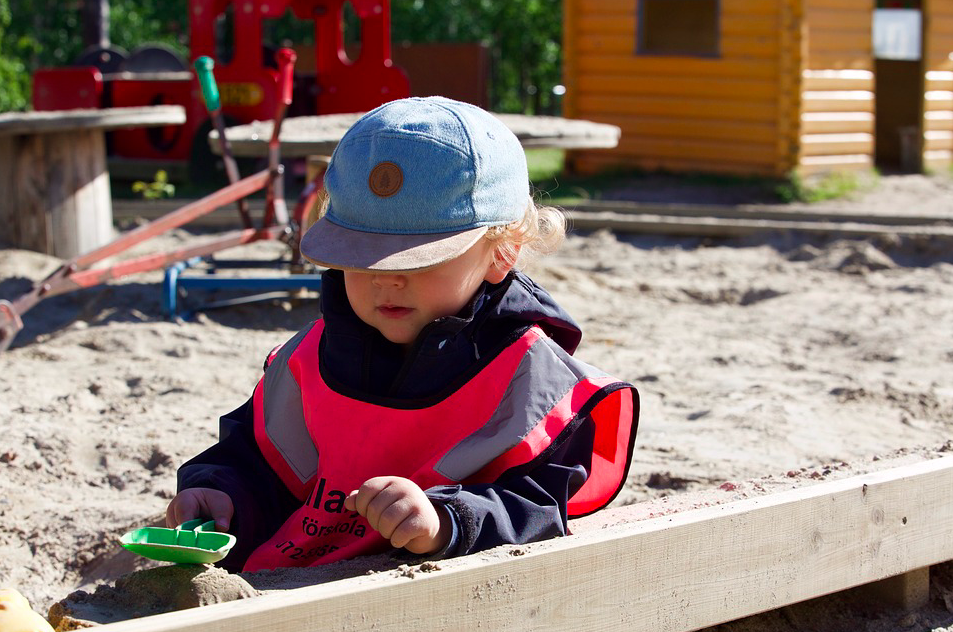
This idea is evident based on the endless number of children’s playgrounds, petting zoos, and even kid zones in stores! Not to mention, it’s normal to see Dutch kids playing outside whenever they can on their bikes, scooters, tricycles, or rollerblades. 🚲
Playing is a really important part of Dutch childhood. Image: Pixabay
Although mandatory schooling starts at the age of five, over 95% of Dutch four-year-olds attend early childhood education, and 63% of two-and-a-half to three-year-old children attend some sort of playgroup.
Through play, children learn how to react in situations, confrontations, and social settings. From the commonness of children’s playgroups to small amounts of homework and dedicated children’s play zones, Dutch children are encouraged to spend time happily playing and socialising.
4. The Dutch have a laid-back parenting style
After hours of playing, the Dutch parenting mantra of rust (rest), regelmaat (regularity), and reinheid (cleanliness) illustrate a significant difference in Dutch and American family life.
Dutch parents have cracked the code. Image: Depositphotos
By adhering to the three R’s, Dutch parents create an environment of stability for their children. Children need plenty of sleep, a routine structure, and to keep clean to avoid harmful germs and diseases.
Rather than assuming that a child will sleep when they are tired or unable to sleep through the night, the Dutch simply adhere to a regular bedtime, creating rhythm and comfort. 💤
This is dramatically different from American cultural norms that encourage consistent stimulation in children to promote cognitive development and achievement.
Think “helicopter parents” who overschedule their children by making them do lots of extracurricular activities while also pressuring them to get high grades.
5. There’s a bona fide welfare state for Dutch kids and families
Studying social policies in the Netherlands highlighted the Dutch commitment to families for me. In America, they tend to leave this subject to the private sector.
The Dutch government tries to reconcile the demands of work-life and family responsibility. Policies like paid maternal and paternal leave to take care of their sick child and child benefit packages seem like some type of alternate universe compared to the U.S., which requires employers to do none of the above.
The Netherlands is so concerned with policies for children that it also encourages the Child-Friendly Cities Network, where cities compete with local initiatives to promote the rights and interests of children. 👶
One example of their initiatives is reserving 3% of residential land for children’s playgrounds, sandboxes, etc.
Outdoor places to play are really important for Dutch kids. Image: Pixabay
If you don’t believe me yet about how different things are in the U.S., wait until you read this: the U.S. is one of the only countries in the world which hasn’t ratified the UN Convention on the Rights of the Child. 🙃
I will obviously never know if I would have had an even happier childhood in the Netherlands. I would probably speak quietly in restaurants, not be phased by suggestive art around the city, and have a basic understanding of water technology from building sand dykes at the beach.
Not only that, but I would undoubtedly be a better cyclist, know more than just one language, and be totally accepting of French fries as a complete dinner option. But happier? Geen idee.
Why do you think Dutch kids are so happy? Tell us in the comments below!
“It’s almost Pakjesavond!” Almost what? Yup, to internationals, Dutch traditions can seem confusing or just plain weird. But you’ve come to the right place: our (unofficial but absolutely excellent) guide to Sinterklaas for expats.
While the rest of the world spends December waiting for Christmas, the Netherlands has its own way of fooling kids during the winter period: Sinterklaas.
Sinterklaas refers to two things. Firstly, it is the name for the Dutch equivalent of Santa Claus — except this one’s from Spain for some reason.
Secondly, it refers to the actual holiday — the Dutch version of Christmas, which takes place on December 5.
Regardless of where you’re from, you’ve probably heard about Sinterklaas due to the controversial nature of his helpers, the Zwarte Pieten.
To understand this Dutch holiday tradition in all its controversy and to fully enjoy what happens on December 5, you’re gonna need some proper Dutch vocabulary. So, here’s our guide to Sinterklaas vocab for expats — featuring all the wonderfully Dutch things that come with the holiday!
Some Sinterklaas vocab for expats
Get your notebooks ready, here we go. 👇
Intocht
Sinterklaas season starts with the arrival of Sinterklaas into the Netherlands, called “intocht van Sinterklaas.” This usually takes place in mid-November.
Sint arrives in a different Dutch city each year. Image: Depositphotos
The word intocht is actually a normal Dutch word for arrival, but somehow we only use it in the context of our bearded holiness. 🎅🏻
Pakjesavond
The traditional night of the Sinterklaas celebration, the night of December 5, is called pakjesavond (gift evening). On this day, parents offer gifts to their kids, which of course, come straight from Sinterklaas himself. 😉
In order for children to actually believe that there is an old guy buying gifts for the whole of the Netherlands, the evening usually consists of a neighbour (buurman) slamming on the front door, throwing pepernoten and leaving some presents on the doorstep. 🎁
Surprise
The most common way of celebrating Sinterklaas for adults is with a surprise (pronounced in proper Dunglish: supreesuh). This is preferably a handmade creative work of art in which an actual gift is hidden.
In the month before pakjesavond, everyone participating in the celebration pick straws to sort out who’s surprising who.
Then they buy a gift for the person they picked — but it has to be cheap! In typical Dutch style, gifts must be bought within a cadeaulimiet (present limit). The crafted gift has to be accompanied by a poem, called a “sinterklaasgedicht” about the person the surprise is intended for.
Sinterklaasgedicht
The Sinterklaas poem is an important aspect of the celebration. It’s usually written in a simple AABB/ABBA rhyme scheme and contains embarrassing/fun information about the person the poem is written for.
The poem is always written from Sinterklaas’s or Zwarte Piet’s perspective since they are meant to know all your dirty little secrets. 😂
Time to get your creative juices flowing! Image: Depositphotos
Pro-tip: This is how you start all traditional poems: “De Sint was eens aan het denken, wat zou hij XXX nou eens schenken?” (The Sint was just thinking, what he would be gifting to XXX?).
Pro-tip 2: The unimaginative ones use a poem generator. Here’s a really basic one… 👀
Sinterklaasliedjes
We could write a whole article about the Sinterklaas songs. I always get nostalgic when I think about the many raunchy songs I’ve learnt in childhood. But since DutchReview is a PG-rated website, we’re gonna keep it clean and just switch to this short and sweet traditional song:
Sinterklaas Kapoentje, gooi wat in m’n schoentje, gooi wat in m’n laarsje. Dank u, Sinterklaasje.
Which translates into:
Sinterklaas Kapoentje, Throw something in myshoe-ie, Throw something in my booty. Thank you,Lil’ Sinterklaas.
So I hear you thinking: What the heck is Kapoentje? After some extensive research, the first link on Google told me it was slang for either a eunuch, Jewish person, bandit, or villain. Ouch! Again, no political correctness points for the Sint. 😱
Strooigoed
Literally translated, strooigoed means “sprinkling good.” That makes no sense, but the better translation of “sprinkling candy” only does a slightly better job. It’s the sugary sweets that Zwarte Pieten throw around when they enter a room.
Chocolade krijtjes
Chocolade krijtjes are chocolate cigarettes. Yup, this is what Zwarte Piet or your parents gave you when you were too young for real cigarettes, but you needed a fix.
Pepernoten vs Kruidnoten
When Moses came down that small Dutch mountain, he gave the Dutch two holy points of discussion: Zwarte Piet and his colour (almost there) and the great debate of whether pepernoten in the shops in August is a national outrage or an accepted form of making a living for the shopkeeper.
To get a true (and slightly simple-minded) Dutchie really riled up, you can also just carelessly say pepernoten when you really want to stuff your mouth with kruidnoten. So let’s get this one right once and for all:
This isn’t a Dutch word, but it is by far the best Dutch tradition. It’s exactly the right brown stuff you want to find in your shoe.
The best part of our year is munching on chocolate letters — no doubt about it! Image: Depositphotos
So was there anything else we didn’t cover yet when it comes to Sinterklaas for expats? Oh yeah, right…
The Zwarte Pieten discussie
Zwarte Piet is an annual cause of protests in the Netherlands. Image: Pixabay
Oh, and of course, there’s the Zwarte Pieten discussie (Black Petes’ Discussion). To be able to participate in this ongoing Dutch tradition, you have to understand a couple of Dutch concepts.
Roetveegpiet
This is probably going to be the key to the transformation of Pete’s appearance. The story about Sinterklaas’ helper using the chimney and therefore being black is an often-heard argument to support that his black skin has nothing to do with racism.
But when RTLNieuws changed their Piets to an actual soot-Piet, all hell broke out in little Holland. There was further controversy when Google stepped into the debate and blocked all ads of Zwarte Pieten.
Regenboogpiet
“Let’s also try to include all the orange, purple, pink, and green people in Dutch society and produce a Rainbowpiet — that should be a great idea!”said no one ever. The Pieten in all the colours of the rainbow are equally controversial throughout the Netherlands.
This article could stretch on for days if we were to properly discuss the Pieten, so this is a very brief summary that we will offer for now.
If you’re curious about Sinterklaas’ arrival, the distribution of strooigoed, and the ugliness that is the Zwarte Piet debate, then watch our video on Sinterklaas’ arrival into Leiden:
Did we miss any Sinterklaas traditions? Let us know in the comments below.
What is stamppot‘s origin story? How did it become a traditional Dutch staple? And the big question: what the heck is it?
When you think of Dutch food, you probably think of cheese (Gouda, anyone?) and the giant pancakes you’ve had in those wonderful Dutch pannenkoeken restaurants.
However, when it comes to traditional meals in the Netherlands, one of the first things any Dutchie will reference is stamppot.
Stamppot is a combination of potatoes mashed with one or several vegetables (and sometimes fruits). These vegetable pairings traditionally include sauerkraut, endives, kale, spinach, and turnip greens. This is then usually paired with traditional Dutch sausage. 😋
Stamppot, through the years
The endurance and popularity of the stamppot are truly mind-boggling. The dish is said to be one of the oldest, and yet still one of the most popular Dutch dishes ever!
To really understand how the dish became such a favourite traditional Dutch food, one must look into the past and understand how it came to be in the first place.
It all started in the 1600s when stamppot first started out as a staple during the cold season and stayed as a winter dish for hundreds of years.
It’s called a “winter dish” because of the meal’s warmth and ability to immediately fill you up. It was a must-have food during the harvest months because, in this period, potatoes were available in abundance, and many hungry farmers could be filled up quickly and cheaply. 🥔
Variations of stamppot
There are lots of stamppot recipes in circulation, but here are some of the most popular ones in the Netherlands:
Boerenkoolstamppot (kale stamppot)
Zuurkoolstamppot (sauerkraut stamppot)
Hutspot (onion and carrot stamppot)
Rauwe Andijviestamppot (raw endive stamppot)
Preistamppot (leek stamppot)
Although the Dutch and their affinity for mashing their food is one that’s quite legendary, we have to admit that no one knows who invented the stamppot.
@andy_cooks Stamppot – Dutch comfort food. What’s your favourite childhood dish? Ingredients – 1kg peeled mashing potatoes – 1 bunch of kale, picked, washed and sliced thin – 500g smoked pork sausage – 50g butter – 100ml milk – Seeded mustard to serve – Salt to taste Method 1. Start by placing your potatoes in a large pot of cold water, season with salt and turn on high. 2. In a separate pot, half filled with hot water, place your smoked sausages to warm them through, alternatively, you can pan fry the sausages, but this was the way my mother used to make it. 3. After the potatoes have boiled for five minutes, add the sliced kale to the pot and stir. 4. Once the potatoes are fully cooked, drain and place them back into the dry pot. 5. Add butter and milk and mash the potato with the kale. 6. To serve, slice your sausage and place it on top of a pile of kale mash with some seeded mustard on the side. 7. Comfort food heaven for me! #cooking#food#dinner#easyrecipe#dutch#potato#foodtiktok#fyp♬ Sure Thing (sped up) – Miguel
One thing is clear, though, the hutspot recipe was discovered when the Dutch resistance succeeded in driving the Spanish away from Leiden. It’s quite a legend in its own right.
This war was a revolt of the Seventeen Provinces of what are today the Netherlands, Belgium, and Luxembourg, as well as the French region of Hauts-de-France, against King Philip II of Spain.
Not the prettiest of foods, but definitely tasty. Image: M.Minderhoud/Wikkimedia Commons/CC3.0
For those of us who don’t know, the word hutspot is derived from the Dutch words hutsen (to mix) and pot (which is, well, pot).
During the Eighty Years’ War, the Spanish tried to capture the city of Leiden in 1573, as the inhabitants stubbornly defended their city and withstood a one-year siege.
Bye bye, Spaniards
On October 3, 1574, the resistance finally succeeded in driving the Spanish away and liberating the city.
It is reported that the Spanish soldiers fleeing Leiden left cooked bits of an unfamiliar stew of carrots, meat, onions, and parsnips, which the starved inhabitants of Leiden ate up really quickly. 🥕
Not knowing what to call the unfamiliar dish, they named it hutspot, and it has remained a symbol of their victory to this day.
Stamppot and Leidens Ontzet
The anniversary of the liberation of Leiden, known as Leidens Ontzet in the Netherlands, is still celebrated every October 3 in Leiden.
Leidens Ontzet is a happy time full of eating hutspot and drinking booze. It’s definitely an event you shouldn’t miss! 🍻
While the origins of the Dutch stamppot may not be very clear, one thing everyone can agree on is that it is a much-loved dish in the Netherlands. Hutspot still remains a symbol of Dutch freedom and victory in the siege of Leiden. 🇳🇱
What do you think of stamppot? Tell us your thoughts in the comments below!
The city of Rotterdam plans to create fifteen new single-occupancy shelters for the homeless with round-the-clock surveillance and security.
The single-occupancy shelters are meant for addicts who cannot be seen using drugs on the street, NU.nl reports.
According to a municipality spokesperson, the presence of addicts, drug dealers, and beggars gives Rotterdam a “bad impression.”
The root of the problem
The municipality has identified seventy homeless people who most often cause public nuisance. In addition to homelessness, these people may also suffer from addiction and mental health issues.
Under the city’s new test approach, these individuals will be removed from the street and taken to a shelter.
Those who refuse may get a restraining order, while addicts will be placed in single rooms where they can use drugs safely under supervision before joining a rehab program.
Rotterdam unveiled these new plans in response to an increase in public disturbances, including multiple complaints about beggars demanding bottles for statiegeld and a restaurant shutting down after 18 burglaries.
So, what’s changing?
According to the municipality spokesperson, Rotterdam will now force the homeless to comply “more than before.”
These plans have already been put in motion, with Mayor Schouten announcing a zero-tolerance policy on drug nuisance in the Oude Noorden neighbourhood. The focus is on surveillance, lighting dark areas, and police patrolling.
Meanwhile, over the next year, the city plans to test the solution that works best. Afterwards, a program for the next three to five years will be developed.
Not everyone’s a fan
However, some housing groups argue that homelessness and public nuisance may not be a result of bad choices, but of policies made by the municipality itself.
Budget cuts in shelters and the lack of social housing push more people onto the streets, making them vulnerable to drug addiction and antisocial behaviour.
As Marlieke Ridder, a general practitioner at Straatzorg Rotterdam, tells DutchReview, “These are people who need care, but drugs are taking over as they numb all the problems they carry. Slowly, they’re being destroyed, you can see it in their eyes.”
Regarding the city’s plans, Ridder considers them a good first step. “I’m curious to see the long-term strategy of the municipality,” she added.
What do you think of the municipality’s new strategy? What could be done better?
Amsterdam residents can finally say doei to Centraal’s unsightly bike tower, with efforts to remove the structure starting next Monday.
Constructed in 2001, the bike tower has long been an infamous blemish on the historic face of the city. And, let’s face it — the grandeur of the iconic central station makes the fietsflat look pitiful.
A long time coming
Soon after the successful opening of Amsterdam’s underwater bike garage in 2023, plans were made for the fietsflat’s removal. (In other words, this demolition is long overdue.)
As Amsterdam’s traffic alderman pointed out in 2023, the tower’s storage capacity of 2,500 is nothing compared to the now 14,000 underground bike slots available to cyclists.
The NOS also notes that the unseemly tower has continued to deteriorate, despite the municipality’s best efforts to renovate it.
Even worse, plans to sell the tower to Schiphol Airport proved too costly and technically difficult. The lack of alternatives left the municipality with no other choice: the fietsflat needs to go.
What can we expect?
The tower will be removed in phases, starting next Monday.
First, the structural elements of the tower will be removed. After two weeks, the demolition of metal and concrete superstructural components will begin. The last thing to be removed will be the foundation.
You can expect some noise pollution for up to seven days, but a full demolition will only be completed by early February.
As far as we’re concerned, though, a little noise is well worth the result.
Are you excited to see Amsterdam’s famous eyesore finally removed? Share your thoughts in the comments.