The fifth happiest country in the world is experiencing a serious decline in mental health according to a CBS report from the first two quarters of 2021. ☁ Starting from the age of 12, 15% of the Netherland’s population are psychologically unhealthy.
The results of this study were measured through an examination of five life aspects: sadness, nervousness, feeling down, peace and calm, and being happy.
In a year largely defined by the coronavirus crisis, CBS doesn’t pin the cause of this decline to one exclusive reason — um, maybe the global pandemic would be a good guess? 💭 Granted, CBS didn’t rule that possibility out.
Corona blues
In building their survey study, CBS temporarily added a section that involved questions to compare the examinees’ state of mind before and after the coronavirus pandemic. Feelings of loneliness, fear, gloom, and stress were more common during the corona crisis than before.
Nearly 4 in 10 young adults, ages 18 to 25, were restless, gloomy, and unhappy more often than other age groups.
If you or a loved one are experiencing psychological problems or suicidal thoughts in the Netherlands, please call the suicide prevention hotline 113 or refer to www.113.nl for resources and assistance — DutchReview loves you ❤
What are your best tips for beating the blues? Tell us in the comments below.
Many students make crazy decisions in their first year of university. But getting married for points might take the cake as the craziest decision ever. 🤪
Two first-year Dutch fraternity students got married in order to gain ‘freshman points’ (sjaarzenpunten). 💍 These points apparently allow them to get into a higher social standing within their house.
A video was taken of the ceremony and was shared across WhatsApp. The two freshmen can be seen in the town hall of Zeist, near Utrecht, wearing suits and ties and signing the wedding documents. 🤵🤵
However, the chairman of Minerva, Cato Colenbrander, says that the marriage has nothing to do with the association and that the two freshmen did this on their own, reports Leidsch Dagblad.
Unfortunately, there are already rumours that the happy couple might have to leave their student housing because they don’t allow married couples to live in their accommodations. Gefeliciteerd! 🎉
What do you think of the marriage? Let us know in the comments!
Every year, Times Higher Education (THE) releases the anticipated World Universities Ranking. The most comprehensive ranking to date, this year’s report evaluated more than 1,600 universities across 99 countries and territories.
The ranking is based on indicators that measure an institutions performance across four key areas — teaching, research, knowledge transfer, and international outlook.
Of those 1,600-plus universities, there were seven that really caught our eye…the Dutch ones (of course!). 😍
So let’s see which ones made it to the top, shall we?
Wageningen University & Research
A consistent contender amongst the world’s top universities, Wageningen University is the highest-ranked of the Dutch institutions.
This year, it jumped to its highest position ever, landing as the 53 best university in the world, according to THE. That’s a nine place increase from last year when it was ranked 62. Impressively, Wageningen scored a 100 in its industry income evaluation.
University of Amsterdam
The Netherland’s beloved UoA also went up in the ranks this year, placing 65th. Last year it was ranked one place lower.
Looking at the breakdown of this year’s ranking, the University of Amsterdam scores especially high in its number of citations.
Utrecht University
Utrecht University was another big mover this year. Going from 75 to 69 this year — it ranked six places higher than last year’s THE report. 👏
Leiden University
The Netherlands’ oldest university, Leiden, was the only Dutch institution that ranked lower in this year’s report than last’s. This year, it ranked at 71 compared to 70 last year.
Erasmus University Rotterdam
Right behind Leiden, we find the Erasmus University Rotterdam. Keeping its rank from last year, the university again placed 72.
Delft University of Technology
TU Delft isn’t far behind the other Dutch universities on World Universities Ranking. This year it moved up from 78 to 75 and, like Wageningen, it was evaluated especially well on its industry income.
University of Groningen
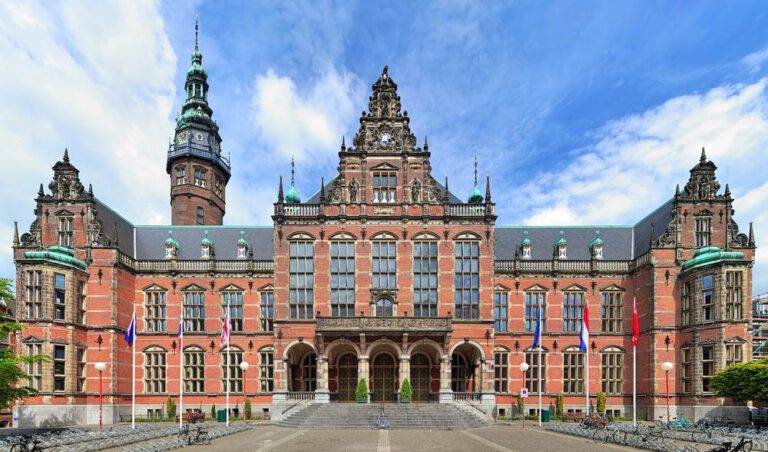
The last Dutch university to make it into the top 100 is the University of Groningen. Staying steady at place 80, the institution with its beautiful buildings kept its ranking from last year.
The Dutch government’s idea for new relaxations — such as saying goodbye to face masks in public transport — were planned to come into effect on September 20. However, these rules are now likely to end five days later.
At the last press conference on August 13, the cabinet laid out a road map for navigating the Netherlands out of lockdown. The new relaxations included an end to working from home (read, no more working in your fluffy slippers 😢), the end of face masks on public transport, 😳 and no more prescribed seating in cafes, 🕺.
However, this next step of the opening plan is likely to be pushed back, as the law would have to be amended before the relaxations can come into effect, RTL Nieuws reports.
What new measures are we looking at?
Beyond the above items, the delay comes hand in hand with some changes to the re-opening.
It was previously planned that in all locations where there were 75 people present — standing or seated — they will soon have to show proof of recovery, a negative test, or vaccination. However, that number will likely be less than 75.
In addition, anyone who still requires testing for access (testen voor toegang) will have to pay a personal contribution instead of it being free.
November 1 had previously been earmarked as the day on which all Dutch coronavirus restrictions would end — hello sweet freedom? However, there is some doubt about whether this will still be the case.
There are concerns about the reopening of clubs and the testing for access program. After all, we wouldn’t want another dancing with Janssen fiasco…
After that, only the basic measures will remain — such as washing your hands, coughing into your elbow, ventilating well, and testing in case of complaints.
Wait, are people calling those measures? We thought that was just basic hygiene. Wash your hands, everyone. 🧼
What are your thoughts on the possible end of restrictions? Tell us in the comments below!
You may have enjoyed mustard on a hotdog in the US or with a pretzel in Germany. In Belgium and the Netherlands, it’s typically enjoyed with sausage, croquettes, and cheese. However, in the country famous for its tulips and clogs, your favourite condiment is also the basis of a soup (yes, really!). Seems…interesting?
More like delicious!
Don’t let the sound of it scare you. Mosterdsoep in Dutch reads as it looks: directly translating to “mustard soup.”
It’s perfect for those chilly, rainy days here in the Netherlands. You may be used to dipping bitterballen or kroketten in this yellow sauce, but having it in a soup with a (sometimes) creamy, slightly spicy taste makes mustard enjoyable in a different way. The main aspect of it is using a specific type of mustard: coarse-grain.
As an American expat, I was surprised when my also-American husband first told me about this soup. He had been coming to the Netherlands for years for work, so he had tried it before me. Now that I live here, I’m happy I am able to sample different versions of it. I’ve even made a recipe given to us by his Dutch colleague and it turned out delicious! So, let’s find out more about this intriguing part of the Netherland’s cuisine!
So…what is mosterdsoep exactly?
It’s a warm, traditional, soup with a foundation that’s based on coarse-grain mustard — importantly, made from whole mustard seeds. Why is this important? Coarse mustard has membranes of the seed in it, so it won’t be smooth and creamy.
The distinct characteristic of this soup is its spiciness, which depends on the amount and type of mustard used. Typically, the soup is started with a roux of butter, milk, and flour. Water or broth is then added, along with cream or milk to thicken it. Finally, it is then garnished with a topping such as bacon, ham, salmon, or leeks.
Pretty simple, but tasty!
Regional variations — ’cause why settle?
There are many interpretations of this soup, varying from region to region. Regions such as Groningen, Limburg, Zaanstreek, and Doesburg produce mustards with variations in flavour, coarseness, ingredients, and preparation. So, each region will have a distinct flavour in its version of the soup, depending on the mustard used.
Mustards are typically produced from yellow, brown, or black seeds which are the sharpest of the three. If you head north to the province of Groningen, you’ll often find bits of bacon and leek in the soup. The Groninger mustard is based on black mustard seeds and, additionally, vinegar contributes to its acidity, giving it a spicy flavour.
Limburg mustard is made with whole mustard seeds and has a mild flavour. In the town of Doesburg, you will find variations in their mosterdsoep, garnished with traditional bacon or an updated take with smoked salmon on top. Zaanse mustard is ground with yellow and brown mustard seeds.
Ready to try Dutch mosterdsoep?
If you’re in the Netherlands, you’re sure to be able to find this delicious soup in a restaurant. Otherwise, take a look at one of the recipes from local mustard-makers in Doesburg, Groningen, or Limburg — and let the cultural cooking journey begin!
Have you tasted Dutch mustard soup? Or ventured to make it yourself? Tell us in the comments below!
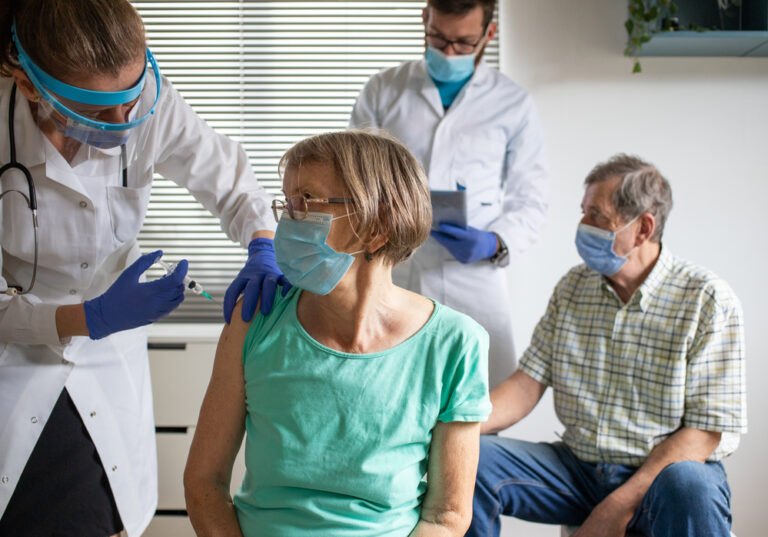
Dutch GGDs are locked and loaded to administer a possible third shot of the coronavirus vaccine as soon as the government gives the green light. 🚦
The cabinet’s decision on whether fully vaccinated people should receive the booster shot can be made as soon as the end of September, according to NU.nl, based on recommendations from the OMT and the Health Council — sleeves up! 💉
The update comes in light of the closure of major vaccination sites in Rotterdam, Utrecht, Amersfoort, and Houten after a predicted decrease in vaccination appointments after most people received both of their jabs by now. The staff of the closed locations were strategically reassigned to work in regions with lower vaccination coverage.
So far, the booster third dose of the coronavirus vaccine is planned on being administered in some countries. Countries are taking different approaches, such as priority-based injections in Turkey where only the elderly may be re-injected.
But the GGDs’ umbrella organization, GGD GHOR, does not want to assume any future scenarios in regards to the vaccination program in the Netherlands. 🔮 “The focus is on the present” explains a GGD GHOR spokesperson.
What kind of approach do you think the Netherlands should take to the third jab? Tell us in the comment below.
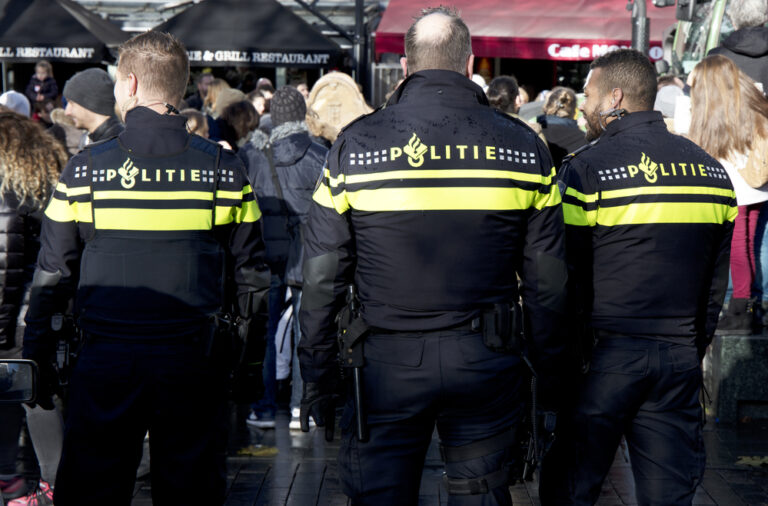
The police in the Netherlands are going through a tough time due to a budget deficit of 157 million euros. But that’s not all: the deficit is expected to increase, and more cuts will be made in the future. 💸
In August 2021, the police stated that a cut of around 30 and 70 million euros would be made. However, according to a report by AD, the budget will be exceeded by much more than that.
Where is the money going?
The deficit comes about after extra investments were made in cybersecurity, personnel care, and the cleaning of drug labs.
In June, the Dutch police created a special task force to make the budget cuts. This task force reported that the police “lacked financial discipline” (yikes!).
Bad timing
This is a bad time for the police to experience budget cuts, especially in light of the murder of Peter R. de Vries, the Netherlands’ most famous crime journalist.
Attje Kuiken, an MP from The Labour Party (PvdA), says that “after the murder of Derk Wiersum and Peter R. De Vries, extra investments will be needed in the fight against organized crime.”
The chairman of the Dutch Police Union (NPB), Jan Struijs, agrees that “this is a particularly bad time not to have the finances in order. Safety is completely on sale.”
Cabinet to the rescue!
The cabinet will allocate an extra 400 million to the fight against organised crime and corruption. A large majority of the House of Representatives called for a higher budget as a response to the murder of Peter R. de Vries.
This decision will be announced on Budget Day (Prinsjesdag), which takes place every year on the third Tuesday of September.
What do you think of the budget cuts? Let us know your thoughts in the comments!
The municipalities of Amsterdam, Rotterdam, Utrecht, The Hague, and Ede have proposed a new strategy in the fight against obesity: they want a legal avenue to ban suppliers of unhealthy food.
In order to promote a healthier living environment, the four large municipalities (plus Ede?) want more options to prevent the supply of unhealthy food, RTL Nieuws reports.
Earlier this year, city council members from these municipalities wrote to the State Secretary asking for more resources to curb the supply of unhealthy food. How exactly do they want to do this though? Well, they want to see an amendment to the Environment Act or the Commodities Act.
More fast food than ever before?
The number of fast-food outlets (think the usual culprits McDonald’s, KFC, and Burger King) has increased in recent years. There are now 470 such locations in this little corner of the world. 🍔
In true Dutch fashion, there are also way more snack bars popping up on street corners. So if you fancy walking across the road to grab some warm bitterballen on a cold winter’s night, that’s no problem at all — there are on average 7.2 snack bars per kilometre in the Netherlands. 😱
No one forces you to have a hamburger though, so what can the government do about this?
Anniek de Ruijter, associate professor at the UvA, tells RTL Nieuws that “because we see food as an individual choice, it is not possible for municipalities and governments to intervene via the Environment Act.”
The municipalities have other ideas though and are trying to broaden the interpretation of the Environment Act so that the food environment comes to be considered as part of a healthy and safe physical environment. Goodbye McDonald’s, hello fruity snacks. 🙅♀️ 🍊
What are your thoughts on this debate? Does the government have a duty to look after us, or is this infringing on our freedom of choice? Tell us in the comments below!
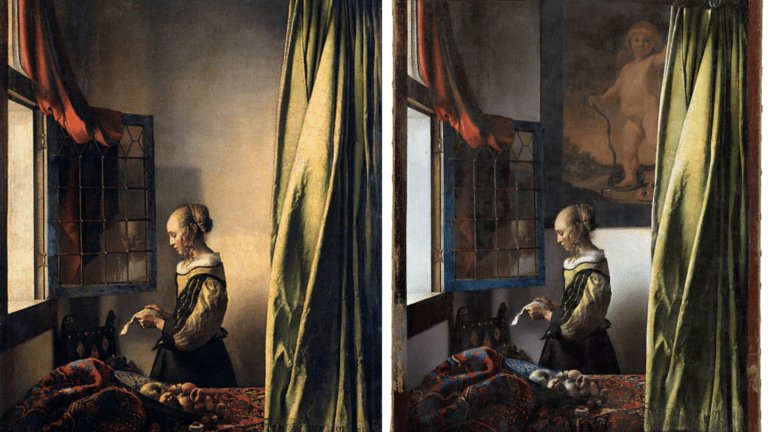
The artworld is in shock after the restoration of one of Vermeer’s most famous works exposed a painting of a full-length Cupid hanging on the wall where previously there was nothing. Even more shocking is that evidence now confirms Cupid was likely painted over by someone other than Vermeer.
Known as the “Master of Light” and the “Sphinx of Delft”, Johannes Vermeer is perhaps the most famous painter in Dutch history. He has painted the iconic “Girl with a Pearl Earring” (1665) which currently hangs in the Mauritshuis, and “The Milkmaid” (1657–1658) displayed in Amsterdam’s Rijksmuseum.
Vermeer’s use of colour to give the illusion of movement is astounding. He makes the viewer believe that he has captured light and, in so doing, immortalises a moment.
A painting within a painting
A painting within a painting has been uncovered by Gemäldegalerie Alte Meister (Old Masters Picture Gallery) in Dresden, where Vermeer’s “Girl Reading a Letter at an Open Window” (1657-59) was housed for over 250 years in its unrestored state.
The restoration has revealed that the painting’s central female figure is not alone as was thought for centuries. Instead, she is accompanied by a detailed, chubby Cupid looking directly at the viewer.
Although the presence of a Cupid painting in “Girl Reading a Letter at an Open Window” has been known for some time, very recent studies done on the original confirm the cover-up was not undertaken by Vermeer. 😱
Ahhh, the restoration of Vermeer’s Girl Reading a Letter at an Open Window is complete (via Art Newspaper). What a huge difference! Wow! pic.twitter.com/RsEwpFtR3Z
The Cupid painting hanging behind a tapestry in “Girl Reading a Letter at an Open Window” was initially thought to have been covered up by Vermeer himself. However, laboratory tests done in 2019 discovered the opposite to be true. In fact, the Cupid imagery was covered up by someone other than the artist decades after its completion.
The restoration and research project began in 2017, and involved X-rays and infrared reflectography recordings. These were carried out alongside microscope examinations of Vermeer’s original.
Colour samples and studies
At the Dresden University of Fine Arts, several colour samples were taken and analysed from Vermeer’s painting. Samples of layering and consistency were also studied in Dresden’s laboratory for archaeometry, as well as a detailed analysis of the picture carrier canvas and research into the restoration history.
The findings of these processes highlighted the need for a reassessment of the extensive overpainting of Cupid in Vermeer’s masterpiece, and lead art historians to believe that there was more to the covered Cupid than meets the eye.
The truth revealed
After tests spanning several years, a full-area X-ray fluorescence examination of the picture, combined with state of the art technology assistance (pun intended 😉), experts concluded that the overpainting of Cupid was not done by Vermeer. Instead, this covering was undertaken several decades after Vermeer completed the painting and well after the artist’s death.
The Rijksmuseum Amsterdam confirms the new findings of the overpainting, and images of the completed restoration were released on August 24 2021, by Gemäldegalerie Alte Meister. These images show Vermeer’s intended design: the now-exposed Cupid attests to Vermeer’s hallmark style in being dubbed a picture within a picture.
A new Vermeer exhibition
After the restoration was completed in early 2021, Vermeer’s “Girl Reading a Letter at an Open Window” will be displayed as it was when it left the artist’s studio almost two and a half centuries ago. This painting, fully restored, will be the highlight and centrepiece of a Vermeer exhibition titled “Johannes Vermeer: On Reflection” at the Gemäldegalerie Alte Meister.
The rooms of the Semper Building will be set aside for this special exhibition, which will feature nine other paintings by Vermeer, including the “Woman In Blue Reading A Letter” (Amsterdam, Rijksmuseum) and “The Lady Standing At A Virginal” (London, National Gallery).
These two pieces have been included for their close relation to “Girl Reading a Letter at an Open Window”. The collection will be on show from September 10, 2021, through January 2, 2022, wherein some 50 works of Dutch genre painting from the second half of the 17th century will be on display
What are your thoughts on this restoration and the discovery of Cupid? Tell us in the comments below!
Universal Basic Income is a hot topic in the world at the moment. But would it work in the Netherlands?
A two-year basic income experiment was carried out in Finland in 2017-2018. The evaluation study is now available. The register data on employment now cover both years of the experiment and a more thorough analysis has been made of the results of the survey. The basic income recipients were more satisfied with their lives and experienced less mental strain than those who had no access to it. They also had a more positive perception of their economic welfare.
The results of this experiment have once again raised the question: would universal basic income work in the Netherlands?
In recent years, especially with the financial support from governments all over the world during the coronavirus lockdown, calls for a basic income have become louder than ever — and rightly so. The global coronavirus crisis required radical measures and has seen some governments all over the world step up to the challenge.
Here in the Netherlands, there were bailouts for some companies and lots of working taxpayers were financially supported while they observed quarantine. Even the US government distributed money (lots of it), which is strange, considering how much the Republicans dislike social security.
In times of crisis, radical ideas suddenly become the order of the day. For years, economists and sociologists have amassed a good amount of evidence that universal basic income, or “free money” as it is often called, will be more effective than traditional forms of social security and development aid.
A basic income is an unconditional income. It’s basically money to which you are always entitled, regardless of your assets, social status, or income. Although a basic income does not yet exist in the Netherlands, there have been some experiments in certain cities and municipalities, and the recent results of the Finnish experiment have encouraged people in the Netherlands to start talking about it again. But whether this “radical” alternative to the current Dutch welfare state has a chance of actually being introduced, totally depends on public support for basic income.
The difference between a basic income and a benefit
The Dutch welfare state makes it possible for people to get benefits in the Netherlands. The main difference between a basic income and a benefit is that there are conditions attached to a benefit. Whether someone is entitled to benefits is determined on the basis of their health, financial, or work status. Depending on the type of benefit, the rules on, for example, the obligation to apply for a job, may differ.
Does universal basic income work?
Studies from all over the world have now shown that universal basic income works. Dutch historian and philosopher Rutger Bregman is an advocate of the basic income — an individual, unconditional allowance for everyone. He believes that a universal basic income won’t just help reduce crime in the Netherlands, it would also eradicate poverty and increase creativity — especially in the entrepreneurial world.
Bregman told The Correspondent, “We have recent behavioural economic research and psychological research showing that people living in poverty lose 14 points of IQ due to the stress they live in. If you eradicate poverty, then you suddenly get an explosion of energy, an explosion of entrepreneurship, the gross national intelligence flies up.”
He also believes that in a free and liberal country like the Netherlands, the freedom that is really missing is financial freedom. “In the first place, a basic income is about freedom. We live in a society with many freedoms: freedom of speech, freedom of association, freedom of religion, and these are all milestones of civilisation.”
“What we don’t have yet is real freedom to choose what you want to make of your life. A lot of people are currently stuck in a job that they don’t really see the point of — a third call their job a bullshit job. But in the end, you have to pay your bills, and you have to earn a living. The alternative is that you apply for benefits, but then you end up in an extremely humiliating system and you have to give up a lot of your freedoms” said Bregman.
Freedom to choose
He added that “A basic income gives everyone the freedom to choose how they want to contribute to their country, what they truly want to make of their lives, to realise their dreams. That it would finally give everyone real freedom is by far the most important argument for a basic income. Another reason why basic income really appeals to me is that it is the most efficient, effective and actually cheapest way to eradicate poverty. I really see basic income as an investment. it’s just cheaper to eradicate poverty than for it to exist, and I think a basic income is a very important tool for that.”
Fortunately, to support Rutger Bregman’s claims, there has already been a demonstrated link made between universal basic income and a drastic reduction in crime, child mortality, malnutrition, teenage pregnancies, truancy, and also better school performance, higher economic growth and more emancipation, especially for marginalised and oppressed groups.
Finnish basic income experiment
During the Finnish experiment, 2,000 unemployed Finns received a basic income of €560 per month for two years. They didn’t have to work or look for work at that time. The results showed that the participants were not tempted to work substantially more. Most worked less and decided to pursue interests that made them happy. Some decided to spend more time with their families (especially their young children), learn a new skill, or just relax and engage more in sports, and general wellbeing.
A demonstrated decrease in crime, poverty, and malnutrition. Image: Lena Balk/ Unsplash
Arguments against universal basic income in the Netherlands
The opponents of the basic income point out that several surveys have shown that people would work less when they get free money. They also argue that the costs are monumental and would financially cripple the country. A lot of right-wing and conservative politicians have also stated that it would attract more “illegal immigrants” to the country, who would seek to misuse such an opportunity. The problem with their claims is that they are all based on “a feeling.” There are no actual figures to support those claims.
A few frequently asked questions about adopting a basic income in the Netherlands
Why is basic income so much in the news, we have it pretty good in the Netherlands, right?
Yes and no. The Netherlands is, without a doubt, one of the most prosperous countries in the world. At the same time, the economic and social policies here usually have a devastating effect on the lives of many people. For example, discrimination in the labour market has resulted in minority groups struggling to get by. The coronavirus pandemic has also put a lot of people in economic uncertainty. And it is no secret that more and more jobs will disappear due to technological developments.
Social security is, therefore, becoming more expensive and ineffective. A new mechanism to maintain the living standards of large groups of people is desperately needed. Basic income is the only social policy that is guaranteed to reach everyone, unlike current schemes based on behavioural and income tests.
How high should the basic income be?
The basic income must be high enough to guarantee a minimum subsistence — even for the most vulnerable groups. Think of people without other sources of income or those who need permanent care. In the Netherlands, this could be an amount of approximately € 1,500 per month.
How would a basic income be paid for?
There are several ways to pay for the basic income in the Netherlands. The Federation of Trade Unions of the Netherlands (FNV) projects that if the Netherlands were to switch to a basic income system, it would cost the treasury €105 billion annually. This money can easily be recouped with the abolition of tax cuts (especially for huge corporations); such as tax and labour tax credit, the scrapping of the self-employed person’s allowance and new tax brackets and percentages.
Basic income can also be paid through an increase in the VAT rate or in the wealth tax (which is currently below the international average and has steadily declined in recent years). So there are several ways to finance the basic income.
Ultimately, it is mainly a matter of political will. After all, there somehow seems to be money available for saving huge corporations during these coronavirus times. If there is one thing the coronavirus pandemic has shown us, it’s that nothing is impossible. And when politicians say that something isn’t possible, they just mean that they don’t want to do that thing. The kind of financial support and bailouts that huge corporations have received during this pandemic has shown that it is very possible to pay for a basic income in the Netherlands.
Will people still work if they receive a basic income?
Experiments with the basic income in Canada and Finland have shown that people do indeed work less (in paid hours). But is that such a bad thing? How many of us wished we weren’t doing our current jobs or doing fewer hours so we can go back to school and get that degree we’ve always wanted, learn a new skill, spend more time with our children, or just travel the world?
The groups that choose to work less are generally married women (not the breadwinners in their families) who choose to take longer maternity leave and young adults who decide to study a little longer. They, therefore, continue to make a meaningful contribution to society.
The value of all unpaid work in the Netherlands is already estimated at more than half of GDP. And by the way, would you spend the rest of your life on the couch if you received €1,500 per month of basic income? That is not a real criticism of the basic income. No one who gets “free money” every month, would choose to spend their whole life on the couch.
Important considerations. Image: Free-Photos/Pixabay
What about “illegal” immigrants and refugees misusing such an opportunity?
This is a very popular critique of the basic income from right-wing and conservative politicians. There is no evidence that such a thing would happen. “Illegal immigrants” do not have social security numbers, and one way such a scenario can be avoided is to tie the access of the basic income to either citizenship or the possession of a residence permit or a working visa.
No human is “illegal” and in an ideal situation, a universal basic income (in every country on earth) would reduce poverty and in so doing, drastically reduce the number of people jumping on boats to make it to the west.
Should rich people also receive a basic income? They don’t need that, do they?
Basic income is a right, not a form of charity. A system that only helps the “poor” would maintain the divide between rich and poor. In addition, it would then have to be determined on a case-by-case basis whether someone is “poor enough,” which in turn leads to an inefficient control device. It is not okay for people to live in a society where they aren’t rich enough to live well, and they aren’t poor enough to get help.
A basic income for everyone actually contributes to social cohesion and solidarity, after all, everyone receives it. It can also lead to more tolerance and altruism. The cost of providing a basic income to millionaires, for example, could potentially be recouped through higher taxes on top incomes. It is, of course, also possible that a wealthy recipient might refuse the basic income because they consider themselves rich enough.
Benefits of a universal basic income
Extra income beats benefits
When you receive benefits and want to start working, you often lose out financially. The money earned is taxed and deducted from your benefits. Looking for and finding a job also entails all kinds of hidden costs (childcare, transport to job applications, purchase of clothing, etc).
In addition, the jobs are often temporary and precarious, which means that you run the risk of having to apply for benefits again within a short period of time. With a basic income, it always pays to work, even if it’s low-paid or temporary jobs. You always have something extra for you and your family.
Employees
It doesn’t matter how much anyone in the Netherlands loves their job, it is not a secret that most people with a full-time job would rather work less. The constant pressure, dirty office politics, overtime, burnout, lack of quality family time, etc., are some of the reasons why most people would choose to work less.
The real reason people don’t work less is that they are afraid of losing their jobs, or because it is not financially possible. Most people have bills to pay and only a 40-hour per week job can make that possible. In addition, a full-time contract doesn’t just offer them job security, it also makes buying a house or renting an apartment easier and more possible.
With a basic income, employees have the choice to decide for themselves whether they want to work full-time or part-time. They can also choose to go back to school and gain more knowledge that would help in the advancement of their careers. Many may also go back to school and switch careers entirely. Another bonus is that their negotiating position will improve immensely. They can finally say “no” to poor working conditions, or even quit when they feel that the job or company isn’t right for them.
Employers
People who don’t work overtime perform better. The same goes for people who don’t work exclusively for money. With a basic income, employers get more motivated and productive employees. This will reduce absenteeism and is also good for the company’s growth and development, as well as the employee’s.
Women
Despite the fact that the labour participation of women has increased significantly in recent years, their economic independence is still considerably lower than that of men. The Central Bureau of Statistics (CBS) reports that in 2019, the wage gap between men and women narrowed further in the Netherlands. Women’s average gross hourly earnings were 14% lower than men’s.
Many women also have to deal with the so-called triple burden: they raise children, work (part-time or full-time), and take care of older family members. When a woman chooses (or is forced) to take on caring duties and do less or no paid work, she becomes dependent on a partner or an agency. With a basic income, women get financial security and thus more control over their own lives.
Finally
The corona crisis is turning our world upside down. At the same time, it has had some positive effects on the world. The pandemic shows even more clearly what was already going wrong for a long time. And due to the conservative nature of human beings and world leaders, it had tragically remained the same. The rich keep getting richer, and the poor keep getting poorer. Unsustainable and unchecked capitalism has greatly enriched a few people in the world, all to the detriment of the environment. The corona crisis thus reveals what our society has become in years of growing income inequality, securitisation, and the rise of populist nationalism.
For the first time, the world took a pause, Mother Earth breathed a sigh of relief. Some governments rose to the challenge to protect their people from the disease and the economic effects of the lockdown, and now, some are calling for some of what they’ve seen during the lockdown to become the “new normal.”
A Green New Deal or a universal basic income may sound radical, but in lots of countries where so much is spent on the sponsoring of wars, and the acquisition of weapons of mass destruction, paying for such an endeavour would be like a walk in the park. Just like the virus, we are experiencing an acceleration of these radical developments, and a basic income in the Netherlands would be a welcome “radical move.”
The question is therefore not what the world will look like after the coronavirus crisis. The future depends very much on what we do today. Do we go back to the ways of old, or do we rise from the ashes; a much fairer, better, and more sustainable world? The future is right now — this very moment. One thing is certain for us: a basic income helps eradicate poverty.
Of course, there are situations where a basic income alone will not be enough to tackle poverty. You will not solve much with “free money” when there are no other basic facilities such as clean water, free and quality education, and free healthcare.
If a basic income is to be introduced in the Netherlands and other countries, certain factors must also be carefully considered. Which facilities are needed to make sure that it is effective, efficient, and generally a success? Each municipality, province (and country) must carefully look at the situation of their people and what is already in place, what more can be added to make it a success. Think of good and affordable housing, education, etc.
There is strong research to support the fact that a basic income can create a more just and sustainable Netherlands, with less crime and poverty. And the same applies to the world. Dutch historian, economist and philosopher, Rutger Bregman believes that financial freedom is the truest kind of freedom. Imagine such freedom in the Netherlands. Imagine such freedom in the palm of your hand. What would you do with it?
What do you think about the idea of universal basic income? Would it work in the Netherlands? Tell us in the comments below!