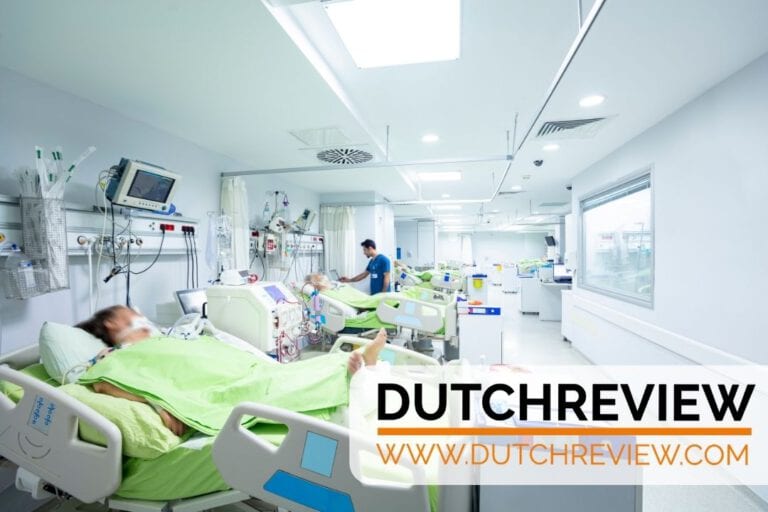
Mayors are holding their breath as hospitals throughout the Netherlands begin to reach full capacity. Many want to see stricter measures to curb increasing pressure on hospitals. “The cabinet must now show strength,” Cor Lamers, Mayor of Schiedam says.
The plea from many mayors follows the closure or impending closure of multiple hospitals/departments due to full capacity caused by increasing coronavirus cases.
For example, the Albert Schweitzer Hospital in Dordrecht has decided to refuse patients for the next 24 hours as all of its beds are full. Further, the emergency department in The Hague was forced to temporarily close on Friday evening.
Dordrecht hospital closed for 24 hours
Dordrecht’s hospital board chairman, Peter Van der Meer, describes the hospital’s situation as “very worrying”, RTL Nieuws reports. He explains that the hospital has told local GPs and ambulance services that the hospital cannot receive any more coronavirus patients for the next 24 hours.
This is because the hospital does not have the staff to treat any additional patients. “It is not possible to open another corona department because we do not have enough staff to do so.”
Van der Meer describes the difficult decision to refuse patients as “diametrically opposed to our sense of duty and our social function. There is no other option, without compromising quality and safety for the patients now entrusted to our care.”
Mayors plea
Mayors from security regions are set to meet tonight to discuss the rising coronavirus cases in their regions. Mayor Jan van Zanen of The Hague describes the situation in The Hague Hospital’s emergency department as “actually unacceptable. The pressure is increasing: on the care, the beds and the staff: It is really bad,” says RTL in a separate report.
Van Zanen did not say whether or not he thought stricter measures are needed but Schiedam Mayor Cor Lamers has been outright about his opinion. He believes the cabinet needs to enforce stricter measures, and soon. “The figures are so alarming. We are now in favour of stricter measures.”
A waiting game
For now, mayors must wait for the cabinet to make a decision surrounding stricter measures. Tonight’s press conference may come as a disappointment for those under pressure, as it has been speculated that harsher measures will not be implemented this week.
Annemarie Penn-te Strake, Mayor of Maastricht, has said that she needs to “hold [her] breath,” whilst the mayor of Breda describes the rise in coronavirus cases amongst the region’s elderly as “cause for concern.”
Follow DutchReview on Facebook for the latest coronavirus news and updates.
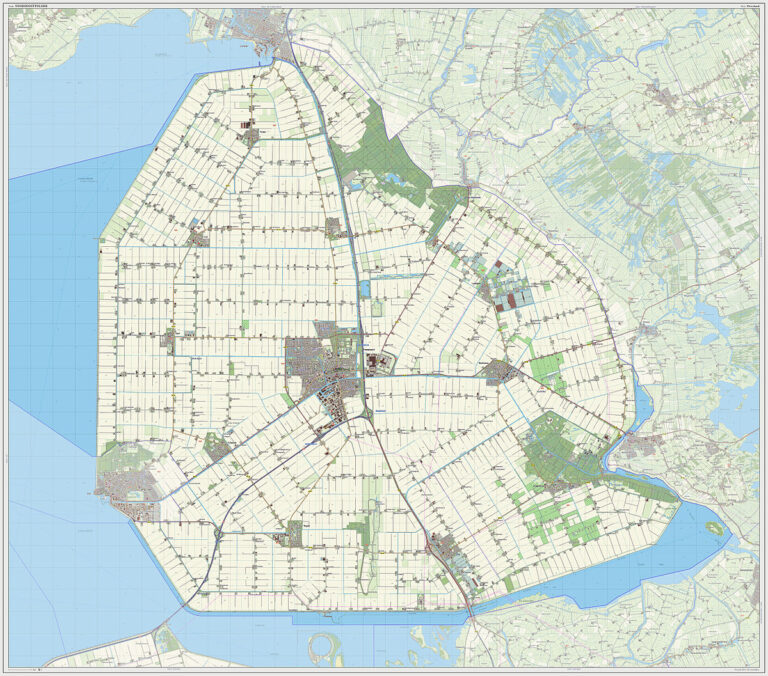
Four submerged settlements from the Middle Ages have been discovered in the northeast of the Netherlands.
Urk and Schokland, two settlements in the Zuiderzee area, have long been thought to have been the only villages in the region that existed back in the middle ages. Now though, maritime archaeologist Yftinus van Popta of the University of Gronigen has discovered four more, reports Omroep Nederland.
Van Popta has been conducting research in the area for five years, following a hunch. Archaeologists had long suspected that the settlements existed but didn’t know their exact location. He’ll now pursue his doctorate for further research.
Archaeological finds
Archaeological materials have been turning up in the area for many years and were believed to have come from ships. But the discovery of the villages, Marcnesse, Nagele, Fenehuysen I, Fenehuysen II, can finally prove otherwise.
Van Popta never believed the theory anyway. “Those things ended up there between 1100 and 1300 AD. The oldest ships were there between 1250 and 1300 AD,” he says.
Van Popta is pleased with his findings. “We have discovered a new part of the Netherlands and made it visible, where real people have lived. I was convinced, but then you still have to prove that it is. It is very nice that you did not work for five years in vain.”
Bones, bricks, and pottery
The archaeologist combined soil profiles, historical maps, satellite images and archaeological finds to create a replica of how the area would have looked in the past.
He discovered the old villages were mostly made up of bones, bricks, and pottery. “Bricks are the remains of houses, bones come from the flesh that they ate, and the pottery they cooked with.”
The pottery found likely belonged to the first inhabitants in the area during the tenth and eleventh century.
Exploration to come
With this revelation, further research is anticipated. “We have actually made sure that no more digging is allowed in the area…Next year I want to see if we can do more targeted research into the drowned villages.”
Are you surprised by these newly discovered villages? Let us know in the comments below!
“Thou shalt not steal” — unless of course you are a (former) colonial power pinching heritage from the lands you have exploited. Then feel free to “safeguard” these stolen items in your museum collections for eternity. Repatriation? Consent? Pffft.
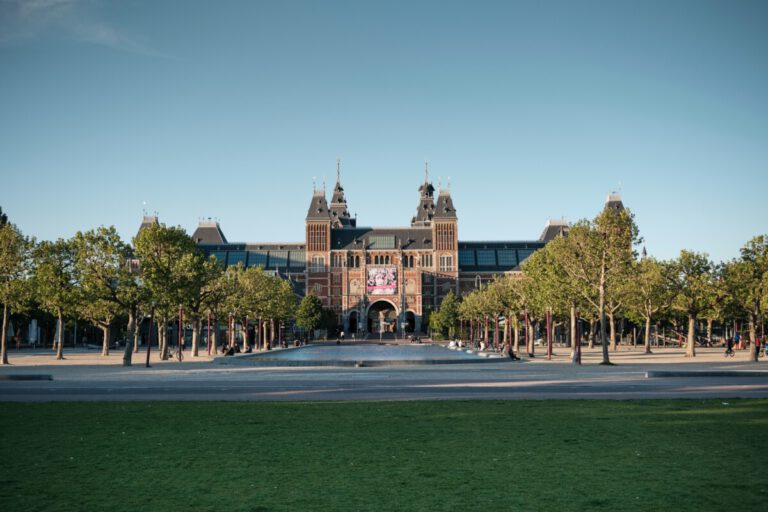
It appears that the Dutch are looking to remedy this hugely unjust tradition, bolstered by the Rijksmuseum and Tropenmuseum both expressing support for a recent government report (translated title:Colonial Collections and Recognition of Injustice) outlining the need to repatriate art stolen by Dutch colonisers.
Repatriation, simply put, is the return of cultural items to their land of origin, and is an integral facet of the larger, on-going issue of decolonisation in museums.
But why is this important? Curious? This article will introduce the general argument for decolonisation, and offer thoughts on the future of museums.
Museums and colonialism: the ugly truth
I adore museums but they once had a very insidious role within colonialist countries, as many academic articles such as this one outline:
“Throughout the eighteenth and nineteenth centuries, museums emerged as active tools of empire, showcasing Eurocentric and racialised ideals and narratives.”
Museums were often used to publicly justify expansion and imperial rule, and created a distinction between “primitive art” and “civilisation”. It was not just cultural theft, it was the use of stolen heritage (and often humans) to perpetuate racist views and an inhumane system.
If you are taking the “yes, but that was in the Past” approach, then sorry but its influence isn’t confined to history. Take the Pitt Rivers Museum in 2020, for example. According to their director:
“Our audience research has shown that visitors often saw the museum’s displays of human remains as a testament to other cultures being ‘savage’, ‘primitive’ or ‘gruesome’.’’
Museums still have the ability to validate and continue traditional narratives dripping in racism and cultural-insensitivity. The Netherlands, as a former colonial power, is no exception to this.
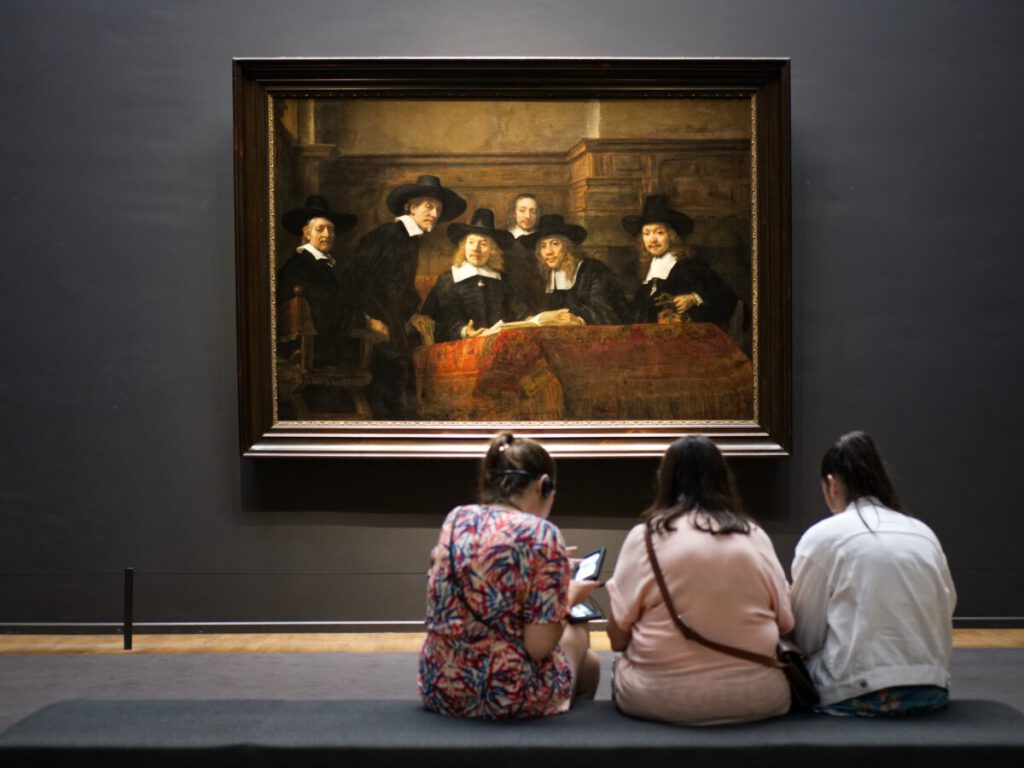
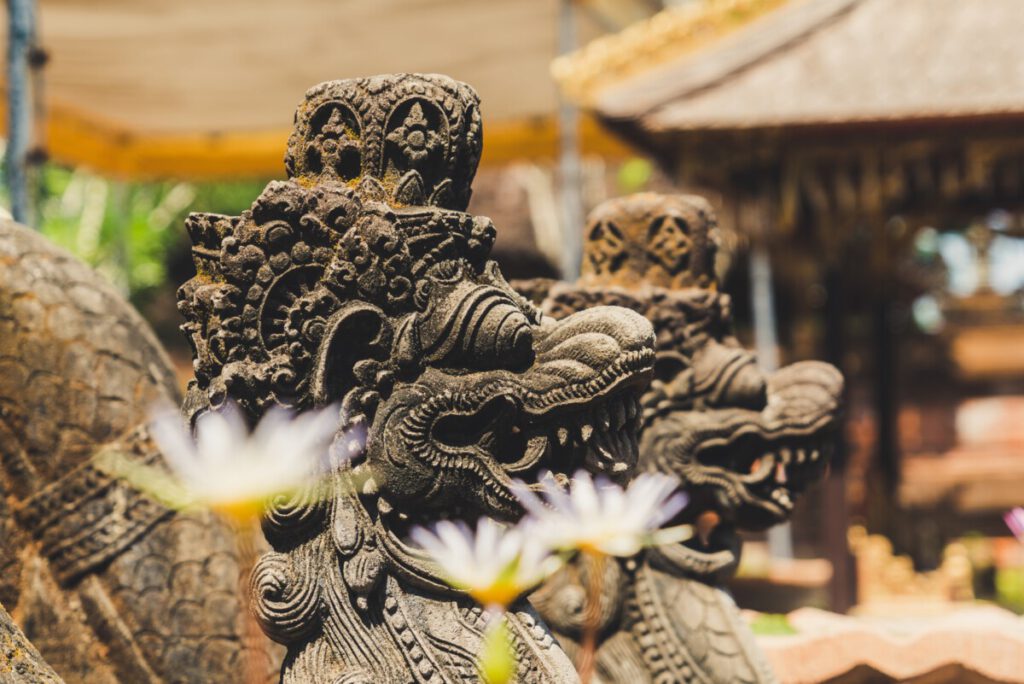
Many museums across the Netherlands hold colonial artefacts. Christian Fregnan/Unsplash.
Enter decolonisation
Sharon Heal writes that: “to decolonise is to add context that has been deliberately ignored and stripped away over generations.” Much heritage, acquired illegally, is presented incorrectly or without cultural sensitivity. In fact, the origins of many items are unknown.
But you may wonder: is this not a re-writing of history? The answer is yes.
It is the re-writing of an unjust, poorly formulated, one-sided account of “our” collective past, offering instead a more valuable world history that includes the narratives and experiences of those that were/are most brutally oppressed, exploited and ignored.
The Dutch and their colonial past
Such a movement is desperately needed as the current approach is failing. After a deeply depressing survey in 2014 found that 59% of Britons were proud of the British Empire, YouGov conducted a second, international version in 2019 where they heaped on more misery by discovering that the Dutch are the worst.
Being British, I’m used to being disappointed in a country whose approach to addressing their highly controversial and exploitative past is to stick their fingers in their ears and sing Rule Britannia as loudly as they can… But the “progressive” Netherlands? How do the Dutch fair in all of this?
What the report could lead to
The report echoes similar approaches from other nations, and it’s important to note that decolonisation isn’t a recent phenomenon, and much positive work has already been done.
For example, The Amsterdam Museum has decided to drop the term “The Golden Age” when referring to the period of history during which the Netherlands exploited and colonised many. However, the Rijksmuseum decided to retain the term.
This year has also brought about a discussion surrounding the “Golden Carriage” and whether or not it should be used. The carriage is decorated with multiple painted panels, one of which depicts a white woman being served by what can only be interpreted as a row of slaves. The “slave panel” has been cited as one of the reasons why the carriage should be left in the stables.
Hopefully, the latest report can bring about further positive change in the Netherlands. However, for a deeper and more lasting change the report needs concrete support from at least three key areas:
Support from fellow museums:
In 2019, the German Museums Association published important guidelines for the care of collections from colonial contexts. In December of this year the Humboldt Forum in Berlin — with its enormous ethnographic collection — plans to open. It’s collection is, unsurprisingly, highly controversial.
If we are to see real change in Dutch museums, it must be a nationwide movement that is sternly implemented.
Support from governments:
The UK’s current right-wing, Tory government’s approach to discussing the country’s history is known to be counterproductive and ignorant. Due to the need for government funding, museums are then put in an unenviable, restricted situation.
The Dutch government has also began talks surrounding the issue of returning colonial artefacts, now it is a question of whether anything will come of this. If the Netherlands is to see change, the government must act and impose strict policies.
“The NMWC uses a typical Dutch approach. Even before negotiations have started, conditions are already on the table.”
The Dutch took many Indonesian artefacts while they were a colonial power over Indonesia. Image: Paolo Nicolello/Unsplash
So what should Dutch museums do now?
Museums need to keep going, keep improving. And fast.
They should be protagonists for positive change not puppets for the status-quo. Not authoritarian institutions, but promoters of fair communication and cross-cultural cooperation. They need to be safe spaces for these discussions to take place.
Dutch museums are taking steps in the right direction, but they need our help. And if they don’t change? Well, they can expect a more forceful resistance. Just ask the Brooklyn Museum who, this year, felt the wrath of activist group, Decolonize This Place.
In short: We should support our museums, but they need to be held accountable.
What do you think of the need to decolonize museums? Let us know in the comments below!
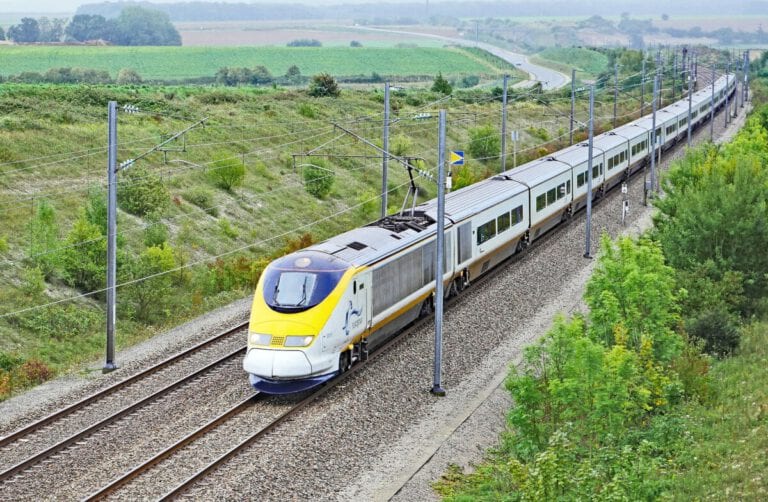
As of today, you can travel by direct train to the United Kingdom’s capital city — even despite the pandemic.
The first Eurostar Amsterdam to London train departed this morning, a trip that takes only four hours. The journey also stops in Rotterdam and Brussels.
London is currently on high-alert because of the coronavirus crisis. Both the Dutch and UK governments urge people to only travel if necessary. If you do travel to London from the Netherlands you will complete a 14-day quarantine upon arrival, and a further 10-day quarantine on your return to Holland.
A direct connection between the two countries has been planned for years. However, because Great Britain is not part of the Schengen zone, new ticket and ID-check terminals had to be built in Amsterdam and Rotterdam. Passengers are asked to arrive 45-60 minutes before their train departs to complete this process.
Naturally, the train was planned to run more frequently than it will currently. The pandemic has forced the number of trains per day to drop. Now only two trains will run per weekday and none on the weekends.
The newest launch means that people in Amsterdam can now go directly to five other different countries. In addition to the UK, daily trains also run to Belgium, Germany, Switzerland, and France.
A new statement from Prime Minister Rutte and Health Minister De Jonge warns “draconian measures” may be imposed if people don’t follow the current coronavirus measures.
For over two hours on Sunday, the cabinet and its advisors discussed if and when new coronavirus measures will come into effect.
More clarity is expected tomorrow when the cabinet shares its plans for addressing the country’s growing crisis.
Still too early to tell
According to experts and policymakers, it’s too soon to tell if the current measures are having the intended effect, reports RTL Nieuws.
A formal press conference is not anticipated tomorrow, but likely later this week.
Over the course of the coming days, it should become clear whether there has been a levelling off or decrease in infection rates.
The looming lockdown
If the current restrictions have not made a substantial impact, tighter measures would be necessary.
This would mean moving to the highest risk level on the government’s roadmap, which would disallow home visits and meetings, and no more than two people would be able to go out together in public.
Political reporter Marleen de Rooy says, “A total lockdown and a curfew are also measures that the government will not rule out if the figures continue to rise.”
Do you think the government should impose strict measures to curb the growing coronavirus numbers? Let us know in the comments.
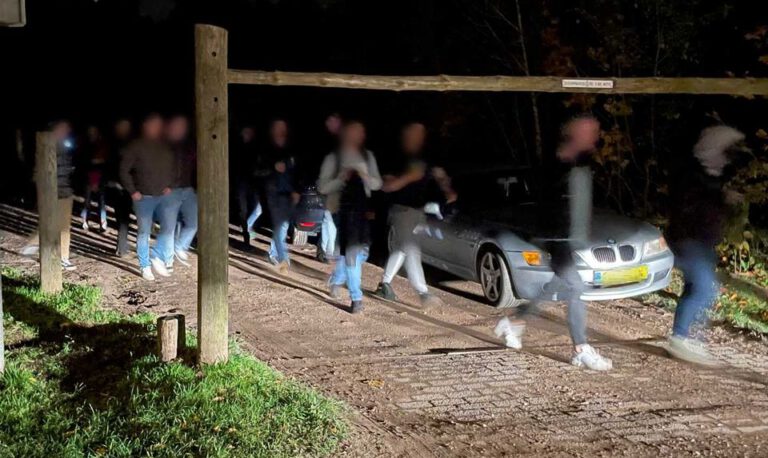
Police in Hilversum have been left very frustrated after they found more than 300 people partying in a construction site. Only two people were arrested, the DJ and an attendee who kicked one of the officers.
The police who made the discovery did not have the means to take disciplinary action against all the partygoers. For this reason, most of the attendees left the site without a problem.
The officers say the partygoers did not comply with coronavirus measures and put their lives at risk by partying in the dark in a construction site. The site was also close to train tracks.
Attendees from all over the Netherlands
What is also worrying about the discovery of the partygoers was the finding of their vehicles.
Police found roughly 100 vehicles at the scene, which could be identified as coming from many different regions of the Netherlands. There were also multiple taxis from Amsterdam. It is also speculated that many of the visitors would have come by public transport.
Outrage
Politie Hilversum (Hilversum Police) have described the illegal party as “incomprehensible and irresponsible” on their Facebook page.
They say that on top of the danger brought into the area by breaking coronavirus measures, the partygoers also left a large amount of waste in the area which will now have to be cleaned up.
“A mountain of waste stayed behind in nature and will have to be cleaned up later today.”
They ended their statement with a plea to abide by the latest coronavirus measures.
“We understand that times are tough for everyone. The corona crisis has lasted over half a year now and the current figures of the RIVM are not encouraging. Now is the time to persevere, for each other, for the healthcare staff, but also for the hospitality industry and events we miss so much.”
Follow DutchReview on Facebook for the latest news and updates.
The Netherlands has breached the 10,000 coronavirus cases per day mark. As of 10 AM, 10,007 more positive COVID-19 cases were registered by the RIVM. This is a jump of 726 people from yesterday’s report.
The Randstad is the supplier of most of these cases with the highest numbers being found in Amsterdam (743), Rotterdam (558) and The Hague (349). These cities have been the hotspots for a while now.
Hospitalizations
The number of people being hospitalised with coronavirus is now higher than the number of those who are being discharged. The NOS reports that 248 more people have been brought into nursing wards across the country. This is 10 more than yesterday.
The number of people admitted to the ICU is slightly down with 43 new patients. These numbers bring the grand total of coronavirus patients in the hospital up to 2,073. Of this number, 472 patients are in the ICU.
Deaths
The number of deaths for the past few days has been far above the weekly average. According to the RIVM, the past seven days measure an average of 37 deaths per day.
However, yesterday saw 46 deaths and today’s number has been registered as 47. This number may in fact be higher given that there is usually a delay of a few days when registering deaths. This is due to the fact that GGDs are under immense pressure.
Stricter measures?
The government has met today to further discuss coronavirus in the Netherlands. Experts have come forward to argue for a complete two-week lockdown.
However, the Minister for Justice and Security claims that the Netherlands has already imposed “very strict” measures. We must simply wait to see the results.
Follow DutchReview on Facebook for the latest news and updates.
For 28 years, the Crossing Border Festival has brought Dutch and international cultural talent direct to The Hague. This year, the party will continue — fully online and totally for free.
The festival will be host to a full lineup of jaw-dropping music and literature acts from November 3 to 8. Even better, you can take part in the festivities from the comfort of your lounge room by watching the live stream stage at Crossing Border Headquarters. Some events will even be broadcast from the stunning Theater aan het Spui.
Online is actually an arrangement that we’re totally on board with. Why? Because by broadcasting the festival online you enjoy exclusive performances every day, plus interact with a fantastic line-up of Dutch and international authors, musicians, poets, and spoken word artists.
Even better, being online means you can choose to enjoy every single day of the festival from any city in the Netherlands. Whether you’re grooving in Groningen, lingering in Leeuwarden, or mingling in Maastricht, you can enjoy this Randstad event. Can anyone say “all-inclusive”? Crossing Border Festival can!
I’m in, now tell me what for!
Are you kidding me? There’s so much happening at the Crossing Border Festival (over 50 acts!) we can’t possibly list it all here — but I guess we can give you a little teaser.
First up, these incredible drawcards aren’t just Dutch. The international lineup includes Antonio Scurati, Manuel Vilas, Hoda Barakat, and Michel Christie — plus heaps more!
Perhaps you’re in the mood for watching a live online interview with promising author Paul Mendez whose debut novel is making huge waves in England? What about getting into the brain of one of the UK’s most respected poets, Robin Robertson?
There are huge names from across the literary scene, from established industry leaders to the most talented debutants. All the interviews are conducted live so you can even ask the authors those burning questions in the back of your mind.
Of course, if it’s music that you’re coming for you won’t be disappointed. Up-and-coming international bands like Keeley Forsyth, Anna B Savage and Kassa Overall will feature exclusively recorded performances for you to jam out to in your pyjamas.
Brooklyn-based “backpack jazz” artist, Kassa Overall, will hit the stage. Image: Aren Johnson/Crossing Border Festival
One event we really can’t wait for is perhaps the steamiest: an online interview with Jehnny Beth and Johnny Hostile (Savages) about their recently published erotic story collection C.A.L.M.: Crimes Against Love Memories. Is it getting hot in here or what?
Alright, you’ve got me — how do I take part?
Even though the Crossing Border Festival has gone virtual, we still recommend you register for your favourite events to make sure that you don’t miss out.
When you register you will choose the day(s) that you’re interested in. Registration will give you access to all the artists that are featured on that day. You’ll also receive a direct link to the live stream, extra information, the latest updates, and even a reminder on the day of the event — just in case it slips your mind.
How much is the Crossing Border Festival 2020?
We know, it’s hard to believe — but the Crossing Border Festival is 100% free. Gratis. On the house. Echt goedkoop, toch? (Very cheap, right?)
An egg heist has caused ripples in the queer penguin community at the Amersfoort Zoo. A lesbian penguin couple has lost its entire nest of eggs to their sticky-fingered neighbours, a gay couple who’s known for making trouble.
This isn’t the first time the gay penguin pair has ruffled feathers. Last year, the same romantically entwined bandits got away with an egg from another penguin family during “an unguarded moment,” according to zoo representatives. The highjacked egg never hatched, leaving the would-be-fathers still chick-less.
Raising the odds
This time, the males upped the ante, swiping every egg from the nest of their female couple counterpart. “So it turns out to be a very determined couple,” says zookeeper Sander Drost.
However, it’s still not looking optimistic for the eager-to-brood male penguins. “It is striking that the gay couple has started brooding on the nest of the lesbian penguins, so we already know that the eggs are not fertilized,” explains Sander.
But the animal caretaker says that the males are cautious with their new stolen treasures. “Maybe one day we will welcome a chick that has been hatched by a gay couple. Who knows, they might succeed next year.”
Not so uncommon
The Amersfoort Zoo announced the “special news” of the egg thievery in a tweet on Tuesday, adding that “homosexuality is more common in this bird species. Both birds nest on the eggs, alternately guarding the nest!”
Bijzonder nieuws! 🐧🐧 Het pinguïn-homokoppel van ons park heeft dit jaar een heel nest ingenomen van een lesbisch pinguïnstel. Homoseksualiteit komt vaker voor bij deze vogelsoort. Beide vogels broeden op de eieren, om en om bewaken zij het nest! pic.twitter.com/2oOVolLt05
Fostering eggs has become commonplace in queer penguin communities at zoos. Zookeepers will often gift unhatched eggs to queer penguin couples when they begin exhibiting signs of desperation, such as building a mock nest out of pebbles.
What do you think of the new drama that’s unfolded among the zoo’s penguins? Let us know in the comments!