Last year, Ajax were a stunning Champions League semi-finalist. This year, they have been knocked out in the group stages as Valencia progressed with its 0-1 victory yesterday night.
The only goal of the game
Rodrigo Moreno scored the only goal during the 24th minute of the first half of the match. With assistance from Ferrán Torres, Moreno skilfully booted the ball into the top right corner of the goal.
Ajax brought on Klaas-Jan Huntelaar at half-time in attempt to combat Valencia’s strong defence.
Valencia’s defender, Gabriel, was given a red card for bashing heads with Ajax’s Dusan Tadic. Tadic received a yellow card as well.
With frequent possession of the ball in the second half, Ajax pushed hard for an equaliser but to no avail.
The surprising win left Valencia coach, Albert Celades, elated “We’ve had a very good group stage, and to finish top of the group is something. It’s all down to the boys,” ESPN reports.
The loss is not only a sporting misery, but a financial defeat as well. Ajax loses out on at least ten million euros, Nos reports.
What’s next for Ajax?
Valencia proceed as the Group H winners. Chelsea is in second ranking after their 2-1 win over Lille. Ajax will now join AZ of Alkmaar in the knock-out rounds of the UEFA Cup.
But more then that, it’s the loss of status. Ajax was looking to start a new golden era and were nicely on their way with their stellar performance in last year’s Champions League edition. Now they’re back to the ‘middle league’ again as the UEFA Cup is nowhere near the status of the Champions League.
Futhermore, the sale of De Jong and De Ligt proved too much as we’ve seen yesterday. And this year might very well be the last for aces such as Ziyech, Van de Beek and Tagliafico.
Ajax aptly posted on their Twitter after the defeat “life isn’t always easy, but that’s no reason to give up”
Looks like some people might be out of jobs at the Dutch Railways because they just tested self-driving trains last night. The successful trial of the train was between Kampen Zuid and Swifterbant, reports NOS. However, they say that it could be years before we actually see these trains on the tracks, so the drivers can rest easy for now.
A train which drives, breaks and comes to a halt all on its own (well, it is preprogrammed) can seem like a huge technological leap but how happy are the drivers, whose jobs might become redundant? According to NOS, their jobs may not be in threat because it might just become “different”. But they do say that not everyone is happy with this development.
Although, everyone is excited about this new technology. Erik Kroeze, an NS spokesperson said in NOS Radio 1 Journal, “But we also hear positive sounds. We notice that a lot of drivers are interested [in it]. It’s a bit [like] asking a motorist what it is like to drive a self-driving car. It is nice for the profession to see how technology develops.”
And understandably so! This train left without any delay and even arrived at the destination on time. Right now, the trains already do a lot of the work themselves but when it comes to going faster, stoping or braking, the driver still has to do it. A new computer was built into the train’s system which tells it when to go faster and when to stop.
This is also not the first time for this technology to be tested: ProRail had successfully trialled one in Groningen all the way back in March of this year. They said the advancements in technology will not put people out of work. They said that the drivers will not be out of jobs as they will be needed to make the system that much more efficient.
Do you think they’ll be rolling them out soon? What do you think will happen to the drivers’ jobs? Let us know in the comments below!
Is there anything better than looking at the Netherlands? Um, yes! How about seeing the Netherlands covered in a cosy blanket of snow? That’s right, we’ve got those sleighbells ring-a-ling, ting-ting-tingling too.
Let’s sweeten the deal and add: thanks to the wonder of the internet and modern technology, you can view snow-covered Amsterdam from the comfort of your own home, snuggled up in bed, with no freezing ears to worry about. You don’t even have to wear pants!
Yeah, we know you’re ready to get into it, so here you go!
Enjoy this epic minute by Gosse Bouma, should be hands down the best thing you should see today!
Did you enjoy this video? Want to see more? Let us know in the comments below!
I have lived in India for most of my life, bar the last three and a half years. Of these, three years were all spent in Rotterdam, the Netherlands. Imagine my excitement when I found out that my recent visit to Mumbai coincided with a special exhibition called India and the Netherlands in the Age of Rembrandt being held at one of the main museums of the city.
The exhibition is held at Chhatrapati Shivaji Maharaj Vastu Sangrahalaya (CSMVS for short because it’s nearly impossible to say that in one breath) until December 16. It is jointly curated by both the CSMVS and the Rijksmuseum in Amsterdam. Having a total of 22 pieces (12 objects from the Rijksmuseum and 10 objects from CSMVS), this exhibition is “celebrating 400 years of cultural heritage between India and the Netherlands” as well as to commemorate the 350th death anniversary of Rembrandt van Rijn.
My excited face when I found out about the exhibition. Image: Arunima Suresh/Supplied
So how did these two countries influence each other and what the hell does Rembrandt have to do with India? I was wondering the same things, so I ventured into the museum’s special exhibits section on the first floor to satiate my curiosity.
The King of the Netherlands inaugurated this exhibit during their recent state visit. Image: Kedar R Koshe/Netherlands Consulate in Mumbai/Supplied
Visiting the India and the Netherlands in the Age of Rembrandt exhibit in Mumbai
Did Rembrandt ever visit India? Sadly, not. He never touched soil on the subcontinent but he did come into contact with Indian miniature paintings. They were a prominent form of art during the 17th century when the Mughals ruled most of India. During this time, it was also the Dutch “Golden Age”: the century during which art, culture, trade, and *ahem* slavery flourished in the Netherlands. It was during this time that the VOC set up trading posts in Coromandel, Gujarat, Bengal and the Malabar Coast. Nicolaas Witsen, a VOC administrator, collected these miniatures and his collection focussed on the Mughals.
Image: Kavana Desai/Supplied
But do remember that not everything during the Dutch Golden Age was well and happy. With the Netherlands being a former colonizing country, there has been much debate happening within the museum sector in the Netherlands about dropping the term altogether as it does not accurately reflect the reality of that time period. The Rijksmuseum famously chose to retain this when other museums like the Amsterdam museum chose to drop it from one of their collections so as to make their museums more inclusive. So definitely expect to see the phrase the Dutch Golden Age used during this exhibition as well.
Apart from Rembrandt being influenced by Indian miniatures, Indian painters like Kesu Das were also inspired by the Dutch prints that somehow made their way to the Indian subcontinent through the Christian missionaries. As a result, you can see a lot of Christian themes like “devotion of the virgin Mary and child” explored through their paintings.
Although this exhibition can be extensive, it does need you to have a bit of background knowledge on the VOC, and the realities of the Dutch Golden Age.
Where is the India-Netherlands exhibition in Mumbai: Chhatrapati Shivaji Maharaj Vastu Sangrahalaya
Have you perfected taking a deep breath before saying the name of the museum? Good! Now that you know the name, let me tell you about this interesting museum.
CSMVS is located a half an hour walk away from the Gateway of India (trust me, that’s a short distance in Mumbai) in the south of the city. The grandeur of the building will strike you immediately where you might recognize Mughal, Jain and Maratha architecture blending together beautifully.
A building that has been around since the early 20th century, it was initially named Prince of Wales Museum of Western India, after King George V. Indian cities, monuments, streets, and buildings have been named and renamed time after time since independence, reflecting the country’s political leaders’ agenda. In 1998, the museum was renamed after Shivaji Bhonsale I, a Hindu emperor of the Maratha kingdom.
Today, it is one of the main museums in the city and has over 1500 objects from different time periods. Be prepared to spend at least three hours (I spent four, but I am quite slow) in there! When you first enter the premises of the museum, you will see the beautiful lawns and gardens that surround the building. You can buy the tickets at the entrance and be on your merry way.
Psst, you can get some respite from the heat because it’s one of the few exhibition halls in the museum that is air-conditioned 😉
So who is actually in India? Are you going to visit this exhibition? Let us know in the comments below!
As we move closer to Christmas, you’d be hoping for some cozy winter weather: soft blankets of pure white snow, or crisp sunny days with ice on the canals. But of course, that’s not what the Netherlands is giving us this week.
Today has begun with sunny weather in many parts of the Netherlands. Mild enough temperatures and not too much wind might have you hoping for some unseasonably nice weather this week. However, you should enjoy the sun while it lasts, because it’ll disappear as soon as Tuesday evening. And not just because it’s nighttime.
Wednesday: wind and rain, the usual refrain
Wednesday begins with rain in the east and southeast of the country. Limburg will be rainy all day, but the north and northwest will experience similar levels of sun to today, but with a bit of extra wind. The sea will be pretty rough, and there’ll be quite a bit of wind on the west coast of the country. The temperature will be 7 or 8 degrees in most parts of the country. Getting over hump day with this much wind won’t be easy, but Wednesday never is.
Thursday: slippy roads and cold toes
On Wednesday night, the temperature will drop dramatically to 1-3 degrees, and some places may experience frost. Roads could be slippy the next morning, as there is also expected to be rain. But this will all lighten up as Thursday begins, with sunny spells combined with some clouds. As the day comes to a close, rain and wind will take centre stage. Thursday will be 6-7 degrees.
Weekend: don’t bother to plan. Just don’t.
Friday will be the worst day so far this week, with rain, clouds and heavy wind. The temperature will be between 6 and 8 degrees. The weather this weekend seems determined to make it impossible for you to plan anything- unpredictable showers and sunny spells are due. The wind will also continue.
Do you have any plans this weekend, and are they weather-compatible? Let us know in the comments below.
New Year’s Eve in the Netherlands: a time for calm reflection, having a cozy party with friends, or setting your street on fire. Whichever you prefer goes in the Netherlands. New Year’s Eve has been a night of mayhem, vandalism, and arson historically, and the government has taken steps to change this. But it’s not yet clear whether these steps will change things at all, so here are our predictions for New Year’s Eve in the Netherlands in 2019.
Generally, the Netherlands is a pretty calm and orderly society, save a couple of wild tourists. Our prisons are emptying out at a good rate and even our ugly places are still incredibly clean. But there’s one night and day when the Dutch lose it and just go crazy, and not in a fun way like with King’s Day, but more in a warzone kind of way.
I’m talking about New Year’s Eve in the Netherlands, or as we Dutch say it: ‘Oud en Nieuw’.
So what are the things that make New Year’s Eve in the Netherlands dangerous?
New Year’s Eve in the Netherlands: Fireworks for all
I’m not talking about general-nicely-organized fireworks shows (although we do see these more, like in Rotterdam). In the run-up to NYE loads of Dutch kids and grown men flood to all kinds of shady websites to purchase massive loads of (il-)legal fireworks. This year it was revealed that these illegal fireworks were coming through drug trafficking channels. While the idea behind the firework tradition is that people set off fireworks for roughly an hour at midnight- it doesn’t really work like that.
For a period of more or less 36 hours, the Netherlands is transformed into a war zone which results in hundreds of missing eyes, scared-to-death pets and extensive debate about banning this tradition (how very Dutch).
NYE in the Netherlands: Fireworks combined with drinking
On the surface it might be all Oliebollen and ‘gezelligheid’, but we all know better. Just like King’s Day ‘Oud & Nieuw’ is a day where it’s more tolerated by other people to get madly drunk beyond reason. Or otherwise stashing up on that other ‘powder sugar’.
Not this kind of powdered sugar. Image: MarjonBesteman/Pixabay
This crazy situation only gets worse the next day, as it’s generally a day off from work for most people, so they can continue to roam the streets in drunken hoards. With fireworks. And oliebollen.
New Year’s Eve in the Netherlands: No bonfires allowed, but there will probably still be bonfires
The tradition of setting fires on New Year’s Eve is, firstly, very weird, but secondly pretty dangerous, as we found out last year when the massive Scheveningen bonfire collapsed. This year, stricter regulations have meant that most municipalities cannot afford to have a bonfire. This news was met with anger from people who love the tradition, and riots ensued in Duindorp last weekend. It’s likely that there will be unofficial bonfires this year, so the regulations may not have their desired effect.
New Year’s Eve in the Netherlands: General Mayhem
In the big Dutch cities and certain villages (Veen for example) there’s just a feeling of hooliganism going around. Big groups of dumb men (sometimes surprisingly old) huddle around a big ass car fire and before you know it they’re throwing fireworks at the firefighters who are just doing their job. At some places the new year’s eve in the Netherlands is so shitty that it has even led to a warning by the US state department.
Are there any CALM traditions on New Year’s Eve in the Netherlands?
Oliebollen are available in the Netherlands from November onwards each year, but they are traditionally supposed to be eaten as the clock strikes midnight. Now there’s a nice (if slightly unhealthy) tradition for you. And of course, most people don’t spend New Year’s Eve on the streets: chill parties with friends are far more common. And, the next day, Dutchies go for a New Year’s Dive in the icy water- what better way is there to sober up and get ready for another year of biking, rain, and stroopwafels?
What are your New Year’s Eve traditions? Let us know in the comments below.
Editor’s Note: This article was originally published on 31 December 2016 but was updated on 10 December 2019 for your reading pleasure.
Do you dream of being a writer? Do you like lots of creative freedom? Do you think you have what it takes to join DutchReview? Because we’re looking for editorial interns!
First off, let’s get some important questions straight out of the way:
When?
Straight away! Or at the start of a semester – which would be 6th of January 2020. We’re looking for someone for 4 days per week, of which 3 days at our DutchReview office. For a minimum of at least 20 weeks, but longer would be better!
Got a different timeframe on your mind? Let us know when you’re reaching out 🙂
Also before you apply, please send a quick email to abuzer_at_dutchreview.com asking if the position is still open.
Where?
Throughout the whole country of course, we’re reviewing the Dutch! However, our physical office is in Leiden at the innovative hotspot of PLNT. But we do work from home/fancy coffeeshop.
What will I be doing?
As an editorial intern you will write articles on a daily basis for the website: this can vary from covering the latest hotspots in Amsterdam or Rotterdam, a cultural analysis about cheese or covering Dutch current events. Please let us know which one of those you can do the best when writing us! You will also be helping out with our massive social media presence.
What will you be doing for me DutchReview?
We’ll be helping you in the process to become a true bi-lingual content creator hero! We’ll take you along on the awesome journey of just a weird idea to a successful article. Teach you all you need to know about online publishing, SEO and pulling off actually funny Dutch-English jokes. After this period you will be a full black-belt master with Google, Facebook and Wordpress. Oh and the best bit? We’re also paying you for all of it!
Do you have the following qualifications?
– You’re absolutely positively great and flawless in English
– You know what a CMS is and might have even heard of Wordpress
– You follow a relevant HBO or WO study (for example in the field of communication, media or journalism)
– You like writing (obviously)
– You are creative and full of ideas – we mean it when we say we really like independent thinkers
– You either know absurdly much about Dutch current events or social and event writing (or you can do everything! Yeah that would be nice)
– You can work independently and deal with deadlines
– You are a social media addict and familiar with Facebook, Twitter, Instagram and Youtube
– You have your own laptop to work on
Do I get paid?
It is a paid internship! You will get €300/month as well as travel costs to and from the office covered. There are also free events, hotspots and free cheese to review every now and then!
You got me, how do I apply?
Before you apply, please send a quick email to abuzer_at_dutchreview.com asking if the position is still open. We get a lot of requests and although we love hearing from you, the positions are often filled quickly. Nonetheless, we are often looking for new talent so please inquire if you are interested!
Send your resumé and a motivation in true DutchReview style (English, witty, not-so-formal and with links to your portfolio if you have one) to abuzer_at_dutchreview.com.
After this we’ll probably ask you for a draft-article and later on, if it was any good, a meet-up 🙂
Research by the Dutch Food and Consumer Product Safety Authority (NVWA) has revealed that one in five pieces of produce is contaminated with dangerous pesticides. These pesticides are endocrine disruptors, meaning that they affect how our hormones work.
Pesticides have serious health consequences
Endocrine disrupting pesticides have been banned in the European Union since 2009, and with good reason. Changes in our hormone balance can lead to infertility, birth defects, obesity, diabetes, ADHD and autism. Pregnant women and babies are particularly vulnerable to the effects of these pesticides. According to the environmental organisation Pan Europa, the ban on these pesticides is not being obeyed.
Main offenders are outside the EU, but Spain is also a problem
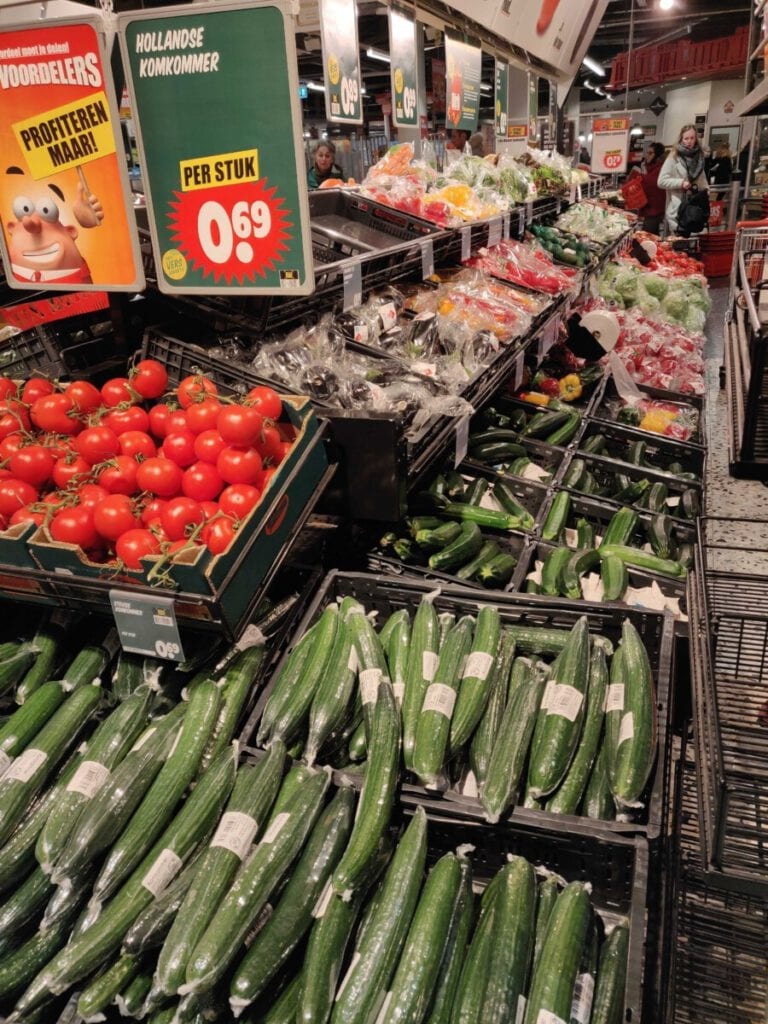
Most of the food produced in the Netherlands was not contaminated with these pesticides- the exceptions being chili peppers, cucumbers, apples, Brussels sprouts and strawberries. The worst country of origin within the European Union for using these endocrine disrupting pesticides was Spain. Approximately half of the nectarines, grapes and peaches from Spain sold in the Netherlands contained illegal levels of the pesticide. Outside the EU, Kenya, Uganda and the Dominican Republic were the main offenders.
One in five food items contaminated
The NVWA sampled three thousand food products sold in the Netherlands to produce these results. These foods included fruits, vegetables, herbs, seeds, grains, potatoes and nuts, and on average one in five of them contained the poisonous hormone.
What should the Dutch government do about this? Let us know your thoughts in the comments below.
Being born a genius comes with its own burdens. Being accused of plagiarism seems to be one of them for 9-year-old Laurent Simons (not photographed in the feature image). He may not become the youngest to finish the electrical engineering course at the Eindhoven University of Technology.
His parents have decided to take him out of the school after the accusation. However, according to NOS, the university says “there was [a] disagreement with the parents about the planned timetable”. The parents wanted the boy to finish the course before his 10th birthday on December 26. according to the Eindhoven University of Technology, this proved to be not possible. The university said in a statement: “The parents have decided not to accept this. We regret that.” Laurent has been using Instagram to express his problems with the university as well.
But does it sound like the parents are putting too much pressure on young Laurent? Possibly. At least that’s apparently how the conversation went between them and the university. Laurent also took to Instagram to call out the university and say “liar liar pants on fire”.
All are equal in the eyes of the law. The Netherlands is a tolerant and hospitable country, in which everyone gets equal opportunities, regardless of his or her background and colour of skin. At least, that’s how the Netherlands likes to see itself. But the numbers and the people behind them tell a different story.
Editor’s Note: This article was written in December 2019 but we believe it is more relevant than ever given the current discussion around Black Lives Matter and racism globally.
Research shows the inequality of opportunity in what types of schools non-white children are encouraged to attend, job applications, in renting an apartment, buying a house or in appointments to administrative positions. The figures also show that the political and public debate has hardened in recent decades and that xenophobia and racism have not just been increasing but have also become more normalised.
Young Dutch people with a migrant background have noticed how the public debate has changed in recent decades. Politicians have slowly succeeded in normalising xenophobia, populist rhetoric has also contributed to a negative image of Muslims, and on social media, it is constantly raining racist comments/insults.
Recently, the Dutch Football Association launched an investigation after a second division game between FC Den Bosch and Excelsior was stopped due to racist abuse. The match was temporarily halted after Excelsior winger Ahmad Mendes Moreira was subjected to racist chanting by the home fans, including songs about ‘Black Pete.’
In the same week, Kim Kardashian posted a tweet in which she called the ‘Dutch tradition’ called Black Pete ‘disturbing’. Kim Kardashian’s tweet opened a cesspool of insults with Dutch folks on Twitter calling her names like whore, attention seeker, etc. What started as a simple tweet soon grew into massive hurling of insults from the pro-Zwarte Piet camp.
Whether the Netherlands likes to admit it or not, the country has an ugly and brutal past of slavery and colonialism. The Netherlands, albeit beautiful, is divided into those who enjoy the profits that were once stolen, or who have to endure the effects of the theft, exploitation and injustices of years past. Since the Netherlands was built in part by the exploitation of other people, cultures, countries and the theft of their natural resources, it is sometimes interesting to see how the country desperately wants to develop a society in which everyone is expected to pretend that this history has left no effects on the Dutch society of today.
In contrast to how the Germans openly teach their young ones about the atrocities of the Nazis, the slavery past of the Netherlands is glossed over in the Dutch school curriculum. A nice slick film about Max Havelaar or a proud description of the Golden Age, throw in some WWII documentaries, and that is usually where the history classes end. Because of this, lots of white Dutch folks often prefer to close their eyes to the sufferings of people of colour.
Recently, the UN rapporteur for racism and xenophobia, Tendayi Achiume, stated that the Dutch government is taking too little action to combat racism. The Zambian UN official stated this at a press conference in The Hague at the end of a working visit to the Netherlands.
As a UN rapporteur, Tendayi is the successor to Verene Shepherd, who strongly criticised the “Dutch tradition” of Zwarte Piet in a report in 2015. Verene Shepherd, a professor at the University of the West Indies and a former UN expert on people of African descent said she still gets hate mail from the Netherlands even years after publishing her report.
Tendayi Achiume’s new report states that the Netherlands has since taken some important steps in this area. For example, she praises the decision not to use Black Petes with fully painted faces at the national Sinterklaas entry this year, but only soot wipes. “The most important thing is that there is a dialogue now,” she said.
At the same time, Tendayi believes that the Dutch government should take more responsibility in the Black Pete issue, especially because it concerns events that are subsidised. With that, she meant the position of Prime Minister Rutte, who has repeatedly said that he leaves the change of Zwarte Piet to Dutch society. Prime Minister Rutte has also refused to address the issue of the violence suffered by anti-Zwarte Piet protesters at the hands of pro-Zwarte Piet hooligans.
Educating the populace
According to Tendayi Achiume, another important role for the government lies in education. She stated that the history lessons should pay much more attention to the Dutch involvement in slavery and colonialism, and also to the arrival of guest workers (gastarbeiders) in the Netherlands. “This ultimately helps to combat discrimination and intolerance,” she added.
The Zambian UN rapporteur criticised the recently introduced burqa ban. She pointed out that it is aimed at Muslim women, who are already a vulnerable group in the Netherlands.
The findings of Tendayi Achiume are still preliminary. A report will be published in July 2020 with its final judgment on racism and xenophobia in the Netherlands.
The UN wasn’t the only institution to write a report on the Dutch Black Pete issue. In 2016, the Dutch children’s ombudsman, Margrite Kalverboer, after speaking to children in the country, reported that non-white children in the Netherlands experienced discrimination on a daily basis that worsened around Sinterklaas.
She wrote that the racial stereotype of Zwarte Piet contributes to bullying, exclusion, and discrimination and is therefore contrary to the international Convention on the Rights of the Child. Margrite received so many death threats from Dutch folks who were pro-Black Pete that she had to make an official complaint to the police about them.
Racism in the Dutch labour market
Over the years, many studies have already been conducted on discrimination in the Dutch labour market. Time and again the result is that Mohammed has less chance of a job than Johan. Not because Mohammed does not have the papers or is not qualified for the job, but because his name is Mohammed and not Johan.
A joint study by the Vrije Universiteit Amsterdam, the Dutch Crime and Law Enforcement Study Center (NSCR), Radboud University and Utrecht University show that ethnic minorities with a blank criminal record received a significantly less positive response to their application than applicants of Dutch descent with violent crime on their criminal record. The preference for white Dutch people is so deeply rooted that most employers aren’t even aware that they are doing it.
Dutch blind spot for racism
In the Netherlands, the denial of racism is rooted in a national self-image of the Netherlands as the country of openness, tolerance and equality. This national self-image stems from the belief that a history of 400 years of colonialism and imperialism has left no traces in contemporary society.
Yes, it is true that the Netherlands has a liberal soft drug policy, a liberal policy for sex workers in the Red Light District and was the first country in the world where same-sex marriage was legalised. As a result, you have Dutch folks who ask the question: “How can we be racist when we are so tolerant?”
Same Dutch folks believe that: “If you are a person of colour and you work hard in school, you can achieve just as much as any other white person in the Netherlands.” The statistics, however, contradict this. Discrimination in the labour market means that people of colour — even if they work hard — do not always get equal opportunities. And even the tolerance that the Netherlands has long been known for is currently under threat from right-wing and populist politicians.
Black folks sometimes wonder: “If right-wing and left-wing politicians and their followers claim not to be racist, then where does racism in the Netherlands come from?” It is customary to associate racism primarily with the (extreme) right or Nazis, while no attention is being paid to the daily and more subtle forms of racism that black folks have to deal with at work, school, playgrounds, in the media, on the streets, public transportation, etc.
Nowadays the term ‘micro-aggressions’ is also a thing in the Netherlands. Subtle racial comments and insults that are thrown at people of colour on a daily basis. Examples of micro-aggressions are: “You’re African and you speak Dutch so well?”“Wow! You’re African and you study here in the UvA. You are not like other black people that I’ve met.”
The annoying thing about micro-aggressive racism is often not even in the comments themselves, but in the world view or meaning behind them. A white person telling a black person studying at the UvA that they are not like other black folks he/she has met is only drawing the conclusion that black folks are not intelligent enough to study at such a university. Or that black folks usually don’t go to (or finish) school.
These micro-aggressions can also mix with other forms of discrimination. Racism also intersects with sexism, homophobia, transphobia, Islamophobia, etc. For example: “Is that your real hair?” Or when white folks touch the hair of black women without permission, as if they are some exotic animals and their bodies are entirely at white folks’ disposal for them to satisfy their curiosity.
You also have white Dutch folks who immediately go into ‘defence mode’ once the topic of racism is brought up. That is called white fragility. White folks who live in a comfortable “white bubble” where no uncomfortable discussions about racism should be had. And they fight tooth and nail to keep it that way.
If someone (mostly black folks) brings up the topic of racism, slavery or the Dutch colonial past, these fragile white folks react with anger or quickly want to put a stop to the conversation. This white fragility is nurtured in Dutch classrooms where young pupils aren’t taught or exposed to the uncomfortable and ugly parts of Dutch history.
Note: The term “white fragility” was coined in 2011 by Robin DiAngelo, an American professor of multiculturalism, who wanted to give a name to the sometimes defensive or evasive reactions of white people to racism discussions.
Recently, Daniël Buter, a young man born and raised in Amsterdam was threatened with deportation by the Dutch Immigration Services (IND) due to not having a Dutch passport. This was due to a series of registration mistakes and also being abandoned by his parents.
In an article about the young Daniel, NOS referred to him as an “Amsterdammer” which somehow, did not sit well with right-wing and populist politician Thierry Baudet. So what do you call a 19-year-old young man born and raised in Amsterdam? You would say an Amsterdammer, right? Well, Thierry Baudet saw it differently. He thinks that it was wrong of the NOS to refer to Daniël Buter as an “Amsterdammer.”
Een “Amsterdammer” die dreigt te worden uitgezet….my god de propaganda / framing van NOS kán bijna niet hilarischer. https://t.co/XhFjeNsWAd
So according to Thierry Baudet, if you’re not a white person like him, then you’re not an Amsterdammer (or Dutch), even if you’re born and raised in the city. Unfortunately, Thierry Baudet’s mentality can be seen throughout the Netherlands. Lots of white Dutch folks don’t consider people of colour who are born and raised in the Netherlands to be their fellow countrymen and women. This is the main reason why the African, Moroccan and Turkish communities are largely marginalised.
When people from these communities do well in their respective fields, then they are considered “Dutch.” If they somehow commit a crime, then they are “African with a Dutch passport” or Moroccan/Turkish with a Dutch passport.” As a person of colour (or a minority), you’re constantly expected by white Dutch folks to prove yourself. You’re always reminded that you’re a guest (even though you’re born and raised in the Netherlands) in the Netherlands, you should be grateful that “you are allowed to live in the Netherlands” and if you commit a crime, you run the risk of losing your passport.
So how racist is the Netherlands?
While the Netherlands may be a tolerant country, Dutch society must admit that it does struggle with the issue of racism. Racism in the Netherlands can be found in everyday life and even in the so-called “good intentions” — such as white Dutch folks who claim not to see colour (colour blindness) and thoughtless micro-aggressions. All of these provide a blind spot for how racism manifests itself in this country.
The discussions about racism in the Netherlands must be had. Our country is, unfortunately, one of those countries where the discussion about racism is still a taboo. At the mention of the word, many white Dutch folks immediately retreat to their shells. The same applies to the discussion about police brutality, slavery and colonialism. By and large, the Dutch response to criticism of Black Pete, slavery and its colonial past has been defensive, at times even aggressive.
Young Dutch pupils should be taught about the slavery and colonial history of the Netherlands. If the Netherlands intends to build a truly inclusive society, then the contributions of guest workers such as the Moroccans and the Turkish to Dutch society should also be taught in schools. Their hard work helped build the Netherlands that we’ve all come to love and appreciate today.
And it is very unacceptable and sad that these communities are still treated as outsiders. You have politicians constantly talking about taking away their Dutch passports or putting them in a plane and deporting them – minder Marokkanen. How can you marginalise the Turkish and Moroccan communities and then wonder why they do not want to “integrate” into Dutch society?
Yes, the Netherlands is a beautiful country but it is time to admit that it has a racism problem. It is time that the right steps are taken to solve this problem. Enough with referring to the racists in the Netherlands as “a few bad apples.” Racism should not be accepted in any facet of Dutch society.
If we want to tackle racism at the root, then we must first admit that there is a problem. This is a persistent cultural system of categorisation and marginalisation that has crept into all parts of our society: the police, politics, education, the law and the way in which people of colour are treated in their daily lives, often without white folks noticing. And then there are those who notice and do (or say) nothing!
Racism in the Netherlands is not the fault of an individual or a group of bad eggs and “uneducated farmers” somewhere in the deep countryside. Racism is an encapsulated cultural problem. It is part of our history and therefore also our daily life. From job application inequality to police brutality. From only white science departments to an educational curriculum that does not mention a word about the injustices that other people and cultures have had to suffer so that the Netherlands would be where it is today, and which especially makes excuses for our shameful acts in other countries.
If the Netherlands wants to show the international community that it does not have a blind spot for racism, then the goal must be to reach a point where black people and other minorities can just live their lives instead of always trying to survive.
Do you think that the Netherlands has a blind spot for racism, and have you ever been a victim of racism in the Netherlands? Let us know in the comments below.