Home Blog Page 711

Unrest in Leiden’s student community after rape and assault

0

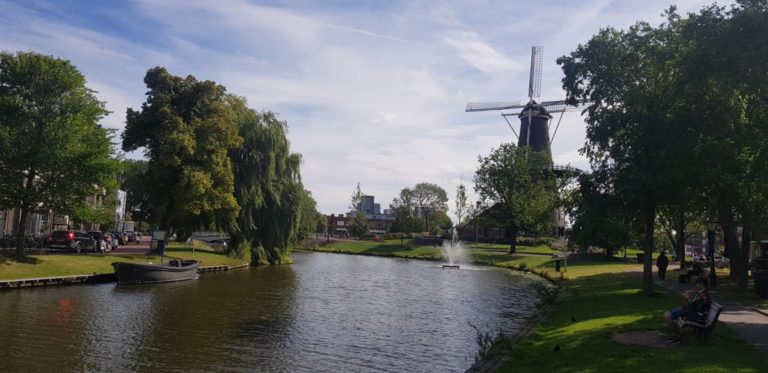
Students in Leiden are getting vigilant and worried about walking around the city alone in the night after two assaults and a rape occurred in just a month. According to NOS, figures released by the police show that there is an increase in the number of sex offenses committed in the area. 

The most recent of the offenses happened early Wednesday morning. A 24-year-old woman was grabbed at around 3 am in the center. The perpetrator fled the scene of the crime and is still not found. The other assault happened on November 11 and the rape occurred on November 6. According to Mayor Lenferink, these incidents are not caused by the same attacker.

With all of these incidents happening students in Leiden no longer feel safe enough to go out alone in the night. The mayor has said that there is extra surveillance installed in the city centre. There are more investigators being put on these cases so as to resolve them quickly.

Student associations have also called on the students to take care of each other and not go home alone in the night. The mayor has also told people to come forward if they have any more information or if they are in danger. However, student associations want more concrete policies and changes to come through.

Do you live in Leiden? What extra precautions have you taken? Let us know in the comments below.

Feature Image: Samantha Dixon/Supplied

Amsterdam is the 25th most visited city in the world

0

Euromonitors’ ‘Top 100 City Destinations’ 2019 report reveals that Amsterdam is more popular than Barcelona and Berlin and is the 25th most visited city in the world. Are we surprised? Not really. Do we care? Yes, because Amsterdam suffers greatly from overtourism. 

What constitutes a “visitor”

The report assessed over 400 cities to conclude what the top 100 most visited cities based on international arrivals were. “Arrivals” were defined as anyone who stayed in a city for a minimum of 24 hours but no more than 12 months.

Arrivals did not include “domestic travellers, same-day visitors, people in transit and cruise passengers as this can distort arrivals figures”.

Europe’s top destinations

Europe has the most inbound arrivals in the world in comparison to other continents but intra-regional travel is still responsible for most of the tourism within Europe.

Amsterdam attracted 8,354,2000 visitors in 2018 but this increased by nearly 6 percent in just one year. By the end of the year, 8,835,4000 visitors are predicted.

London is the most visited city in Europe (but do we even consider Britain as “Europe” anymore?). Amidst Brexit uncertainty, the number of inbound arrivals to London slightly decreased in 2018. Paris is the second most visited city in Europe and Istanbul is third. Amsterdam just pipped Barcelona to seventh place and Vienna ranked tenth.

Top destinations globally

If Amsterdammers are feeling frustrated by tourism, then perhaps they need only look at Hong Kong, the most visited city in the world was, which nearly 30 million tourists descended upon in 2018. But of course it is relative, as Hong Kong is more than quadruple the size of Amsterdam.

Bangkok and London came in second and third place. Amsterdam ranked 25th on this list with Paris and Prague being the only other European cities that were more visited than the Dutch capital.

The top 100 cities account for nearly 47% of all global arrivals and this is set to only increase.

Are you one of the few people who have not visited Amsterdam? Congratulations! You are helping spread the tourism out.

Feature image: Ralf Gervink/Pixabay

Rutte and other world leaders mock Trump at NATO summit in London

0

The Dutch Prime Minister Mark Rutte may have been caught making fun of the ‘well-respected’ President of the USA, Donald Trump at the NATO summit in London. Rutte was in conversation with Justin Trudeau, Emmanuel Macron, and Boris Johnson when the alleged mocking took place.

What went down?

Johnson asks Macron why he was late and Trudeau cuts in saying “He was late because he takes a 40-minute press conference off the top”. Macron replies but his words cannot be understood as his back faces the camera.

It is unconfirmed what the topic of conversation was but many people suspect it was about President Trump, who engaged in an unscripted 50-minute back and forth conversation with journalists on Tuesday.

Near the end of the footage, when Princess Anne has joined the group, Trudeau comments “You just watched his team’s jaws drop to the floor.”

The edited footage ends here but a far longer video can be seen on Sputnik News’ Facebook page, who are the news outlet who originally posted the video.

So far, Trump has not responded to the video. His latest tweet expresses how much he enjoyed meeting with the British Prime Minister.

Rutte and Trump’s relationship

The last time Prime Minister Rutte and President Trump met was in July of this year. The meeting seemed to go swimmingly as Trump commented “We’re dealing on trade, we’re dealing on military, we’re dealing on intelligence.  And the relationship has never been better.” Rutte confirmed this by responding “Absolutely” to Trump’s comments.

Well, this second meeting seemed to go a lot smoother than the first one. Remember when Rutte interrupted Trump with a firm “No” after Trump alleged it was a good thing that there was no solution for the trade-dispute between the EU and the US?

Some people on Twitter thought it was disrespectful for the leaders to talk behind Trump’s back. Others thoroughly enjoyed the spectacle. What are your thoughts? Let us know in the comments below.  

Source: Official White House Photo/Tia Dufour

Falling over claims 13 people’s lives each day

0

Statistics Netherlands reported a total of 4628 people died in 2018 after an unfortunate fall. This averages to 13 people a day, with most of the victims over the age of 80 years old. Are those steep Dutch stairs to blame? Or slippery cobblestones? 

What constitutes “falling”

Only people who accidentally fell, tripped or slipped were included in the statistics. People who died after falling from a mobility assistance such as a walker or mobility scooter were not included in the analysis.

Why is there a rise in the number of deaths caused by falling?

The deaths caused by falling has been increasing for years now. This is predominantly to do with the ageing population of the Netherlands. As people get older, they lose their balance and hand eye coordination. But even when age is excluded in the assessment, Statistics Netherlands still notice an increase in falling.

Look up from your phones everyone! Let us know in the comments below if you’re reading this from your phone.

Feature image: Pexels/Pixabay 

The Netherlands is failing to rat out the rats: no one knows how many there are

6

The Netherlands has a rat problem, but no one is completely sure how bad it is. A combination of inefficient reporting and ineffective municipality policy means that in some major cities, there are more rats than people.

No collective counting system exists for the number of rats in the Netherlands, but what everyone agrees on is that there are far too many of them. I would personally argue that one rat is too many rats, but we’re talking far larger numbers of them here, unfortunately.

No one has been able to rat the rats out

There is no uniform system for dealing with rats in the Netherlands: the government has passed the responsibility to individual municipalities, who attempt to solve the problem, or don’t, in whatever way they choose. RIVM has attempted to create a Rat Monitor, a hotline for professional pest controllers, through which the total number of Dutch rats can be monitored. However, thus far, there haven’t been enough reports made to create an accurate picture of the rat problem.

Efforts to source this information from the public have also failed, but for a different reason. People are terrible witnesses, it seems, especially when it comes to rats. Someone who very rarely sees a rat is much more likely to report it than someone who sees rats all the time.

40 percent of municipalities have seen an increase in rat nuisance complaints

By combining municipality records and other knowledge centres on rat nuisance, NOS revealed that there were 10,000 reports of rat nuisance last year, and already 7,000 this year. NOS also found that out of the 190 municipalities they asked, 40 percent felt that the number of complaints about rat nuisance had increased.

Fewer rats are being poisoned, so get yourself a cat

Because the rules on rat poison have become stricter, the rat population is expected to continue increasing over the next couple of years. So, don’t leave your babies unattended, and get a cat. Even if cats aren’t particularly discerning about what they kill, having a furry predator in your corner could well be worth it if the rat population continues to grow.

Have you had any experiences with rats recently? Let us know in the comments below.

Feature image: DSD/Pexels

Big Brother: is this supermarket taking security cameras too far?

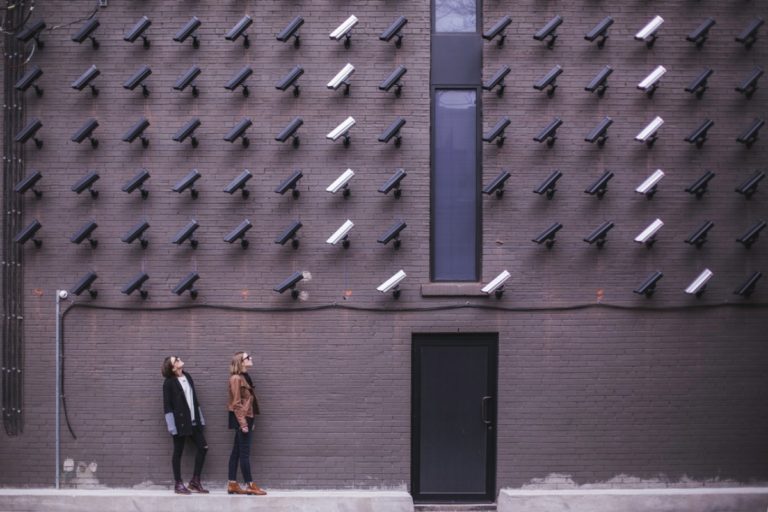
In Jumbo supermarket’s Alphen aan den Rijn store, dozens of cameras scan and record customers’ faces. The store owner says the cameras are necessary to catch thieves and protect customers. But when does security cross become an invasion of privacy?

If you’re a known thief walking into Jumbo to grab a carton of milk, too bad. Facial recognition systems will trigger an alarm that will have you forcibly removed from the store, RTL Nieuws reports.

It may sound like the latest and greatest in technological advancements, but Lotte Houwing, spokeswoman for internet freedom NGO Bits of Freedom argues that the problems outweigh the benefits.

“I would feel more uncomfortable in a Jumbo where all sorts of cameras are watching that are constantly watching me, than in a Jumbo where someone sometimes steals a sandwich,” Houwing told RTL Nieuws.

What kind of society should we live in?

This is the question on many people’s minds. To be able to recognise the faces of thieves means capturing and storing biometric data. Houwing says the saving and processing of the data has a big risk.

“To recognize faces, you have to store them somewhere. So there is a database with all sorts of faces and identities linked to it,” she explains. “This is very personal data that you don’t want to end up on the street. You only have one face.”

An expensive exercise

Houwing can’t imagine that the expensive costs of maintaining facial recognition software outweigh the costs of theft.

More so, the cost to innocent customers who are not thieves could pay the price. Simply entering the supermarket giant gives them no control over what happens with their data, or where it ends up.

 “The faces of customers are reduced to barcodes that are scanned upon arrival,” Houwing explains. “You do not want the data to end up on the street because a database is not properly protected.”

Is facial recognition in stores legal?

According to the Dutch Data Protection Authority, the processing of biometric data is prohibited in principle. However, a loophole applies if the processing is ‘deemed necessary for authentication or security purposes’.

“A strict test is then required to determine whether the importance of using biometrics is proportionate to the invasion of privacy. And whether the use of biometric data is the best way or whether there are other ways,” says the authority.

Political parties CDA and D66 have been critical of facial recognition for a long time and are campaigning to interfere more with the use of the technology. “Face recognition is the next step in penetration where people are seen as a collection of data. That can be at the expense of human dignity,” says CDA MP Chris van Dam.

Thankfully, the huge use of facial recognition technology at Jumbo’s Alphen aan den Rijn is not standard across the supermarket chain. “We do not apply this in our branches. This pilot was initiated by a Jumbo entrepreneur,” explained a Jumbo spokeswoman.

Jumbo isn’t the first place to take facial recognition to extremes. Police now use databases to search for criminals, while Schiphol Airport is looking to trial a new passportless system.

What do you think about the use of facial recognition becoming more common? Are you concerned about your privacy, or do you think it’s a fair measure to increase security? Let us know in the comments below!

Feature Image: Burst/Pexels

8 men arrested in Den Bosch for drugging and sexually abusing teenage girls

0

Earlier this morning, a group of men were arrested for abusing and sexually assaulting three teenage girls. Police Netherlands believe the girls were drugged and then harmed in a “defenceless condition”. 

Social media used to lure the girls

The girls, aged 15 and 16, first got in contact with the men through social media. The abuse took place at a garage company in ‘s-Hertogenbosch.

During the investigation, police discovered nude photos and other visual footage. Police Netherlands make clear “When it comes to images of a minor, possession and distribution are always punishable. It falls under child pornography and when we come across such images, we always investigate the origin and distribution.”

There might be more victims

The police detective team believe more girls have fallen victim to the group but have remained silent so far. A spokesperson from the police urges “Maybe they didn’t dare to do that earlier, because they were afraid of the boys. But if something like this happened to you, you need help”, RTL news reports. 

Men remain in jail

Police will conduct searches of the suspects’ homes today. Those who have been arrested this far will remain in jail and may only have contact with their lawyer.

Need support?

If you want to report a similar crime, you can contact the vice squad on 0900-8844. If you would like support as a victim of a sexual crime, then you can contact either the Centre for Sexual Violence (CSG), Victim Support Netherlands or Safe Home. All information you share with the police or any of the above organisations is treated confidentially.

More than half of ABN Amro’s ATM machines closed due to heists

0

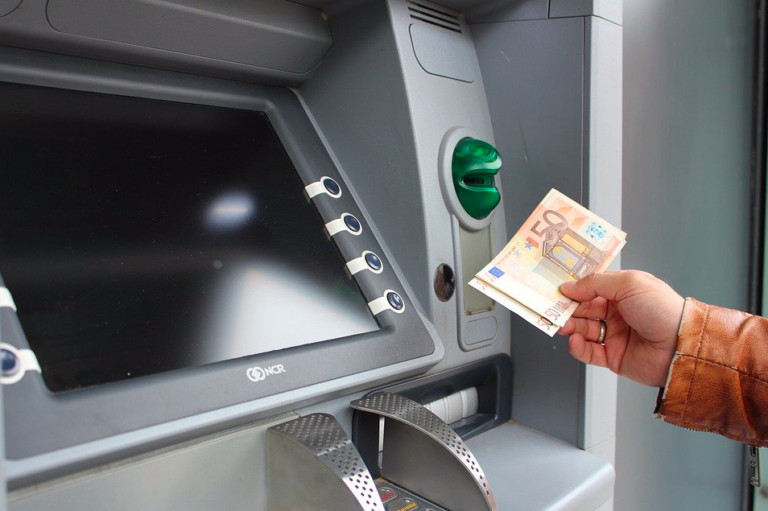
ABN Amro has been forced to close down 470 ATM machines due to heists. The machines have been emptied and boarded up but ABN Amro thinks the closure will only be temporary and should not last more than a few weeks, NOS reports. 

ABN Amro bank is targeted

There have been 60 heists this year on ABN Amro machines. Competitors such as ING and SNS have not had any successful heists on their machines, although there have been a few attempts.

ABN Amro has made clear that the agreements they have with De Nederlandsche Bank and the National Payments Consultation, such as for there must be a cash dispenser for consumers within a 5-kilometre radius, will not be affected.

Safer locations sought for the ATM machines

A drastic increase in the number of robberies has led to the decision to close the ATM machines while ABN Amro looks for safer locations to house them in.

The bank commented, “We understand that this emergency measure can cause inconvenience to anyone who wants to withdraw money at the closed ATMs, but the safety of local residents and entrepreneurs comes first”.

ANBO association recognises the safety concerns but is worried about the effect these closures will have on peoples’ ability to access cash. Director of ANBO, Liane den Haan, tells NOS “The Netherlands has between 2 and 4 million people who cannot use internet banking and are therefore heavily dependent on cash. These are not only the elderly, but also people who cannot read or write, people with a low literacy or people with a disability.”

Has the closure of these ATMs affected you? Let us know in the comments below. 

Dutchies don’t like to be distracted when having their dinner

0

How do you like to eat your dinner? Do you like to watch something while you gobble some food? Or do you prefer to not be distracted from the food at all? Well, according to a recent study, Dutch people like to keep their phones away and their Netflix off, reports RTL Nieuws. 

According to a study of more than 1,000 Dutchies conducted by the Nutrition Centre

Spending more time for breakfast, lunch and dinner

Dutchies are spending more time enjoying their meals than they did five years ago. They take about 29 minutes for dinner. 60% of them like to eat more consciously and three-quarters of them eat at the table. They’re also giving more importance to breakfast and lunch: they schedule in around 15 minutes for breakfast and 21 minutes for lunch.

Dutchies are eating more consciously

Only 4% of the responders on the study said that they scroll through social media while they are having their dinner. 19% of them prefer not to be distracted but 25% of them said that they like to watch something while they eat. A whopping 52% of them said that they talk to a loved one.

Dutch people are not only eating more consciously but they also like to eat food that they cooked themselves! They try to make food at least 5.5 times a week, while ready-made meals or takeaway is eaten only once a week. However, people over 55 cook more often than young people. They also eat more attentively than younger people do.

How do you like to eat your meals? Let us know in the comments below!

Feature Image: Jan Vašek/Pixabay 

Editor’s Note: This article was originally published in December 2019, and was fully updated for your reading pleasure in September 2021.

New Year’s Eve in 2019: no bonfires this year, but there will be riots

0

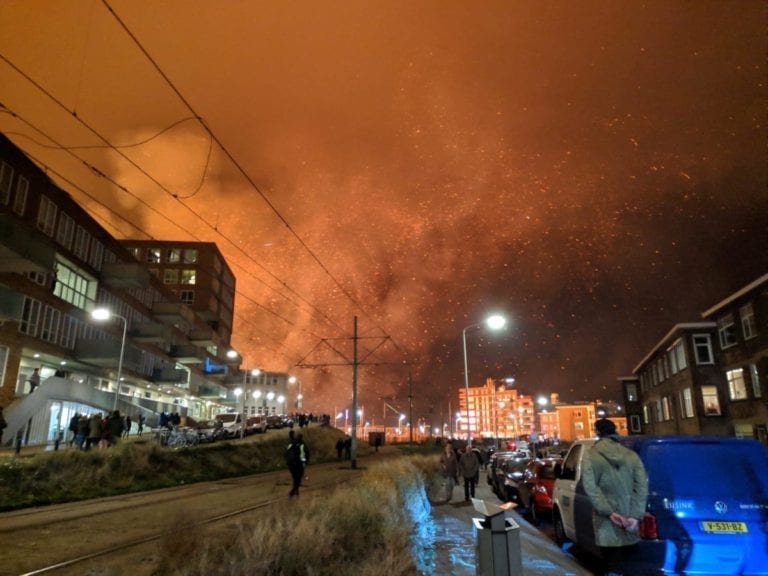
New Year’s Eve is typically a wild affair in the Netherlands. Far from a peaceful evening of gatherings with friends, oliebollen, and champagne, it tends to be filled with firework disasters, bonfires, and even riots. But this year, hopefully, things will be different. 

No bonfires this New Year’s Eve

New regulations on bonfires have been put in place, which effectively means that there will be no bonfires this New Year’s Eve. Last year, a bonfire built at Scheveningen reached 48 metres in height. It resulted in fire flying through the air. The new regulations only permit bonfires up to 10 metres in height, and additionally require the organisers to get insurance with a 100,000 euro deductible. Without support from the municipality, most organisers will not be able to afford this. The bonfire at Duindorp beach has already been cancelled: it is expected that the one in Scheveningen will also be cancelled over the next couple of days.

The fires last year. 

Riots broke out in Duindorp this weekend

Some Dutchies are far from happy with this development. Riots broke out in Duindorp this weekend, probably as a result of these new regulations (the police have not yet confirmed this, however). Containers and rubbish bins were set on fire, and a bus stop was also damaged. Thirteen people were arrested, but have since been released. Among them was a nine-year-old, armed with a molotov cocktail. Fires were started, and the police estimate that a group of 50 people was involved with the riots this weekend. They think that the neighbourhood will remain restless til New Year’s Eve.

Local residents want the bonfires back

Local residents of Duindorp have also voiced their frustration with the decision, and fear that New Year’s Eve will be even more disruptive without the bonfires. Some also feel that the municipality is taking away a beloved tradition: “They can’t just let this take away,” one of them says. “There was ‘old-fashioned fun’ in the neighborhood again last night [referencing the riots] and that probably won’t stop for the time being. It will be the same cat and mouse game with the [municipality] as you saw in the 80s and 90s, before the bonfires. ”

Municipality holds firm on bonfire decision

The municipality has refused to entertain such ideas, saying that they will not be blackmailed out of their decision. It remains to be seen what kind of behaviour will take place on New Year’s Eve this year. If you’re confused about this VERY odd New Year’s Eve behaviour, we have an article about New Year’s Eve in the Netherlands that will explain everything.

What do you think of this decision? Should the bonfires stay, or do the police just need to crack down on rioters? Let us know in the comments below. 

Feature image: Emma Brown/Supplied.