Since Trump’s return to the Oval Office, the Netherlands has revised its travel advice for LGBTQ+ people travelling to the US.
Although travel advice previously stated that American laws and customs surrounding the LGBTQ+ community are comparable to the Netherlands, they are now labelled as different.
What changed?
According to the NOS, the US now has local laws that could hinder LGBTQ+ individuals’ access to healthcare or cause trouble upon entry to the country.
The latter especially affects transgender and nonbinary people, since American authorities now require short-term travel authorisation and visa applicants to indicate their gender at birth, accepting M or F only.
People who don’t identify with the gender they were assigned at birth could therefore face issues when entering the US, or be subject to awkward questioning.
Trump hates gender
This change in travel advice is a consequence of the Trump administration’s repeated targeting of the queer community — transgender and non-binary people in particular.
Trump has been busy issuing presidential decrees that remove protections against LGBTQ+ people since his inauguration and has chosen the word ‘gender’ as public enemy number one.
In light of this, government documents can no longer use words such as ‘gender identity,’ or ‘non-binary’, and government agencies can no longer display the rainbow flag.
@pinknews The U.S. State Department has removed “TQI+” from its section on travel advice for LGBTQI+ travellers, now reading just ‘LGB’. This is one of many instances of the Trump administration removing references to LGBTQ+ from federal websites. This follows a memo issued on Wednesday the 29th of January by the U.S. Office of Personnel Management ordering federal agencies to take down “all outward facing media (websites, social media accounts, etc.) that inculcate or promote gender ideology"… #presidenttrump#transgender#lgbtqia#whitehouse#usa♬ Minimal for news / news suspense(1169746) – Hiraoka Kotaro
But it’s not just about symbols — the administration also blocked care for trans youth and removed the option of not declaring your gender on US passports, causing a bureaucratic nightmare for many Americans.
As the Netherlands continues to embrace digital technologies, a new report warns that the country may also be deepening social inequality.
As NU.nl writes, the Sociaal en Cultureel Planbureau (SCP), a prominent Dutch research institute, says the government must take action to prevent digitalisation from further dividing Dutch society.
In its latest report, the SCP explores the impact of digitalisation on social cohesion — a concept it defines as how strongly people feel connected to each other and to institutions like the government.
According to the SCP, high social cohesion helps encourage civic participation, such as volunteering or voting. But as digital technology becomes more integrated into daily life, this cohesion could weaken — especially for certain groups.
A growing digital divide
The SCP warns that digitalisation risks widening the gap between richer, highly educated individuals and those with fewer resources or lower digital literacy — a.k.a. those who are not connected.
Without equal access to digital tools and skills, vulnerable groups may find it harder to participate in society.
Image: Freepik
And it’s not just about access: digitalisation may also fuel division. The SCP argues that social media and online platforms give “free rein to unfiltered emotion,“ potentially increasing social polarisation in the Netherlands.
The report also suggests that digitalisation contributes to a more individualistic mindset. People are increasingly held responsible for their own societal success — or failure — while values like solidarity and mutual support take a back seat.
Where once there may have been a stronger sense of collective responsibility for those struggling in society, there’s now a growing belief that people simply have themselves to blame.
So, what should the government do?
While the SCP acknowledges the Dutch government is addressing important topics like privacy protection and digital security, it says more must be done to protect social cohesion.
One key recommendation: involve other ministries — such as Social Affairs and Education — in digital policy discussions to ensure broader perspectives are considered.
The SCP also urges the government to recognise that Dutch citizens are not a one-size-fits-all group — people differ in how they view and interact with new technologies.
Without a more inclusive approach, the SCP warns, many may feel unheard or left behind in the digital age.
How do you feel about digitalisation in the Netherlands? Share your thoughts in the comments.
There’s some good news for the Netherlands: fewer people smoke or drink. But when it comes to weight, statistics paint a far less rosy picture.
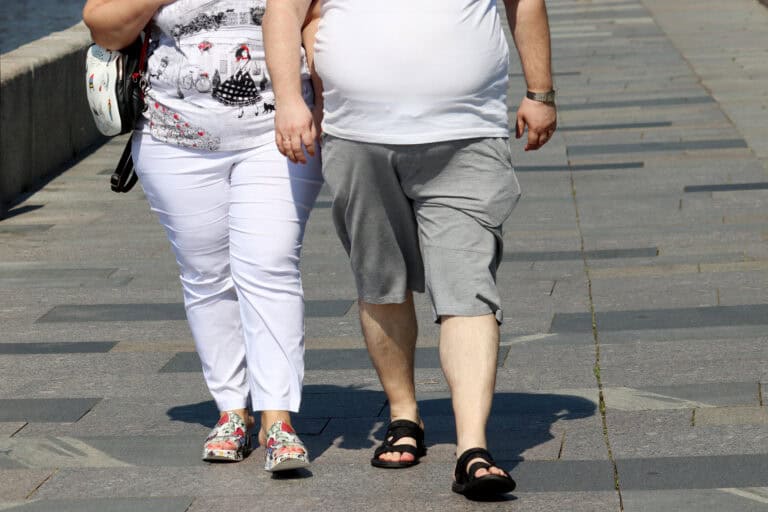
Despite efforts to adopt healthier lifestyles, the number of overweight adults in the Netherlands has been increasing — with 50% of the Dutch now affected.
Lifestyle improvements, but weight stalls
The good news? New data from a report by CBS (the Dutch Bureau of Statistics) highlights a very welcome downward trend in the number of Dutch adults who smoke and drink.
Only 18% of Dutch adults smoke and just 6% drink too much alcohol — and, given the steady decline in smokers and binge drinkers over the past ten years, we can expect those figures to keep falling. 🙌
The bad news? CBS’ Lifestyle Monitor also highlighted an alarming trend in obesity rates, with the share of obese adults growing from 13% to 16%.
These findings come from annual self-reported height, weight, and lifestyle data used to calculate BMI (Body Mass Index) — any result over 25 is considered overweight, with those over 30 considered obese.
Let’s just say that the Dutch government’s goal to reduce this to 38% by 2040 looks increasingly unrealistic. 😬
Inequality in health
The report also reveals a deeper divide: better health is strongly correlated with having a higher income and a higher level of education.
Smoking is nearly twice as common among less-educated adults (21% vs. 13%), and 65% of low-income adults are overweight. 😟
Smoking is more prevalent among lower-income individuals, though overall figures for smokers in the Netherlands are falling. Image: Depositphotos
Excessive drinking, on the other hand, appears to have no class divide.
What is especially worrying about the recent statistics, however, is that weight issues start early. The CBS Youth Monitor report shows that 14% of kids aged 4 to 17 are already overweight — a worrying sign for the future. 🚩
The bottom line? Although healthier habits are a step in the right direction, tackling obesity is key to lasting progress.
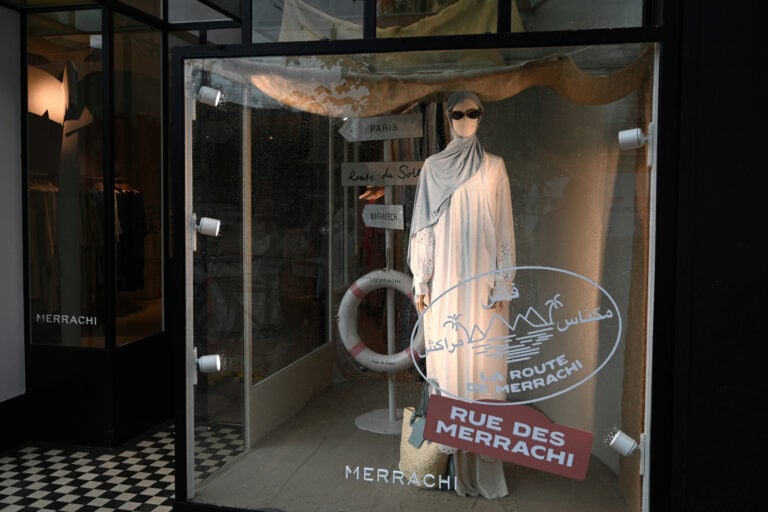
The Dutch-owned modest fashion brand Merrachi made its debut in the heart of Paris, with a new pop-up store. While curious Parisians admired the new addition, French politicians had less enthusiastic opinions. 👀
After first gaining popularity online, especially among Muslim women, Merrachi opened stores in Amsterdam and Antwerp, and Paris was a natural next step.
Modest clothing for everyone
Merrachi’s founder, Nada Merrachi, told the NOS that she wants modest fashion to be inclusive.
“We want to bring two worlds together and connect them.” That’s why the brand features women with and without headscarves in the campaigns.
She chose the city centre on purpose, explaining that she wants modest girls like her to take up more space in city centres instead of feeling like they don’t belong.
“Many women who dress modestly are often not visible in the centre. Often, the shops where you can buy modest clothing are in the suburbs.”
The girly-pops are loving it
The response? Overwhelmingly positive — at least for Merrachi’s shoppers.
Hundreds of women lined the streets of Paris’ snazzy Le Marais shopping district, excited to check out the collection.
Merrachi believes her brand disrupts stereotypes and preconceived notions about modesty, expanding people’s perceptions of the different styles and cultures that exist in fashion.
The Eiffel Tower’s modest makeover
To release the launch, Merrachi released a brilliant campaign video, “dressing up” the Eiffel Tower in modest clothing (wrapping it in an abaya and headscarf).
French law bans abayas and headscarves in public schools, making their reaction to the campaign pretty predictable.
Far-right politicians accused the brand of “hijacking a French symbol and attacking French heritage” and called it “a terrifying political project,” proving once again that fashion is everything but apolitical.
But hey — any press is good press, right? 😉
What do you think about Merrachi? Would you wear some of their stuff? Let us know in the comments below?
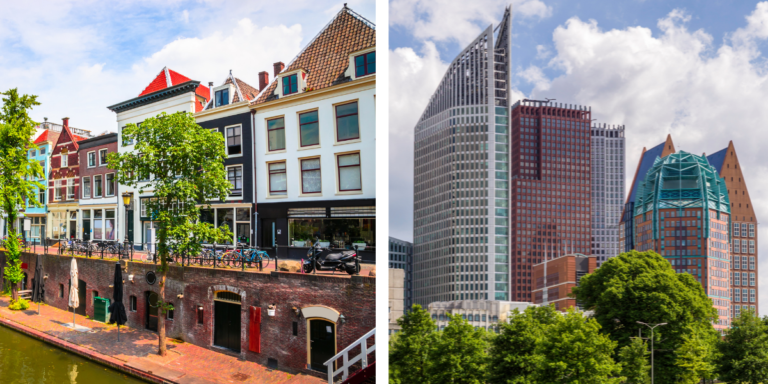
When people think of the Netherlands, cities like The Hague and Utrecht come to mind. But your average Dutchie might get a little ticked off if you act like those are the only existing cities.
Rarely do you hear about the beautiful city of Hilversum or the historical city of Nijmegen.
It’s always “Amsterdam this, Rotterdam that” and never “Actually, I really like Maastricht“. 😤
But of course, the remaining 9.1 million people live perfectly happy, fulfilling lives outside this cluster of cities, right? 🤨
Why do they do it?
Some Dutchies may feel that everything outside the Randstad is dull.
There’s this idea that all the culture, nightlife, and beauty are concentrated in just a few big cities — and that the rest isn’t worth exploring.
Obviously, that’s not true. But for those living outside the Randstad, it can feel insulting when visitors act like the Netherlands begins and ends with Amsterdam.
But you will notice this subtle feud when you ask a Dutchie which city is the best — suddenly, the country is divided over whether it’s a Randstad city. ⚔️
Should you join in?
Unless you want to contribute to this weird rivalry, it’s probably best to stay neutral.🍵
Instead, enjoy all the Dutch cities for what they are — each with its unique charm, history, and vibe.
What do you think of this Dutch quirk? Have you experienced it? Tell us in the comments below!👇
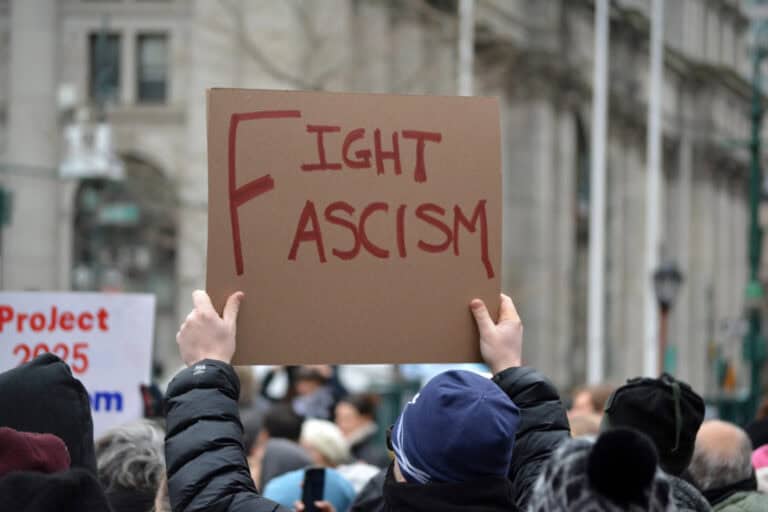
Did you spot the crowds on Saturday? Were you part of them? Thousands of protestors gathered on the streets of Amsterdam to protest fascism, racism, and far-right policies.
This protest is held annually on the International Day Against Racism and Discrimination, established by the UN over 60 years ago.
United against discrimination
A coalition of over 200 organisers were involved, Euronews shares, including Amnesty International, Kick Out Zwarte, the Dutch Palestine Committee and Another Jewish Voice. ✊
They expressed their demands loud and clear, strongly disapproving of the rise of fascism and far-right government in the Netherlands.
Many denounce the government’s “anti-democratic measures against Muslims and asylum seekers,” specifically criticising Minister of Asylum and Migration, Marjolein Faber.
It’s all about solidarity, community and speaking up to denounce national and international acts of discrimination, fascism and anti-democratic measures of all kinds.
A closer look
The Palestinian solidarity movement in Amsterdam joined Saturday’s protests, reignited after Israel brutally broke the ceasefire agreement, killing hundreds of Palestinians in Gaza.
Meanwhile, Turkish protesters were demanding democracy and justice following the detainment of Istanbul’s mayor, Ekrem İmamoğlu, condemning the unlawful move by Turkish President Recep Tayyip Erdoğan. As of yesterday, İmamoğlu is in jail.
One protestor told Turkish outlet Holland Medya, “We have gathered to protest the one-man regime, inequality, and injustice that continues in Türkiye.”
Did you join any of the protests? Which slogans stand out to you? Let us know in the comments.
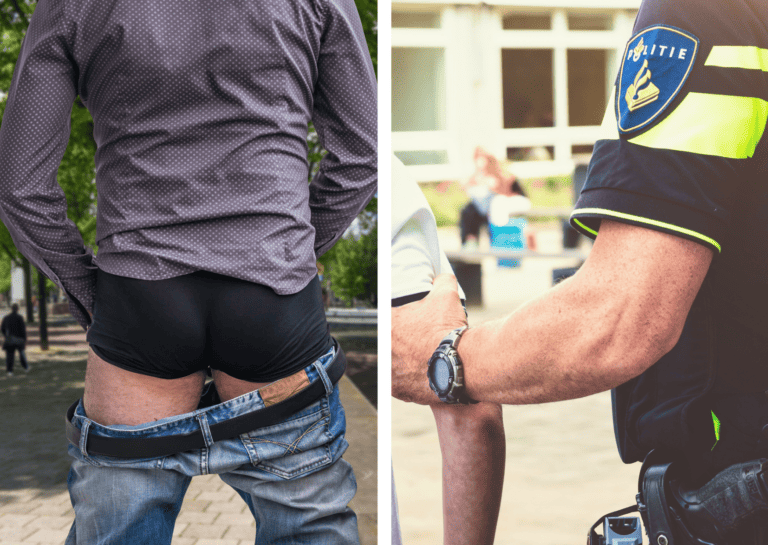
A Rotterdam police officer is facing costly consequences for getting a little too wild in his rollercoaster chase after a public urinator last September.
When trying to arrest him, the officer locked the suspected offender in a crawl space… only to be the one to bust him out, as NOS reports.
Let’s break down the twists and turns. 👇
A splash and a flash
Wild pissers aren’t just targeting canals and metro stations; house façades are under threat too. At least, that was the case for one home in Rotterdam last year.
After an hour and a half, he was freed. By the very same police officer who locked him in there — and finally arrested him.
Hefty fine and a big apology
Police management disapproved of the officer’s methods, and €500 was deducted from his pay.
The officer also apologised via email to 250 colleagues, with some believing the sanction was still too mild.
As for the wild pisser? His case has been dismissed. Apparently, being locked up for an hour and a half was punishment enough (at least on an empty bladder). 😮
What do you think of the sanctions against the arresting officer? Were they too mild? Let us know in the comments!
Want to leave the Netherlands but afraid that you’ll miss the beautiful architecture? Don’t worry: these places are modelled after Dutch towns despite being found in all corners of the world!
Dutch architecture is internationally celebrated and admired. So much so, that some countries decided to construct a little bit of the Netherlands for themselves.
These Dutch-shaped towns exist for many different reasons, too! For some, they might be amusement parks, while for others, they are purely residential.
Either way, some of these carbon copies will make you think you ate one too many truffles and got magically transported back to a cosy, Dutch neighbourhood.
1. Huis Ten Bosch: Japan’s Dutch experience
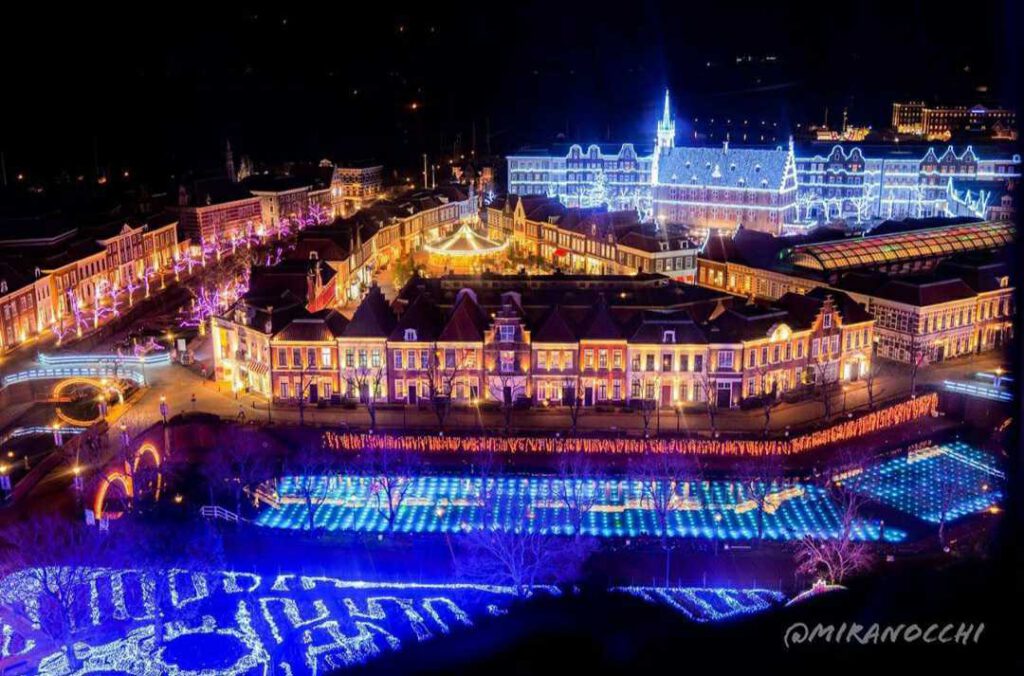
The Netherlands, but with neon lights. Image: Miranocchi/Instagram
Perhaps the most surreal of all copycat towns are “Dutch” theme parks. Can you imagine Paleis Huis Ten Bosch — but in Japan and filled with art and tourists? 📸
In 1979, Yoshikuni Kamichika visited the Netherlands and was blown away by its beauty. He was looking to create a unique tourist attraction for visitors to the Omura Bay area in Nagasaki, Japan, when the stunning Dutch houses and canals gave him a jolt of inspiration.
Located in Sasebo, Nagasaki, Huis Ten Bosch was opened in 1992 and cost a massive €2.5 billion!
The money funded the digging of six kilometres of canals as well as the planting of 400,000 trees and 300,000 flowers (the man was dedicated, we have to give him that.)
Bricks were even imported from the Netherlands to ensure that the buildings looked as accurate as possible.
2. Holland Village: China’s slice of the Netherlands
The Japanese were not the only ones to create their own little Netherlands. China once enjoyed a Dutch theme park of its own, Holland Village.
The town was meant to be both a Dutch theme park and a residential area. Holland Village was built in the year 2000 in Shenyang, China.
It boasted canal houses, windmills and replicas of famous Dutch buildings such as its own Amsterdam Centraal and Peace Palace.
Chinese-Dutch entrepreneur Yang Bin was the mastermind behind the project. However, he was arrested in 2002 for tax fraud. All his projects were subsequently declared bankrupt, and Holland Village was demolished in 2009. 😥
3. Holland Village, Shanghai: a Dutch satellite town in China
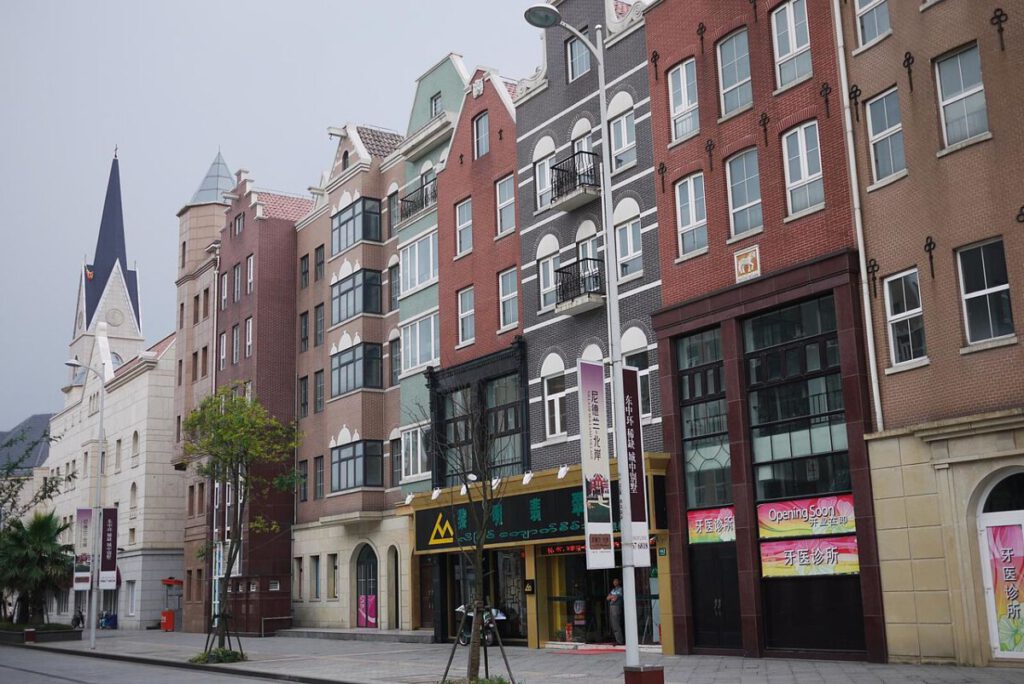
A Chinese-Dutch ghost town. Image: Banalities/ Wikimedia Commons/CC2.0
Not to be confused with Bin’s Holland Village in Shenyang, this Holland Village (or Holland Town) was built in Shanghai and is exclusively residential.
Holland Village was intended to act as a satellite town for Shanghai. Modelled after Amsterdam (surprise, surprise), the town consists of adjoining canal houses, and canals (duh) and even has its own De Bijenkorf!
It was hoped that the village would appeal to rich Chinese who lived in the Netherlands but wanted to return to their homeland. In reality, however, the village appealed to very few.
Despite 20,000 residential buildings being built in Holland V in 2023, the project is basically a ghost town. Now, it acts as a backdrop for wedding photos and quirky film productions.
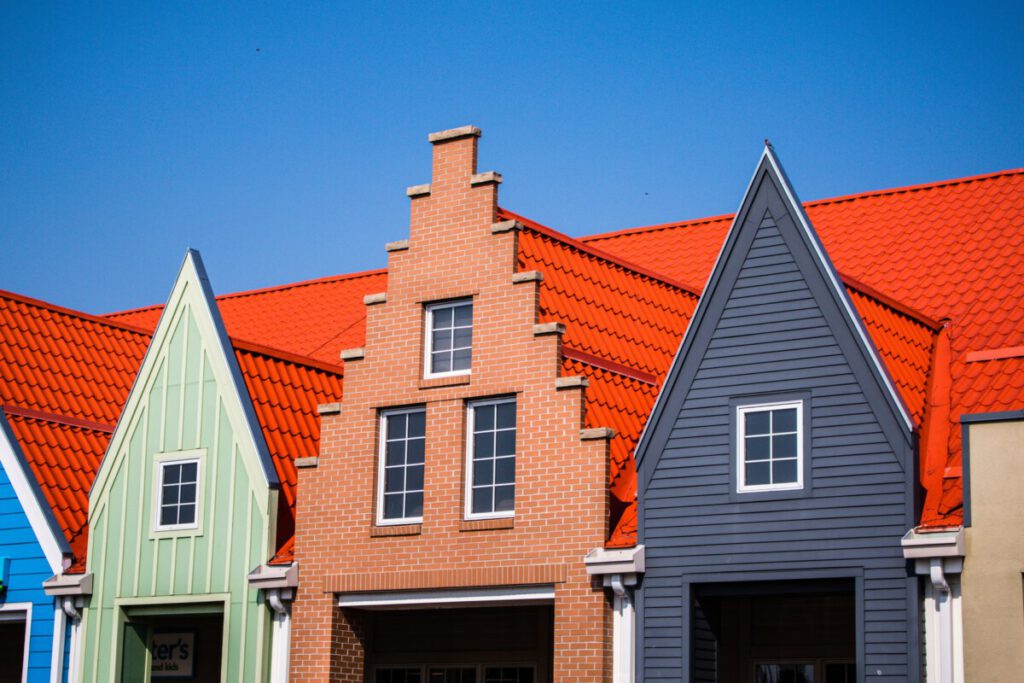
4. Holland, Michigan: quintessential Dutchness in the US
So colourful! Image: Unsplash
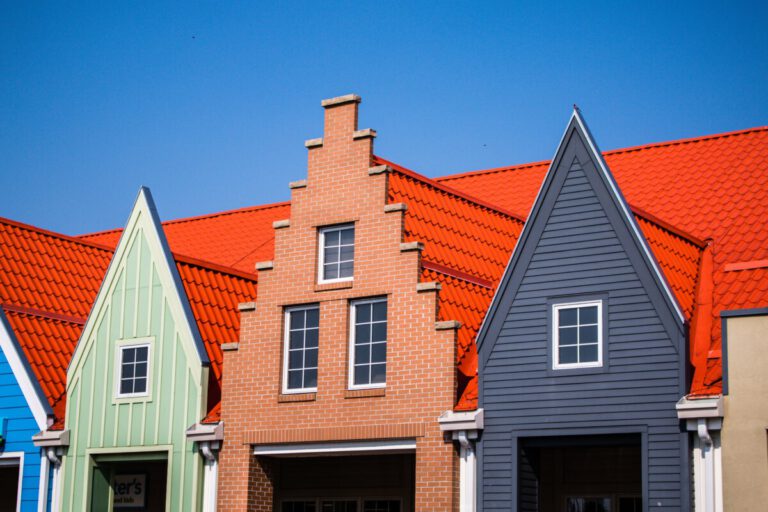
Some of these copycat towns can be attributed not to international admirers but to Dutch settlers themselves. Perhaps a town that best exemplifies this is Holland, Michigan (yep, sounds pretty Dutch.)
This town still offers sightseers a glimpse of Dutch architecture with buildings, windmills and bridges that would convince you that you are in a brightly coloured version of the Netherlands. The town even hosts its famous Tulip Time festival each May.
Ready to move to the US but not quite ready to leave behind the quirks of Dutch life? Perhaps Holland, Michigan, will help you transition.
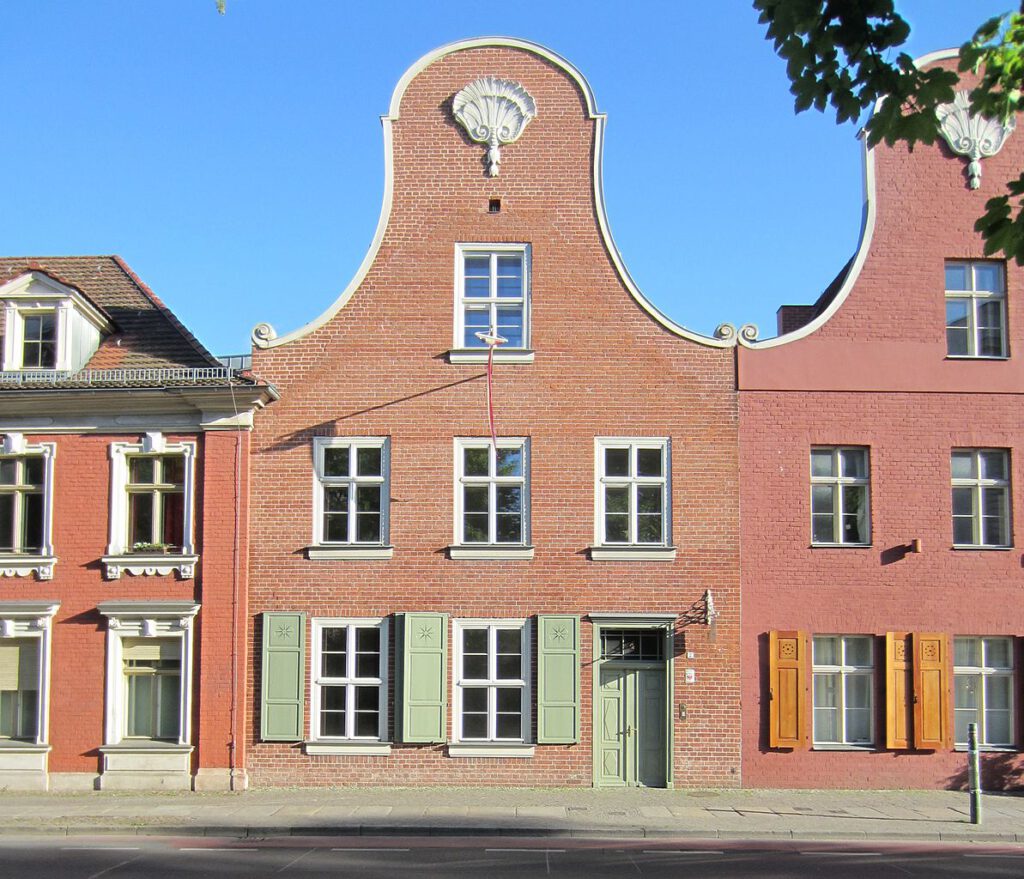
5. Dutch quarter, Potsdam Germany: a little bit of Dutch in Duitsland
Unfortunately, the quarter didn’t attract many Dutch. Image: Giorgio Michele/Wikimedia Commons/CC4.0
King Friedrich Wilhelm I admired Dutch architecture so much that he decided to build a Dutch quarter in the city of Potsdam, Germany. Modelled after parts of Amsterdam and with similarly styled buildings, Wilhelm I hoped to attract Dutch craftsmen.
The Dutch quarter was nearly lost during the German Democratic Republic, when it fell into dilapidation. However, following the fall of the Berlin Wall, the quarter was gradually restored and renovated with the help of the Dutch royal family.
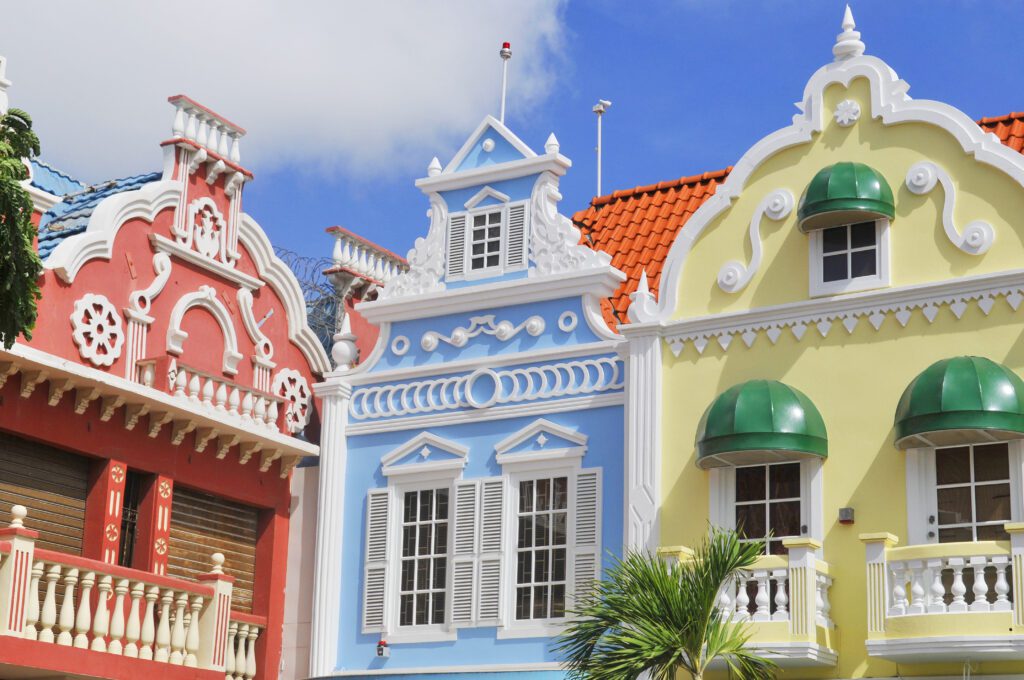
6. Oranjestad, Aruba: a colourful take on Dutch architecture
Putting their own spin on things! Image: Depositphotos
It is well known that the Dutch had a colonial hold on Aruba for many years. This inevitably resulted in Dutch architecture cropping up across the tropical island.
However, Arubans put their own spin on what is ultimately a colonial footoprint.
Instead of the usual brick-coloured buildings, this Dutch-inspired architecture has been dressed up in beautiful pastel colours to better suit its tropical surroundings and culture.
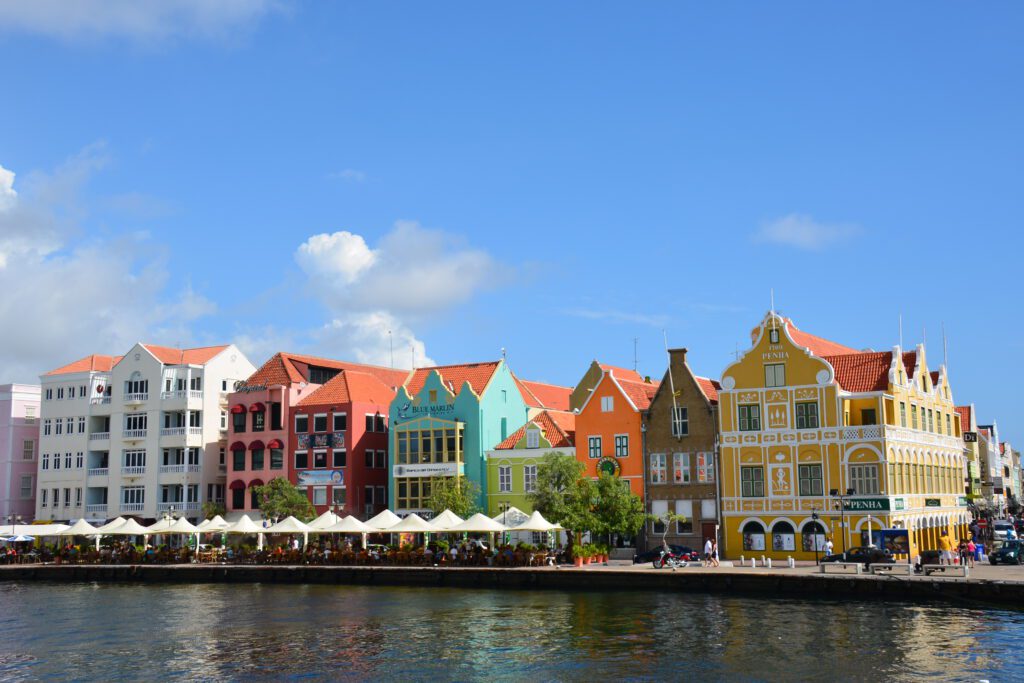
7. Willemstad: perhaps the most colourful ‘Dutch’ town yet
Imagine if Amsterdam took a page from their book! Image: Depositphotos
Even brighter still are the beautiful buildings of Willemstad on the island of Curacao. These brightly coloured houses make the city look like a Dutch Lego-Land from the water.
According to the UNESCO World Heritage Convention, Willemstad has historically Dutch architecture and urban planning in many of it’s districts!
Much like Oranjestad, the city didn’t stick to the Dutch style guide when it came to painting this architecture, and we for one, are thankful for it — look at how pretty it is! Those colours are bound to get some serotonin flowing.
8. Orange County Hotel Resort: a Turkish take on the Netherlands
Located in Kemer, Turkey, we must admit, this resort didn’t go wrong with the name. The Dutch are about as tied to the colour orange as the Irish are to shamrocks. To make sure there is no confusion, the resort’s name also features a windmill logo.
But once you lay eyes on the architecture of this resort, you almost question why they felt the need to specify at all. This place is clearly modelled after classic Dutch townscapes!
The only real difference is that their windmills are situated next to swimming pools, not murky canals.
If there are any Dutchies looking to experience some nice holiday weather in the Netherlands for once, look no further!
Could you be convinced that these places were in the Netherlands? Tell us in the comments below!
Listen, there’s a lot to be mispronounced when you first arrive in the Netherlands. You’ll order yourself a “str-oooohp-wafel”, you’ll say “dank-ooh-well,” and then you’ll probably plan a trip to the “ri-jick-es-museum.”
The what?
Y’know, the “rig-echs-museum.”
Can you guess which heavily mispronounced tourist attraction we’re butchering? The one and only Rijksmuseum, of course!
The most mispronounced museum in the world
It turns out we’re not the only ones who tend to scramble our sounds when trying to say “Rijksmuseum.”
In fact, according to a survey shared by Digg, the Rijksmuseum is the most mispronounced museum in the whole world.
As part of the survey, the pronunciation site Forvo was used to determine how many searches were done to check the pronunciation of a number of famous tourist destinations in each country across the globe.
With a whopping 98,000 listens on Forvo, the Dutch tourist attraction won the title of most difficult museum name to wrap your tongue around — all hail queen “rich-ex-museum!” 👑
However, the Rijksmuseum isn’t the only Dutchie to find itself sitting in the list of top 20 most difficult museum names in the world.
The pronunciation of the Kröller-Müller museum also had to be listened to 6,000 times, and the Museum Boijmans Van Beuningen enjoyed 5,000 listeners.
Pffft, silly silly tourists. (👀).
Well, how do you pronounce it then?
As a team of internationals with inflated egos, we can confidently say that the correct way to pronounce Rijksmuseum is — to listen to this Dutch woman say it in this advert.
Nailed it? Now you can learn how to pronounce gefeliciteerd!
What do you think is the most difficult Dutch word to pronounce? Tell us your thoughts in the comments below!
Fancy sharing your breakfast with Donald Trump? With bird flu rampant in the US, Americans need more eggs. The president hopes EU chickens are the answer.
The US has already called on Denmark, Finland and Sweden; now, they want the Netherlands to supply eggs or egg products, Dutch Association of Egg Traders and Egg Product Manufacturers, Anevei, confirms.
Will the Dutch eggs-port?
Suppliers in the Netherlands are considering whether they will comply with the request. 🥚
For one, the Dutch don’t even have access to the ACTUAL fresh egg market in the US, so this deal only concerns egg products (eggs that have been processed, like separated egg whites, yolks, or freeze-dried eggs).
Plus, Trump wants help from the very nations facing his new tariffs, but naturally, Dutch suppliers are worried about costly export consequences.
Damn…. $ 22.29 USD for a tray of eggs?? A big tray (double the normal amount of 10 with 20 eggs) cost us 6 euro's atm in The Netherlands give or take (around $ 6,54 USD). pic.twitter.com/xkPNNtNHs4
Anevei chairman Werner Buck emphasises the financial importance of a longer-term deal this time round.
“The egg processors are looking at what is possible”, he confirms. But don’t worry, Buck does not expect them to sacrifice their Dutch customers’ eggs to meet American demands.
Do you think the Netherlands should supply egg products to the US? Let us know your thoughts in the comments below.